Winterizing a lawn is not one treatment performed on a single date. It is a sequence of fall tasks, each timed to grass type, regional climate, and the weather signals appearing in the yard before the first freeze. Determining when to winterize lawn areas therefore starts with identifying grass species, not with checking a calendar.
This guide breaks down the timing windows for cool-season and warm-season grasses, then walks through the task sequence, from aeration through irrigation shutdown, that keeps roots strong through winter and ready for a fast spring recovery.
Why winterizing timing matters
Grass shifts into dormancy as temperatures fall, redirecting energy from blade growth into root storage. Winterizing tasks support that shift only when they land in the correct window. Fertilizer applied too early feeds top growth that frost then kills. Aeration performed too late leaves open soil exposed through winter without time for roots to recover. Mowing too short exposes the crown to cold, while mowing too long traps moisture and invites snow mold.
Timing mistakes compound each other. Fertilizing late, mowing too short, and skipping water before a hard freeze leaves a lawn thin, patchy, and vulnerable to disease by spring. Getting the sequence right, rather than guessing at a date, is what actually protects the lawn through winter.
When to winterize lawn
Begin winterizing four to six weeks before the average first hard frost, then adjust for grass type: cool-season lawns start earlier, warm-season lawns wait longer. Frost dates vary too widely for a single date to work, making grass type the more reliable signal for when to winterize lawn tasks in both groups.
Cool-season grass timing
Kentucky bluegrass, tall fescue, and perennial ryegrass grow most actively in cool fall weather, which makes early fall the prime window for winterizing your lawn. Aeration, overseeding, and the first fertilizer application typically happen from early to mid fall, while soil is still workable and grass has enough growing season left to establish new roots before dormancy. Waiting until late fall to start cool-season tasks limits how much recovery time the lawn gets before the ground freezes.
Warm-season grass timing
Bermudagrass, zoysiagrass, and St. Augustinegrass slow down as nights cool and typically do not need attention until later in fall. These grasses go dormant instead of continuing active growth through autumn, so early winterizing work risks stimulating growth that a sudden cold snap can damage. For warm-season lawns, most winterizing tasks, including the final fertilizer application, wait until growth has already begun slowing on its own.
Weather signals to watch
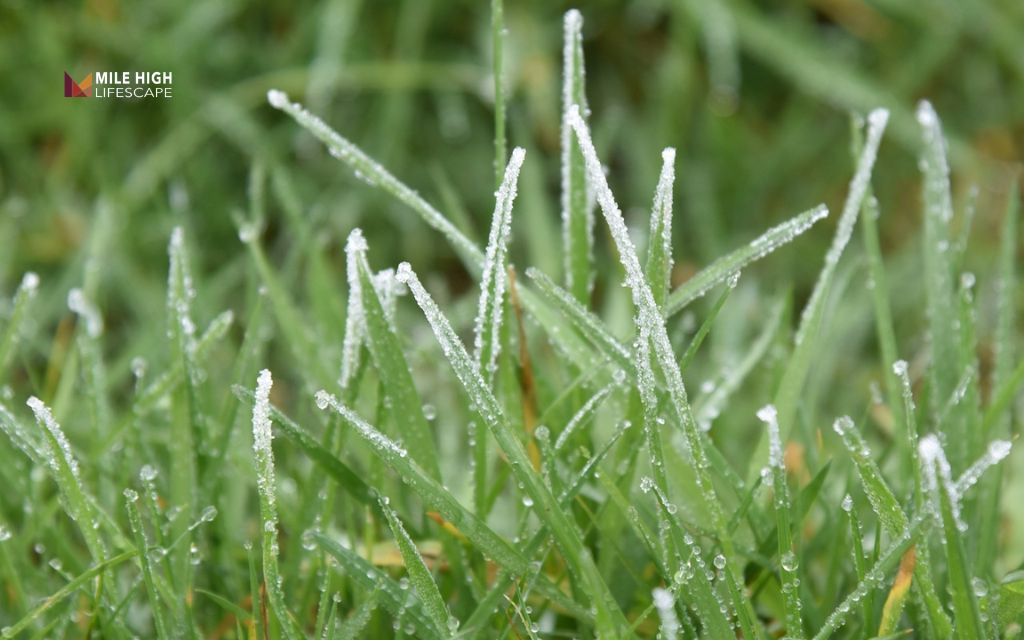
Calendar dates shift by region, but grass responds to the same physical signals everywhere. Soil temperature consistently below 55 degrees Fahrenheit tells cool-season grass to slow blade growth and start storing energy in the roots, the cue to begin fertilization and aeration. Morning frost on the grass signals that active growth is ending for most lawns, regardless of species.
Daytime highs settling below 60 degrees Fahrenheit for several consecutive days, combined with steady leaf drop rather than sporadic shedding, mark the transition into the late fall task window. Watching these signals instead of a fixed date is the real answer to when should I winterize my lawn.
Elevation changes the timeline too. Properties at higher elevation, or those sitting in low spots where cold air collects overnight, can reach frost thresholds two to three weeks earlier than a similar lawn nearby. Checking a local soil thermometer or a regional extension office forecast answers when to winterize your lawn more precisely than any national guide.
The fall lawn winterization sequence: Task by task
Early fall tasks
Early fall is the window for aeration, overseeding, and the first fertilizer application, particularly for cool-season lawns. Aerating relieves soil compaction and lets water, air, and nutrients reach the root zone before winter. Overseeding thin or bare patches right after aeration gives new grass time to germinate and build root depth before growth slows.
The first fertilizer application should carry light nitrogen to support this early growth without pushing excessive top growth. Warm-season lawns skip this early push entirely, since when to winterize grass depends heavily on species.
Late fall tasks
Late fall covers the final mow and the final fertilizer application. The final mow should leave grass slightly shorter than the summer height to reduce matting under snow, without scalping the crown. The final fertilizer application should be potassium-heavy and low in nitrogen, strengthening roots without encouraging blade growth that frost can damage.
Leaf cleanup, reduced watering, and irrigation system preparation round out the late fall list. Leaves need regular removal instead of being left to mat down on the grass, since a thick layer blocks light and traps moisture that promotes snow mold. Watering tapers off as the lawn goes dormant, and irrigation lines need to be drained and shut down before a hard freeze to prevent cracked pipes and damaged sprinkler heads.
| Task | Best timing | Why it matters |
| Aeration | Early fall | Relieves compaction and opens soil for water and nutrients |
| Overseeding | Early fall, right after aeration | Gives new seed time to establish before dormancy |
| First fertilizer application | Early fall | Supports root and seed establishment without excess top growth |
| Final mow | Late fall | Reduces matting and snow mold risk without exposing the crown |
| Final fertilizer application | Late fall | Builds root reserves with a low-nitrogen, high-potassium blend |
| Leaf cleanup | Ongoing through late fall | Prevents light blockage and moisture buildup under matted leaves |
| Watering reduction | Late fall, tapering to a stop | Matches the dormant lawn’s lower moisture needs |
| Irrigation system shutdown | Late fall, before the first hard freeze | Prevents frozen, cracked pipes and damaged sprinkler heads |
Winterizing mistakes that undo the work
Getting the timing right avoids most of the damage that shows up by spring. The most common winterizing mistakes include:
- High-nitrogen fertilizer applied late in the season: Nitrogen fuels leaf growth, and lush new growth heading into a freeze is more vulnerable to frost damage than grass that stopped growing on schedule.
- Delayed irrigation shutdown: Waiting until after a freeze hits can crack irrigation pipes and destroy sprinkler heads that then need full replacement in spring.
- Mowing too short before winter: This exposes the crown, the part of the plant responsible for spring regrowth, to cold injury.
- Mowing too long or skipping leaf cleanup: Long grass and matted leaves both trap moisture against the soil, creating conditions for snow mold once snow cover arrives.
Conclusion
Answering when to winterize lawn areas comes down to matching the timing to grass type, watching soil temperature and frost signals rather than the calendar alone, and working through the early and late fall tasks in order, from aeration through irrigation shutdown. That sequence, not a single date, gives the lawn its best chance at a strong spring recovery.
Mile High Lifescape has spent over 20 years helping homeowners across the Denver Metro area time these tasks correctly, from soil aeration to the final fall application. If a lawn needs a professional hand before winter sets in, our lawn care service covers the full winterizing sequence season after season. Call (303) 877-9091 to schedule a fall visit.
Frequently asked questions (FAQs)
When should I winterize my lawn?
Begin four to six weeks before the average first hard frost in the region. Cool-season grasses start earlier in fall, while warm-season grasses wait until later, once dormancy has already begun.
Is winterizing the same as applying winterizer fertilizer?
No. Fertilizer is one part of the process. Winterizing also includes aeration, overseeding, adjusted mowing height, leaf cleanup, watering cutback, and irrigation system shutdown.
Can I still winterize if I missed the early fall window?
Late fertilization and aeration are less effective once the ground is close to freezing, but tasks like the final mow, leaf cleanup, watering reduction, and irrigation shutdown remain necessary regardless of timing.
Do warm-season lawns need winterizing?
Yes. Even though warm-season grasses go dormant rather than dying back, they still benefit from a properly timed final fertilizer application, adjusted watering, and irrigation system preparation.
What happens if I skip irrigation system shutdown?
Water left in irrigation lines can freeze and expand, cracking pipes and damaging sprinkler heads. Repairs typically cost more than the shutdown would have, and the damage often is not visible until the system is turned back on in spring.