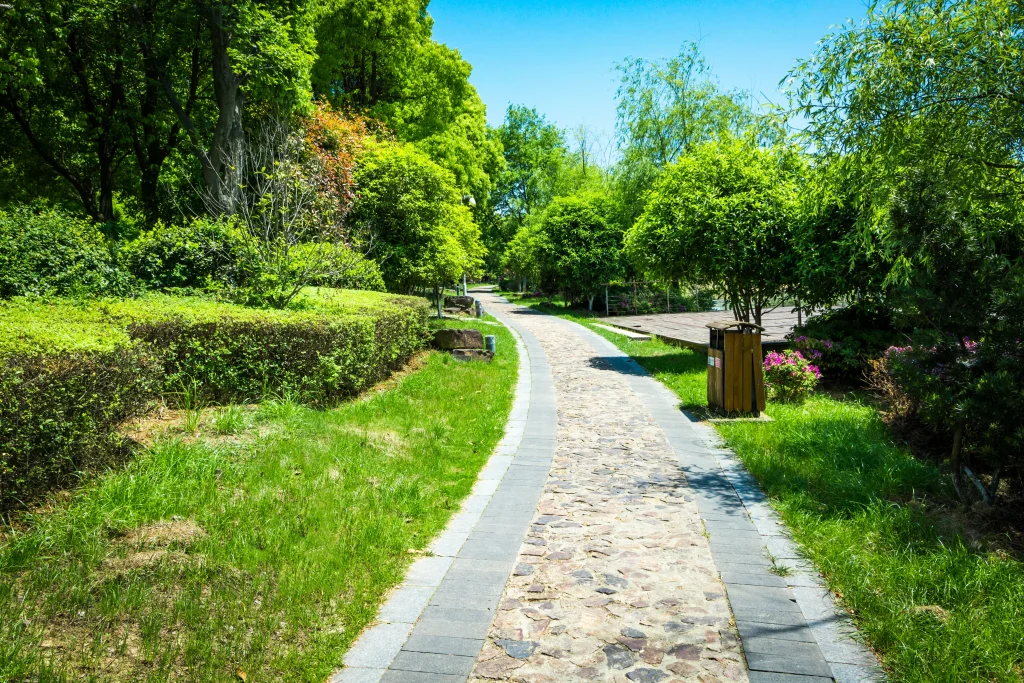
In a world of constant noise and stress, a Zen rock garden offers peace, balance, and simplicity right in your backyard. These gardens distill nature’s essence into its purest form: stones representing mountains, raked gravel mimicking flowing water, and placed elements creating balance without a single drop of irrigation.
In this comprehensive guide, we share 23 inspiring zen rock garden ideas. Whether you’re transforming a backyard or carving out a small zen garden in an urban space, you’ll discover how to create an authentic meditation retreat that honors Japanese traditions.
Check out more useful articles on rock landscaping:
- Indoor zen rock garden design: 7 inspiring ideas + complete setup guide
- 21 landscape designs with river rock that transform ordinary yards into water-wise retreats
- Low-maintenance rock desert landscape: 18 ideas to transform your Denver yard
- 7 lava rock landscaping ideas for creating a drought-resistant Denver yard
What is a zen rock garden?
A zen rock garden, traditionally called a karesansui, or Japanese dry garden, is a minimalist outdoor composition rooted in Buddhist philosophy and Japanese aesthetic principles.
Unlike conventional gardens that rely on colorful blooms or flowing water, karesansui designs use stone, gravel, and negative space to evoke a sense of calm, balance, and mental clarity.
In practice, a zen rock garden typically includes:
- Light-colored gravel or sand: representing the flowing movement of water, oceans, or rivers
- Large rocks: symbolizing mountains, islands, or natural formations emerging from the landscape
- Minimal plantings: moss patches, low ornamental grasses, or small sculpted shrubs like Japanese black pine or boxwood
- Clean, defined edging: to contain gravel, reinforce visual lines, and keep the composition crisp
What makes zen gardens particularly appealing today is their low-maintenance nature. Once installed, they require far less upkeep than a traditional lawn or flower bed.
There’s no mowing, no irrigation system, and no seasonal replanting. The raked gravel patterns are the garden’s living element, changed by your hand whenever the mood calls for it.
23 zen rock garden ideas for Your homes
Each idea below highlights design purpose, visual impact, and Denver-specific adaptations to help you craft a zen garden design that works beautifully in Colorado’s unique environment. All images are used for illustration purposes only.
Classic raked gravel garden
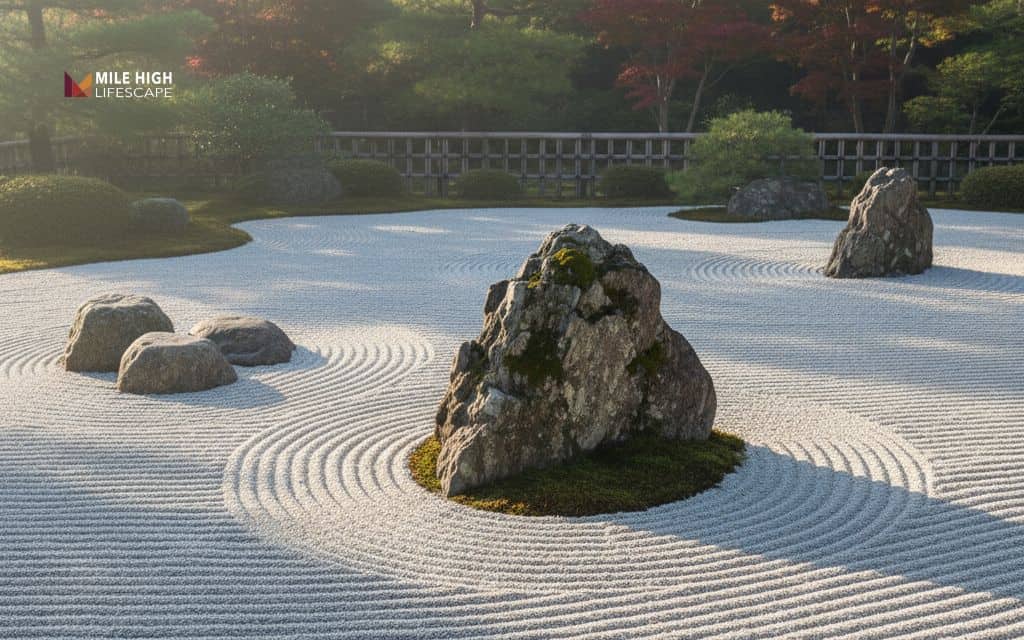
The foundation of zen gardens – simple raked gravel with a few placed boulders embodies the essence of Zen minimalism. The repetitive act of raking creates meditative patterns that represent water’s flow, while the stones symbolize islands or mountains rising from the sea.
Temple-inspired courtyard
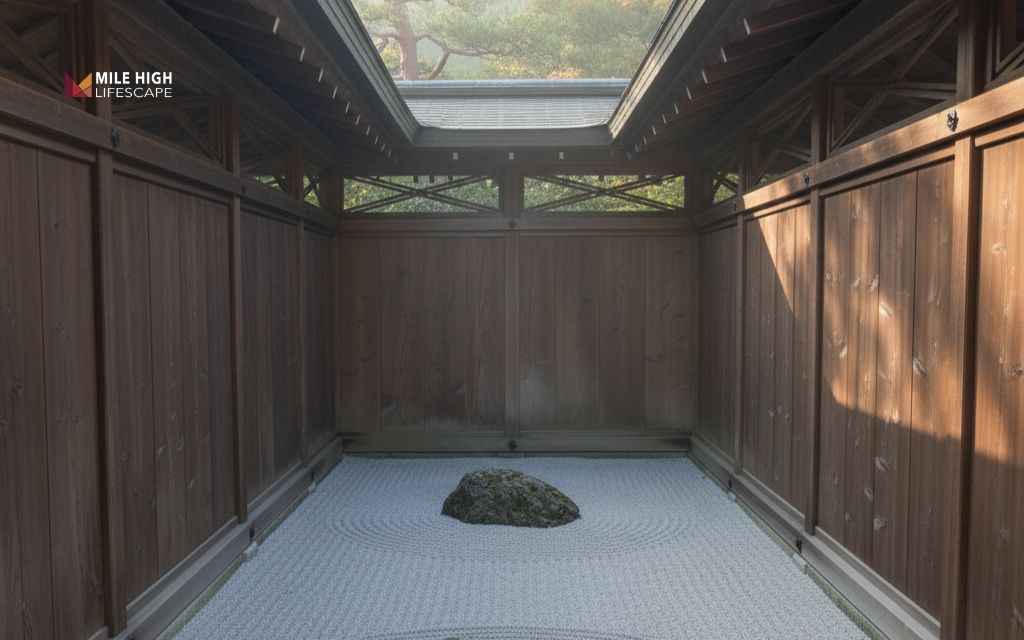
Frame your zen garden with wooden slats, bamboo fencing, or weathered cedar panels to create an enclosed sanctuary. This design mimics the contemplative courtyards found in Kyoto’s ancient temples, providing privacy and establishing clear boundaries between the meditative space and the outside world.
Drought-tolerant zen oasis
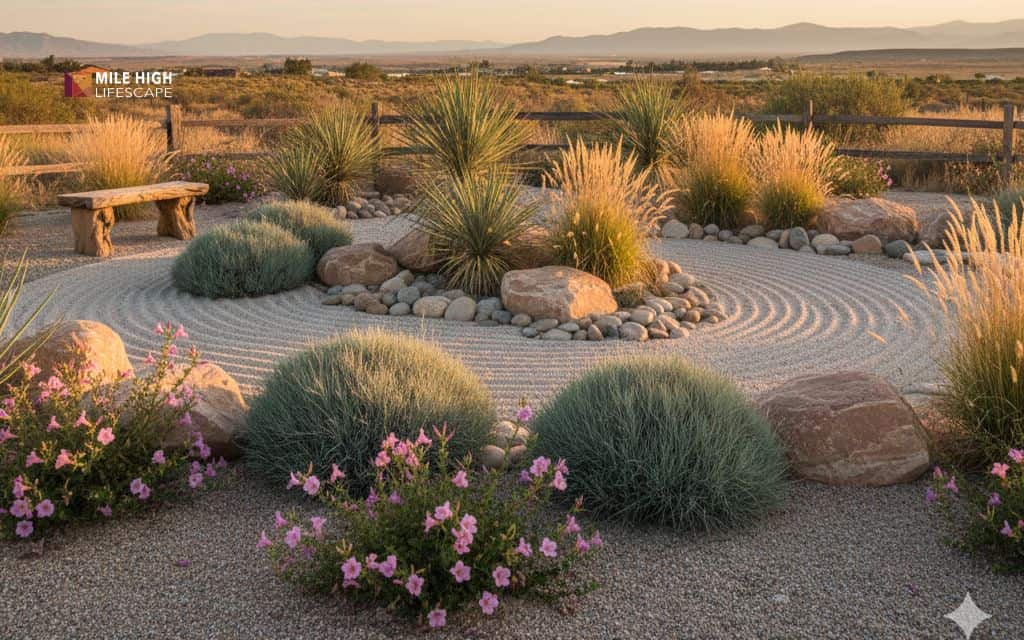
Blend zen garden ideas with xeriscape principles by incorporating drought-tolerant plants like blue fescue, yucca, or ornamental grasses among smooth stones. This approach creates a living zen garden that respects both Japanese aesthetics and water conservation needs.
Blue fescue (Festuca glauca) provides silvery-blue texture, while ‘Karl Foerster’ feather reed grass adds vertical movement. Desert four o’clock (Mirabilis multiflora) offers subtle pink blooms without demanding irrigation, making your outdoor zen garden both beautiful and sustainable.
Boulder balance composition
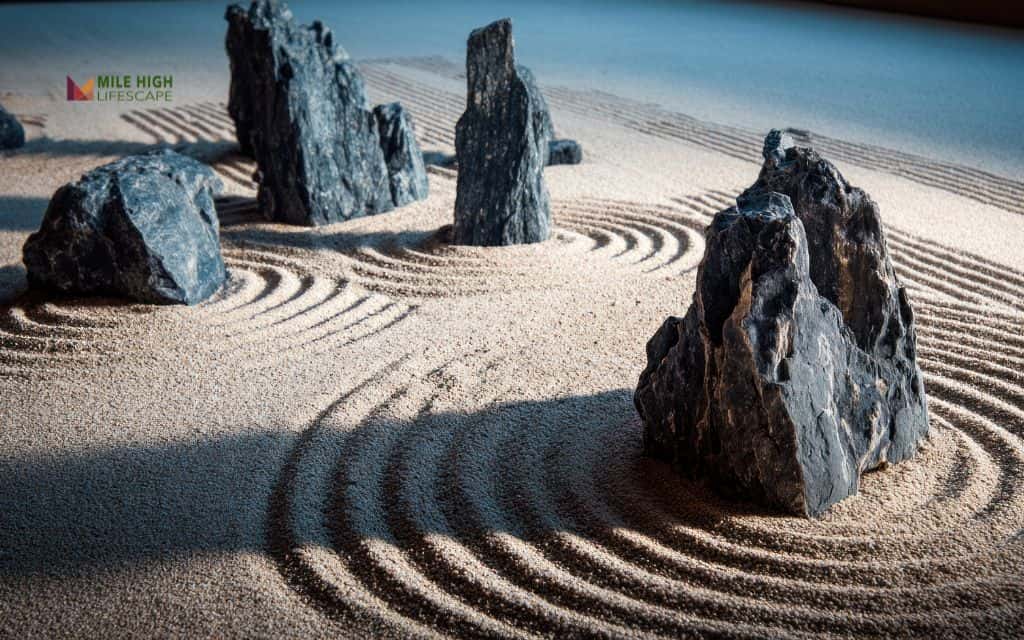
Large rocks positioned asymmetrically represent mountains – a core element in zen garden design. The Japanese principle of “shin-gyo-so” (formal, semi-formal, and informal) guides placement, with the tallest stone representing heaven, a medium stone for earth, and a smaller one for humanity.
Small urban zen corner
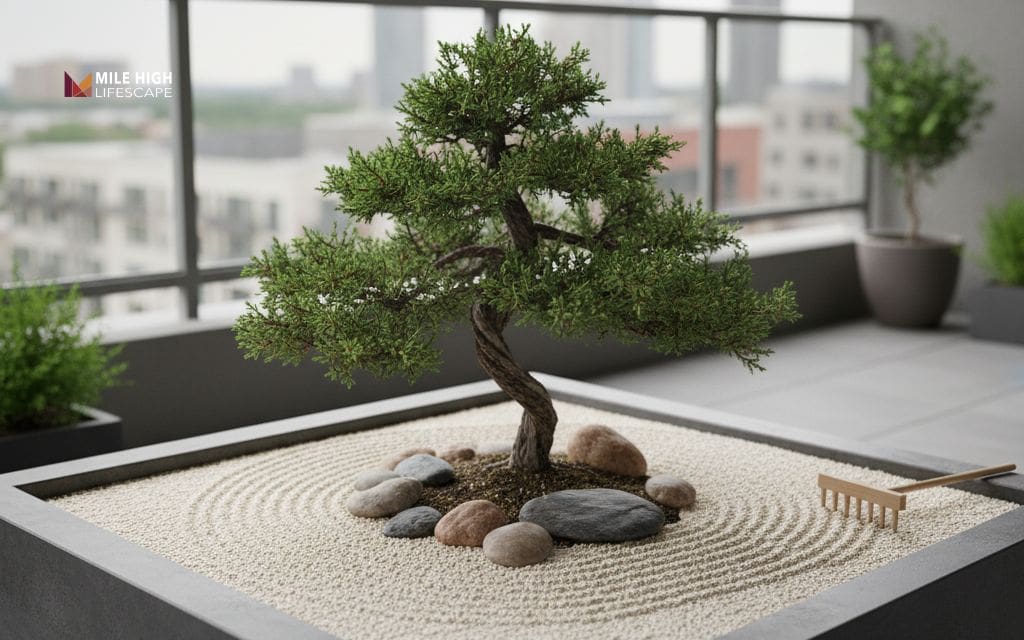
Transform a 4×4 foot area with sand, stones, and a single bonsai or juniper for apartment patios or compact yards. These zen rock garden ideas for small spaces prove that tranquility doesn’t require acreage – just thoughtful design and intention.
Use a shallow container filled with fine gravel as a portable zen garden that can move with the sun or be brought inside during harsh weather. Add a dwarf Japanese juniper (Juniperus procumbens ‘Nana’) that tolerates temperature swings from -20°F to 100°F.
Japanese maple focus point
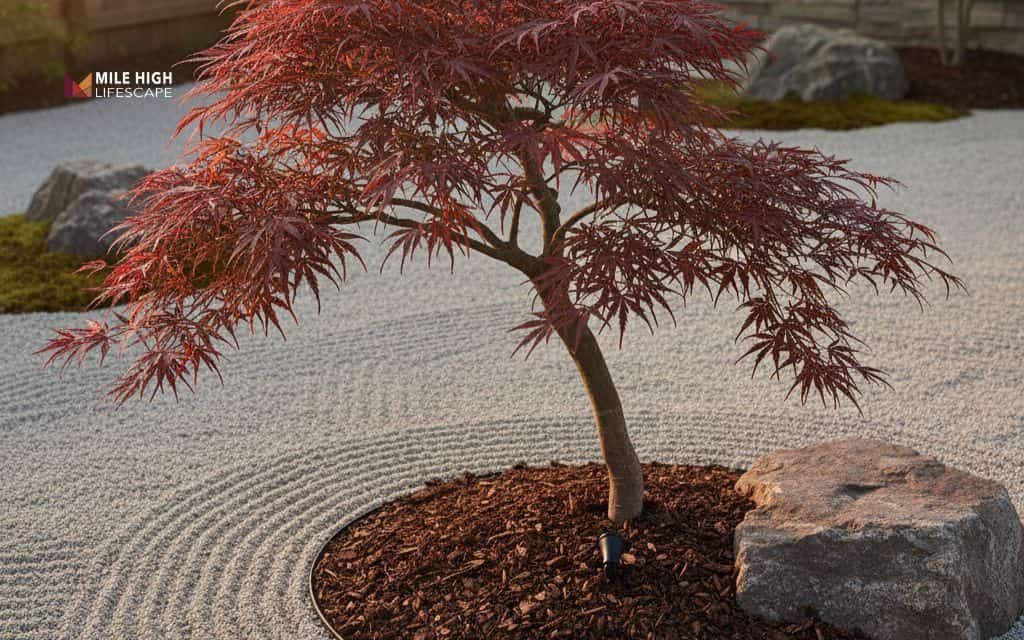
Add a small Acer palmatum for seasonal color contrast against neutral gravel. The maple’s delicate leaves and graceful branching create a living sculpture that transforms throughout the year – from spring greens to autumn crimsons.
Japanese maples require afternoon shade and consistent moisture in Colorado’s dry climate. Plant on the east or north side of structures, mulch heavily, and consider varieties like ‘Bloodgood’ or ‘Sango Kaku’ that show better heat tolerance.
Install drip irrigation for this focal point while keeping the rest of your low maintenance zen garden backyard water-free.
Dry creek stream
Mimic flowing water using curved lines of gravel and river rocks. This design technique, called “kare-sansui” translates to “dry mountain water,” capturing the essence of streams without actual water features that would freeze in winters.
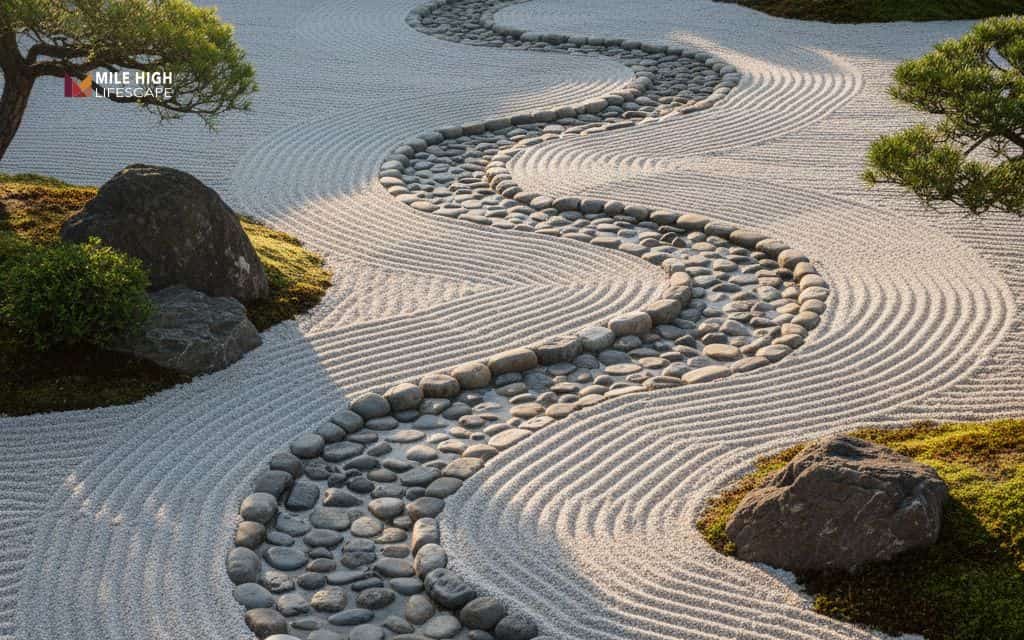
Mountain meditation garden
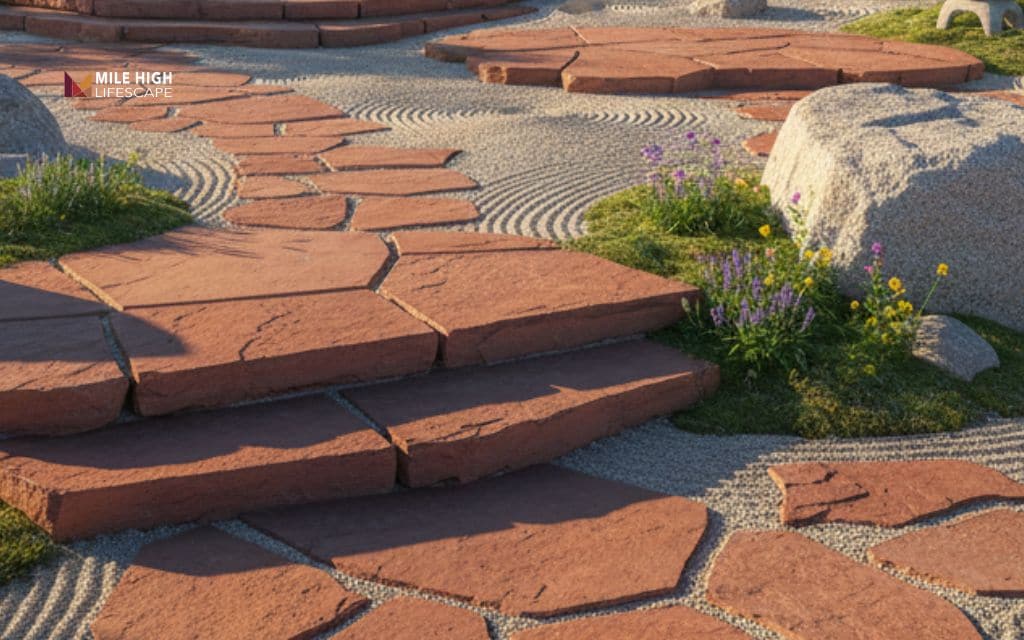
Use local red flagstone and granite to reflect Colorado’s mountain scenery. This fusion of Japanese zen principles with Rocky Mountain geology creates an authentic sense of place – your backyard zen garden becomes both a meditation space and a celebration of regional landscape.
Lyons red sandstone, Eldorado Canyon flagstone, and Pikes Peak granite offer distinctive Colorado character. These materials also withstand freeze-thaw cycles better than imported stones, reducing maintenance and replacement costs over time.
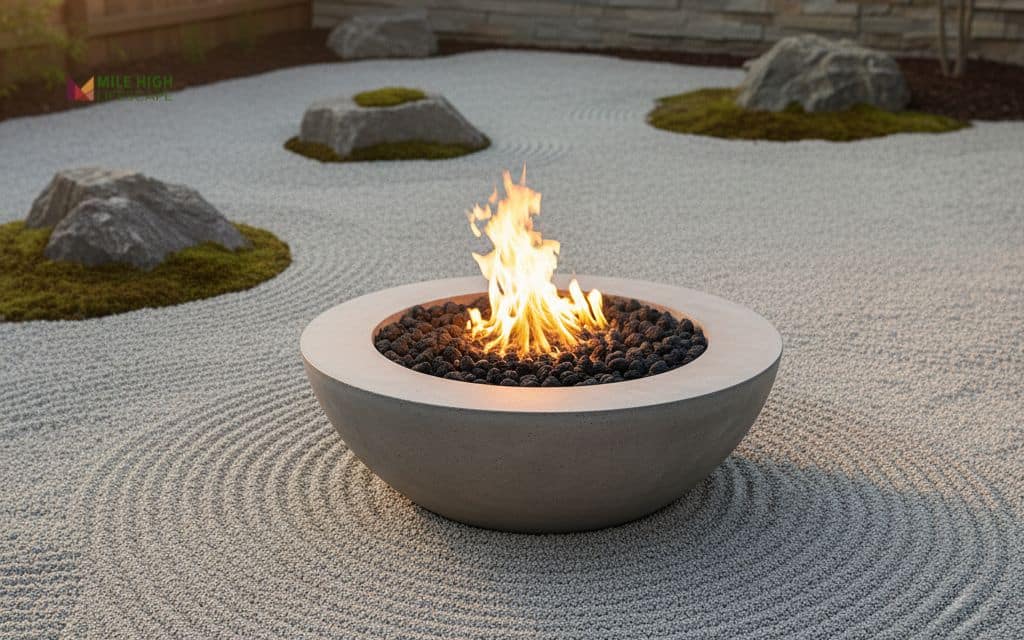
Zen fire bowl space
Combine gravel ground cover with a minimalist fire bowl. This contemporary twist on traditional zen garden ideas extends your outdoor zen garden’s usability into crisp autumn evenings and mild winter afternoons.
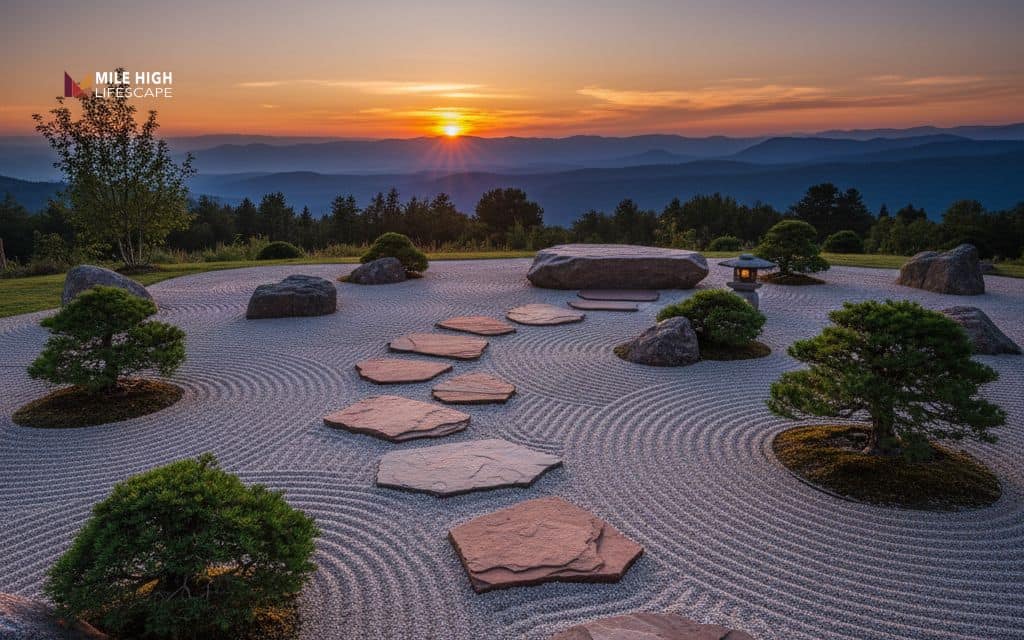
Moon viewing path (tsukimi-do)
Create stepping stones leading to a single sitting stone for evening reflection. Use flat flagstone stepping stones 18 – 24 inches wide, spaced 24 – 30 inches apart for comfortable walking.
The destination stone should be large enough to sit on (36+ inches), positioned to face east for moonrise viewing over the plains or west for sunset meditation toward the mountains.
This design honors the Japanese tradition of tsukimi (moon viewing).
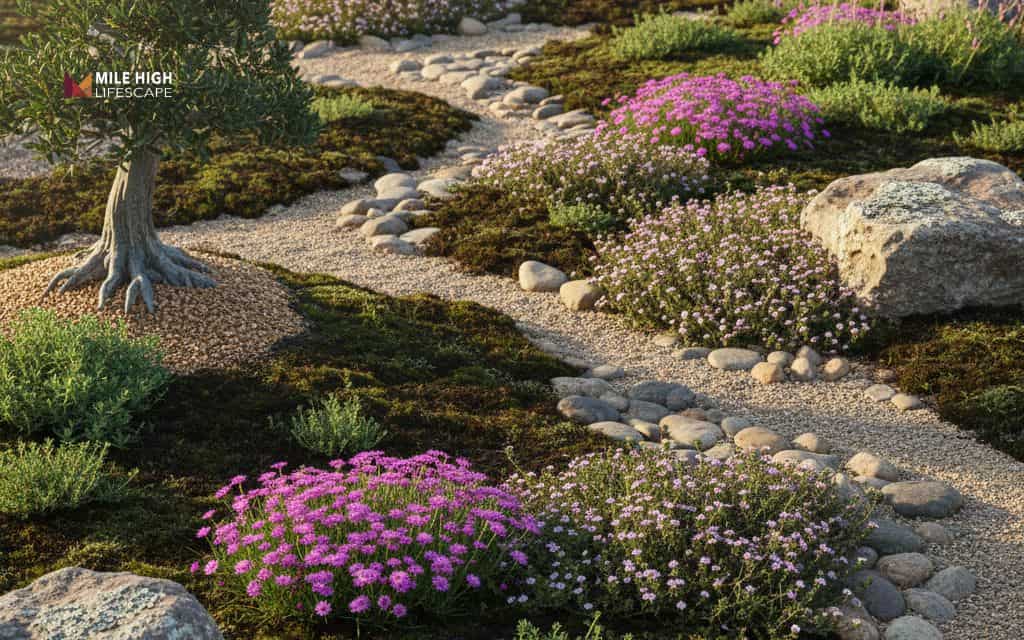
Moss and pebble blend
Use low-water moss alternatives like Irish moss (Sagina subulata) or thrift (Armeria maritima). Creeping thyme (Thymus serpyllum) provides a similar ground-hugging effect with purple blooms and drought tolerance. It releases fragrance when walked upon, adding a sensory dimension to your zen garden ideas backyard design.
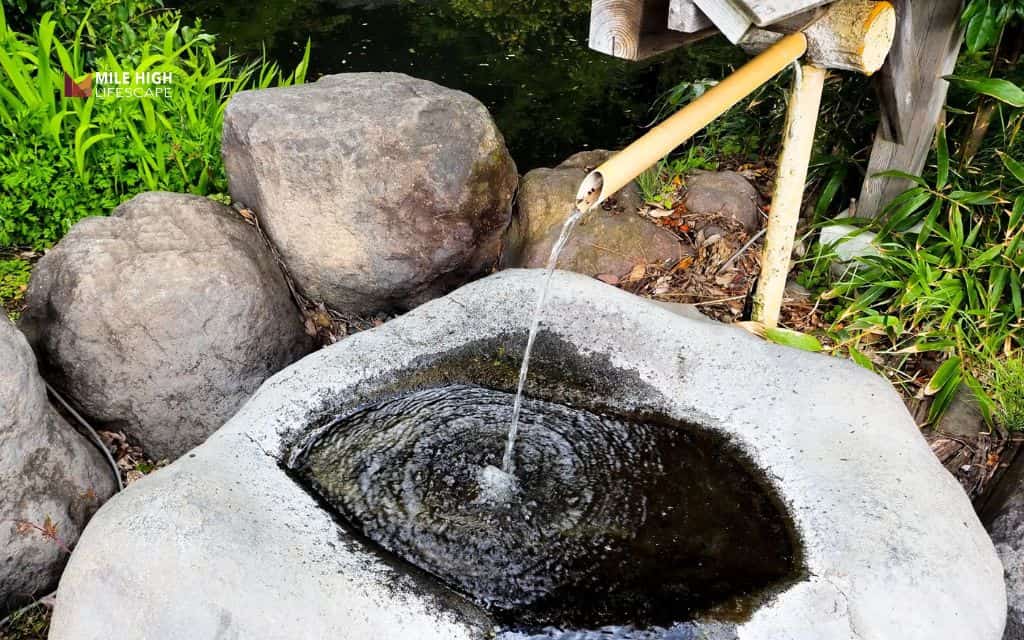
Bamboo water feature (shishi-odoshi)
A subtle, rhythmic water element adds movement and sound while keeping the space calm. The traditional deer-scarer (shishi-odoshi) bamboo fountain creates a meditative “clack” as it fills and tips, marking time’s passage without intrusion.
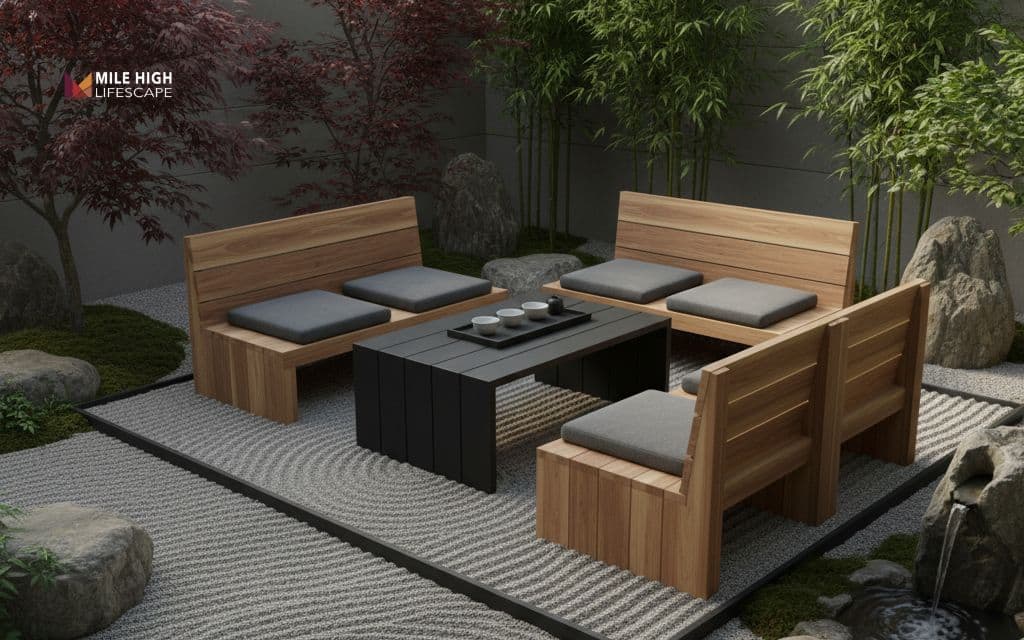
Zen tea garden corner
Design a minimalist sitting area with gravel flooring and a low tea table. This roji (dewy path garden) concept creates a transitional space for the tea ceremony, adapted for contemporary meditation, morning coffee, or afternoon reading.
Choose weather-resistant teak or cedar benches with clean lines. Keep the palette neutral – natural wood tones or matte black finishes that don’t compete with the garden’s peaceful aesthetic.
Add flat cushions in gray or earth tones for comfortable seating during meditation sessions.
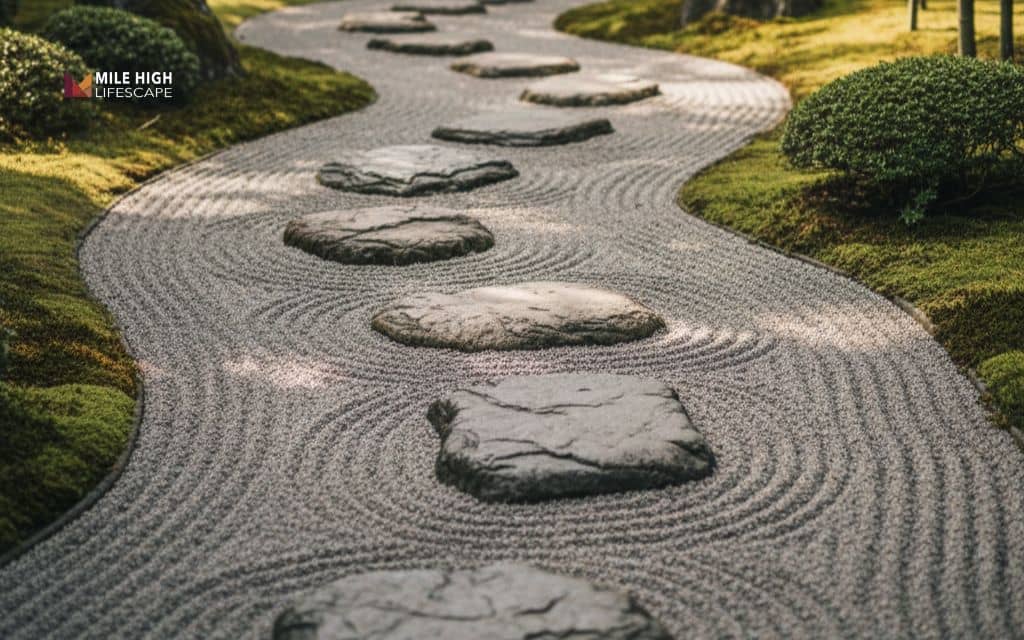
Gravel path with stepping stones
The path should never be perfectly straight; gentle curves reflect Zen philosophy that the indirect route often provides greater insight than the direct one.
Set stones slightly off-center from each other, requiring mindful attention while walking. This deliberate design slows movement and heightens awareness – transforming a simple walk into moving meditation practice perfect for your backyard zen garden.
Read more: 12 best types of gravel for driveways for Denver homes
Mini zen sand tray (indoor or balcony)
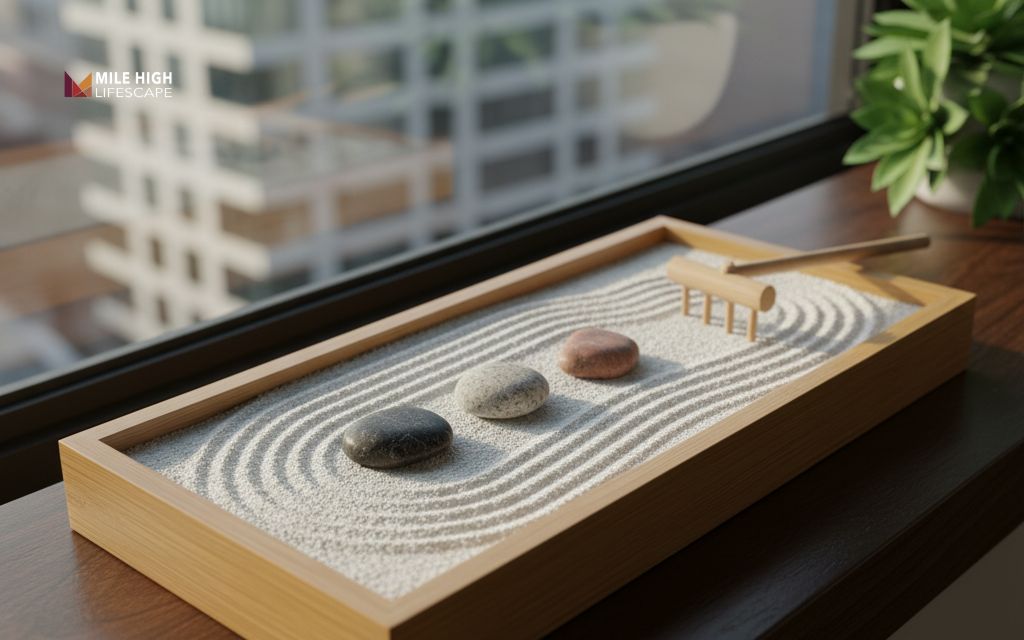
A tabletop version of Zen gardening for daily meditation. These portable gardens measure 12×18 inches or smaller, fitting on desks, patios, or windowsills for apartment dwellers who lack yard space.
Use a shallow wooden tray or ceramic dish filled with fine sand or white aquarium gravel. Add 3-5 small stones and a miniature rake. This easy zen garden design provides daily stress relief through the meditative act of raking patterns.
Wabi-sabi rock arrangement
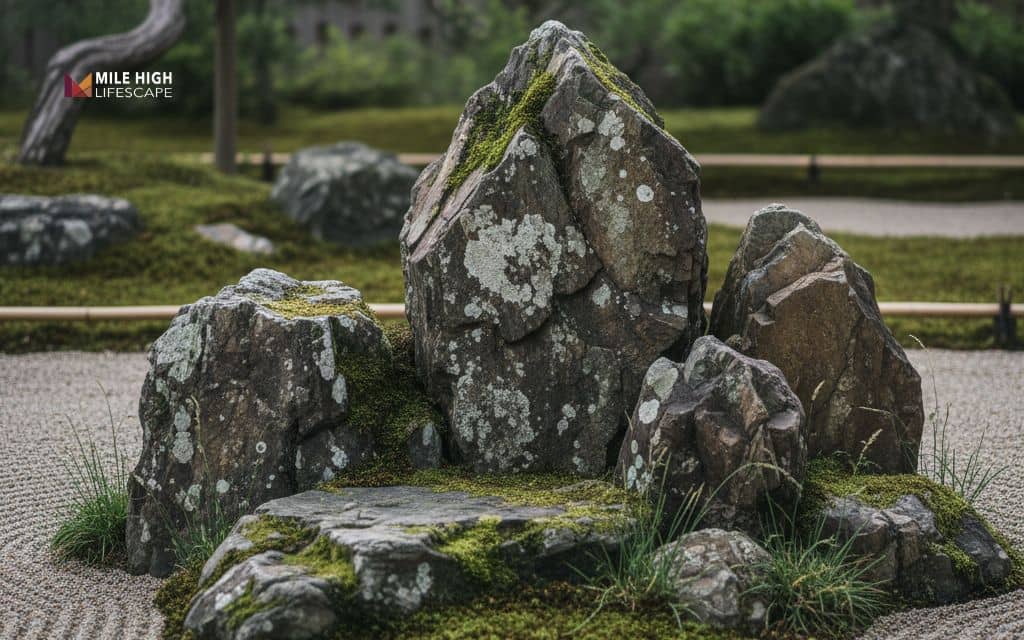
Focus on imperfection and natural asymmetry (aged stones, uneven lines, and organic forms).
Wabi-sabi, the Japanese aesthetic celebrating beauty in impermanence and imperfection, creates gardens that feel timeless rather than manicured.
Choose weathered stones with lichen, moss, or interesting erosion patterns. Avoid clean, geometric arrangements. Let plants grow slightly wild at edges.
Embrace the patina that develops on materials over time. This authentic aging process deepens your garden’s character and connects it to the natural landscape.
Meditation bench space
A simple wooden bench surrounded by gravel and evergreens for mindfulness practice. Position the bench facing your garden’s focal point or toward a mountain view, creating a dedicated space for daily meditation or contemplative moments.
Build or purchase a bench 16-18 inches high for comfortable seated meditation. Add a backrest for longer sessions.
Surround with dwarf mugo pine (Pinus mugo var. pumilio) or Japanese juniper that requires no trimming, maintaining the low maintenance easy zen garden design principle.
Night-lit zen garden
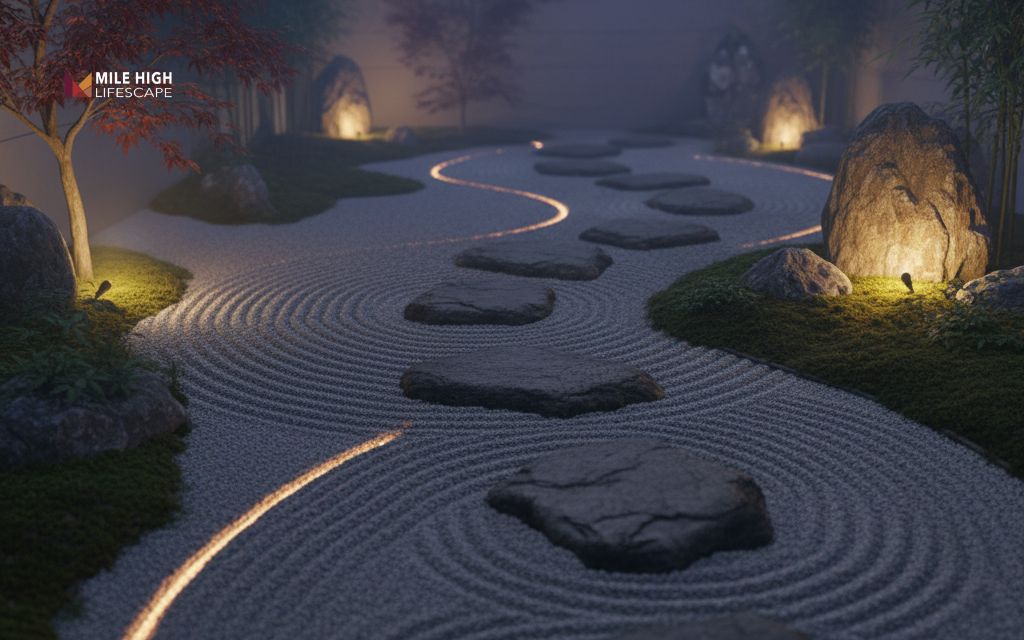
Add warm LED lighting along gravel paths or under boulders to highlight shapes after sunset. Proper illumination extends your garden’s usability and creates dramatic shadows that transform the space after dark.
Position uplights to cast boulder shadows across raked gravel, creating changing patterns as the moon and artificial light interact. Solar-powered path lights eliminate wiring while aligning with sustainable zen garden principles.
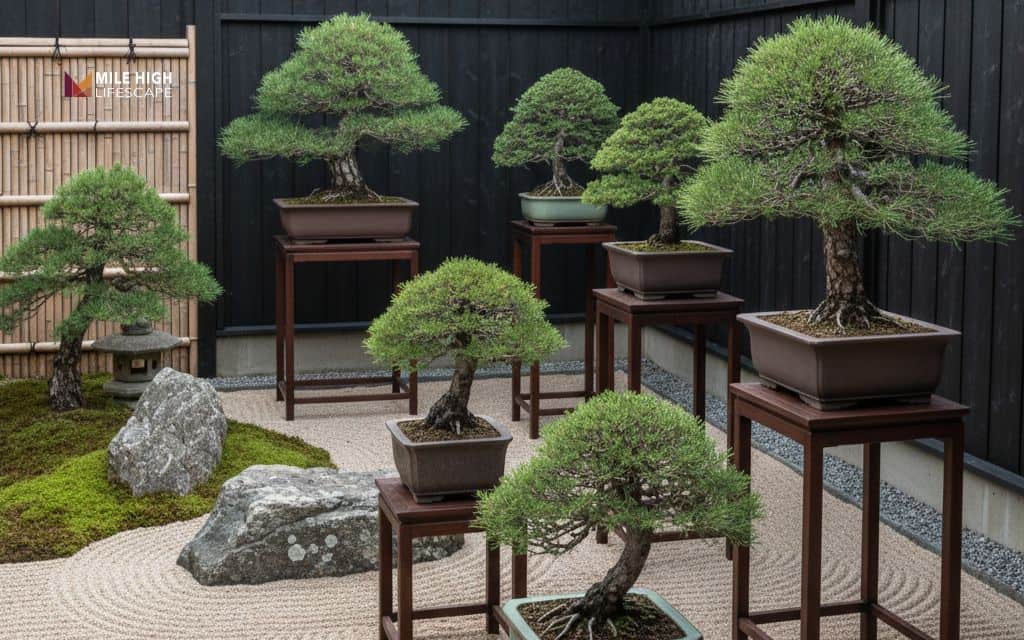
Zen courtyard with bonsai display
Use bonsai pines or junipers in ceramic pots to add structure and Japanese flair. These living sculptures provide vertical interest and seasonal change without compromising the minimalist aesthetic essential to zen garden design.
Choose cold-hardy species like Rocky Mountain juniper or mugo pine that handle temperature extremes. Protect pots from freeze-thaw damage by elevating on pot feet for drainage and wrapping in burlap during extreme cold.
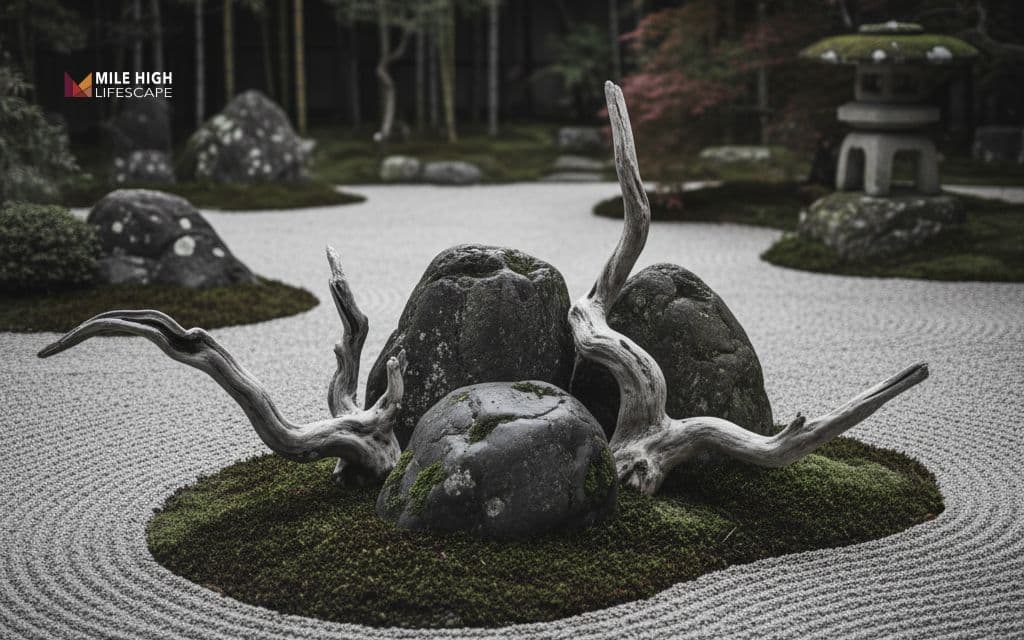
Stone and driftwood harmony
Mix natural materials – bleached wood and smooth river stones for a balanced composition. This approach creates textural contrast while maintaining the monochromatic palette central to traditional japanese zen garden ideas.
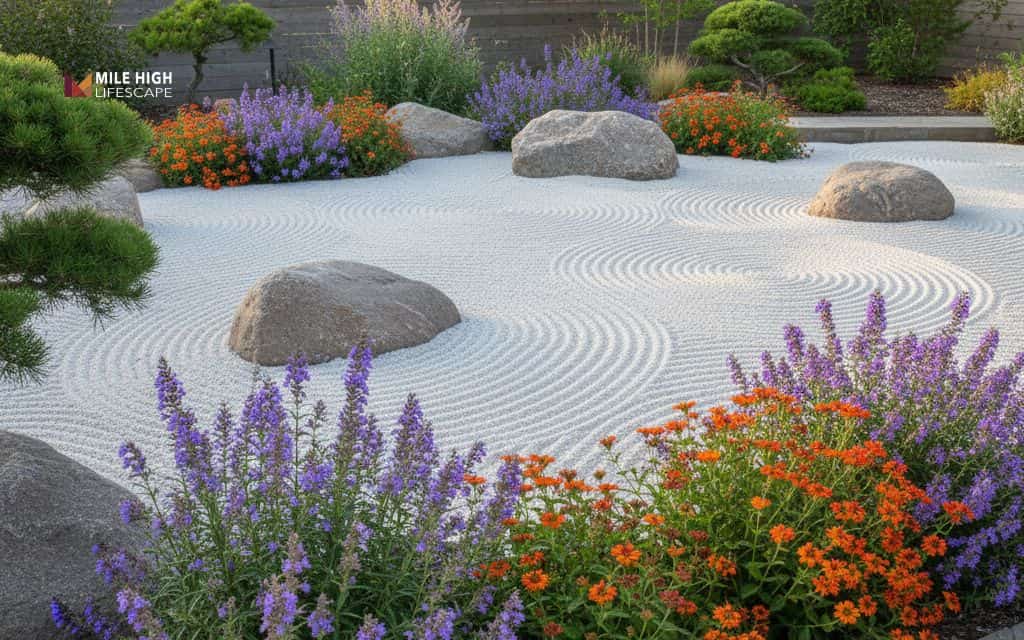
Flowering zen edge
Integrate subtle bursts of color with drought-tolerant blooms like salvia or penstemon. While traditional zen gardens avoid bright colors, this modern adaptation acknowledges that seasonal interest can enhance rather than detract from meditative qualities.
Rocky Mountain penstemon offers purple-blue spikes that attract hummingbirds without overwhelming the composition. Sunset hyssop provides orange blooms and fragrant foliage.
Plant in clusters along the garden’s perimeter, keeping the central area pure stone and gravel.
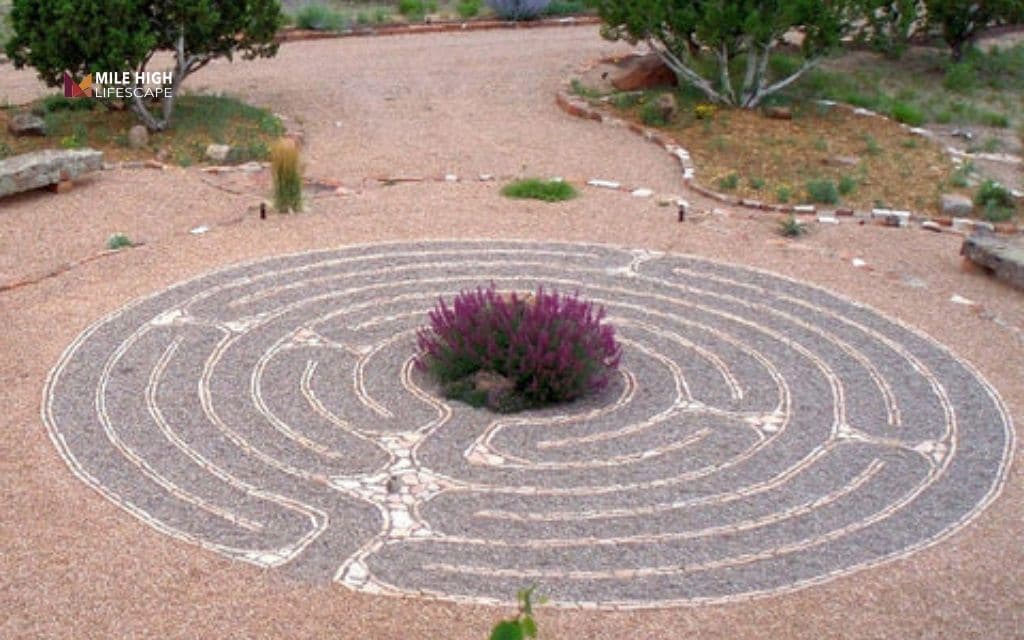
Zen gravel labyrinth
Unlike traditional hedge mazes, this design uses raked patterns to define the path, creating a meditative journey toward the center and back.
A 12-foot diameter circle provides adequate walking space for a single-path labyrinth. Rake deeper grooves (1-2 inches) to define the path clearly. Use a central boulder or bonsai as the journey’s destination.
This backyard zen garden feature combines exercise, meditation, and artistic expression.
Backyard meditation deck
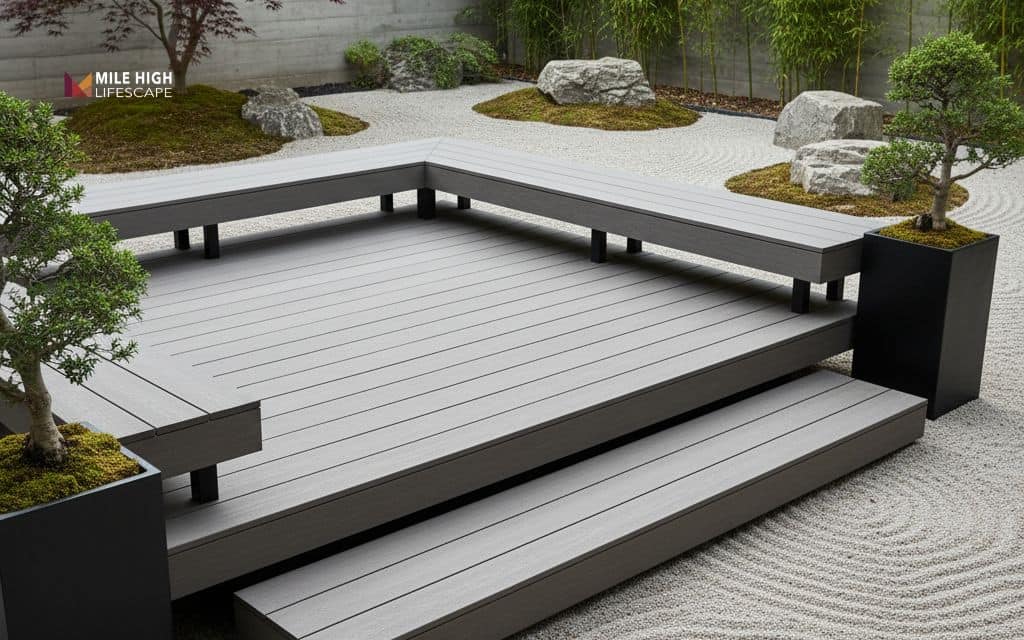
Pair wood decking with gravel and minimalist potted plants for a modern Colorado-Asian fusion. This hybrid design provides comfortable seating while maintaining zen garden aesthetics.
Use composite decking in gray or brown tones that harmonize with stone elements. Extend the deck as a platform floating above the gravel bed, with steps descending into the garden.
Add built-in bench seating along the perimeter, eliminating furniture while maximizing usable space in your zen backyard ideas design.
Read more: 17+ inspiring and easy backyard rock landscaping ideas to refresh your garden design
How do you create a zen garden in your yard?
Ready to build? This step-by-step process works for most backyard zen garden layouts, from compact corners to larger dedicated garden beds.
Step 1: Choose your location
The right location sets the entire tone of your zen garden. Look for:
- A quiet corner of the yard, away from high-traffic areas
- Good drainage – gravel beds in low-lying spots can become waterlogged and shift over time
- Minimal foot traffic – zen gardens are meant to be viewed and contemplated, not walked through casually
Step 2: Define the shape
The shape of your zen rock garden sets the visual personality of the entire space. Three layouts work best for most outdoor zen garden designs:
- Rectangle: clean lines, modern aesthetic, ideal for contemporary backyards and patio borders
- Organic curve: softened edges that mimic natural shorelines, better suited to naturalistic garden settings
- Raised bed: a contained, bordered design elevated slightly above ground level, excellent for small spaces or areas with poor drainage
Mark your chosen shape with spray paint, garden hose, or rope before breaking ground so you can adjust proportions before committing.
Step 3: Prepare the base
A properly prepared base is what separates a zen garden that lasts years from one that becomes a weed patch by fall.
- Remove existing grass and vegetation completely – sod cutters make this significantly faster on larger areas
- Install landscape fabric across the entire bed, overlapping seams by at least 6 inches to prevent gravel from sinking into soil and weeds from pushing through
- Compact the soil lightly with a hand tamper or plate compactor to create a stable, level surface beneath the fabric
This base preparation step is the most important part of easy zen garden design – skipping it leads to uneven gravel, weed pressure, and ongoing maintenance headaches.
Step 4: Add the gravel layer
Gravel is the visual centerpiece of your zen garden. It represents water in traditional karesansui design and provides the canvas for raking patterns.
- Spread gravel 2 to 3 inches deep across the entire bed
- Light-colored gravel works best – white marble chips, white decomposed granite, or light tan pea gravel create the high-contrast, serene look that defines classic zen garden aesthetics
- For a more modern or edgy design, crushed gray granite or bluestone chips offer a cooler, more contemporary palette
Avoid overly chunky gravel for zen gardens. Finer-textured gravel (¼ inch to ⅜ inch) rakes cleanly and holds pattern lines much better than coarser stone.
Step 5: Place rocks first
Rock placement is both the art and the architecture of your zen garden. Before finalizing gravel levels, position all rocks first so you can adjust their relationships to each other.
- Choose 1 focal rock – this is your largest, most visually commanding stone; it anchors the composition
- Add 2 to 4 supporting stones – smaller rocks that create balance and movement around the focal stone; arrange them in odd-numbered groupings (3 or 5) following the Japanese aesthetic principle of fukinsei (asymmetrical balance)
- Bury the base of each rock slightly – sinking the bottom 2 to 4 inches into the soil gives rocks a grounded, natural appearance and prevents shifting over time
Step 6: Rake patterns into the gravel
Raking is the meditative practice at the heart of zen garden culture – and the part most people look forward to most. Use a wide-toothed wooden rake (traditional) or a purpose-made zen garden rake for finer gravel beds.
Three foundational raking patterns work well for most outdoor zen garden designs:
- Straight lines: parallel horizontal or diagonal lines create a calm, modern feel; ideal for contemporary backyard zen garden layouts
- Circular ripples: concentric rings radiating outward from each rock mimic the effect of a stone dropped in water; this is the most traditional karesansui pattern
- Flowing curves: gentle S-curves and wave patterns that sweep across the full bed create a sense of natural movement and work beautifully in organically shaped garden beds
The purpose of raking is as much about the meditative act of doing it as it is about the final visual result. Patterns can be changed weekly, daily, or seasonally. That’s the living quality of a zen rock garden.
Plants that thrive in zen rock gardens
Selecting the right plants ensures your garden remains beautiful and low-maintenance.
| Plant Type | Example | Benefit |
| Evergreen Shrubs | Dwarf Mugo Pine, Japanese Juniper | Provides structure and winter interest when deciduous plants are dormant |
| Grasses | Blue Fescue, Feather Reed Grass | Adds texture and motion, softening hard stone edges with movement |
| Perennials | Sedum, Salvia, Ice Plant | Delivers color pops and pollinator support without demanding irrigation |
| Groundcovers | Creeping Thyme, Veronica | Softens rock edges and fills gaps while tolerating foot traffic |
| Trees | Japanese Maple, Ornamental Cherry | Creates focal accents with seasonal interest and dappled shade |
Planting guidelines:
- Space plants to maintain the open, contemplative quality essential to zen landscaping.
- Group in odd numbers (3, 5, 7) following Japanese design principles.
- Mulch with 2-3 inches of wood chips or decorative stone to conserve moisture and suppress weeds, reducing your low maintenance zen garden backyard upkeep.
Water-wise strategy: Install drip irrigation only for plant zones, leaving gravel areas completely dry.
Zen garden maintenance tips
The beauty of zen garden design lies in its simplicity. While these gardens require regular attention, the tasks themselves become meditative rituals rather than chores.
- Rake gravel: Rake gravel to refresh flow patterns and remove footprints.
- Remove debris after windstorms or snowfall. Spring winds deposit cottonwood seeds, dried leaves, and pine needles. Use a leaf blower on a low setting or hand-pick to avoid disturbing gravel patterns.
- Clean rocks and boulders with a mild rinse twice yearly (spring and fall). Use a soft brush to preserve lichen and natural patina while removing dust and bird droppings.
- Check edging for movement after freeze-thaw cycles. Reset plastic or metal edging that has shifted, ensuring clean boundaries between gravel and surrounding lawn or beds.
- Replenish gravel every 2 – 3 years as particles settle and embed in underlying soil. Add a 1-inch layer to restore proper depth (3 – 4 inches total) and refresh the surface for optimal raking.
Conclusion
A Zen rock garden blends ancient Japanese wisdom with modern practicality. These spaces provide refuge from urban stress, honor water conservation, and require minimal upkeep once established.
Whether you’re crafting a tranquil backyard or a minimalist front-yard statement, these 23 zen rock garden ideas will help you design a space that reflects peace, harmony, and connection with nature.
_______________
Your Denver Zen Garden Design Experts
For 20 years, we have been a trusted provider of landscaping rock services in Denver, specializing in authentic zen rock garden design and installation.
Our expert team sources local stone, selects climate-appropriate plants, and installs proper drainage systems. We help you create peaceful meditation spaces that blend Japanese traditions with Colorado’s unique climate you’ve been dreaming of.
Ready to transform your outdoor space? Call Mile High Lifescape: (303) 877-9091
Frequently asked questions (FAQ)
What kind of gravel is best for a Zen rock garden?
Decomposed granite or pea gravel works best for zen gardens. Decomposed granite offers a natural tan-gold color that compacts slightly for stability in wind, while pea gravel (¼-inch rounded stones) provides the smoothest raking experience.
Do Zen gardens need plants?
Not necessarily. Minimalist zen garden design uses only rocks and gravel to create a powerful visual impact. However, small shrubs, grasses, or moss alternatives can enhance softness and provide seasonal interest without compromising the atmosphere.
How big should a backyard Zen garden be?
Even a 4×4 foot space can provide a calming retreat if designed thoughtfully. The garden’s power comes from intentional design rather than size.
Is a Zen garden high-maintenance?
No. Zen gardens rank among the lowest maintenance landscaping options. Weekly raking takes 10-15 minutes. Occasional debris removal, stone cleaning twice yearly, and gravel replenishment every 2-3 years complete the requirements.
Zen garden ideas on a budget?
You don’t need a big budget to create a beautiful zen garden. Start with affordable materials like pea gravel or decomposed granite, a few large rocks sourced locally or from a landscape supply yard, and basic landscape fabric to keep weeds out. A simple wooden or metal edging, a wide rake, and three well-placed stones are all you truly need to build a calming, low-maintenance zen space for under $100.