Pine straw as mulch is absolutely a legitimate option for Front Range landscapes, but it’s not the right choice for every situation. You need to weigh several factors including water conservation needs, soil health goals, and particularly fire risk in our dry climate.
Some areas of your property might benefit from pine straw’s characteristics, while others are better suited to traditional alternatives.
This comprehensive guide walks you through everything you need to know about using pine straw for mulch in Denver gardens. We’ll explain exactly what pine straw mulch is, dive into the benefits and limitations for Colorado landscapes.
By the end, you’ll have the practical knowledge to make an informed decision about whether pine straw belongs in your landscape.
What is pine straw mulch?
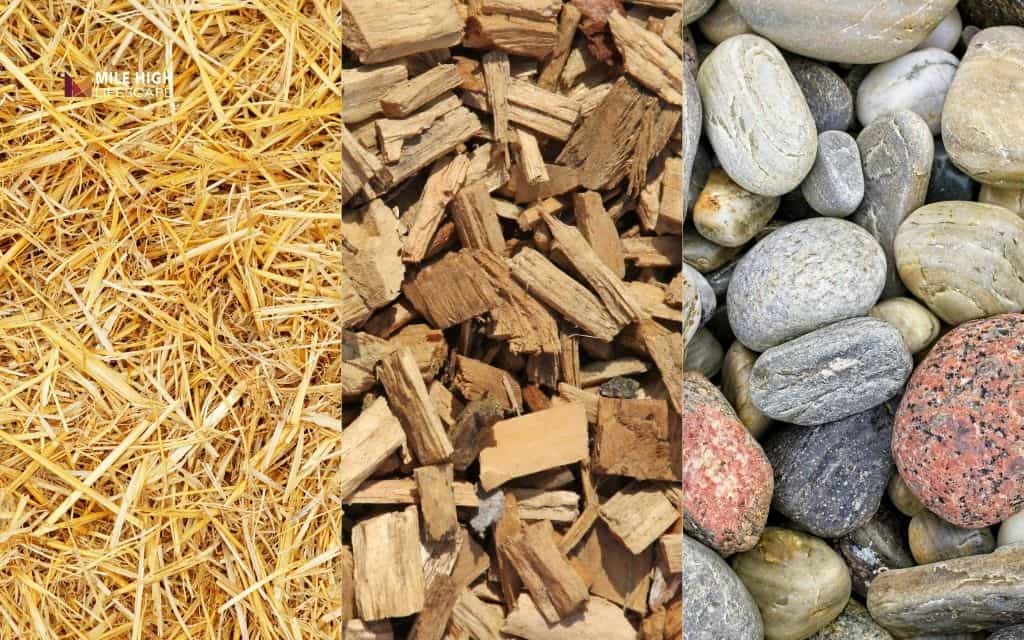
Pine straw vs “regular” mulch
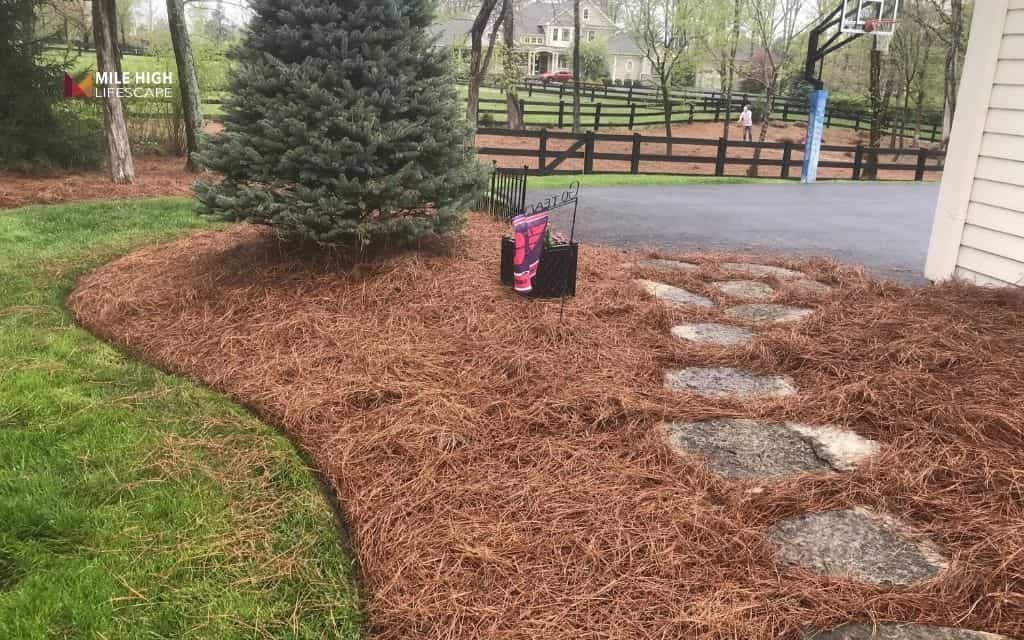
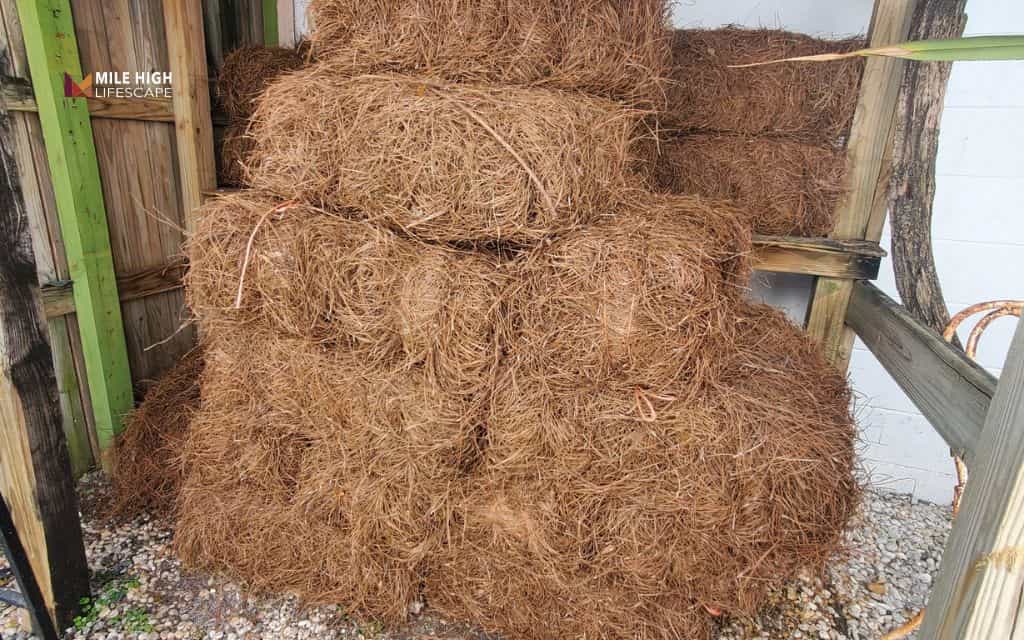
Pine straw consists of fallen pine needles. Forestry workers or landowners rake these needles, compress them, and bundle them into bales. No wood. No shredding. Just needles.
This separates pine straw from wood chip mulch, which uses shredded bark and branches. It also differs from grain straw – those golden stems farmers bale from wheat or oat fields. Pine needles create a distinct texture and performance profile in garden beds.
The needles form an interlocking mat when spread. Water moves through this mat easily. Air circulation continues beneath the surface. This structure creates different results than wood chunks or grain stems.
Types of pine straw
Not all pine straw is created equal. The 2 main types you’ll encounter are long-needle and short-needle varieties.
Long-needle pine straw
Long-needle pine straw comes primarily from longleaf pine trees and features needles that can reach 10 to 14 inches in length. These longer needles create a more cohesive mat, offer better erosion control on slopes, and typically provide superior coverage.
A single bale of long-needle pine straw usually covers approximately 45 to 50 square feet at a proper 2 to 3 inch depth. The longer needles also tend to have a richer, more consistent copper-brown color that many gardeners prefer aesthetically.
Short-needle pine straw
Short-needle pine straw, harvested from loblolly or slash pines, features needles around 6 to 9 inches long. While it covers slightly less area per bale (typically 35 to 40 square feet), it breaks down somewhat faster, which can be beneficial if you’re looking to add organic matter to your soil more quickly. The color tends toward a lighter tan or golden-brown shade.
Benefits of pine straw as mulch
Lightweight and easy to work with
This lighter weight makes pine straw particularly valuable for Denver’s hillside properties and multi-level landscapes.
You can easily carry bales to hard-to-reach areas, toss them up slopes, and maneuver them around established plantings without the back strain associated with heavier mulch options.
The ease of handling also speeds up application significantly. You can mulch a moderately sized bed in half the time it would take with bagged wood mulch, simply because you spend less energy and time transporting material to where you need it.
Excellent coverage and cost efficiency
Pine straw delivers more square footage per dollar than bagged wood mulch. One bale covers 45-50 square feet at proper depth. A typical 2-cubic-foot bag of bark mulch covers 12-15 square feet at the same depth.
You need roughly 3 bags of bark to equal one bale of pine straw. At current Denver prices, bales often cost $6-8 each. Premium bark bags run $4-6 each. The math favors pine straw for large bed installations, especially when labor costs enter the equation for professional installations.
Mulching with pine straw reduces material transport costs. Landscape contractors move more coverage per truck load. DIY gardeners make fewer trips from the store. Time savings add up quickly on properties with extensive planting beds.
Moisture retention & temperature moderation
The loose, airy structure of pine needles creates effective insulation. Water penetrates easily when you irrigate or when rain falls. The mat then slows evaporation from the soil surface.
Temperature moderation matters at our altitude. Summer soil temperatures can spike to 120°F in exposed beds. Winter nights drop below zero. Pine straw buffers these extremes. Root zones stay cooler in summer and warmer in winter than bare soil or thin mulch layers.
The needle structure allows air movement while providing shade. This combination prevents the soil surface from crusting – a common problem in Denver’s clay soils after heavy rain or irrigation.
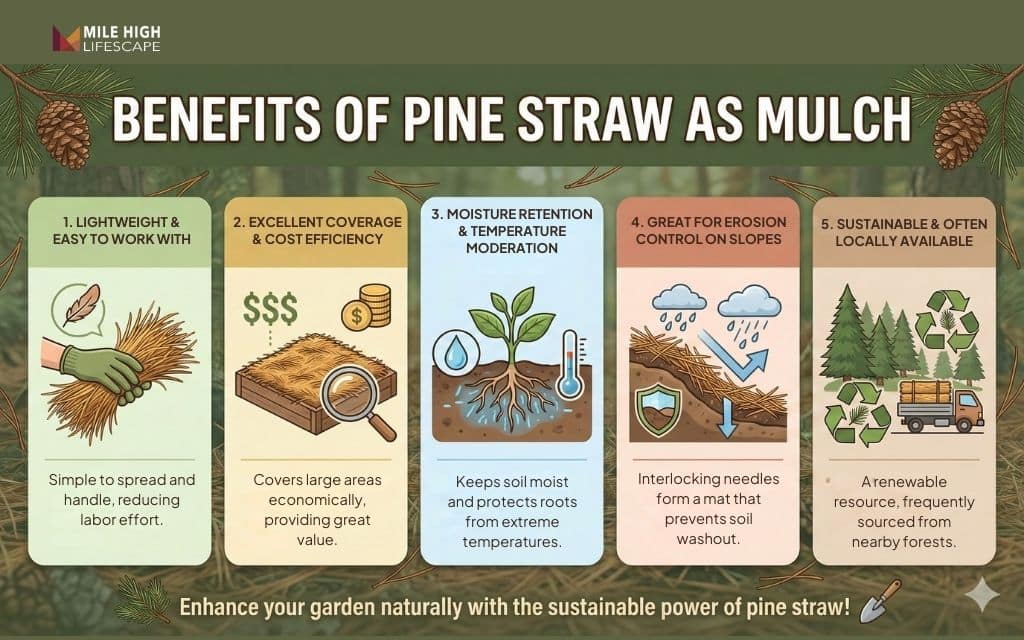
Great for erosion control on slopes
Pine needles interlock when layered. This creates a stable mat that resists water runoff and wind displacement. The effect intensifies as needles settle and compact slightly over time.
The interlocking mat also allows plant roots to establish without competing against shifting mulch. Young shrubs and perennials anchor more easily through pine straw than through deep wood chip layers.
Sustainable and often locally available
Forestry operations collect fallen needles as a byproduct of forest management. No trees are cut solely for mulch production. This makes pine straw a renewable resource with minimal environmental impact.
Some homeowners collect needles from their own ponderosa pines or neighboring properties. This works if you harvest responsibly – never strip all needles from the forest floor, as they provide wildlife habitat and natural decomposition.
Commercial bales typically come from managed pine forests in the Southeast or, increasingly, from sustainable operations in the Mountain West. Check with local suppliers about sourcing if sustainability concerns matter to your gardening philosophy.
Drawbacks and limitations of pine straw
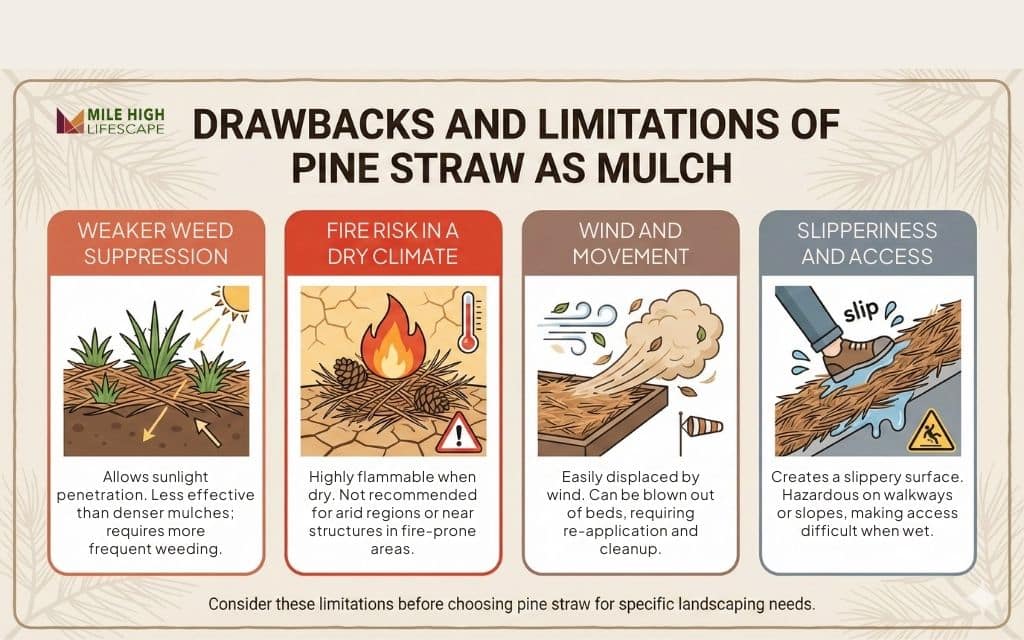
Weaker weed suppression
Pine straw creates an open structure. Light penetrates between needles. Seeds germinate more easily than under dense wood mulch or landscape fabric.
This limitation requires strategic management. You combine pine straw with proper bed preparation – remove existing weeds completely before mulching. Consider applying pre-emergent herbicides if you use them in your gardening practice. Hand-weeding becomes part of regular maintenance rather than an occasional task.
Heavy weed pressure locations – newly converted lawn areas or beds near untended lots – need more aggressive control methods before pine straw makes sense.
Fire risk in a dry climate
Pine needles ignite quickly. They carry flame rapidly once burning. This creates serious concerns in Colorado’s wildland-urban interface zones and during our fire-weather days.
Defensible space requirements in WUI areas often prohibit combustible mulch within 5-15 feet of structures. Check local fire codes before using pine straw near your home, deck, or detached buildings.
Wind and movement
Exposed front yards, hilltop properties, and beds without windbreak plantings lose pine straw to wind displacement. You find needles in the lawn, on sidewalks, and against fences. This creates maintenance frustration and reduces mulch effectiveness.
Solutions include using deeper initial applications (3-4 inches), which compact to a more stable mat, and combining pine straw with dense perennial groundcovers that hold needles in place. Some gardeners wet down fresh pine straw applications to help needles knit together before wind events.
Slipperiness and access
Wet pine needles become slippery. This creates safety concerns on paths, slopes used for foot traffic, and near entries where people walk regularly.
Reserve pine straw for ornamental beds rather than functional pathways. If you must mulch a slope that serves as access, consider wood chips or stepping stones instead. The risk of falls increases significantly on wet, needle-covered inclines.
Maintenance access also becomes trickier. You slip more easily when working in beds after rain or irrigation. Wear boots with good tread if you maintain pine-straw-mulched areas.
Where pine straw works best in a Denver landscape
Flower beds and ornamental borders
Pine straw for flower beds creates a natural, forest-floor appearance. The russet color complements most flower colors without competing visually. The open structure allows spring bulbs to emerge easily.
Perennial borders benefit from the loose mulch texture. You divide plants without fighting through compacted wood layers. New perennials establish quickly as roots penetrate the needle mat.
Ornamental grass plantings look particularly appropriate with pine straw. The similar textures and colors create cohesive designs. Annual beds work well too, though you’ll turn the straw under or remove it before spring planting.
Acid-loving ornamental plants
Rhododendrons, azaleas, and hydrangeas perform best in acidic soils. Pine straw provides an appropriate surface mulch for these plants, even though it doesn’t dramatically alter soil pH.
The visual match matters. These plants evolved under pine and oak forests. Pine needles look natural surrounding them. The needles also break down slowly, contributing small amounts of organic matter without the rapid decomposition that can temporarily rob nitrogen from soil.
Evergreen shrubs, including many junipers and some yews, tolerate or prefer slightly acidic conditions. Pine straw complements their year-round foliage.
Slopes and erosion-prone areas
Pine straw for landscaping on hillsides outperforms most alternatives for erosion control. The interlocking mat holds soil during spring snowmelt and summer monsoon rains.
Apply pine straw at 3-4 inches depth on slopes. Water lightly after installation to help needles settle and lock together. The resulting mat resists both water erosion and wind displacement better than freshly spread bark or compost.
Combine pine straw with dense planting. Ornamental grasses, low shrubs, and spreading perennials work with the mulch to stabilize slopes. The plants anchor soil with roots while pine straw protects the surface.
Avoid using pine straw on slopes near structures in fire-prone areas.
Vegetable gardens and paths
Pine straw works in vegetable gardens as path mulch and, with caution, as bed mulch. The material stays cleaner than grain straw.
Garden paths benefit from pine straw’s soft surface and drainage properties. You walk comfortably between rows. Water drains through to the soil rather than puddling. The needles suppress some path weeds while allowing easy replanting when you rotate crops.
As bed mulch around vegetables, pine straw provides moderate weed suppression and good moisture retention. However, you need deeper depths to suppress weeds, and that much mulch can harbor slugs in irrigation-heavy vegetable beds.
Pine straw vs wood mulch vs rock – Which should you choose?
| Feature | Pine Straw | Wood Mulch/Bark | Rock Mulch |
| Coverage & Lifespan | 45-50 sq ft/bale; lasts 9-12 months | 12-15 sq ft/bag; lasts 18-24 months | Permanent; one-time install; no replacement |
| Fire Risk | High; ignites quickly and spreads flame | Moderate; less flammable | None; completely non-flammable |
| Slope Performance | Excellent; interlocks into stable mat | Fair; washes away in heavy rain | Excellent; permanent stability |
| Soil Benefits | Adds organic matter as it decomposes | Adds organic matter; enriches clay soils | None; can overheat soil (130°F+) |
| Best Denver Uses | Back-slope ornamentals, flower beds, erosion control areas | Front yards, high-weed areas, visibility plantings | Foundation areas, WUI zones, xeriscapes, near structures |
When to choose which in Denver
- Choose pine straw when: You need erosion control on slopes, want lightweight material, and the bed is sheltered away from structures.
- Choose wood mulch when: Weed pressure is high, you want lasting color in visible areas, and you need weight to resist wind.
- Choose rock mulch when: Fire safety is the priority (WUI zones), you’re creating xeriscapes, or you want a permanent solution.
How to mulch with pine straw
Step 1: Prepare the bed
Remove all existing weeds, grass, and debris from the planting bed. Hand-pull perennial weeds and dig out roots completely. Shake excess soil from roots back into the bed.
Edge the bed with a sharp spade or edging tool. Create a clean boundary between lawn and mulched area. This prevents grass from creeping into the bed and keeps pine straw from migrating onto turf.
Add compost or soil amendments if your plantings require them. Work amendments into the top 2-3 inches of soil. Water thoroughly and allow the bed to settle for a day or two before mulching.
Check soil moisture before spreading pine straw. The ground should be moist but not saturated. This helps needles settle and knit together after installation.
Step 2: Apply the pine straw
Break the wire or twine binding each bale. The compressed needles will spring apart. Fluff them by hand, separating clumps and loosening the mat.
Spread needles by hand or with a three-tine cultivator. Work from the center of the bed outward toward edges. Aim for 2-3 inches of depth once settled. On slopes prone to erosion, increase depth to 3-4 inches for better coverage and stability.
Layer needles loosely rather than compacting them. The airy structure provides better water penetration and air circulation than a densely packed mat. The needles will settle and compress naturally over the first few weeks.
Step 3: Tuck and shape
Pull pine straw up to, but not against, plant stems and crowns. Leave a 1-2 inch gap around each plant to prevent crown rot and fungal issues. This gap also allows you to check soil moisture at the root zone.
Shape bed edges with your hands or a leaf rake. Create a slight berm at the lawn line to prevent needles from washing or blowing onto grass. Taper the mulch thickness gradually toward paths and hardscapes.
Fill any thin spots where soil shows through. Consistent coverage improves both appearance and function. Bare patches allow weeds to establish and soil moisture to evaporate.
Step 4: Water in
Apply light irrigation over the newly spread pine straw. This settles needles into position and begins the knitting process. Use a gentle spray or misting setting – heavy streams wash needles out of place.
On slopes, watering becomes especially important. The moisture helps needles grip together and resist erosion during the critical first weeks after installation. Focus extra water on the steepest sections and areas where runoff concentrates.
How long does pine straw mulch last?
Pine straw performs best for 9-12 months in Denver conditions. The needles maintain their structure and appearance through one full growing season. After that, color fades, needles fragment, and the mat loses effectiveness.
Breakdown occurs faster with frequent irrigation. Drip systems that keep pine straw consistently moist accelerate decomposition. Beds irrigated weekly break down straw in 8-10 months. Drier beds with monthly deep watering extend straw life to 12-14 months.
As needles decompose, they add small amounts of organic matter to soil – a benefit in our clay-heavy soils. The decomposition enriches soil structure gradually without the nitrogen tie-up that fresh wood chips can cause.
Conclusion
Pine straw offers a practical, sustainable mulch option for specific Denver landscape situations. The material excels on slopes where erosion threatens soil and plantings.
It works beautifully in ornamental beds around shrubs, perennials, and acid-loving plants. Gardeners who value lightweight, easy-to-handle materials find pine straw transforms large-scale mulching projects from exhausting to manageable.
Walk your property with these guidelines in mind. Identify beds where pine straw’s strengths align with your needs. Test one bed before converting your entire landscape. You’ll quickly learn whether pine straw fits your maintenance style and site conditions.
________________
For nearly two decades, Mile High Lifescape has helped Denver homeowners create functional, beautiful landscapes. We understand which materials work in our unique climate and how to apply them for lasting success.
Contact us at (303) 877-9091 or hello@milehighlifescape.com for expert guidance on mulch installation service for your specific property. Our team brings professional knowledge to every project, from small flower beds to comprehensive landscape renovations.
Frequently asked questions (FAQs)
Is pine straw a good mulch for Denver’s climate?
Yes, pine straw works well in Denver for sheltered beds and back-slope plantings. The material handles our temperature extremes and retains moisture effectively in our semi-arid climate. However, avoid using it near structures in fire-prone areas and on exposed, windy sites.
Is pine straw good for mulch around flower beds and shrubs?
Pine straw excels in flower beds and around shrubs. The lightweight material allows bulbs and perennials to emerge easily while maintaining soil moisture and temperature. Its natural appearance complements ornamental plantings without overwhelming delicate stems.
Does pine straw actually acidify the soil?
No, pine straw has minimal effect on Denver’s alkaline soil pH. While fresh needles are slightly acidic, they neutralize as they dry. If you grow acid-loving plants like azaleas, you still need soil amendments – pine straw alone won’t change soil chemistry.
Can I use pine straw for landscaping on slopes?
Yes, pine straw performs exceptionally well on slopes. The needles interlock into a stable mat that resists erosion during spring runoff and summer storms. Apply 3-4 inches depth on steep grades, but avoid using near structures in fire-prone areas.
How often should I replace pine straw mulch?
Refresh pine straw annually each spring with a new 1-2 inch layer. Most installations function well for 9-12 months before needing attention. You don’t need to remove old needles – simply top-dress over them to restore appearance and effectiveness.