Why surround a foundation with stones and rocks in the first place? If you’re like most Denver homeowners, you’ve probably noticed a few concerning issues around your foundation line:
- Cracks appearing in the concrete
- Standing water after those intense spring storms
- Mud splashing halfway up your siding
- Weeds creeping right up against your house
These aren’t just cosmetic annoyances – they’re signs that your foundation zone needs attention.
Here’s the quick answer: a properly installed rock border around your foundation can improve drainage, reduce soil erosion, deter pests, cut down on maintenance headaches, and boost your home’s curb appeal – all while supporting Denver’s landscaping goals.
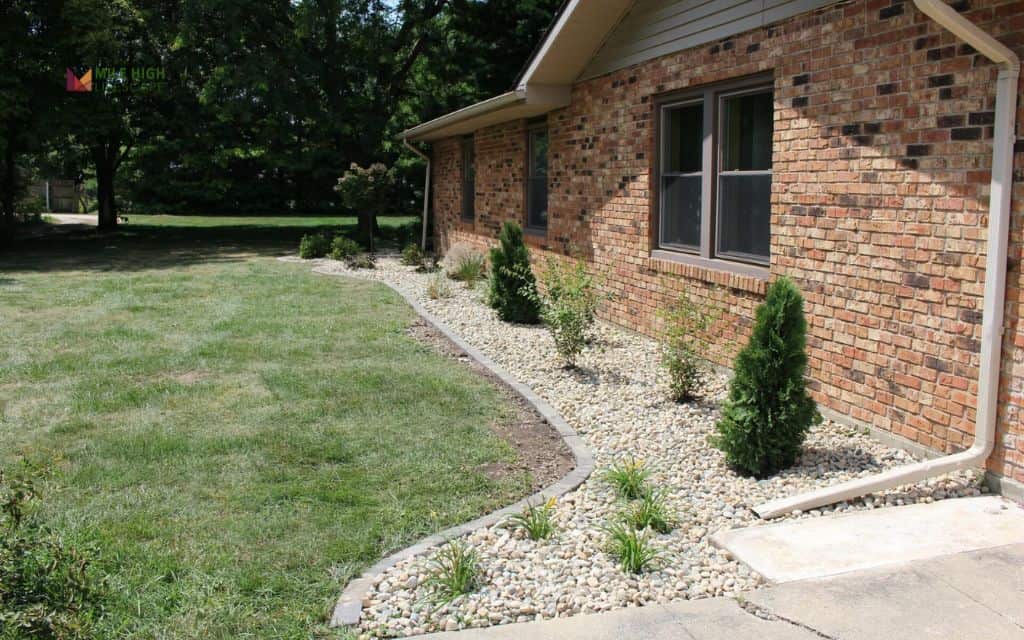
Why surround a foundation with stones and rocks? 6 big benefits
Better drainage and moisture control
Water is the primary threat to any foundation. Rocks and gravel create a permeable zone that moves water away from your walls instead of letting it pool. The stones act as a drainage layer, allowing moisture to filter down and away from the foundation rather than sitting against it.
A rock border works alongside gutters, downspouts, and proper grading to protect basements and crawlspaces from moisture intrusion.
The system prevents hydrostatic pressure that builds when water saturates soil next to foundation walls. That pressure can force water through concrete pores and cracks, leading to basement dampness or worse.
Rock borders reduce this risk by giving water a path away from the structure.
Reduced soil erosion and foundation movement
Stones hold soil in place and diffuse the impact of rainfall, especially where roof runoff hits the ground near your foundation. Without protection, water streaming from roof edges carves channels in soil, washing it away from the foundation and creating low spots where water collects.
A rock border stabilizes the top few feet of soil around your foundation. The stones absorb water impact and prevent erosion on sloped lots. While rocks won’t solve major foundation problems, they reduce stress from surface water and soil movement.
Cleaner, low-maintenance weed & mud control
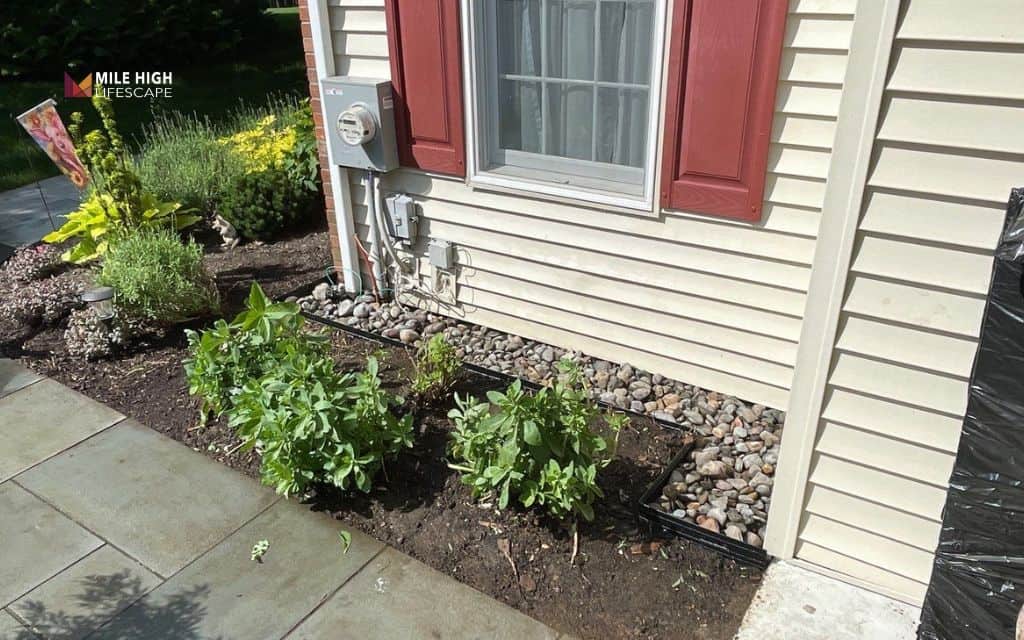
Rock borders create a barrier that makes it harder for weeds and turf to creep directly against your foundation walls. When you install landscape fabric beneath the rocks, weed pressure drops dramatically. The weeds that do appear pull out easily from the loose stone surface.
The mud factor matters in Denver. Our spring storms create splash zones along foundation walls where turf meets the house. Rainwater hits hard surfaces, bounces back, and carries mud and organic debris onto siding. Over time, this constant splashing stains lower siding sections and creates conditions for mildew growth.
Pest deterrence (with important caveats)
A stone strip makes your foundation less inviting to insects and rodents compared to dense mulch beds or thick plantings right against the house. The rocks provide less habitat and fewer hiding spots than organic materials.
Understanding what rocks can and cannot do matters here.
Stones don’t magically repel termites or other wood-destroying insects. Colorado has subterranean termites, though they’re less common than in humid climates. The benefit of rocks is that they don’t provide the cellulose food source that wood mulch offers.
Termites still may travel through or under rocks to reach wood in your home, but they won’t feed and nest in the rock border itself.
The open nature of a rock bed also makes visual inspection easier. You can spot termite tubes, ant trails, or rodent activity more readily on bare stones than in dense mulch or vegetation. This visibility helps with early detection.
The caveat applies to installation quality. If you pile rocks directly against wood siding or create spaces where debris collects, you can create pest habitats rather than deter them. The rock border needs to allow air circulation and inspection access around the foundation perimeter.
Protection for siding, stucco, and paint
Lower siding sections take a beating from soil, mud, and organic matter splashing up during rain. This constant contact with wet debris accelerates deterioration. Wood siding develops rot. Painted surfaces stain and peel. Stucco absorbs moisture and stains.
Rocks reduce this contact by creating a clean zone between the ground and your siding. The stone surface doesn’t hold moisture against the wall the way soil and mulch do. Water drains down through the gaps instead of sitting in organic material next to the foundation.
This protection extends the life of lower siding sections. You repaint less frequently. Wood trim near grade lasts longer. Stucco maintains its appearance without heavy staining from soil splash. The cost savings from reduced siding repair and repainting can offset the rock installation expense within a few years.
Curb appeal + water-wise, fire-wise landscaping
A rock border creates a visual frame around your home. The clean line where stones meet lawn or planting beds defines the structure and adds intentional design to your landscape.
When you match rock color and texture to other hardscape elements like walkways or retaining walls, the overall look becomes cohesive.
Rock borders fit perfectly into xeriscape designs. The stones don’t need irrigation. They don’t require the water that lawn or traditional plantings demand. When you combine foundation rocks with drought-tolerant plants, gravel pathways, and efficient irrigation, you create a landscape that thrives in our climate while using minimal water.
Fire safety adds another consideration in Colorado. Fire-wise landscaping principles recommend creating a defensible space around homes using less flammable materials near the structure.
Rock borders are more fire-resistant than deep organic mulch beds right against your foundation. They don’t provide fuel for embers or ground fires.
Best rocks to use around your foundation
Recommended rock types
Not all rocks work equally well around foundations. Here are your best options for Denver homes:
- ¾” – 1½” crushed rock or crushed gravel: The angular edges lock together for stability, and the size range provides excellent drainage while staying put in wind and rain. Common options include crushed granite, crushed limestone, or river rock crush.
- 1 – 2″ river rock: The rounded edges give a finished look that many homeowners prefer for visible foundation borders along front yards and walkways. River rock does tend to shift a bit more than crushed stone, but in a 2 – 4 inch depth it stays reasonably stable.
- Crushed stone blends with fines: These blends compact somewhat, which can be useful along frequently traveled areas but may slightly reduce percolation compared to pure crushed rock. Use these where you want stability more than maximum drainage.
Rock size, depth, and width
Getting the dimensions right makes all the difference:
- Depth: Install 2 – 4 inches of rock. 2 inches is the minimum for decent weed suppression and drainage; 3 – 4 inches provides better coverage and lasts longer between refresh additions. Deeper than 4 inches usually isn’t necessary and just adds weight and cost.
- Width: Plan for 18 – 36 inches measured from the foundation wall outward. 18 inches is the practical minimum for providing drainage benefits; 24 inches is more typical and gives you room to walk along the house for maintenance. On sides with drainage challenges, extend to 36 inches or more.
- Rock size matters: Avoid rocks smaller than ½ inch like pea gravel as your sole foundation rock. While pea gravel looks nice, it’s lightweight enough to blow around in our Denver winds, wash away during heavy runoff, and migrate into planting beds. If you love the pea gravel look, use it in less critical areas away from the foundation.
Materials to be cautious with
A couple of materials can cause problems if used incorrectly:
- Large decorative boulders placed tight against foundation walls look impressive but can hide inspection areas and trap moisture if the grading underneath isn’t perfect. If you want larger accent stones, place them a foot or more away from the wall with proper drainage behind them.
- Non-permeable plastic sheeting under rock is a common mistake. Solid plastic tarps or vapor barriers trap water instead of letting it drain down into the soil. This defeats the entire purpose of the rock border. Always use permeable landscape fabric instead.
Rocks vs mulch around foundations – Which is better?
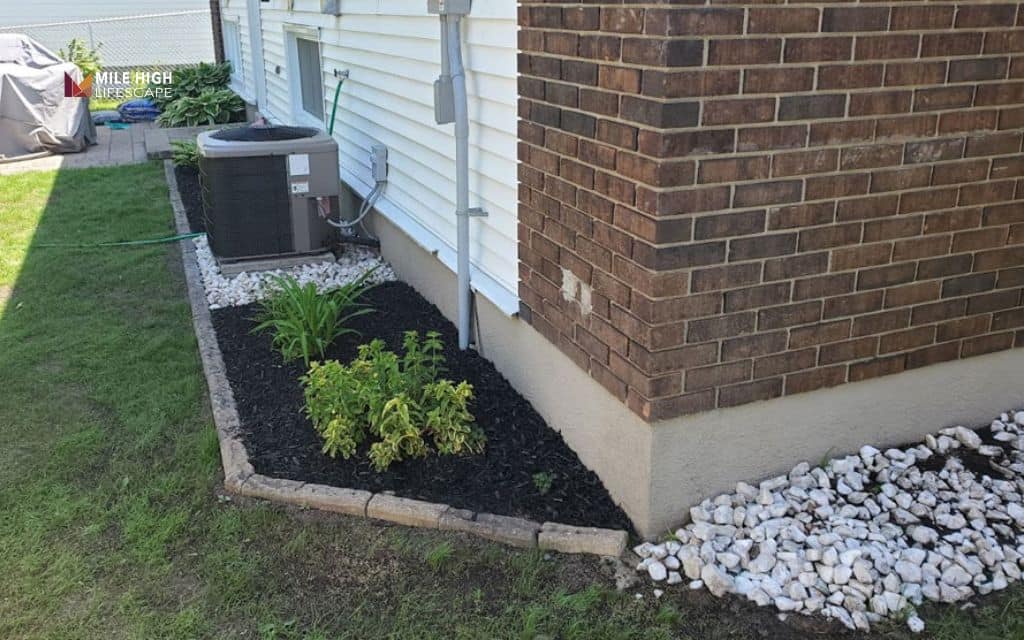
You don’t have to choose between rocks and mulch for your entire yard – you can use both strategically. Here’s how to think about it:
Pros of rocks around the foundation
Rocks are long-lasting and don’t decompose, so you’re not replacing them every 2-3 years like organic mulch. They actively support drainage rather than absorbing water. They don’t provide food for termites or create the moist, dark habitat that attracts other pests.
And once installed, they’re essentially maintenance-free except for occasional raking to redistribute them and remove debris.
Pros of mulch around the foundation
Organic mulch (wood chips, shredded bark, compost) improves soil quality over time as it breaks down, which benefits shallow-rooted shrubs, perennials, and groundcovers.
It also retains moisture in the soil, which plants appreciate – though that’s exactly what you don’t want right against your foundation.
Best practice for Denver homes
The smart approach combines both: keep rock in a 18 – 24 inch band directly against your foundation walls where drainage and pest deterrence matter most, then transition to mulch further out in your planting beds where you’re growing shrubs and perennials that benefit from organic matter and moisture retention.
This gives you the functional benefits of rock at the foundation (drainage, pest control, low maintenance) while still supporting healthy plant growth in beds that are spaced 2-3 feet away from the structure.
That spacing is key – you want enough buffer that plant roots, mulch moisture, and pest habitat stay away from direct foundation contact.
___________
Landscape rock service at Mile High Lifescape has helped Denver Metro area homeowners solve foundation landscaping challenges. Our team understands local soil conditions, drainage patterns, and climate factors that affect foundation health.
Contact us at (303) 877-9091 or hello@milehighlifescape.com to discuss rock border installation that protects your home and enhances your landscape.
Conclusion
So why surround a foundation with stones and rocks? Because it’s one of the smartest, most practical improvements you can make to your Denver home’s exterior. Let’s recap those six big benefits:
- Better drainage that protects your basement and foundation from water damage
- Reduced erosion that stabilizes soil and minimizes washouts, especially important with our clay soil
- Low-maintenance weed and mud control that keeps your foundation zone clean
- Pest deterrence by removing the food and habitat that organic materials provide
- Protection for siding and paint from moisture, mud splash, and organic contact
- Enhanced curb appeal while supporting water-wise, fire-wise landscaping principles
These aren’t just cosmetic improvements – they’re functional, Denver-appropriate solutions that address real challenges Front Range homeowners face.
When installed correctly with proper grading, the right rock type, and adequate width, a foundation rock border works year-round through wet springs, hot summers, and freeze-thaw winters.
Frequently asked questions (FAQs)
Why surround a foundation with stones and rocks instead of mulch or plants?
Rocks provide superior drainage and don’t decompose, which makes them ideal for the area directly against your foundation where moisture control matters most. They don’t feed termites, require no annual replacement, and create a clean maintenance zone that protects siding from mud splash.
How wide should the rock border around my foundation be?
Plan for 18 to 36 inches of rock extending from your foundation wall. Homes with drainage challenges on certain sides need wider borders in those problem areas. The width depends on roof overhang, gutter placement, soil slope, and how much water your foundation handles during spring storms and snowmelt.
Do rocks around the foundation cause or prevent foundation problems?
Properly installed rocks prevent problems by improving drainage and reducing soil erosion that can affect foundation stability. Rocks cause problems only when installed incorrectly such as over poor grading that directs water toward the foundation, or on top of impermeable plastic that traps water against walls. The rock border itself doesn’t harm foundations; improper water management does.
What type of stone is best around a foundation in Denver?
Three-quarter inch to one-and-a-half inch crushed rock works best for most Denver homes because it drains well, stays in place during storms, and handles our clay soil conditions effectively. River rock in similar sizes offers a softer look while maintaining good drainage. Avoid materials smaller than half-inch as they migrate, blow around in wind, and wash away during heavy rain.
Can rocks around my house attract or deter termites?
Rocks don’t attract termites because they provide no food source, unlike wood mulch which termites feed on. However, rocks don’t repel termites either – subterranean termites can travel through or under rock borders to reach wood in your home. The benefit is that rock makes termite tubes and activity easier to spot during inspections, and removes one potential food source near your foundation.
Do I need landscape fabric under foundation rocks?
Yes, install permeable landscape fabric under your foundation rocks to block weeds while allowing water to drain through. Avoid impermeable plastic sheeting, which traps water against the foundation instead of letting it drain away. The fabric prevents soil from mixing up into the rocks while maintaining the drainage function that makes rock borders effective.
How often do I need to refresh or add more rock around my foundation?
Rock borders need minimal maintenance compared to mulch. Check them annually and add stones where settling or migration has created thin spots, usually after spring snowmelt or heavy storm seasons. Most installations need minor topping off every three to five years rather than complete replacement. The rocks themselves last indefinitely.