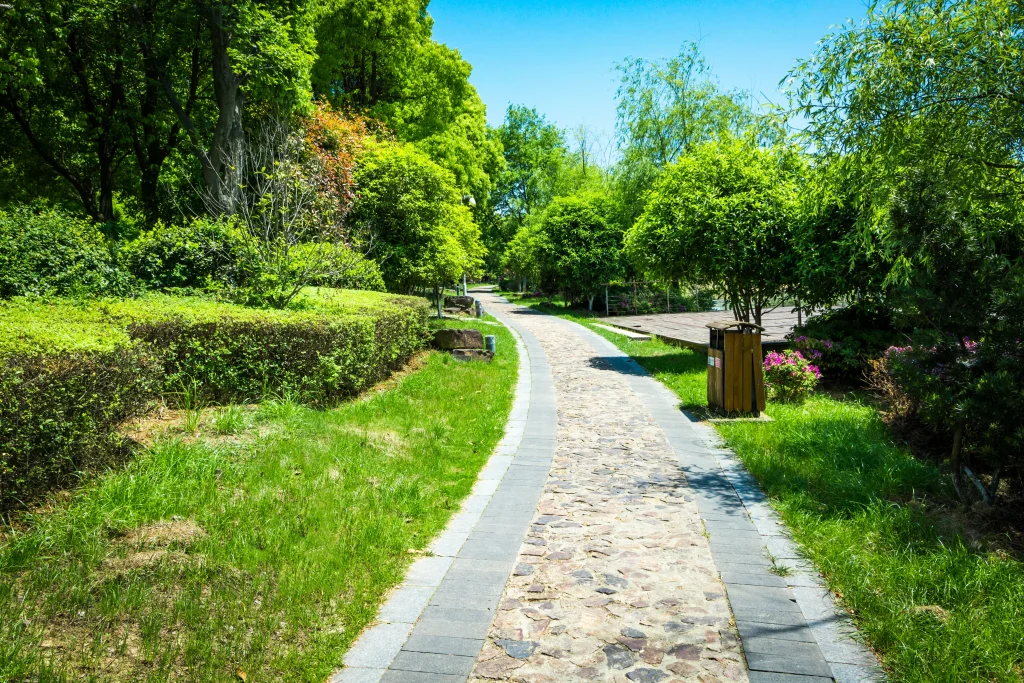
Understanding what is river rock – and how to use it correctly – is the difference between a beautiful, water-wise landscape and a hot, weedy, expensive redo.
If you’re a Denver homeowner dealing with water restrictions, skyrocketing irrigation costs, and clay soil that drains like concrete, river rock might seem like the perfect solution. And it can be, only when installed properly. But too many Front Range yards end up with rock that shifts across sidewalks, overheats plants in full sun, or sprouts weeds within a year because the installation skipped crucial steps.
This guide will walk you through exactly what river rock is, where it comes from, how to choose the right size and color for your Denver landscape, and where it works best (and where it doesn’t). Whether you’re replacing turf in your front yard, creating a dry creek bed for drainage, or designing a low-maintenance planting bed, you’ll know exactly how to use river rock the right way.
What is river rock?
What are river rocks, exactly?
River rocks are naturally rounded stones shaped by water over thousands of years. Moving water in rivers and streams tumbles the stones, smoothing sharp edges and creating rounded shapes. This process differs from crushed rock or gravel production, where machinery breaks larger stones into angular fragments.
When you’re looking at rocks in a river, you’re seeing geology in action. Moving water constantly shifts and polishes these stones, creating their characteristic smooth texture. This natural process is what distinguishes river rock from manufactured landscape materials or crushed stone products.
What does river rock look like?
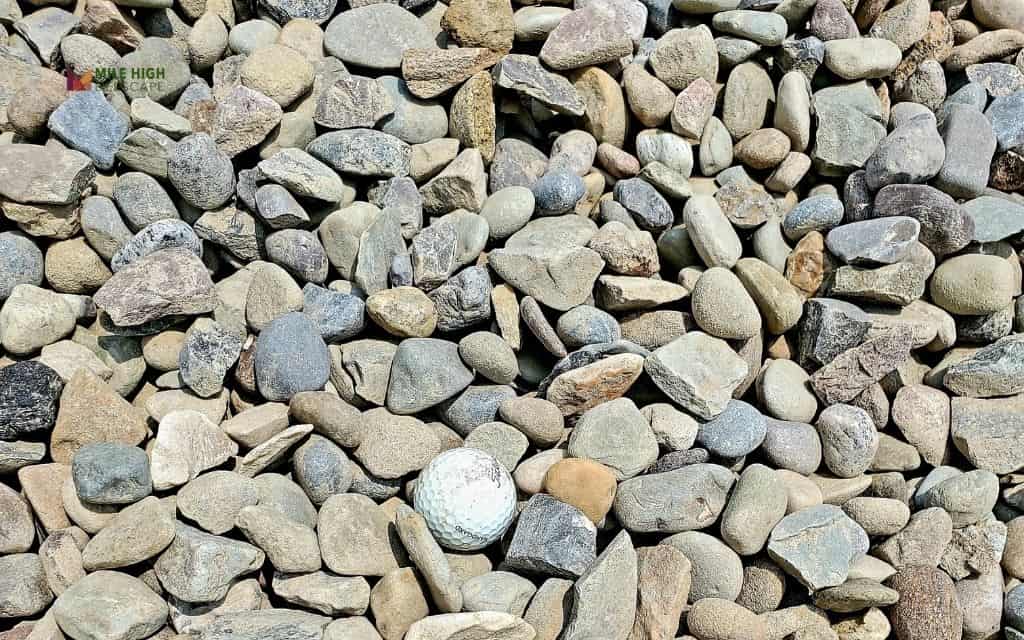
Picture smooth, oval or rounded stones with a natural polish from years of water movement. Each stone has a slightly different shape – some more oblong, others nearly spherical – but all share that distinctive water-worn smoothness.
River rock comes in mixed natural colors depending on its geological source. You’ll typically see combinations of tan, gray, brown, white, and charcoal, often with multiple colors present in a single stone. Some river rock features subtle striations or mineral patterns, while others are more uniform in color.
Where does river rock come from?
These stones form over thousands of years through constant water movement. Rivers and streams carry rocks downstream, tumbling them against each other and the riverbed. This natural abrasion gradually rounds off sharp edges and smooths surfaces, creating the characteristic river rock shape.
In Colorado and throughout the Rocky Mountain region, river rock forms in mountain streams and rivers that carry snowmelt and rainfall. The process continues year-round, though most actively during spring runoff when water volume and velocity are highest. Harder stones like granite and quartzite maintain their size longer, while softer rocks break down into smaller particles over time.
Today, river rock is collected from active riverbeds (where permitted), ancient river channels that dried up long ago, or quarries that access geological deposits of water-worn stone.
Much of the river rock used in Denver landscapes comes from Colorado sources, though some is transported from surrounding states where river deposits are more accessible.
Types of river rock
Common river rock sizes
Types of river rock are distinguished by size, and choosing the right size for your project makes the difference between a landscape that works and one that frustrates you for years.
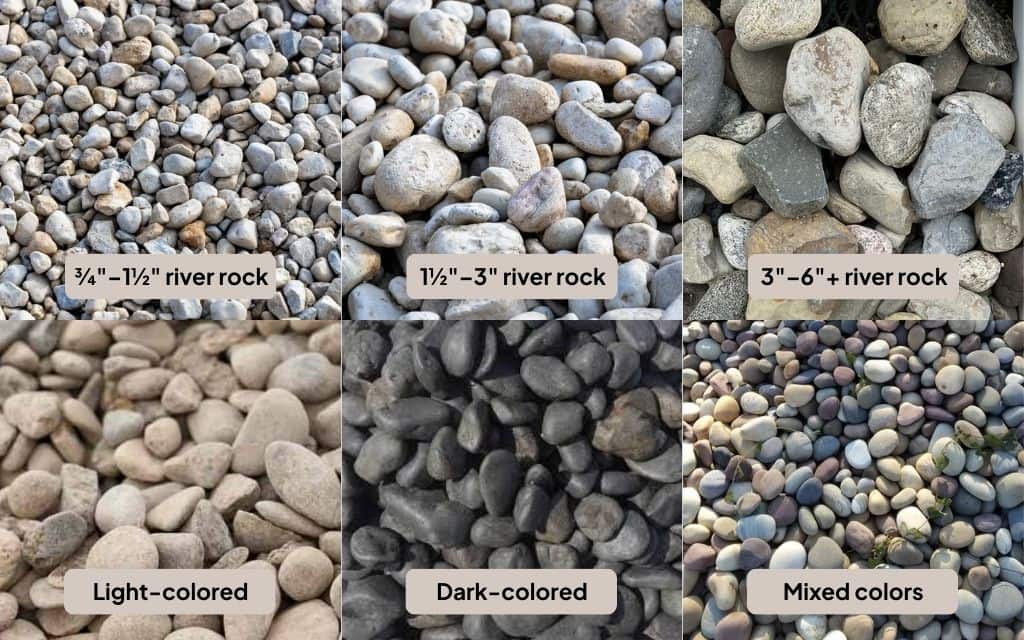
¾”–1½” river rock
¾”–1½” river rock works well for ground cover in small planting beds, around tree bases, and in areas where you want a finer texture. This size is comfortable to walk on barefoot, making it suitable for some pathway applications.
However, it’s more prone to migration – small stones scatter easily onto lawns and sidewalks, especially during Denver’s strong spring winds or when snow removal pushes it around.
1½”–3″ river rock
1½”–3″ river rock is the most popular landscape size for Denver yards.
It’s large enough to stay in place reasonably well, small enough to create even coverage without looking overwhelming, and heavy enough that it won’t blow around in the wind.
This size provides good drainage while still preventing most weed seed germination (when installed properly over landscape fabric). It works well for xeriscapes, around downspouts, and in front yard installations where you want a clean, professional appearance.
3″–6″+ river rock
3″–6″+ river rock serves as an accent material rather than primary ground cover.
Use these larger stones for dry creek beds, drainage channels, decorative focal points, and areas where you want bolder visual impact.
The larger size is excellent for areas with heavy water flow since the stones won’t wash away during runoff. They’re also useful on slopes where smaller rocks would migrate downhill.
Color choices for Denver gardens
Light-colored river rock
Light-colored river rock (tan, white, light gray) reflects more sunlight, which helps moderate temperatures around heat-sensitive plants.
However, the reflection can create glare that’s uncomfortable near windows or seating areas. Light rock also shows dirt and organic debris more readily, requiring occasional rinsing to maintain that clean appearance.
Dark-colored river rock
Dark-colored river rock (charcoal, dark brown, black) absorbs heat during the day and releases it slowly at night. This can benefit cold-sensitive plants in spring and fall but creates excessive heat stress.
Dark rock next to your foundation can increase cooling costs, and the heat radiating from dark rock in full sun can be intense enough to affect your comfort when working in the garden.
Mixed natural colors
Mixed natural colors (the most common option) provide a balanced approach. Blending tans, grays, and browns creates visual interest while avoiding the extreme heat absorption of all-dark rock or the maintenance demands of all-light rock.
How much river rock do you actually need?
Calculate your needs this way:
- Measure your area in square feet (length × width)
- Multiply by your desired depth in feet (3 inches = 0.25 feet)
- This gives you cubic feet
- Divide by 27 to convert to cubic yards (the standard purchase unit)
Example: A 200-square-foot bed at 3 inches deep needs 200 × 0.25 = 50 cubic feet, or about 1.85 cubic yards. Order 2 yards to account for settling and ensure complete coverage.
Underestimating depth leads to 3 common problems: visible landscape fabric showing through (looks unfinished), weeds emerging within weeks, and rock that migrates or settles unevenly across your bed.
It’s better to order slightly more than you think you need. You can always use extra rock around downspouts or create small decorative accents elsewhere in your yard.
Benefits and trade-offs of river rock in Denver landscapes
Benefits of using river rock
- River rock excels in Denver’s semi-arid climate for several practical reasons. Once installed, it requires virtually no water beyond occasional rinsing to remove dust.
- The material has an exceptional lifespan. Unlike organic mulches that decompose and need annual replacement, natural river rock maintains its appearance for decades.
- River rock provides excellent drainage. Water flows freely through the gaps between stones rather than pooling on the surface or creating muddy areas.
- The clean, natural appearance complements xeriscaping principles. River rock provides visual interest without competing against plants. The neutral palette works with traditional and modern landscape designs. Unlike artificial materials, natural stone ages gracefully.
Trade-offs you should know about
- Heat retention in full sun is river rock’s biggest limitation in Denver landscapes. Dark stones can become hot enough to cause discomfort when touched during summer afternoons, and the radiant heat affects nearby plants.
- Weed issues arise when installation cuts corners. River rock alone doesn’t prevent weeds, you need proper soil preparation, quality landscape fabric, and adequate depth. Even then, wind-blown seeds can germinate in the small amount of organic debris that accumulates between stones over time.
- River rock isn’t ideal for every area of your yard. It shifts underfoot on pathways, making it uncomfortable and potentially unsafe for high-traffic areas. On slopes, rock can migrate downhill over time unless you install proper edging and stabilization.
- The initial cost is higher than many alternatives. While river rock pays for itself over time through reduced maintenance and no replacement needs, the upfront investment (including delivery, fabric, edging, and installation labor) can be significant for larger areas.
Best uses for river rock in Denver gardens
River rock as ground cover in xeriscapes
River rock shines as ground cover in water-wise landscapes, particularly around native and drought-tolerant plants.
The smooth stones also prevent splash-back when you do water, keeping mud off plant foliage and reducing fungal disease risk. This matters for low-growing plants like penstemon, ice plant, or sedum that sit close to ground level.
In xeriscape beds, use 1½”–3″ river rock around established plants, keeping a small mulch ring (wood chips or shredded bark) immediately around each plant’s base. This gives you the low-maintenance benefits of rock while providing the soil conditioning benefits of organic mulch where it matters most – at the root zone.
Spacing is important: give plants room to grow before installing rock. If you crowd rock too close to small transplants, you’ll need to move it as plants mature, which is tedious work. Plan for mature plant size and leave appropriate space from the beginning.
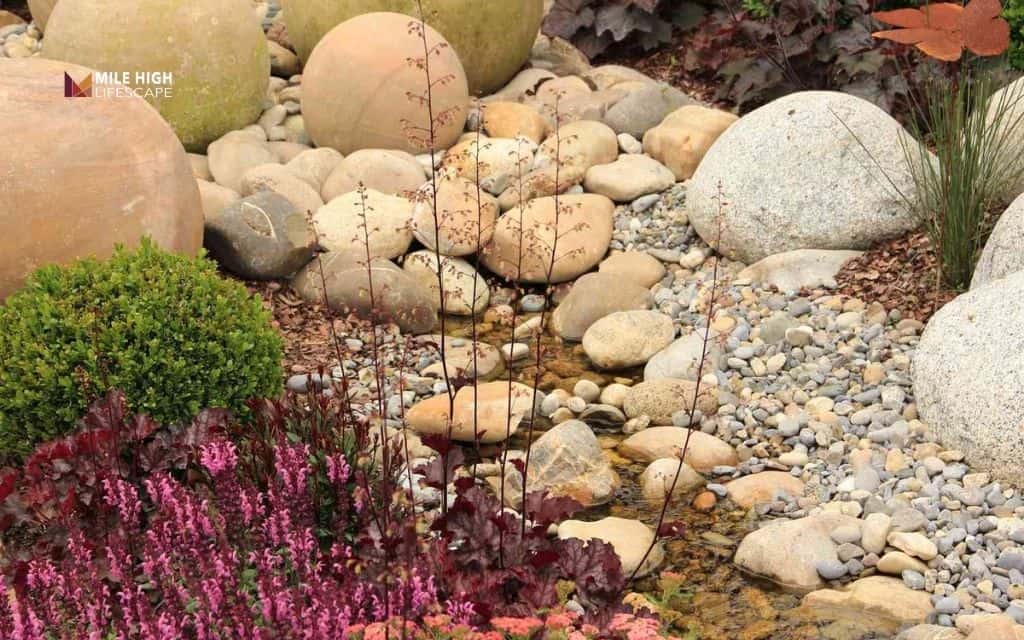
Front yard river rock landscaping
Successful front yard river rock installations combine rock ground cover with strategic plant placement and defined edges.
Create planting beds with sweeping curves rather than straight lines – this looks more natural and allows better traffic flow. Install metal or poly edging to prevent rock from migrating onto sidewalks and driveways, which is both unsightly and a maintenance hassle.
Most attractive front yard designs use river rock as the background element, not the main feature. Let plants provide color, texture, and seasonal interest, while rock serves as the clean, neutral canvas that ties everything together. This approach satisfies HOA aesthetic requirements while keeping maintenance low.
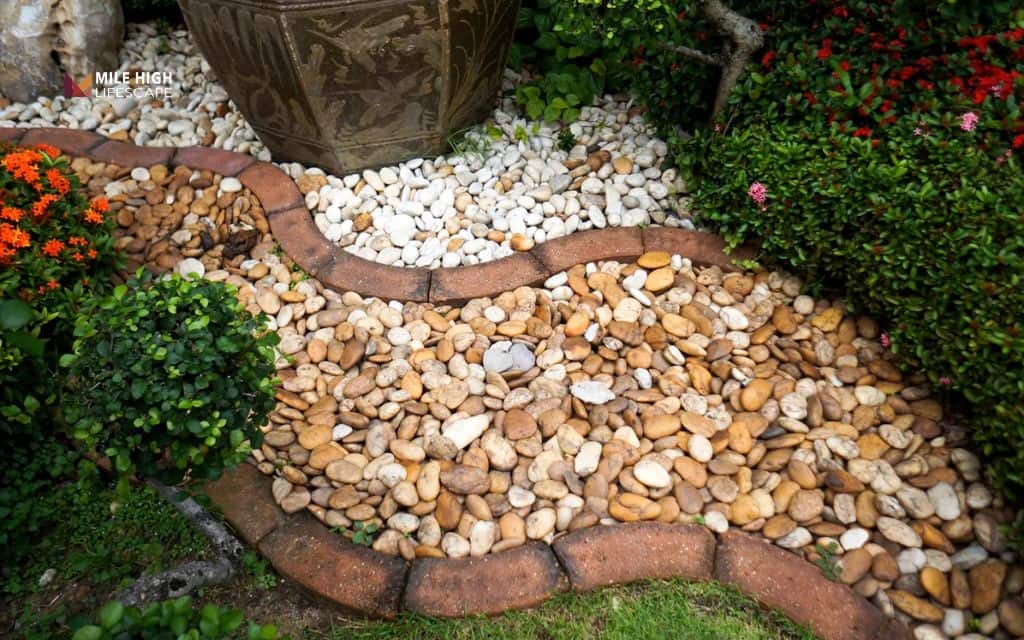
River rock for drainage and erosion control
Around downspouts, create a “splash pad” of 3″–6″ river rock extending 2–3 feet from the outlet. This dissipates water energy from roof runoff, preventing erosion and mud splashing during storms. The larger rock size stays in place despite high water flow.
Dry creek beds serve dual purposes in Denver landscapes: they handle occasional water flow during heavy rain or snowmelt, and they create attractive focal points year-round. Use larger river rock (3″–6″+) for the creek bed itself, with smaller rock (1½”–3″) transitioning to the banks.
Swales and low spots benefit from river rock if you don’t want standing water or muddy areas. Install drainage rock first, then top with river rock for appearance. This two-layer approach ensures both functionality and aesthetics.
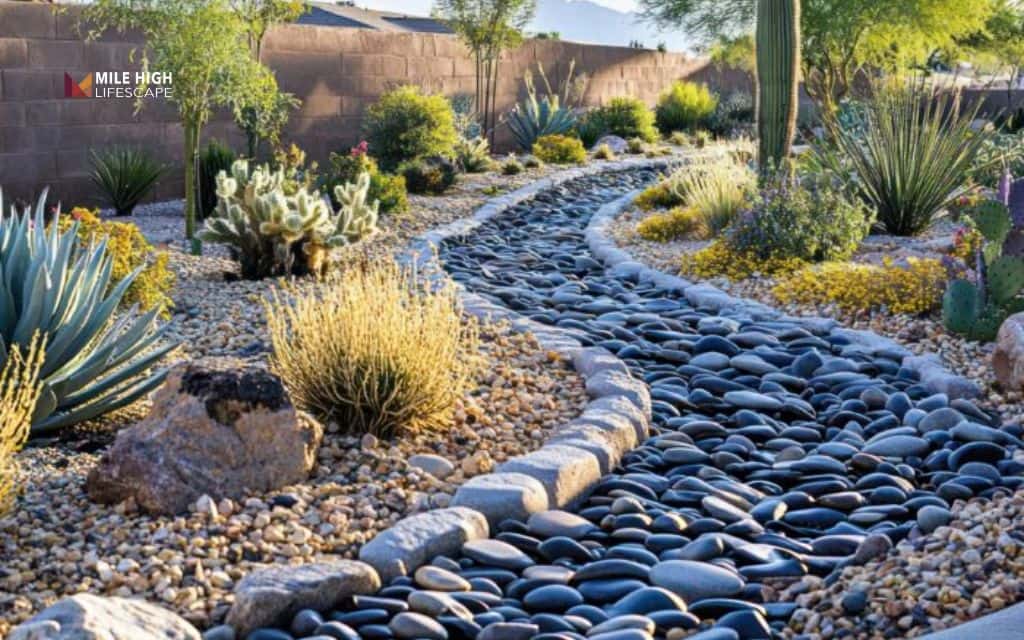
Decorative accents and path edges
River rock creates visual contrast that makes plants and hardscape elements stand out. Use it along the edges of flagstone paths or around stepping stones to soften the transition between hard surfaces and planting beds.
A border of larger river rock can define the edge of a mulched planting bed, providing visual separation and a maintenance edge that prevents mulch from migrating onto lawn or hardscape. This works well in Denver landscapes where you’re combining rock and organic materials – the river rock border creates a clean transition between the two.
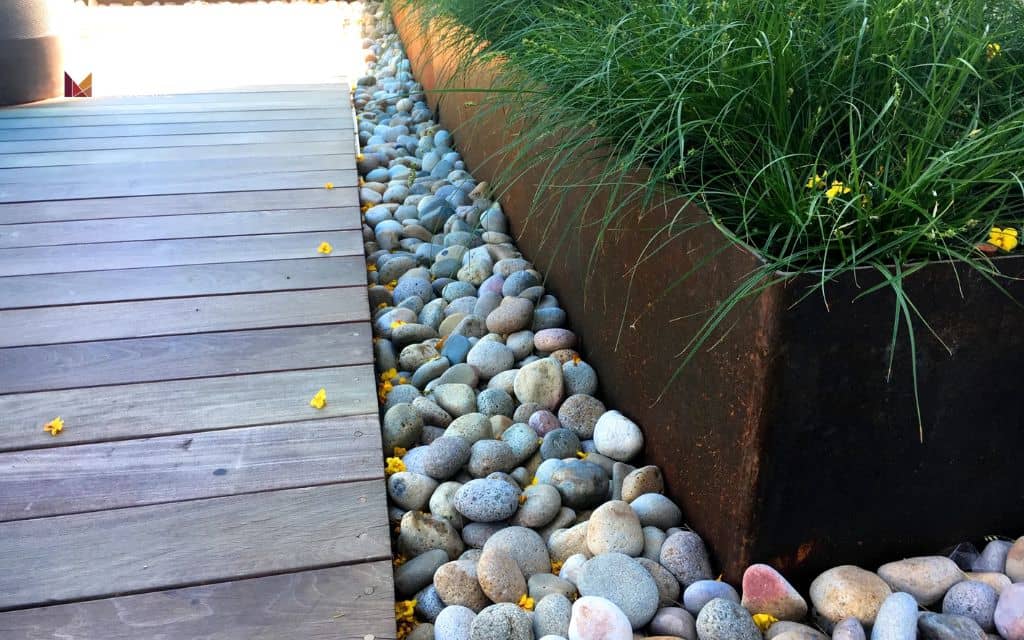
Where river rock does not work well
High-traffic walkways
Rounded river rock shifts underfoot, creating an unstable and uncomfortable walking surface. While pea gravel can work for occasional-use garden paths, larger river rock is unsuitable for any pathway you’ll use regularly.
For walkways, use flagstone, pavers, decomposed granite, or crushed angular gravel instead. These materials compact and stabilize in ways that rounded river rock cannot.
Steep slopes without stabilization
On slopes steeper than about 3:1 (3 feet horizontal for every 1 foot vertical), river rock will migrate downhill over time.
If you want river rock on a slope, install sturdy edging or terracing to create level zones that hold rock in place. Alternatively, use larger rock (3″+) which resists movement better than smaller sizes, though even large rock will eventually shift on steep grades.
For erosion control on steep slopes, consider alternatives like erosion control fabric with plant establishment, terracing with retaining walls, or groundcover plants suited to Denver’s climate (like creeping phlox or kinnikinnick).
Areas with no shade or plant cover
River rock in full sun with no plant canopy overhead creates a heat island that’s uncomfortable for people and stressful for nearby plants. During Denver’s summer, exposed rock beds can radiate enough heat to damage plant tissue, increase water stress, and make outdoor living spaces unpleasant.
If you must use river rock in full sun, choose lighter colors to reduce heat absorption, ensure adequate spacing between rock and plant crowns (at least 6 inches), and increase irrigation frequency for plants adjacent to rock.
Conclusion
When you understand what river rock is and how to use it properly, it can transform your Denver landscape into a water-wise, low-maintenance space that looks polished year-round.
River rock reduces water use by minimizing evaporation and eliminating the need for lawn irrigation. It improves drainage in our challenging clay soil. And it creates that clean, naturalistic xeriscape look that works with Colorado’s climate and aesthetic.
__________
For nearly two decades, Mile High Lifescape has been proudly serving the Denver Metro area as the go-to landscape company, especially landscape rock service. If you want a river rock landscape that looks polished, drains properly, and lasts through Denver winters, professional planning can help you avoid costly mistakes. Count on us to transform your outdoor space into a beautiful oasis that exceeds your expectations.
Contact us at (303) 877-9091 or hello@milehighlifescape.com for expert guidance on your river rock project.
Frequently asked questions (FAQs)
What is river rock used for in landscaping?
River rock is used as ground cover in xeriscapes, drainage material around downspouts and in dry creek beds, and decorative accents along pathways. In Denver, it’s popular for reducing water use and creating low-maintenance landscapes that handle our clay soil and freeze-thaw cycles.
What size river rock is best for front yards?
For most Denver front yards, 1½”–3″ river rock works best. This size stays in place well, provides good coverage, and looks professional without overwhelming the space.
Does river rock stop weeds?
River rock reduces weeds significantly when installed properly over landscape fabric at 3–4 inches depth, but it doesn’t eliminate them completely. You’ll still need occasional maintenance as wind-blown seeds can germinate in debris that accumulates between stones over time.
Does river rock get too hot in summer?
Yes, river rock absorbs heat and can become very hot in Denver’s summer sun, especially darker colors. This radiant heat can stress nearby plants and make the area uncomfortable for people and pets during hot afternoons.
How long does river rock last?
River rock lasts 20+ years with minimal maintenance. Unlike organic mulch, it doesn’t decompose or fade, though you may want to rinse it occasionally to remove dust and debris.