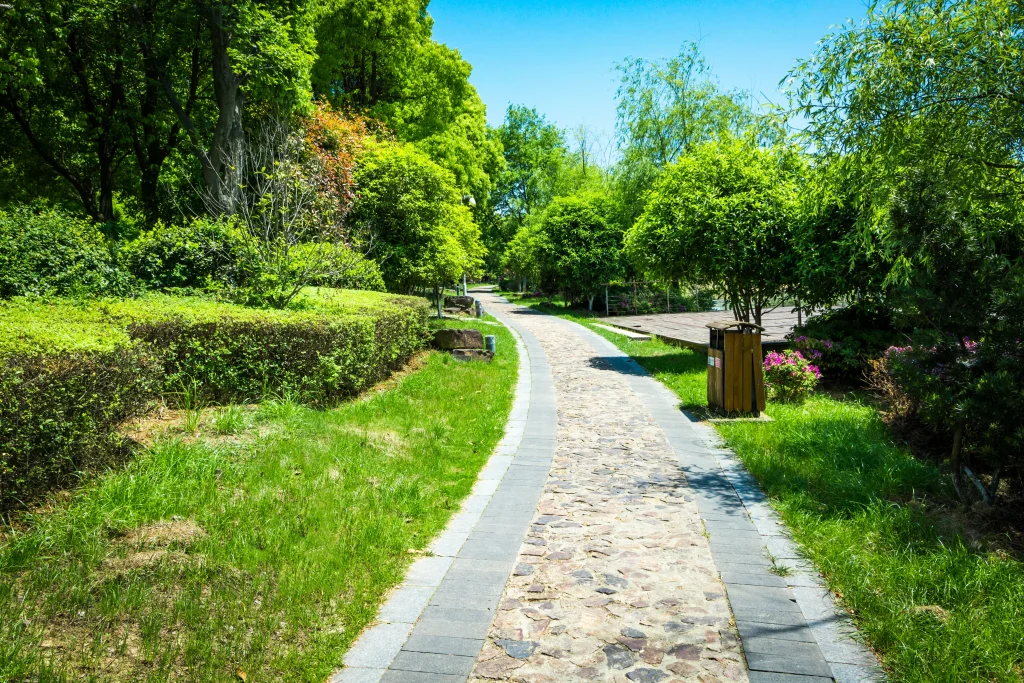
Pea gravel landscaping has become one of the most requested features in Denver yards. These small, smooth stones create beautiful pathways, patios, and xeriscape beds that fit perfectly with Colorado’s water-wise landscaping goals.
But here’s the reality: pea gravel landscaping works beautifully in Denver when it’s used in the right places and installed correctly, but it’s not a universal solution. Too often, homeowners spread a thin layer over bare dirt, skip the edging, and wonder why they’re battling weeds, migration, and muddy messes after the first thunderstorm.
This guide cuts through the confusion and gives you exactly what you need to succeed with pea gravel in Denver’s challenging climate. You’ll learn:
- What pea gravel is and what it’s genuinely best used for
- Where pea gravel works well in Denver landscapes
- Step-by-step installation guidance designed specifically for Front Range conditions
- Real local cost ranges and sourcing tips for the Denver metro area
Whether you’re converting lawn to low-water landscaping or adding walkable hardscape surfaces, this article will help you make confident decisions about pea gravel landscaping that actually lasts in Colorado.
What is pea gravel?
What does pea gravel look like?
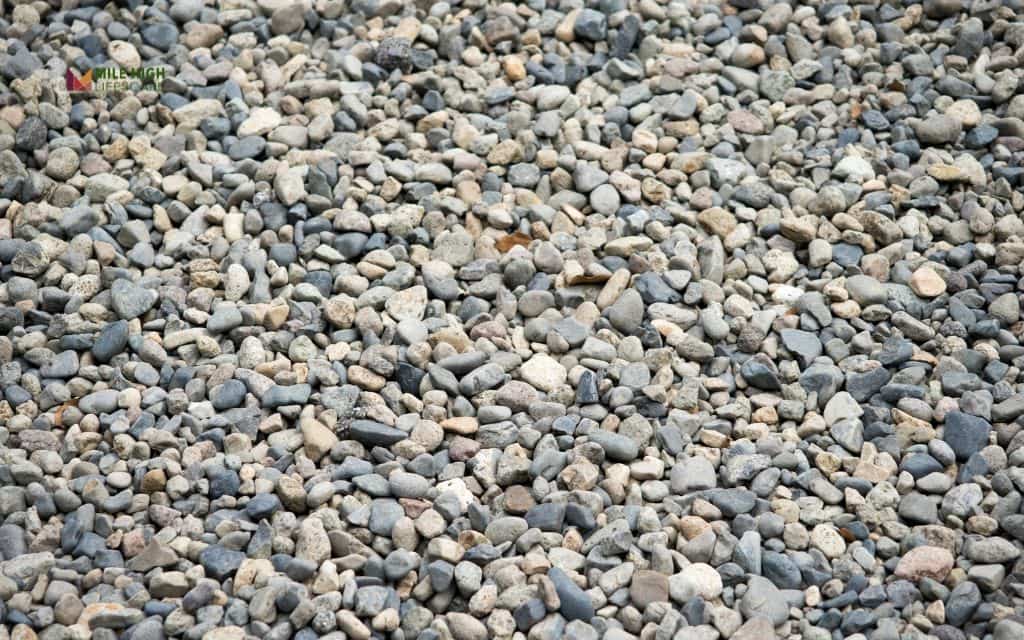
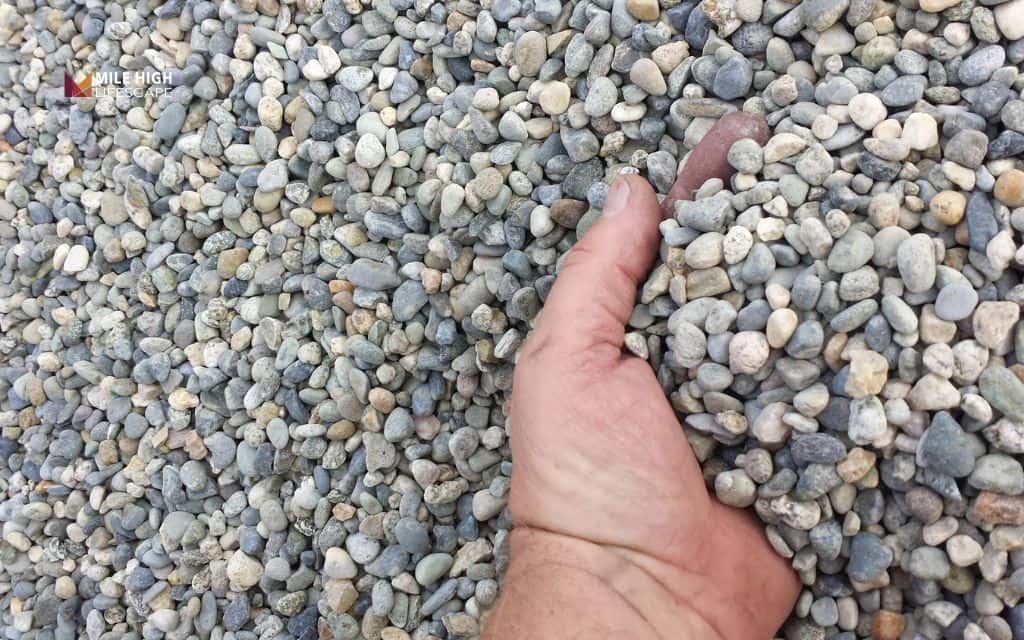
Pea gravel consists of small, naturally rounded stones that measure between ⅜ inch and ½ inch in diameter, roughly the size of a garden pea, which explains the name.
Unlike crushed angular rock, pea gravel features smooth, water-worn edges that create a soft, comfortable texture underfoot.
The stones display natural earth tones ranging from warm tans and beiges to soft grays, subtle browns, and occasional hints of pink or white depending on the source quarry. This natural color variation gives pea gravel a more organic, softer appearance compared to the uniform look of manufactured materials.
Pea gravel vs pea pebbles vs pea stone
You’ll often hear these 3 terms used interchangeably at Denver landscape suppliers, and for most practical purposes, they describe the same material. Pea gravel, pea pebbles, and pea stone all refer to small, rounded stones in that ⅜”–½” size range.
The subtle differences come down to regional terminology and minor sizing variations.
“Pea pebbles” sometimes refers to stones on the smaller end of the spectrum (closer to ⅜”), while “pea stone” might indicate slightly larger pieces approaching ½ inch. Some suppliers use “pea pebbles” to describe material that’s been more extensively tumbled for extra smoothness.
When ordering, focus on confirming the actual size range and color options rather than getting caught up in terminology differences. The important distinction is ensuring you’re getting rounded gravel in that pea-sized range, not crushed rock or larger river rock.
What is pea gravel used for?
Pea gravel for walkways and paths
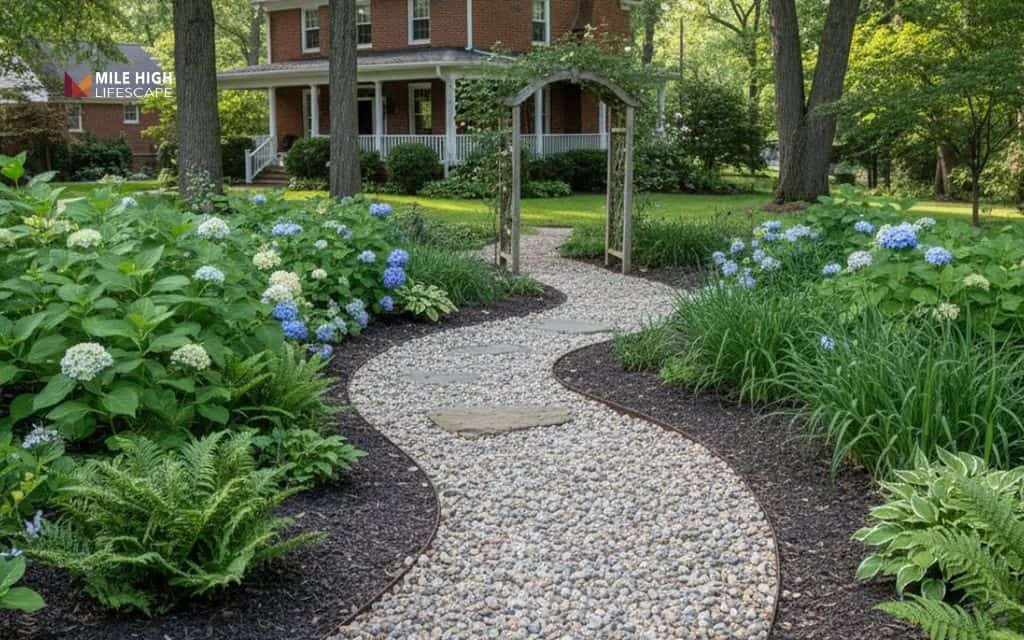
Pea gravel creates comfortable, informal paths that work beautifully in Denver gardens and side yards. The smooth, rounded stones feel pleasant underfoot and create a soft crunching sound that many homeowners love.
Unlike rigid pavers or concrete, pea gravel paths offer visual warmth and flexibility in design. You can create gentle curves and natural-looking routes through your landscape.
Pea gravel works best for secondary paths (routes to the garden shed, through flower beds, or around the side yard) rather than primary walkways that see constant heavy traffic.
For high-traffic areas like the main path to your front door, consider pavers or flagstone for better stability and a more finished appearance.
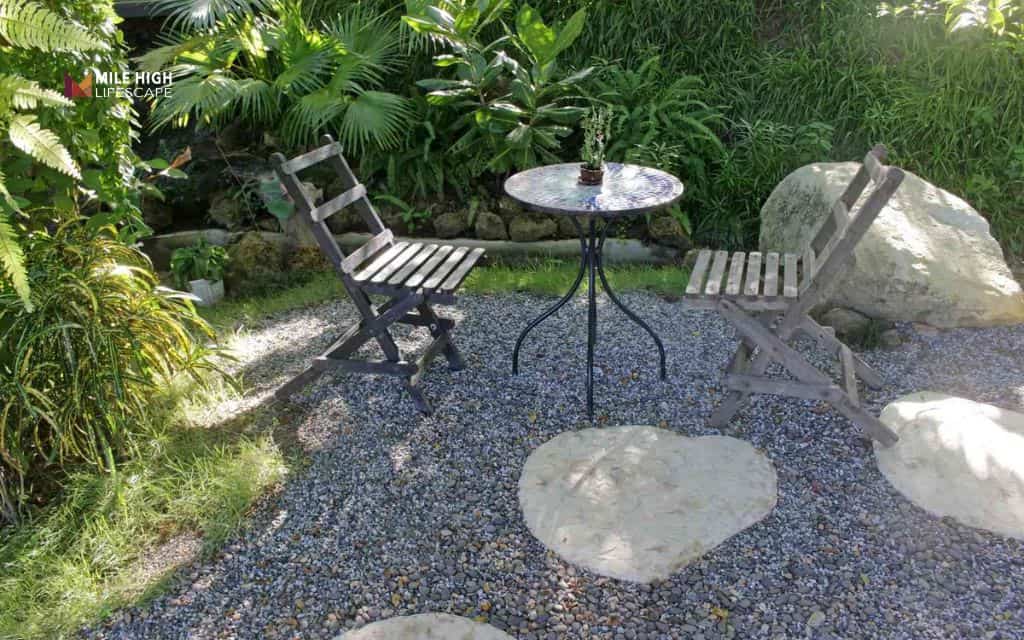
Pea gravel patios and seating areas
Pea gravel offers a budget-friendly patio alternative that delivers excellent drainage during Colorado’s dramatic summer storms. You can create an attractive outdoor seating area for a fraction of the cost of pavers or stamped concrete, and the installation typically takes just a weekend if you’ve got the base preparation right.
Pea gravel patios work best for casual seating areas rather than formal entertaining spaces. Furniture legs can sink into the gravel, creating wobble issues with lightweight chairs and tables.
Consider using paver or flagstone pads under furniture legs, or choose pea gravel for fire pit areas, meditation spaces, or casual garden seating where stability matters less.
Pea gravel in garden beds and flower beds
Pea gravel works beautifully as decorative mulch in Denver flower beds and garden spaces.
The stones create a clean, modern look while serving practical functions that traditional wood mulch can’t match. Unlike organic mulches that decompose and need annual replacement, pea gravel lasts indefinitely with minimal maintenance.
The stone mulch reduces soil splashback during thunderstorms, keeping your plant foliage cleaner and reducing fungal disease pressure. In Denver’s dry climate, pea gravel also slows evaporation from the soil surface, helping retain precious moisture around plant roots—though not as effectively as organic mulch, which provides better insulation.
Pea gravel for xeriscape and front yards
Pea gravel has become a go-to material for Denver xeriscape designs and water-wise front yard landscaping. The natural stone look satisfies most HOA requirements while reducing water consumption compared to traditional lawns. Pea gravel front yards offer a clean, contemporary appearance that requires virtually zero irrigation once established plants are mature.
The smooth, rounded texture creates visual softness that balances the sometimes harsh appearance of larger landscape rocks. Many Denver homeowners use pea gravel to create flowing, organic patterns between drought-tolerant plant groupings, defining distinct planting zones while maintaining cohesive design flow.
Is pea gravel good for drainage?
How pea gravel handles water
Yes, pea gravel provides excellent surface drainage when properly installed. Water passes through the spaces between individual stones almost instantly, making pea gravel one of the best choices for areas where standing water is a concern.
The rounded shape and relatively uniform size of pea gravel creates consistent void spaces throughout the material, allowing water to flow freely. This means rain and irrigation water move through the gravel layer to the soil below rather than running off or pooling on the surface.
This drainage characteristic makes pea gravel particularly valuable in Denver landscapes where clay soil tends to shed water rather than absorb it.
Where drainage problems happen
Here’s the truth about pea gravel and drainage: pea gravel drains well only if the base drains well. Many Denver homeowners spread pea gravel directly over clay soil and wonder why they end up with muddy, swampy areas after rainstorms.
The gravel itself drains beautifully, but when water reaches the impermeable clay layer underneath, it has nowhere to go. Instead of draining away, water saturates the base layer, turns the soil muddy, and creates a soupy mess that allows gravel to migrate and sink unevenly.
Drainage problems consistently occur in these scenarios:
- Clay soil underneath without base prep: Without a properly prepared crushed stone base layer, water accumulates at the soil-gravel interface, creating persistent mud and undermining the stability of your pea gravel surface.
- Flat areas with no slope: Pea gravel needs at least 1–2% slope to encourage water to move laterally toward drainage points. Flat installations allow water to pool beneath the gravel layer, especially in low spots that naturally accumulate runoff.
- Heavy runoff zones: Areas below downspouts, at the bottom of slopes, or where roof water concentrates deliver too much water too quickly for even well-prepared bases to handle. These locations need more robust drainage solutions like French drains or channel drains. Pea gravel alone won’t solve concentrated water flow problems.
The fix? Always install a 3 – 4 inch compacted base layer of crushed stone beneath pea gravel in areas with clay soil or drainage concerns. This base layer provides the actual drainage capacity, while the pea gravel serves as the attractive, functional top layer.
How to install pea gravel landscaping correctly
Step 1: Decide the right location
Before you order a single yard of pea gravel, carefully evaluate where you’re installing it. Not all locations work equally well for pea gravel landscaping, and choosing the wrong spot sets you up for frustration and failure.
Consider whether the area will be walkable or decorative:
- High-traffic zones where people walk daily need stable surfaces with excellent edging and compacted bases.
- Decorative zones can get by with simpler installation.
- Areas where kids play or guests frequently walk are usually better suited to pavers or flagstone. Pea gravel’s loose surface can feel unstable underfoot and doesn’t provide firm footing for active use.
Wind exposure matters more than most Denver homeowners realize. Our winds can scatter lightweight pea gravel, especially in exposed areas without windbreaks.
Evaluate drainage paths carefully. Where does water naturally flow during storms? Pea gravel works beautifully in areas with gentle slopes and good natural drainage but struggles in low spots that collect water or flat zones with no grade.
Identify downspout locations, natural swales, and areas where water pools after rain. These may need drainage solutions beyond pea gravel alone.
Smart location choices prevent 90% of pea gravel problems before you ever start digging.
Step 2: Remove turf and prep the base
Proper base preparation separates successful pea gravel installations from failures that need complete redos within a year:
- Sod removal: Strip all existing turf, weeds, and organic material down to bare soil. Use a flat shovel to cut sod into manageable strips, removing roots and organic matter completely.
- Grading for drainage: Use a garden rake and level to create gentle slopes (minimum 1–2% grade) that direct water away from structures and toward appropriate drainage points. In Denver’s clay soil, even small improvements in slope make dramatic differences in how well water moves through your landscape.
- Compaction is critical for Denver clay: Our clay soil expands when wet and contracts when dry, creating heaving and settling that destroys poorly prepared bases. After excavating to proper depth (typically 5–6 inches total to accommodate base and gravel), compact the soil thoroughly using a hand tamper for small areas or rent a plate compactor for larger installations.
Step 3: Base layers that prevent mud
Install a 3 – 4 inch layer of crushed stone or road base before adding pea gravel.
The angular, crushed material (typically ¾-inch minus or Class 5 road base) compacts into a stable, semi-permeable layer that prevents gravel from sinking into mud while allowing water to percolate through. This base layer serves as the actual structural foundation. Pea gravel is just the attractive top layer.
The crushed stone creates what landscapers call a “drainage plane” that allows water to move laterally toward drainage points instead of pooling at the clay interface.
During Denver’s heavy thunderstorms, this base absorbs the initial water surge and releases it gradually, preventing the mud formation that comes when water hits impermeable clay directly beneath gravel.
For pathways and patios, compact the base layer thoroughly with multiple passes of a plate compactor. The base should feel rock-solid before you add landscape fabric and pea gravel – if you can push your finger into it easily, it needs more compacting.
Step 4: Landscape fabric: Use it right
Landscape fabric serves 1 purpose in pea gravel installations: Preventing weeds from growing up through the gravel from the soil below. But only if you choose the right product and install it correctly.
Use heavy-duty woven landscape fabric only – the kind that feels like sturdy fabric, not plastic sheeting. Commercial-grade woven polypropylene fabric allows water and air to pass through while blocking weed growth. This material lasts 10–20 years when properly covered with rock.
And those cheap thin black plastic sheets sold at big-box stores deteriorate rapidly under Denver’s intense UV exposure, even when covered with gravel. Within 1–2 years, cheap plastic fabric disintegrates into fragments that mix with your gravel and become nearly impossible to remove.
Step 5: Install pea gravel at the right depth
The most common question about pea gravel landscaping is “how deep should it be?” The answer for Denver conditions is 2–3 inches finished depth, measured after the gravel has settled.
This depth provides enough coverage to look attractive, feel comfortable underfoot, and stay functional during wind and rain events.
Less than 2 inches looks sparse, exposes the landscape fabric underneath, and allows weeds to establish more easily. More than 3 inches creates a surface that’s difficult to walk on, wastes money on unnecessary material, and increases migration problems because the deeper loose layer has less stability.
Order 10–15% extra to account for settling, future top-dressing, and the inevitable spots where depth measures slightly thin.
Step 6: Edging to stop migration
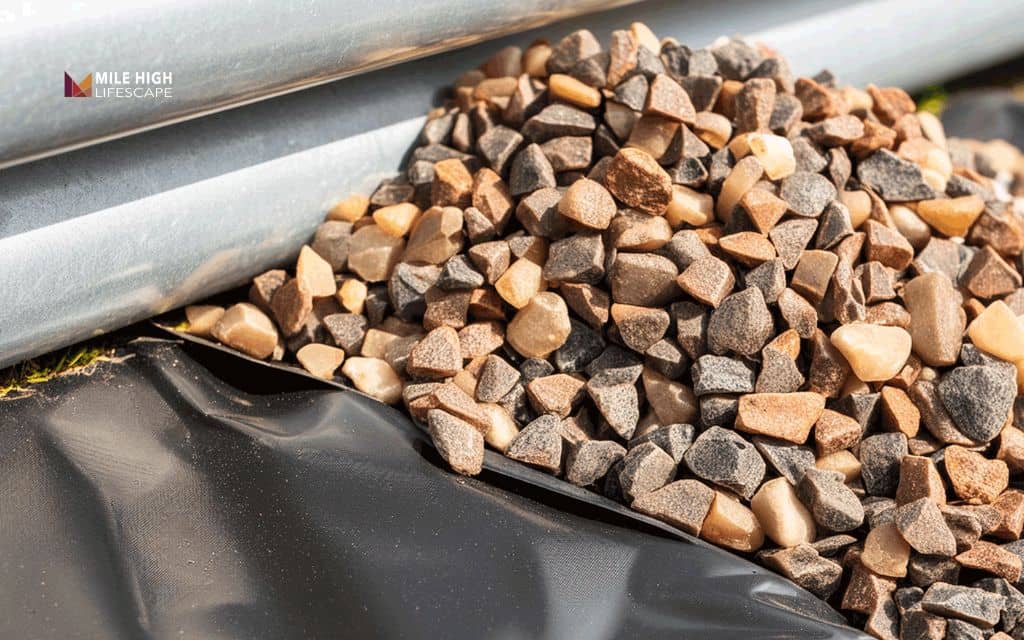
Edging is essential for successful pea gravel landscaping. Without solid borders, gravel spreads into adjacent lawn, garden beds, and hardscape surfaces with every footstep, every rainstorm, and every pass of the lawn mower.
Metal edging
Metal edging (aluminum or steel) provides the cleanest, most durable border for pea gravel. Install professional-grade metal edging (not the flimsy corrugated stuff) with the top edge flush with or slightly above the finished gravel surface.
The vertical barrier contains gravel effectively while remaining nearly invisible. Stake edging every 2–3 feet and ensure corners are secured firmly. These are the most common failure points.
Stone or concrete borders
Stone or concrete borders create more substantial, visible edges that can become design features rather than just functional barriers.
Colorado buff flagstone, moss rock borders, or poured concrete edges all work well, though they require more installation effort and expense. These substantial borders also help define the space visually and can double as seating edges for patios.
Pea gravel landscaping costs in Denver
Material costs
Pea gravel costs in the Denver metro area typically range from $45 – $75 per ton when purchased in bulk from landscape supply yards. Prices fluctuate based on current demand, fuel costs for delivery, and which supplier you choose, but most homeowners can expect to pay around $55–$65 per ton for standard earth-tone pea gravel.
One ton of pea gravel covers approximately 80 – 100 square feet at a 2 – 3 inch depth, which means a typical 200-square-foot patio requires 2 – 2.5 tons of material ($110 – $165 in gravel costs).
Bagged vs bulk comparison: Big-box stores sell pea gravel in bags (usually 0.5 cubic feet per bag) for $5–$8 per bag. You’d need roughly 80–100 bags to cover that same 200-square-foot patio – a total cost of $400–$800 for bagged material. Bulk purchasing saves 60–75% on material costs for any project larger than about 50 square feet.
Delivery vs pickup
Most Denver landscape supply yards offer delivery for $75 – $150 depending on distance from their location and the size of your order. Some suppliers waive delivery fees for orders over 5 – 10 tons, making bulk delivery essentially free if you’re tackling a large project.
Delivery makes sense for orders over 2 tons or whenever you lack a pickup truck and trailer. One cubic yard of gravel weighs approximately 1.3 – 1.5 tons, far too heavy for most passenger vehicles. Even pickup trucks should limit loads to prevent suspension damage and unsafe driving conditions.
Professional delivery places material exactly where you need it (typically within 50 feet of the truck parking spot), saving hours of wheelbarrow work. Specify your delivery location clearly, many suppliers can place material in driveways or side yards if accessible.
DIY vs professional installation costs
A DIY pea gravel installation for a 200-square-foot pathway or patio typically costs $300–$600 in materials:
- Base material: $75–$160
- Landscape fabric: $40–$80
- Pea gravel: $110–$165
- Edging materials: $75–$150
- Delivery: $75–$150
Tool rental (plate compactor) adds $75–$100 for a weekend if you don’t already own one.
Professional installation costs for the same 200-square-foot area typically run $1,200 – $2,200, including materials and labor. That might seem like a significant premium, but professional installation delivers several advantages worth considering:
Pros handle proper grading and drainage – the most critical and most commonly botched aspect of DIY projects. They own the specialized compaction equipment needed for stable bases. They complete installation in 1–2 days versus the 2–3 weekends most homeowners need. And perhaps most importantly, professionals warranty their work.
Conclusion
When used intentionally in the right locations with proper installation, pea gravel landscaping delivers impressive benefits for Denver homeowners:
It dramatically reduces water consumption compared to traditional turf, helping you meet water restrictions while lowering utility bills. Pea gravel creates walkable, attractive spaces that function beautifully in Colorado’s demanding climate. And it fits into contemporary xeriscape designs that satisfy HOA requirements while reducing ongoing maintenance demands.
Whether you tackle installation yourself or bring in professionals, understanding these principles ensures your pea gravel landscaping performs beautifully for years while reducing water use and maintenance in your Denver yard.
______
Professional Pea Gravel & Landscape Rock Installation in Denver
Mile High Lifescape specializes in professional landscape rock installation designed for Colorado’s Front Range conditions. We handle the critical steps that separate lasting installations from failed DIY projects: proper base compaction, graded drainage, commercial-grade fabric, and durable edging systems.
Our team understands Denver’s clay soil, intense weather, and freeze-thaw cycles. We install pea gravel pathways, patios, and xeriscape beds that stay beautiful and functional without migration, mud, or weed problems.
Services include: site drainage analysis, complete base preparation, professional materials and installation, and expert guidance on rock selection for your specific needs.
Ready to discuss your project? Contact Mile High Lifescape for a consultation. Let us create a pea gravel landscape that lasts in Denver’s demanding climate.
Frequently asked questions (FAQs)
Is pea gravel good for Denver landscapes?
Yes, pea gravel works excellently in Denver landscapes when used in appropriate locations like pathways, patios, and xeriscape beds. It handles our intense summer storms well, requires zero water, and tolerates Denver’s freeze-thaw cycles without cracking or deteriorating. However, it requires proper base preparation in our heavy clay soil and works best in low-to-moderate traffic areas rather than primary walkways.
How deep should pea gravel be?
Install pea gravel at 2–3 inches finished depth for optimal performance in Denver conditions. This depth provides adequate coverage to look attractive, feel comfortable underfoot, and resist wind scattering while preventing excessive migration. Depths less than 2 inches expose landscape fabric and allow weeds to establish more easily, while depths over 3 inches create unstable surfaces that are difficult to walk on.
Does pea gravel stop weeds?
Pea gravel significantly reduces weeds when installed over quality landscape fabric but doesn’t eliminate them completely. Weed seeds blown onto the gravel surface can germinate in accumulated organic debris, and occasional weeds will push through gaps in fabric or compromised areas. Expect to pull or spot-treat 90% fewer weeds than bare soil, but plan for occasional maintenance rather than zero weeding.
Is pea gravel good for drainage?
Pea gravel provides excellent surface drainage—water passes through it almost instantly. However, drainage quality depends entirely on what’s beneath the gravel. In Denver’s clay soil, you must install a 3–4 inch compacted crushed stone base layer or water will pool beneath the gravel, creating mud and instability. The rule: pea gravel drains well only if the base drains well.
What’s the best base for pea gravel?
The best base for pea gravel in Denver’s clay soil consists of 3–4 inches of compacted Class 5 road base or ¾-inch minus crushed stone installed over graded native soil. This angular, crushed material compacts into a stable drainage layer that prevents mud formation while supporting the pea gravel surface. Compact thoroughly with multiple passes of a plate compactor before adding landscape fabric and gravel.
Does pea gravel work in winter?
Yes, pea gravel performs well through Denver winters. The stones don’t crack from freeze-thaw cycles like pavers can, and snow melts through the surface quickly rather than creating ice sheets. However, snow removal can be challenging—shoveling often picks up gravel along with snow, and plow blades can scatter stones. Most homeowners let snow melt naturally on pea gravel surfaces rather than attempting mechanical removal.