
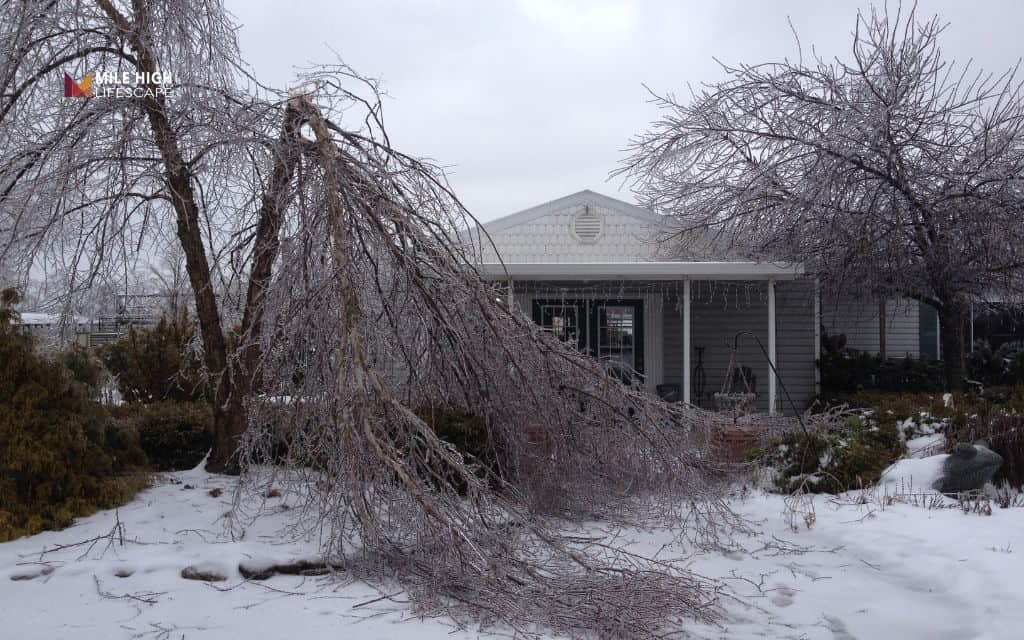
An ice storm can transform a healthy yard into a hazard zone overnight. By morning, limbs that once arched gracefully over your driveway are snapped in half, and trees you have tended for years are leaning at angles that make your stomach drop. The weight of ice is relentless. A single inch of glaze coating can add hundreds of pounds to a mature tree’s canopy, and that sustained load bends, cracks, and splits wood that would have held firm against the strongest wind.
The instinct to rush outside and start clearing is understandable, but tree removal after an ice storm is one situation where acting too fast can be as dangerous as doing nothing. Damaged trees are structurally unpredictable. Branches that look stable can fall without warning, split trunks can shift mid-cut, and conditions that seemed safe an hour ago can change quickly. This guide walks you through what to do first, how to read the damage, and how to decide whether your tree needs to come down, be pruned back, or simply be given time.
First steps after an ice storm
Before you pick up a single tool or move a single branch, take a deliberate walk around your property with safety as the only priority. The decisions you make in the first hour set the tone for everything that follows:
- Stay away from downed power lines: Treat every downed line as live until the utility company confirms otherwise. Keep at least 35 feet of distance from any wire on or near the ground, and never attempt to move a branch that is tangled in electrical lines, even with a non-metal tool. Call your utility provider immediately and wait for their crew before approaching the area.
- Avoid trees with hanging limbs or visible splits: Partially detached branches suspended in the canopy are known as “widow makers” because they can fall hours or days after a storm with no warning. Stay out from under any tree showing cracks at major branch unions, a split trunk, or limbs torn but still held up by surrounding wood. Cordon off the area until a professional tree removal service can assess it.
- Document damage before touching anything: Photograph each affected tree from multiple angles before any cleanup begins, and capture any impact on structures, fences, or vehicles. Note the date and weather conditions in your captions. This documentation is essential for homeowner’s insurance claims and gives any tree removal service a clear picture of the post-storm condition.
When tree removal after an ice storm is the right call
Not every ice-damaged tree needs to come down. The right decision depends on three things: how much of the crown was lost, whether the trunk is still structurally sound, and how much risk the tree poses to people and property. Getting this assessment right matters, because mature trees take decades to replace and provide real value to your landscape and property.
Signs tree removal is necessary
Some damage patterns make removal the clear and correct choice. If you observe any of the following, contact a professional tree removal service rather than attempting to save the tree:
- The trunk has split or shows a deep vertical crack running down toward the root flare: A split trunk is a structural failure, not a wound the tree can seal and recover from.
- More than 50 percent of the major structural branches are gone or broken: A tree running on half its crown is severely energy-limited right when it needs resources most to heal.
- The tree is leaning at a new angle with soil heaving or cracking at the base: This signals root failure, and a leaning tree with compromised roots is a fall waiting to happen.
- The tree is resting on a structure, roof, fence, vehicle, or power line: The weight and the contact point both need to be addressed by a professional tree removal service before any additional movement occurs.
- Pre-existing decay, a hollow section in the trunk, or known root disease: Ice storms expose weaknesses that were already there. A tree that was compromised before the storm hit is rarely worth the investment of a recovery attempt.
Signs the tree can be saved with pruning
Many ice-damaged trees are strong recovery candidates. Look for these signs before deciding on removal:
- The trunk is solid with no major cracks or bark stripping: A healthy trunk is the single biggest predictor of successful recovery, regardless of how bad the canopy looks.
- Crown loss is below 50 percent: A tree that has lost less than half its canopy still has enough energy to seal wounds and push new growth in the following season.
- Damage is concentrated in outer branches, not the main scaffold: Broken tips and secondary limbs can be pruned back cleanly. Damage to primary structural branches is a different story.
- The tree was healthy before the storm: No prior disease, pest damage, or deadwood accumulation means the tree has the reserves it needs to recover.
When to DIY and when to call for help
Safe DIY cleanup tasks
Clearing small loose debris, including twigs, light branches, and leaf material on the ground, is generally safe once there are no hanging hazards overhead and no downed lines nearby. Raking, bagging, and brushing fluffy snow off low shrubs with a soft broom are all reasonable homeowner tasks.
Use a gentle upward sweep on snow-covered branches rather than shaking them. Ice-coated wood is brittle and snaps under added shock, so even light contact with the wrong branch can bring it down.
Tasks that require a professional tree removal service
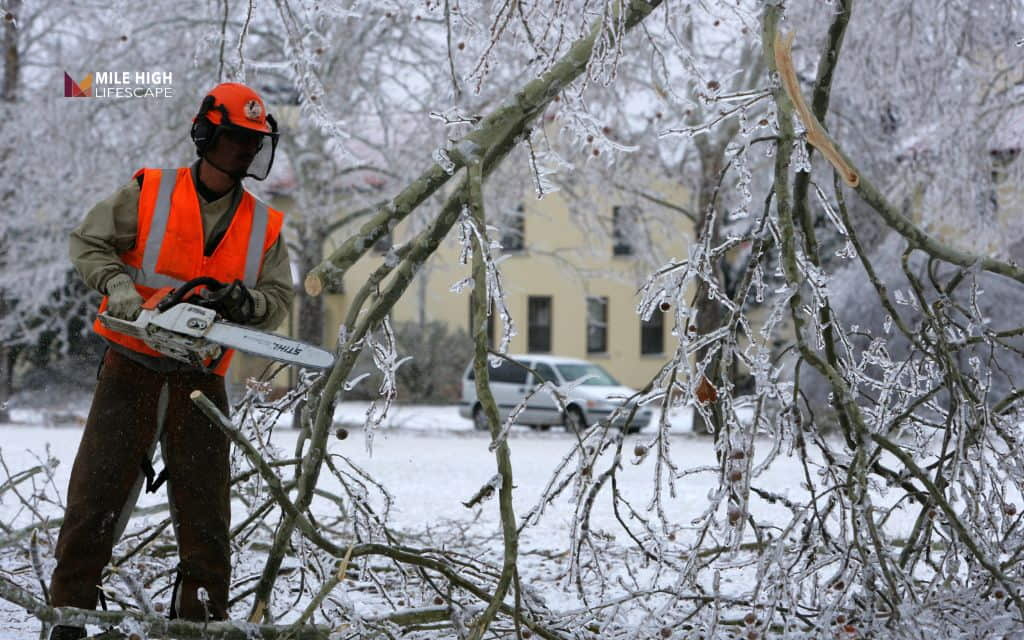
Any chainsaw work on storm-damaged wood should be left to professionals. Branches under tension store kinetic energy that releases unpredictably when cut, and the direction is not always obvious even to experienced operators.
This applies to any branch over four inches in diameter, any cut above shoulder height, any hanging limb, and any tree near a structure or power line. The decision about tree removal after an ice storm is rarely straightforward, and the same is true for cleanup. In most states, work within ten feet of an energized line legally requires a utility-trained crew.
Storm-damaged trees move fast from manageable to dangerous. Mile High Lifescape brings certified expertise and the right equipment to every job across the Denver metro and Front Range. Contact us today and let us take the risk off your hands.
How to prevent severe ice storm damage next time
The trees that come through ice storms in the best shape are almost always the ones that received consistent care going into winter. Prevention does not eliminate risk entirely, but it significantly reduces how much damage occurs and whether that damage becomes structural failure:
- Schedule structural pruning during dormancy: Late fall through early spring is the best window. Dormant-season pruning reduces ice-load surface area and gives a professional tree removal service the chance to address weak branch unions, co-dominant stems, and deadwood before they become breaking points.
- Choose storm-resilient species for new plantings: Bur oak, green ash, and honeylocust handle ice load far better than Bradford pear or silver maple, which are notorious for splitting. If a tree on your property has a history of storm damage or visible signs of decay, a professional evaluation before winter is a worthwhile investment.
- Maintain tree health year-round: Mulching, consistent watering during dry stretches, and managing pest and disease stress all build the pre-storm health that predicts post-storm survival. A tree that enters winter in strong condition heals faster and pushes new growth more reliably the following spring.
Learn more: How to get rid of tree trunks
Conclusion
Tree removal after an ice storm is rarely a clear-cut decision. Stay safe in the immediate aftermath, document the damage before touching anything, and resist the urge to cut aggressively. The right call depends on crown loss, trunk condition, and what the tree looked like before the storm. Getting that read right makes the difference between a landscape that recovers and one that does not.
If an ice storm has left damaged or fallen trees on your Denver or Front Range property, the certified team at Mile High Lifescape can assess the damage, handle safe removal where it is needed, and help you protect the trees worth saving. Schedule a storm damage assessment with us today and get a clear, professional plan for restoring your landscape.
For trees that can be saved but have broken, hanging, or damaged limbs, our Tree Branch Removal service provides a safe way to clear hazardous branches without unnecessary tree removal. We carefully remove damaged limbs to help protect your property while giving the tree the best chance to recover.
Frequently asked questions (FAQs)
Do trees recover after an ice storm?
Many trees do recover, and some do so better than homeowners expect. Trees that lost less than 25 percent of their canopy typically return to normal growth within a season or two. Between 25 and 50 percent crown loss, recovery is likely but slower. Above 50 percent, the outlook depends heavily on species, trunk condition, and the tree’s health before the storm hit.
How soon do I need to remove a fallen tree?
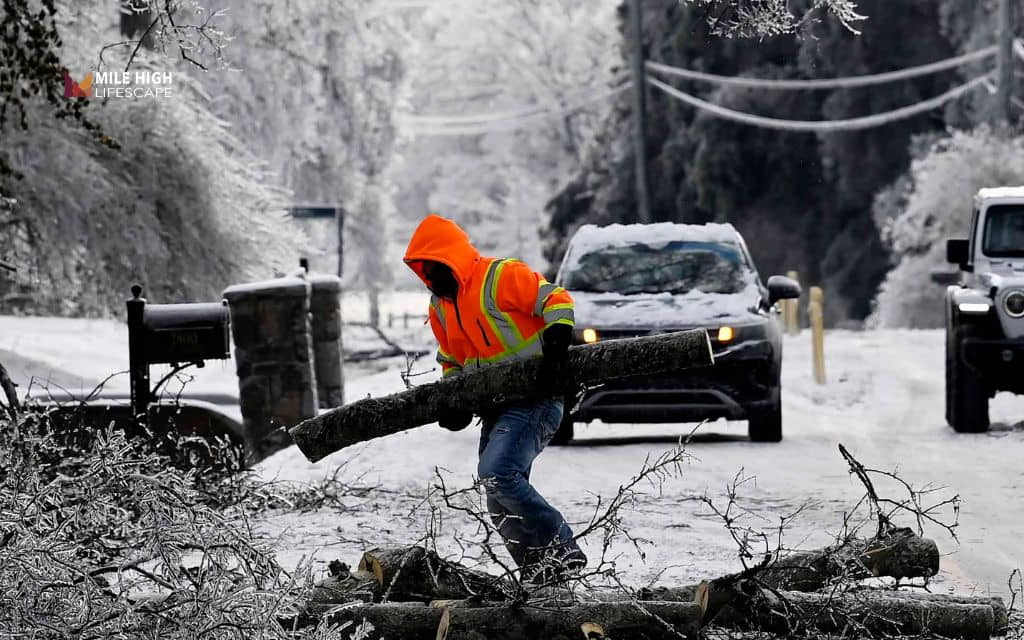
If the tree is on a structure, blocking access, or touching a power line, arrange tree removal after the ice storm within 24 to 48 hours. In all other cases, a measured assessment within a week is fine. Rushing can mean removing trees that would have recovered.
How much does emergency tree removal cost after an ice storm?
Emergency tree removal typically ranges from $500 to $3,000 or more depending on tree size, location, and job complexity. Trees on roofs or near power lines cost considerably more and may require crane equipment. Always get a written estimate from a licensed, insured service before authorizing work.
Will my tree survive if it lost half its branches?
A tree with 50 percent crown loss is in the gray zone. Healthy hardwoods like oak or ash can recover, but expect several years of reduced growth. For brittle species or trees already under stress, the prognosis is less certain. Trunk condition is the deciding factor: a solid trunk gives the tree a real chance; a split or cracked stem usually does not.
Should I prune broken branches right away?
Hazardous hanging or dangling branches should come down promptly. For everything else, wait until late winter or early spring before pruning. Many branches that look dead after an ice storm are simply dormant. Use the scratch test: green tissue under the bark means the branch is alive; brown and dry means it can go.
Does homeowners insurance cover tree removal after an ice storm?
Homeowners insurance typically covers tree removal after an ice storm only when the fallen tree has damaged a covered structure such as a roof, garage, or fence. Coverage for removal itself is often capped at $500 to $1,500 per tree. Trees that fall in the yard without hitting anything, or trees that were visibly dead before the storm, are generally not covered. Document everything and contact your insurer within 24 to 48 hours before authorizing any work.