You had the tree taken down, and you thought that was the end of it. Then a few weeks later, small green shoots start pushing up through the stump or popping out of the soil several feet away. It raises a question that surprises many property owners: will a tree stump regrow even after the tree is gone?
The short answer is yes, but only under certain conditions. Whether a tree stump will regrow depends on the species and how much energy remains in the root system. This article explains why it happens, which trees are most prone to it, how long the problem lasts, and what actually works to stop it.
Can a tree regrow from a stump?
Can a tree stump regrow after the tree is cut? Yes, but not every stump will. The key factor is whether the root system is still alive. If it is, stored energy in the roots can push new shoots called sucker shoots or epicormic sprouts to the surface within weeks of removal.
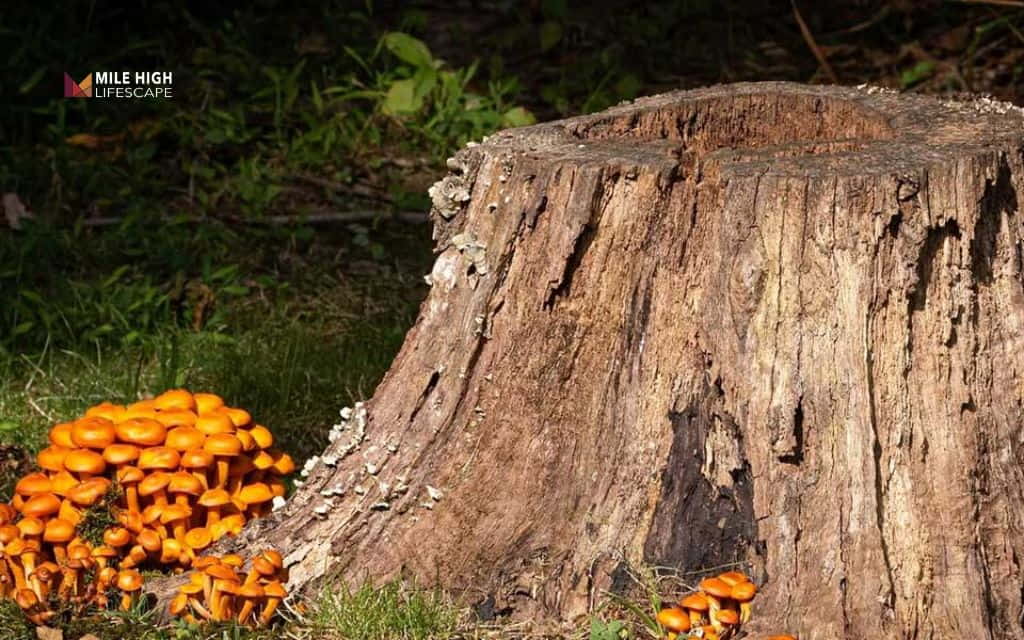
What comes back is not a replacement tree. These shoots attach to decaying wood and lack the structural foundation to develop safely. Whether a stump sprouts or simply decays comes down to species. Fast-growing deciduous trees are far more likely to keep producing new growth than slow-growing hardwoods or conifers.
Learn more: How to get rid of tree trunks
Why tree stumps regrow: The biology behind stump sprouting
Stored energy in the root system
Before being cut, a tree spends years storing sugars and starches in its root system. When the trunk is removed, those reserves do not disappear. The roots redirect that stored energy upward, producing new shoot growth from the stump surface, the root collar at ground level, or lateral roots spreading outward through the soil. The larger the root system, the more vigorous that initial regrowth tends to be.
Dormant buds and the cambium layer
Beneath the bark of every tree, including along the roots, there is a thin living tissue called the cambium layer. Embedded within it are dormant buds, backup growth points that stay inactive under normal conditions but activate when the tree is stressed. Cutting a tree down is the most extreme stress trigger of all, and the root collar, the dense zone just below the soil surface where trunk meets roots, is particularly packed with these buds and continues producing shoots even after the stump is cut low to the ground.
The University of Maryland Extension notes that heavy pruning or major branch removal can stimulate dormant buds into producing new shoot growth. Full removal creates the most extreme version of this response. The more dormant buds a species carries and the more aggressively they react to cutting, the more persistent the regrowth problem will be.
Stump sprouts, root suckers, and water sprouts: what is the difference?
Homeowners often see shoots appearing in different locations and are unsure what they are dealing with. There are three distinct types of regrowth, and knowing the difference helps clarify how serious the problem is.
- Stump sprouts: shoots that emerge directly from the cut surface or the sides of the stump itself. These are the most visible and easiest to identify.
- Root suckers: shoots that emerge from lateral roots spreading through the soil, sometimes appearing several feet from where the tree stood. These are often the more persistent problem, because the roots driving them can extend well beyond the stump.
- Water sprouts: fast-growing vertical shoots that appear on the branches of a tree that is still standing. These are not relevant to a removed stump but are commonly confused with sucker growth, especially when a nearby tree is also producing them in response to stress.
Learn more: Tree removal after ice storm
Which trees are most likely to regrow from a stump?
High-risk sprouters
Willows, poplars, cottonwoods, elms, silver maples, mulberries, and black locusts are the most persistent resprouters, sending up suckers from roots that can stretch far beyond the original trunk. Bradford pear and tree of heaven are particularly problematic because cutting them can actually intensify suckering. For these species, a tree stump will regrow reliably without intervention, and the problem can continue for a decade or more.
Moderate-risk sprouters
Certain oak species, ash, birch, and crepe myrtle may produce sprouts for one or two growing seasons, especially if the tree was young and healthy at removal, but the root system typically exhausts its energy faster than high-risk species. Consistent manual removal is usually enough to manage these stumps without professional treatment.
Low-risk sprouters
Most conifers, including pine, spruce, fir, and cedar, rarely produce sucker growth after being cut. Their root systems are not built for vegetative regeneration, and the cambium typically dies back without activating dormant buds. Slow-growing hardwoods like mature beech and hickory behave similarly. For these species, the stump will almost certainly decay on its own rather than resprout.
What stump regrowth can do to your yard
When a tree stump regrows unchecked, the damage extends well beyond the stump itself. The four most common consequences for property owners are:
- Weak, hazardous multi-stem growth: Sprouts form a dense cluster anchored to decaying wood, leaving each shoot with a structurally compromised base. As the cluster gains height and weight, it becomes a genuine fall hazard during storms, ice events, and high winds, and clearing it at that stage is far more difficult and expensive than addressing the stump early.
- Damage to driveways, sidewalks, foundations, and utilities: Root suckers do not stay contained to the stump area. They emerge wherever lateral roots run, which can mean under a driveway, along a sidewalk edge, or pressing against a foundation wall. For stumps near sewer lines, irrigation mains, or buried electrical conduit, the ongoing root pressure creates a risk that tends to get more expensive the longer it is left unaddressed.
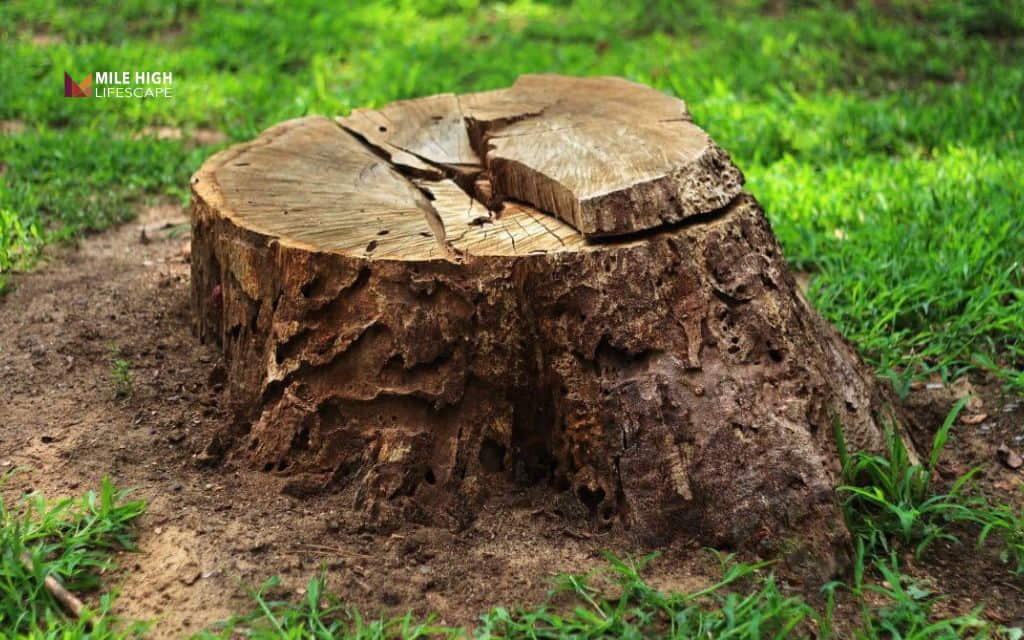
- Pest and disease pressure: A stump that is decaying while still producing new growth stays biologically active longer than one that simply dries out, making it more attractive to carpenter ants, termites, and bark beetles. Fungal pathogens like Armillaria root rot can colonize the decaying wood and spread to nearby healthy trees through root contact, a particular concern when the removed tree was already diseased.
- Competition with your lawn and garden beds: An actively resprouting stump draws water and nutrients from the surrounding soil, thinning and browning the grass over the root zone and crowding out nearby garden plants before the competition is even visible. Root suckers can push up through perennial beds and groundcovers fast enough to cause real damage between maintenance visits.
How to stop a tree stump from regrowing
Repeated sprout removal
Cut every sprout back to its point of origin before any leaves fully expand. Once a shoot photosynthesizes, it recharges the root reserves that were supposed to be depleting, resetting the clock. For high-risk species, this method alone is rarely enough and works best when combined with one of the approaches below. Dispose of cut sprouts in yard waste, not compost, since the living tissue can re-root.
Cut-stump herbicide treatment
Glyphosate or triclopyr-based products applied directly to the freshly cut stump surface can be highly effective, but the application must happen within minutes of the final cut while the cambium is still actively moving fluids. Late summer to early fall is the best timing, when the tree is naturally drawing carbohydrates downward into the roots, which helps the herbicide translocate deeper into the system than a spring or summer treatment would.
One caution worth noting is root grafting. Trees of the same species planted nearby can share underground root connections, and herbicide applied to one stump has occasionally traveled through those pathways and damaged adjacent trees. If there are desirable trees within twenty to thirty feet of the treatment area, a professional assessment before application is advisable.
Stump grinding
Stump grinding is the most commonly used professional solution for residential properties. A grinding machine reduces the stump to wood chips four to twelve inches below the soil surface, severing the cambium connection and making surface regrowth unlikely. Most stumps are processed in a few hours, and the site is usable the same day.
Grinding leaves the lateral root system underground, so occasional root suckering is still possible with aggressive species. For high-risk trees like willow, poplar, tree of heaven, or black locust, combining grinding with an herbicide application to the freshly ground area gives better long-term control than either method on its own.
Full stump and root removal
Physical excavation of the stump and major lateral roots eliminates the regrowth problem entirely. It is the preferred approach for stumps near foundations, retaining walls, sewer lines, irrigation mains, or any area planned for new hardscape, and it is the right choice when a replacement tree will be planted in the same spot, since a new tree planted over a decaying stump faces nutrient competition and exposure to any fungal pathogens already in the old root system.
The trade-off is disruption. Excavation leaves a void that needs backfilling, and the disturbed area takes time to re-establish. For most homeowners, the decision between grinding and full removal comes down to what the site will be used for after the stump is gone.
Learn more: How to get rid of tree stumps
Conclusion
Stump regrowth is easier to underestimate than to manage. The shoots look small at first, but the root system driving them is often far larger and more persistent than the surface suggests. With the wrong species and no intervention, what starts as a few green shoots can become years of repeated trimming, lawn damage, and structural risk that only gets more expensive to address the longer it is left alone.
If you are dealing with a stubborn stump on a Denver metro or Front Range property, the team at Mile High Lifescape offers stump removal, tree branch removal, and full tree care services to match the right solution to your specific site conditions. Reach out today to schedule a consultation and get it handled properly.
Frequently asked questions (FAQs)
Will a tree stump regrow if I just leave it alone?
Will a tree stump regrow without any intervention? For aggressive species like willow, poplar, silver maple, and tree of heaven, yes, and often for years, sometimes more than a decade. Low-risk species like pine and spruce typically decay on their own without meaningful regrowth. For anything in between, the safest assumption is that an untreated stump will sprout at least once during the first growing season.
Can a tree regrow from a stump after grinding?
Sometimes, though much less commonly than from an unground stump. Stump grinding removes the above-ground tissue and severs the main cambium connection, but the lateral root system remains underground. For high-risk species, those roots still carry enough energy to push up occasional root suckers after grinding. Combining grinding with a post-treatment herbicide application significantly reduces this risk for aggressive species.
How long does it take for a tree to grow back from a stump?
The first sprouts typically appear within four to eight weeks of removal for fast-growing deciduous species. If left unchecked, a multi-stem cluster can develop within a single growing season. Whether a tree stump will regrow into something resembling a full tree depends on consistent neglect over many years, and even then the result is a structurally compromised, multi-stem growth rather than a proper tree.
Why shouldn’t you leave a tree stump in the ground?
Beyond the question of will a tree stump regrow, an untreated stump creates several overlapping problems. Persistent sucker growth competes with the surrounding lawn and garden. The decaying wood attracts termites, carpenter ants, and wood-boring beetles. Fungal pathogens can transfer to nearby healthy trees through root contact. And active roots can keep pressing against driveways, sidewalks, and foundations long after the tree itself is gone.
Can I plant a new tree where the old one was removed?
Not directly into a ground-down stump. The decaying wood ties up nitrogen as it breaks down and creates competition for nutrients that a new tree needs in its establishment phase. Fungal pathogens already present in the old root system can also infect a new planting. Full stump and root removal followed by soil amendment gives the best outcome. Alternatively, planting at least eight to ten feet away from the original stump location avoids most of these issues.
Will stump sprouts ever turn into a real tree?
Rarely, and almost never into a structurally sound one. Sprouts from a decaying stump are anchored to deteriorating wood that cannot support them as they gain height and weight. The result is a multi-stem, shrub-like cluster that presents a fall hazard as it matures, not a viable replacement tree.