Termite damage worries homeowners for good reason, but not every crawling or swarming insect in your house is a termite. Bugs that look like termites, from carpenter ants to powderpost beetles, send many homeowners into a panic over a threat that isn’t real. Learning the differences in body shape, wings, and behavior helps you identify what’s actually inside your walls before you spend money on the wrong fix.
What termites actually look like
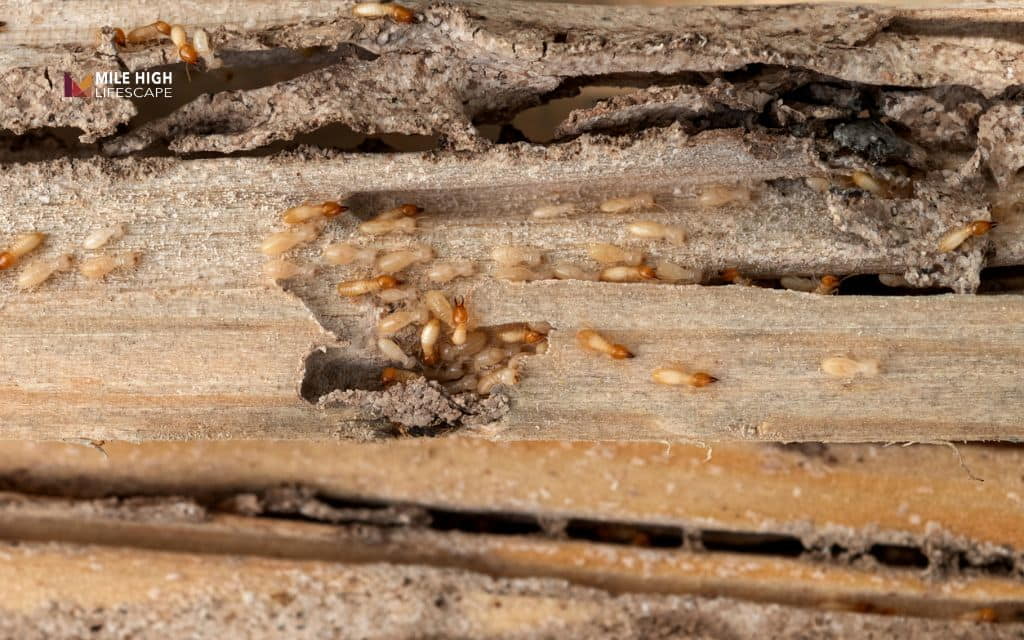
Termites measure about a quarter inch to half an inch long. Their body stays the same width from head to tail, without a pinched or narrow waist. Color ranges from white to light brown to black, depending on the species and life stage. Two straight antennae extend from the head, and swarmers (winged termites) carry two pairs of wings equal in length, often twice as long as the body itself.
Three termite types live in the United States: subterranean, drywood, and dampwood. Subterranean termites need soil contact and build mud tubes to travel above ground. Drywood termites nest directly inside dry wood without any soil connection. Dampwood termites target wood already softened by moisture or decay. Each type leaves distinct evidence, which matters more for identification than appearance alone.
Kind of bugs that look like termites
Carpenter ants
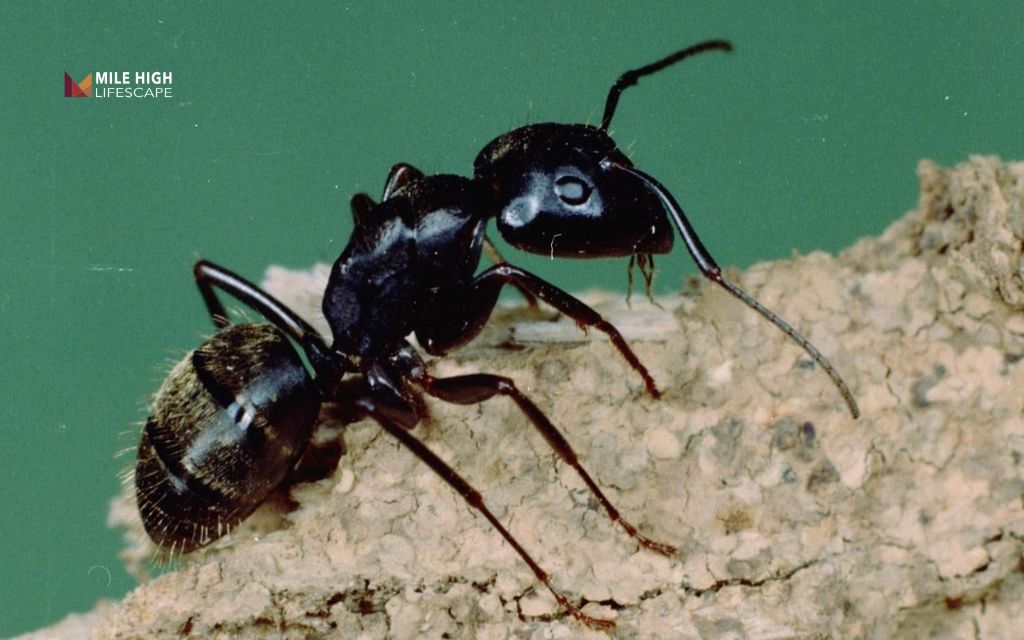
Carpenter ants confuse homeowners because both insects swarm and damage wood. Unlike termites, carpenter ants don’t eat wood. They tunnel through it to build nests and leave the debris behind in piles of shredded wood near their entry points.
The waist gives it away first: carpenter ants pinch in sharply at the middle, while a termite’s stays the same width from head to tail. Bent, elbowed antennae mark a carpenter ant, compared to a termite’s straight pair. Wings tell a similar story: a carpenter ant’s front wings run longer than its rear pair, while a termite’s four wings match in length. And where a termite leaves behind tiny fecal pellets, a carpenter ant leaves piles of shredded wood.
Flying ants
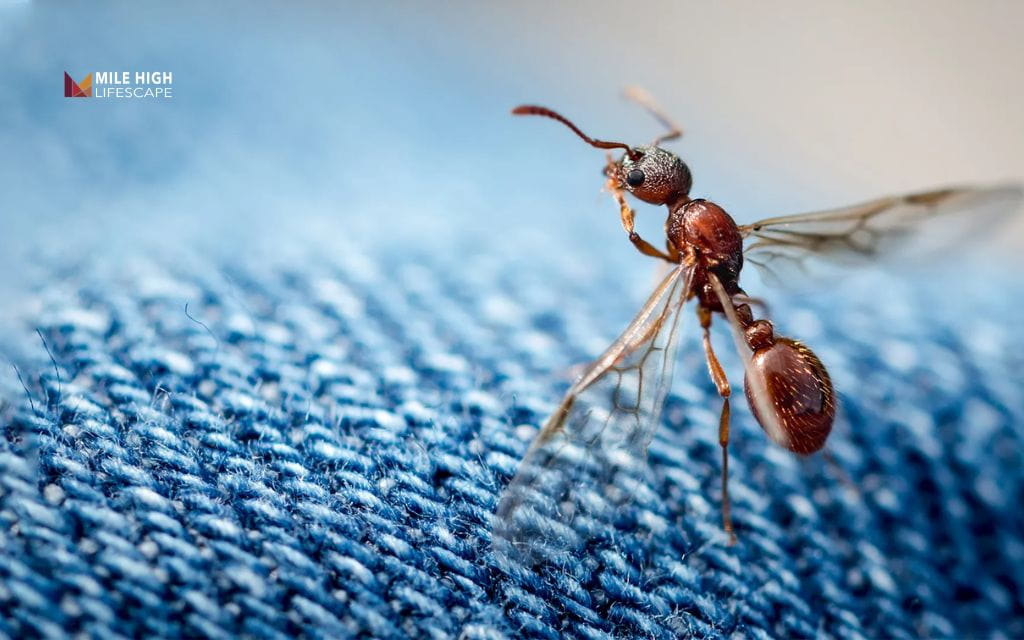
Winged insects that look like termites often turn out to be flying ants, also called alates. Reproductive ants of many species grow wings during mating season, then swarm in search of new nesting sites. This category rarely causes structural damage, since most flying ants feed on food debris rather than wood.
The antennae give them away first. A flying ant’s antennae bend, while a termite’s stay straight. A flying ant’s waist pinches inward at the middle, while a termite’s body runs straight down the sides. Wings follow the same pattern: a flying ant’s front pair grows noticeably longer than its rear pair, while a termite’s four wings all match. Diet separates the two further, since flying ants forage for food debris and sugars instead of wood, paper, and other cellulose.
Carpenter bees
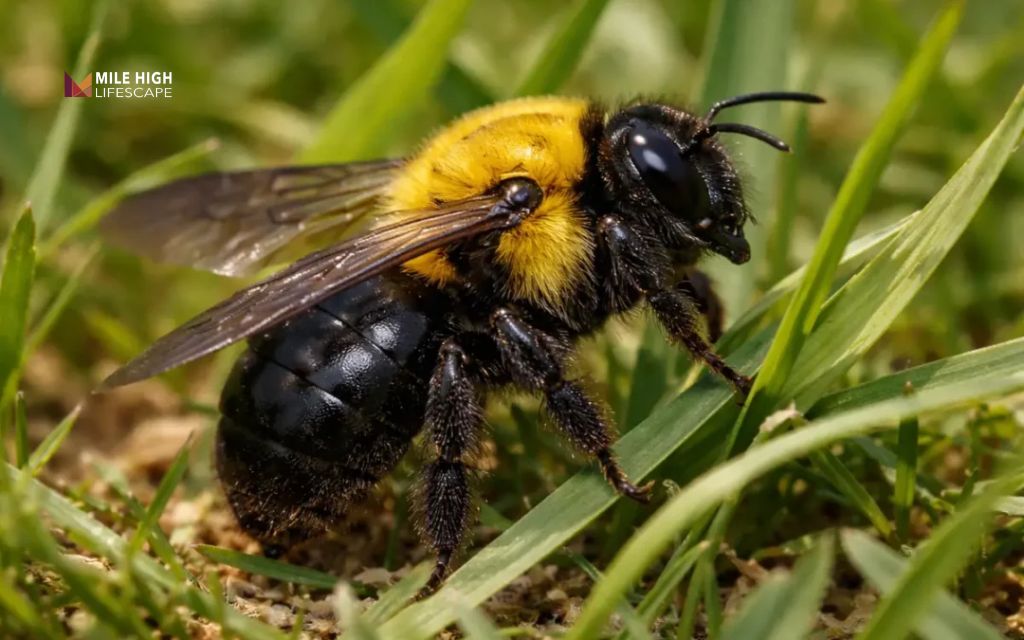
Carpenter bees drill round, finger-width holes into unfinished or unpainted wood to build nests. The holes resemble termite kick-out points at first glance, but the insect itself looks nothing like a termite once you spot it.
Carpenter bees wear a shiny black body with a patch of yellow fuzz on the thorax and grow far larger than a termite, reaching about an inch long against a termite’s quarter to half inch. Its holes come out round and finger-width, unlike the small, irregular holes a termite leaves. Behavior sets them apart too: carpenter bees work alone, while termites live and feed in colonies.
Powderpost beetles
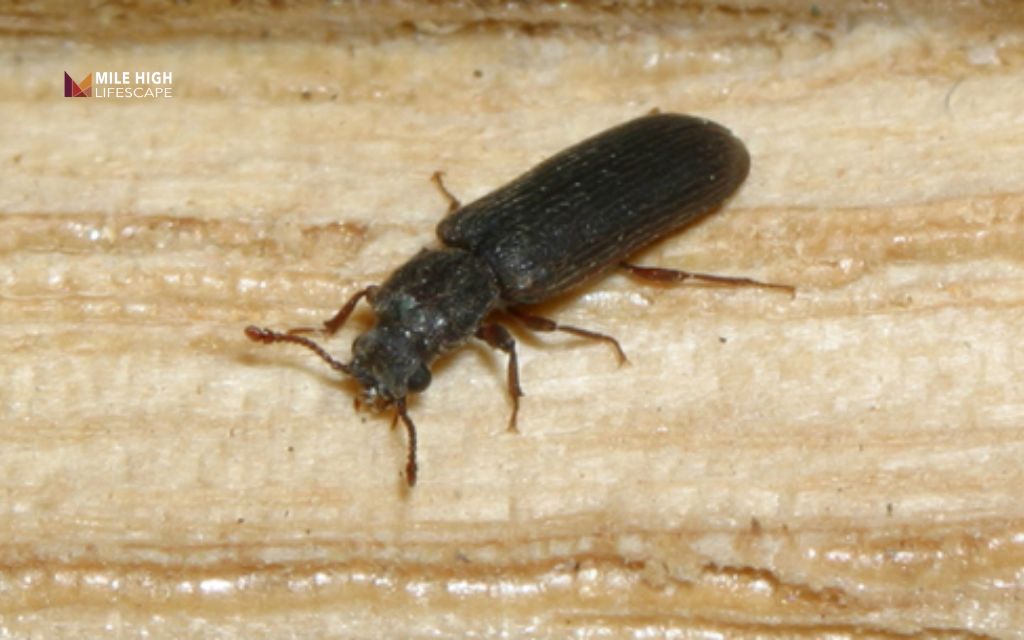
Powderpost beetles feed on unfinished hardwood during their larval stage, leaving tiny round holes surrounded by fine, powder-like sawdust. Adult beetles hide during the day, so most homeowners spot the damage before the insect.
Powderpost beetles carry the classic hard-shelled beetle shape, nothing like a termite’s straight, soft body. The residue differs too: fine wood powder collects near a beetle’s holes, while a termite leaves tiny fecal pellets instead. Beetles also stick to unfinished hardwood, while termites feed on wood whether it’s finished or not.
Other termite look-alikes
Several other insects that look like termites show up less often but still cause confusion. Acrobat ants nest in old termite galleries and lift their abdomen when disturbed. Drain flies breed in damp pipes and drains, and their fuzzy, moth-like wings can trick an untrained eye. Mayflies and lacewings swarm around outdoor lights in warm months but never touch wood, since neither insect feeds on cellulose.
Signs that point to termites, not a look-alike
One insect sighting alone rarely confirms termites. Species, life stage, and location all affect appearance, so evidence around the structure tells you more than one bug ever could.
- Mud tubes: Pencil-width tunnels of dirt and saliva climbing a foundation or wood structure point to subterranean termites.
- Fecal pellets: Tiny, hard, uniform pellets near small kick-out holes signal drywood termites rather than ants or beetles.
- Discarded wings: Piles of shed wings near windowsills or doors mean a termite swarm already happened nearby.
- Hollow sound: Wood that sounds hollow or papery when tapped often hides termite tunneling underneath.
When the problem needs a professional look
DIY identification helps you narrow the possibilities, but it shouldn’t replace a professional inspection once you suspect an active infestation. Trained technicians can confirm the species, locate the colony, and recommend the right treatment for the situation.
Call a licensed pest control professional if you notice mud tubes on your foundation, discarded wings inside the home, wood that sounds hollow, or damage that keeps spreading despite your best efforts. Structural wood damage from any wood-destroying insect, not just termites, deserves a second opinion before repairs begin.
Preventative measures
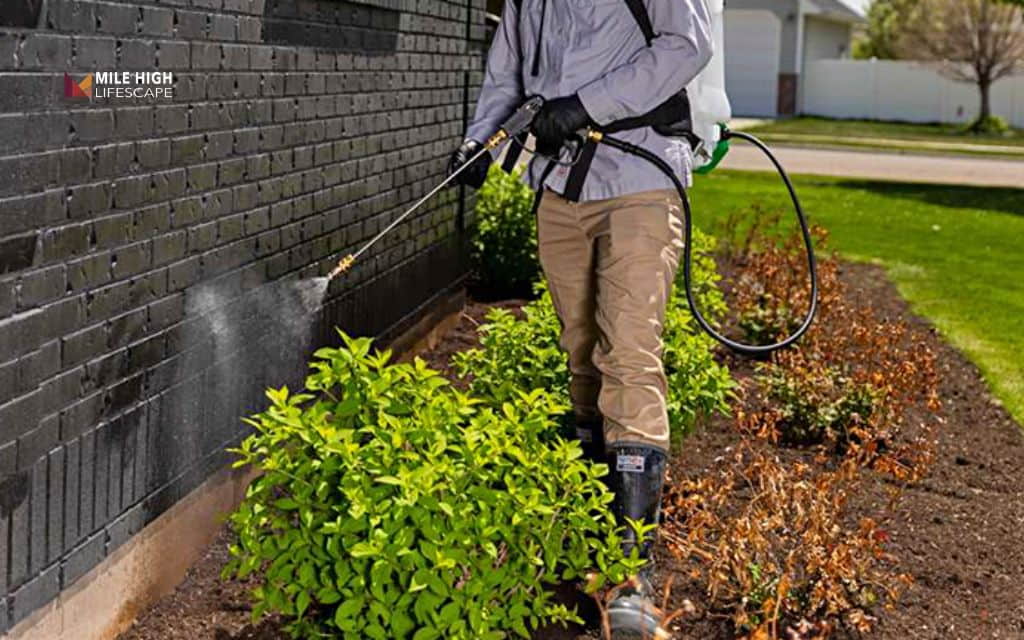
Reducing the conditions these insects need makes your property less appealing to termites and their look-alikes alike.
- Manage moisture: Fix leaks and grade soil away from the foundation to keep wood and soil dry.
- Store wood properly: Keep firewood, lumber, and mulch away from exterior walls and off direct soil contact.
- Seal entry points: Caulk cracks in siding, foundation, and window frames where swarmers can slip inside.
- Trim vegetation: Keep trees and shrubs pulled back from the house to cut down on moisture and wood-to-soil contact near the structure.
Conclusion
Bugs that look like termites cause plenty of unnecessary panic, but a closer look at antennae, wings, and body shape clears up most of the confusion fast. When wood damage, mud tubes, or discarded wings show up on your property, a professional inspection settles the question for good.
Healthy, well-maintained landscaping plays its own part in keeping wood-destroying pests away from your home. Mile High Lifescape‘s tree and shrub care keeps branches trimmed back and vegetation healthy, cutting down on the moisture and wood-to-soil contact that draws termites and their look-alikes toward your property in the first place. Homeowners across the Denver Metro area can request a free quote by calling (303) 877-9091.
Frequently asked questions (FAQs)
What bugs look like termites?
Carpenter ants, flying ants, carpenter bees, and powderpost beetles account for most termite look-alikes. Each shares a trait with termites, whether that’s wood damage, swarming behavior, or general size.
What looks like a termite but isn’t?
Flying ants cause the most confusion, since both insects swarm and grow wings during mating season. Bent antennae and a pinched waist point to an ant, not a termite.
What do tiny termites look like?
Worker termites measure about a quarter inch long, pale and soft-bodied with straight antennae. Swarmers grow slightly larger once their wings develop.
How do drywood termites differ from other termite look-alikes?
Drywood termites nest directly inside dry wood without any soil contact, unlike subterranean termites or wood-boring insects such as powderpost beetles. Their fecal pellets, not tunnels of dirt, give away their presence.
Do flying insects that look like termites always mean an infestation?
Not always. Seeing a swarm of flying ants or other winged insects near your porch light doesn’t confirm termites. Look for wood damage, discarded wings near your foundation, or mud tubes before assuming the worst.