
Can you lay sod in winter? Yes, cool-season sod can go down in winter when the soil is unfrozen and you can water it. This guide helps Denver homeowners decide if their yard qualifies, install and care for winter sod, and choose a smart plan B when 2026 water rules say no.
Can you lay sod in winter? The short answer
Yes, you can lay sod in winter if 3 conditions line up: the soil is not frozen, the sod is a cool-season grass, and you can water it legally. If any one condition fails, wait for spring.
Colorado State University (CSU) Extension states that cool-season sod can be planted as long as the soil is not frozen. The same guidance adds a warning. Sod laid late in the season has little time to build roots, so it needs irrigation through winter to avoid drying out.
Winter sod is a water-management project more than an installation project.
Can you plant sod in winter instead of seed?
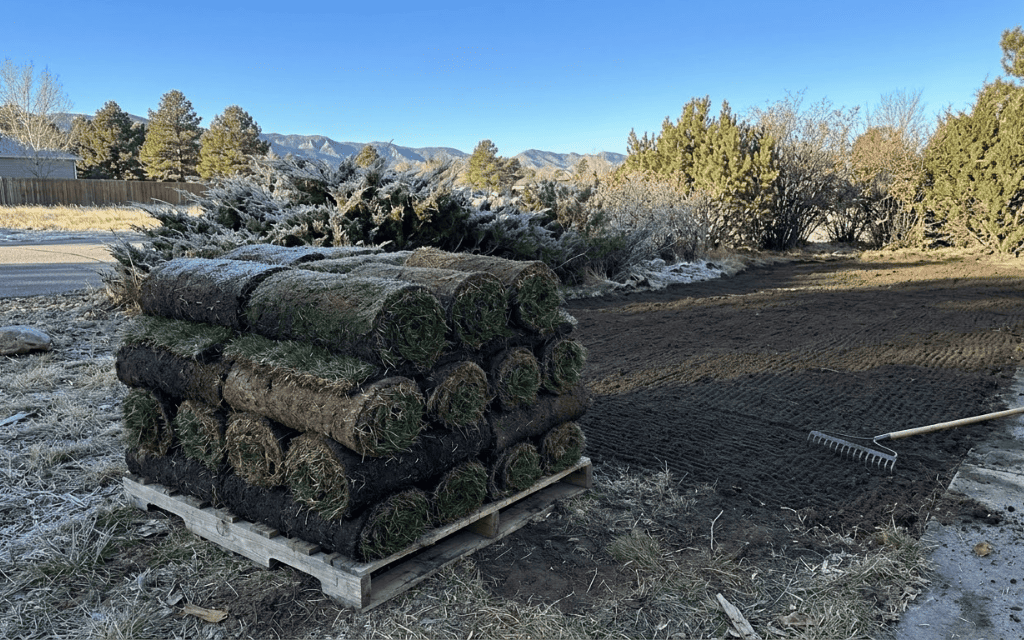
Sod is the better winter option of the 2. Grass seed needs warm, moist soil to sprout, so seed sown in winter usually waits until spring. Sod arrives as mature turf with roots and soil attached. It covers bare ground on day 1 and holds soil in place.
How sod behaves in winter: dormancy, roots, and cold
Sod survives winter by slowing down. Its survival depends on 3 factors: grass type, root contact with soil, and moisture.
Cool-season vs. warm-season sod in winter
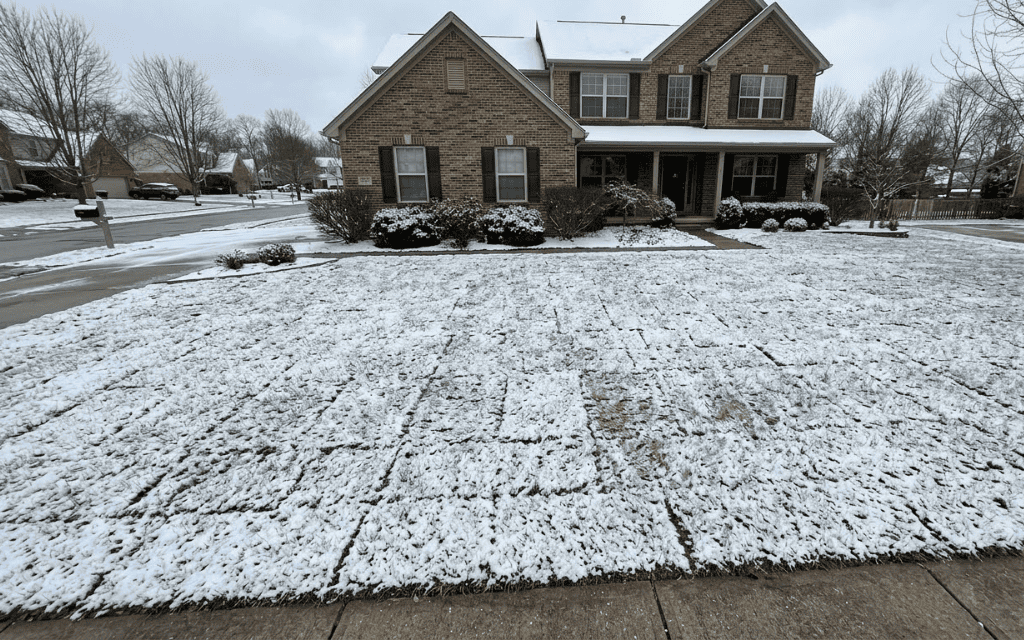
Cool-season grasses, such as Kentucky bluegrass, tall fescue, and fine fescue, fit Denver’s climate. They tolerate cold and can hold some green color into early winter.
Warm-season grasses, such as Bermuda, zoysia, and St. Augustine, turn brown and go fully dormant when temperatures drop. Many winter sod guides online come from sod farms in Texas, Georgia, and Florida. Their numbers describe mild southern winters, not the Front Range.
Does new sod root in winter?
New sod roots slowly in cold soil and stops rooting in frozen soil. CSU Extension notes that sod should be well rooted before freezing temperatures arrive in fall. Under growing-season conditions, that rooting takes about 2 to 3 weeks.
Sod laid in December skips that window. Expect real root growth to start in spring, when the soil warms.
Why winter desiccation is the main risk on the Front Range
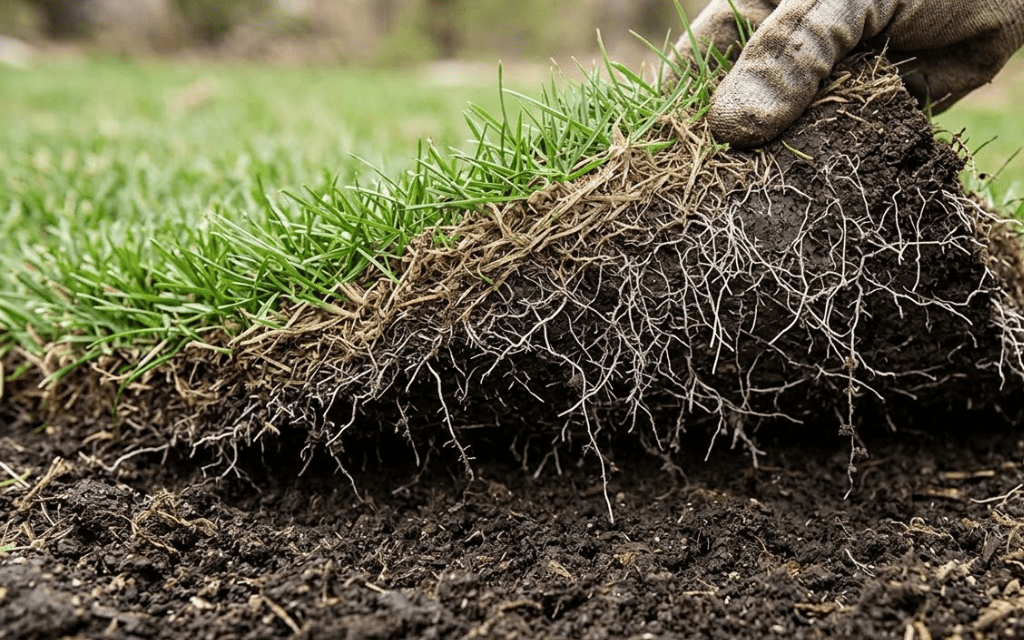
Desiccation means drying out. Turf specialists at Texas A&M AgriLife and the University of Georgia name it the leading cause of dormant sod loss.
Denver adds dry air, strong sun, and snow that often melts within days. South-facing yards, west-facing yards, and slopes dry out first.
Laying sod in winter in Denver: freeze dates, frozen ground, and water rules
Denver sets 3 limits on winter sod: an early freeze calendar, ground that freezes and thaws, and 2026 watering restrictions.
Denver’s freeze calendar
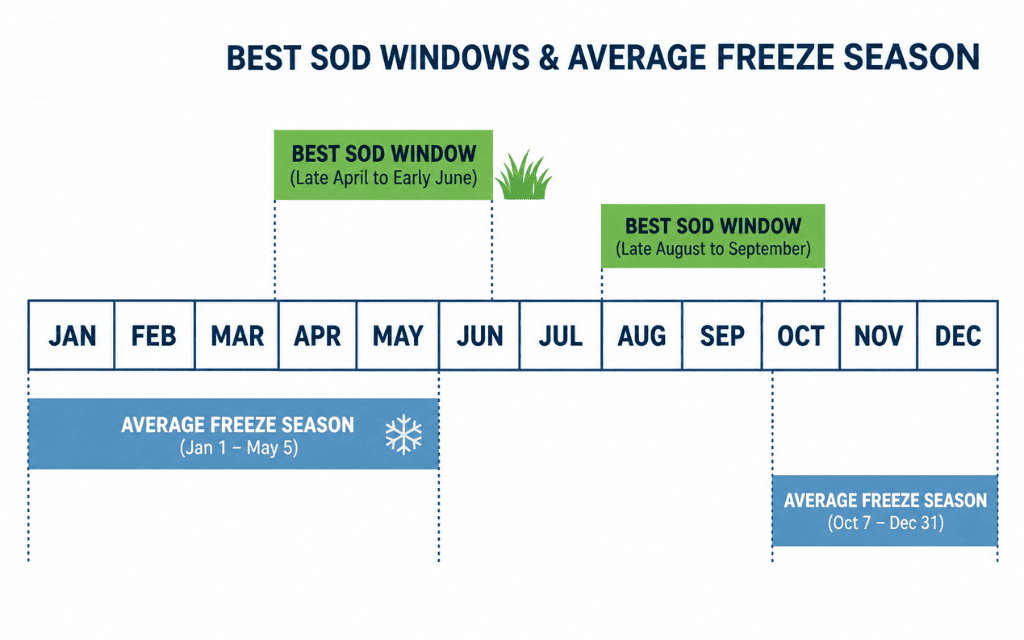
Denver’s average first freeze arrives on October 7, and its average last freeze comes on May 5, according to the National Weather Service in Boulder. The average first measurable snow falls on October 18.
Sod laid after early October rarely gets 2 to 3 weeks of root growth before freezing weather. For timing outside winter, read our guide on the best time to lay sod in Denver.
Can you lay sod on frozen ground?
No. Wait until the soil thaws. Some sod suppliers say frozen ground works if you graded it before the freeze. CSU’s guidance, however, ties cool-season sod planting to soil that is not frozen.
Frozen ground causes 3 problems. You cannot rake or level it, roots cannot grow into it, and water runs off or turns to ice on top. To test it, push a long screwdriver into the soil. If it stops at a hard layer near the surface, the ground is frozen.
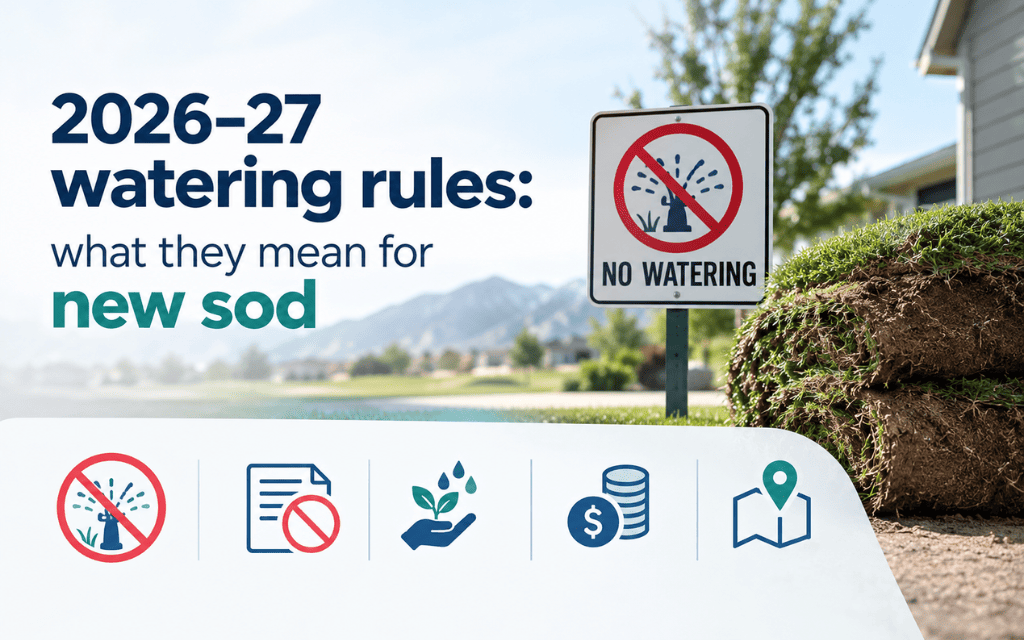
2026–27 watering rules: what they mean for new sod
New sod needs water, and Denver’s current drought rules control that water.
As of October 2026: Denver Water has prohibited lawn watering and all spray irrigation since October 1, 2026, until further action by the Denver Board of Water Commissioners. It no longer issues watering establishment permits, except for 3 qualifying projects: the Lead Replacement Program, mainline pipe replacement, and a Certificate of Occupancy. Single-family homes face a $500 charge for a first violation and $1,000 for a second.
Hand watering under these rules covers trees, shrubs, and other plants, not lawns. For most Denver Water customers, winter sod is off the table this season.
Thornton, Westminster, Broomfield, Highlands Ranch, and other cities run separate water utilities with their own rules. Check your provider’s current restrictions before you order sod.
Pros and cons of laying sod in winter
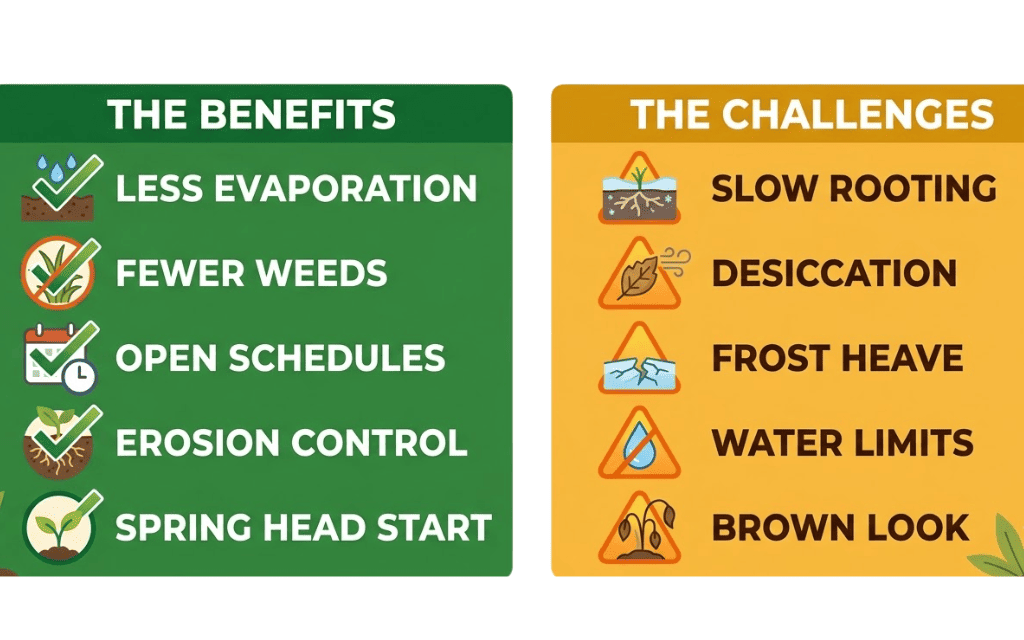
Winter sod trades fast establishments for lower water demand. The table below compares both sides for a Denver yard.
| Pros | Cons |
| Lower evaporation, so sod needs less frequent water | Little or no root growth until spring |
| Less weed competition while weeds are dormant | Desiccation from dry wind and sun |
| More open schedules with installers and sod suppliers | Freeze-thaw cycles that can lift loose seams |
| Fast cover for mud and erosion on bare lots | Watering limits under 2026 drought rules |
| A head start on spring green-up | A brown, dormant look until spring |
Is winter sod right for your yard? A 5-point checklist
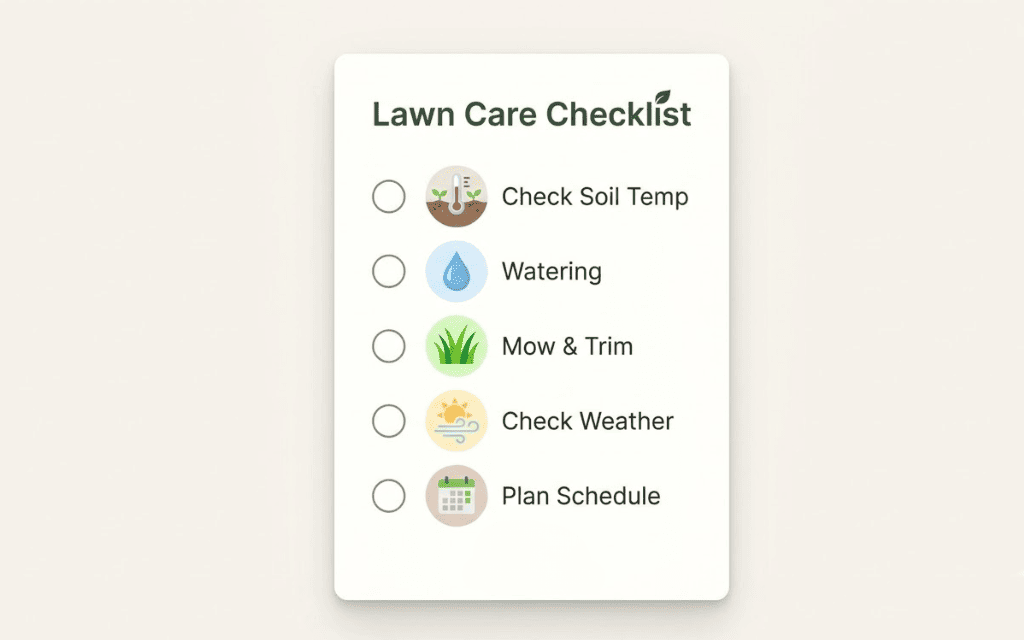
Answer these 5 questions before you order sod. A “no” to either of the first 2 means you should wait for spring.
- Soil: Is the soil unfrozen, workable, and already prepared?
- Water: Does your water provider allow lawn watering or a permit right now?
- Grass type: Are you installing a cool-season sod, such as Kentucky bluegrass or tall fescue?
- Exposure: Is the area sheltered, or does it face south, west, wind, or a slope?
- Deadline: Do you face a hard deadline, such as a Certificate of Occupancy, a home sale, or an erosion problem?
How to lay sod in winter when conditions allow
To lay sod in winter, finish soil prep before the ground freezes, then install on a mild, dry day.
Prepare the soil before the ground freezes
Start with a soil test. CSU Extension recommends mixing 3 to 5 cubic yards (2.3 to 3.8 cubic meters) of compost or other organic matter per 1,000 square feet (93 square meters). Till it into the top 6 to 8 inches (15 to 20 cm) of soil.
Remove old turf and thatch first. CSU warns against laying sod on an existing lawn, a thatch layer, or heavily compacted soil. Moisten the soil 6 to 8 inches (15 to 20 cm) deep a few days before delivery.
Install sod the same day it arrives
Lay sod within 48 hours of harvest, as University of Georgia turf experts advise. Sod on a pallet loses moisture, while sod on the ground gains warmth stored in the soil.
Cover pallets with a tarp in cold wind. Let frozen rolls thaw before you unroll them, because frozen sod cracks.
Lay tight seams, roll, and work across slopes
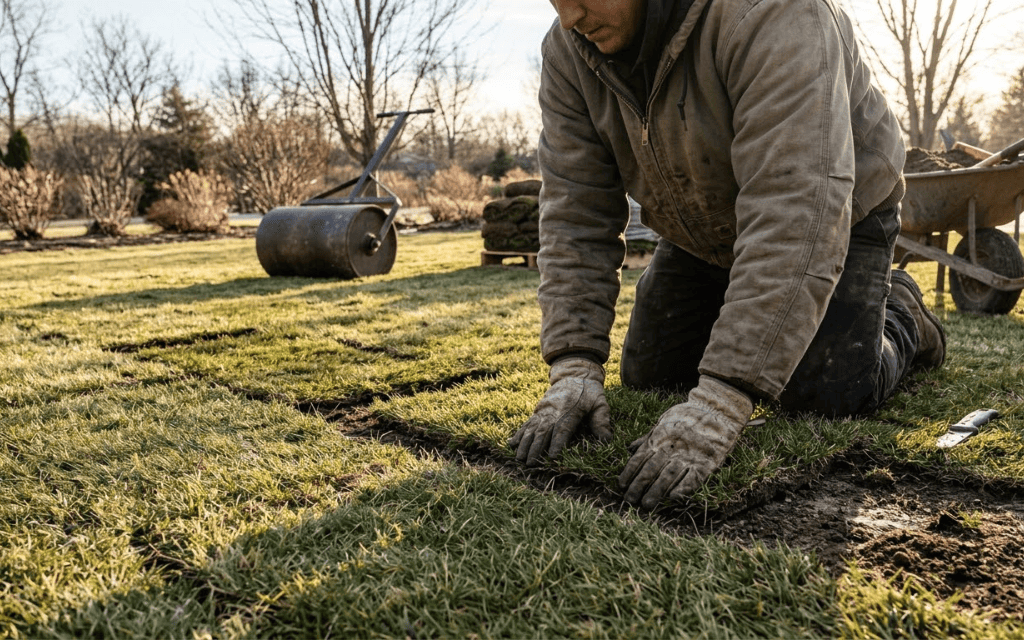
Butt each piece tight against the next and stagger the seams like brickwork. Gaps let cold, dry air reach the edges. Roll the lawn with a sod roller to press roots into the soil.
On slopes, lay strips across the grade, not up and down it. Pin pieces with sod staples so freeze-thaw cycles and runoff cannot shift them.
Water right after installation, where rules allow
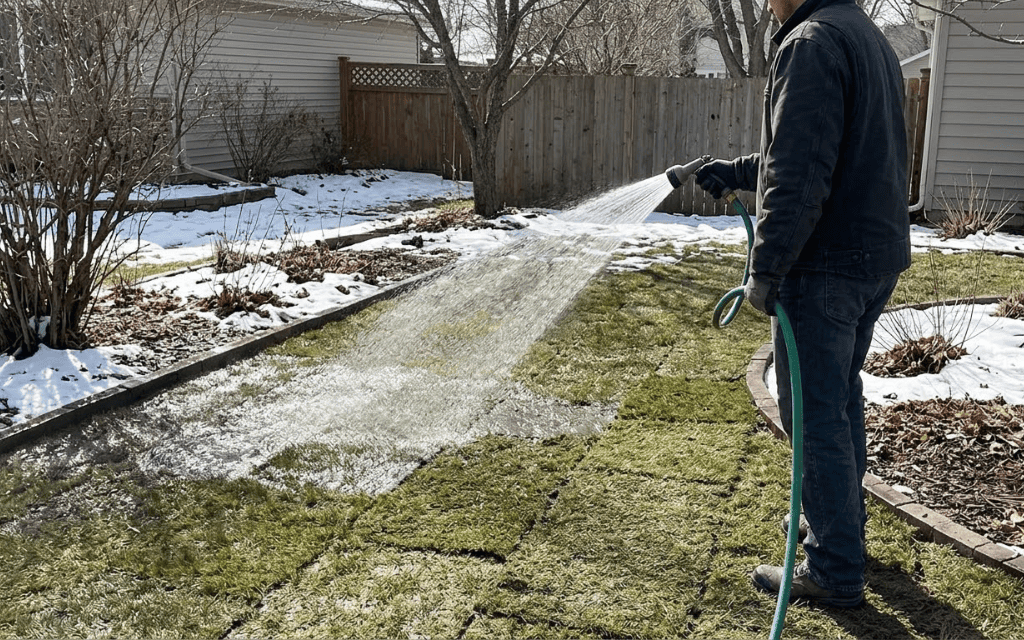
Water new sod right away so moisture reaches the soil under it. CSU advises watering only when water can soak into the sod and soil, and stopping before puddles or ice form. If your provider bans lawn watering, this step fails, and the project should wait.
Caring for new sod through a Colorado winter
Winter care for new sod focuses on moisture, traffic, and patience until spring.
Winter watering: when and how much
CSU Extension notes that winter watering may mean every 2 to 3 weeks during an especially dry winter. Dormant sod needs only enough water to keep the top 1 to 2 inches (2.5 to 5 cm) of soil moist, according to University of Georgia turf experts.
Water at midday when air temperatures sit above freezing and the soil is not frozen. Disconnect the hose afterward so the spigot does not freeze. Our watering new sod guide covers schedules for other seasons.
Snow, ice melt, and foot traffic
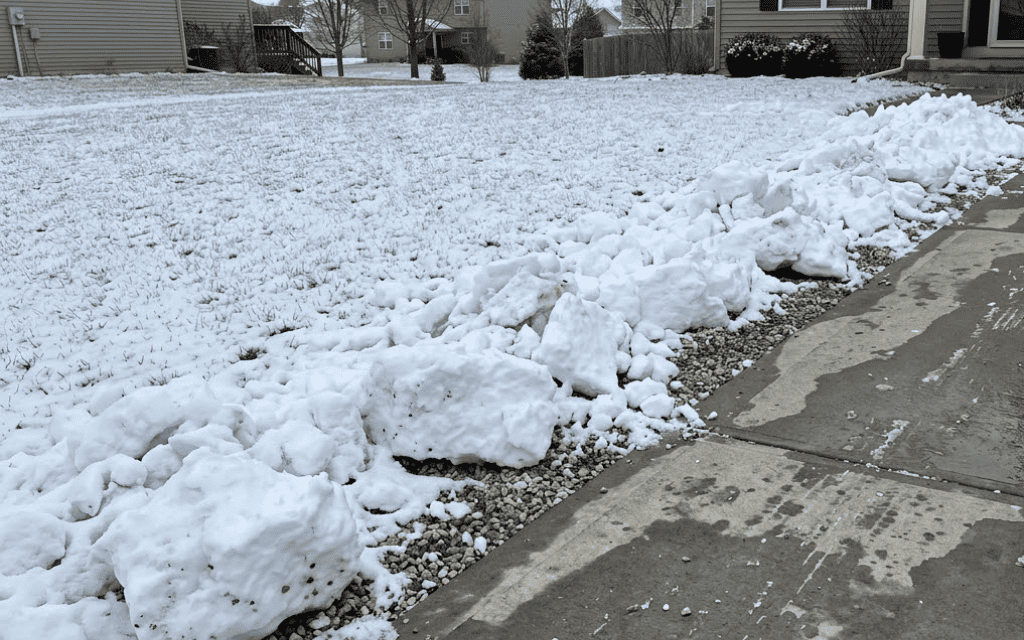
Snow cover helps new sod. It adds moisture and blocks drying wind. Avoid piling shoveled snow on one spot, because deep, packed piles trap moisture and invite snow mold.
Keep rock salt and other de-icers away from new sod. Stay off frozen sod, too, because frozen grass blades break under foot traffic.
Hold off on fertilizer and mowing until spring
Skip nitrogen fertilizer on dormant sod. Arkansas and Texas A&M extension guidance advises waiting until the grass greens up, because dormant roots cannot use the nitrogen. Mow for the first time after spring growth starts and the sod resists a gentle tug.
Signs your winter sod is establishing
Healthy winter sod shows 3 signs: corners resist a gentle tug, edges stay flat against the soil, and the lawn greens evenly in spring. A tan or brown color in January signals dormancy, not failure.
What to do instead if you can’t lay sod this winter
If the ground is frozen or your provider bans lawn watering, use winter to set up a stronger spring lawn. These 4 steps keep the project moving:
- Prepare the soil now: Test, amend, and grade on workable days, then lay sod in spring when roots can grow and watering resumes.
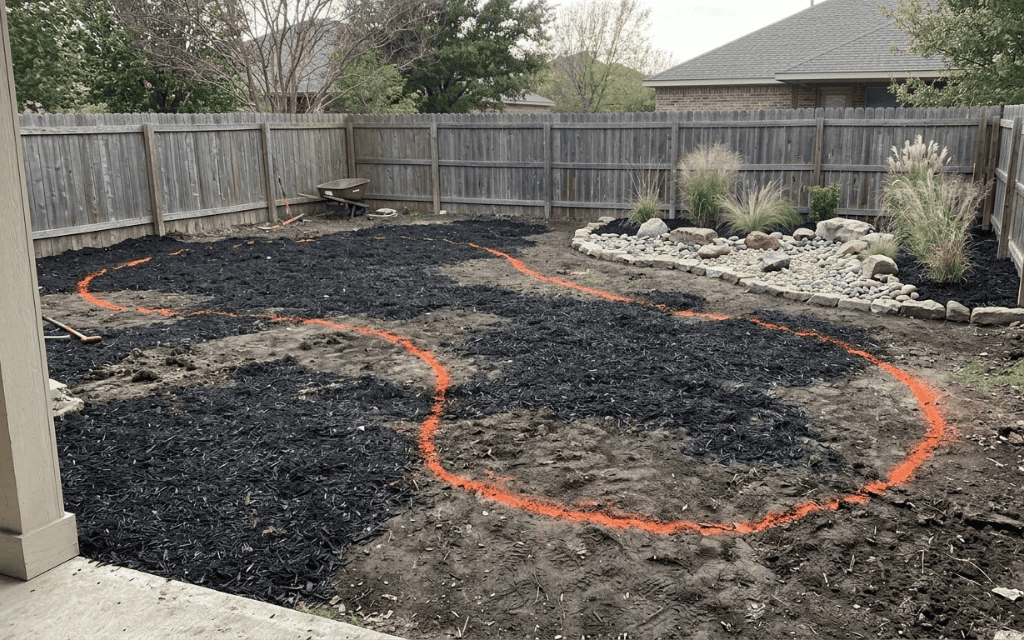
- Cover bare soil with mulch: Professional mulch installation reduces mud, wind erosion, and weeds on bare beds and borders.
- Redesign part of the yard: Xeriscape landscaping replaces thirsty turf with water-wise plants, rock, and mulch that handle drought rules better.
- Plan irrigation upgrades: A well-designed system from our sprinkler installation team gives spring sod even coverage on legal watering days.
Sod installation services from Mile High Lifescape
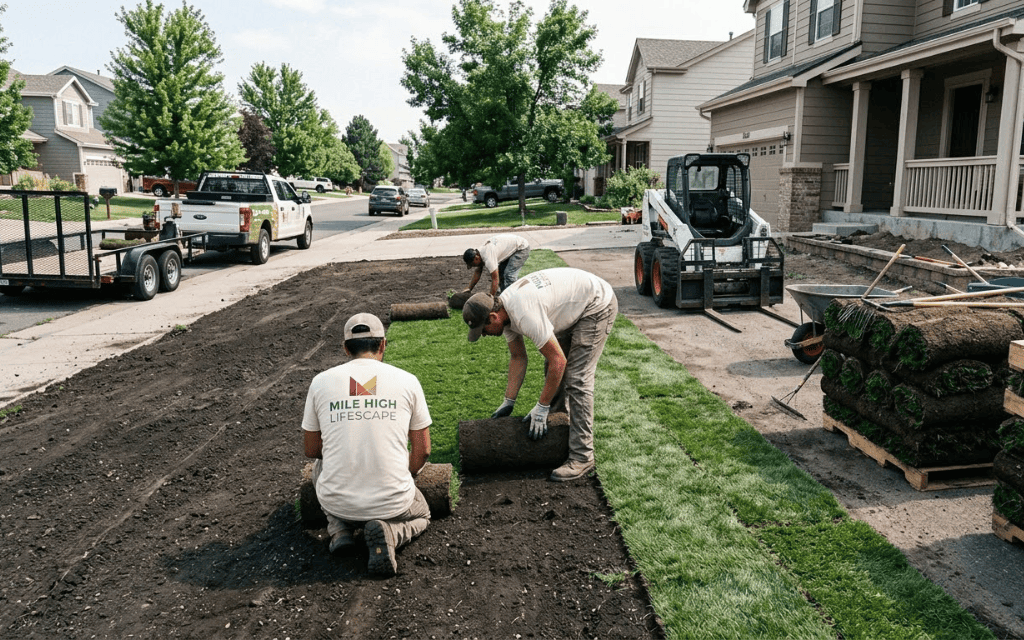
Mile High Lifescape provides professional Sod Installation for homes and commercial properties across Denver Metro. When homeowners ask us, “Can you lay sod in winter?”, our answer depends on their soil, grass type, and current water rules. With over 20 years of experience, our team knows how freeze dates, clay soil, and drought restrictions affect a new lawn here.
Every project starts with a site assessment of your soil, sunlight, layout, and water rules. Then we tell you plainly if your yard should get sod now or wait for spring.
Our sod installation covers 4 stages:
- Site preparation: We remove old turf, rocks, and debris for a level base.
- Soil enhancement: We add organic matter so roots grow deeper.
- Irrigation planning: We set up or adjust watering systems for even coverage.
- Aftercare guidance: We explain watering, mowing, and seasonal care.
Call us when you face a deadline, a slope, drainage problems, compacted clay, or unclear water rules.
FAQs about laying sod in winter
Will frost or a freeze kill new sod?
A light frost rarely kills dormant cool-season sod on its own. The bigger threats are drying wind and freeze-thaw cycles that lift unrooted pieces. Tight seams, rolling, and moist soil reduce both risks.
Can I lay sod before a snowstorm?
Yes, if you lay it on unfrozen, prepared soil first. Snow adds moisture and insulation.
Is it too late to lay sod in November in Denver?
November is usually too late for reliable rooting. Denver’s average first freeze comes on October 7. Our guide to laying sod in the fall explains the safer September window.
Can I install sod in Denver during the 2026 watering ban?
Only with a qualifying permit. Denver Water issues establishment permits in winter 2026 only for 3 project types, including a Certificate of Occupancy. Without one, you cannot water a new lawn.
Should I fertilize sod installed in winter?
No. Wait until the sod greens up in spring. Dormant roots cannot use nitrogen, and early feeding can feed weeds instead.
Winter sod works only when unfrozen soil, cool-season grass, and legal watering line up. For most Denver Water customers in 2026, spring is the better plan. Still asking, “Can you lay sod in winter?” Call Mile High Lifescape at (303) 877-9091 for a site check of your yard.