The types of grass in Tennessee fall into 2 groups: cool-season grasses, such as tall fescue, and warm-season grasses, such as bermudagrass and zoysiagrass. This guide helps Tennessee homeowners match a lawn grass to their region, sunlight, and upkeep budget. We built it on University of Tennessee (UT) Extension turfgrass research updated in March 2026.
What types of grass grow in Tennessee?
Tennessee grows both cool-season and warm-season lawn grasses because the state sits in the turfgrass transition zone. Summers run too hot for many northern grasses, and winters run too cold for many southern ones.
Tennessee stretches 440 miles (708 km) from the Mississippi River to the Blue Ridge Mountains. UT Extension divides that span into 6 natural land regions, each with its own elevation, soils, and winter lows.
Cool-season grasses: green most of the year
Cool-season grasses grow fastest at air temperatures of 60–75°F (16–24°C). UT Extension names tall fescue, fineleaf fescues, and Kentucky bluegrass as Tennessee’s primary cool-season species.
These grasses stay green through much of the winter but suffer heat and drought stress in July and August, when humid weather invites brown patch disease.
Warm-season grasses: built for Tennessee summers
Warm-season grasses grow fastest at air temperatures of 80–95°F (27–35°C). Bermudagrass and zoysiagrass lead this group in Tennessee.
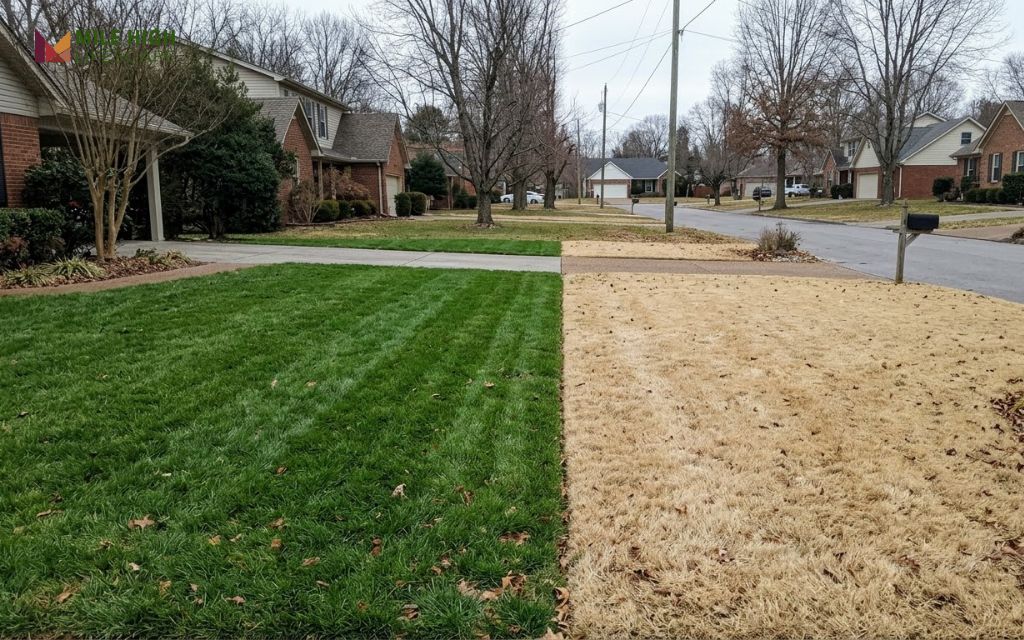
These grasses go dormant once soil temperatures drop below about 50–55°F (10–13°C). They spread by stolons, rhizomes, or both and repair worn spots on their own, but they risk winter injury in colder parts of the state.
Tennessee grass types compared at a glance
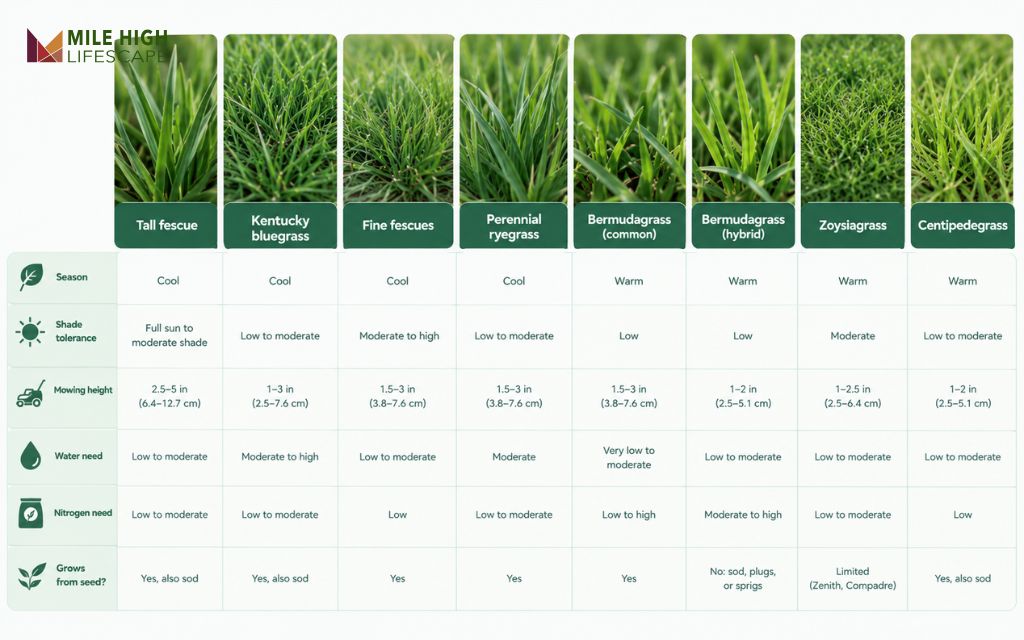
The table below compares the 7 grasses on the traits that decide success in a Tennessee yard.
| Grass | Season | Shade tolerance | Mowing height | Water need | Nitrogen need | Grows from seed? |
| Tall fescue | Cool | Full sun to moderate shade | 2.5–5 in (6.4–12.7 cm) | Low to moderate | Low to moderate | Yes, also sod |
| Kentucky bluegrass | Cool | Low to moderate | 1–3 in (2.5–7.6 cm) | Moderate to high | Low to moderate | Yes, also sod |
| Fine fescues | Cool | Moderate to high | 1.5–3 in (3.8–7.6 cm) | Low to moderate | Low | Yes |
| Perennial ryegrass | Cool | Low to moderate | 1.5–3 in (3.8–7.6 cm) | Moderate | Low to moderate | Yes |
| Bermudagrass (common) | Warm | Low | 1.5–3 in (3.8–7.6 cm) | Very low to moderate | Low to high | Yes |
| Bermudagrass (hybrid) | Warm | Low | 1–2 in (2.5–5.1 cm) | Low to moderate | Moderate to high | No: sod, plugs, or sprigs |
| Zoysiagrass | Warm | Moderate | 1–2.5 in (2.5–6.4 cm) | Low to moderate | Low to moderate | Limited (Zenith, Compadre) |
| Centipedegrass | Warm | Low to moderate | 1–2 in (2.5–5.1 cm) | Low to moderate | Low | Yes, also sod |
The nitrogen column follows UT’s yearly scale: “low” means 1 lb or less of nitrogen per 1,000 sq ft (0.5 kg per 100 m²), and “moderate to high” means 3–5 lb (1.5–2.4 kg per 100 m²). Shortlist 2 or 3 grasses, then check them against your region.
Cool-season grass types in Tennessee
Tennessee’s cool-season lawns rest on 4 grasses: tall fescue, Kentucky bluegrass, fine fescues, and perennial ryegrass. Each plays a distinct role, from main lawn to winter cover.
Tall fescue: turf-type vs. Kentucky 31
Tall fescue is the most common cool-season lawn grass in Tennessee. It has a bunch-type growth habit, moderate drought and shade tolerance, and adapts to a wide range of soil conditions.
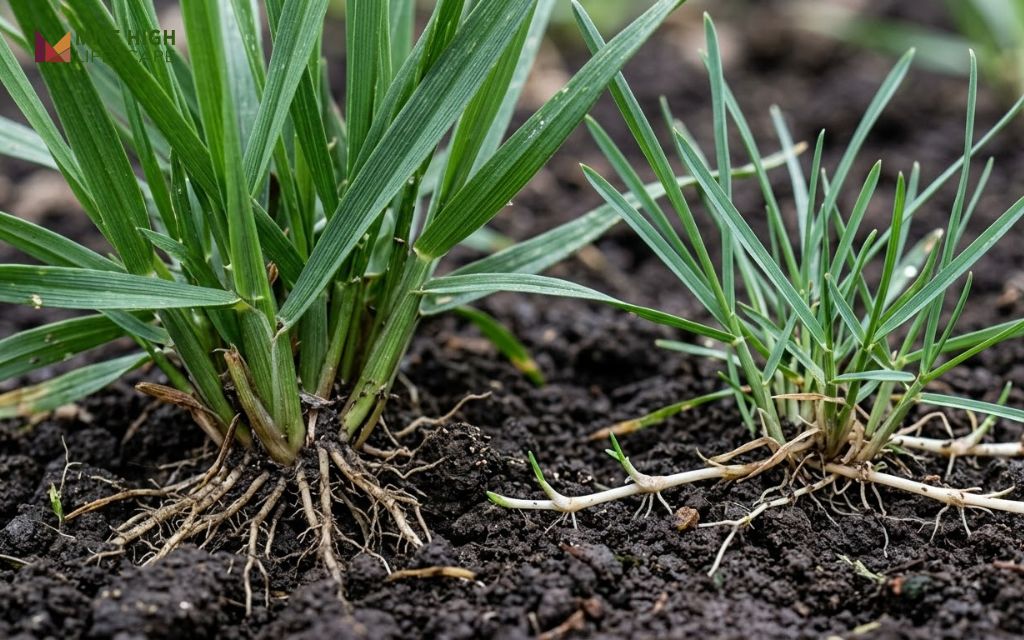
Bunch-type growth means tall fescue spreads by tillers, not runners, so thin patches need fall interseeding. Mow it at 2.5–5 in (6.4–12.7 cm).
Kentucky 31 (KY-31), released in 1943, is the tall fescue most people know. The 1979 release of ‘Rebel’ started the turf-type line, with finer leaves, darker color, and better disease tolerance. When we reviewed UT’s 2026 guide, we found a clear split: turf-type blends for front lawns, KY-31 for low-input utility areas.
Kentucky bluegrass
Kentucky bluegrass forms a dense, dark green, fine-textured sod that spreads by rhizomes. It repairs itself, which bunch-type tall fescue cannot do.
Its weak points are shallow roots and high water demand. A pure bluegrass lawn in Tennessee needs routine irrigation and often goes dormant in summer drought.
That is why bluegrass usually works as a blend partner. Most tall fescue sod sold in Tennessee contains about 10–15% Kentucky bluegrass to add strength and repair ability. Heat-tolerant hybrids, such as ‘Reveille’, ‘Bandera’, and ‘Thermal Blue’, survive summer better.
Fine fescues: Tennessee’s shade specialists
Fine fescues include 5 narrow-leaf grasses: chewings, hard, slender creeping red, strong creeping red, and sheep fescue. Their needle-like blades grow slowly and need little nitrogen.
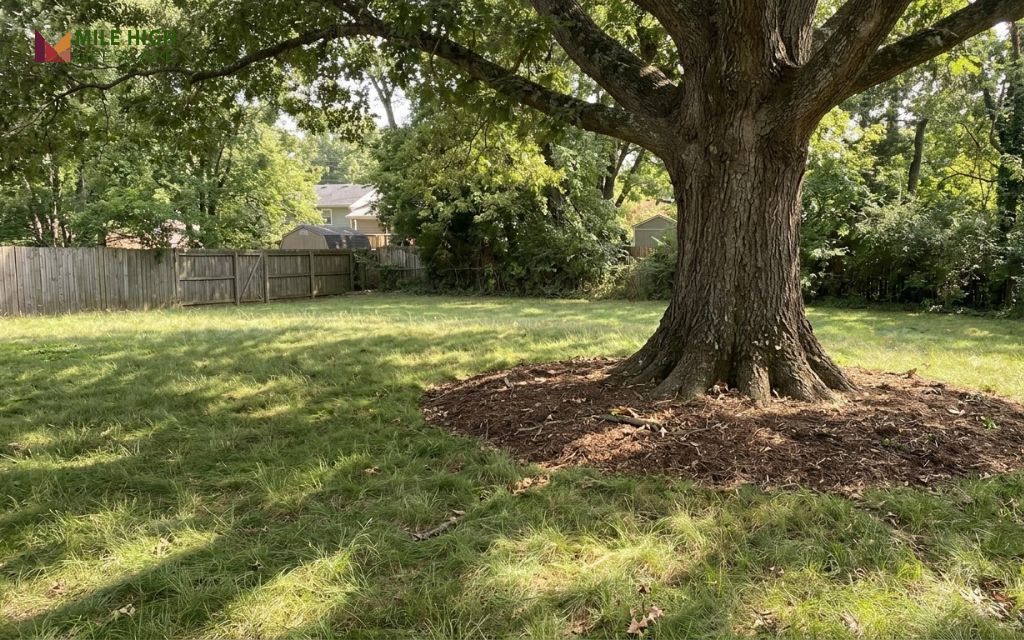
Fine fescues have the highest shade tolerance among Tennessee lawn grasses, so seed companies sell them in shade mixtures. Their limit is heat. UT reports that poor heat tolerance cuts their lifespan in much of the state, and hard fescue handles heat better than chewings or creeping red. Use them in cool, shaded, well-drained spots, usually blended with tall fescue.
Perennial ryegrass: a helper, not a permanent lawn
Perennial ryegrass germinates faster than tall fescue or bluegrass and gives quick, dark green cover. In Tennessee, it serves 2 jobs: overseeding dormant bermudagrass for winter color and speeding up establishment in cool-season mixes.
It struggles as a permanent lawn. Tennessee summer heat and drought weaken it, and UT discourages mixing ryegrass with fescues and bluegrass because the fast seedlings can dominate the stand. Annual ryegrass is a separate, short-lived species for temporary erosion control.
Warm-season grass types in Tennessee
Tennessee’s warm-season lawns rely on 2 primary grasses, bermudagrass and zoysiagrass, plus centipedegrass in limited areas. All 3 lose color in fall, rest through winter, and resume growth in late spring.
Bermudagrass: common vs. hybrid
Bermudagrass is the standard grass for sunny, high-traffic Tennessee lawns. It spreads aggressively by stolons and rhizomes, tolerates drought and foot traffic, and grows best in fertile, well-drained soil.
It needs 6 or more hours of direct sun, thins under trees, and creeps into flower beds.
Common bermudagrass, such as ‘Arden 15’, ‘Rio’, and ‘Yukon’, grows from seed. Hybrid bermudagrass, such as ‘Latitude 36’, ‘TifTuf’, and ‘Tifway 419’, produces no viable seed and goes in as sod, plugs, or sprigs. Cold-tolerant cultivars like ‘Latitude 36’ pushed bermudagrass into northeast Tennessee.
Zoysiagrass
Zoysiagrass forms a dense, carpet-like turf that crowds out weeds. It tolerates drought, takes slightly more shade than bermudagrass, and grows much more slowly.
UT rates 2 Zoysia japonica varieties, ‘Meyer’ and ‘Palisades’, as more cold tolerant than bermudagrass. ‘Zenith’ and ‘Compadre’ grow from seed, while most other zoysias go in as sod, plugs, or sprigs. Zoysia matrella types, such as ‘Zeon’, ‘Cavalier’, and ‘Royal’, have finer texture.
Zoysia rewards patience: 4-inch (10 cm) plugs set 9 inches (23 cm) apart may need 2 growing seasons to cover the ground. UT advises against ryegrass overseeding on zoysia.
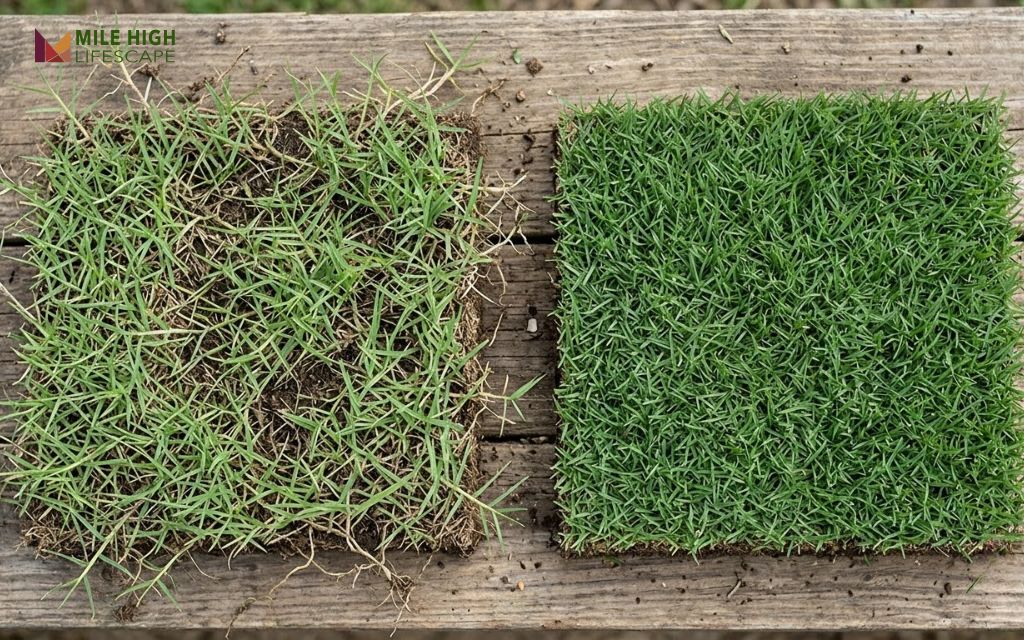
Centipedegrass: why it stays rare in Tennessee
Centipedegrass is a slow, low-input grass with an apple-green color and above-ground stolons only. It tolerates acidic soil and needs little nitrogen.
UT’s 2026 guide does not recommend centipedegrass widely in Tennessee because it survives winter poorly. The ‘TifBlair’ variety offers better cold tolerance, but sod is hard to find locally. Treat centipede as a niche choice for mild, low-traffic West Tennessee sites.
What about St. Augustine and buffalograss?
St. Augustinegrass appears in UT material only as a shade-tolerance example, not as an adapted Tennessee lawn grass; it lacks the cold hardiness Tennessee winters demand. Buffalograss, a Great Plains native, also sits outside UT’s Tennessee tables and suits dry western climates, such as Colorado’s Front Range.
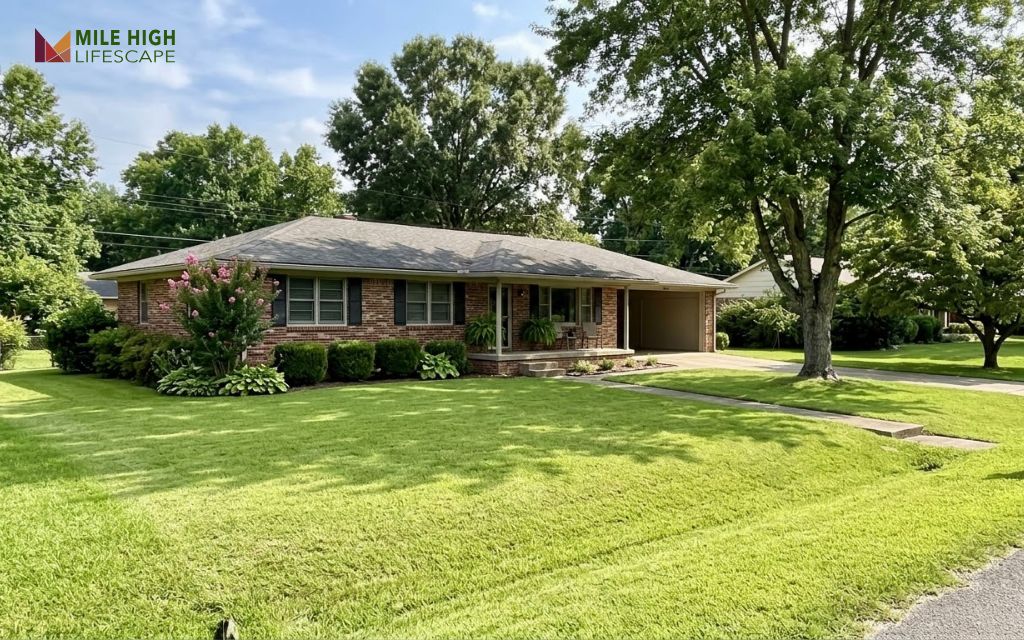
Best grass for each region of Tennessee
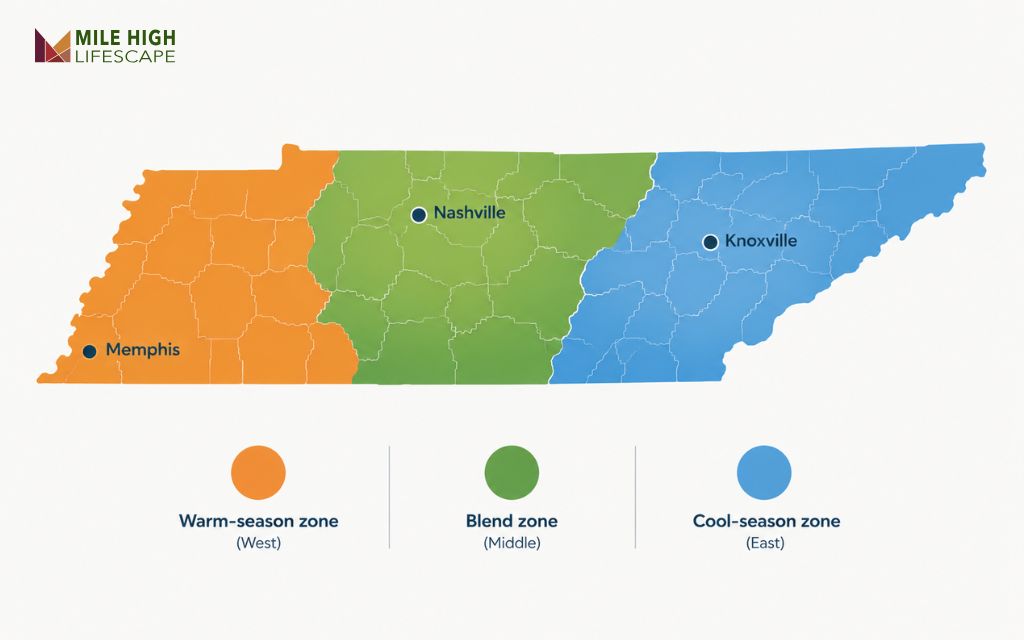
Tennessee’s 3 grand divisions run warmer and lower from east to west. Your region narrows the 7 grasses to 2 or 3 strong candidates.
East Tennessee: cool-season country
The best lawn grass for East Tennessee is a turf-type tall fescue blend, with Kentucky bluegrass or fine fescue added for shade. UT states that cool-season grasses are generally preferred in the region.
Elevation drives this choice. The Blue Ridge averages about 5,000 ft (1,524 m), where warm-season grasses risk winter kill. In the Ridge and Valley around Knoxville, severe lows and repeated frosts often injure cold-tolerant bermudagrass and zoysiagrass.
The Cumberland Plateau rises to 1,500–1,800 ft (457–549 m), with cool-season grasses on high ground and both groups in valleys. For the best grass seed in East Tennessee, sow a turf-type tall fescue blend from late August to mid-October.
Middle Tennessee: where both groups compete
Middle Tennessee is the transition zone inside the transition zone, so the sun pattern decides the grass. On the Highland Rim, UT reports that cool-season grasses often outperform ‘Arizona Common’ bermudagrass and other varieties prone to winter kill. In the Nashville Basin, which spans roughly 60 miles (97 km) east to 80 miles (129 km) south of Nashville, rich soils support both groups in full sun. Plant tall fescue in shade and cold-tolerant bermudagrass or zoysiagrass in sun.
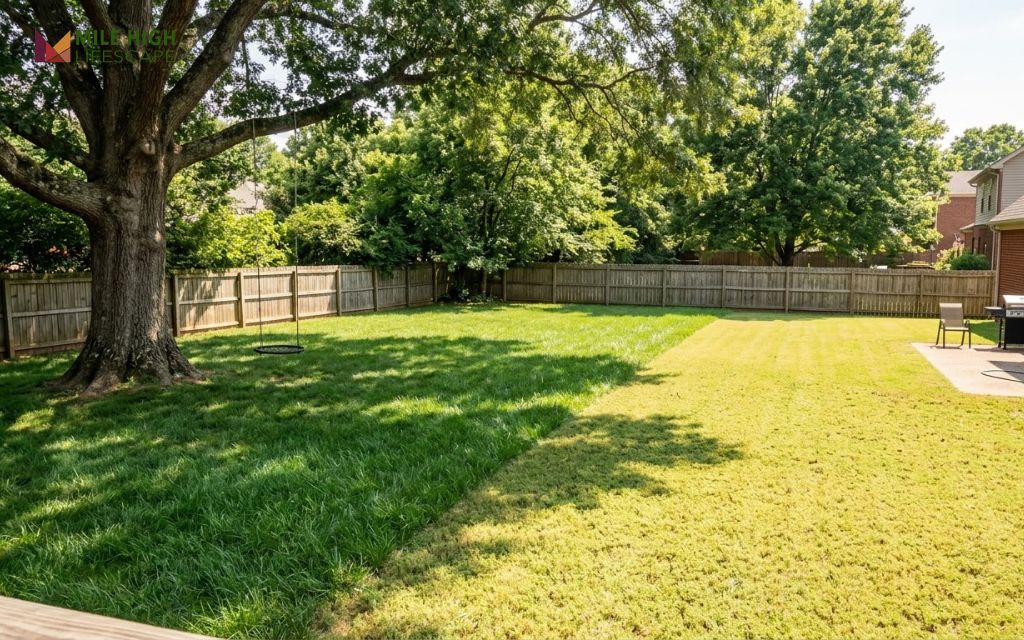
West Tennessee: warm-season territory
West Tennessee favors warm-season grasses. UT reports that bermudagrass, centipedegrass, and zoysiagrass adapt well to well-drained, full-sun sites in the Gulf Coastal Plain, which includes the Delta at under 300 ft (91 m) elevation.
Some guides name Kentucky bluegrass as the top West Tennessee pick, but that claim conflicts with UT data, since bluegrass needs routine irrigation in long, humid summers. For Memphis-area shade, the Memphis Area Master Gardeners suggest zoysias such as ‘Palisades’, ‘Cavalier’, and ‘Royal’, or tall fescue.
How to choose the best grass for your Tennessee lawn
4 site factors decide the best grass for a Tennessee lawn: hours of direct sun, foot traffic, upkeep budget, and the need for winter color.
Count your hours of direct sun
Count direct sun hourly on a clear June or July day, when trees carry full leaves. UT’s 2026 guide uses 4 shade levels:
- Low shade tolerance: needs 6 or more hours of direct sun. Bermudagrass fits here.
- Low to moderate tolerance: needs 4–6 hours. Kentucky bluegrass, perennial ryegrass, and centipedegrass fit here.
- Moderate to high tolerance: needs 2–4 hours, or a full day of filtered light. Hard fescue and sheep fescue fit here.
- High tolerance: needs under 2 hours with steady filtered light. Creeping red fescue and chewings fescue fit here.
Tall fescue and zoysiagrass carry a “moderate” rating, so they sit between the 4–6 hour and 2–4 hour groups. Spots with less light than the last level rarely hold turf in Tennessee heat, and a mulched bed with shade plants serves them better.
Match the grass to how you use the yard
Bermudagrass recovers quickest from kids, pets, and games. Zoysiagrass tolerates moderate traffic but heals slowly, and tall fescue handles moderate traffic with fall reseeding. Fine fescues suit low-traffic corners.

Weigh maintenance, water, and fertilizer
UT reports that most Tennessee lawns need no more than 1 inch (2.5 cm) of water per week in summer, rainfall included, and bermudagrass and zoysiagrass often perform well with about 0.5 inch (1.3 cm).
Kentucky bluegrass needs the most water. Hybrid bermudagrass carries the highest nitrogen and mowing demands. Mow any grass when it reaches 1.5 times its target height, so each cut removes no more than one-third of the blade.
Decide whether winter color matters
Winter color splits the 2 groups. Tall fescue and other cool-season grasses stay green through much of the winter, while bermudagrass, zoysiagrass, and centipedegrass turn tan from first frost to spring green-up.
Ryegrass overseeding adds winter green to bermudagrass, but UT warns the ryegrass competes with it for water, light, and nutrients in spring.
Best grass seed for Tennessee (and when you need sod instead)
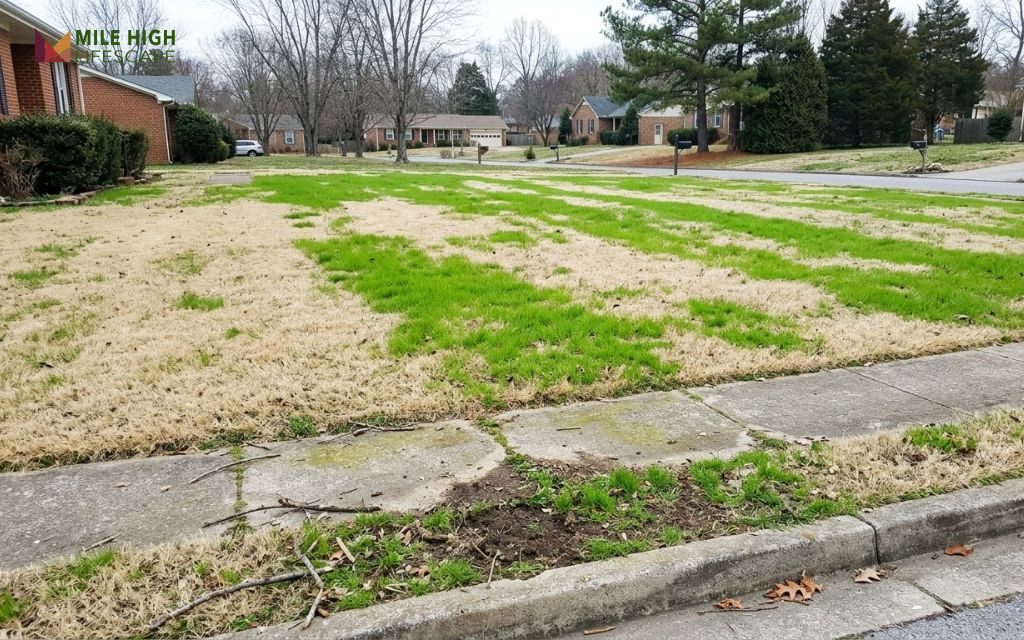
The best grass seed for Tennessee is a turf-type tall fescue blend for most cool-season lawns and a common bermudagrass variety for sunny warm-season lawns.
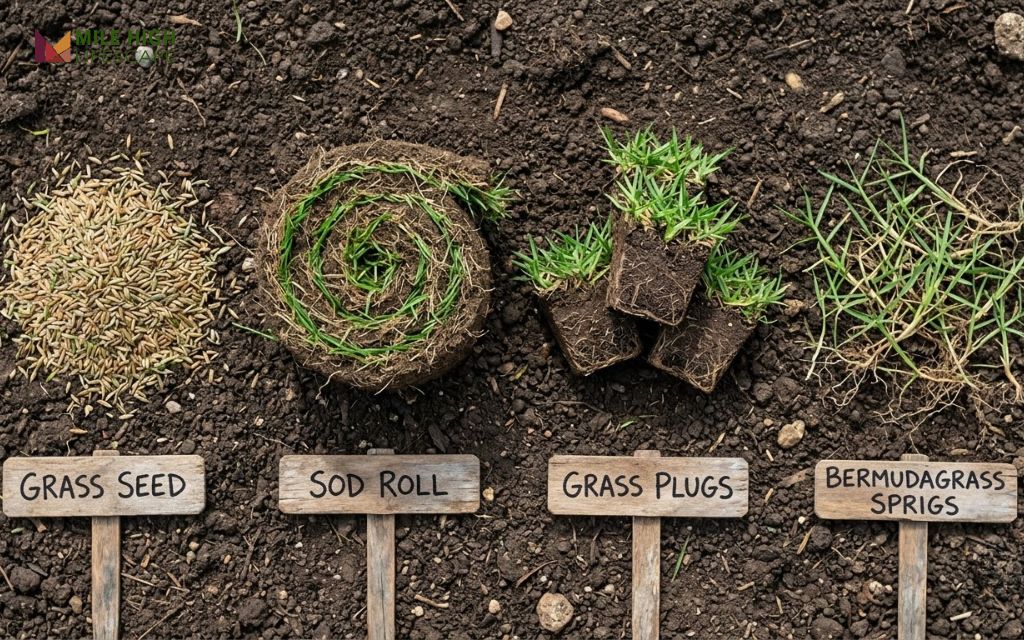
Grasses you can seed vs. sod-only grasses
Your grass choice decides the planting method. UT’s 2026 guide sorts the options this way:
- Seed or sod: tall fescue, Kentucky bluegrass, common bermudagrass, and centipedegrass.
- Seed only: fine fescues and perennial ryegrass.
- Sod, plugs, or sprigs only: hybrid bermudagrass and most zoysiagrasses, with ‘Zenith’ and ‘Compadre’ as seeded exceptions.
Seed costs the least but takes the longest to establish and faces more weed pressure. Sod costs more up front but gives instant cover, faster use, and better erosion control on slopes.
Choosing the best fescue grass seed for Tennessee
The best fescue grass seed for Tennessee is a blend of 2 or more turf-type tall fescue varieties. Blends spread risk, since each variety brings different disease, drought, or shade tolerance.
UT lists 10 low-input tall fescue varieties for Tennessee, including ‘Firecracker GLS’, ‘Grande 3’, ‘SuperSonic’, and ‘Xanadu’. Variety trials from NTEP, A-LIST, and the Turfgrass Water Conservation Alliance (TWCA) help narrow the choice.
Sow tall fescue at about 5 lb per 1,000 sq ft (2.4 kg per 100 m²), which places roughly 9 seeds per square inch. Kentucky bluegrass needs only 1–1.5 lb per 1,000 sq ft (0.5–0.7 kg per 100 m²) because its seeds are far smaller.
How to read a seed label
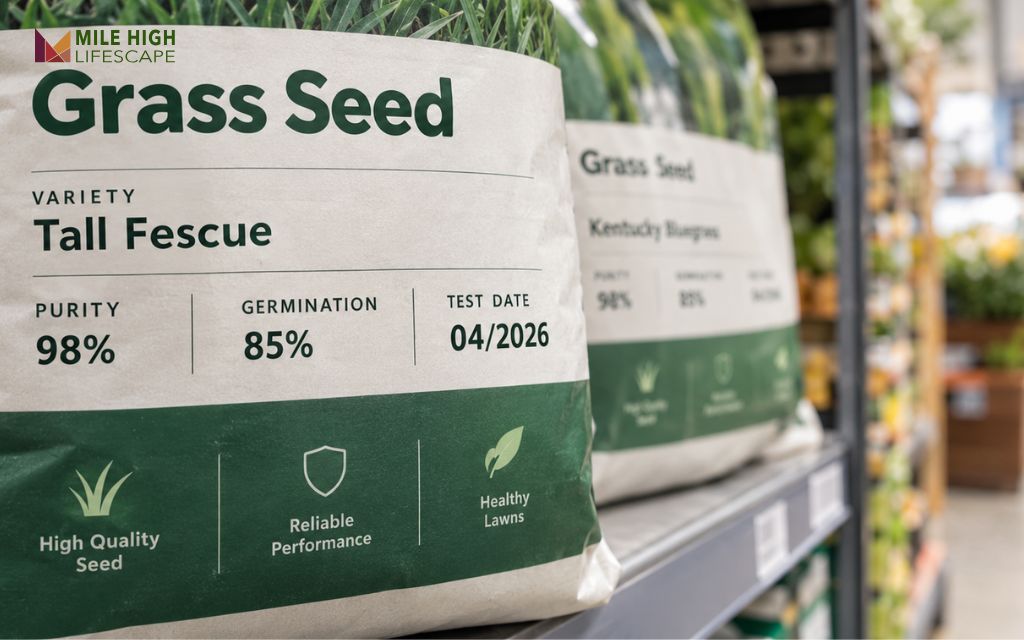
Every bag of turfgrass seed sold in Tennessee must carry a label that lists each species above 5% by weight, the germination rate, weed seed content, and the month and year of the germination test. The test stays valid for 9 months, so check the date before you buy.
Compare bags by pure live seed (PLS): multiply purity by germination and divide by 100. A bag with 99.58% purity and 90% germination holds 88.72% PLS, so live seed costs about 13% more than the shelf price.
When to plant grass in Tennessee
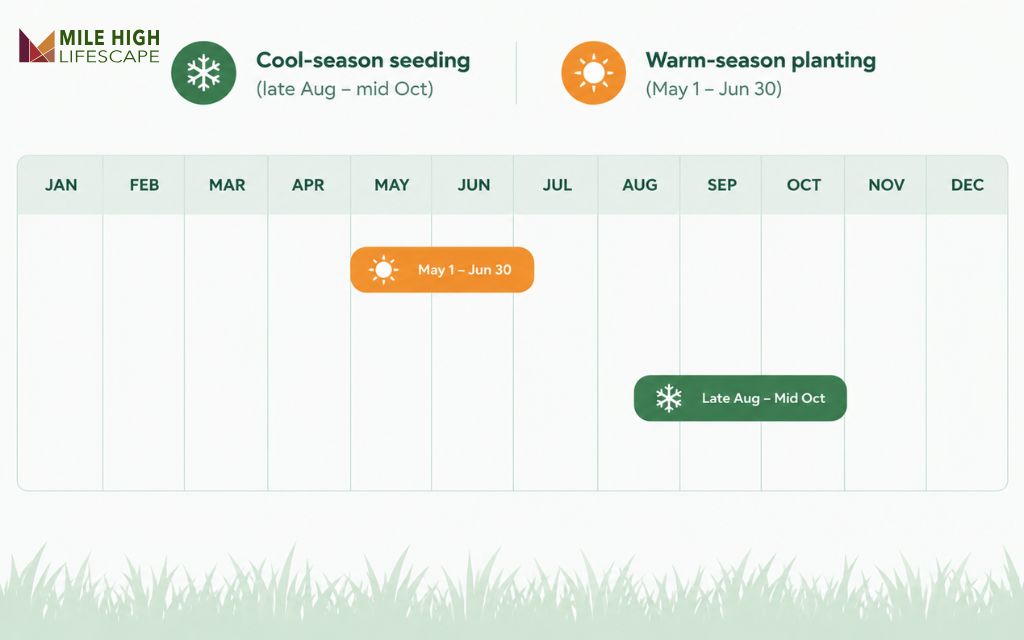
Planting dates in Tennessee depend on the grass group and planting method. UT Extension sets these windows:
| Grass group | Seed | Sod |
| Cool-season (tall fescue, Kentucky bluegrass, fine fescues) | Late August to mid-October; no later than mid-October | Most of the year when the ground is unfrozen; growers often pause shipping in hot, dry summer weather |
| Warm-season (bermudagrass, zoysiagrass, centipedegrass) | May 1 to June 30 for seed, plugs, or sprigs | Most of the year; dormant sod may need several weeks to months to root |
Cool-season seed germinates best as air temperatures cycle between 59°F and 82°F (15–28°C), and warm-season seed at 68–95°F (20–35°C). Under deciduous trees, sow cool-season seed from mid-August to mid-September for the most light before leaves return. Submit a soil test about 6 weeks before planting; UT prefers a soil pH of 6.0–6.5.
UT’s 2026 guide also separates 2 terms that people often mix up. Interseeding adds seeds of the same species to thicken a lawn, such as fescue into fescue. Overseeding adds a different species for seasonal color, such as ryegrass into bermudagrass.
How to tell which grass you already have
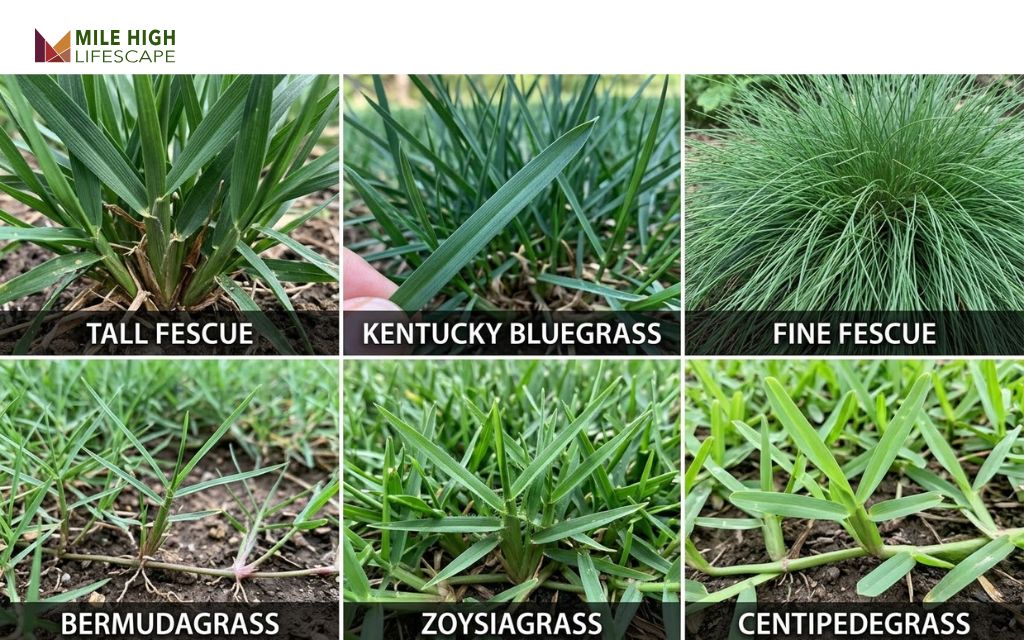
You can identify most Tennessee lawn grasses in 3 checks: winter color, growth habit, and leaf shape.
- Check winter color: Green in January points to a cool-season grass; tan points to bermudagrass, zoysiagrass, or centipedegrass.
- Check growth habit: Clumps with no runners point to tall fescue or fine fescue. Underground rhizomes point to Kentucky bluegrass. Surface runners point to bermudagrass, zoysiagrass, or centipedegrass.
- Check the blade: Tall fescue has wide, coarse blades. Kentucky bluegrass has a boat-shaped tip. Fine fescue looks like needles, and centipedegrass shows an apple-green tint.
How Tennessee lawn grasses compare to Colorado lawns
Tennessee and Colorado share several grass names, but each grass plays a different role in each state. Colorado’s Front Range is semi-arid, and Denver sits at about 5,280 ft (1,609 m).
| Grass | Role in Tennessee | Role in Colorado |
| Kentucky bluegrass | Blend partner; needs irrigation in summer | Most widely used lawn grass in Colorado (CSU Extension) |
| Turf-type tall fescue | Main lawn grass in East and Middle Tennessee | Common alternative to bluegrass; may need as much water in heavy clay |
| Bermudagrass and zoysiagrass | Primary warm-season lawns | Missing from CSU’s list of grasses that work well in Colorado |
| Buffalograss and blue grama | Absent from UT’s Tennessee tables | Native warm-season grasses; blue grama is Colorado’s state grass |
Colorado State University (CSU) Extension names Kentucky bluegrass the most widely used lawn grass in Colorado, followed by alternatives such as buffalograss, blue grama, and turf-type tall fescue. Denver Water notes that tall fescue in heavy clay may need as much water as bluegrass, because clay limits its deep roots.
With over 20 years of experience on Denver Metro lawns, we see water planning shape a Colorado lawn more than winter color does. If you move from Tennessee to the Denver area, expect a cool-season lawn, a drier summer, and stricter attention to irrigation.
Sod installation in Denver with Mile High Lifescape
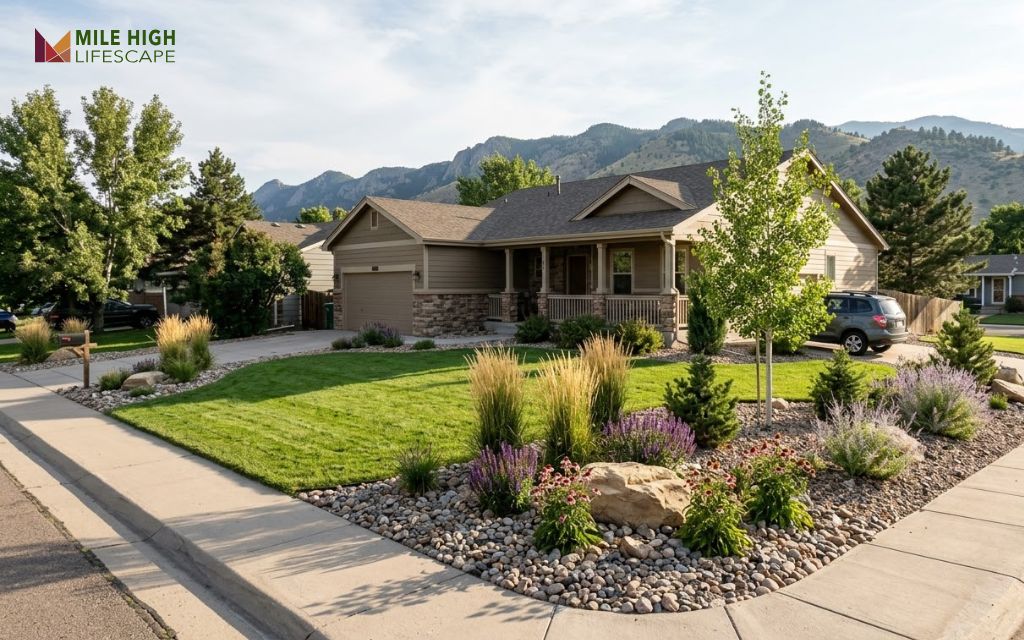
Mile High Lifescape provides Sod Installation for homeowners and commercial properties across the Denver Metro area. Many types of grass in Tennessee, such as bermudagrass and zoysiagrass, rarely suit Colorado, so Denver sod relies on cool-season grasses like Kentucky bluegrass and tall fescue. Sod gives a usable lawn sooner than seed, with less weed pressure and better erosion control on slopes.
Our team brings over 20 years of experience to every sod project, large or small. We prepare the soil, grade for drainage, and lay sod with firm soil contact, using proven landscaping techniques. We serve Denver, Lakewood, Littleton, Centennial, Broomfield, Thornton, Westminster, Highlands Ranch, and nearby communities.
New sod performs best with steady follow-up care. Our lawn care team handles mowing, fertilization, and weed control, while xeriscape landscaping cuts water use in areas where turf struggles. Call (303) 877-9091, Monday to Saturday, 8 a.m. to 5 p.m., to plan your new lawn.

Frequently asked questions about types of grass in Tennessee
What is the most common grass in Tennessee?
Tall fescue is the most common cool-season lawn grass in Tennessee. UT recommends it for most home lawns in East and Middle Tennessee, and its sod often carries 10–15% Kentucky bluegrass.
What grass stays green all year in Tennessee?
Tall fescue stays green the longest in Tennessee, including most of the winter, though it may thin in late summer.
What is the best grass for shade in Tennessee?
Fine fescues and tall fescue handle shade best among Tennessee lawn grasses. Zoysiagrass is the most shade-tolerant warm-season option.
Can you grow bermuda grass in East Tennessee?
Yes, in sunny, low-elevation yards with cold-tolerant varieties such as ‘Latitude 36’ or ‘Yukon’. In the Blue Ridge and higher plateau areas, bermudagrass risks winter kill.
When should I plant grass seed in Tennessee?
Plant cool-season seed from late August to mid-October and warm-season seed from May 1 to June 30. Sod goes in most of the year when the ground is unfrozen.
Should you mix different types of grass in Tennessee lawns, such as bermuda and fescue?
No, keep them in separate zones. Plant bermudagrass in full sun and tall fescue in shade, because a mixed stand shows 2 colors in winter and the grasses compete.
Is Kentucky 31 a good grass seed for Tennessee lawns?
Kentucky 31 suits utility areas better than front lawns. UT recommends turf-type tall fescue blends where appearance matters.