Knowing when to apply fungicide to lawn areas in Colorado saves Denver homeowners money and wasted effort. The right date depends on the disease, not the season. This guide covers soil temperature cues, repeat intervals, and the cases where you can skip the spray.
When to apply fungicide to lawn: the short answer
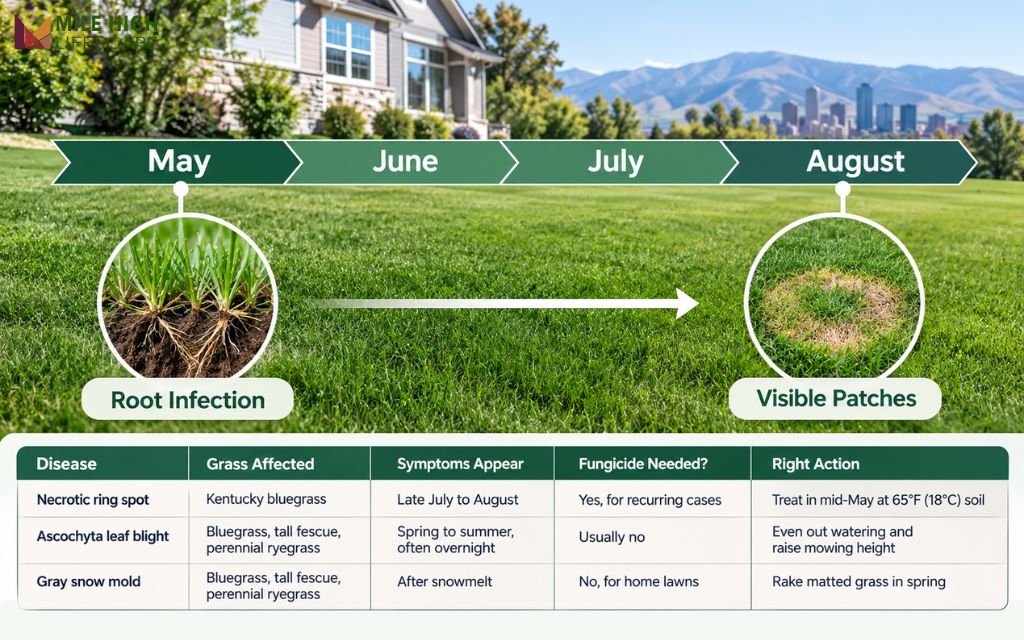
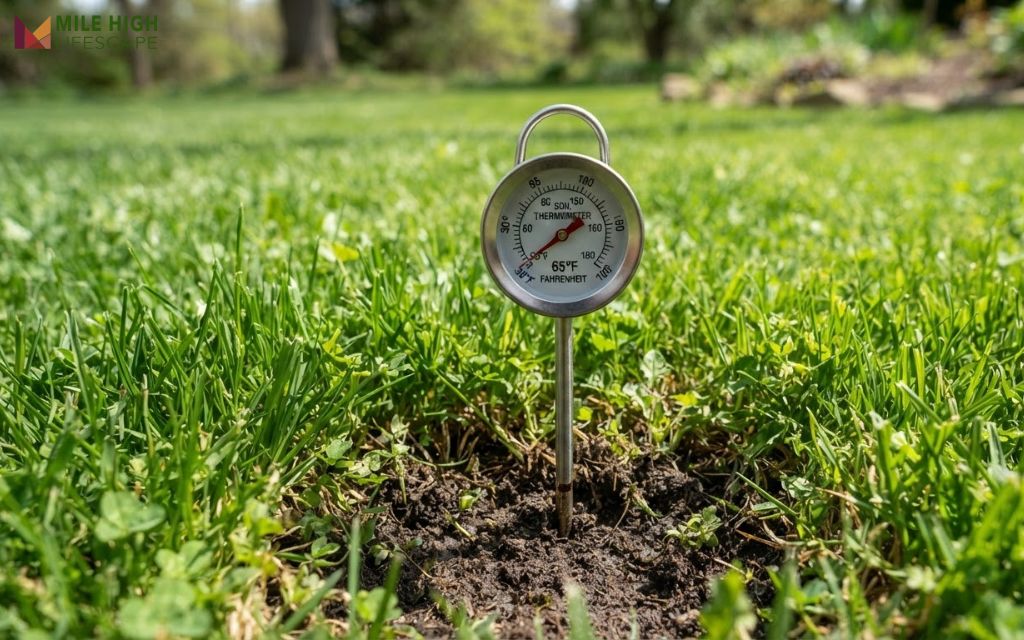
Apply lawn fungicide before a confirmed, recurring disease becomes active, not on a calendar date. For necrotic ring spot on Denver bluegrass, that means mid-May, when soil reaches 65°F (18°C) at 2 inches (5 cm). Ascochyta and snow mold usually recover without it.
Many online guides name early spring or fall as the best time to apply fungicide to lawn turf. Those dates often come from humid Southern lawns, which grow zoysia, St. Augustine, and centipede grass. Denver lawns face different turf and different diseases.
The table below matches 3 Colorado lawn diseases to the right fungicide decision.
| Disease | Grass affected | Symptoms appear | Fungicide needed? | Right action |
| Necrotic ring spot | Kentucky bluegrass | Late July to August | Yes, for recurring cases | Treat in mid-May at 65°F (18°C) soil |
| Ascochyta leaf blight | Bluegrass, tall fescue, perennial ryegrass | Spring to summer, often overnight | Usually no | Even out watering and raise mowing height |
| Gray snow mold | Bluegrass, tall fescue, perennial ryegrass | After snowmelt | No, for home lawns | Rake matted grass in spring |
Diagnosis drives every date in this table, so confirm the disease before you buy a fungicide for your yard.
Does your lawn need fungicide?
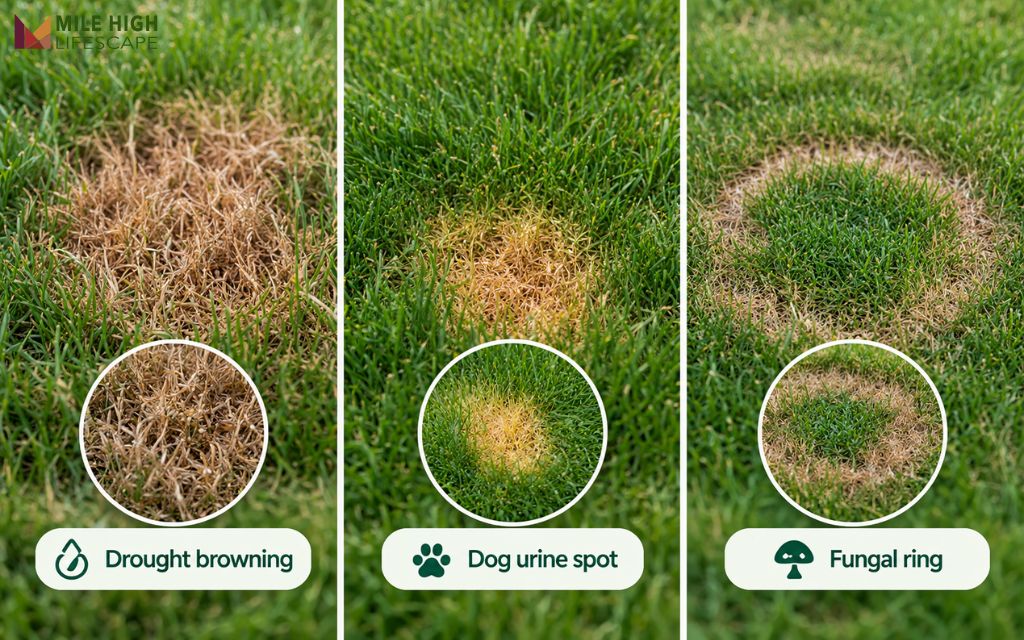
Your lawn needs fungicide only when a confirmed fungal disease keeps returning and better watering and mowing haven’t solved it. Brown grass alone proves nothing. Several common lawn problems mimic turf disease, and an antifungal grass treatment fixes none of them.
Problems fungicide won’t fix
These 5 problems look like lawn fungus but need a different repair:
- Drought stress: Dry turf browns across sunny areas. Ascochyta looks similar, but CSU Extension notes that it can appear overnight.
- Sprinkler gaps: Poor coverage leaves dry arcs and corners. Test each head, and consider sprinkler installation if the system can’t reach the whole lawn.
- Soil compaction: Hard clay starves roots of air and water. Lawn aeration relieves compacted soil.
- Dog urine: Salts and nitrogen burn small round spots, often with a dark green edge.
- Fertilizer burn: Excess product leaves bright streaks along spreader paths.
Get a real diagnosis before you buy anything
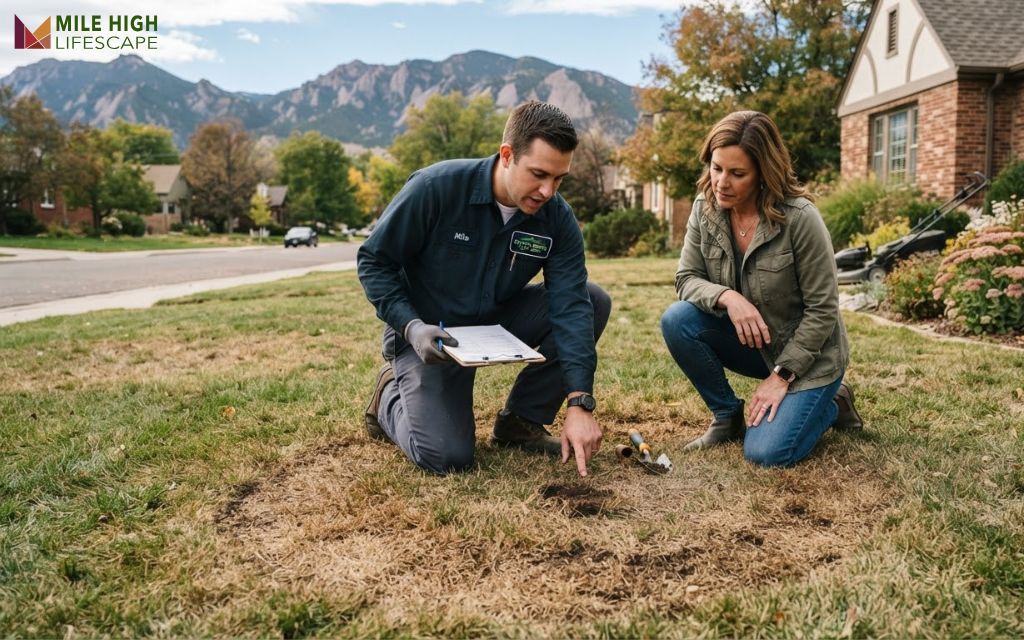
A lab or Extension diagnosis prevents the wrong purchase. CSU Extension asks homeowners to dig a fresh, shoebox-sized sample, 2 to 3 inches (5 to 8 cm) deep, with healthy and damaged turf in the same piece.
Wrap the roots in aluminum foil and add notes on watering, fertilizer, and when the damage began. Take the sample to your county Extension office or the CSU Plant Diagnostic Clinic in Denver, and ask about current fees and drop-off steps.
Preventive vs. curative fungicide: which timing fits your lawn?
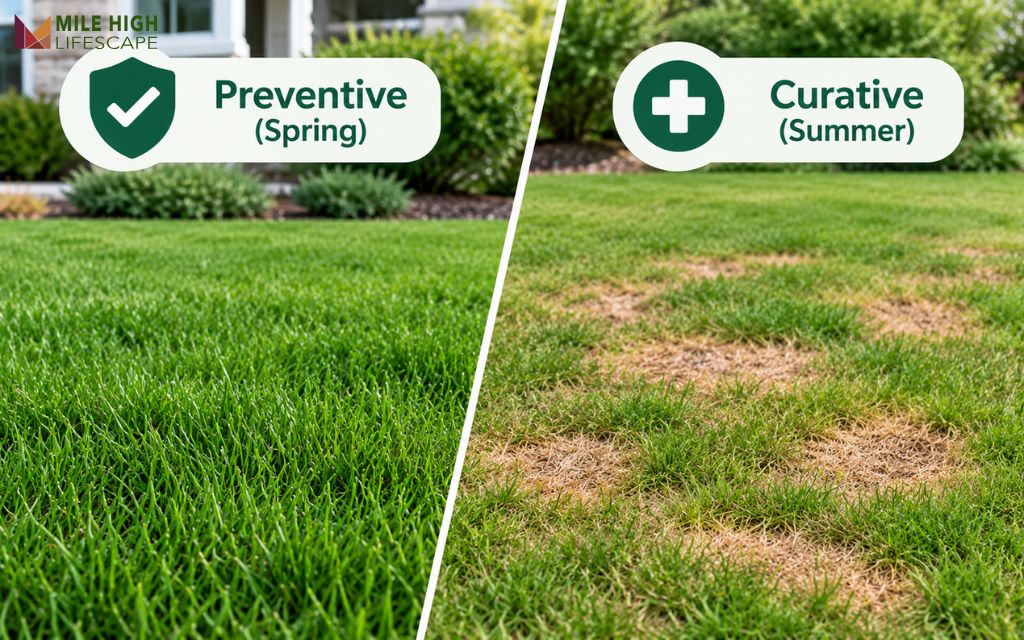
Preventive fungicide goes on before disease activity starts, and curative fungicide goes on after symptoms appear. A preventive fungicide treatment suits a lawn that develops the same disease each year. It usually relies on lower rates or longer intervals, as the product label allows.
Curative use targets an active outbreak and often calls for higher rates or shorter intervals. Curative fungicide cannot heal diseased tissue. It protects uninfected leaves and new growth while the turf is actively growing, so dead grass stays dead.
Best time to apply fungicide to a Colorado lawn, disease by disease
The best time to apply fungicide to lawn turf in Colorado follows each disease’s life cycle. These 4 cases show how much the answer changes, from a firm May date to no spray at all.
Necrotic ring spot: treat in mid-May, before symptoms
Necrotic ring spot (NRS) is the most destructive disease of Kentucky bluegrass in Colorado, according to CSU Extension. It leaves “frogeye” rings of dead grass around a live center. The fungus colonizes roots from May, at soil temperatures of 65 to 80°F (18 to 27°C).
Patches surface in late July or August, when summer heat stresses the damaged roots. That delay is the trap: an August patch tells you to schedule treatment for next May.
“Applications after symptom development or in late fall are not effective.” CSU Extension, Necrotic Ring Spot fact sheet
CSU Extension’s NRS schedule has 4 parts:
- First application: Treat when a soil thermometer reads 65°F (18°C) at 2 inches (5 cm), usually in mid-May.
- Second application: Repeat about 28 days later.
- Third application: Add a final round about 28 days after that on badly damaged lawns.
- Watering in: Apply less than 1/4 inch (6 mm) of water, and avoid drenching the lawn.
Soil temperature matters more than the date, because spring warmth varies each year. PlantTalk Colorado adds that garden center products are largely ineffective against NRS, and that fungicide helps only when watering and fertilizing habits also change.
Ascochyta leaf blight: usually skip the fungicide
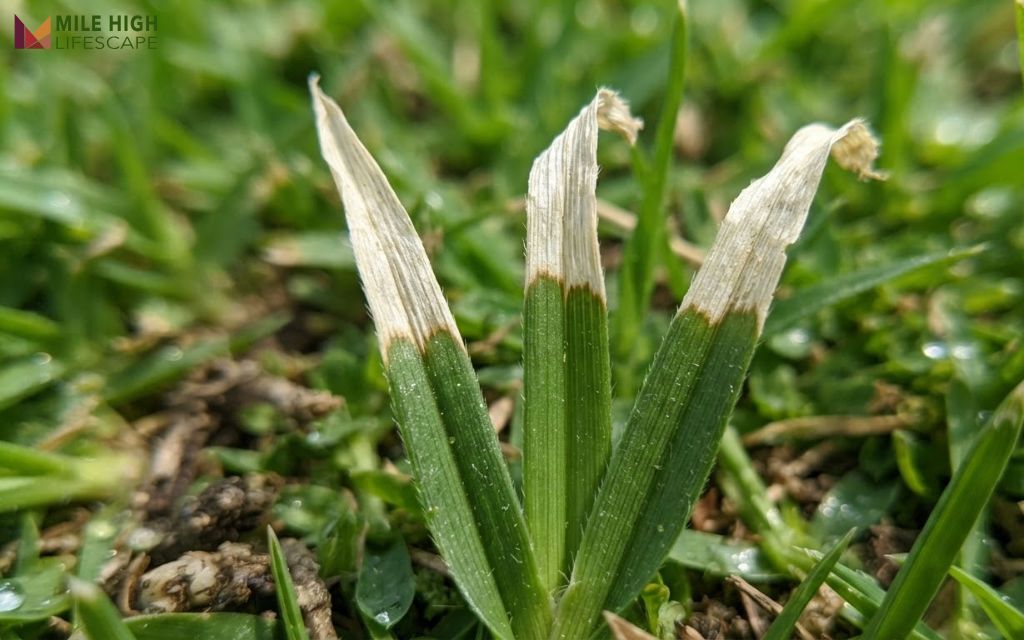
Most Ascochyta outbreaks do not justify fungicide. CSU Extension says the products can be costly and hard to apply, and sudden outbreaks make timing difficult. Large straw-colored areas appear fast, yet crowns and roots usually survive.
Keep soil moisture even, sharpen mower blades, and avoid mowing wet grass. During an outbreak, mow less often and raise the deck. Turf usually recovers within a few weeks.
Snow mold: rake instead of spray
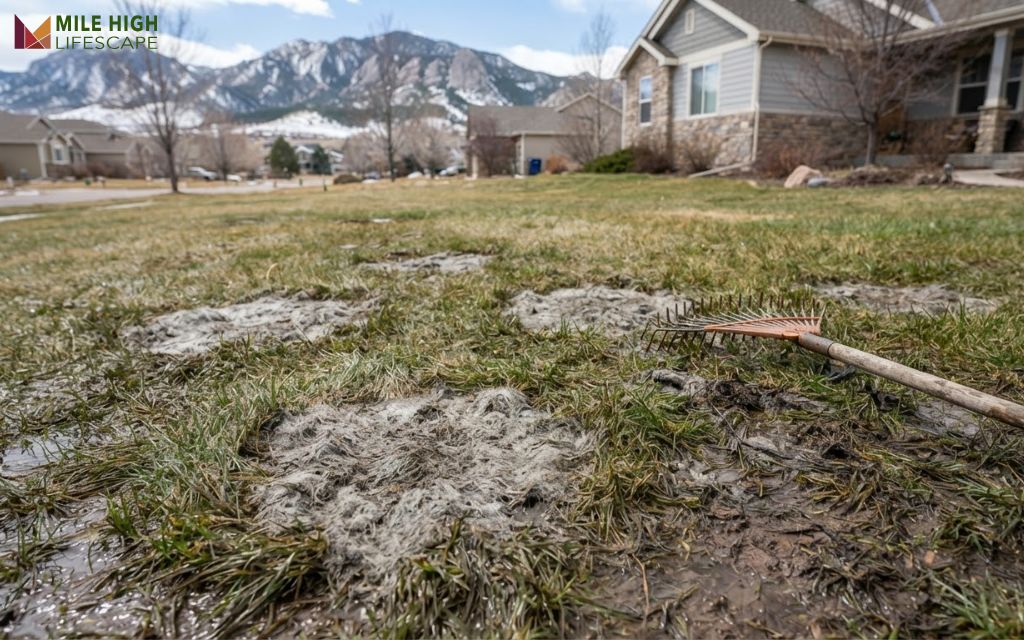
CSU Extension does not recommend fungicide for snow mold on Colorado home lawns. This advice differs from some online guides, which suggest a fall application. Golf courses spray because closely mown greens can die, but damage on taller home turf is usually cosmetic.
Gray snow mold needs 40 to 60 days of continuous snow cover, which is uncommon on most Colorado lawns. Lightly rake matted patches in spring. Before winter, mulch or collect fallen leaves, and keep shoveled snow from piling up on the grass.
Other lawn diseases: confirm before you treat
Summer patch, rust, dollar spot, and other turf diseases each follow different timing. Summer patch closely resembles NRS, so CSU Extension advises lab confirmation when symptoms don’t quite match. Identify the disease first, then let the label set the date.
How often should you apply fungicide to a lawn?
Apply fungicide at the interval printed on the label for your target disease. No single schedule fits every lawn.
NRS treatment in Colorado runs about 28 days between rounds. Other label intervals vary by active ingredient, such as azoxystrobin or propiconazole, and by disease pressure.
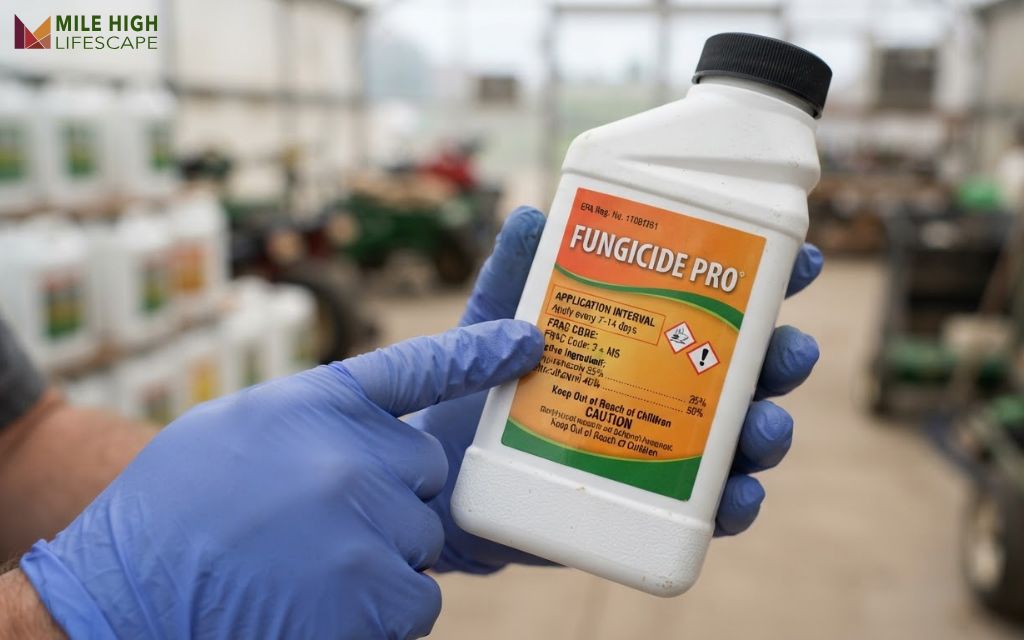
Never shorten the labeled interval or exceed the labeled rate. Rotate products with different FRAC codes when repeat applications are needed, because repeated use of one mode of action encourages fungicide resistance.
How to apply lawn fungicide correctly
Correct application takes 3 steps: choose a matched product, measure the treated area, and manage water. Each step protects your money and the surrounding turf.
Choose the right fungicide for lawn fungus
Pick a fungicide for lawns only if its label names your disease and allows residential turf use. The same rule applies to any lawn antifungal or fungicide for grass. The table below compares 4 product types:
| Product type | How it works | Application note |
| Contact | Stays on leaf surfaces | Must be in place before infection begins |
| Systemic | Moves into plant tissue | Can sometimes suppress a fungus after infection |
| Granular | Spreads as dry pellets | For root disease, apply to dry turf, then irrigate |
| Liquid | Sprays on as a diluted mix | For root disease, irrigate lightly before the spray dries |
Read the label and measure your lawn
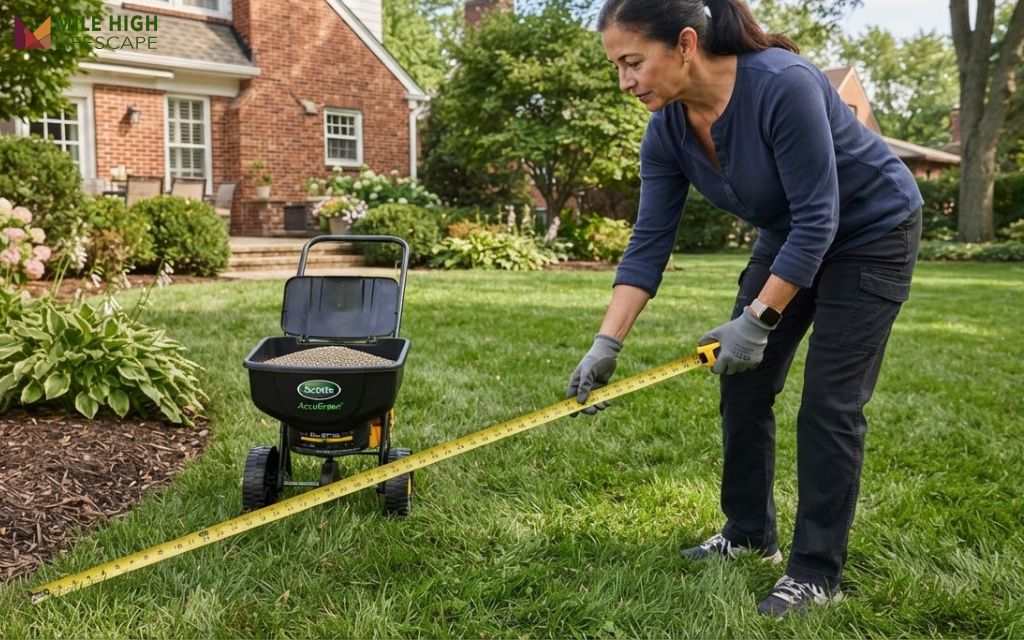
EPA states that “the label is the law,” so read every section before you open the product. Multiply length by width to find your square footage, because most rates are set per 1,000 square feet (93 m²). Wear the listed protective gear, and keep people and pets off the lawn for the labeled time.
Water it in within Denver’s watering rules
Follow the label on whether to water in the product or let it dry on the leaves. As of 2026, Denver Water limits lawn watering to 2 assigned days per week during its May 1 to October 1 season and bans it from 10 a.m. to 6 p.m. Check current rules with your local water provider before you treat.
Skip application before heavy rain, on saturated or frozen soil, and in high wind. These conditions raise the risk of runoff and drift.
How to treat lawn fungus without relying on fungicide
To treat lawn fungus for the long term, change the conditions that favor it. Fungus control for lawns starts with these 5 habits:
- Water deeply: Wet the soil 6 to 8 inches (15 to 20 cm) deep, as seldom as turf health allows. CSU Extension calls overwatering a leading factor in NRS.
- Limit spring nitrogen: Avoid heavy doses of fast-release nitrogen, such as urea, in spring. Apply most nitrogen in fall.
- Mow high: Keep turf at 2.5 to 3 inches (6 to 8 cm), and remove no more than one-third of the blade at once.
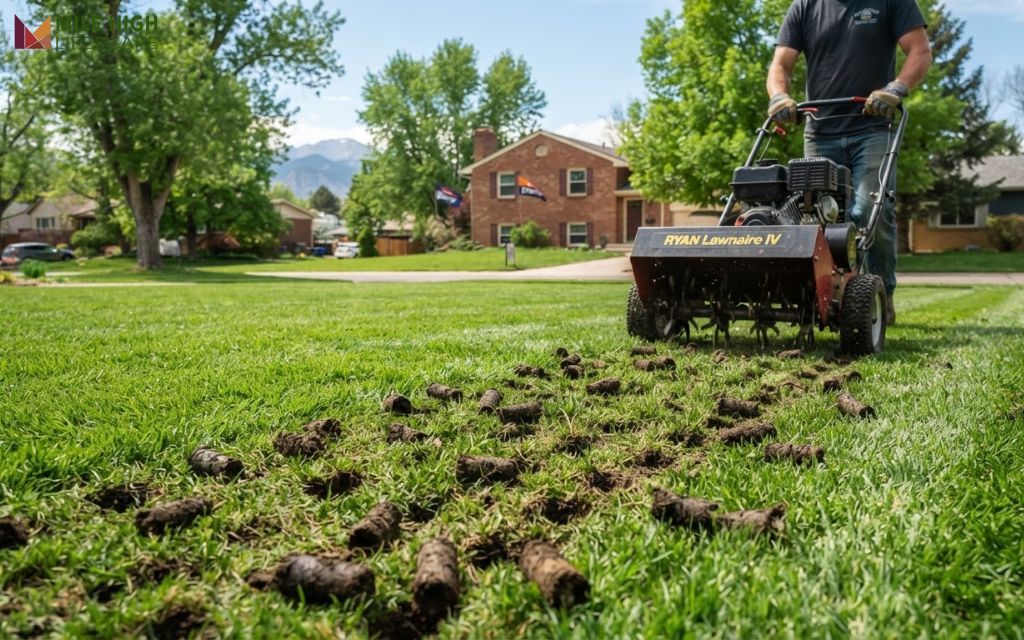
- Aerate compacted soil: Pull plugs 2 to 3 inches (5 to 8 cm) long in spring or fall. NRS runs worse on compacted, poorly drained ground.
- Overseed bare rings: Fill NRS patches with perennial ryegrass, which the fungus doesn’t infect. Expect some difference in color and texture.
These habits lower disease pressure and reduce how much fungicide your lawn needs in future seasons.
Sod installation for lawns too damaged to save
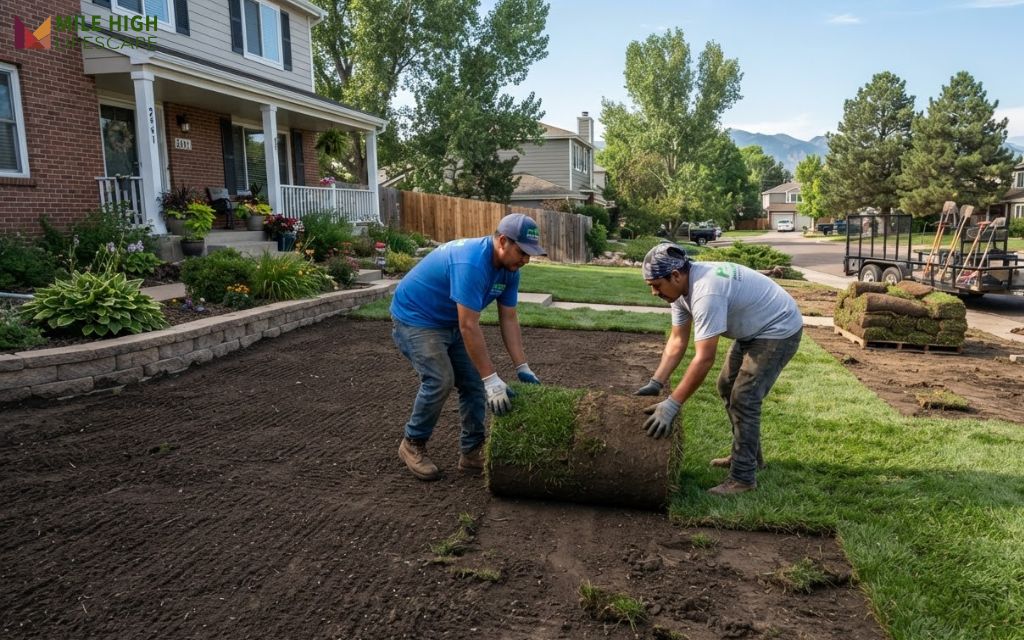
New sod replaces turf that fungicide and overseeding can’t bring back. No fungicide revives dead grass, so large dead areas need new turf. Mile High Lifescape offers Sod Installation for Denver Metro homeowners with lawns past the point of spot repair.
Sod works best when the cause is fixed first. NRS often appears 2 to 3 years after a lawn is established, and it runs worse on compacted, poorly drained sites. Soil preparation and better watering matter as much as the new grass.
Read the label before using any fungicide for sod, and confirm that it allows use on newly laid turf. New bluegrass sod may also qualify for a Denver Water establishment permit, which covered up to 3 weeks of extra watering in 2026.
When to call a lawn care professional
Call a professional when the problem repeats, the cause stays unclear, or you can’t decide when to apply fungicide to lawn areas. These 3 signs point to outside help:
- Repeating patches: The same rings return every summer despite better watering.
- Unclear symptoms: Damage matches no disease you can identify.
- Spreading damage: Dead areas grow faster than the lawn can recover.
Colorado requires a commercial applicator license for anyone who applies pesticides for hire, so ask any provider for license details before treatment. PlantTalk Colorado notes that licensed applicators carry more effective NRS products than retail stores.
With over 20 years of experience, Mile High Lifescape helps Denver homeowners trace lawn problems and plan the next step. Our lawn care services include pest and disease management, fertilization, and aeration.
Frequently asked questions about lawn fungicide
Can I apply fungicide in the fall in Colorado?
Late-fall fungicide does not help necrotic ring spot, and CSU Extension does not recommend it for snow mold on home lawns. Use fall for fertilizing and aeration instead.
Will fungicide make dead grass green again?
No. Fungicide protects living tissue and cannot revive dead grass. Dead areas need overseeding, new sod, or time for surrounding turf to fill in.
Is it too late to treat lawn fungus in August?
Yes, for necrotic ring spots. Treatment after symptoms is not effective, so focus on watering and stress relief, then plan for May. Other diseases need their own diagnosis.
Should I apply fungicide before or after rain?
Apply after heavy rain passes, on soil that isn’t saturated. The forecast affects when to apply fungicide to lawn areas, because heavy rain raises runoff risk. Some products need light irrigation and others must dry on the leaf, so follow the label.
Do I need fungicide for snow mold?
No. Rake matted patches and let the lawn dry. Home lawn turf usually recovers on its own as spring warms.