Can you mow a wet lawn? You can, but cutting wet grass often tears blades, clumps clippings and compacts soil. This guide helps Denver Metro homeowners read their lawn’s moisture, pick the right time to mow and limit damage when waiting isn’t an option.
Can you mow a wet lawn?
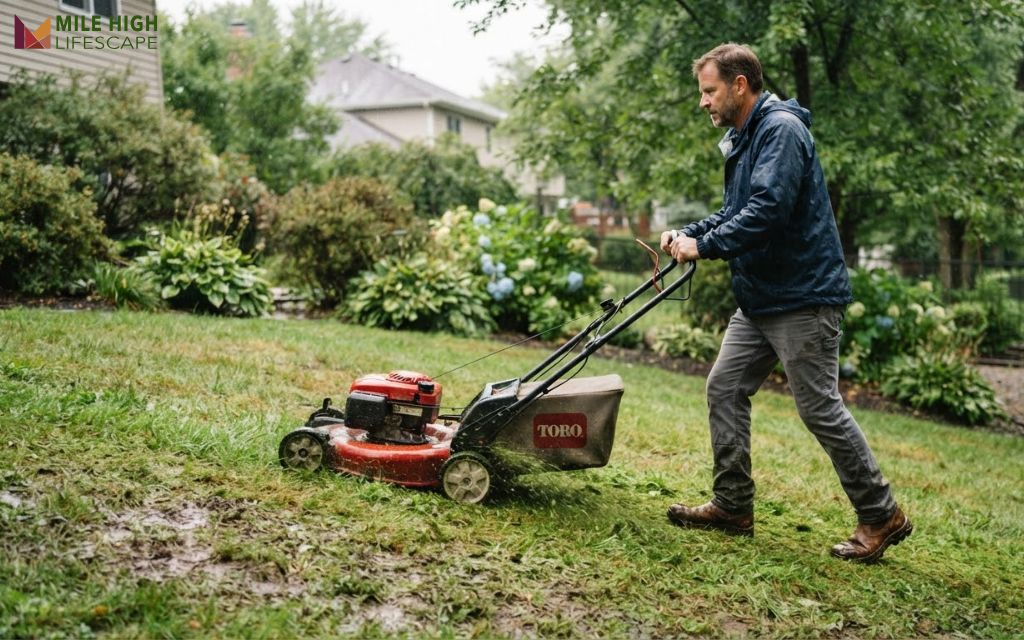
Yes, you can mow a wet lawn, but you should wait whenever you can. Damp blades bend and tear instead of cutting cleanly, and soft soil sinks under the mower. The best time to mow is when the grass is dry to the touch and the ground feels firm.
Wet blades vs. wet soil: two different problems
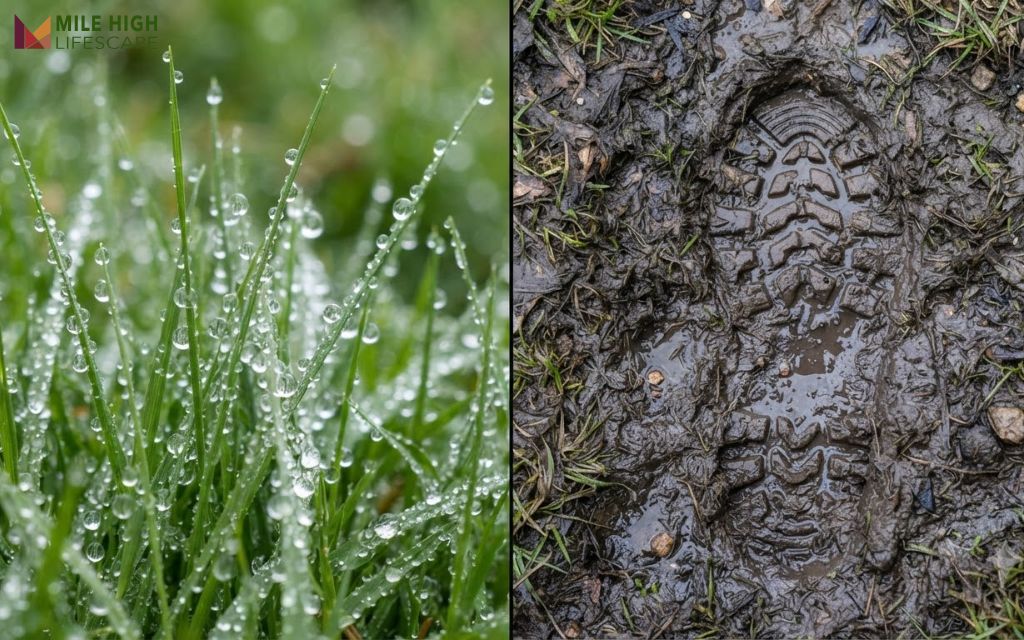
Water on the leaf surface and water in the root zone cause different kinds of harm. Surface moisture from dew or a short sprinkler cycle mainly hurts cut quality and causes clumping. Saturated soil from heavy rain, snowmelt or long irrigation leads to compaction and ruts, which take far longer to fix.
We always check both layers. A damp surface may need only an hour of sun, while a soggy root zone can stay soft for a day or longer on clay-heavy ground.
What happens when you mow wet grass?
Mowing wet grass affects the turf, the soil, the mower and the person pushing it. Mississippi State University Extension advises against mowing a wet lawn to limit disease spread and soil compaction.
Torn blades and an uneven cut
Wet grass leans over under the weight of water, so the mower rides across it instead of slicing it. Many blades get shredded at the tips, which turn brown within a few days. Once the lawn dries and stands back up, the missed patches show as a ragged, uneven finish.
Clumped clippings that smother turf
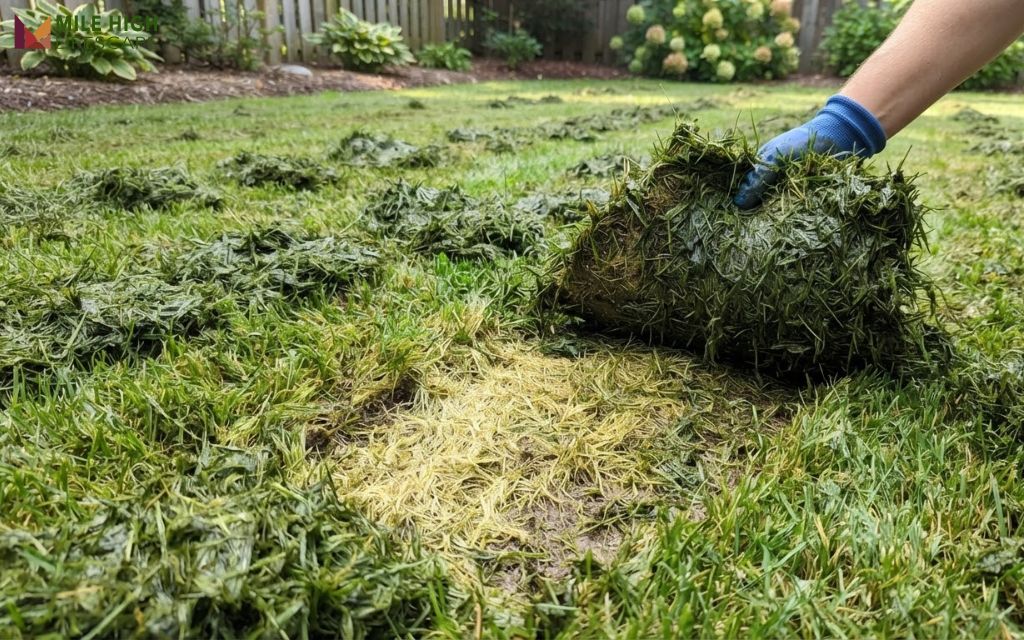
Wet clippings stick together and drop in heavy mats. Colorado State University turf specialist Tony Koski warns that big, wet clumps left “fermenting” on the lawn can kill the grass underneath. He recommends bagging them for compost or garden mulch instead of leaving them in place.
Soil compaction and ruts on clay-heavy ground
Wet soil compresses easily under wheels and footsteps. Compacted soil holds less air, drains slowly and restricts root growth. Purdue researchers also note that mower ruts in wet conditions keep leaves wet longer, which favors disease. Clay-heavy soils, common in many Front Range yards, hold water longer and need extra drying time.
Higher disease risk, including Ascochyta leaf blight
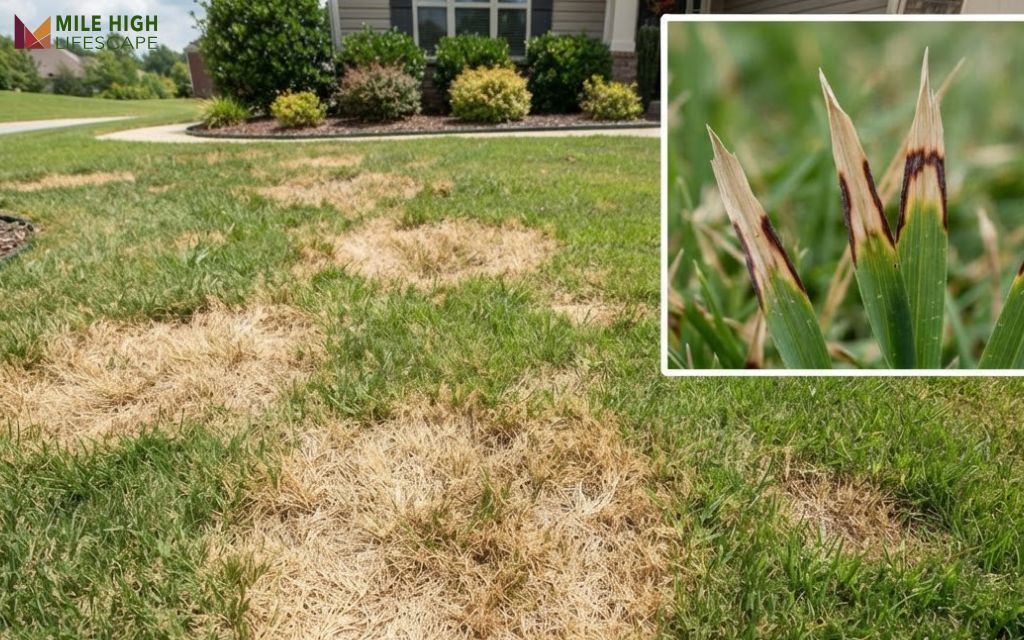
Torn, wet leaf tips give fungi an easy way in, and wet clippings carry spores across the lawn. In Colorado, Ascochyta leaf blight is a common disease of Kentucky bluegrass. CSU Extension advises avoiding mowing during wet weather, especially when this disease is active, and raising the mowing height during outbreaks.
Clogging and extra wear on your mower
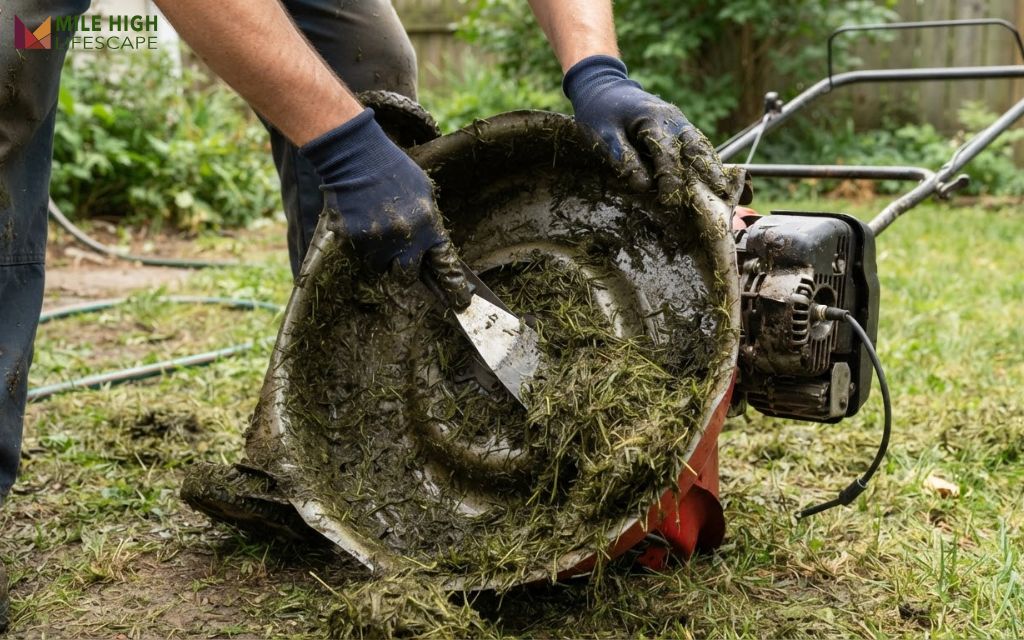
Heavy, sticky clippings pack under the deck and block the discharge chute. The engine or motor works harder, and battery mowers drain faster. Wet debris left under the deck also speeds up rust on the blade and housing.
Is it safe to cut wet grass?
Wet grass is slippery, and slopes become the biggest hazard. A slip near a spinning blade is how many serious injuries happen. A study in the American Journal of Emergency Medicine estimated an average of 84,944 lawn mower injuries per year treated in U.S. emergency departments from 2005 to 2015.
Never use a corded electric mower on wet grass. Water and a live extension cord are a shock risk, and no lawn is worth that trade.
How to tell if your lawn is too wet to mow
University of Missouri Extension suggests a simple habit: walk the lawn and test its firmness before you start the mower. These are the same five quick checks we rely on, and they take under two minutes:
- Hand test: Brush your palm across the grass. If it comes away wet, the blades will clump.
- Shoe test: Walk a few steps. Damp shoes or pant cuffs mean the surface needs more drying time.
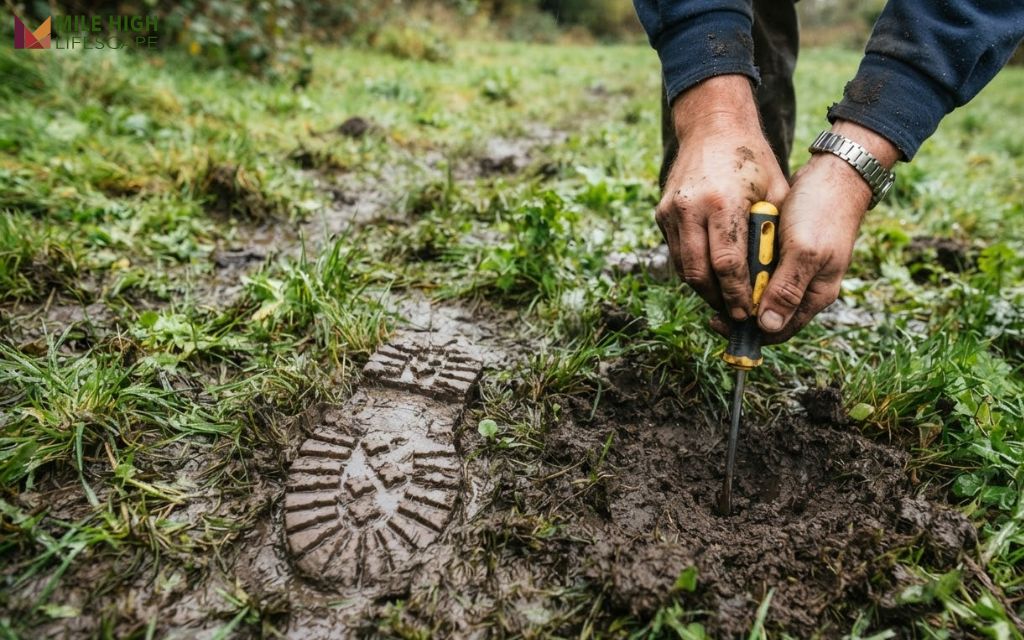
- Footprint test: Look back at your steps. Grass that springs up is ready; footprints that stay pressed in mean wet soil.
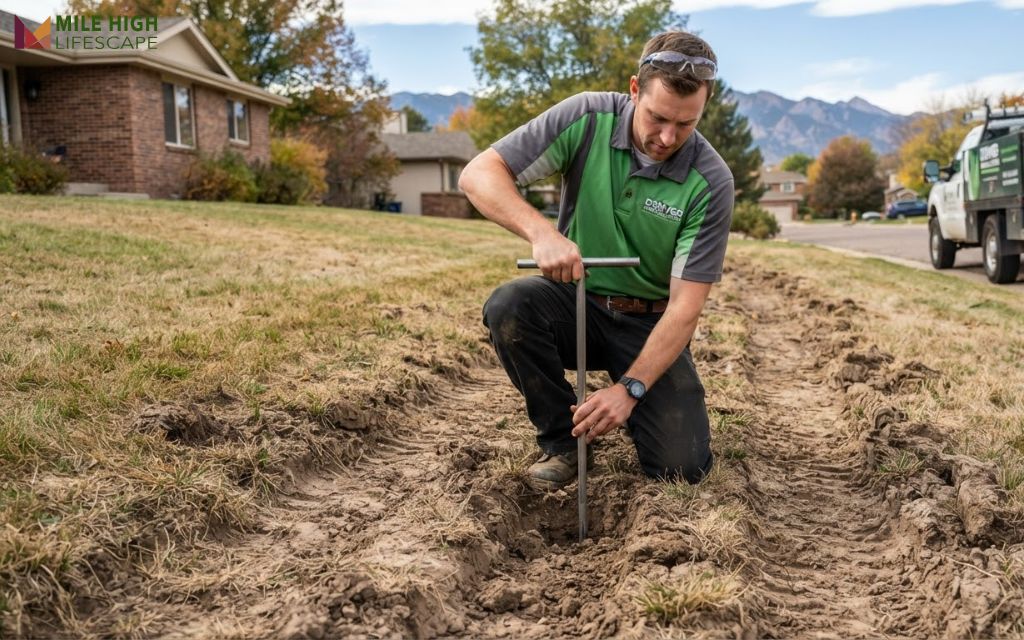
- Screwdriver test: Push a screwdriver into the turf. If it slides in with no effort and comes out muddy, the root zone is saturated.
- Test strip: Mow one short pass in a hidden spot. If clippings clump or the deck clogs right away, stop and wait.
If you see standing water or muddy low spots, skip mowing in those areas no matter how the rest of the yard looks.
How long to wait depends on why the grass is wet
There is no single waiting time that fits every yard. The source of the moisture tells you whether only the blades are wet or the soil is too. Use this table as a starting point, then confirm with the checks above.
| Source of moisture | What is usually wet | What to do |
| Morning dew | Leaf surface only | Wait until the sun burns it off, often by mid-morning |
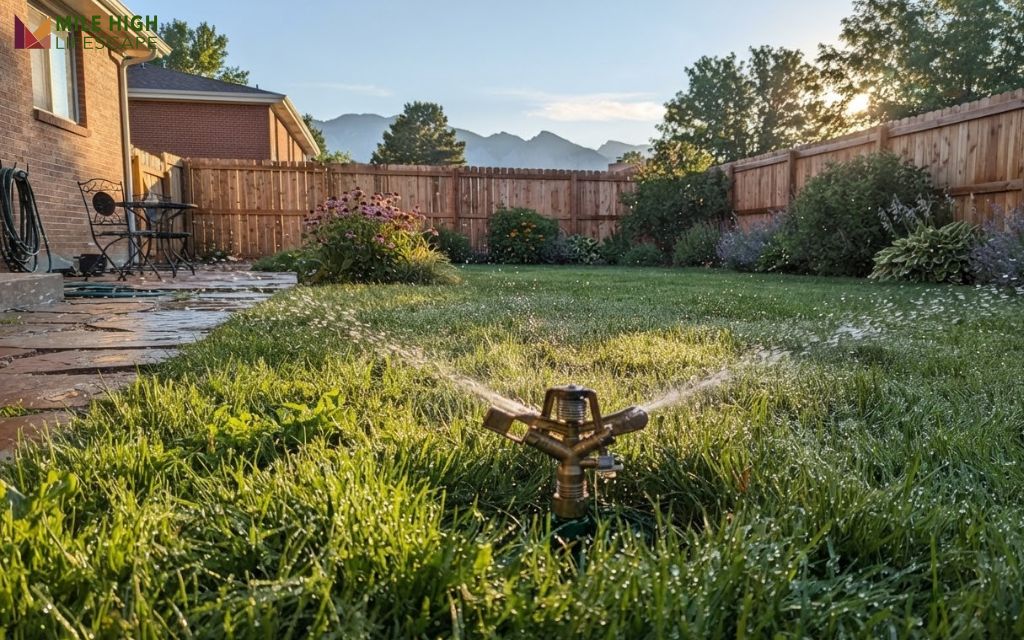
| Sprinkler cycle | Leaf surface and top inch (2.5 cm) of soil | Mow before your watering day, or wait until blades dry |
| Short afternoon thunderstorm | Mostly the surface | Recheck in a few hours; low humidity speeds drying |
| Several days of rain or snowmelt | Leaves and the full root zone | Wait for firm soil, often a day or more |
| Frost or frozen grass | Leaf tissue (ice crystals) | Don’t mow or walk on it until it thaws and dries |
Plan mowing around your watering days
In Denver, a wet lawn often comes from the sprinkler, not the sky. Denver Water’s summer rules ban lawn watering between 10 a.m. and 6 p.m., so most systems run early morning or evening. As of November 2026, the Stage 1 drought had limited lawns to two assigned watering days per week, and lawn watering ended after September 30.
That schedule makes planning easy. Mow on the day before a watering day, or in the late morning after an early cycle has dried. Never mow right after the system shuts off.
Afternoon thunderstorms vs. multi-day rain
Denver’s dry air and strong sun often dry a lawn surface within hours after a brief summer storm. A slow, multi-day soaking is different, because it fills the soil and keeps it soft. Cool, wet springs on the Front Range, like the rainy May and June of 2023, can keep lawns soggy for long stretches.
When mowing wet grass is the lesser evil
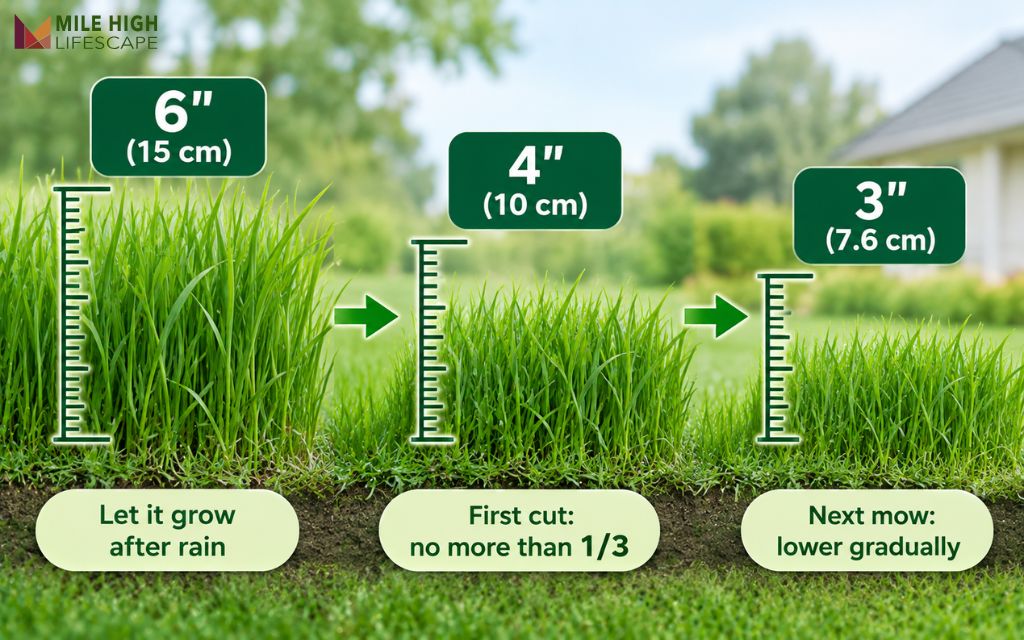
Sometimes waiting costs more than mowing. After a long rainy stretch, grass can grow so tall that one cut would remove too much leaf at once. Extension turf guides follow the one-third rule: never remove more than one-third of the blade in a single mowing.
Here is how that works. A lawn kept at 3 inches (7.6 cm) should be cut by the time it reaches 4.5 inches (11.4 cm). If a wet week lets it reach 6 inches (15 cm), cutting straight back to 3 inches would remove half the leaf.
Kansas State University advises raising the mowing height for the first cut after a weather delay, then lowering it over the next mowings. In that case, a careful cut on slightly damp grass with firm soil beats letting the lawn keep growing.
How to mow wet grass if you have to
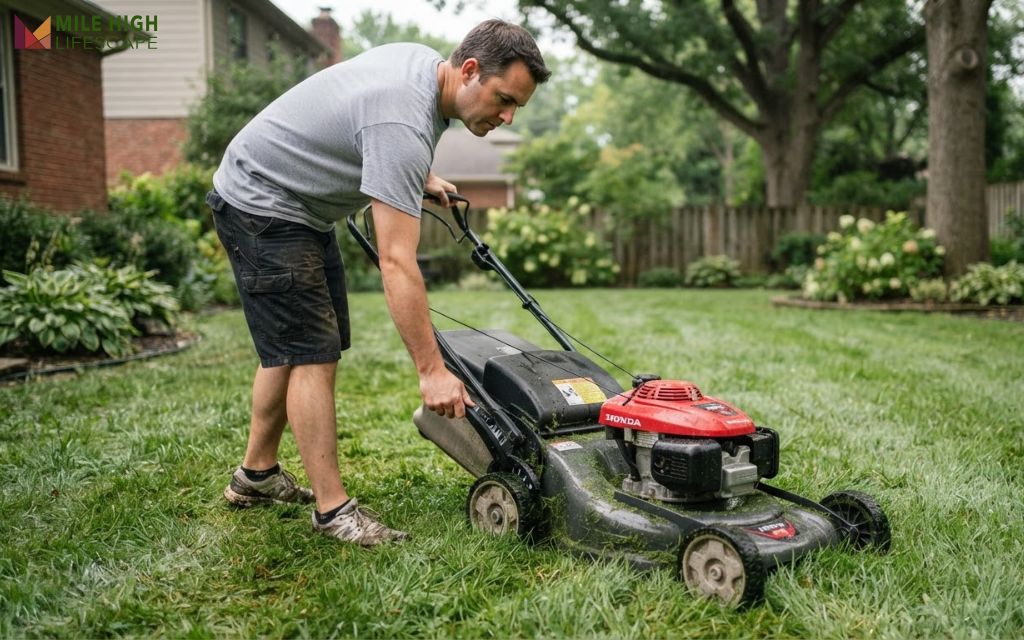
If the soil is firm but the blades are still damp, these steps limit the damage:
- Raise the deck: Colorado lawns do best at 2 to 3.5 inches (5 to 9 cm), per CSU. Use the top of that range or one notch higher.
- Start with a sharp blade: CSU recommends sharpening after every third mowing or at least once a month. A sharp edge slices wet blades instead of tearing them.
- Slow down: A slower pace gives the blade time to cut and reduces clumping.
- Overlap your passes: Cutting half a deck width at a time catches blades the first pass pushed over.
- Use side discharge or the bagger: Skip mulching mode, which packs wet clippings under the deck.
- Make wide, gentle turns: Sharp pivots tear turf and dig ruts in soft spots.
- Skip slopes and low spots: Come back to them once they dry.
- Clear the deck safely: Shut the engine off and disconnect the spark plug or remove the battery before you scrape out clumps.
We tell homeowners the same thing we practice: if the mower starts leaving ruts or clogging every few passes, stop. Finishing the job is never worth a damaged lawn.
What to do after mowing a wet lawn
A few minutes of cleanup right after a wet mow prevents bigger problems later:
- Clean the deck while clippings are soft: Dried, caked grass is hard to remove and holds moisture against the metal.
- Bag or rake heavy clumps: CSU’s Koski advises bagging large wet clumps rather than leaving them on the lawn.
- Check for ruts and footprints: Note compacted areas; they are candidates for core aeration later in the season.
- Watch for disease for a week or two: Straw-colored patches or bleached leaf tips are early warning signs.
If ruts or compaction keep showing up after wet seasons, lawn aeration opens the soil so air and water can reach the roots again.
Does mower type make a difference?
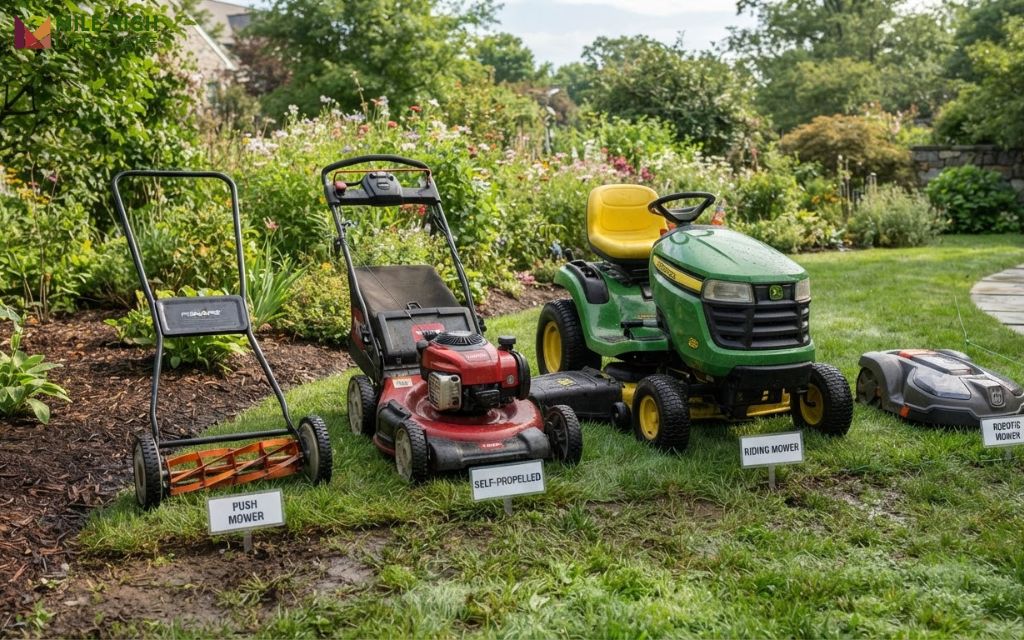
Every mower struggles on soaked turf, but some handle damp conditions better than others:
| Mower type | On damp grass | Main wet-weather risk |
| Push mower | Clogs quickly | Slips on slopes |
| Self-propelled | Steadier pace | Heavier wheels leave ruts |
| Riding or zero-turn | More power to clear clumps | High compaction, loss of traction |
| Corded electric | Not for wet use | Electric shock |
| Cordless (battery) | Short run time when wet | Faster battery drain, moisture damage |
| Robotic | Light, frequent trims | Still unsuited to soaked or flooded turf |
Check your owner’s manual before mowing wet grass. Many manufacturers advise against it, and damage from misuse may not be covered.
Wet weather and new sod or seeded lawns
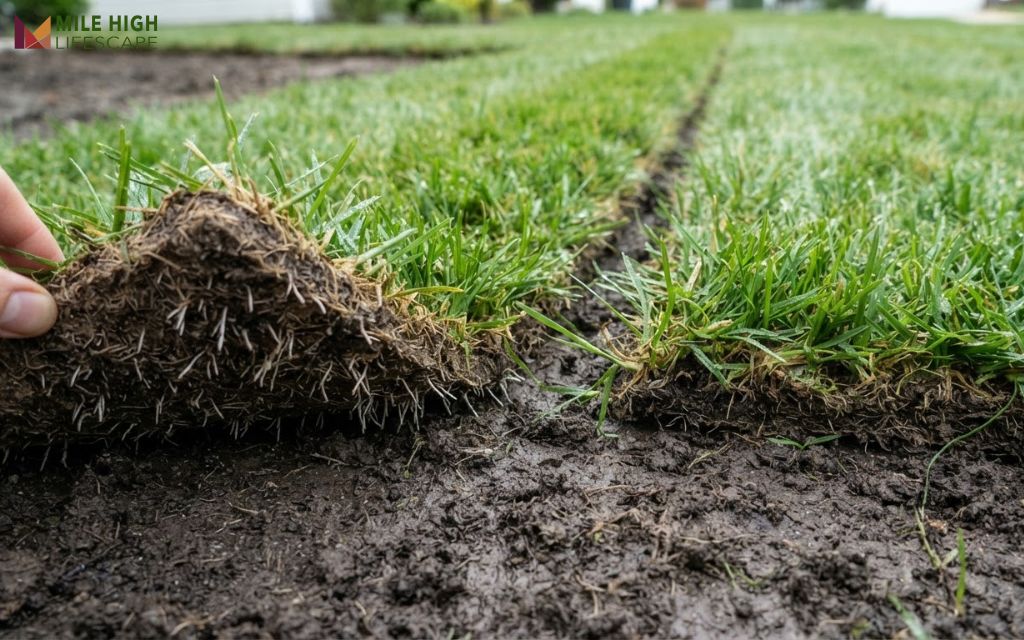
New turf is the least forgiving surface to mow wet. Fresh sod sits on loose, well-watered soil, and its roots have not knit into the ground yet. Mower wheels and footsteps can shift the strips, open seams or leave deep prints.
Wait until the sod resists a gentle tug at a corner before the first mow, and make that first cut on a dry day. Newly seeded lawns are even more fragile, since wet seedlings pull out of soft soil with ease. Keep the first few mows high and light.
Sod Installation from Mile High Lifescape
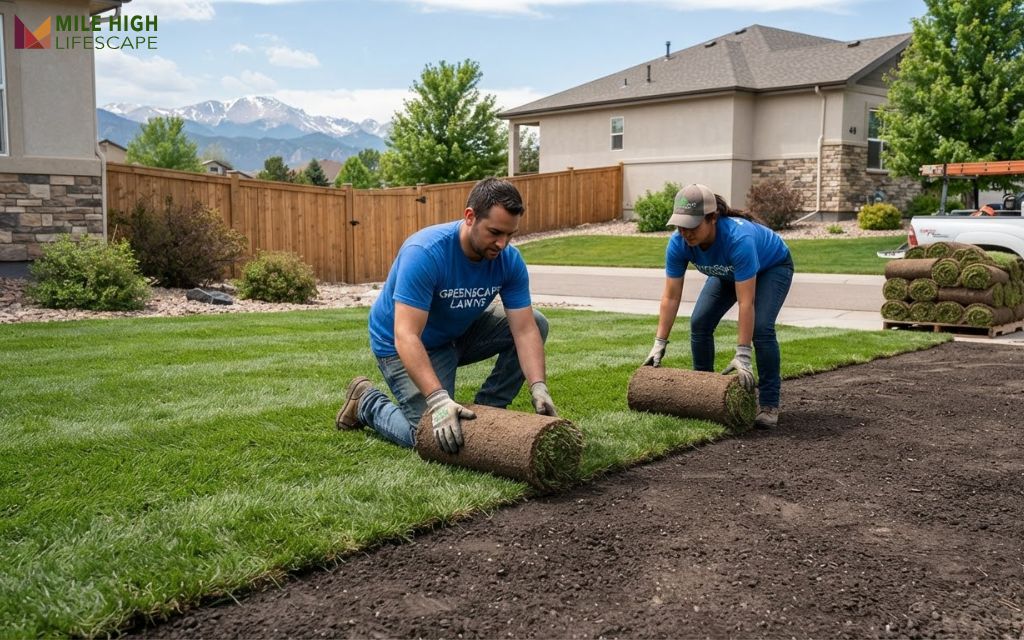
Some lawns reach a point where better mowing habits can’t fix them. Years of ruts, compaction, disease patches or thin turf may call for a fresh start. That is where our Sod Installation service helps.
With over 20 years of experience in Denver Metro lawns, our team plans each sod project around your yard’s soil, sun and drainage. Every client gets personalized service, whether it’s a small backyard patch or a full front lawn. We follow proven landscaping techniques and applicable building codes on every job.
We serve Denver, Lakewood, Littleton, Centennial, Broomfield, Thornton, Westminster, Highlands Ranch and nearby areas. New sod gives you a level, dense surface that drains and mows the way it should.
When to call a lawn care professional
Can you mow a wet lawn on your own every time? Most of the time, yes. But a few signs point to a bigger problem worth a professional look:
- Rainy stretches keep putting you behind, and the grass grows past the one-third limit between cuts.
- Ruts and footprints stay visible long after the lawn dries, a sign of compacted soil.
- Straw-colored or bleached patches spread after wet weeks, which may point to disease.
- Water pools in the same low spots after every storm or sprinkler cycle.
Mile High Lifescape offers lawn mowing and maintenance on a weekly, biweekly, monthly or one-time basis. We also handle aeration and overseeding, pest and disease management, turf renovation and drainage solutions. Call (303) 877-9091 or email hello@milehighlifescape.com, Monday to Saturday, 8 a.m. to 5 p.m.
FAQs about mow a wet lawn
Can you mow grass with morning dew on it?
You can, but the cut will be cleaner if you wait. Dew sits on the leaf surface, so the soil stays firm. On sunny days, it usually burns off by mid-morning.
How long after rain can you mow your lawn?
It depends on how much rain falls and how fast your soil drains. After a short storm, a few hours of sun may be enough. After days of rain, wait until the footprint and screwdriver tests show firm soil.
Is it safe to use an electric or battery mower on wet grass?
Never use a corded electric mower on wet grass because of the shock risk. Battery mowers remove the cord hazard, but most manuals still advise against wet use. Moisture can damage electronics and drain the battery faster.
Does mowing wet grass spread lawn fungus?
It can. Torn, wet blades give fungi an entry point, and wet clippings carry spores across the lawn. In Colorado, CSU Extension links wet-weather mowing to the spread of Ascochyta leaf blight.
Can you mow a wet lawn while it’s still raining?
No. Active rain soaks the grass faster than you can cut it, makes footing unsafe and adds electrical risk. Wait for the storm to pass and the lawn to dry.
Should you bag or mulch clippings when the grass is wet?
Bag them or use side discharge. Mulching mode packs wet clippings under the deck and leaves clumps. CSU’s Tony Koski recommends bagging large wet clumps for compost or garden mulch.