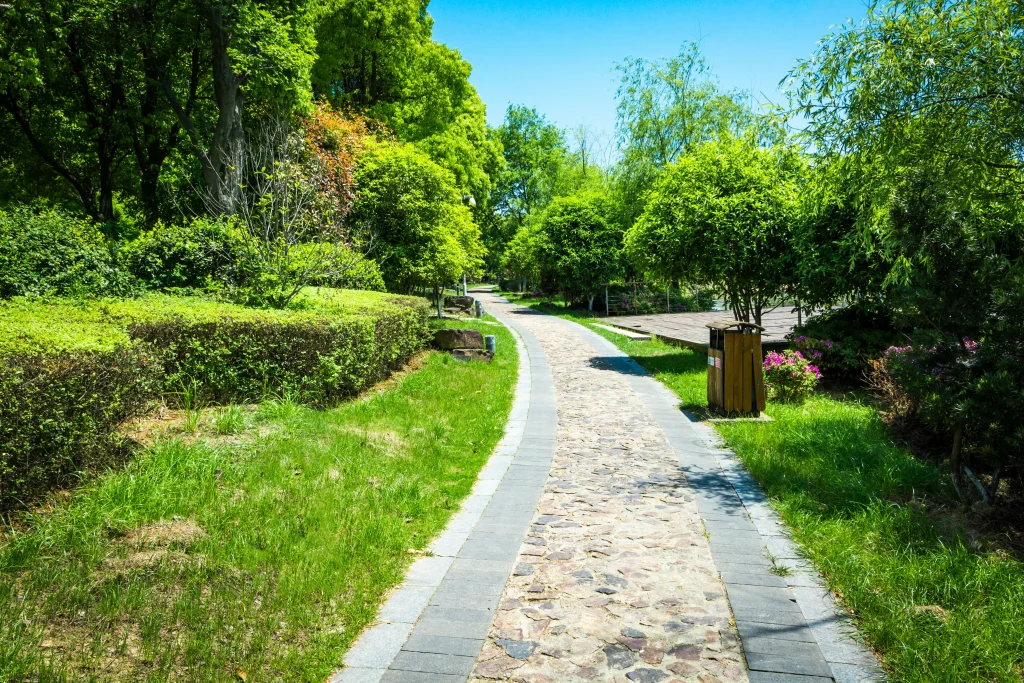
Celebration Bermuda vs TifTuf comes down to one trade-off: TifTuf is a University of Georgia hybrid bred to use less water, while Celebration is an Australian bermuda selection known for blue-green color and fast wear recovery. Neither grows from seed. This guide compares 7 factors, explains why online verdicts disagree, and shows where each grass works.
Celebration Bermuda vs TifTuf at a glance
TifTuf usually wins on water savings, and Celebration usually wins on color and wear recovery. Both are warm-season bermudagrasses that need full sun and go in as sod, plugs, or sprigs.
Rows marked “disputed” show traits where sellers publish opposite claims.
| Trait | Celebration | TifTuf |
| Species | Cynodon dactylon selection | Sterile hybrid: C. dactylon × C. transvaalensis |
| Origin | Rod Riley, New South Wales, Australia | University of Georgia, Tifton campus |
| Planting method | Sod, plugs, or sprigs | Certified sod, plugs, or sprigs |
| Water use | Strong drought tolerance | 38% less water than Tifway 419 (2011 UGA trial) |
| Sun needs (disputed) | Full sun; licensor cites 4 to 6 hours | Full sun to partial shade; growers cite 5 to 6+ hours |
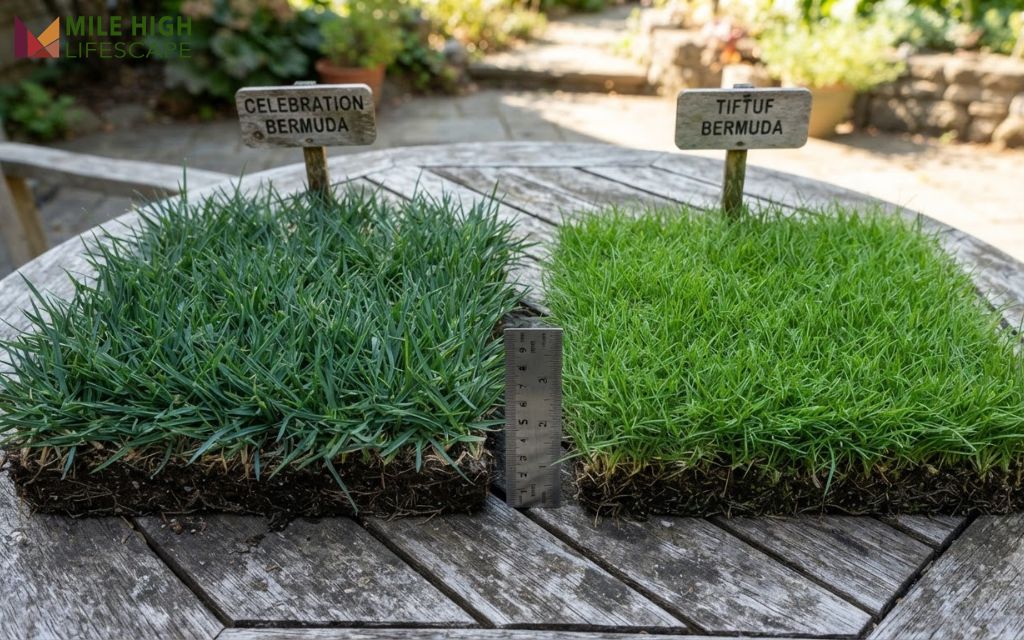
| Color (disputed) | Deep blue-green | Bright to medium green |
| Mowing height | 0.5 to 1.5 in (1.3 to 3.8 cm) | 0.5 to 2 in (1.3 to 5.1 cm) |
| Seed available | No | No |
What is Celebration bermudagrass?
Celebration is a bermudagrass selection, not a lab-bred hybrid. Australian turf breeder Rod Riley found it in 1988 as a mutation of the Greenlees Park variety and propagated it through 4 generations before release.
In the United States, it holds plant patent PP11,181 under the name Riley’s Super Sport. Sod Solutions brought it to the US market in 2001 and licenses it under the Celebration® brand.
Growers propagate Celebration by sod and plugs to keep it true to type. Celebration Hybrid™ is a separate, newer grass that Mississippi State University bred from the Celebration line.
What is TifTuf bermudagrass?
TifTuf is a sterile hybrid bermudagrass bred for drought tolerance at the University of Georgia (UGA). Plant scientists Wayne Hanna and Brian Schwartz tested it at the UGA Tifton campus from 1993 and selected it from more than 27,000 candidate plants.
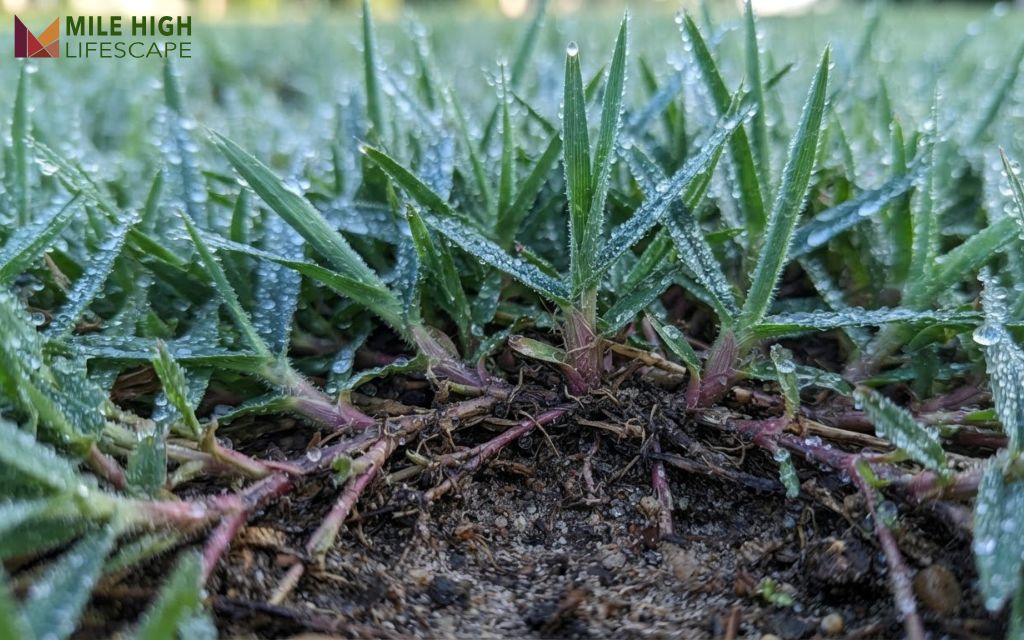
The cross pairs common bermuda (Cynodon dactylon) with African bermuda (Cynodon transvaalensis). That pairing gives TifTuf fine leaves and dense growth, but no viable seed.
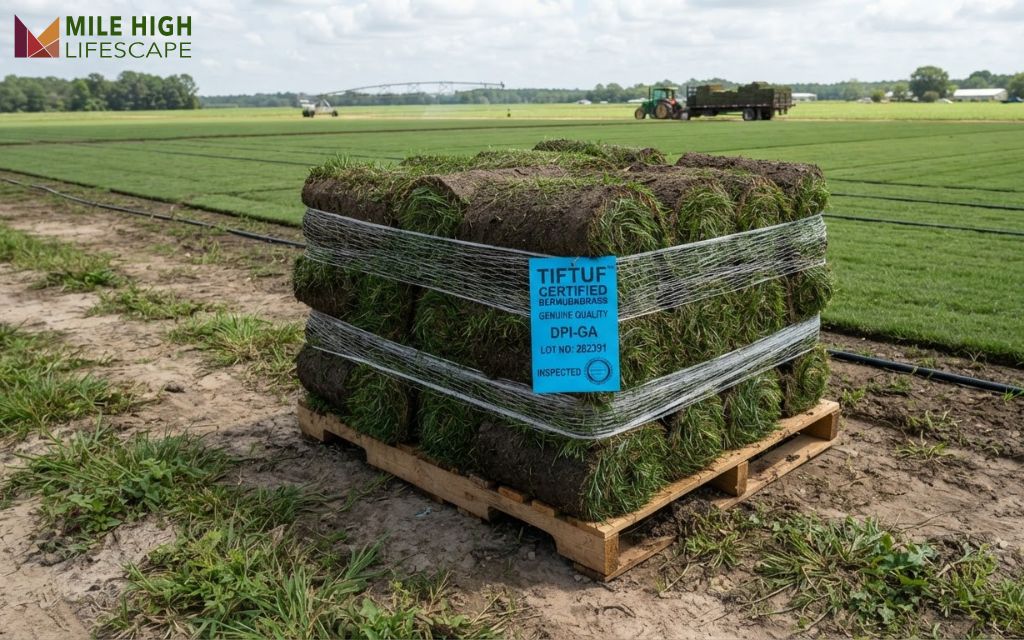
Since 2015, The Turfgrass Group has licensed TifTuf to certified growers, and genuine sod carries a blue certification tag.
TifTuf vs Celebration: 7 factors that decide the better fit
Seven traits separate these grasses in daily lawn care: water use, sunlight, wear, appearance, mowing, cold, and cost. Each section names the source behind its numbers.
1. Drought tolerance and water use
TifTuf holds the stronger drought record. In a 2011 UGA drought trial, TifTuf used 38% less water than Tifway 419 while keeping better turf quality.
UGA also reported that TifTuf outperformed Tifway, Celebration, and Princess-77 under short and long droughts in national trials. Schwartz traced the gain to lower water use, not deeper roots.
Celebration remains drought-tough and ranked near the top for recovery in a San Antonio Water System study. The 38% figure compares TifTuf with Tifway, not with every bermuda.
2. Sun and shade requirements
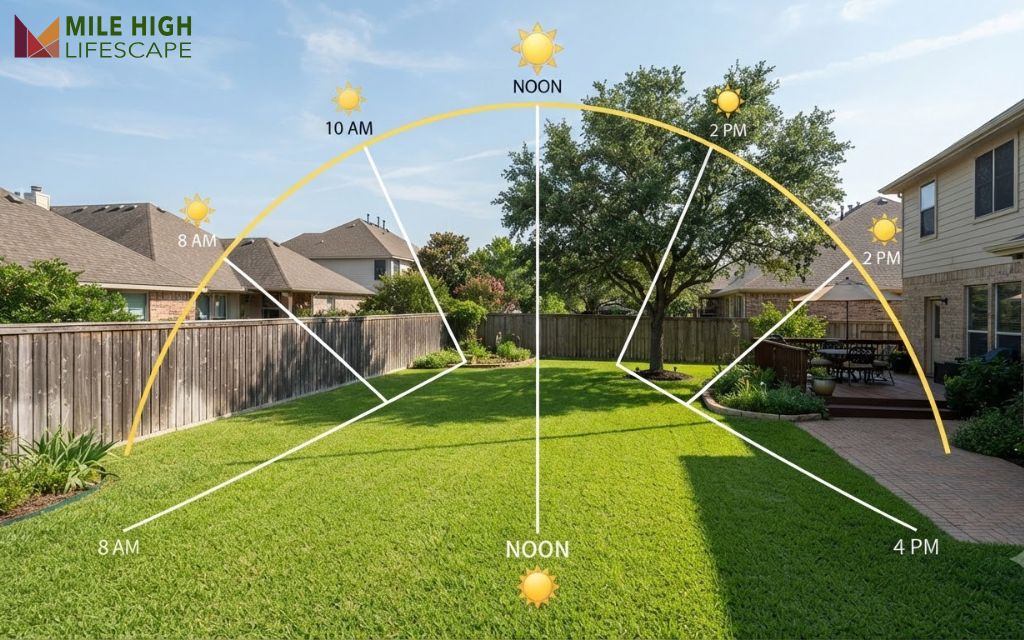
Both grasses need full sun, so plan on at least 6 hours of direct light. UGA describes TifTuf as handling full sun to partial shade, and neither grass survives under dense tree canopy.
Shade claims split by seller. Sod Solutions, which licenses Celebration, ranks Celebration first for bermuda shade tolerance. The Grass Store, a Texas sod retailer, gives TifTuf the edge.
Growers list TifTuf minimums from 5 to 6+ hours, and University of Florida guidance puts bermudagrasses at 6 to 8 hours. Check your yard’s light at 9 a.m., noon, and 3 p.m. before you choose.
3. Wear tolerance and recovery
Celebration is known for fast recovery, and TifTuf is known for holding density under traffic. Both grasses spread by stolons and rhizomes, which lets them knit worn spots back together.
Rankings conflict: The Turfgrass Group puts Celebration first for traffic, while Super-Sod claims TifTuf leads. Either grass handles kids and dogs during summer growth.
Recovery stops in winter dormancy, so traffic on dormant turf leaves bare paths until spring.
4. Color, texture, and seedheads
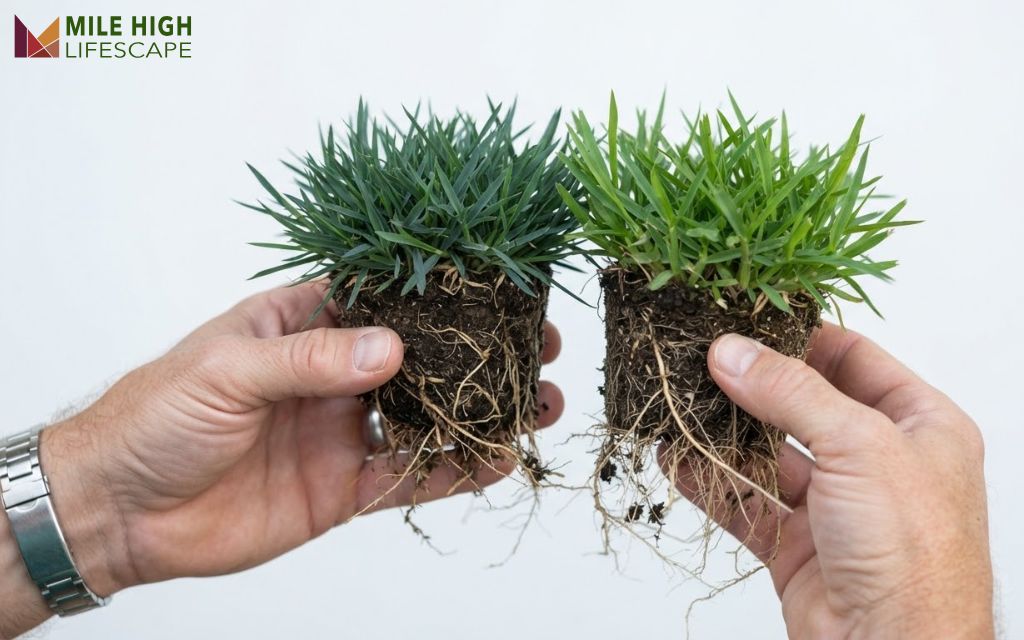
Celebration has a deep blue-green color, while TifTuf looks bright to medium green. Color descriptions still vary: Sod Solutions calls TifTuf light green, while some TifTuf growers call it dark green.
The Grass Store lists TifTuf’s blade at about 0.07 inches (1.7 mm) wide and Celebration’s at about 0.11 inches (2.8 mm).
5. Mowing height and maintenance
Mow both grasses short and often: 0.5 to 1.5 inches (1.3 to 3.8 cm) for Celebration and 0.5 to 2 inches (1.3 to 5.1 cm) for TifTuf. At the lower end, a reel mower gives the cleanest cut; a sharp rotary mower works near the top of each range.
Remove no more than one-third of the leaf at each cut. In peak summer growth, that often means mowing every 4 to 7 days.
Super-Sod recommends 3 to 6 pounds of nitrogen per 1,000 square feet (about 1.5 to 2.9 kg per 100 m²) a year for TifTuf, based on a soil test. Both grasses need dethatching once thatch builds up.
6. Cold tolerance and winter dormancy
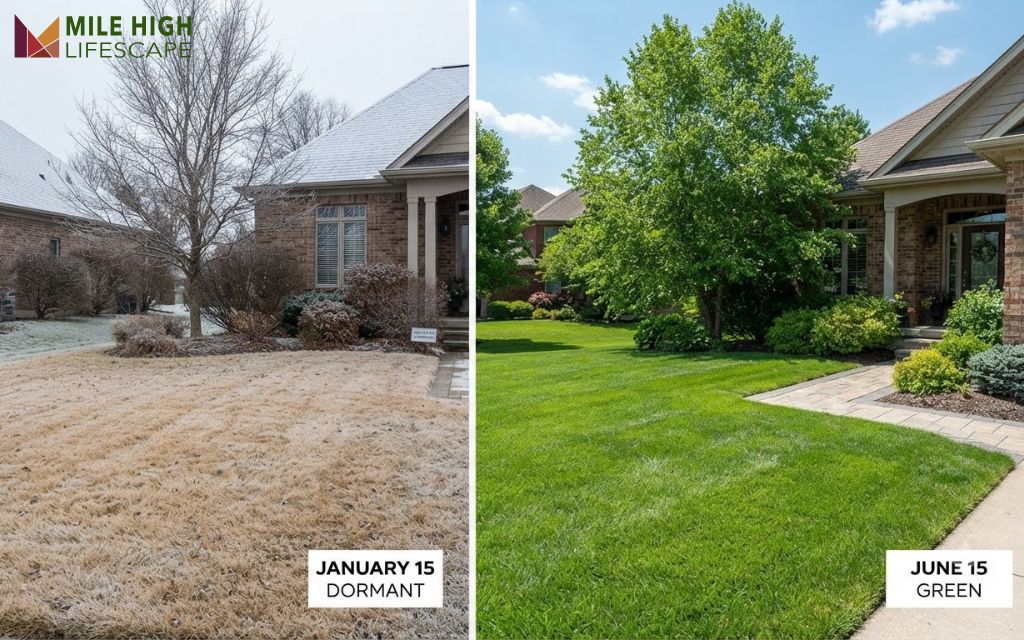
Both grasses go dormant and turn tan after the first hard frost. Neither stays green through a cold winter without overseeding.
Super-Sod rates TifTuf hardy to USDA zone 6b and cites over 90% survival at -6°F (-21°C) in a Kansas NTEP trial. That figure comes from a seller, so treat it as a claim until you read the NTEP report.
For colder transition-zone lawns, breeders built hybrids such as Latitude 36, NorthBridge, and Tahoma 31.
7. Cost and availability
Both grasses sell as premium sod, priced above Tifway 419 and well above common bermuda seed. Prices change with region, farm, and delivery distance, so request local quotes for each.
Each brand sells through licensed growers only, so check the grower list before you plan a project.
Why online comparisons of these two grasses disagree
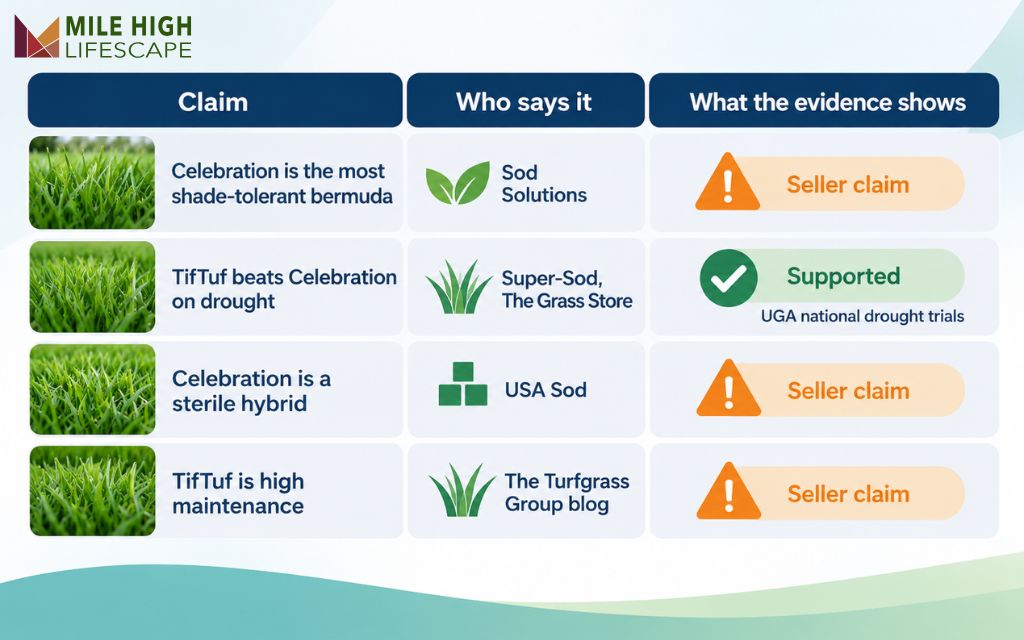
Most comparison pages come from companies that grow, sell, or license one of these grasses. That stake shapes which traits they test and how they rank them.
| Claim | Who says it | Their stake | What the evidence shows |
| Celebration is the most shade-tolerant bermuda | Sod Solutions | Licenses Celebration | Other sellers rank TifTuf higher; test your own sun hours |
| TifTuf beats Celebration on drought | Super-Sod, The Grass Store | Grow or sell TifTuf | Supported by UGA national drought trials |
| Celebration is a sterile hybrid | USA Sod | Sells many varieties | Incorrect: its patent lists Cynodon dactylon |
| TifTuf is high maintenance | The Turfgrass Group blog | Licenses TifTuf | Conflicts with growers’ low-maintenance ratings |
Before you trust a verdict, check who grows or licenses the grass in that article.
Regional testing adds variation. The National Turfgrass Evaluation Program (NTEP) tests cultivars side by side at many sites, so its data gives a fairer baseline than one farm’s photos.
Sod, plugs, or seed: how TifTuf and Celebration are planted
TifTuf and Celebration grow only from living plant material: sod, plugs, or sprigs. Growers propagate them vegetatively to keep each variety genetically true.
Can you buy TifTuf or Celebration grass seed?
No. TifTuf is sterile, and Celebration is sold as sod, plugs, and sprigs, not seed. A bag labeled “TifTuf seed” likely contains common bermuda, so buy from a licensed grower.
Sod vs plugs vs sprigs
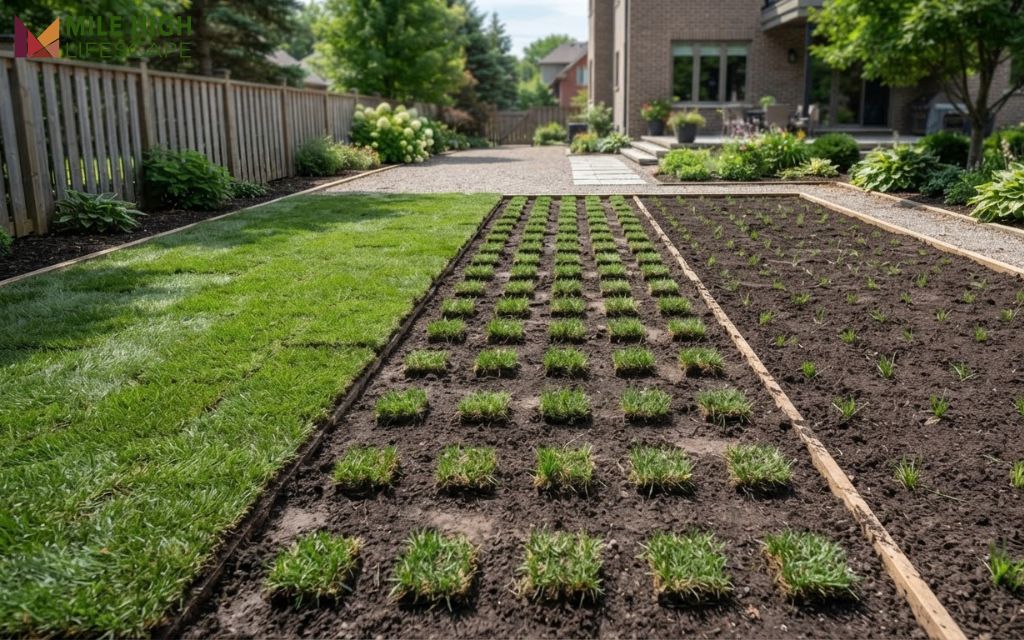
Sod gives instant coverage and handles light use in about 2 to 3 weeks during active growth. Plugs and sprigs cost less, but they take 60 to 120 days to fill in and need weed control while gaps close.
Common bermuda vs TifTuf
Common bermuda is the seeded, budget option; TifTuf is the premium vegetative option. Common bermuda has coarser leaves, lower density, and takes 60 to 90 days to establish from seed. TifTuf gives a finer, denser surface and lower water use at a higher upfront cost.
Where Latitude 36 and TifGrand fit in
Latitude 36 targets colder climates, and TifGrand targets shade. Both are sterile hybrids sold as sod, so neither has seed despite searches for “Latitude 36 seed.”
Latitude 36: cold-hardy, with limits
Oklahoma State University released Latitude 36 in 2010. It took top overall honors in the 2007–2012 NTEP bermudagrass trials and was bred for better winter hardiness than Tifway.
Cold-hardy still means winter risk: after the 2017–18 winter, Kansas State University rated injury at 100% for Tifway and 80% for Latitude 36.
TifGrand vs TifTuf
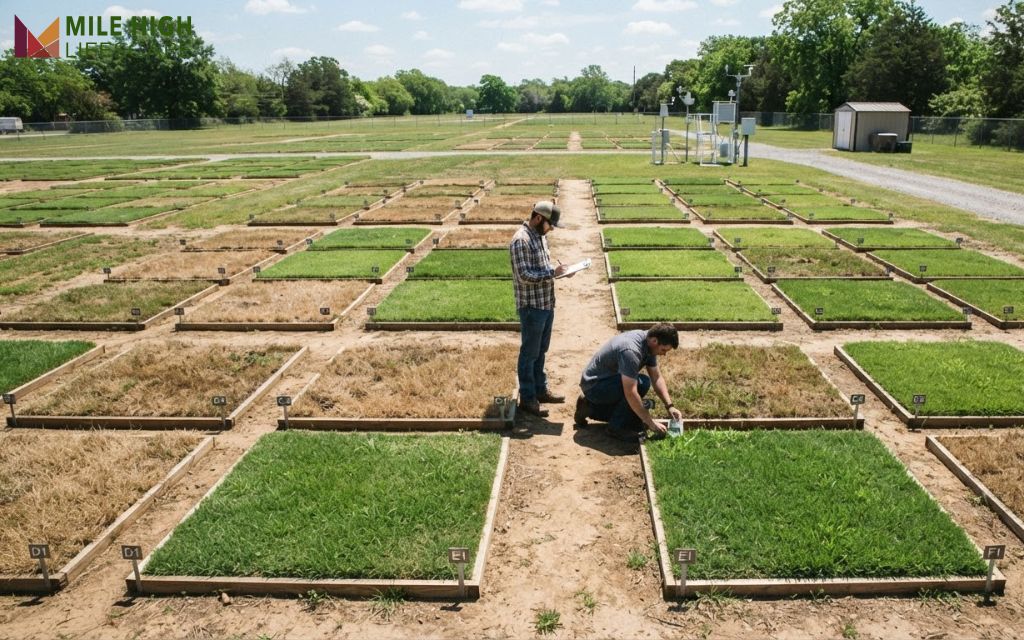
UGA introduced TifGrand in 2010 as a shade-focused bermuda, and Georgia grower NG Turf says it tolerates 60% to 70% shade with 5 hours of direct sun. TifTuf leads on drought, and TifGrand leads on shade. Pick TifGrand for a yard with afternoon tree shade and TifTuf for an open lawn under watering limits.
Which bermuda should you choose for your yard?
Match the grass to sun, water, and use before you match it to a brand. These 4 scenarios cover most yards:
- TifTuf for sunny lawns under watering limits: UGA drought data supports lower irrigation once roots establish.
- Celebration for active, high-visibility yards: Deep color and fast recovery suit front lawns and play areas with frequent low mowing.
- Latitude 36 or NorthBridge for transition-zone winters: Expect some winter injuries after a severe cold.
- A different grass for yards under 6 hours of sun: Zoysia, St. Augustine, or tall fescue handle shade better, depending on climate.
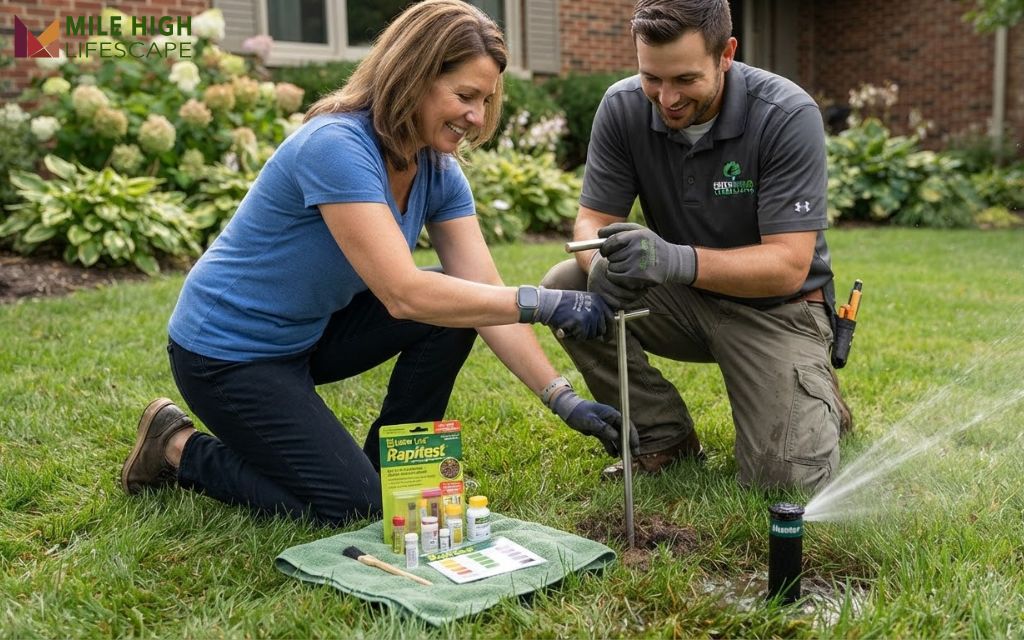
Test the soil, fix drainage, and check sprinkler coverage first, because no cultivar overcomes compacted clay.
Can Celebration or TifTuf grow in Denver and Colorado?
Neither grass is a practical lawn choice for most of the Denver Metro area. With over 20 years of experience on Front Range lawns, our team recommends cool-season or native grasses here, and the evidence below shows why.
Hardiness zone, altitude, and a long dormant season
Most of Denver falls in USDA hardiness zone 6a on the 2023 map, with average winter lows of -10°F to -5°F (-23°C to -21°C). Sellers rate TifTuf, one of the harder hybrids, only to zone 6b. Check your ZIP code on the USDA map.
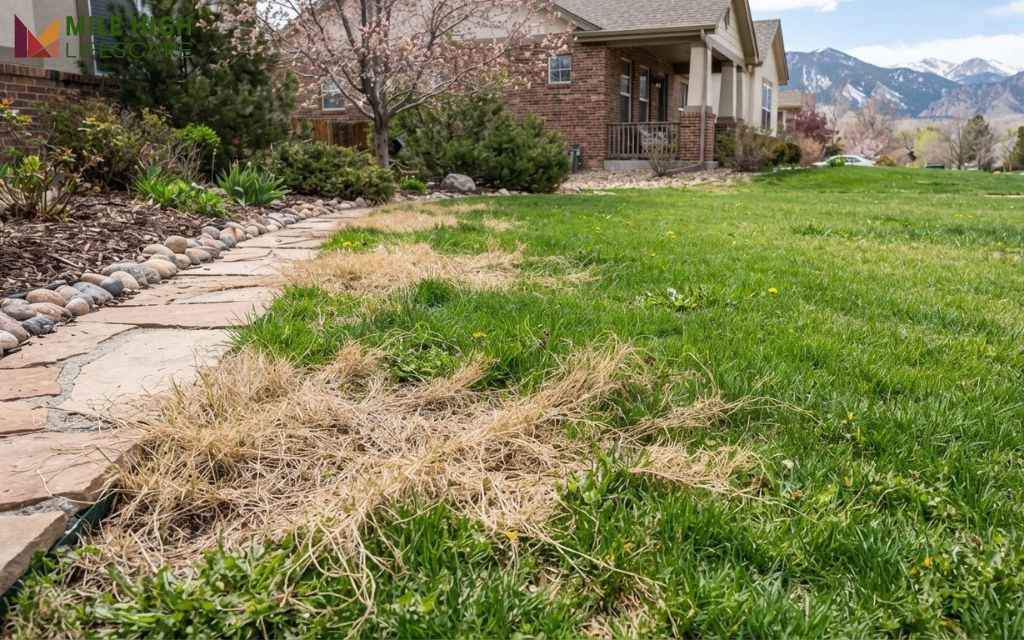
Warm-season grass also wakes up late here. CSU Extension notes that bermudagrass greens up in late April or early May, and it browns again after the first hard frost, leaving a tan lawn for much of the year.
Why CSU Extension treats bermudagrass as a weed
Colorado State University Extension describes bermudagrass as a common and growing weed in Colorado lawns and garden beds. It spreads through underground rhizomes and above-ground stolons, so pulling and digging rarely removes it.
Control takes several herbicide passes during summer growth, sometimes for 2 to 3 years.
Water-wise lawn options that work on the Front Range
Water-wise lawns in Denver start with grasses adapted to cold winters and dry summers. Denver Water declared a Stage 1 drought on March 25, 2026, limiting lawn watering to 2 assigned days per week, banning it from 10 a.m. to 6 p.m., and keeping the rules through April 30, 2027.
These 4 grasses fit Front Range conditions:
- Kentucky bluegrass: Colorado’s most widely used lawn grass, suited to active family yards.
- Turf-type tall fescue: a deep-rooted, cool-season grass that tolerates more shade than bermuda.
- Buffalograss: a native, warm-season grass with low water and mowing needs for sunny, low-traffic areas.
- Blue grama: Colorado’s native state grass, suited to naturalized spaces.
For commercial sites, Colorado’s SB24-005 bars new nonfunctional turf on new or redeveloped properties from January 1, 2026.
Sod installation for Denver lawns by Mile High Lifescape
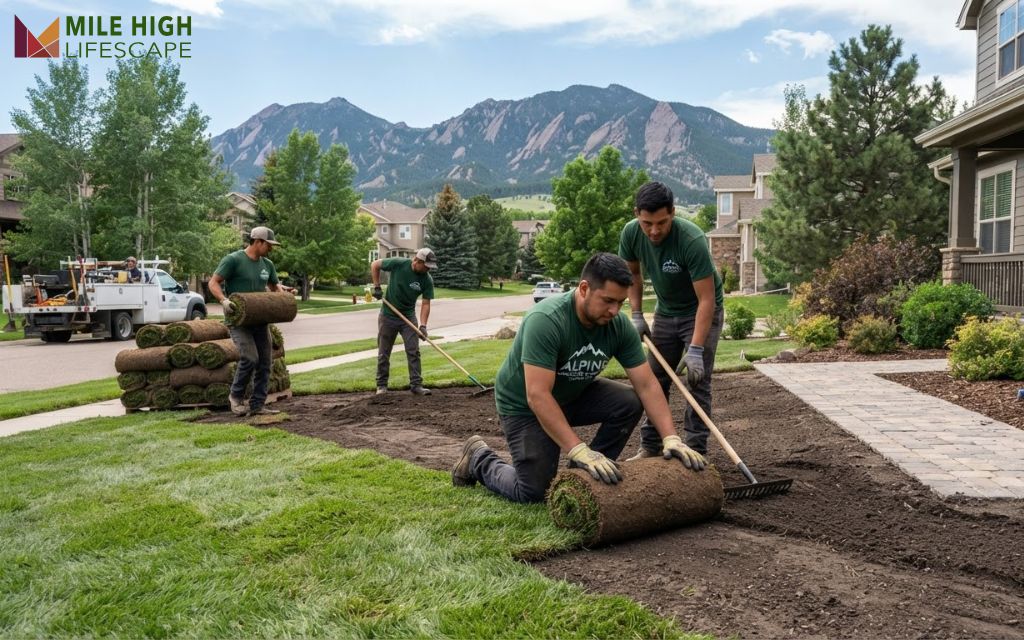
Mile High Lifescape provides Sod Installation for homes and commercial properties across the Denver Metro area. If your research on Celebration Bermuda vs TifTuf started with a search for a drought-tough lawn, we match your yard to a grass that suits Front Range winters, local soil, and current watering rules.
Every project gets personalized service and follows proven landscaping techniques and applicable building codes.
We pair sod work with related services when a yard needs them, such as sprinkler installation for even coverage, aeration and overseeding for compacted turf, and xeriscape landscaping for areas that need no turf.
Call (303) 877-9091, email hello@milehighlifescape.com, or visit 1007 S Federal Blvd, Denver, CO 80219, Monday to Saturday, 8 a.m. to 5 p.m.
FAQs about Celebration and TifTuf
Is TifTuf or Celebration better for a home lawn?
TifTuf fits sunny lawns under watering limits, and Celebration fits active yards where color and recovery matter. Both need full sun and frequent low mowing.
Can you grow TifTuf or Celebration bermuda from seed?
No. Both grasses grow only from sod, plugs, or sprigs. Seeded bermuda products contain common bermuda or other cultivars.
How many hours of sun does TifTuf bermuda need?
TifTuf needs at least 6 hours of direct sun for dense turf. Thin growth follows in deeper shade.
Can you plug Celebration or TifTuf into an existing lawn?
Yes, both sell as plugs, but they fill in slowly and leave mixed patches beside other grasses. Space plugs about 12 inches (30 cm) apart.
Does bermuda grass survive Denver winters?
Bermuda often survives as a dormant weed in Denver, but it stays tan for months. That makes Celebration Bermuda vs TifTuf a question for warm-climate lawns, not Front Range yards, and CSU Extension advises controlling bermuda rather than planting it in Colorado.