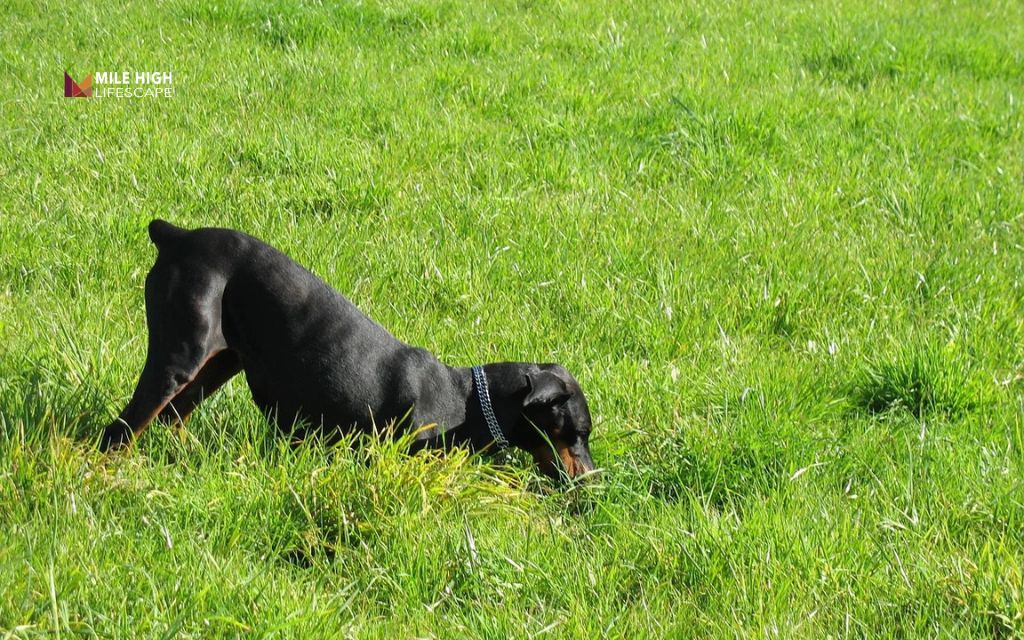
If you are trying to understand how to stop a dog from digging, the best place to start is with the reason behind the behaviour. Dogs may dig from boredom, heat, instinct, curiosity, or an attempt to escape, so the right solution depends on what triggers it. Mile High Lifescape also sees how repeated digging can leave lawns thin, uneven, and difficult to maintain. A combination of behaviour management and timely lawn repair usually produces the most lasting result.
Why Do Dogs Dig In The Yard?
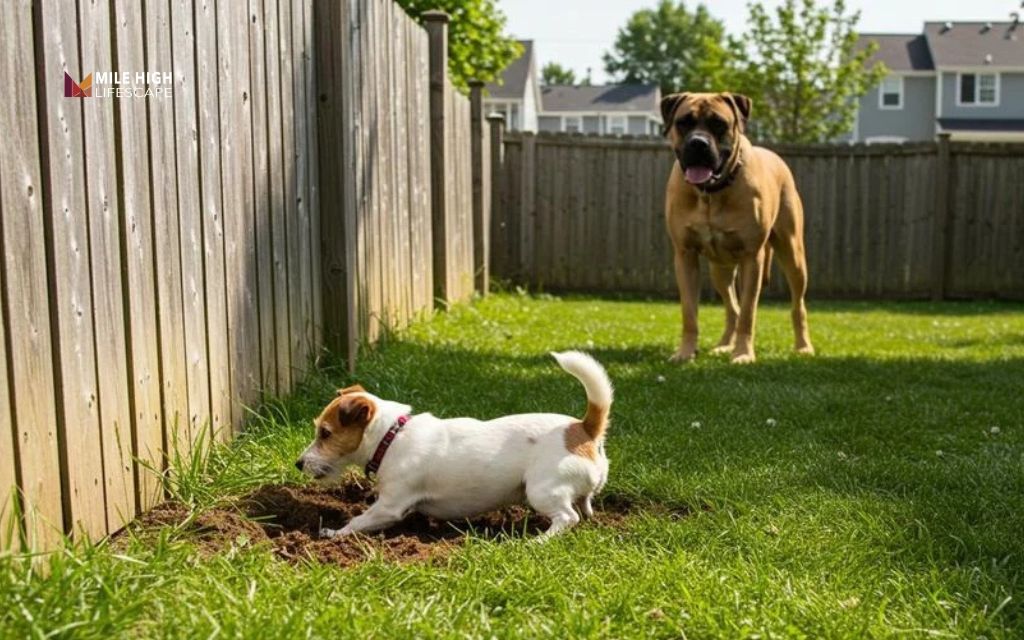
Before deciding how to stop a dog from digging, look at when and where the behavior happens. A dog that digs beside a fence may be trying to escape, while one that digs shaded holes on hot days may simply be looking for cooler soil.
Common reasons include:
- Boredom or excess energy.
- Natural breed-related instincts.
- Heat and lack of shade.
- Prey beneath the soil.
- Attempts to escape the yard.
- Hiding toys or food.
- Stress or anxiety.
Dogs may also return to areas where loose soil already makes digging easy. Keeping the turf dense through regular lawn care can make vulnerable patches less inviting.
How To Stop A Dog From Digging: 7 Practical Ways
There is no single answer to how to stop a dog from digging because the behaviour can have several causes. The most effective approach removes the trigger, redirects the dog, and protects the lawn while a new routine develops.
1. Increase Daily Exercise And Mental Stimulation
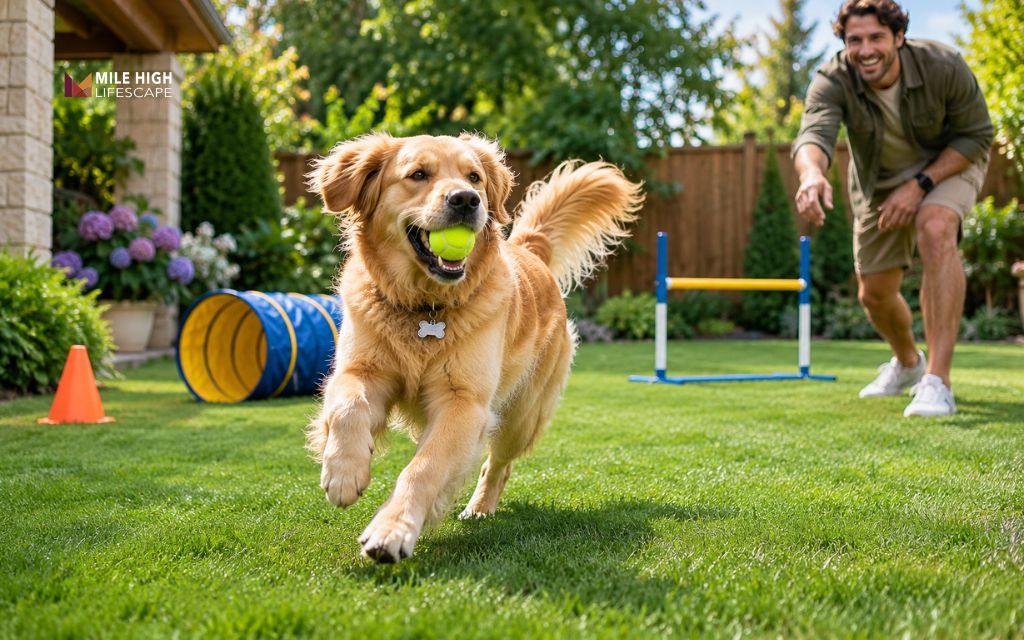
If boredom drives the behaviour, more physical activity and mental stimulation can help. Longer walks, scent games, training sessions, and interactive toys give the dog other ways to use its energy.
For anyone asking how can I stop a dog from digging, this should be one of the first areas to review. A dog with appropriate daily activity is often less likely to create its own entertainment in the yard.
2. Supervise And Redirect The Behaviour
Watch the dog closely during outdoor time and interrupt digging before a large hole develops. Call the dog away, offer another activity, and reward calm behaviour elsewhere.
This approach works better than punishment when learning how to stop dogs from digging. Consistent redirection helps the dog understand which parts of the yard are off-limits without creating unnecessary fear or stress.
3. Create A Designated Digging Area
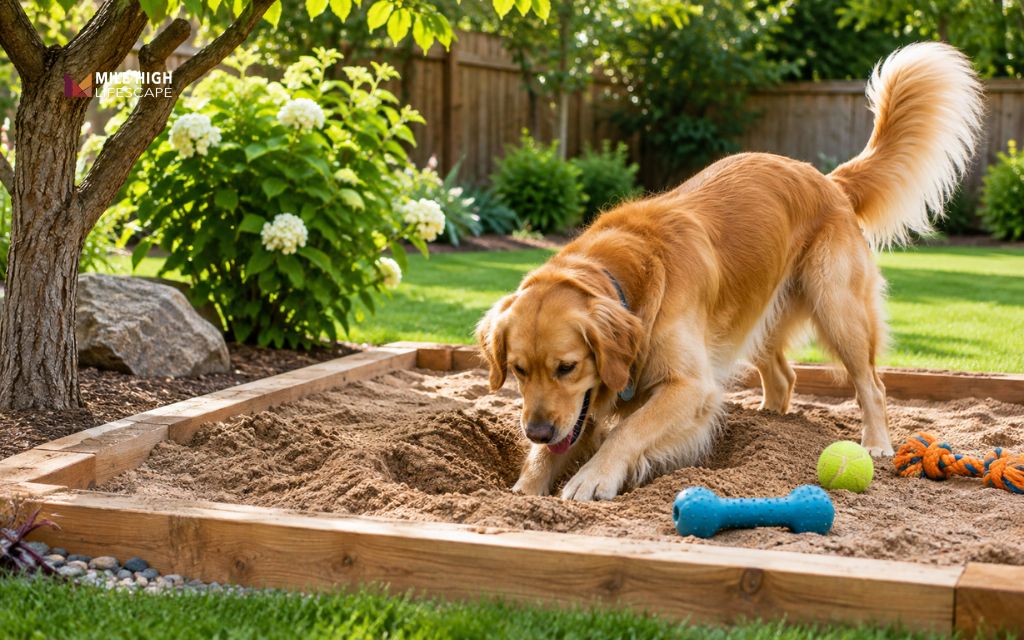
Some dogs have a strong natural urge to dig, so eliminating the behaviour completely may be unrealistic. A small sandpit or loose-soil area gives that instinct an acceptable outlet.
Hide toys or treats in the approved area and reward the dog for using it. If you are wondering how do you keep a dog from digging across the entire lawn, giving it one permitted location can make boundaries much easier to establish.
4. Block Access To Favourite Digging Spots
Temporary fencing, garden edging, or supervised access can protect areas the dog repeatedly targets. This is especially useful while damaged turf recovers. When considering how to stop dog from digging in one specific section, remove access before the behaviour becomes habitual. Newly repaired or sodded areas should also stay protected until roots are established.
5. Address Digging Along The Fence
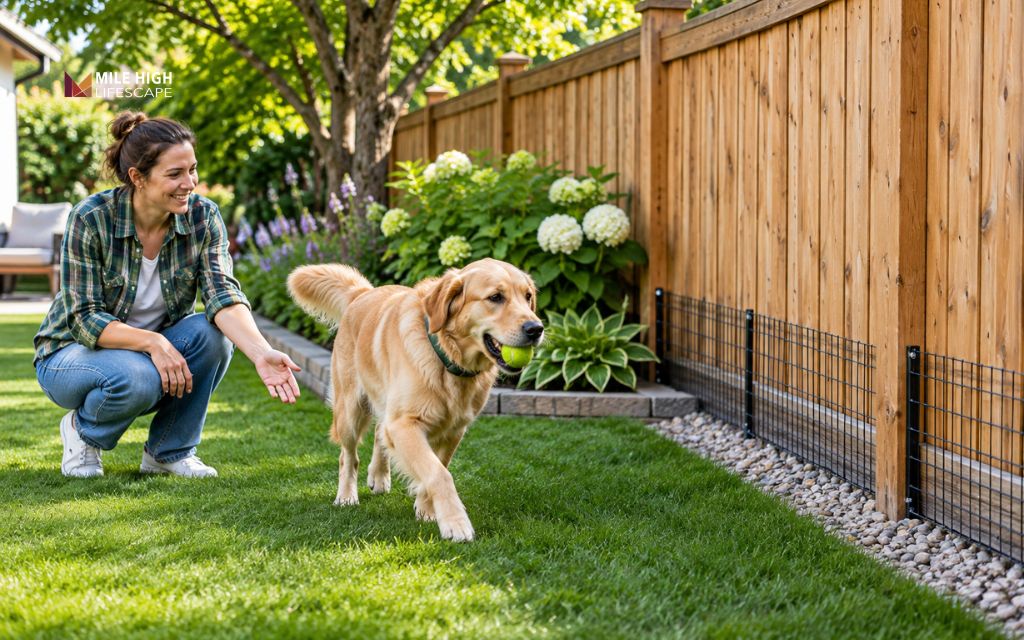
Dogs often dig along fences because they are following scents, reacting to nearby animals, or trying to leave the yard. Secure the bottom edge with a safe barrier and supervise outdoor time until the habit becomes less frequent. Avoid exposed wire or sharp materials that could injure paws.
6. Provide Shade And Water In Hot Weather
Hot weather can make dogs dig into the soil to reach a cooler layer beneath the surface. Provide reliable shade, fresh water, and a comfortable resting area away from direct afternoon sun. This can reduce heat-related digging and make the yard more comfortable during warmer periods.
7. Remove Attractions Beneath The Lawn
Underground insects, rodents, or strong scents can keep a dog focused on one patch of turf. Part of learning how to stop a dog from digging is checking whether something beneath the lawn is encouraging the behaviour. Use pet-safe pest control where necessary and repair disturbed soil once the source is removed.
How To Stop A Dog From Digging Up The Lawn Specifically
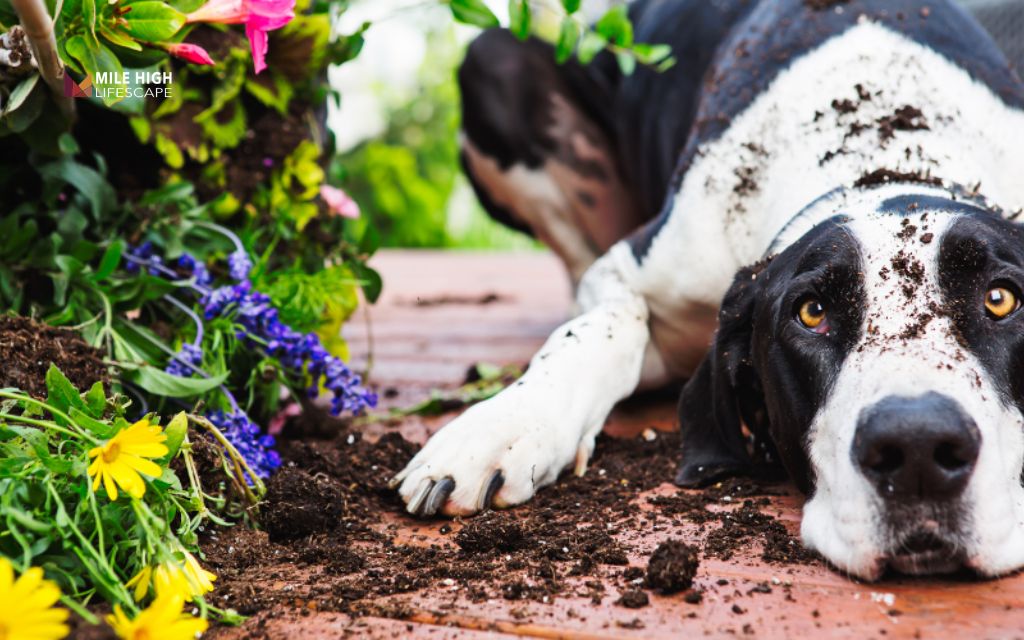
Learning how to stop a dog from digging up the lawn starts with protecting the areas that are easiest to disturb. Bare patches, loose soil, lawn edges, and recently repaired turf often attract repeat digging, so cover or block access to those spots while the grass recovers.
To stop dog digging lawn areas repeatedly, keep the turf dense, repair thin sections early, and redirect play away from vulnerable zones. Consistent supervision also helps when figuring out how to stop dog from digging in yard areas where the habit is already established.
A practical lawn-focused approach includes:
- Repair bare patches before they become larger digging targets.
- Restrict access to freshly seeded or sodded sections.
- Improve thin or compacted turf where roots are weak.
- Keep fence lines and garden edges clearly defined.
- Redirect energetic play to less vulnerable parts of the yard.
- Maintain regular watering and mowing so the lawn stays dense.
What Not To Do When Stopping A Dog From Digging
When deciding how to stop a dog from digging, avoid methods that may frighten the dog or damage the lawn. Punishment after the event rarely teaches the dog which behaviour is expected and may increase stress instead.
Avoid:
- Hitting or physically punishing the dog.
- Shouting long after the digging occurred.
- Using cayenne pepper or irritating powders.
- Placing sharp objects inside holes.
- Applying unsafe chemicals to the soil.
- Leaving the dog unsupervised in problem areas.
- Assuming every digging problem has the same cause.
How To Repair Lawn Damage Caused By Dog Digging
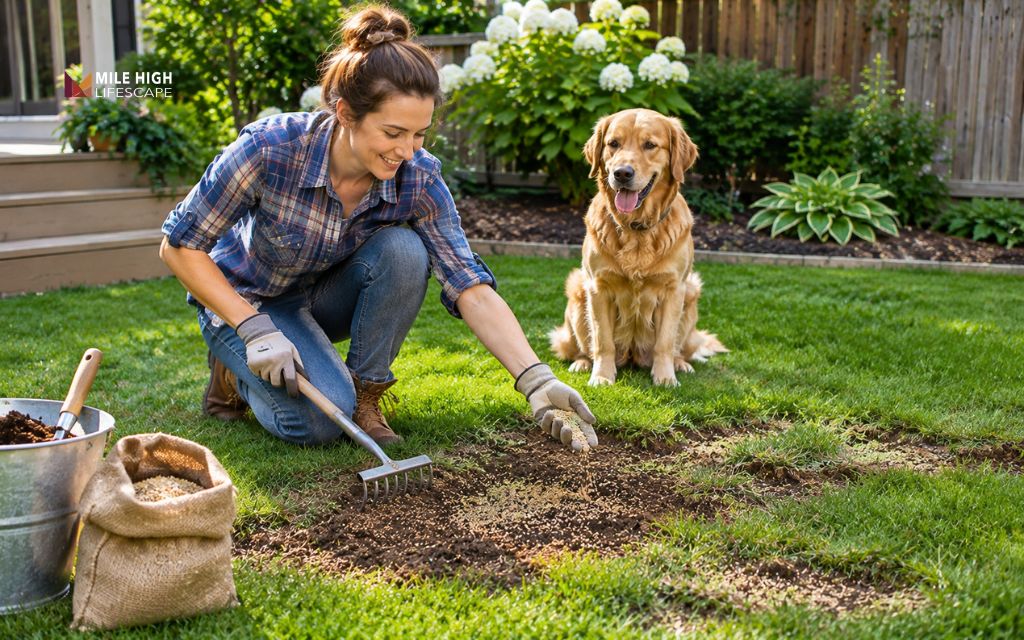
Once you know how to stop a dog from digging, repair the damaged lawn before holes become larger or collect water. Small holes can usually be filled with suitable soil, lightly firmed, and levelled with the surrounding surface.
For more extensive damage:
- Remove loose or dead turf around the hole.
- Refill the area with suitable soil.
- Restore the original grade.
- Reseed small bare patches.
- Replace larger sections with sod.
- Keep pets away during establishment.
Where sod is needed, proper soil preparation improves root contact. Follow appropriate new sod care while repaired sections settle.
How To Prevent Future Digging In The Yard
Long-term prevention matters just as much as learning how to stop a dog from digging after the behaviour begins. A predictable outdoor routine, healthy turf, and clear boundaries make repeat damage less likely.
Keep the yard easier to manage with these habits:
- Maintain regular walks and play sessions.
- Rotate toys and enrichment activities.
- Repair thin lawn areas early.
- Keep fence lines secure.
- Supervise pets around new turf.
- Maintain one approved digging area if needed.
- Adjust irrigation to keep the lawn healthy.
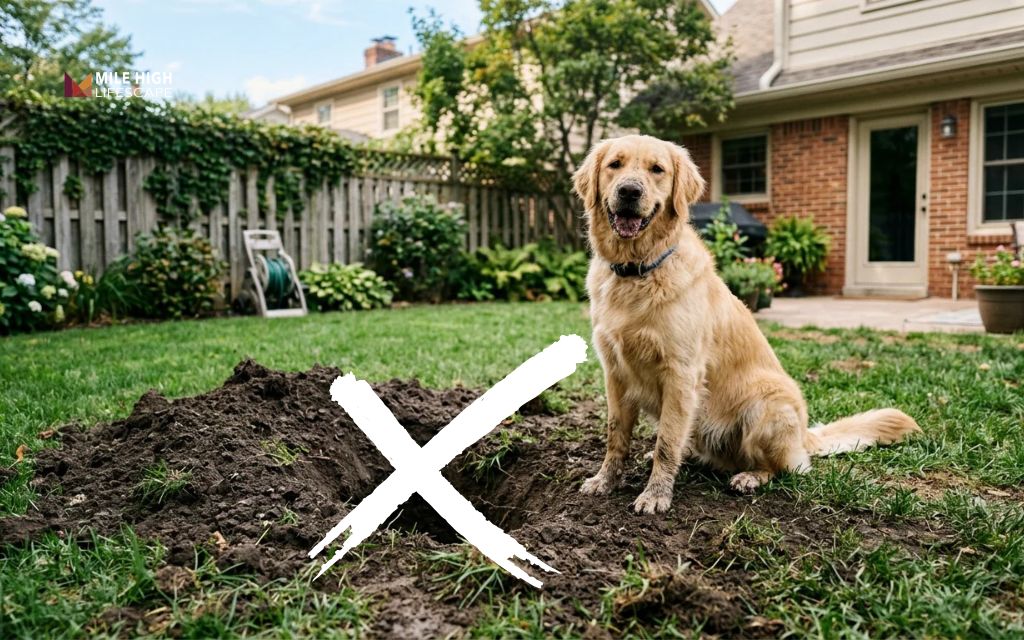
Mile High Lifescape: Restore A Lawn After Digging Damage
Repeated digging can leave a lawn uneven, thin, and difficult to repair with quick patchwork alone. Mile High Lifescape looks at the condition of the turf, soil level, drainage, and the extent of the damage before recommending the most suitable repair approach.
- Targeted lawn repair: Small damaged sections can be levelled, rebuilt, and restored without replacing the entire lawn.
- Sod replacement: Larger bare areas may benefit from professional Sod Installation for faster, more even coverage.
- Long-term recovery: Ongoing lawn care helps repaired areas establish evenly and cope better with regular pet traffic.

Final Thoughts
Learning how to stop a dog from digging starts with understanding what is driving the behaviour, then combining supervision, redirection, and better yard management. Once the cause is addressed, repair damaged turf early so the lawn can recover before bare areas expand.
If repeated digging has left larger sections uneven or difficult to restore, contact Mile High Lifescape for help rebuilding the lawn with the right repair or sod solution.