Coated vs uncoated grass seed is a choice between protection and quantity: one bag wraps each seed in clay, polymer, or fertilizer, and the other packs more live seed into every pound. This guide helps homeowners compare both types with turf research, seed tag math, and Colorado growing conditions, so you buy the bag that fits your yard.
Coated vs uncoated grass seed: what each bag contains
Coated vs uncoated grass seed differs by one layer. Coated seed wears a shell of clay, polymer, or nutrients, and uncoated seed is bare. That shell changes bag weight, coverage, and moisture handling, not the grass variety.
What is coated grass seed?
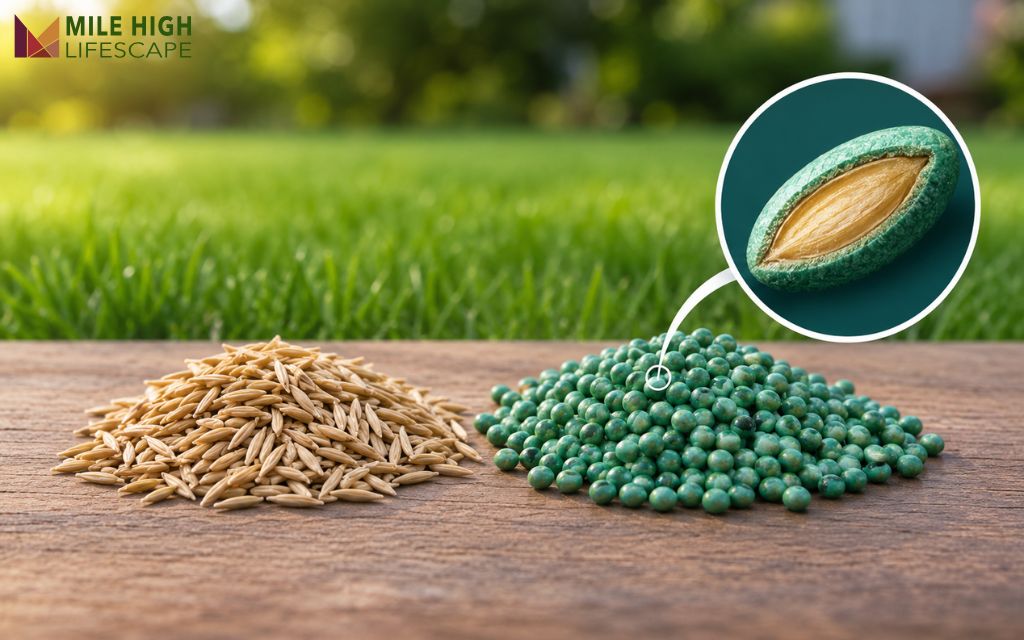
Coated grass seed is turfgrass seed wrapped in a thin layer of added material before packaging. The coating holds water, adds spreading weight, colors the seed, or delivers nutrients at germination. Pennington’s Penkote process on Kentucky 31 tall fescue made it a retail staple.
What’s inside a grass seed coating?
Most retail grass seed coatings use one or more of these 5 material groups:
- Clay, lime, or calcium carbonate: These minerals add weight so small seeds spread evenly.
- Water-absorbing polymers: Starch-based gels, such as ZEBA, hold water against the seed.
- Fertilizer and micronutrients: Nitrogen, zinc, and iron feed the seedling during its first days.
- Fungicides and biostimulants: These agents guard against damping-off and support early roots.
- Colorants: Green, blue, or yellow dyes make seed visible on soil and mark the treatment.
Brands mix these differently: a 2010 HortTechnology study found a fungicide and biostimulant coating on Pennington seed and a starch coating on Scotts seed.
Coated seed vs seed treatment vs seed and fertilizer mixes
A seed coating adds a visible shell and real weight. A seed treatment, such as Pennington’s Seed Fuel, is a thin spray-on film with almost no weight. A seed and fertilizer mix places loose granules beside the seed. The inert matter line on the tag tells them apart.
What is uncoated grass seed?
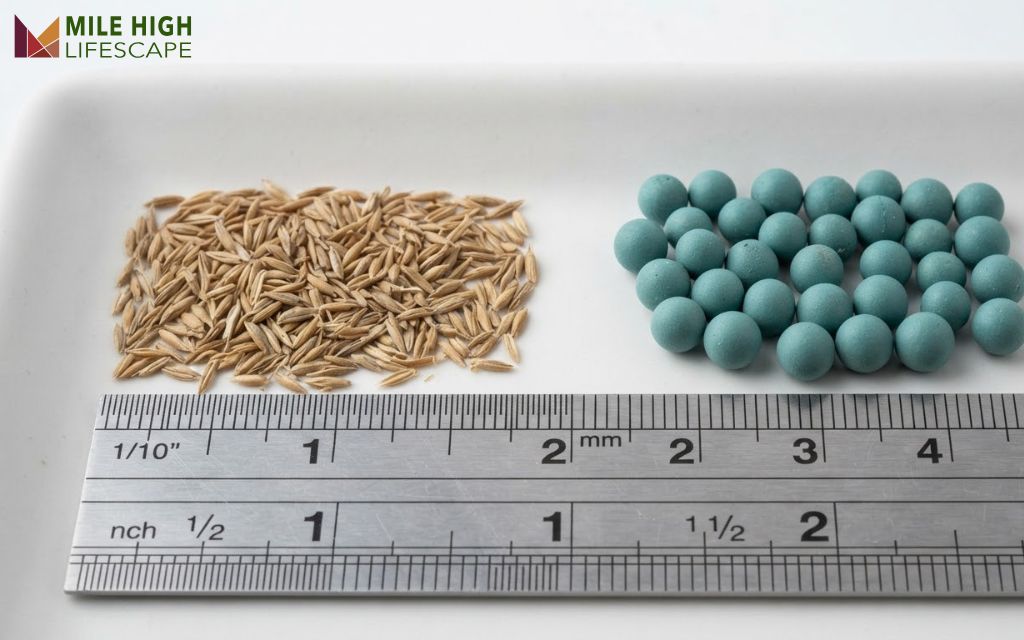
Uncoated grass seed, also called raw or bare seed, is cleaned seed sold without an added shell. Kentucky bluegrass carries about 2,177,000 seeds per pound (4.8 million per kilogram), and tall fescue about 227,000 per pound (500,000 per kilogram), according to UMass Extension.
Side-by-side comparison of coated and uncoated seed
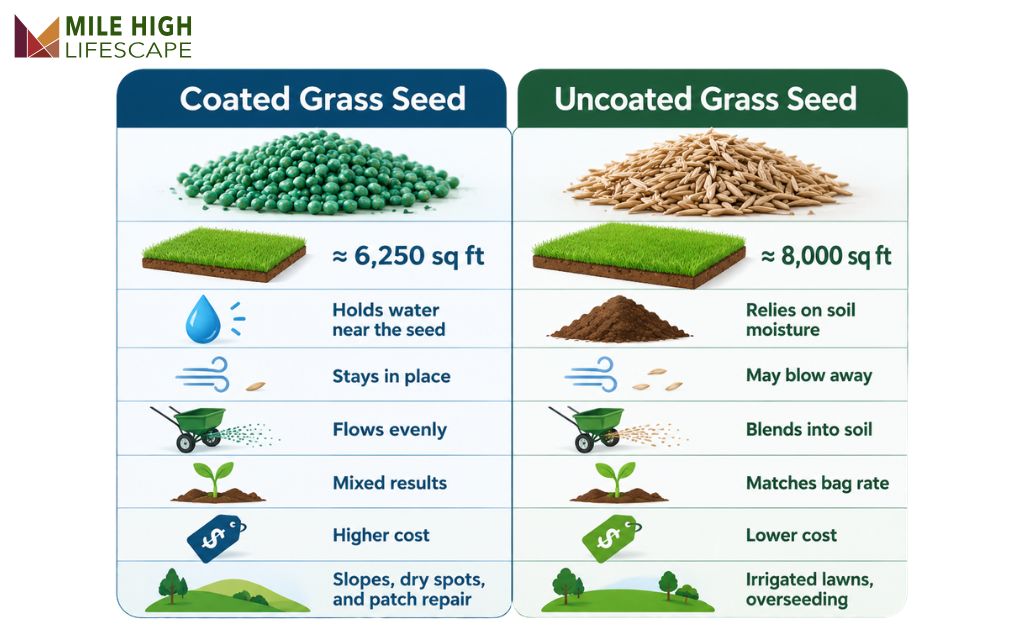
This table compares both seed types across 8 buying factors:
| Factor | Coated grass seed | Uncoated grass seed |
| Seeds per pound | Fewer, since the coating adds weight | More, since the bag holds seed only |
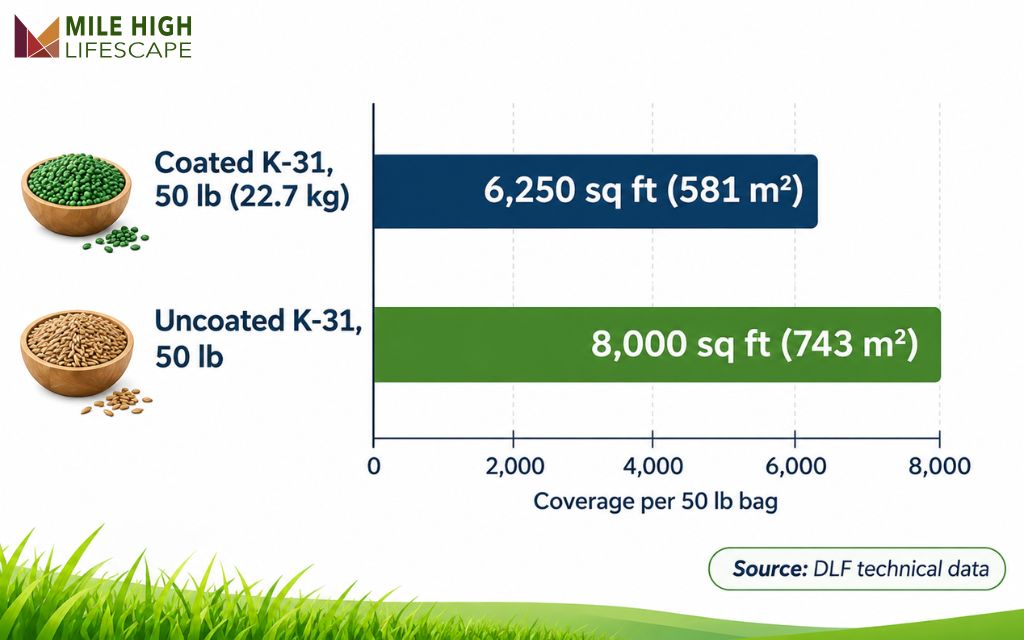
| Coverage per 50 lb (22.7 kg) bag | About 6,250 sq ft (581 m²) for coated K-31 | About 8,000 sq ft (743 m²) for uncoated K-31 |
| Moisture buffer | Polymer coatings hold water near the seed | Relies on soil moisture and watering |
| Wind and runoff | Heavier seed stays in place | Light seed shifts on slopes and in wind |
| Spreader use | Flows evenly and shows on soil | Flows well and blends into soil |
| Germination | Mixed results in independent trials | Matches the germination rate on the tag |
| Cost per live seed | Higher | Lower |
| Best fit | Slopes, dry spots, and patch repair | Irrigated lawns, overseeding, and large areas |
Does seed coating improve germination? 4 turf studies
Seed coating improves germination under stress, and it adds little under normal watering. When we reviewed 4 peer-reviewed turfgrass studies, we found gains during drought and flat results in well-watered soil.
Kentucky bluegrass and tall fescue under normal conditions
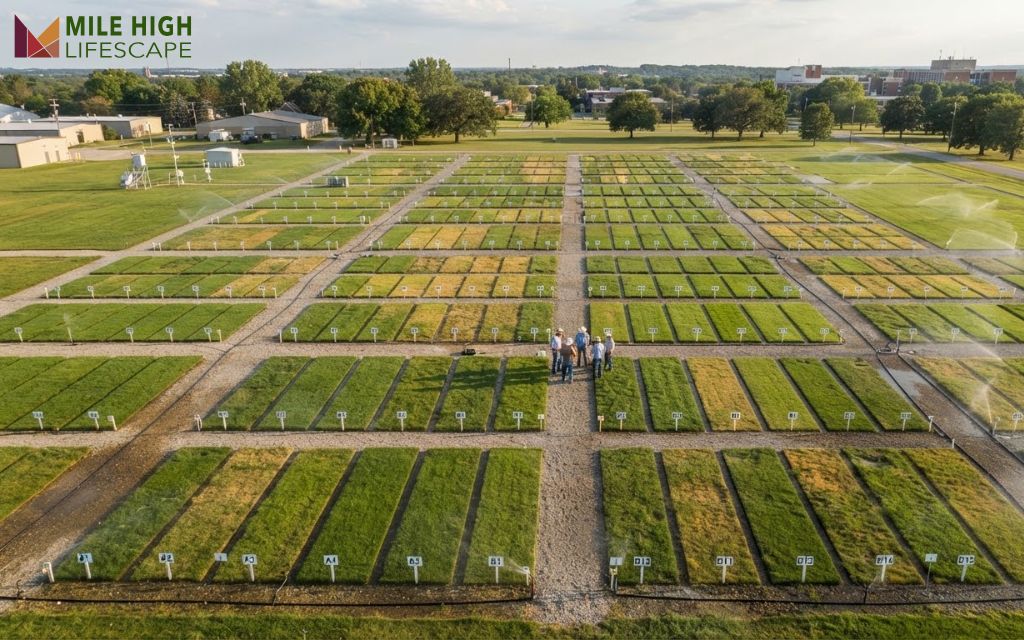
Richardson and Hignight tested 2 retail coatings in 3 soil types (HortTechnology, 2010). Tall fescue germination stayed the same in every soil, and coated Kentucky bluegrass sprouted faster only in sandy loam.
At New Mexico State University, Serena, Singh, and Leinauer found a ZEBA coating raised 22-day germination only for creeping bentgrass. By day 92, several coated Kentucky bluegrass mixes showed more ground cover.
When coatings helped: drought and limited irrigation
A 2016 HortTechnology study tested a surfactant film coating under deficit irrigation in eastern Oregon. Coated tall fescue produced about 22% more density, 23% more cover, and 28% more biomass than untreated seed.
Expert note: Coatings earn their cost when water runs short. Under full sprinkler coverage, they add more weight than value.
When coatings did not help: salinity and bluegrass
Serena and colleagues tested seed at 5 salinity levels (HortScience, 2012). Coated perennial ryegrass germinated better at 4 levels, but coated Kentucky bluegrass germinated worse at 2, including plain tap water. Michigan State University found coated alfalfa results equally inconsistent.
What the research means for a home lawn
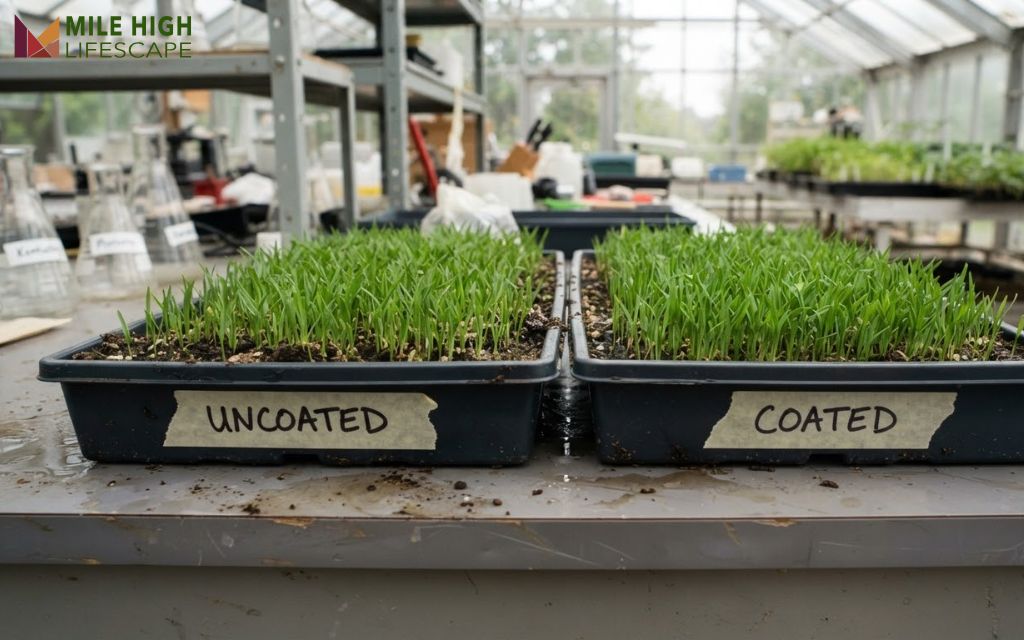
Coated seed works as insurance against stress, not as a germination booster. Pick it for fast-drying sites and missed waterings, and pick uncoated seed when you control irrigation.
The real cost: how to compare coated and uncoated bags
To compare the real cost, divide the bag price by its pure live seed, not its total weight.
Read 4 lines on the seed tag
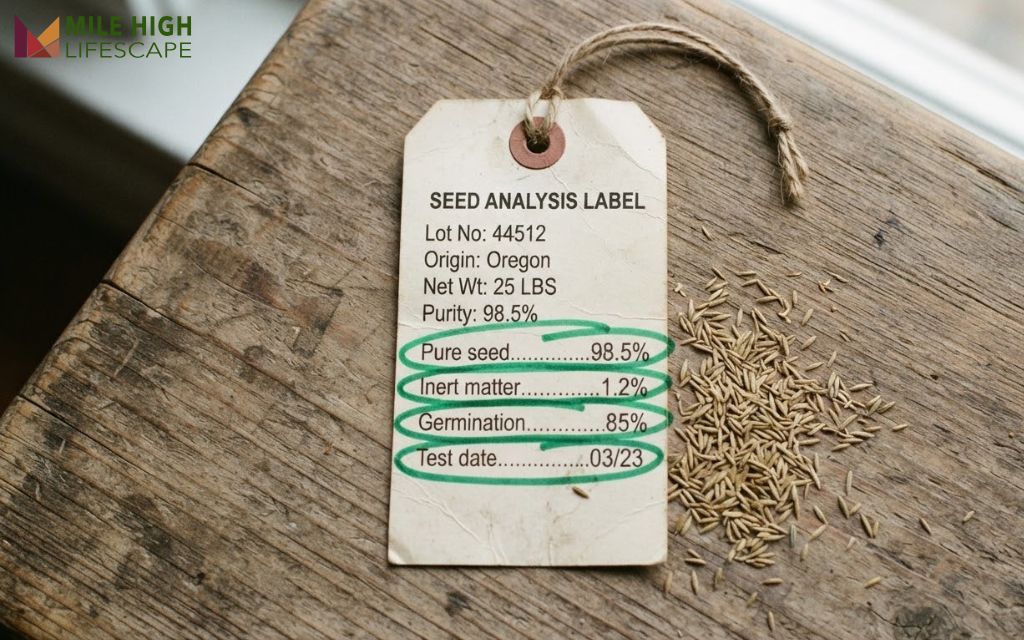
Every bag of lawn seed carries a seed tag with these 4 lines:
- Pure seed: This line shows the percentage of bag weight that is grass seed.
- Inert matter: This line shows everything else, including the coating, according to UConn Extension.
- Germination: This line shows the percentage of pure seed that sprouted in the lab test.
- Test date: This line shows when the germination test ran.
Calculate pure live seed (PLS)
Pure live seed equals pure seed % × germination % ÷ 100. Take 2 example tags: a coated bag at 50% pure seed and 85% germination holds 42.5% PLS. An uncoated bag at 97% pure seed and 85% germination holds 82.5% PLS, nearly twice the live seed per pound.
Coverage per bag: a Kentucky 31 example
DLF lists about 6,250 sq ft (581 m²) per 50 lb (22.7 kg) bag of coated Kentucky 31 and 8,000 sq ft (743 m²) per uncoated bag. At equal bag prices, uncoated seed costs about 22% less per square foot seeded.
5 situations where coated grass seed makes sense
Coated grass seed pays off where seed dries, blows, or washes away before it roots:
- Slopes and berms: Heavier seed resists washing downhill.
- Windy, open lots: Added weight keeps seed in place on new-build sites.
- Spot repairs: A moisture-holding shell buys time on small patches that dry fast.
- Missed waterings: Polymer coatings help when you cannot water 2 to 3 times a day.
- Small-seeded species: Coating bulks up fine bluegrass seed for even spreading.
Spreader tip: Calibrate your spreader for every new bag. In Michigan State University tests, some coated seed flowed 22% to 30% faster than uncoated seed.
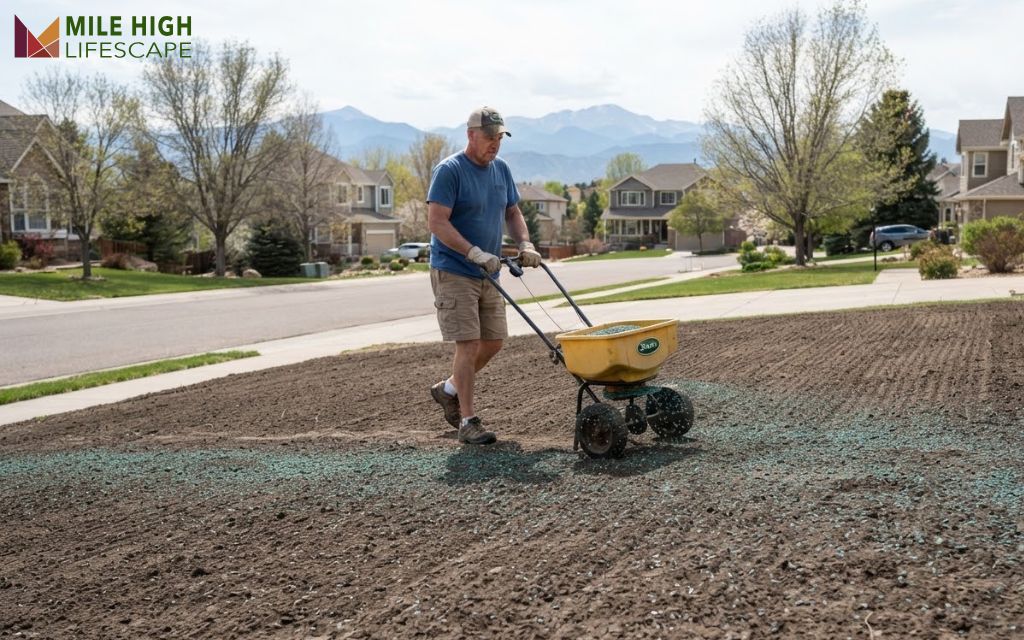
5 cases where uncoated grass seed is the better choice
Uncoated grass seed gives more value when moisture and placement are under control:
- Irrigated lawns: Sprinklers keep the surface moist, so a coating adds little.
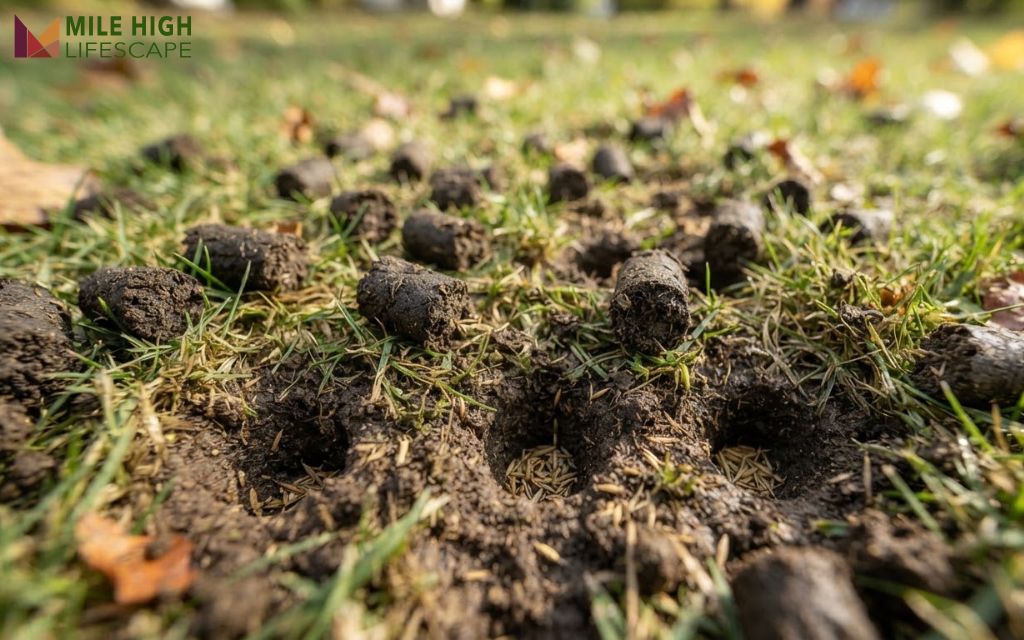
- Core-aerated overseeding: Raw seed drops into aeration holes at a higher count.
- Large areas: Higher coverage lowers the cost of seeding 5,000 sq ft (465 m²) or more.
- Slit seeding and hydroseeding: Machines meter raw seed precisely, and slurry already holds moisture.
- Certified blends: Premium turf-type blends often sell uncoated, at full seed content.
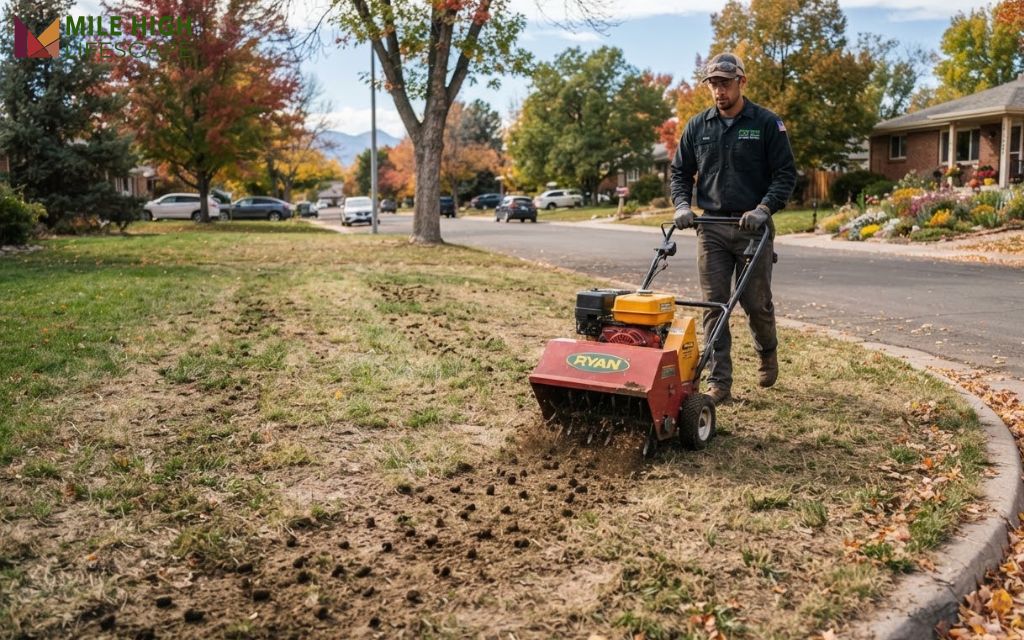
At Mile High Lifescape, our aeration and overseeding service pairs core aeration with seeding, so seed lands in open holes with direct soil contact.
Kentucky 31 tall fescue: coated or uncoated?
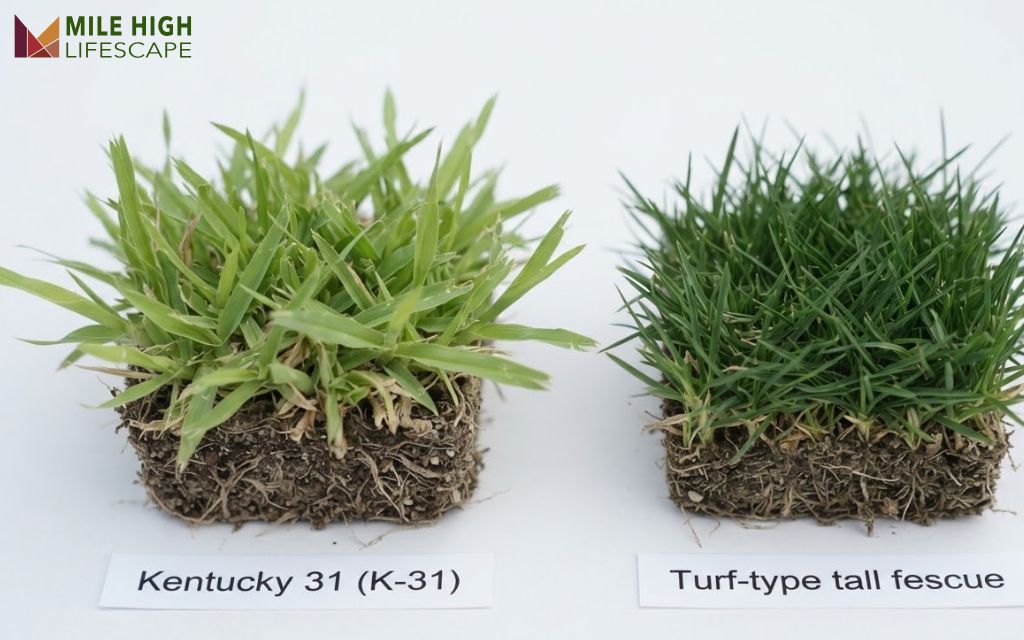
Kentucky 31 (K-31) tall fescue sells in both forms. Coated K-31 covers about 22% less ground per bag, so it fits slopes and patch work. Uncoated K-31 gives better value on irrigated, prepared soil.
The bigger question is the variety. Colorado State University (CSU) Extension discourages K-31 for home lawns because it forms poor-quality turf with coarse, light green blades.
CSU recommends turf-type tall fescue blends instead, seeded at 6 to 8 lb per 1,000 sq ft (29 to 39 g/m²). CSU also advises against seeding tall fescue into Kentucky bluegrass, because the wider blades do not blend.
Seeding in Denver: How Colorado conditions shift the choice
Colorado conditions tilt the coated vs uncoated grass seed decision toward moisture control. Dry air, Front Range clay, and seasonal watering limits decide whether new seed survives its first 2 weeks. The 4 factors below show where a coating earns its cost and where uncoated seed still wins.
Dry air, wind, and sun dry the seedbed fast
Low humidity, wind, and intense sun at 5,280 ft (1,609 m) dry the soil surface quickly. CSU Extension advises light, frequent watering through germination, which takes up to 2 weeks. A moisture-holding coating earns its cost on south-facing slopes and park strips.
Clay soil needs prep before any seed
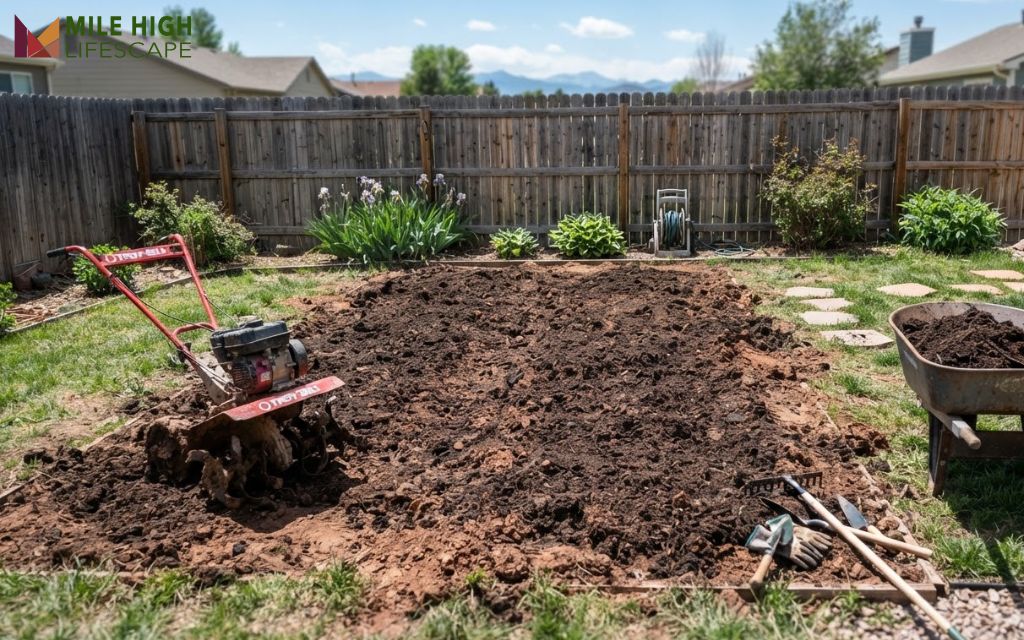
Front Range clay crusts and sheds water. CSU Extension recommends loosening the top 12 inches (30 cm) and mixing 3 to 5 cubic yards (2.3 to 3.8 m³) of compost per 1,000 sq ft (93 m²) into the top 6 to 8 inches (15 to 20 cm). No coating fixes a crusted seedbed.
Watering rules and establishment permits (as of November 2026)
Denver Water declared a Stage 1 drought on March 25, 2026, limiting lawn watering to 2 days per week, with no watering from 10 a.m. to 6 p.m. Its Watering Establishment Permit allows extra watering for up to 3 weeks on new sod and 8 weeks on new native grass seed.
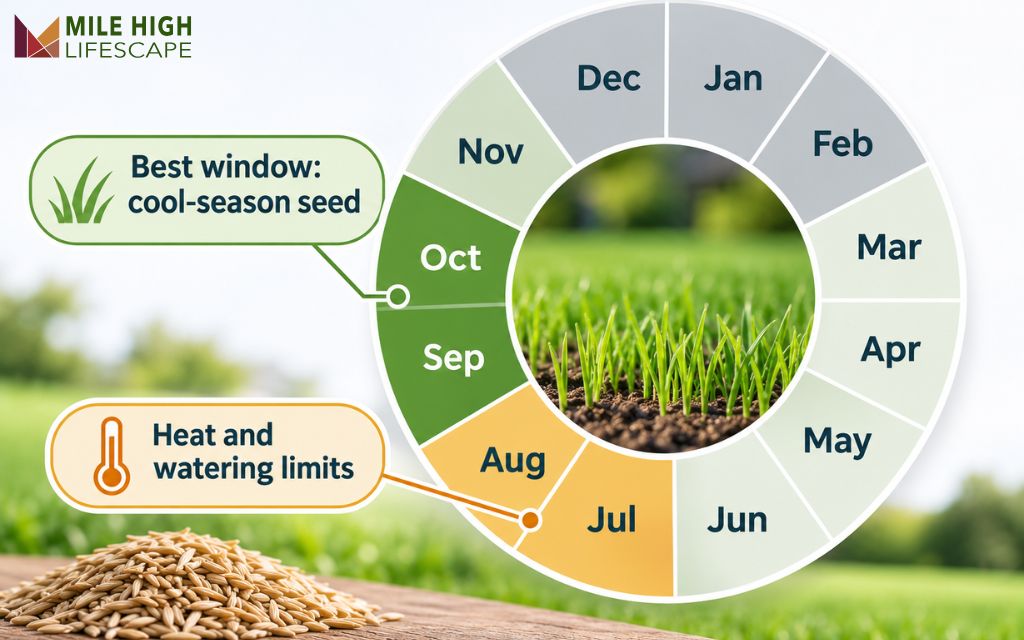
Denver Water also advised against new cool-season seed or sod in July and August. Other providers, such as the Wheat Ridge Water District, set stricter rules, so check yours before you seed.
Best time to seed cool-season grass in Colorado
Late summer gives cool-season grass the easiest start in Colorado, according to CSU Extension. Warm soil speeds germination, and seedlings root before the first hard freeze.
5 seedbed factors that matter more than seed coating
Seed coating ranks behind 5 seedbed factors that decide whether new grass establishes:
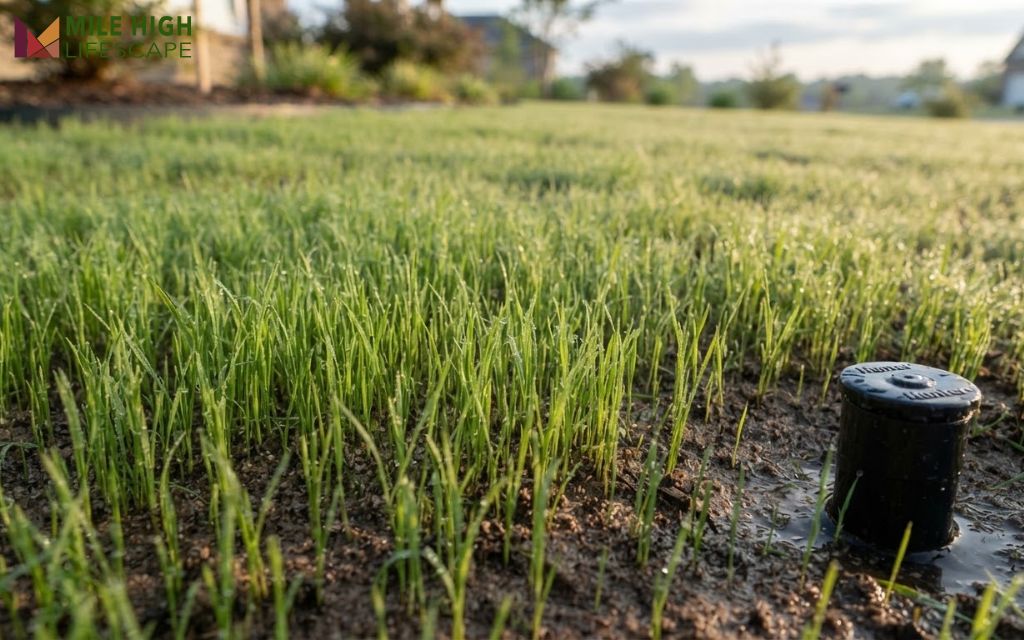
- Seed-to-soil contact: Rake seed into the top 0.25 inch (6 mm) of soil.
- Steady moisture: Water lightly 2 to 3 times a day until seedlings reach 1 inch (2.5 cm).
- Seeding window: Late summer seeding avoids peak heat.
- Species match: Bluegrass, tall fescue, and ryegrass each suit different sun and water levels.
- First mowing: Mow at about 3 inches (7.6 cm), removing one-third of the blade at most.
On the Denver Metro lawns we care for, failed seeding traces back to a dry or compacted seedbed far more often than to the seed type.
Which option fits your yard?
Match the seed to your site, not the bag label:
| Your situation | Better pick | Reason |
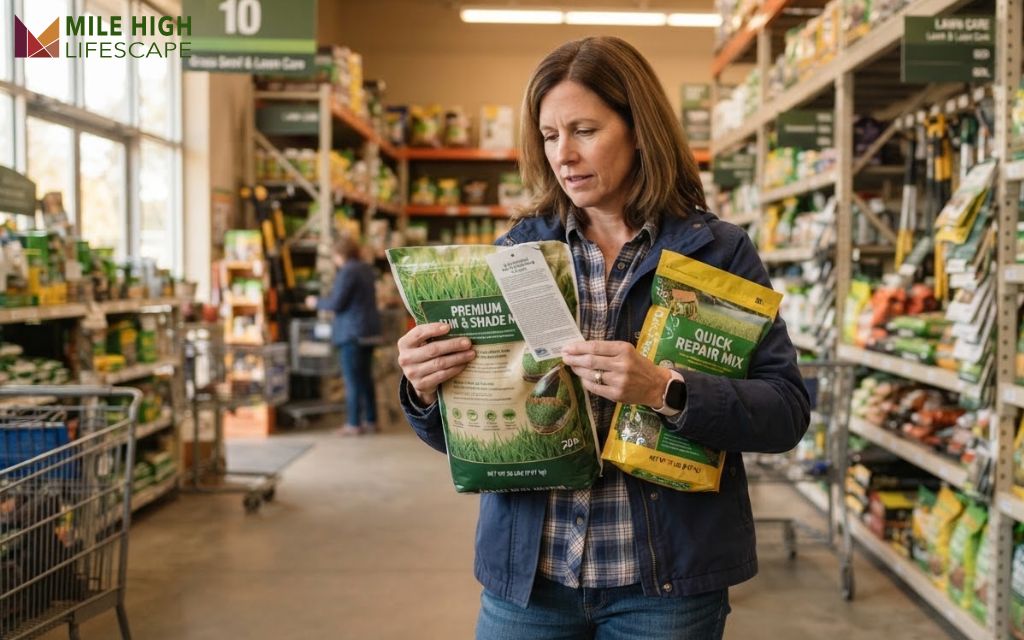
| Overseeding an irrigated Kentucky bluegrass lawn | Uncoated bluegrass or bluegrass and ryegrass blend | More seeds per pound, and sprinklers supply moisture |
| Repairing bare spots by hand | Coated seed or a patch mix | The shell holds moisture between waterings |
| Seeding a slope or windy lot | Coated seed | Weight resists wind and runoff |
| Starting a new lawn on bare soil | Uncoated certified seed with full soil prep, or sod | Lower cost per live seed, or no germination wait |
| Seeding under 2-day watering limits | Coated seed with polymer, or sod with a permit | Coating buffers dry days, and sod needs a shorter permit |
Sod Installation from Mile High Lifescape: a faster alternative to seed
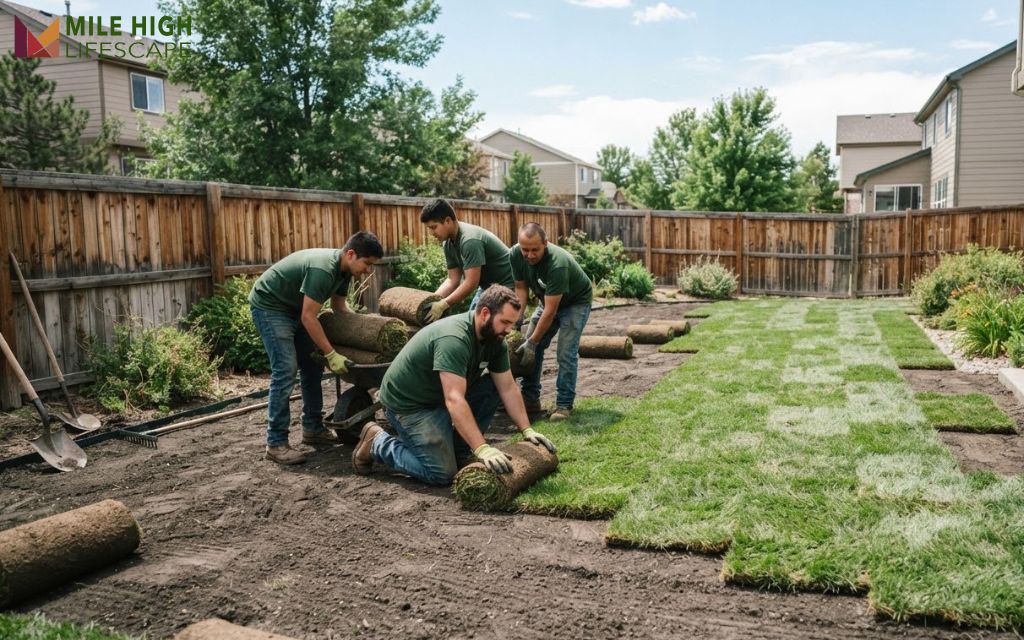
Sod Installation skips the germination stage and gives you mature turf that roots in weeks. Kentucky bluegrass seed can take 3 weeks just to germinate.
Mile High Lifescape provides Sod Installation for Denver Metro homeowners who want a finished lawn fast, have slopes that wash out, or face tight watering limits. With over 20 years of experience, our team prepares and grades the soil before laying sod, so roots reach the ground below.
Sod costs more upfront than seed, but it removes the risk of a failed germination window in drought years.
When to call a lawn care professional
Call a lawn care professional when seeding fails twice, no matter which side of the coated vs uncoated grass seed choice you picked. Repeated failure usually means the problem sits below the surface. These 4 signs point to a bigger fix:
- Repeated seeding failure: Two failed attempts signal a soil, drainage, or watering problem.
- Thin turf across half the lawn: Wide thinning calls for turf renovation.
- Compacted clay: Crusted soil needs core aeration before seed can root.
- Patchy sprinkler coverage: Dry arcs and missed corners need sprinkler installation or zone adjustments.
Mile High Lifescape serves Denver, Lakewood, Littleton, Centennial, and nearby Denver Metro cities with aeration and overseeding, turf renovation, and lawn care services in Denver.
FAQs about coated grass seed
Is coated grass seed better than uncoated?
Neither type wins everywhere. Coated seed suits dry, sloped sites, and uncoated seed gives more value on irrigated lawns.
Do you need more coated seed to cover the same area?
Yes, coated seed covers less area per bag because the coating adds weight. Coated K-31 covers about 22% less ground than uncoated K-31.
Can you use coated grass seed for overseeding?
Yes, though uncoated seed usually fits overseeding better. Raw seed slips into aeration holes at a higher seed count.
Does coated grass seed need less water?
Coated seed tolerates short dry spells, but it still needs a moist surface to germinate. Coatings help most under limited irrigation.
Do birds eat coated grass seed?
Birds can eat coated seeds. We found no independent study confirming colored coatings deter birds. Raking seed into the soil protects it better.
Can coated seed go through a broadcast spreader?
Yes, coated seed flows well through broadcast spreaders. Calibrate first, since coated seed can flow faster than raw seed at the same setting.
Is Kentucky 31 a good choice for a Denver lawn?
CSU Extension discourages Kentucky 31 for home lawns because of its coarse, lower-quality turf. A turf-type tall fescue blend gives a finer, denser lawn.