Empire Zoysia grass is a dense warm-season turf valued for strong wear tolerance, good drought performance, and a relatively tidy growth habit. Its broad blades create a soft, attractive lawn, while stolons and rhizomes gradually build a thick surface. Climate, shade, soil, and maintenance still influence how well it performs. Mile High Lifescape helps homeowners compare turf options before committing to a new lawn.
What Is Empire Zoysia Grass?
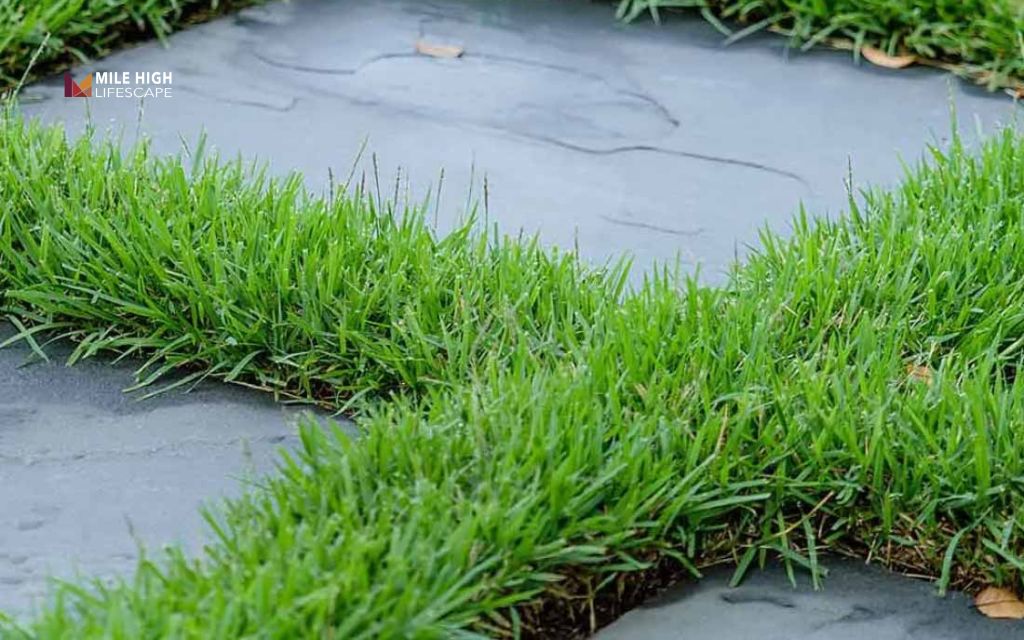
Empire Zoysia grass is a cultivar of Zoysia japonica with medium-to-coarse blades and a dense growth pattern. It spreads through both stolons and rhizomes, helping the turf knit together across the soil surface. The grass maintains an attractive green colour during active growth and can establish in both sandy and clay soils under suitable conditions.
Benefits And Drawbacks Of Empire Zoysia Grass
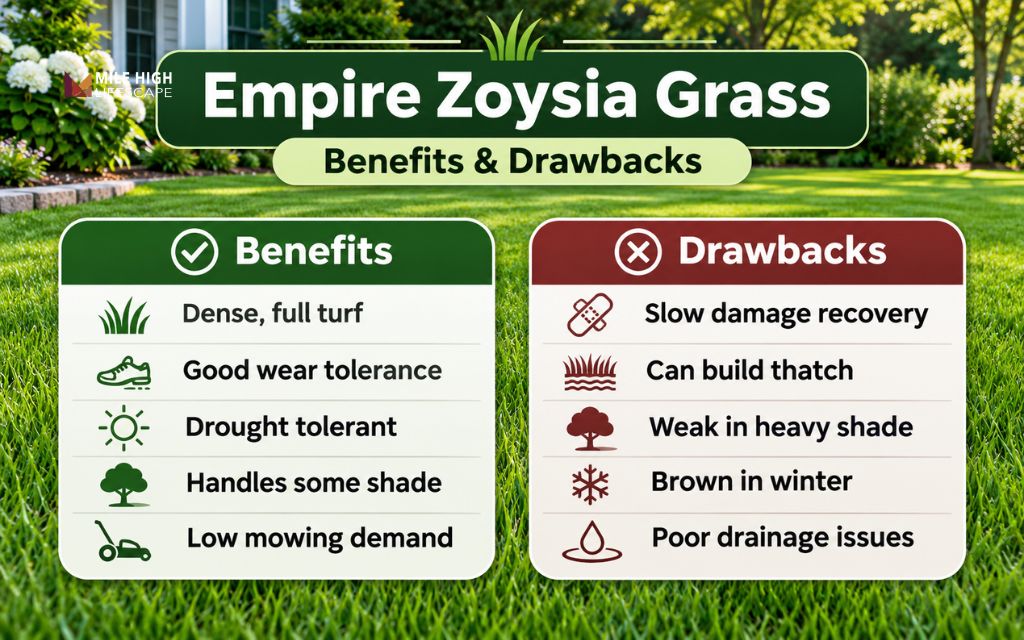
Empire Zoysia grass offers a useful balance of turf density, wear tolerance, and drought performance, but it is not maintenance-free. Its slower growth can reduce mowing compared with highly vigorous grasses, although recovery from severe damage also takes longer.
Benefits Of Empire Zoysia
Empire Zoysia offers a good balance of durability, density, and manageable maintenance for suitable warm-season lawns.
- Dense growth creates a full, uniform lawn surface
- Strong wear tolerance suits regularly used residential areas
- Good drought tolerance once the root system is established
- Moderate shade tolerance is better than Bermuda in many sites
- Lower mowing demand than faster-growing warm-season grasses
- Strong heat tolerance supports reliable summer performance
Drawbacks Of Empire Zoysia
Its slower growth and dense turf habit also create a few maintenance limits that homeowners should consider.
- Slower recovery after severe damage or scalping
- Thatch can build up under excessive fertiliser use
- Heavy shade may reduce turf density
- Winter dormancy causes seasonal brown colour
- Large patch disease can affect stressed or susceptible lawns
- Poor drainage can weaken roots and reduce establishment quality
What Conditions Does Empire Zoysia Grass Need?
Empire Zoysia grass performs best where warmth, sunlight, drainage, and consistent seasonal care support active growth. It adapts to more than one soil type, but poor drainage or prolonged shade can still reduce turf quality.
Sunlight And Shade
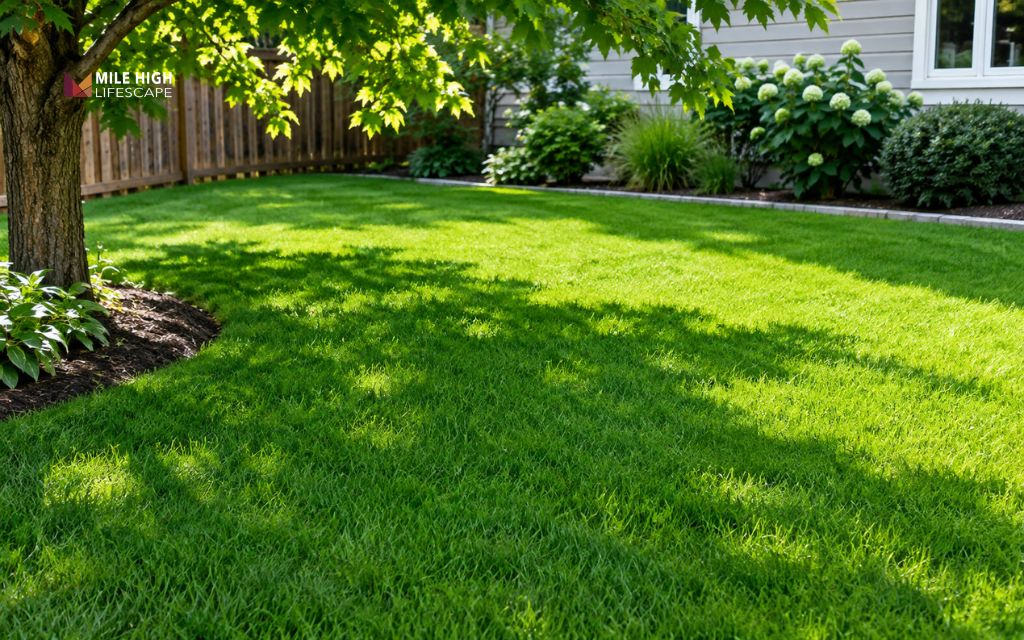
Empire can tolerate moderate shade better than Bermudagrass, but it still benefits from substantial sunlight. Dense tree cover or long periods of deep shade may thin the turf because coarse-textured Zoysia japonica cultivars generally perform less strongly in shade than finer zoysias.
Soil And Drainage
Empire Zoysia grass has performed well in both sandy and clay soils, but the ground should still allow water to move through the root zone. Compaction, low spots, and poor grading can interfere with establishment. Properly laying sod starts with a level, workable surface that supports close root contact and even establishment.
Temperature And Growing Season
Empire is a warm-season grass, so growth becomes strongest during warmer months and slows as temperatures fall. Dormancy may turn the lawn brown during colder periods before active growth returns. Installation works best when enough warm weather remains for the root system to establish before prolonged cold conditions arrive.
Empire Turf Vs Other Zoysia Grasses
Empire turf differs from other zoysia cultivars mainly in texture, establishment rate, shade response, and overall growth habit. Empire has a coarse, dense surface and good establishment compared with older types, while some finer cultivars provide stronger shade performance.
| Factor | Empire | Meyer | El Toro |
| Texture | Medium-coarse | Medium | Coarse |
| Growth density | Very dense | Dense | Dense |
| Establishment | Good | Slow | Faster |
| Shade tolerance | Moderate | Lower | Moderate-good |
| Drought tolerance | Very good | Good | Good |
| Mowing | Rotary-friendly | Moderate | Rotary-friendly |
Empire Zoysia Sod: What To Know Before Installation
Empire Zoysia grass is commonly established as sod because the finished lawn receives immediate surface coverage while roots develop underneath. Fresh pieces should remain moist, arrive close to installation time, and be laid promptly after delivery. Knowing how thick sod typically is also helps homeowners plan finished grades around paths, patios, and irrigation heads.
How To Install Empire Zoysia Sod
Empire Zoysia grass establishes more consistently when the ground is level, the pieces fit tightly, and watering begins immediately. Old turf should be removed first, while grading and soil preparation should be completed before delivery.
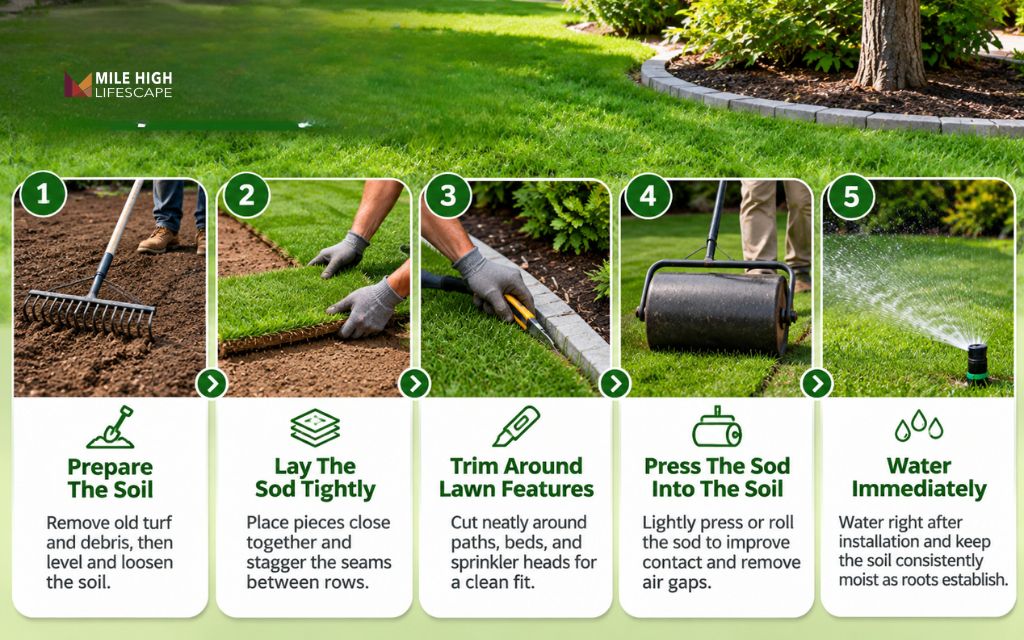 Empire turf installation depends on soil contact, alignment and immediate moisture
1. Prepare The Soil
Remove old turf, weeds, stones, and debris before installation, then loosen compacted areas and correct uneven grading. The surface should feel firm but still workable enough for new roots to move into the soil. A smooth base also helps the sod sit evenly without creating raised or sunken sections.
2. Lay The Sod Tightly
Place each piece firmly against the next so the seams remain tight and the soil beneath is not exposed. Stagger adjoining rows rather than lining the joints up continuously.
3. Trim Around Lawn Features
Use clean cuts around paths, planting beds, sprinkler heads, and curved borders so the sod fits neatly against permanent features. Larger fitted sections usually hold moisture better than several small scraps. Avoid stretching pieces into place, as this can leave weak seams once the turf settles.
4. Press The Sod Into The Soil
Lightly press or roll the surface after installation to improve contact between the sod and prepared soil. The aim is to remove air gaps without compacting the ground too heavily. Seams and outer edges deserve extra attention because these areas tend to dry out faster than the centre.
5. Water Immediately
Water the lawn as soon as the sod is laid so moisture reaches both the turf and the soil underneath. Keep the root zone consistently moist during the early establishment period, then reduce watering gradually as roots strengthen. Avoid leaving the ground saturated, since excessive moisture can slow healthy root development.
How To Care For Empire Zoysia Grass
Empire Zoysia grass stays healthier with balanced maintenance rather than frequent intervention. Once established, it handles heat and dry periods well, but watering, mowing, and fertilising still need to match the lawn’s actual condition and seasonal growth.
- Watering: Water deeply when the soil begins to dry, then allow the root zone to drain before irrigating again
- Mowing: Maintain the lawn at roughly 1–2 inches and use sharp blades to avoid tearing or scalping the turf
- Fertilising: Apply moderate nutrition based on soil condition, as excessive nitrogen can encourage thatch and unnecessary growth
Common Empire Zoysia Grass Problems
Empire Zoysia grass can develop problems when moisture, mowing, fertility, or disease conditions move outside a suitable range. Early changes in density or colour usually deserve attention before larger areas decline.
- Thatch buildup after excessive nitrogen
- Large patch during favourable disease conditions
- Scalping from cutting too low
- Slow recovery after severe damage
- Thinning under heavy shade
- Uneven rooting after poor installation
- Winter browning during dormancy
- Stress from persistent waterlogging
Persistent discolouration should be assessed carefully because brown sod can reflect moisture, rooting, dormancy, or disease rather than one single cause.
Mile High Lifescape: Build A Lawn Around Colorado Conditions
A grass can perform exceptionally well in one region and still be a poor match elsewhere. Mile High Lifescape brings over 20 years of experience to Denver-area lawn projects, with recommendations shaped by local climate, seasonal conditions, irrigation, and the way each property will actually be used.
Our approach includes:
- Turf recommendations based on local lawn conditions and long-term expectations
- Careful preparation before new sod reaches the installation area
- Professional placement that supports consistent rooting and cleaner finished edges
- Irrigation guidance, including sprinkler installation where coverage needs improvement
Ready to start with sod that suits your property? Call Mile High Lifescape at (303) 877-9091 to discuss your lawn project.

Final Thoughts
Empire Zoysia grass offers dense growth, strong heat and wear tolerance, good drought performance, and moderate shade adaptability. Those qualities can make it an attractive warm-season lawn, but climate and seasonal conditions remain important. Homeowners should compare local suitability before ordering Empire turf, then focus on careful installation and measured maintenance once the lawn is established.
Frequently Asked Questions
What Type Of Grass Is Empire Zoysia?
Empire is a cultivar of Zoysia japonica, a warm-season turfgrass that spreads through stolons and rhizomes. It has medium-to-coarse blades and develops a dense lawn under suitable conditions.
Is Empire Zoysia Grass Good In Shade?
Empire Zoysia grass has moderate shade tolerance and generally performs better under partial shade than Bermuda. Dense or prolonged shade can still reduce turf density, so it should not be treated as a true deep-shade grass.
How Fast Does Empire Zoysia Spread?
Empire spreads through stolons and rhizomes at a moderate rate. It can establish more quickly than some older zoysia cultivars but does not recover from severe damage as rapidly as Bermuda.
How Often Should Empire Zoysia Be Watered?
New sod needs consistent moisture until roots establish. Once mature, Empire Zoysia grass has very good drought tolerance and generally benefits from deeper, less frequent irrigation rather than constant shallow watering.
What Height Should Empire Zoysia Be Mowed?
A practical residential range is roughly 1–2 inches, depending on equipment, climate, and lawn condition. Rotary mowers are often used around 2 inches, while lower heights require more precise mowing.
Does Empire Zoysia Turn Brown In Winter?
Yes. Empire Zoysia grass is warm-season turf and can enter dormancy as temperatures fall. The lawn may turn tan or brown until warmer conditions trigger active spring growth again.
Is Empire Zoysia Available As Sod?
Yes. Empire Zoysia grass is commonly installed as sod, which creates immediate surface coverage while roots establish beneath the turf. Availability depends on regional growers and local suppliers.