The best grass for dogs handles paw traffic, repairs itself, and fits your local climate. This guide helps dog owners compare 7 lawn grasses, fix urine spots, and choose a lawn that stays green in Denver and beyond.
What makes the best grass for dogs?
The best grass for dogs combines 3 traits: high wear tolerance, fast recovery, and a good climate fit. Miss one trait, and paw traffic turns the lawn into bare paths, brown spots, or mud within a season.
Wear tolerance vs. recovery speed
Wear tolerance describes how much running and turning a grass takes before it thins. Recovery speed describes how fast it fills the damage. A dog lawn needs both, because even the toughest turf wears down along fence lines and gate paths.
Spreading grasses vs. bunch-type grasses
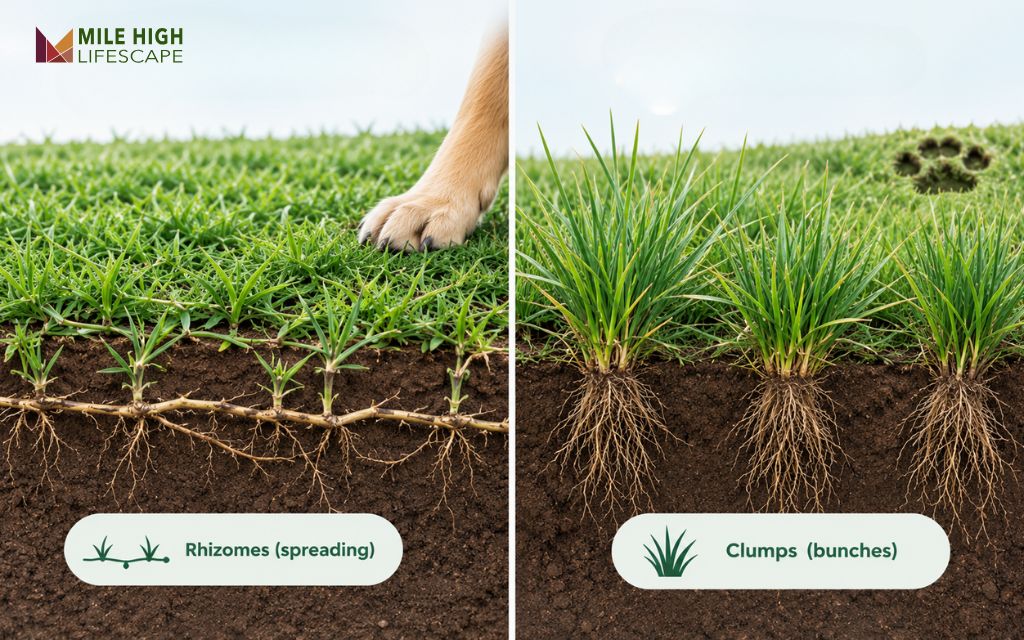
Spreading grasses grow new shoots from underground rhizomes or surface stolons. Kentucky bluegrass, bermudagrass, and zoysiagrass all spread this way and patch small holes without help.
Bunch-type grasses, such as tall fescue and perennial ryegrass, grow in clumps. A dead clump stays bare until you reseed it.
Cool-season vs. warm-season climate fit
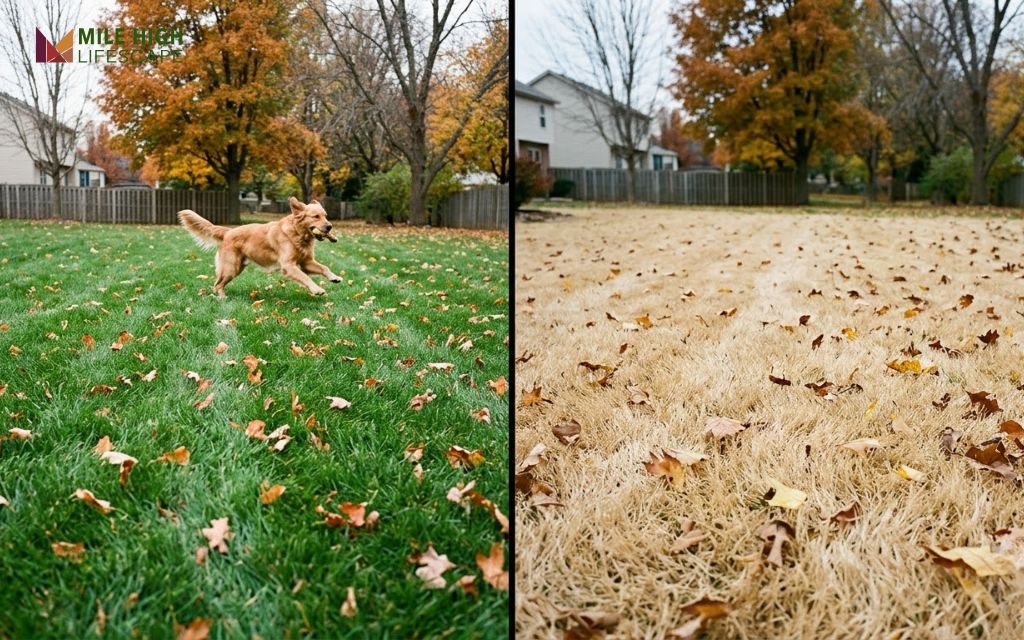
Cool-season grasses grow best in spring and fall and stay green through cold winters. Warm-season grasses peak in summer heat, then go dormant and brown after the first hard frost.
In our lawn care work around Denver, climate fit decides more than any brand label. A warm-season grass that sits dormant from October to May cannot recover from winter dog traffic.
The 7 best grasses for dogs compared
Each grass below suits a different mix of climate, sun, and dog activity. We list the Colorado-proven options first, then the warm-season grasses that dominate Southern lawns.
1. Kentucky bluegrass: best self-repair for cool climates
Kentucky bluegrass is the most widely used lawn grass in Colorado, and its rhizomes give it high recuperative potential. Worn spots fill back in during spring and fall growth.
The trade-offs are poor to fair shade tolerance, a higher nitrogen need, and the lowest urine tolerance among common cool-season grasses. CSU suggests seeding at 3 to 5 pounds per 1,000 square feet (1.5 to 2.4 kg per 100 m²).
2. Turf-type tall fescue: best for shade and urine tolerance
Turf-type tall fescue brings deep roots, good wear tolerance, and the best shade and salt tolerance of the common Colorado lawn grasses. In NC State’s summary of lactic acid research, tall fescue ranked as the most urine-tolerant cool-season grass.
Tall fescue grows in clumps, so heavy dogs use leaves worn areas that need overseeding. Pick blends of 2 to 5 turf-type varieties and skip “K-31” pasture fescue, which CSU discourages for lawns.
3. Perennial ryegrass: best for fast spot repairs
Perennial ryegrass germinates fast and tolerates wear, which makes it the go-to seed for patching urine spots in bluegrass lawns. CSU calls it more effective than bluegrass for spot seeding.
As a full lawn, it falls short. It has poor recuperative potential, poor shade tolerance, and the weakest persistence under low maintenance. It is also unavailable as pure sod.
4. Fine fescues and buffalograss: water-wise, but for light traffic
Fine fescues, such as creeping red, hard, and chewings fescue, offer very good shade and cold tolerance. Their wear tolerance stays moderate, and they recover slowly from paw traffic.
Buffalograss is a native, low-water, warm-season option. CSU warns that it will not tolerate heavy, constant traffic and is not recommended above 6,500 feet (1,981 m).
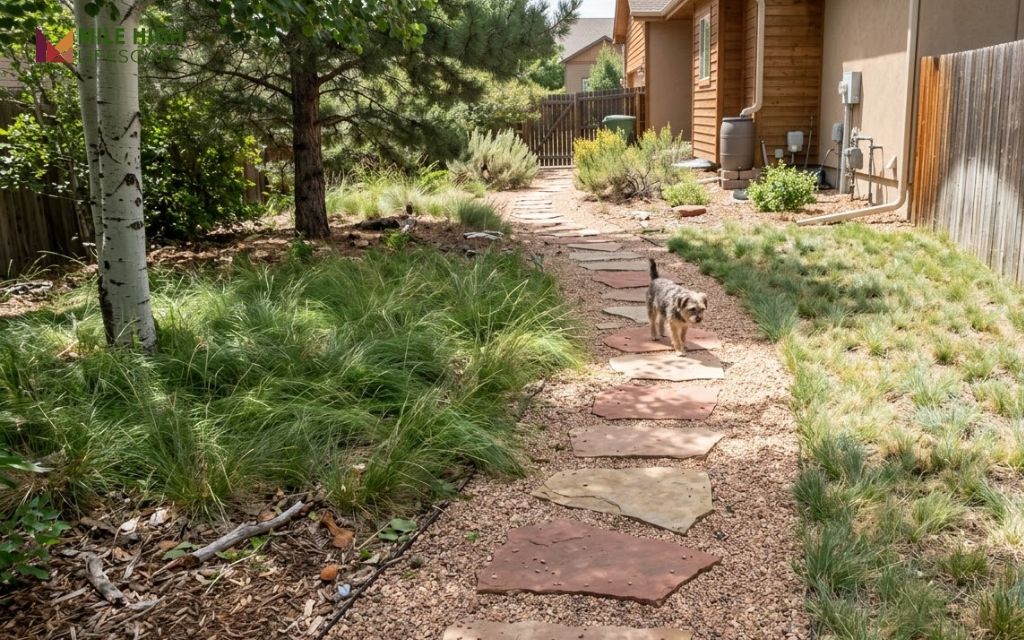
5. Bermudagrass: top traffic tolerance in warm climates
Bermudagrass is the most traffic-tolerant turfgrass in NC State’s guidance and recovers fast through stolons and rhizomes. That is why Southern sod farms rank it first for active dogs.
In Colorado, bermudagrass usually shows up as an invasive lawn weed. CSU notes that the varieties Yukon and Riviera have shown strong cold hardiness in Fort Collins research plots since 2005, yet both still sit dormant through the cold months.
6. Zoysiagrass: dense turf with slow recovery
Zoysiagrass forms a thick mat that handles traffic and shields soil from some urine. It recovers slower than bermudagrass after damage.
CSU does not recommend zoysiagrass for Colorado. No zoysia sod is available in the state, winter dieback is common, and the grass invades beds once established.
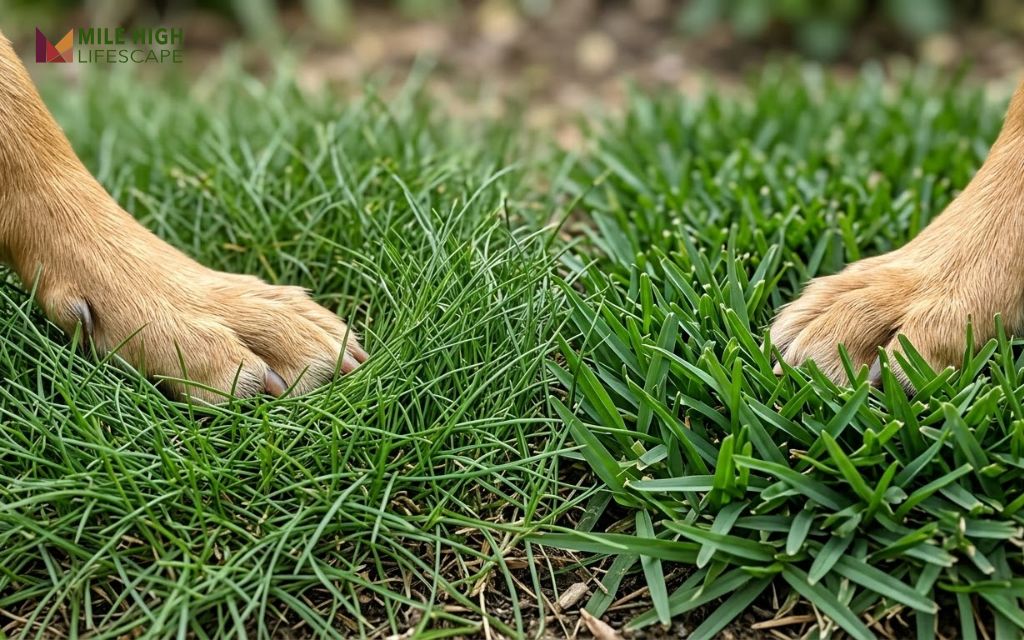
7. St. Augustine and centipedegrass: Southern options for light use
St. Augustine and centipedegrass fit humid Gulf Coast lawns. Both recover slowly from heavy wear, so most Southern sod growers reserve them for small or low-energy dogs. Neither grass suits Front Range winters.
Best grass for dogs by yard situation
The right pick depends on how your dog uses the yard. Match your grass to these 4 common situations.
Large or very active dogs
Choose a spreading grass that refills worn paths. In cool climates, a Kentucky bluegrass and turf-type tall fescue blend balances self-repair with durability. In hot Southern climates, bermudagrass leads.
Shady yards with dogs
Choose turf-type tall fescue for shade plus traffic. Fine fescues handle deeper shade but wear out faster, so add a mulch path where your dog runs.
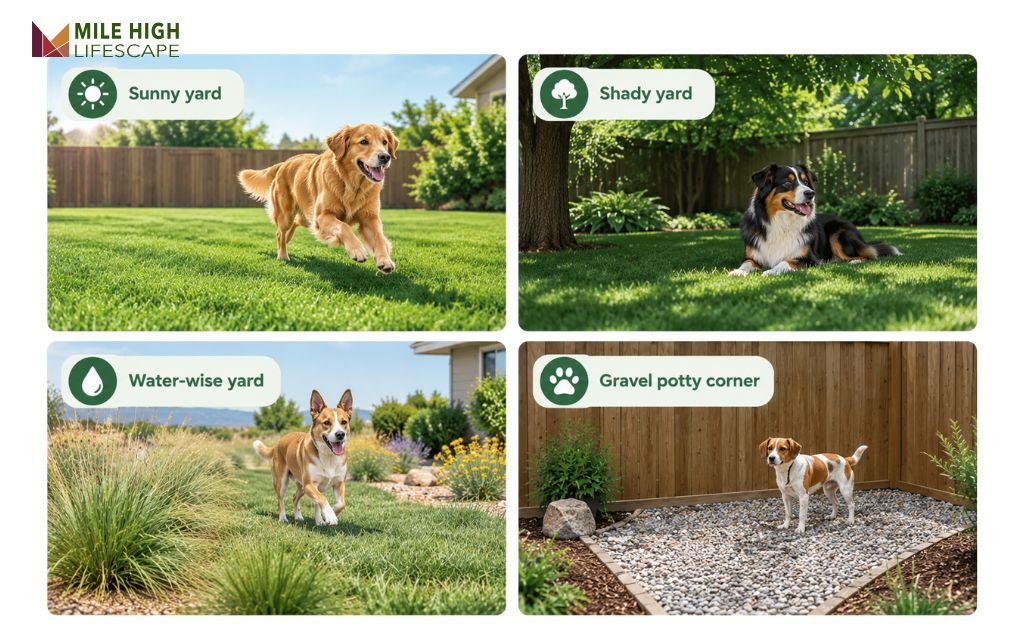
Water-wise yards
Choose turf-type tall fescue where soil allows deep rooting, or limit lawn to the areas your dog uses. Keep low-traffic edges in water-wise plants.
One favorite potty spot
Give the dog a non-grass potty area, such as mulch or gravel. CSU calls this the only sure fix for urine spots.
Best grass for dogs in Denver and the Colorado Front Range
For most Denver yards, a Kentucky bluegrass and turf-type tall fescue blend is the practical choice, with perennial ryegrass for quick repairs. This combination handles cold winters, recovers in spring and fall, and accepts dog traffic.
Why Southern grass lists miss Colorado
Most “best grass for dogs” rankings come from sod farms in Texas, Florida, and the Southeast. They put bermudagrass, zoysiagrass, and St. Augustine first. At 5,280 feet (1,609 m), Denver’s short season and cold winters reverse that order.
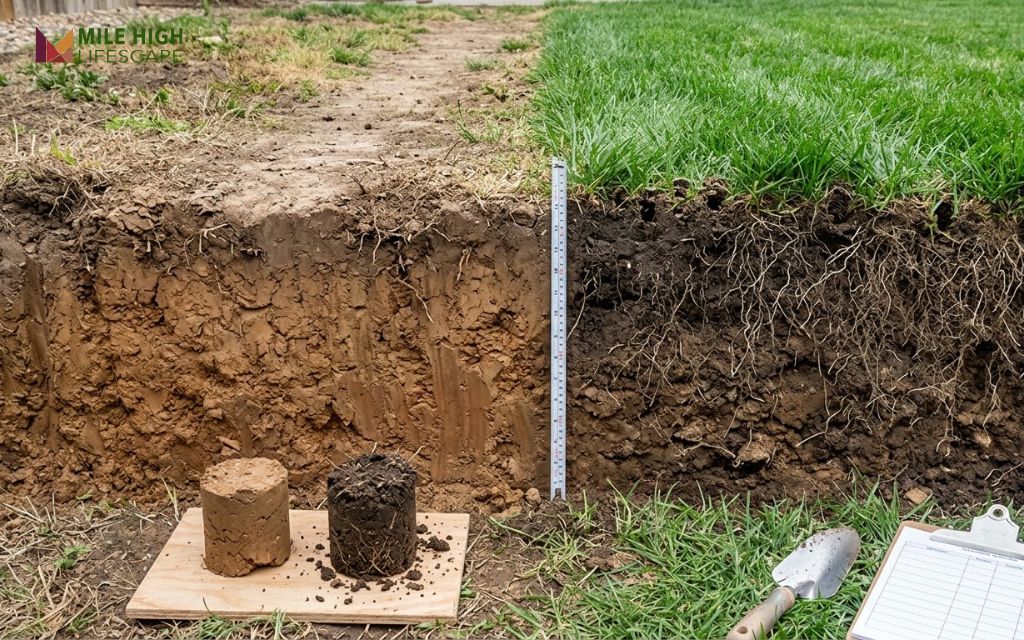
Clay soil, dry air, and long winters
Front Range soils are often shallow, gravelly, or heavy clay. PlantTalk Colorado notes that these soils limit tall fescue’s deep roots, so it may need as much water as bluegrass or more.
Clay also compacts under daily paw traffic. On compacted dog paths we see in Denver yards, grass roots stay shallow and dry out first.
Watering a dog lawn under Denver Water rules
As of October 2026, Denver Water operates under a Stage 1 drought declared on March 25, 2026. Customers may water lawns no more than 2 days per week, on assigned days, between 6 p.m. and 10 a.m.
Plan urine flushing around these limits. Check your water provider’s current rules for hand watering before you rinse spots on off days.
Rule of thumb from our crews: if your watering days are limited, invest in a potty zone first. It saves more grass than extra water.
Sod vs. seed when you have dogs
Sod gives dog owners a usable lawn in weeks, while seed needs a full season of protection. New seedlings cannot handle paws, so you must fence dogs off the area until the grass roots.
Seed costs less and lets you choose exact varieties, such as a turf-type tall fescue blend at 6 to 8 pounds per 1,000 square feet (2.9 to 3.9 kg per 100 m²). Sod costs more but covers bare soil at once. Note that perennial ryegrass is not sold as pure sod, and tall fescue sod is less available than bluegrass sod in Colorado.
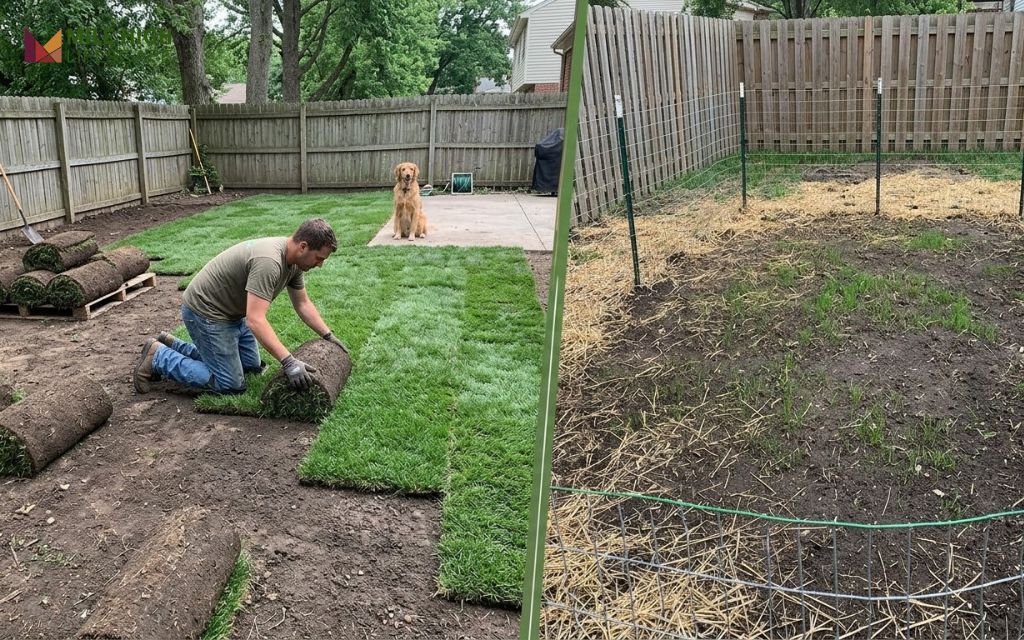
Sod installation for dog-friendly lawns in Denver
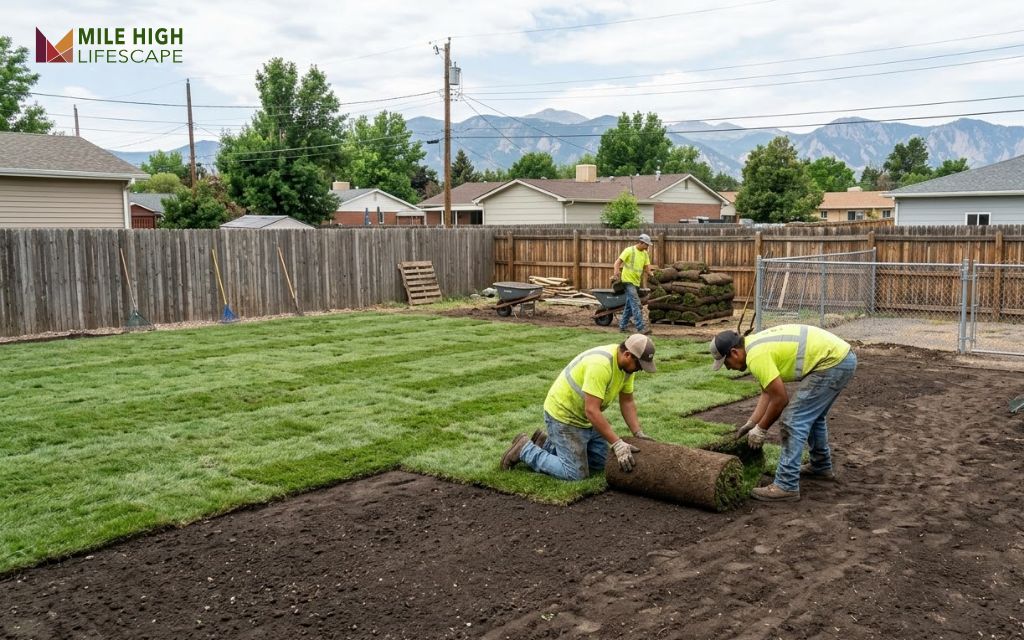
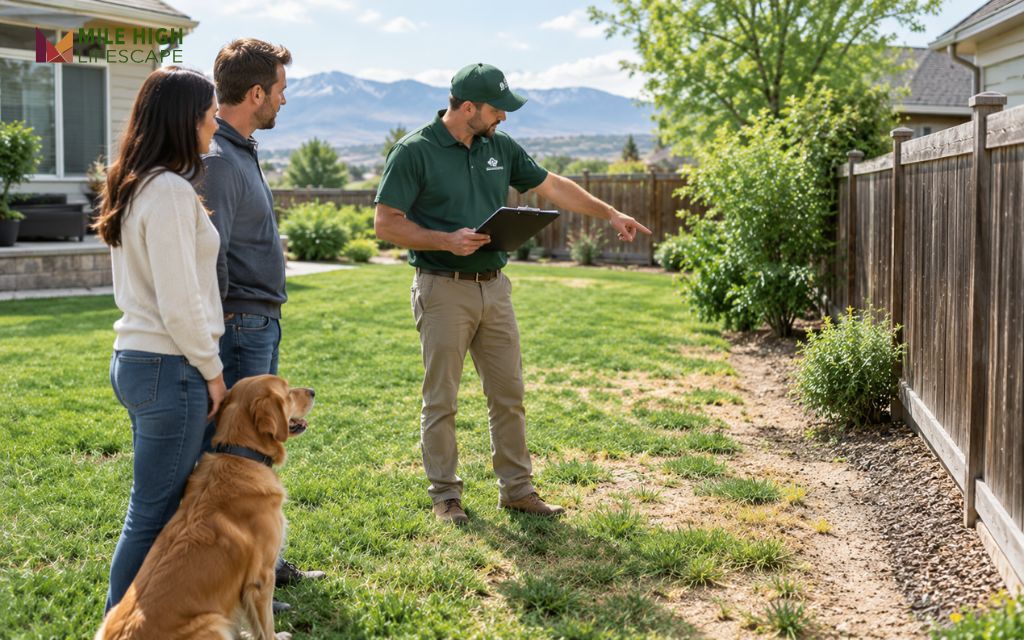
Mile High Lifescape installs new lawns for Denver Metro homeowners who want turf that stands up to dogs. Our Sod Installation service covers soil preparation, grass selection for your sun and traffic, and laying fresh sod.
With over 20 years of experience in Denver lawns, we plan dog paths, potty areas, and watering zones before the first roll goes down. That planning keeps new sod from failing in the same spots as the old lawn.
Why dog urine kills grass and which grasses handle it best
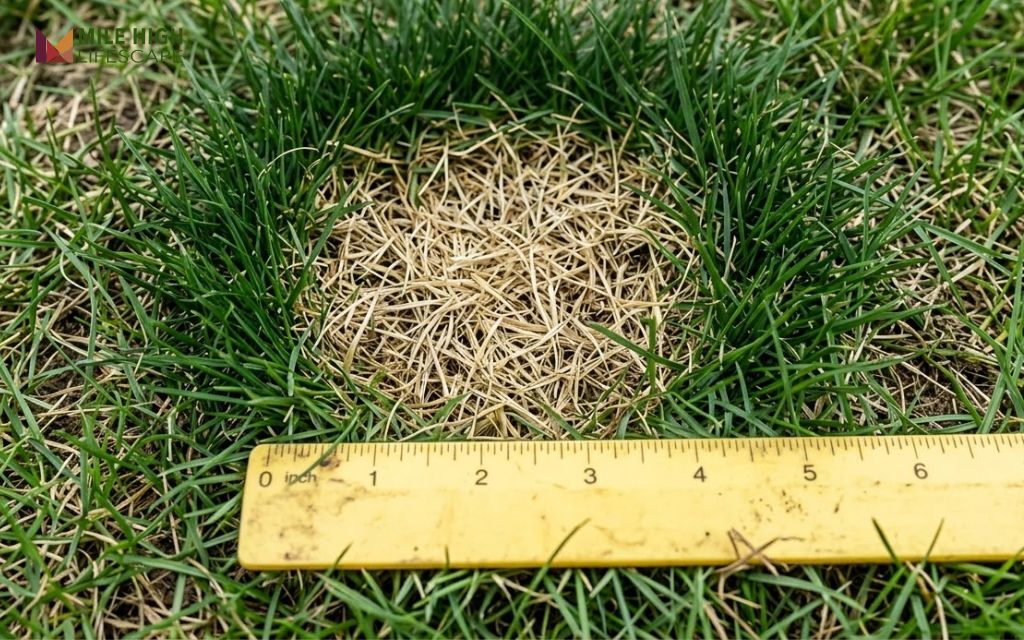
Dog urine kills grass because it drops concentrated nitrogen, salts, and lactic acid on one small spot. The result is a dead patch 3 to 6 inches (8 to 15 cm) across with a dark green ring.
Nitrogen, salts, and lactic acid
Nitrogen at the spot’s edge acts like fertilizer and creates the dark green ring. At the center, the dose burns. NC State Extension reports that lactic acid, not only nitrogen, is a main cause of grass death.
Damage gets worse in dry soil, in hot weather, and when grass is not actively growing. Large dogs and dogs that squat leave more concentrated spots.
Which grasses tolerate urine best
In NC State’s summary of Li et al. (2019), bermudagrass and zoysiagrass tolerated lactic acid better than cool-season grasses. Among cool-season grasses, the order ran: tall fescue, creeping red fescue, perennial ryegrass, then Kentucky bluegrass.
No grass is urine-proof. Tolerance buys time; dilution and training prevent spots.
Urine-spot myths that don’t work
CSU Extension flags several popular fixes as false:
- Diet supplements: No supplement has scientific proof of reducing urine spots, and some harm dogs.
- Baking soda and gypsum: Both are salts, so they can worsen damage.
- “Only female dogs”: Any dog that squats concentrates urine in one spot.
Consult your veterinarian before changing your dog’s diet.
How to repair urine spots by lawn type
Repair spots with seed that matches your lawn. CSU Extension gives these rules:
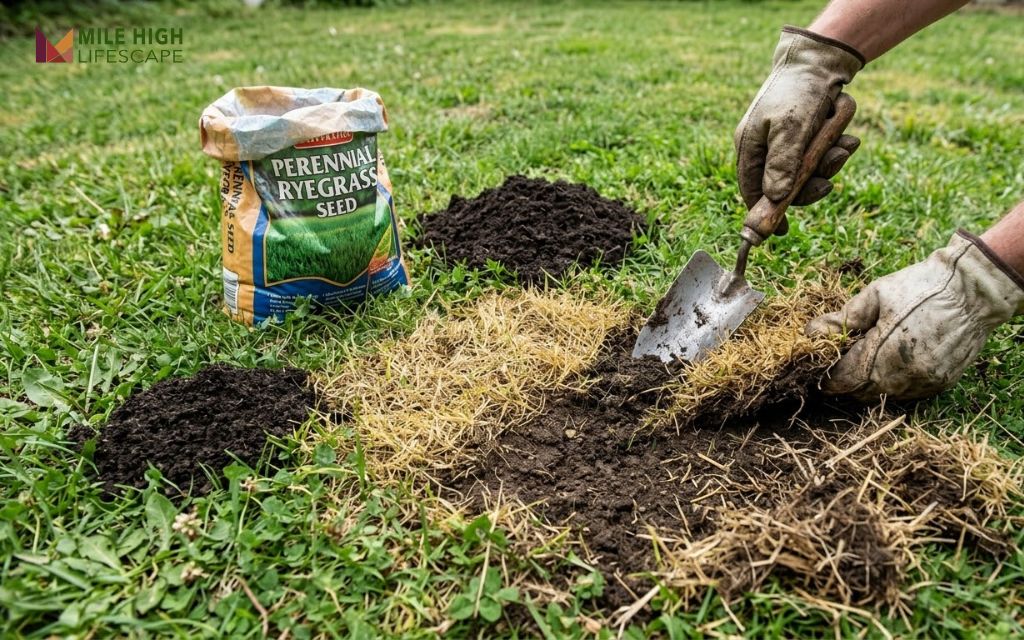
- Kentucky bluegrass lawns: Spot seed with perennial ryegrass, which works better than bluegrass seed.
- Tall fescue lawns: Spot seed with turf-type tall fescue, not K-31 or annual ryegrass.
- Fine fescue lawns: Spot seed with fine fescue only.
- Bermudagrass or zoysiagrass lawns: Patch with matching sod.
For dead spots, remove the dead turf and 0.5 to 1 inch (1.3 to 2.5 cm) of soil, then reseed or resod.
How to keep a lawn healthy with dogs
A healthy lawn resists dog damage better than a stressed one. Build resilience with these 5 habits:
- Mow high: Keep Colorado lawns at 2.5 to 3 inches (6.4 to 7.6 cm), and never cut more than one-third of the blade at once.
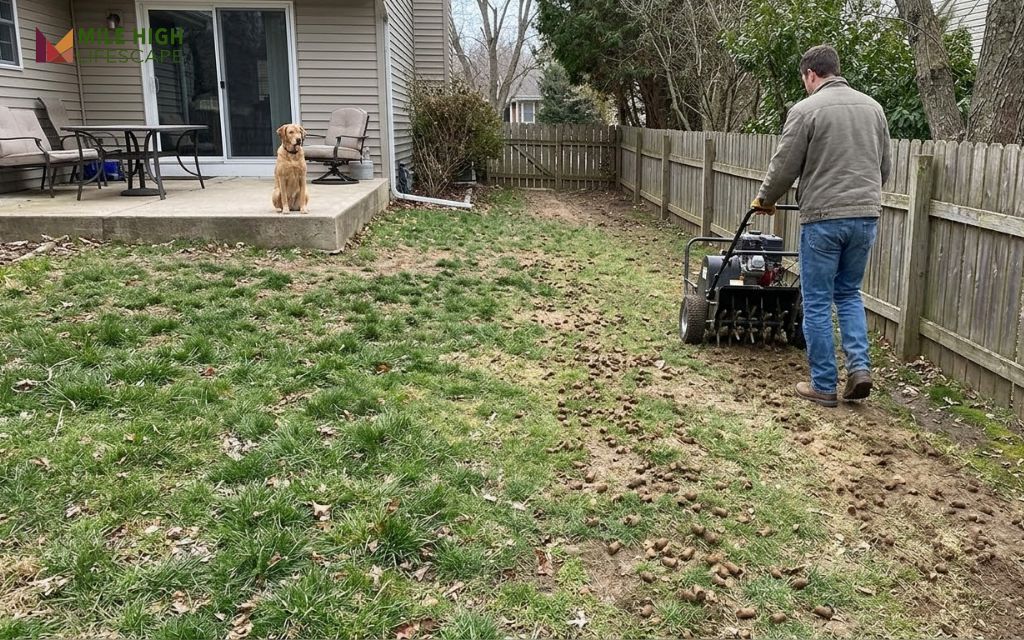
- Aerate traffic paths: Core aeration relieves compacted soil along fences and gates. Our lawn aeration service pulls 2- to 3-inch (5 to 7.6 cm) cores in the paths dogs wear down.
- Water deeply: Clay soils may need 1 to 1.5 inches (2.5 to 3.8 cm) of water to wet roots to 6 inches (15 cm). Split it into 2 cycles about an hour apart.
- Fertilize on schedule: Feed in spring and late summer to fall, and skip July to early August, as CSU recommends.
- Rotate play areas: Block worn zones for a few weeks so spreading grasses can refill them.
If you would rather hand off mowing, feeding, and seeding, our lawn care team offers weekly, biweekly, monthly, or one-time service.
Create a dog zone instead of fighting your lawn
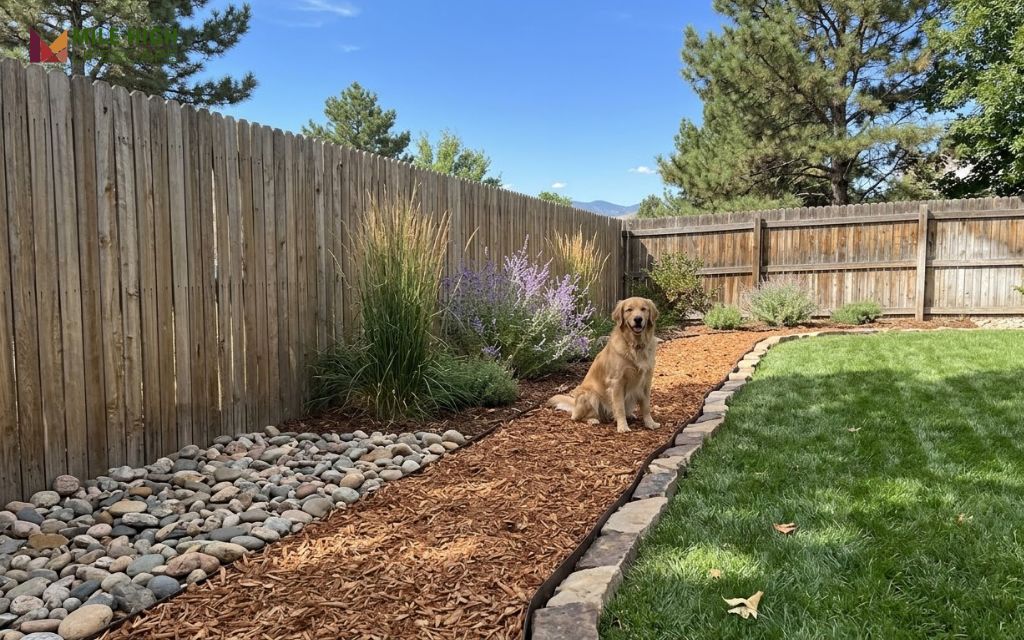
CSU Extension calls a trained, non-turf potty area the only sure solution for dog urine spots. A dedicated dog zone also takes running pressure off the rest of the lawn.
Build an effective zone with 3 parts:
- Potty surface: Use pine or cedar mulch, pea gravel, or landscape rock that rinses clean.
- Running path: Lay a mulch or gravel strip where your dog already patrols the fence.
- Boundary: Add low edging or a fence so the dog learns the zone.
Our xeriscape landscaping designs pair dog runs with water-wise plants, and our mulch installation crews set the surface.
Is grass safe for dogs?
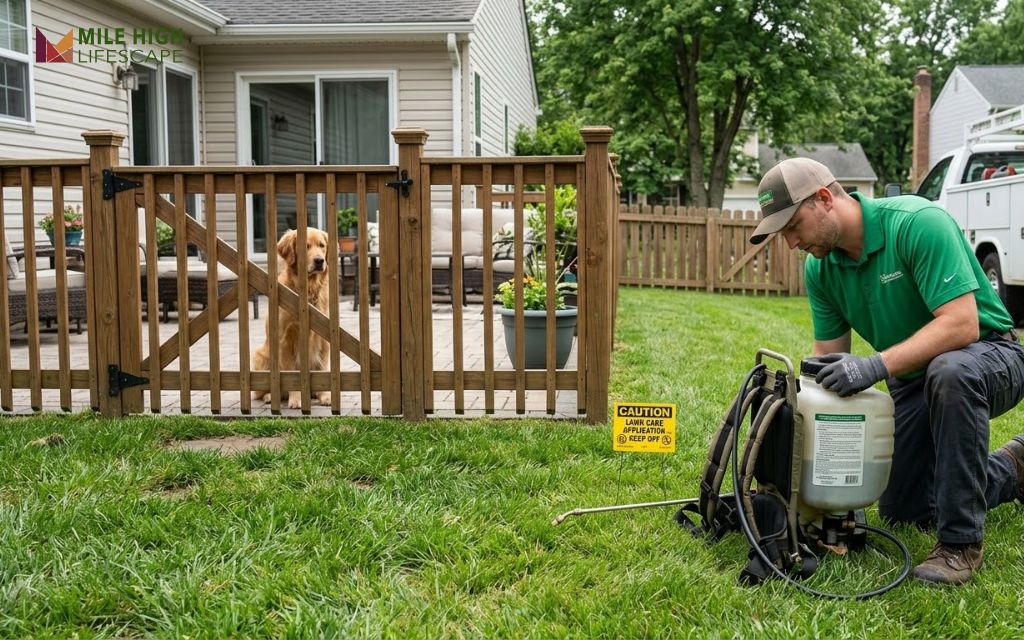
Common lawn grasses are safe for dogs, and NC State Extension describes grass eating as normal dog behavior. The real risk comes from lawn products.
Follow the re-entry interval on every pesticide or fertilizer label. Keep dogs off treated turf until the product dries or the label time passes.
What about artificial turf for dogs?
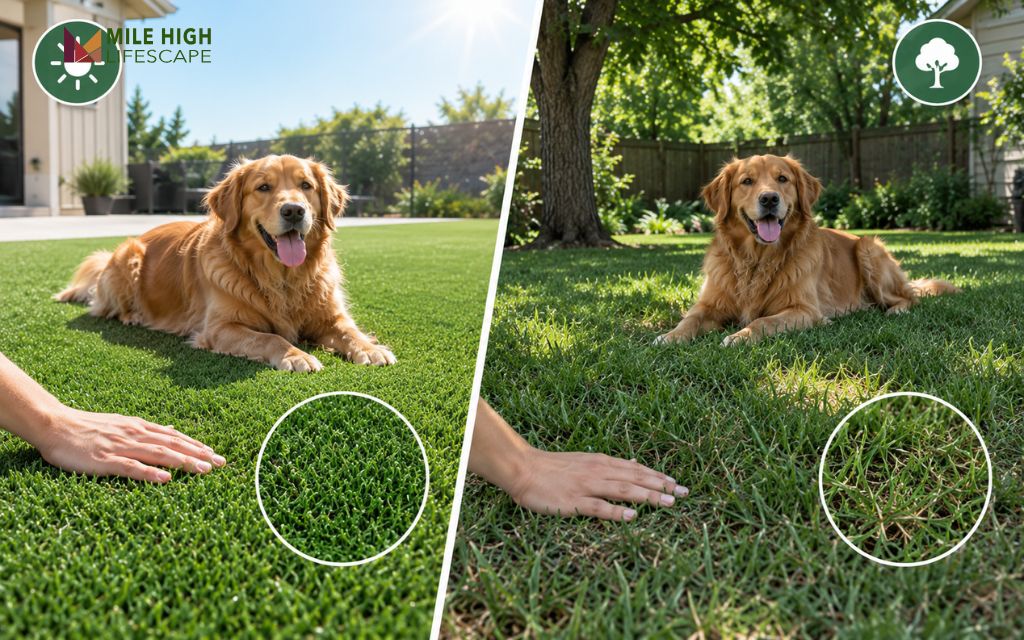
Artificial turf removes urine burn and mud, but it heats up in direct sun and needs regular rinsing and sanitizing. Live grass stays cooler and breaks down waste with soil microbes.
In Colorado, SB24-005 bars new nonfunctional and artificial turf on commercial, institutional, and industrial sites from January 1, 2026. The law does not cover single-family homes.
When to call a lawn care professional
Choosing the best grass for dogs is only half the job. Call a professional when damage outpaces your weekend repairs. Watch for these 4 signs:
- Large bare areas: Dead patches cover more than about one-third of the lawn.
- Hard paths: Compacted clay stays bare after reseeding.
- Wrong grass: Your current lawn type does not match your dog or your shade.
- New layout: You want a dog run, new sod, or a fence in one project.
Mile High Lifescape brings over 20 years of experience to Denver Metro lawns, from Lakewood to Highlands Ranch. We also handle turf renovation, fertilization and weed control, and fence installation. Call (303) 877-9091, Monday to Saturday, 8 a.m. to 5 p.m.
Frequently asked questions about the best grass for dogs
What is the best grass for dogs?
For cool climates like Denver, a Kentucky bluegrass and turf-type tall fescue blend works best. In hot Southern climates, bermudagrass offers the top traffic tolerance and fastest recovery.
What grass is most resistant to dog urine?
Tall fescue tolerates urine best among cool-season grasses, according to research summarized by NC State Extension. Bermudagrass and zoysiagrass tolerate it better still, but no grass is urine-proof.
What is the best grass for high traffic, dogs, and shade?
Turf-type tall fescue is the strongest choice for shade plus dog traffic. It needs overseeding where paths wear thin.
Is tall fescue good for dogs?
Yes, turf-type tall fescue is a durable, urine-tolerant grass for dogs. It grows in clumps, so plan to overseed worn spots each fall.
What is the best sod for dogs?
In Colorado, Kentucky bluegrass or a bluegrass and tall fescue sod is the most practical choice. In the South, bermudagrass sod leads for active dogs.
Do dog rocks or urine supplements protect grass?
No supplement has scientific proof of preventing urine spots, according to CSU Extension. Water, training, and a potty zone work instead.
What is the best grass for dogs in Texas?
Bermudagrass suits most sunny Texas yards with active dogs, while zoysiagrass fits partly shaded yards.