Can you blow wet leaves? Yes, but wet leaves weigh more, stick to the grass and to each other, and need more airflow to move. Strong leaf blowers clear a thin, damp layer. Matted layers need a rake first.
This guide answers can you blow wet leaves with the facts: why they resist air, which blower fits, how to work step by step, and when to rake or wait. It also covers safety, mistakes and alternatives.
Can you blow wet leaves?
Can you blow wet leaves with a leaf blower? Yes. The result depends on airflow, leaf depth and moisture. Damp, loose leaves move with a capable blower. Soaked leaves packed into a mat do not.
So can you blow wet leaves today, or should you wait? Waiting is easier, because leaves separate and travel with less air once surface water drains. Still, a thick wet layer should not sit on turf for weeks, because it blocks light and holds moisture against the grass.
Why wet leaves resist a blower
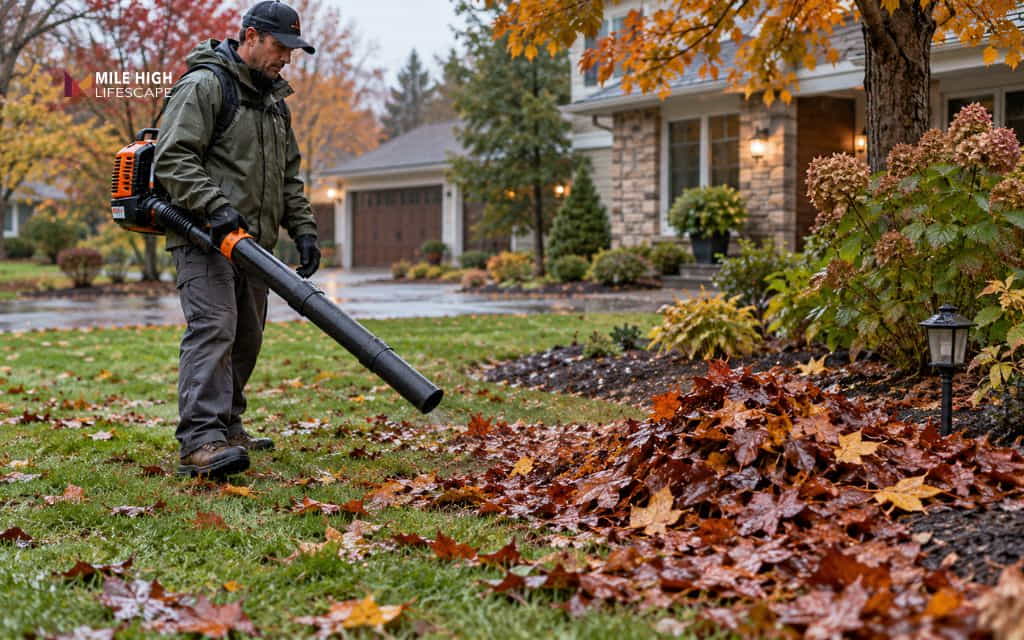
Water adds weight. Wet leaves overlap and stick to each other and to the grass blades. Airflow that moves dry leaves with ease often skims over wet ones, so the top layer shifts while the layer beneath stays put. That is why the question can you blow wet leaves needs a conditional answer.
Shade, wind, leaf type and pile depth change drying time, so no fixed wait fits every yard. Lift a few leaves with a rake. If they separate and feel loose, a blower can move them. If they feel slick or stay stuck, wait or rake first.
Blow, rake or wait: How to handle wet leaves
Match the method to the leaf condition before you start. This table shows how to answer can you blow wet leaves for your own yard.
| Leaf condition | Best move |
| Damp, loose, thin layer | Blow in short sections |
| Soaked, matted layer on turf | Loosen with a rake, then blow or bag |
| Rain still falling | Wait until it stops |
| Thick layer on a large lawn | Rake and collect soon, or hand the job to a yard cleanup service before the layer smothers the grass |
Best leaf blower for wet leaves
Leaf blower wet leaves performance depends on airflow, design and leaf depth, so not every model qualifies. CFM measures air volume, and MPH measures air speed. Some lawn care publishers suggest at least 190 MPH and 500 CFM for wet leaves. Treat that as a guide, because brands rate blowers differently.
| Blower type | Strength | Limit |
| Gas or backpack | Highest airflow in most models, suits large lots and deep piles | Noise, fuel and weight |
| Cordless battery | Portable, quieter, no fuel | Output and run time vary by model |
| Corded electric | Lighter weight, low running cost | Cord length limits reach |
Variable speed helps, because you can lower output near beds and gravel. When can you blow wet leaves with good results? When the airflow suits the load, so match the tool to your lot size.
How to blow wet leaves step by step
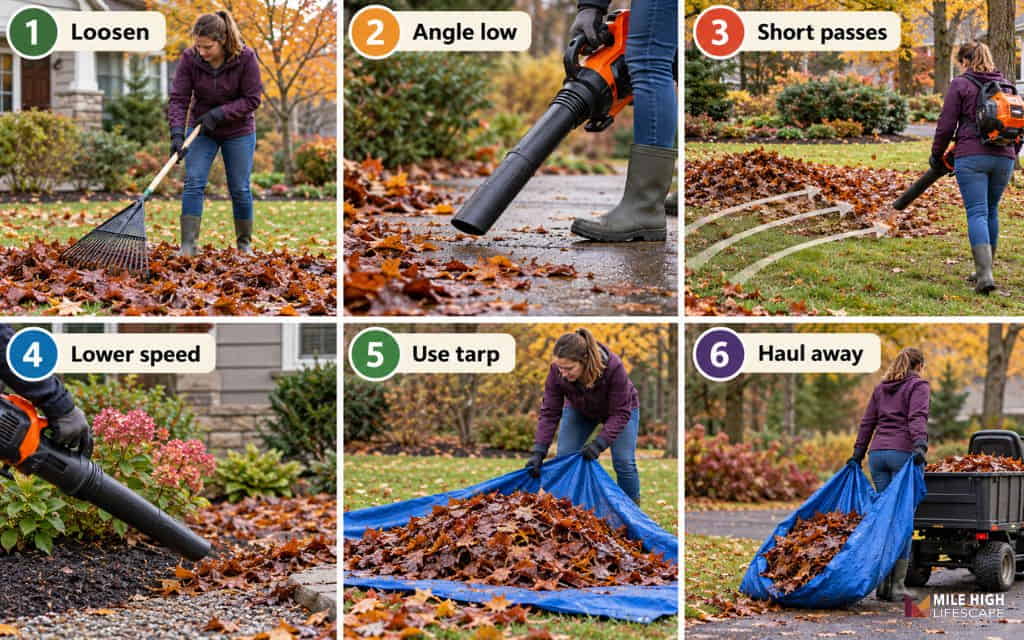
Follow these steps when the answer to can you blow wet leaves is yes for your yard:
- Loosen matted areas with a rake, so air lifts single leaves instead of a heavy sheet.
- Angle the nozzle down and keep it close to the ground, so the airstream pushes leaves along the surface.
- Blow in short, overlapping passes toward one collection point.
- Lower the speed near beds, gravel and delicate plants, so air does not scatter mulch, stones or soil.
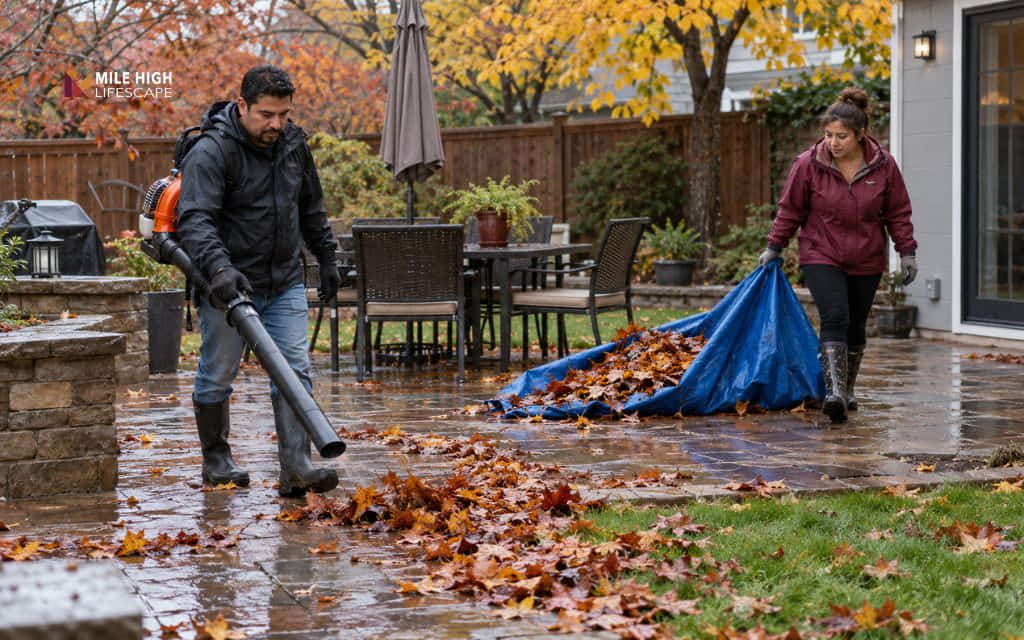
- Move the pile onto a tarp, fill it halfway and anchor the corners, since wet leaves weigh more.
- Haul the leaves to compost or yard waste collection, and never push them into streets or storm drains.
Is it safe to use a leaf blower on wet leaves?
Separate wet leaves from wet conditions. Rain, standing water and soaked ground raise the risk with electric tools. Some manufacturers advise against use in wet conditions, so read your manual. Keep battery packs, chargers and cords dry, and stop if rain starts.
So can you blow wet leaves safely? Yes, when the manual allows use in damp conditions and your footing is secure. Wear eye and ear protection and slip-resistant boots, because wet leaves are slick.
Mistakes to avoid when blowing wet leaves
Even when can you blow wet leaves is a yes, the method must fit the pile. Avoid these mistakes.
- Full power on the first pass: Strong airflow near beds strips mulch and scatters soil across the lawn, so lower the speed there and lift leaves out of beds by hand.
- Pushing leaves into streets or storm drains: Leaves can clog drains and carry organic matter into waterways, so keep them on your property.
- Using an underpowered blower: Weak airflow wastes time on matted leaves, so switch to a rake when the layer will not lift.
Alternatives to blowing wet leaves
Can you blow wet leaves faster than you can rake them? Only on a thin layer. Raking works on any yard size with a sturdy rake, short strokes and half-filled tarps.
Mowing a thin layer of dry leaves into small pieces returns nutrients to the soil. Before you try it, review how to mow the lawn so blade height and pattern protect your turf.
Conclusion
Can you blow wet leaves? Yes, with enough airflow, a thin layer and the right timing. Loosen matted leaves with a rake, work in sections and follow your manual. When rain returns or leaves mat down, rake or wait.
Wet leaves pile up fast, and the work adds up. Mile High Lifescape rakes, bags and hauls away leaves, clears debris from beds, and trims and edges lawns for Denver Metro homeowners. After cleanup, mulch installation restores the cover that protects roots through winter. Call (303) 877-9091 for a free estimate with no obligation.
Frequently asked questions (FAQs)
Can you blow wet leaves after rain?
Yes, once surface water drains. Wait until leaves lift apart with a rake. No fixed time fits every yard, because shade, wind and pile depth change drying speed.
Is it better to blow wet or dry leaves?
Dry leaves are better, because they weigh less and travel with less air. Can you blow wet leaves when waiting is not an option? Yes, if the layer is thin or waiting risks smothering the grass.
Can you blow wet leaves off a lawn, patio or gravel?
Yes, with adjustments. On lawns, work in sections. On patios, a blower clears leaves fast. On gravel, lower the speed so stones stay in place.
Can you blow wet leaves into a storm drain?
No. Leaves can clog drains and carry organic matter into waterways. Keep them on your property or follow local yard waste rules.
Can you use an electric leaf blower in wet conditions?
Check the manual first. Some manufacturers advise against use in rain or on wet ground. If the manual does not allow wet use, can you blow wet leaves with that tool? No, so wait or rake.
Can wet leaves damage your lawn?
Yes. Thick, matted layers block light and hold moisture against the grass. Over an extended period, that can weaken turf and favor lawn disease.