Picture this: you step into your backyard on a calm morning, coffee in hand, and notice a thick bare branch hanging motionless in the canopy while every other limb around it is full and green. It is not just an eyesore. That branch may already be dead, and it could come down without any warning at all.
This is exactly the situation that deadwooding is designed to address. It is one of the most common tree-care practices in use today, especially for mature trees, and it is far more precise than simply lopping off anything that looks off.
In this guide, you will learn what deadwooding means, why trees develop dead wood in the first place, how to spot trouble early, and most importantly, how to decide whether you can handle the job yourself or whether you need a certified arborist on site.
What is deadwooding?
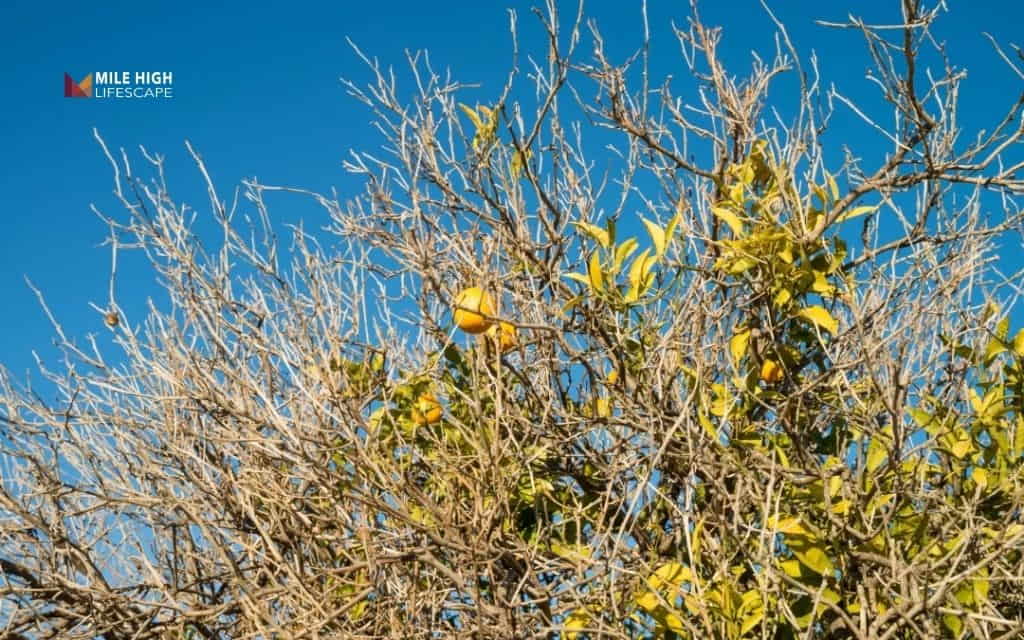
The term “deadwood” refers to the woody parts of a tree, usually branches or limbs, that have lost the ability to transport water and nutrients. These sections are no longer alive and will not recover on their own. Over time, dead wood dries out, becomes brittle, and eventually breaks away from the tree, sometimes with very little force needed.
A deadwood tree, meaning a tree that has significant sections of dead branches still attached to an otherwise living trunk, is the prime candidate for deadwooding. If the root system and the core of the trunk remain healthy, targeted removal of the dead sections can save the tree entirely.
Deadwooding is the careful, selective removal of dead, dying, diseased, or structurally compromised branches from a tree’s canopy. The goal is to eliminate unsafe wood while leaving every healthy branch completely intact. Performed correctly, it protects both the tree and the people who live or work near it.
Why do trees develop deadwood?
Dead wood in a tree does not always signal that the tree is dying. Some dieback is a normal part of how trees grow and adapt. Other times it is a clear warning that something is wrong beneath the surface. Understanding the cause helps you respond with the right level of care.
Natural self-pruning
Many tree species shed lower limbs naturally as the canopy matures and fills out above them. When branches no longer receive enough sunlight to justify the energy the tree spends feeding them, the tree gradually cuts off their nutrient supply and allows them to die. This process is called natural self-pruning.
It is completely normal, but the resulting dead limbs should still be removed in yards and managed landscapes. Even naturally shed branches can fall unexpectedly and cause injury or property damage if they are left hanging in the canopy.
Environmental stress
Prolonged drought reduces the water and nutrient flow to outer branches, causing gradual tip dieback that can work its way inward over time. Extreme heat, persistent dry winds, and sudden hard freezes can all damage branch tissue and disrupt the vascular system a tree depends on to stay alive.
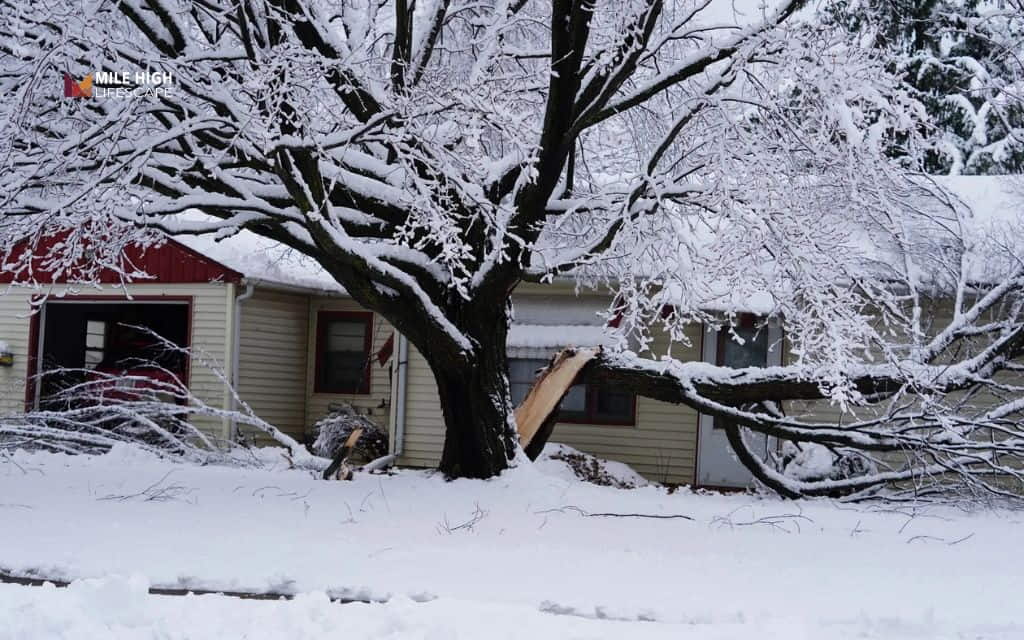
Heavy snow, ice accumulation, and repeated freeze-thaw cycles place enormous physical stress on branch unions and can crack wood that was previously sound. Flooding and waterlogged soils suffocate tree roots, leading to canopy dieback that appears well above ground, sometimes months after the flooding event itself.
Pests and disease
Wood-boring insects such as emerald ash borers, bark beetles, and carpenter ants tunnel through living branch tissue, cutting off the flow of water and nutrients. The affected branches die relatively quickly after infestation, and without intervention, the insects will spread to healthy sections of the same tree and to neighboring trees in the yard.
Fungal infections including cankers, heart rot, and anthracnose weaken branches from the inside before any visible symptoms appear on the surface. Bacterial diseases such as fire blight can move through susceptible tree species rapidly, killing entire branches within a single growing season.
Physical and mechanical damage
Storm events bring wind, hail, ice, and heavy rain that can split branch unions, strip bark, and create open wounds where decay and disease can take hold. Construction activity in or near a tree’s root zone, including soil compaction, trenching, and grade changes, is a common cause of branch dieback that homeowners often do not connect to the original disturbance.
Animal damage from deer rubbing against trunks, rodents chewing bark at the base, or woodpeckers feeding on insect-infested wood can all create entry points for pathogens and contribute to localized branch death over time.
Age and natural decline
As a tree ages past its prime, its ability to compartmentalize decay and resist disease naturally diminishes. Internal wood begins to break down in older sections, and limb dieback becomes more frequent even without any single identifiable stressor. Mature and over-mature trees almost always require more frequent deadwooding inspections than younger specimens.
This does not mean an aging tree must be removed. Many veteran trees remain structurally sound and ecologically valuable for decades with consistent, professional care. Deadwooding is often a central part of that long-term management strategy.
6 benefits of deadwood tree removal
Protects people, pets, and property from falling limbs
Dead branches lose structural integrity progressively. They do not always wait for a major storm to fail. A dead limb can snap and fall during calm weather, under a light gust, or simply under its own weight as decay advances. When that limb is positioned over a walkway, a roofline, a vehicle, or anywhere people or animals regularly spend time, the risk is serious.
Removing dead branches eliminates the hazard before it has a chance to cause harm. It also removes a potential source of liability if a fallen branch damages a neighbor’s property or injures someone on or near your land.
Extends tree life and redirects nutrients to healthy growth
A living tree distributes water, minerals, and carbohydrates through its vascular system constantly. Dead branches are no longer part of that system, but their presence can still interfere with the tree’s efficiency by blocking sunlight from reaching productive sections of the canopy and creating physical weight that strains branch unions.
When dead wood is removed, the tree is better able to direct its available resources toward the branches and growth points that are still actively producing. This supports stronger new growth, more even canopy development, and a longer overall lifespan for the tree.
Reduces pest and disease pressure
Dead wood is one of the first things wood-boring insects target. Beetles, termites, and borers seek out decaying tissue because it is easier to penetrate and offers a protected environment for egg-laying. Once a population establishes itself in a dead limb, it can spread to the living wood of the same tree or move to nearby healthy trees.
Fungal pathogens follow a similar pattern, colonizing dead tissue and then advancing into living wood through the same wound or opening. Removing dead branches promptly takes away one of the primary footholds these organisms rely on, reducing the likelihood of a broader infestation or infection taking hold.
Improves storm and wind resistance
In a healthy canopy, wind passes through the foliage with relatively distributed resistance. Dead branches do not flex the way living ones do. They catch wind differently and are far more likely to snap under load, often taking healthy branches with them when they fall. The resulting damage to the tree’s structure can be far more extensive than the original dead limb itself.
A canopy that has been cleared of deadwood is more aerodynamically efficient during storm events. The remaining live branches bend and recover rather than breaking, and the overall risk of catastrophic storm damage to both the tree and the surrounding property is significantly lower.
Enhances curb appeal and property value
A tree with bare, broken, or visibly decaying limbs draws attention for all the wrong reasons. It can make an otherwise well-maintained yard look neglected, and it detracts from the visual quality of landscaping investments that may have taken years to establish. Deadwooding restores the tree’s natural shape, allowing it to serve as a genuine asset to the property’s appearance.
For homeowners thinking about resale value, a yard with well-maintained, structurally sound trees is a measurable selling point. Buyers and inspectors notice hazardous or poorly maintained trees, and a professional deadwooding program demonstrates responsible property ownership and ongoing care.
Reveals hidden structural issues early
One of the benefits of scheduling regular deadwooding with a certified arborist is what gets discovered in the process. When a professional examines a tree closely enough to assess each branch individually, they also observe the overall structure, the condition of major branch unions, the presence of internal decay, and any signs of root issues visible at the base.
Identifying a cavity, a co-dominant stem with a weak attachment, or early evidence of root rot during a routine deadwooding visit gives you the chance to address a potentially serious structural problem before it becomes an emergency. Early intervention is almost always less costly, less disruptive, and safer than waiting until a tree begins to fail.
When is the best time to deadwood a tree?
The most effective window for routine deadwooding is late winter to early spring, while the tree is still dormant and has not yet leafed out. With leaves off the branches, dead wood is considerably easier to spot against the bare canopy. Cuts made during dormancy also result in less sap loss, lower disease transmission risk from insect activity, and a tree that is positioned to seal over pruning wounds as soon as new growth begins in spring.
That said, the best time to remove a hazardous dead branch is the moment you identify it, regardless of season. A dead limb positioned over a structure, a play area, or a power line should not wait for the optimal pruning window. Safety concerns take priority over scheduling considerations every time.
For mature trees with significant canopy coverage, an annual or biennial professional inspection is a reasonable baseline. Trees that have experienced recent storm damage, drought stress, or known pest pressure should be inspected more frequently, ideally after every major weather event and at the start of each new growing season.
Property managers, commercial owners, and HOA board members overseeing multiple trees or larger landscapes benefit most from establishing a standing tree-care schedule rather than responding on a case-by-case basis. A proactive inspection program catches developing problems earlier and avoids the higher costs that come with emergency or reactive work.
How to identify deadwood on a tree
Catching dead wood early gives you more options and reduces the risk of an unexpected branch failure. Most homeowners can spot the common signs from the ground without any special equipment. Here is what to look for during a routine visual check.
Visual signs of a dead branch
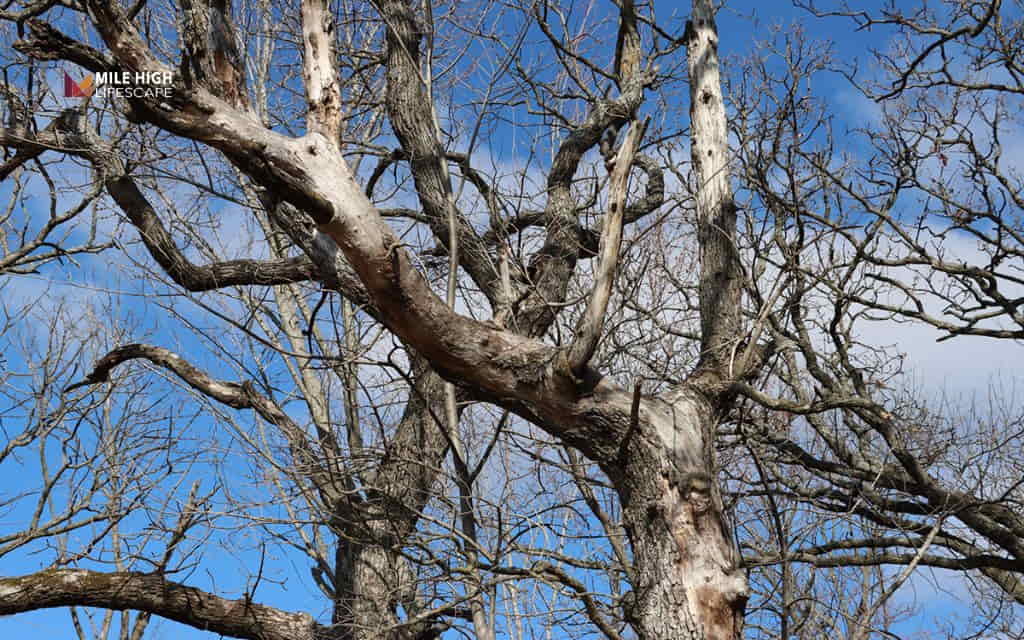
A dead branch stands out from the rest of the tree in several ways that are visible to the untrained eye. Look for any of the following indicators:
- No leaves or needles during the active growing season, while the rest of the canopy is full
- Branches that snap easily with light pressure rather than bending with flexibility
- Bark that is peeling away, missing in patches, or cracked and discolored
- Dead foliage clinging to the branch through winter while surrounding branches have shed normally
- Visible fungal growth such as shelf mushrooms, conks, or patches of mold on the limb or nearby trunk
- Open cracks, splits, cavities, or areas where the wood has a sunken or stained appearance
The scratch test
The scratch test is a simple field method used by arborists to check whether a branch still has living tissue. Using a fingernail or the edge of a pruner blade, you gently scrape away a small sliver of outer bark and look at the layer directly beneath. Green, moist tissue means the branch is still alive. Brown, dry, or crumbling tissue indicates the branch is dead.
While this test is useful, it carries a real risk if done incorrectly. Scratching too deeply or in multiple spots along the same branch can create permanent wounds in bark that is still alive, opening the tree to infection.
High-risk locations where deadwood becomes dangerous
Not all dead branches carry the same level of risk. Location is one of the most important factors in determining urgency. The following situations should be treated as high priority for professional assessment and deadwood removal:
- Branches directly over patios, decks, outdoor seating areas, children’s play structures, or pools
- Limbs positioned above rooflines, gutters, skylights, or attached structures
- Dead wood hanging near or touching power lines, communication cables, or utility equipment
- Branches over driveways, walkways, sidewalks, or parking areas with regular foot and vehicle traffic
- Any visibly cracked, split, or partially detached limb, regardless of its height or location
How do professionals deadwood a tree?
Understanding what professional deadwooding involves helps you set clear expectations and evaluate the quality of work being done on your property.
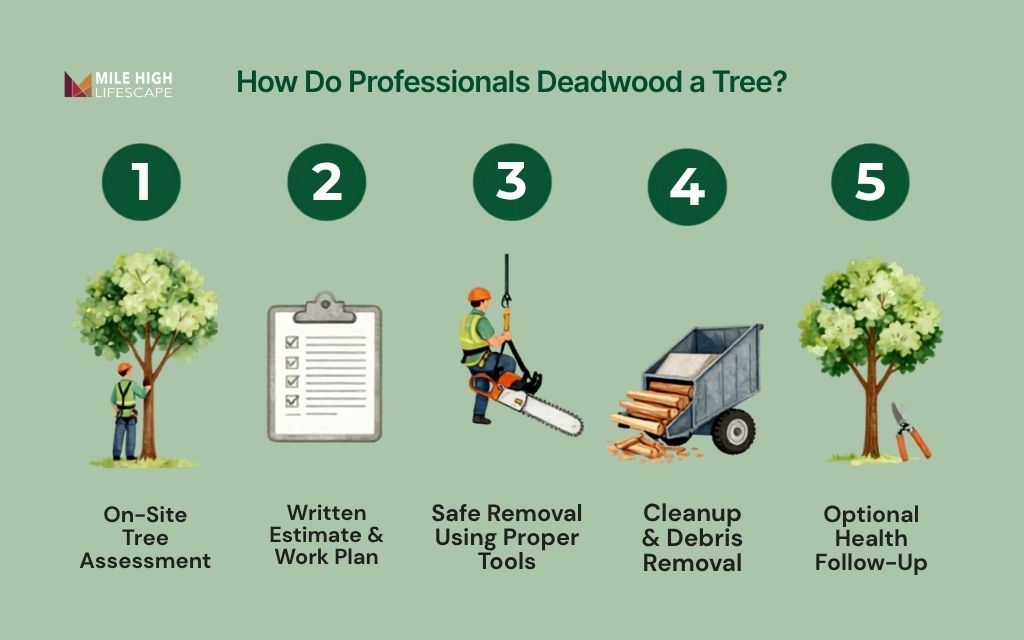
Step 1: On-site tree assessment
A certified arborist starts by walking the property and evaluating the tree from canopy to base, looking for dead or compromised branches, structural weaknesses, internal decay, and any nearby hazards such as structures or power lines. This assessment determines the full scope of work and shapes the safest approach for every cut that follows.
Step 2: Written estimate and work plan
After the assessment, the arborist provides a written estimate covering which limbs will be removed, the equipment needed, and the total cost. Before signing, confirm that the company carries current liability insurance and that the lead arborist holds ISA certification or an equivalent credential from a recognized tree-care organization.
Step 3: Safe removal using proper tools and techniques
Professionals use climbing harnesses, aerial lifts, and rope-and-rigging systems to access the canopy safely and control exactly where each cut piece falls. Every branch is removed using the three-cut method to prevent bark tearing, and all work is performed to ANSI A300 standards, the recognized industry benchmark for professional tree care in the United States.
Step 4: Cleanup and debris removal
Once the deadwood is removed, the crew clears all fallen branches, sawdust, and wood debris from the property. Larger limbs are typically chipped on site, and if you have a use for the material, many tree services will leave the wood chips behind at no additional cost.
Step 5: Optional health follow-up
Depending on what the assessment revealed, the arborist may recommend supplemental care such as deep root fertilization, protective mulching, or a follow-up inspection 6 to 12 months later. For trees showing early signs of pest activity or disease, addressing those issues at the same visit tends to produce better outcomes and better value than scheduling a separate service call.
Ready to protect your trees and elevate your outdoor living space?
For homeowners in the Denver Metro area and along Colorado’s Front Range, Mile High Lifescape pairs professional tree-health assessments with full-service landscape design and care. Whether you are managing a single mature specimen or overseeing an entire outdoor living space, our certified team handles everything from the initial site evaluation through cleanup, with transparent estimates and no surprises along the way.
Conclusion
Deadwooding is one of the most practical and impactful things a property owner can do to protect their trees, their household, and their investment in the surrounding landscape. It removes immediate safety hazards before they have a chance to cause harm, extends the productive life of mature trees, and gives a certified arborist the opportunity to catch developing structural problems while they are still manageable.
The key takeaway is that deadwooding is not the same as general trimming or random branch removal. It is a precise practice that requires a clear understanding of where and how to cut. In most cases, this job deserves the attention of a trained professional.
If your property has dead, damaged, or hazardous branches that need professional attention, Mile High Lifescape provides reliable Tree Branch Removal to help keep your trees and property safe. Our experienced team carefully removes problem branches while minimizing impact on the health and structure of your trees.
Frequently asked questions (FAQs)
Is deadwooding the same as tree removal?
No. Deadwooding removes only the dead, dying, or compromised branches from an otherwise living tree, leaving all healthy wood in place. Tree removal eliminates the entire tree, including the trunk and stump. A standing dead tree with no living branches to preserve is typically a candidate for full removal, while a tree with isolated dead limbs among a healthy canopy is the right candidate for deadwooding.
Will deadwooding hurt my tree?
Performed correctly by a trained professional, deadwooding does not harm a tree. Removing dead wood benefits the tree by allowing it to redirect resources toward healthy branches and seal over clean cuts with new callus tissue. The risk lies in improper technique: flush cuts that remove the branch collar or ragged stub cuts create lasting wounds that invite decay and insects, which is why professional execution matters.
Can I deadwood a tree myself?
For small dead twigs under roughly one inch in diameter that can be reached safely from the ground using hand pruners or loppers, careful DIY removal is generally acceptable. However, anything larger, higher than arm\’s reach, near a structure or power line, or requiring a ladder, chainsaw, or climbing gear should always be left to a certified arborist. The injury risk in those situations is serious and not worth taking on without proper training and equipment.
Is deadwood bad for my home?
Yes, deadwood near your home presents real risks. A dead branch positioned over a roofline, driveway, deck, or doorway can fall without warning and cause significant structural damage or injury. Dead wood also attracts wood-boring insects and supports fungal growth, both of which can migrate into structural elements of the home if left unaddressed. Prompt deadwood removal is a straightforward way to reduce all of these risks.
How do I know if a branch is really dead?
Look for branches with no leaves or needles during the growing season, bark that is peeling or missing, wood that snaps rather than bends, and foliage that has died but not dropped. Visible fungal growth on or near the limb is also a strong indicator. For confirmation, the scratch test (gently scraping a small patch of bark to check for green tissue underneath) can help, but when in doubt, have a certified arborist examine the branch directly.
How often should I deadwood my trees?
Most mature trees benefit from a professional inspection every 1 to 2 years as a baseline. Trees with a history of pest pressure, recent storm damage, or placement over high-traffic areas should be inspected more frequently, ideally after each major weather event and at the start of every growing season. Establishing a consistent care schedule, rather than responding only when a problem becomes visible, leads to better long-term outcomes for both the trees and the property.