Does English ivy kill trees? Ask five people and expect five different answers, ranging from a confident yes to a flat no. Homeowners, gardeners, and property managers dealing with ivy on trees need more than a guess. This guide breaks down what English ivy actually does to a tree, which trees can carry it without harm, and when it is worth the effort to clear it away.
Does english ivy kill trees directly?
English ivy, or Hedera helix, climbs using aerial rootlets. These small, hairy structures grip bark and masonry for support. They do not pierce the tree’s vascular tissue, and they draw no water or sugar from the wood beneath them. This sets ivy apart from true parasitic plants like mistletoe, which tap directly into a host’s circulatory system to steal nutrients. So when someone asks, can ivy kill a tree, the short answer is no, not on its own. Ivy behaves as an epiphyte and a climber, not a parasite, and the danger builds only when it spreads unchecked for years and takes over large portions of the trunk and canopy.
Part of the confusion comes from timing. Ivy often shows up thickest on trees that are already declining, since a thinning canopy lets more light reach the vine and speeds its growth. People notice the ivy and the dying tree together and assume one caused the other. In most of these cases, the tree was losing vigor from age, root damage, or disease long before the ivy became visible, and the vine simply moved in on an opening the tree had already created.
How english ivy can still weaken a tree
Added weight and wind resistance
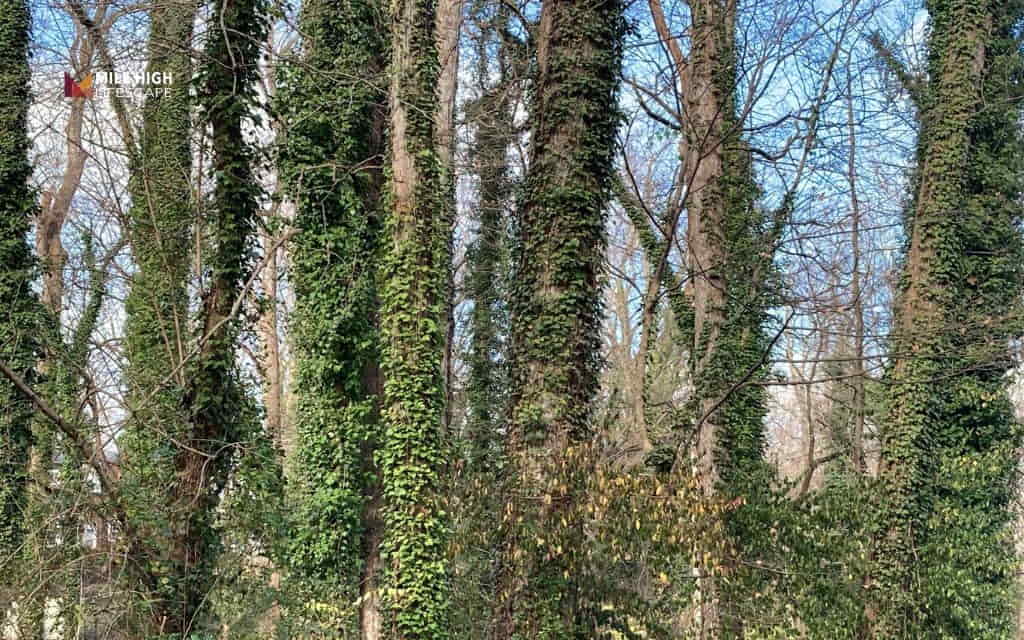
Mature ivy vines grow thick and woody, and a dense mat can add hundreds of pounds to a trunk and its limbs. That extra mass turns the tree into a sail during storms. Wind that a bare canopy would shed instead catches on the ivy’s dense evergreen leaves, increasing the load on limbs and roots. Trees carrying heavy ivy break or uproot at lower wind speeds than trees without it.
The risk climbs in winter, when deciduous trees have already dropped their own leaves but ivy stays green and full. A tree that would normally present a bare, low-resistance profile to a winter storm instead keeps a dense evergreen surface for wind to push against, right when cold, saturated soil offers the weakest anchor for the roots.
Blocked sunlight to the canopy
Ivy that reaches the upper branches shades the tree’s own leaves. Photosynthesis slows, and the tree produces less energy for growth, defense, and root maintenance. This effect stays minimal while ivy clings to the lower trunk, but it becomes serious once vines spread across the canopy and compete with foliage for light.
Hidden structural defects
Ivy covers the trunk and major limbs completely, hiding what lies beneath. Cracks, cavities, cankers, and dead wood go unnoticed under the leaves, along with insect activity or fungal growth near the base. Neither an arborist nor a homeowner can judge a tree’s structural safety when the bark stays out of sight. This hidden risk rarely comes up in casual discussions about ivy, yet it matters most when a tree stands near a home, driveway, or walkway.
Internal defects can stay invisible for years, and a tree can look healthy from a distance, green and full, right up until a limb or the whole trunk fails. Ivy covering the lower ten or fifteen feet of a trunk removes the one place where a visual inspection would normally catch that kind of problem early.
Competition and disease entry points
Ivy roots draw water and nutrients from the same soil as the tree, and a dense root mat around the base limits how much moisture reaches the tree’s own root system. The humid, shaded microclimate under a heavy ivy mat also favors fungal growth and provides cover for wood-boring insects and rodents. Wounds from ivy’s aerial rootlets, while shallow, can still open small entry points for pathogens on already stressed bark.
Learn more: How to Remove Ivy From Ground
Which trees face the highest risk
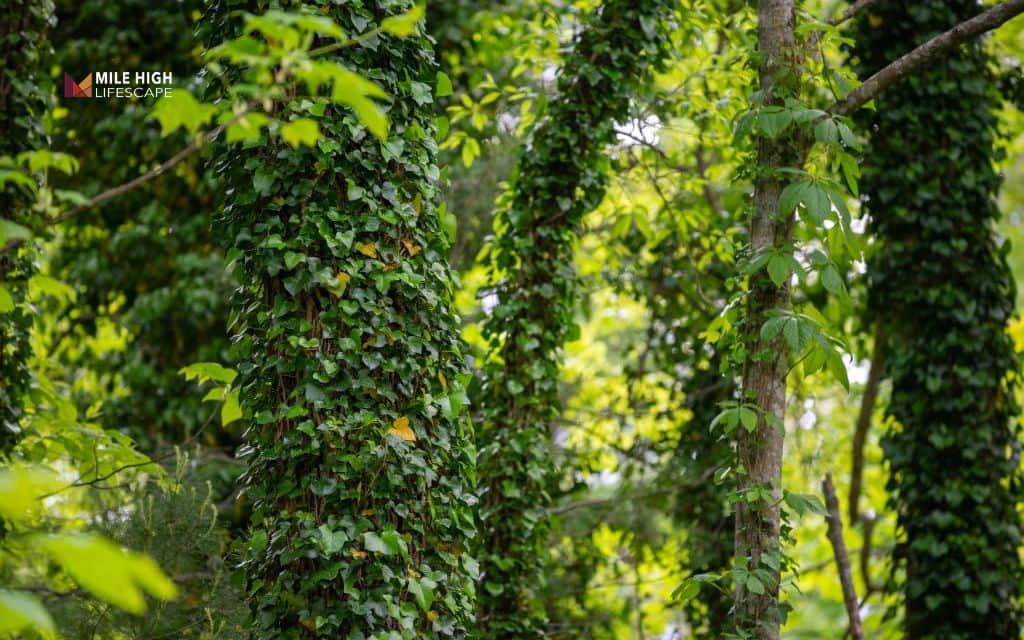
A tree’s starting condition determines how much ivy matters. Healthy, vigorous trees can often carry ivy for years with little measurable effect, while trees under stress from age, drought, compacted soil, or disease have far less reserve capacity to absorb the added pressure. Species with thin bark, such as young maples or birches, also tend to show more irritation at points where ivy’s aerial rootlets grip the trunk than thick barked species like oaks.
| Tree condition | Typical response to ivy | Level of concern |
| Young or newly planted tree | Ivy competes directly for light and root space during establishment | High |
| Mature, healthy tree with light ivy coverage | Tolerates ivy on the lower trunk with minimal impact | Low |
| Mature tree with ivy in the canopy | Loses photosynthetic capacity and gains storm risk | High |
| Tree already stressed by drought, disease, or old age | Has little reserve to offset added weight and shade | High |
| Tree near a structure, driveway, or power line | Hidden defects and wind load raise safety risk regardless of tree health | High |
How to remove english ivy from a tree safely
Removing ivy from a tree calls for a specific method, not a simple pull. Ivy draws its water and nutrients through roots in the soil, so cutting the vines at the base severs that supply line and starves everything growing above the cut. Wear gloves and long sleeves before starting, since contact with ivy sap causes skin irritation and allergic reactions in some people. Late fall through early spring works well for this project, since ivy growth slows during the cooler months and the ground is often soft enough for easier root pulling.
- Locate the vines: Find the base of the ivy vines at the soil line around the trunk.
- Cut two rings: Sever all vines in a full ring near the ground, then cut a second ring at chest height.
- Remove the middle section: Pry the cut segment away from the bark gently, taking care not to tear the tree’s own tissue.
- Clear the root zone: Remove ivy roots and runners in a wide ring around the base of the tree to cut off the plant’s water source near the trunk.
- Leave the upper growth in place: The vines above the top cut will dry out and loosen naturally, and can be pulled free once the tree adds a season or two of new growth underneath.
Learn more: How to tell if a tree is dying
Preventing english ivy from growing back
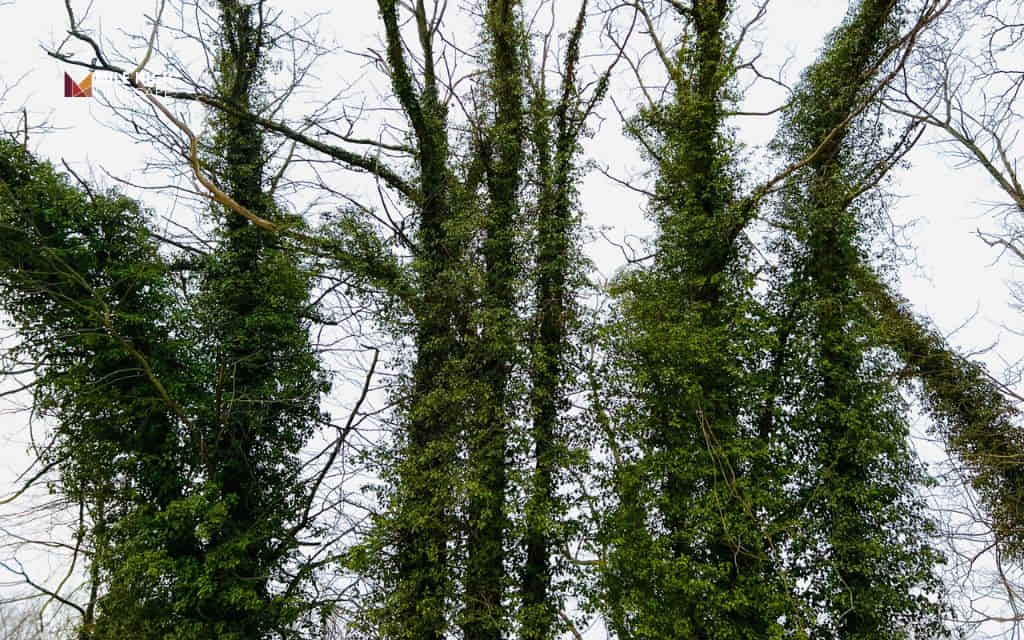
English ivy regenerates from even small root and stem fragments left in the soil, so a single removal session rarely finishes the job. Check the cleared area every few weeks through the growing season and pull any new shoots while they are small and easy to remove by hand. A layer of mulch spread over the cleared root zone, kept a few inches back from the trunk itself, also helps by suppressing seedlings and holding moisture for the tree rather than the vine.
Replacing cleared ivy with a non-invasive groundcover gives the space a job to do and makes it harder for ivy seedlings, often spread by birds that eat ivy berries, to gain a foothold. Low native groundcovers or shade-tolerant perennials suited to the site work well in the open ring around a tree’s base. Consistent monitoring for the first year or two after removal, paired with a seasonal walk-around to catch new growth early, determines whether the ivy stays gone for good.
Conclusion
Does English ivy kill trees on its own? No. But it will not stay harmless forever either, and it can tip the balance against a tree that is already carrying other burdens. Light ivy on a healthy trunk rarely calls for action. Ivy that has reached the canopy, hidden the bark, or settled on a stressed tree deserves a closer look and, in most cases, removal.
If ivy has taken hold on a tree in your yard and you are not sure whether it is safe to leave or time to act, Mile High Lifescape can help. Once the ivy is removed, dead, weakened, or damaged limbs may become more visible and require additional attention. Our Tree Branch Removal Services can help safely remove hazardous branches, improve tree structure, and reduce potential risks around your property. Call (303) 877-9091 to schedule a visit.
Frequently asked questions (FAQs)
Does ivy kill the tree it grows on?
Not directly. English ivy does not draw water or nutrients from a tree’s vascular system. It can still contribute to a tree’s decline indirectly, through added weight, reduced sunlight, and hidden structural damage, especially once it reaches the canopy.
Will english ivy kill trees that are already healthy
A healthy, mature tree with light ivy growth on the lower trunk typically shows little to no effect. Risk rises once ivy spreads into the canopy or the tree is under other stress, such as drought or disease.
How fast does ivy spread on a tree
English ivy grows quickly once established, often climbing several feet in a single growing season under favorable conditions. Left unmanaged, it can reach the canopy of a mature tree within a few years.
Should every tree have its ivy removed
Not necessarily. Light ivy growth on the lower trunk of a healthy tree is usually low risk. Removal becomes a priority once ivy reaches the canopy, covers a large share of the trunk, or grows on a tree that shows other signs of stress.
Does cutting the vines at the base kill the whole plant
Cutting and removing a ring of vines at the base severs the ivy above that point from its root system, and that section will die and dry out. The roots and any vines still rooted in the soil can regrow unless they are also removed or monitored closely.
Is english ivy considered invasive
In many parts of the country, English ivy grows aggressively outside cultivation and displaces native plants, and several states classify it as an invasive or noxious species. Its ability to spread by seed and by rooting wherever a stem touches soil makes ongoing management worthwhile even where it is not formally regulated.