
A tree in decline rarely fails without warning. Bare branches, peeling bark, and a sudden lean build for weeks or months before a dying tree falls or needs to come down. This guide explains how to tell if a tree is dying, how to tell a dying tree apart from one that’s simply dormant or stressed, and what to do once you’ve spotted the signs.
The question of how do you know if a tree is dying comes down to four areas: the branches, the bark, the trunk, and the roots. The sections below cover the clearest signs a tree is dying, a few checks you can run yourself, and when the problem calls for a professional rather than a closer look from the ground.
How to tell if a tree is dying versus dormant or stressed
A tree that looks dead is not always dead. Some trees enter dormancy each winter, dropping leaves and going still as a normal seasonal pause. A dormant tree leafs out again across its full canopy come spring. A stressed tree is a different case, often caused by drought, compacted soil, or storm damage, and it can show yellowing leaves or a thin canopy yet still recover once the cause is corrected. The line between a stressed tree and a dying tree comes down to whether the decline reverses with care or keeps getting worse.
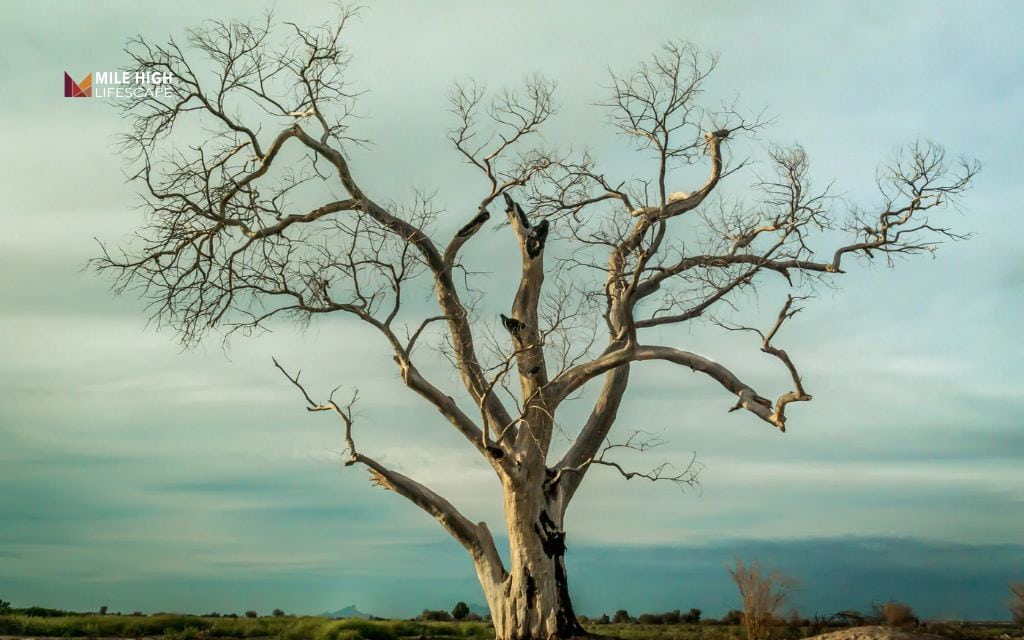
A dying tree shows damage that does not reverse. Multiple sections of the canopy fail to leaf out. Branches snap easily. Bark falls away in large patches, and the decline continues regardless of watering or fertilizer. Telling these three states apart is the first step before deciding what comes next.
Common signs of a dying tree
Dead or brittle branches
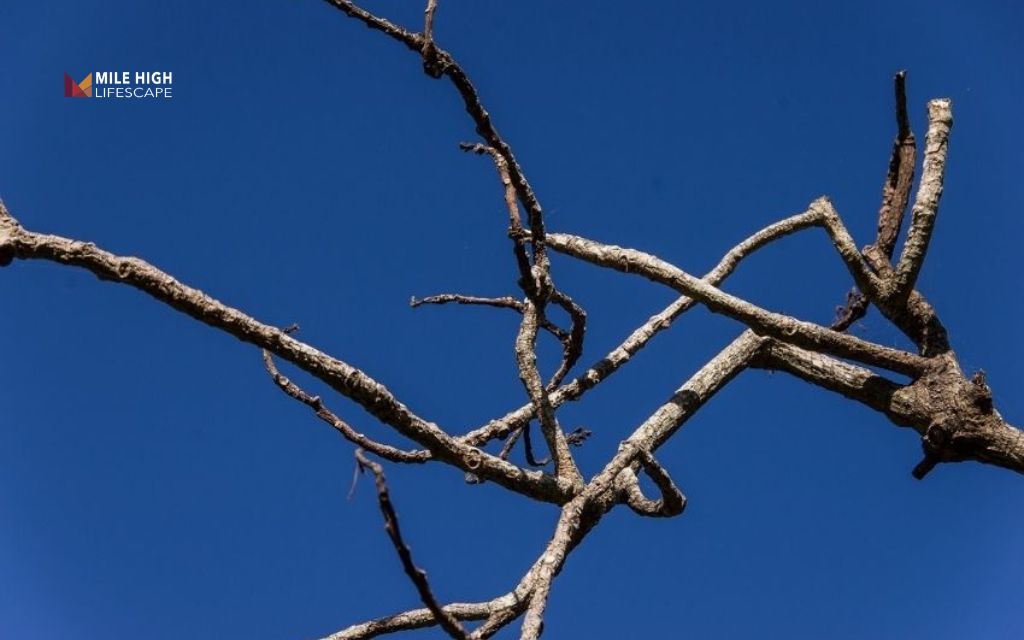
Healthy wood bends before it breaks. A dead branch does neither: it snaps clean, shows no green beneath the surface, and often loses its bark in patches as it dries out. Dead branches scattered through the canopy, rather than confined to one storm-damaged limb, point to a dying tree that has stopped feeding part or all of itself.
A few dead twigs after a hard winter are normal and often just need pruning. The concern grows when deadwood spreads across multiple branches or returns to the same spot year after year, which usually means the problem sits deeper in the limb or the trunk.
Peeling, cracked, or split bark
Bark works the way skin does: it shields the living tissue underneath from moisture loss, insects, and disease. When it peels back in large sheets, splits along the trunk, or cracks open after a freeze, that protection is gone, and whatever caused the damage now has a direct path inward.
Press a finger against the exposed wood. Tissue that feels moist and looks pale is still doing some work. Wood that is dry, discolored, or crumbling has already died. A small patch of bark loss on one limb is worth watching; bark loss that wraps most of the way around the trunk, known as girdling, is one of the surest signs of a dying tree, since it cuts off the supply lines for good.
Fungal growth at the base or trunk
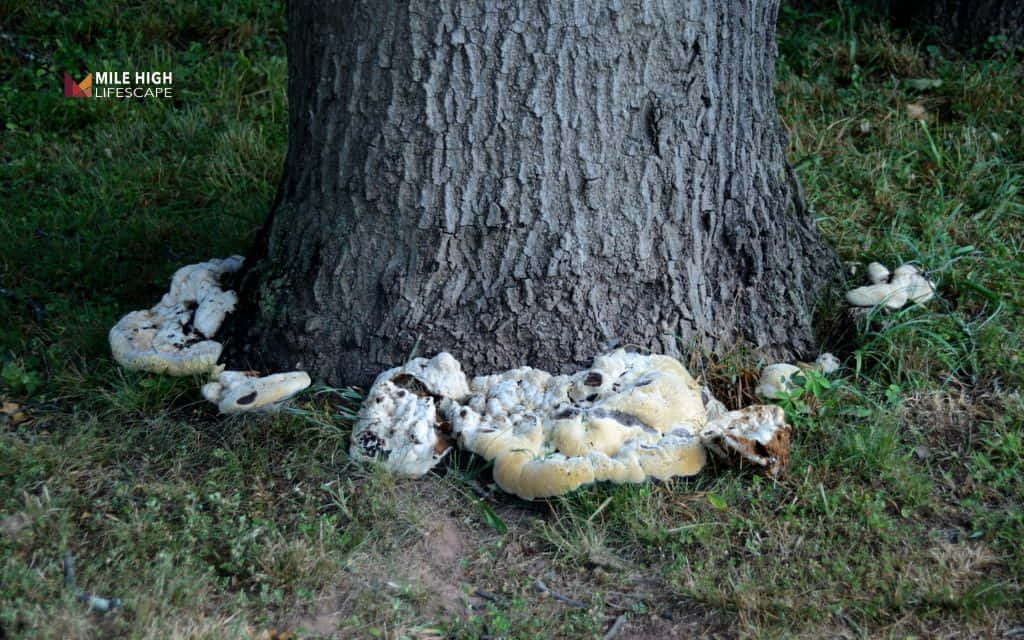
Mushrooms and shelf-like conks growing from the trunk or the soil at the root crown are not decoration. Fungi feed on dead and decaying wood, so their presence almost always means decay is already underway inside a dying tree, even if the canopy above still looks green.
Resist the urge to dig around the base to investigate further. Disturbing the soil or roots can speed up the decline and won’t tell you anything a trained eye can’t see faster. Fungal growth at the trunk base is one of the clearest signals of a dying tree, since the internal damage is often more advanced than it appears from outside, and bringing in a certified arborist sooner rather than later gives the tree its best chance.
A leaning trunk
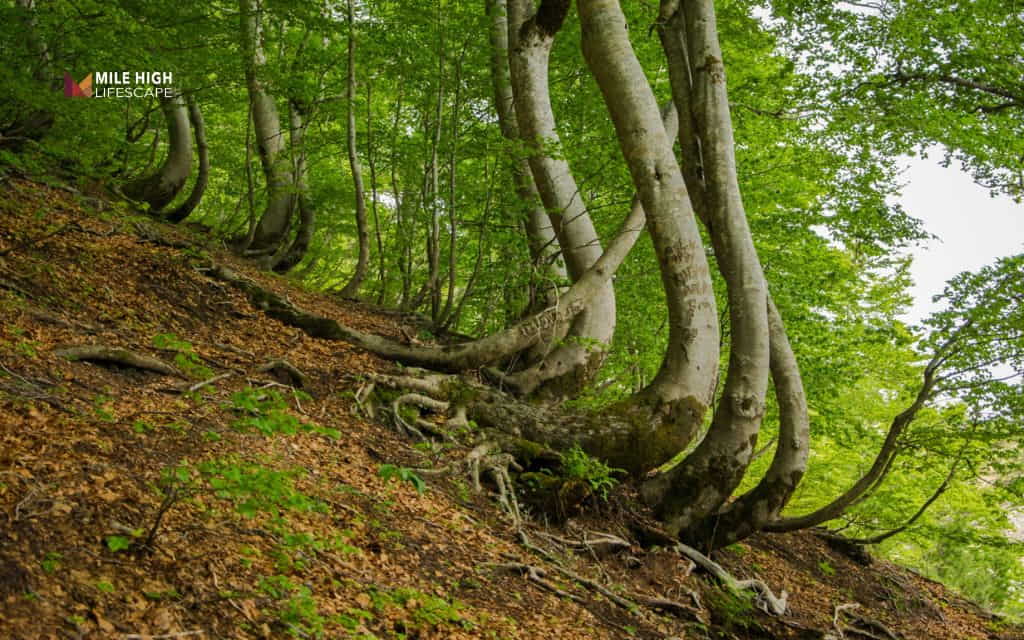
Some trees grow at a natural angle from the day they’re planted and stay perfectly stable for decades. A lean that develops suddenly, or one that worsens over a season, is a different story and often the clearest sign a tree is dying from the roots up. It usually means the root system on one side has failed, often after heavy rain saturates the soil and the root plate loses its grip.
Walk around the base and look for cracked or heaved soil on the side opposite the lean, a sign the roots are lifting rather than holding. A new lean near a house, fence, or walkway should be treated as urgent. Bracing or staking a mature, leaning tree is not a do-it-yourself fix.
Trunk decay or soft, hollow wood
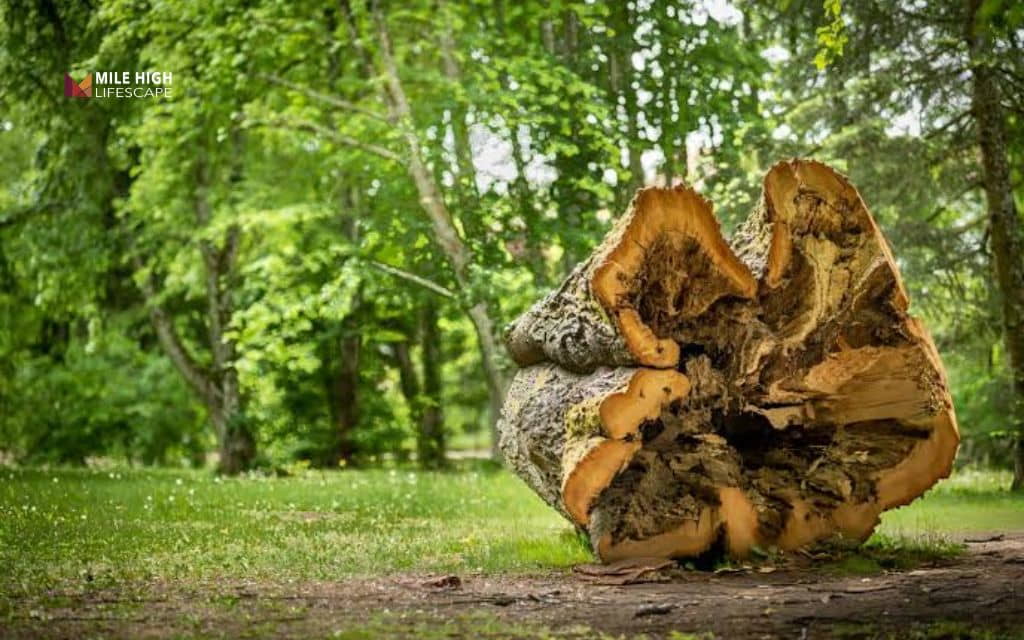
Decay typically starts at an old wound, a pruning cut, or a spot where bark was damaged, then spreads inward from there. The outside of the trunk can still look intact while the core hollows out underneath, which is why decay is often more serious than it appears at a glance.
Push gently against any soft or spongy-feeling section of bark or wood. A dull, hollow sound when you tap the trunk is another clue that the wood inside has broken down. A tree can survive for years with some internal decay, but as the solid wall of healthy wood gets thinner, the risk of a dying tree failing in wind or heavy snow climbs along with it.
Extensive or early leaf loss
Every species sheds leaves on its own schedule, so a single bare branch in October isn’t cause for alarm. What stands out is leaf loss that arrives well ahead of the normal season, comes on suddenly, or leaves the tree bare while nearby trees of the same kind still hold their leaves.
Look at where the loss is concentrated. Leaf drop spread evenly across the whole canopy often points to a root or water problem, while loss limited to one side can mean that side of the tree lost its supply line, whether from root damage, a girdling root, or a wound higher up. A tree that fails to leaf out again the following spring is no longer just stressed. At that point, it is a dying tree.
A thin canopy next to healthy trees
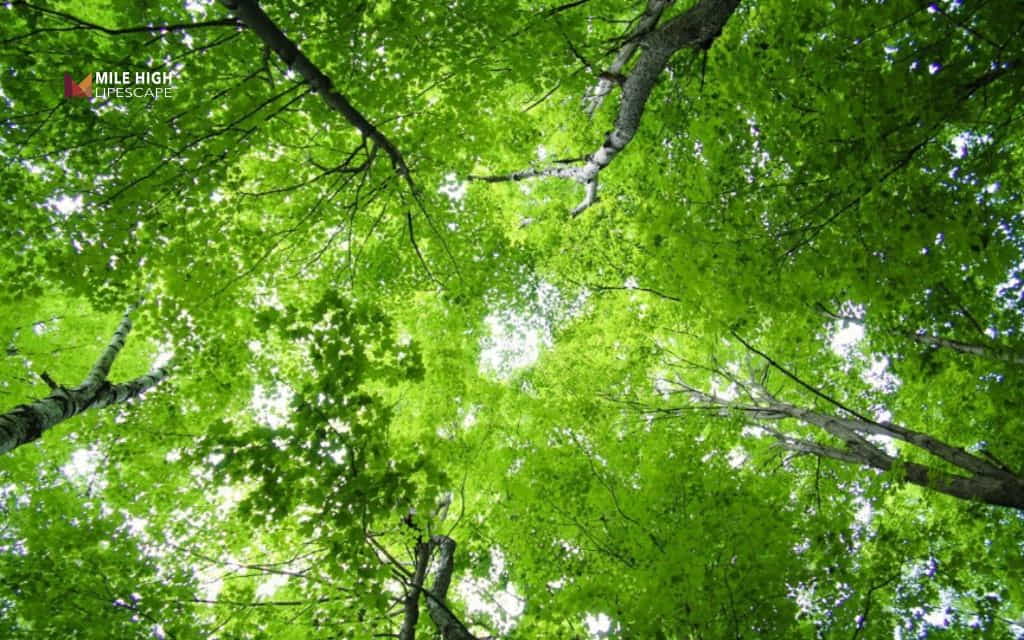
Canopy density builds up over years, so a tree in decline rarely goes from full to bare overnight. The more common pattern is a slow thinning: smaller leaves, more visible sky through the branches, and a canopy that looks washed out next to a healthy tree of the same species nearby.
Because drought and insect activity can cause similar thinning for a single season without killing the tree, this sign is best judged over time rather than from one visit. A canopy that stays thin, or keeps thinning, across two or more growing seasons is showing the real decline of a dying tree rather than a temporary setback.
Visible root damage
Roots anchor a tree and supply nearly everything it needs to grow, so damage to the root system often shows up above ground months or even years after the actual injury. Construction equipment, trenching, soil compaction, and changes in grade around the base are common causes, even when the work happened well outside the dripline.
Look for soil that has heaved or cracked near the trunk, roots that have been cut or exposed, and any dieback in the canopy that lines up with the damaged side of the root zone. Because roots carry the structural load of the entire tree, damage near the larger anchoring roots is a frequent hidden cause behind a dying tree and calls for a prompt evaluation rather than a wait-and-see approach.
Learn more: How long do trees live?
Simple checks you can do yourself
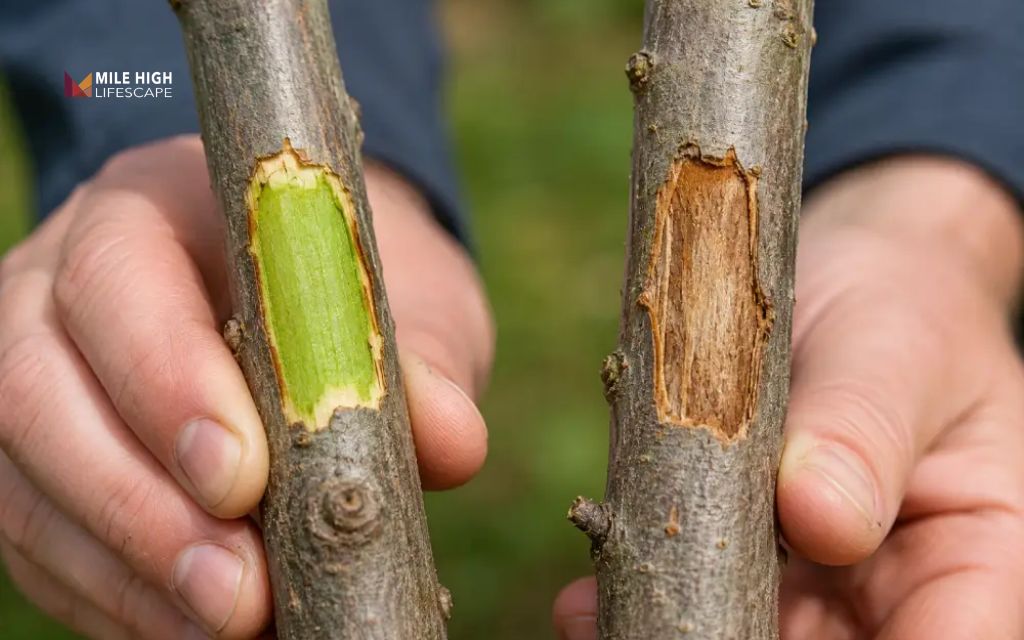
The scratch test
Scratch a small patch of bark on a thin branch with a fingernail or pocketknife. Green tissue underneath means that part of the tree is alive. Brown, dry tissue means that branch has died. Test a few branches in different parts of the canopy, not just one.
The bend test
Bend a small twig between two fingers. A living twig bends and springs back. A dead twig snaps cleanly with little resistance. Brittle twigs that snap throughout the canopy point to a tree in serious decline.
Comparing your tree to others nearby
Look at a healthy tree of the same species growing nearby in similar soil and sun. A canopy that looks noticeably thinner, paler, or slower to leaf out than its neighbor is falling behind. This comparison separates a tree that is simply slow this season from a dying tree that is genuinely declining.
Learn more: Can trees die of old age?
When a tree becomes a safety hazard
These hazards often show up together on a dying tree rather than in isolation. Some signs point to immediate risk rather than slow decline. A leaning trunk paired with cracked soil at the base, a hollow or cavity filled trunk, large dead limbs over a roof or driveway, or fungal growth at ground level all raise the chance that part or all of the tree could fail without further warning.
Do not climb the tree, cut large limbs, or try to remove a leaning or unstable tree on your own. A dying tree under structural stress can fail in ways that are hard to predict from the ground. The safer step is to call a certified arborist or professional tree service for an inspection, especially if the tree stands near a house, fence, power line, or area where people gather.
Learn more: Rotten tree warning signs
Conclusion
Knowing how to tell if a tree is dying comes down to watching for the same handful of signals before they turn into an emergency: dead branches, peeling bark, fungal growth, a new lean, and a canopy that fails to fill back in. A scratch test, a bend test, or a side by side comparison with a healthy tree nearby can confirm what the eye already suspects.
Not every tree showing stress is beyond saving, and not every dormant tree is dead. But once the damage is widespread or the tree threatens a structure, walkway, or power line, the decision is no longer about diagnosis. It is about safety, and that calls for a professional. For nearly two decades, Mile High Lifescape has served the Denver Metro area with professional tree and shrub care. If you are unsure whether a tree on your property is a dying tree, stressed, or simply dormant, our team can inspect it and recommend the right next step. Call us at (303) 877-9091 to schedule an free assessment.
Frequently asked questions (FAQs)
How do you know if a tree is dying?
The clearest signs a tree is dying are dead or brittle branches, peeling or cracked bark, fungal growth at the base, a new or worsening lean, and a canopy that fails to fill back in over a full growing season. These signs of a dying tree rarely appear alone, so check for more than one before drawing a conclusion. A scratch test or bend test on a few branches can confirm what you see.
Can a dying tree be saved?
Sometimes. A tree that is stressed rather than dying often recovers once the cause, such as drought or compacted soil, is corrected. A tree with widespread dead branches, major bark loss, or trunk decay has a lower chance of recovery and may need removal instead.
How fast can a tree die?
It depends on the cause. Disease and root rot can take a tree down gradually over several seasons. Storm damage or a severed root system can cause rapid decline within weeks.
Is a leaning tree always dangerous?
Not always. Some trees grow at a natural angle and stay stable for years. A sudden lean, or a lean paired with cracked soil or exposed roots at the base, is the combination that signals real risk.
How do you tell a dead tree from a dormant tree?
A dormant tree drops its leaves on schedule and leafs out again across the whole canopy come spring. A dead tree shows no new growth anywhere, has brittle twigs that snap instead of bend, and bark that keeps falling away through the following season.
Should you remove a dying tree yourself?
No. Removing a dying tree often means cutting into wood that has already lost its strength, which makes the job unpredictable. A certified arborist or tree service has the training and equipment to take it down safely, especially near a house, fence, or power line.