
Evergreen trees keep their color through every season, so a sudden patch of brown needles can feel alarming. Some browning is normal. Evergreens shed older needles every year, and a single dry season can stress even a healthy tree. Other times, brown or thinning foliage signals one of several evergreen diseases that need attention before they spread.
This guide explains the symptoms of common diseases of evergreen trees, how to tell disease apart from normal seasonal change, and what steps protect the tree. Diagnosis depends on the whole tree, not one brown branch, because different evergreens such as pine, spruce, arborvitae, juniper, cedar, fir, and yew show evergreen tree diseases in different ways.
Common evergreen tree disease symptoms
Most evergreen tree diseases announce themselves through changes in the needles, branches, bark, or roots. Homeowners usually notice the problem before they know its name, so it helps to start with what the tree shows rather than what the disease is called.
- Needle discoloration: Yellow or brown needles, especially in a banded or two toned pattern, point toward a fungal issue rather than simple aging.
- Lower branch browning that moves upward: This pattern, rather than browning from the inside out near the trunk, often signals needle cast or canker disease instead of normal seasonal needle drop.
- Dead branch tips with green growth behind them: Brown tips while the rest of the branch stays green usually indicate tip blight.
- Dead branch tips and thinning canopy: Infected branches stop producing healthy new growth, leaving the canopy sparse and uneven.
- White or gray growth on bark: This is a sign that a pathogen has taken hold beneath the surface.
- Black spots on needles or stems: Small dark spots often appear before needles discolor and drop.
- Oozing sap or resin from cracked bark: This points toward canker disease, where the canker blocks water and nutrient flow to branches beyond it.
- Orange or rust colored spots: These spots on needles or small branches indicate a rust disease.
- Root and base problems: Soft or discolored roots, a sudden lean, or slowed growth point toward root disease rather than a foliage problem.
Learn more: Tree Disease Treatment: A Practical Guide for Homeowners
Common evergreen tree diseases
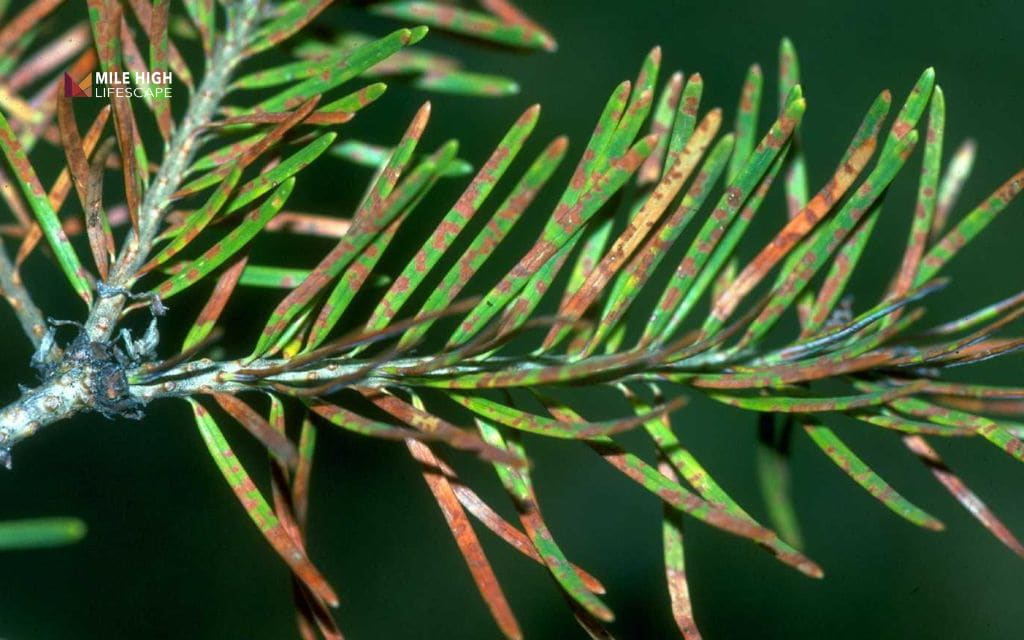
Needle cast
Needle cast diseases attack the needles directly and cause them to discolor and drop earlier than normal. Symptoms typically begin on the lower, inner branches and move upward and outward over one to two growing seasons. Affected needles often show small dark spots or bands before turning brown and falling, leaving bare branches with healthy growth only at the tips.
Needle cast fungi spread through spores released from infected needles, often during wet spring weather. Spruce trees are particularly susceptible, though pines can develop similar needle cast diseases. Trees growing close together with poor airflow face higher risk, since damp conditions let spores spread between branches and neighboring trees.
Tip blight
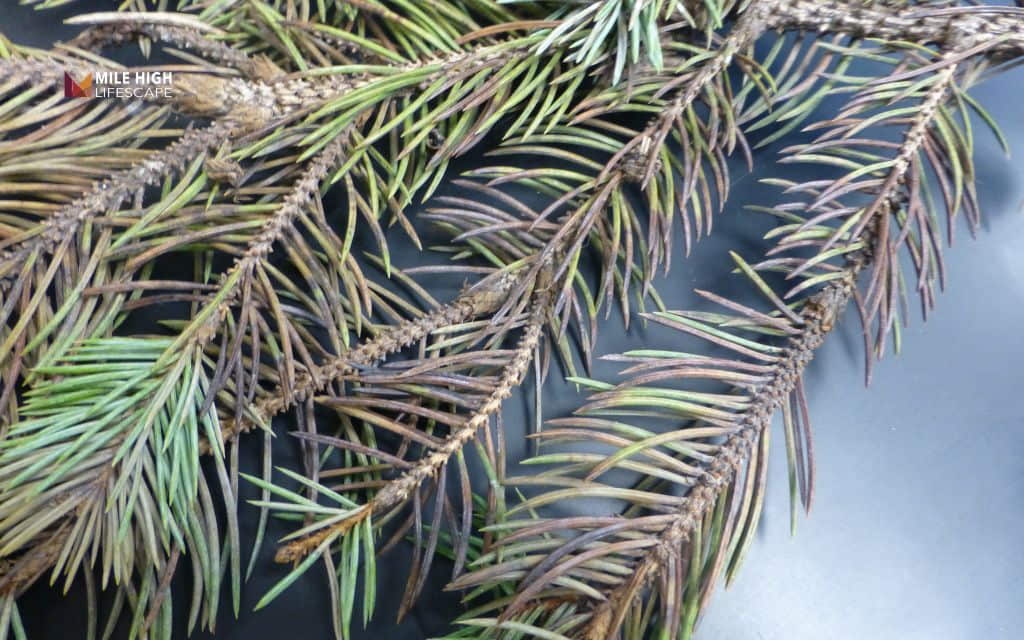
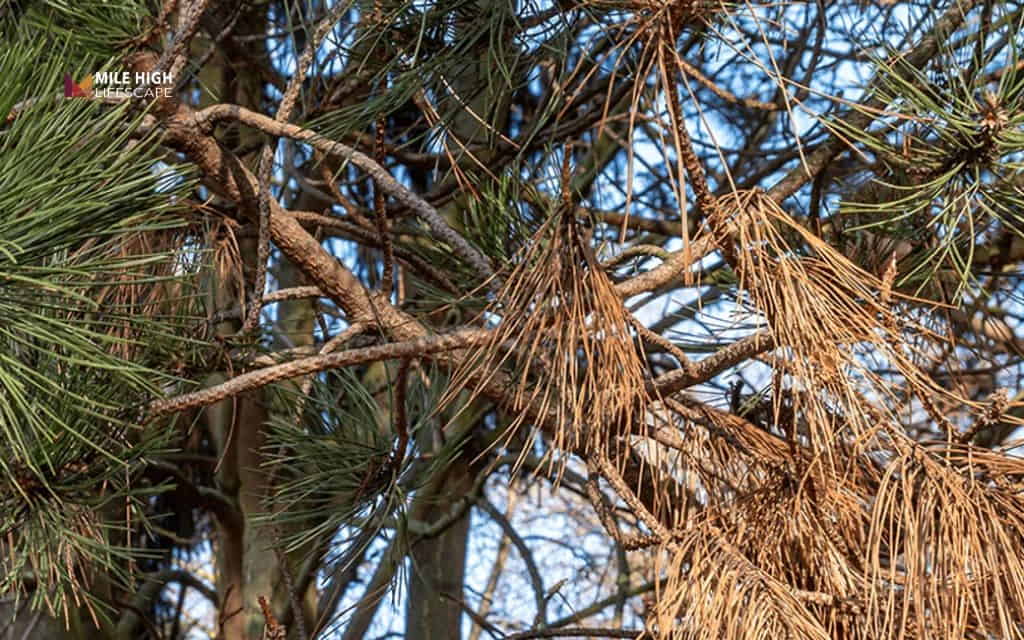
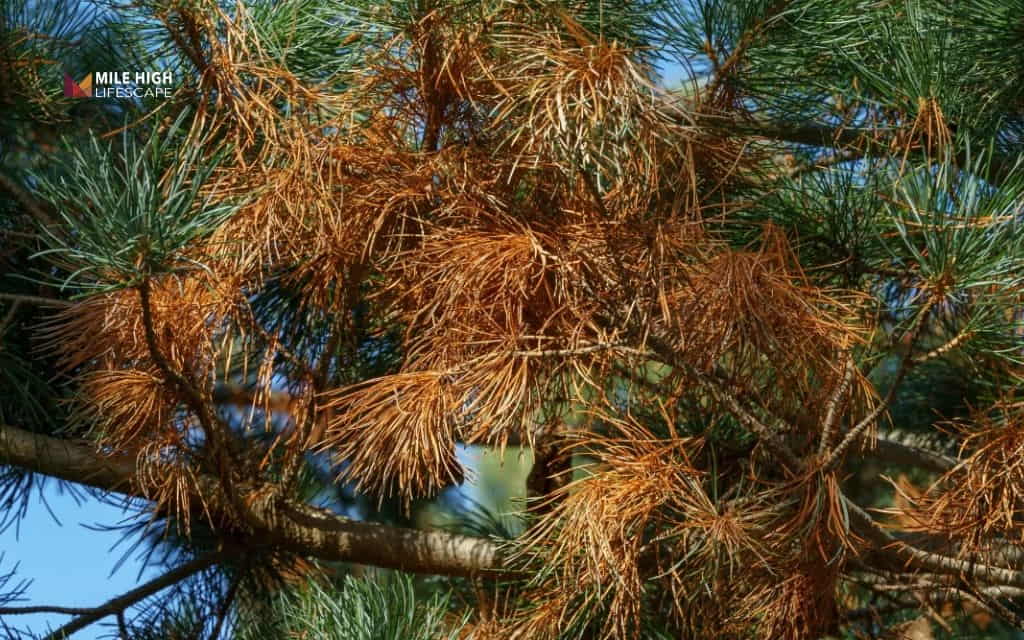
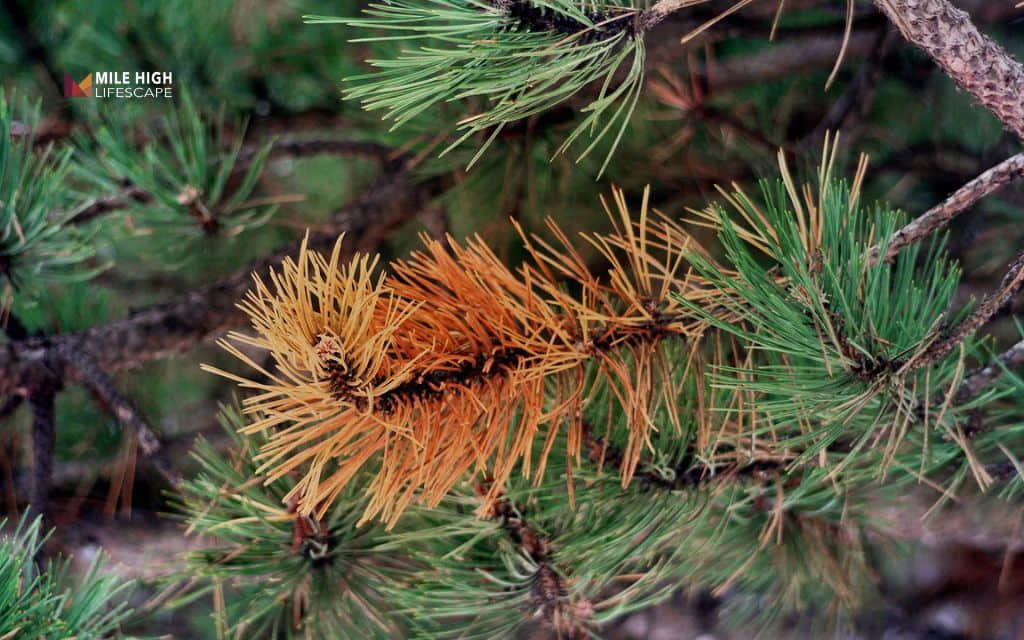
Tip blight kills new growth at the ends of branches while older growth often remains green. New shoots turn brown or tan, may curl, and stop extending, giving the tree a stunted, uneven appearance at the canopy’s outer edge. Small dark fruiting structures sometimes appear on the dead tissue.
This disease commonly affects pines, particularly under stress from drought, soil compaction, or wounds from pruning or storm damage. The fungus enters through damaged tissue and spreads fastest in warm, humid conditions. Repeated infection over several years can kill entire branches.
Canker disease
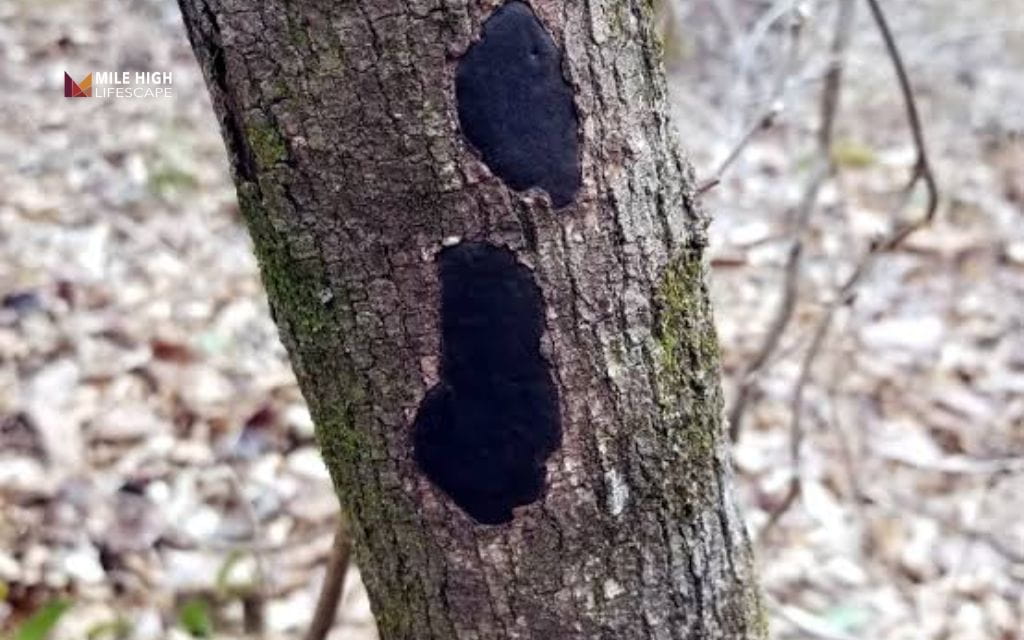
Canker disease creates sunken, discolored patches on branches or the trunk where bark and the tissue beneath it die. Resin or sap often oozes from these cankers, and the bark around them may crack or appear darker than healthy tissue. Branches beyond a canker frequently wilt and die, since the canker blocks the flow of water and nutrients.
Canker fungi typically infect trees already weakened by drought, mechanical injury, or poor growing conditions. Spruce is especially prone to this group of diseases, and infection often spreads through rain splash, wind, or insects that carry spores from branch to branch.
Root rot
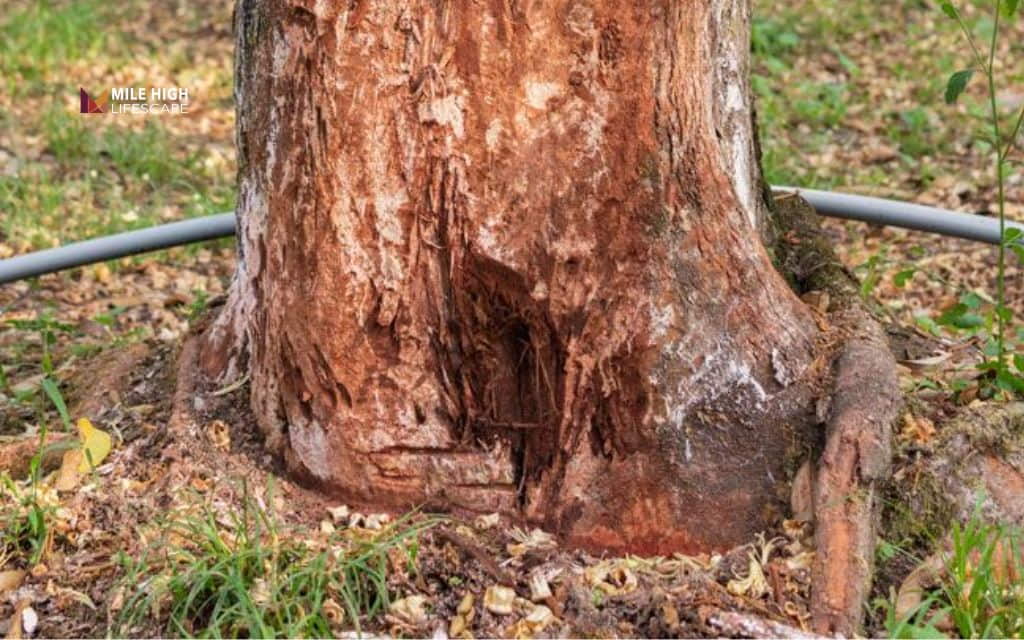
Root rot develops below the soil line and is harder to spot early, since symptoms above ground can resemble general decline. Affected trees may show a thinning, off color canopy, slowed growth, or a sudden lean as the root system weakens. Digging near the base sometimes reveals soft, dark, or foul smelling roots.
This disease thrives in wet, poorly drained soil where water sits around the roots for extended periods. Several different fungi cause root rot, and most evergreen species become vulnerable when planted in heavy clay or low lying areas without adequate drainage.
Rust diseases
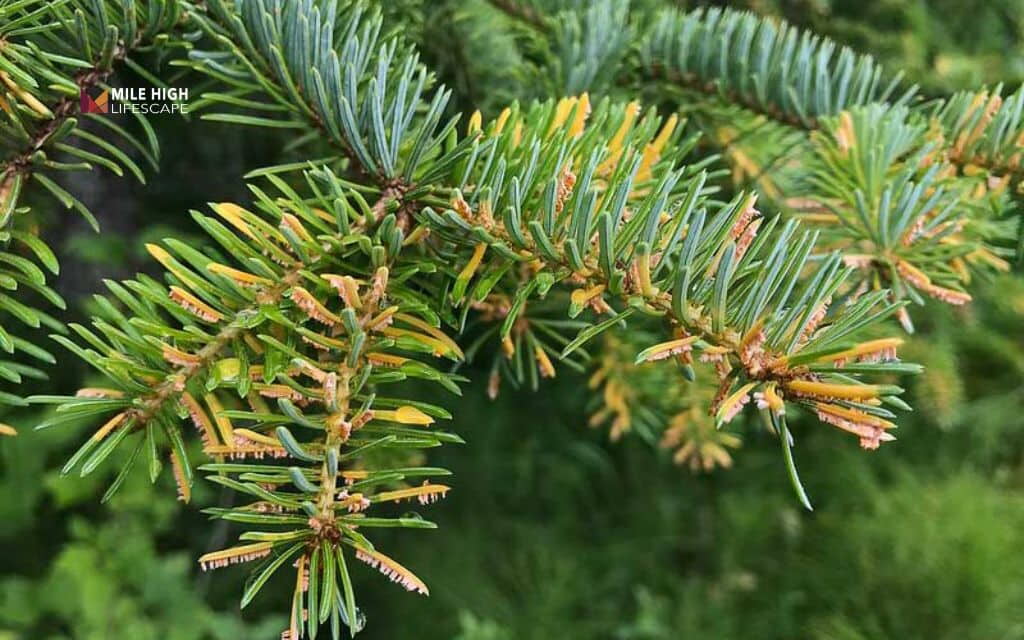
Rust diseases produce small orange or reddish spore masses on needles, stems, or small branches, giving infected tissue a distinctly rusty appearance. Affected needles often yellow and drop, and in some cases, swollen growths or witches brooms form on infected branches.
Rust fungi frequently require two different host plants to complete their life cycle, which is why these diseases often appear on evergreens planted near certain ornamental or fruit trees. Juniper and cedar are commonly affected, and infection tends to increase during wet spring weather when spores are most active.
Fungal decay
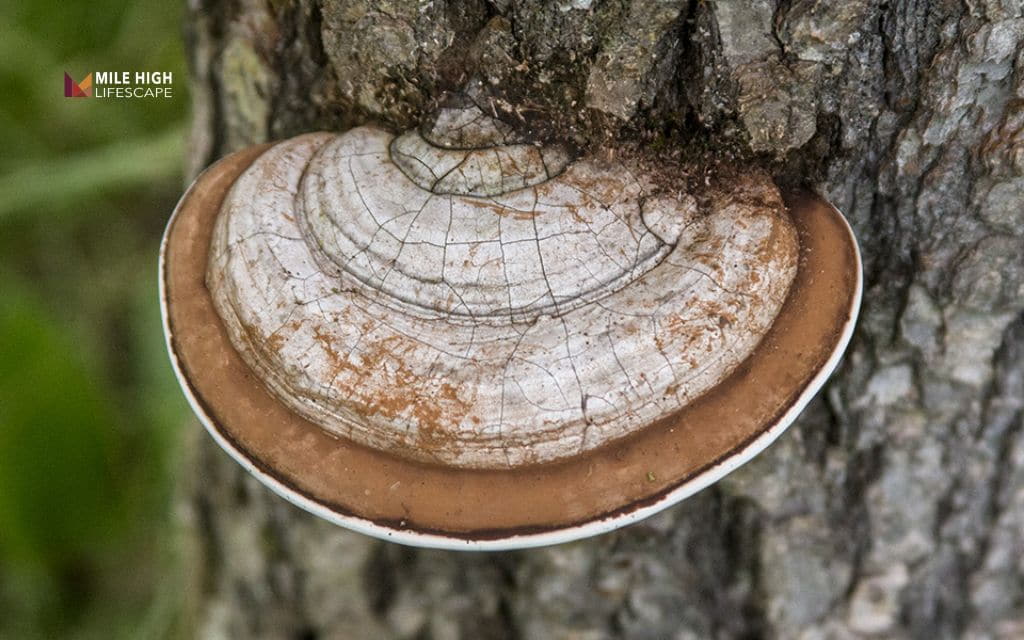
Fungal decay describes internal decline caused by wood decaying fungi that break down structural tissue inside branches or the trunk. Visible signs include shelf like growths on the bark, soft or crumbling wood near wounds, and branches that fail without obvious external damage.
This type of evergreen fungus usually enters through old wounds, pruning cuts, or storm damage rather than attacking healthy, undamaged bark. Because decay progresses inside the tree, the structural risk often exceeds what the cosmetic symptoms suggest, particularly on large or older specimens.
Learn more: Pine tree diseases
How symptoms vary by evergreen type
Evergreen species differ enough that the same disease can look different from one tree to the next. A full inspection should account for the species, not just the symptom.
| Evergreen type | Common disease pattern | What to check |
| Pine | Tip blight, needle cast, diplodia related dieback | New shoot tips, resin flow on bark, pattern of needle loss |
| Spruce | Cytospora canker, needle cast, root rot in wet soil | Lower branch dieback, sap on bark, soil drainage near roots |
| Arborvitae | Tip blight, winter burn that mimics disease, root rot | Browning pattern, whether damage favors one side, root and soil condition |
| Juniper | Rust diseases, tip blight, root rot in heavy soil | Orange spore masses, branch tip dieback, drainage |
| Cedar | Rust diseases, root rot | Rust colored growths, vigor at the base versus the canopy |
| Fir | Needle cast, root rot, canker | Needle retention, lower branch health, base of trunk |
| Yew | Root rot, winter injury | Soil moisture, evenness of browning, new growth in spring |
Evergreen tree disease treatment
Effective evergreen tree diseases treatment starts with removing the conditions that let disease spread, not just addressing visible damage:
- Pruning infected branches: Remove dead, dying, or infected branches to reduce fungal material on the tree and limit further spread, making cuts during dry weather and cleaning tools between cuts.
- Improving airflow: Space new evergreens properly and thin crowded branches on existing trees, since better airflow lowers humidity on the needles and bark and slows fungal growth.
- Watering at the soil level: Avoid overhead irrigation, since dry foliage reduces the spread of spores that rely on moisture to infect new tissue.
- Removing fallen needles and debris: Clear infected needles and branches from under the tree rather than leaving them, since many fungi survive in dead plant material through winter.
- Correcting drainage: Fix poor drainage through grading, raised planting beds, or improved drain systems to address root rot at its source rather than just the symptoms above ground.
Preventing the spread of evergreen tree diseases
Prevention matters most for evergreens planted as privacy screens, windbreaks, or property borders, since these trees stand close together and a single infected specimen can spread disease down the entire row.
- Proper spacing: Space new evergreens according to their mature size, rather than for an immediate full look, to keep airflow adequate as the trees grow.
- Routine inspection: Walk the tree line each season and check the lower, inner branches first, since most evergreen tree diseases begin there, so pruning can start before spores spread to neighboring trees.
- Prompt sanitation: Clean up fallen needles and pruning debris promptly, since this removes the habitat where fungi overwinter.
- Healthy watering and drainage: Keep trees properly watered with good drainage, since stressed trees resist infection less effectively than healthy ones.
- Avoiding mechanical damage: Avoid damage from mowers, string trimmers, and improper pruning, since wounds give canker and decay fungi an entry point.
- Seasonal timing: Watch closely in spring and early summer, when fungal spores are most active, and address new symptoms before they establish.
Disease or environmental stress?
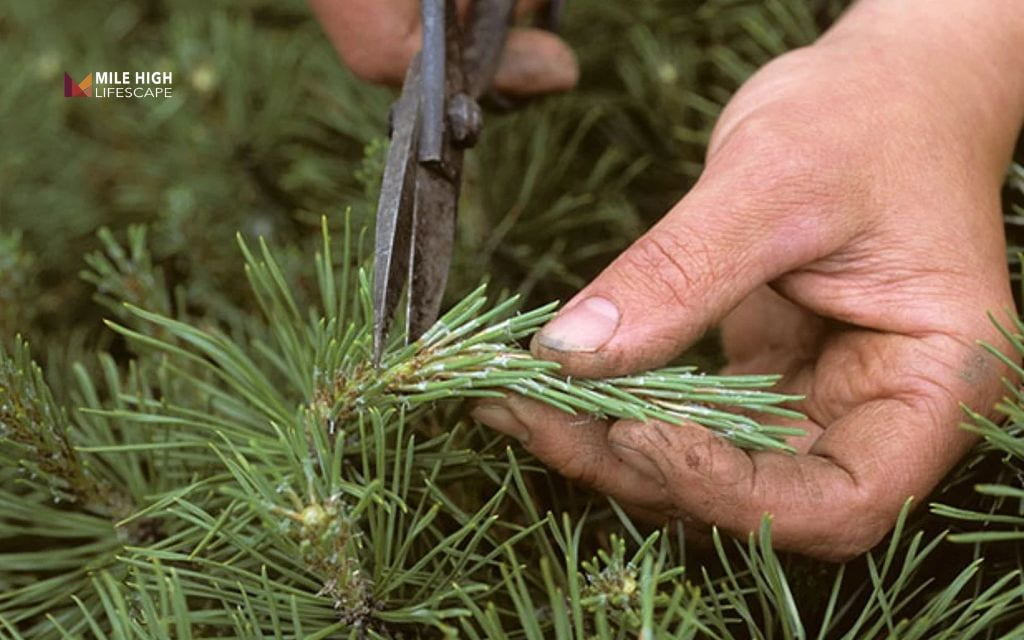
Not every brown evergreen has a disease. Weather causes many of the same symptoms, so ruling out the environment comes first. Winter burn and drought stress brown the tree evenly, often on the side facing wind or sun, and improve once conditions ease. Natural needle drop is seasonal and limited to the oldest, innermost needles.
Disease behaves differently. It starts at one point, usually the lower branches, spreads outward over weeks or months, and continues without treatment. If the damage matches a weather pattern, monitoring is often enough. If it spreads or comes with cankers, oozing sap, or root symptoms, the cause is more likely one of the evergreen tree diseases covered below.
Learn more: Pine tree pests
Conclusion
Evergreen tree diseases range from minor, manageable infections to serious problems that threaten the health of an entire privacy screen or windbreak. Recognizing symptoms early, ruling out environmental stress, and matching treatment to the specific disease and tree species gives evergreens the best chance to recover.
If you have noticed browning, thinning, or other signs of evergreen tree diseases on your property in the Denver Metro area, Mile High Lifescape team can inspect your trees and recommend the right next step. Call us at (303) 877-9091 to schedule an assessment.
If diseased, dead, or damaged limbs need to be removed, our Tree Branch Removal service can help eliminate hazardous branches and reduce the risk of further damage. Proper branch removal can also improve tree structure and support healthier long-term growth.
Frequently asked questions (FAQs)
Can a tree with evergreen tree diseases recover?
Many trees recover with early pruning, improved drainage, and better airflow, especially when the disease is caught while it affects only a portion of the canopy. Trees with extensive root rot or trunk decay have a lower chance of recovery and may need removal.
Will evergreen tree fungus spread to nearby trees?
Yes. Most evergreen tree diseases spread through spores carried by wind, rain, or insects, which is why inspecting and treating nearby evergreens matters once one tree shows symptoms.
Is brown evergreen foliage always a sign of disease?
No. Seasonal needle drop, winter burn, and drought stress all cause browning without disease being present. Checking the pattern and timing of the browning helps tell the difference.
How can I tell which disease is affecting my tree from pictures alone?
Evergreen tree diseases photos can offer a general comparison, but many diseases produce similar discoloration. Confirming the cause usually requires checking the pattern of spread on the actual tree, not photos alone.
Do all evergreens get the same diseases?
No. Pine, spruce, arborvitae, juniper, cedar, fir, and yew each have different susceptibilities, so the same symptom can point to a different disease depending on the species.