Fescue vs bermuda comes down to climate. Tall fescue is a cool-season grass that handles shade and cold, while bermuda grass is a warm-season grass built for heat and full sun. This guide compares both on 9 points and shows which one fits a Denver lawn, whether you plan a new lawn, a renovation, or a fix for patchy turf.
Fescue vs bermuda at a glance
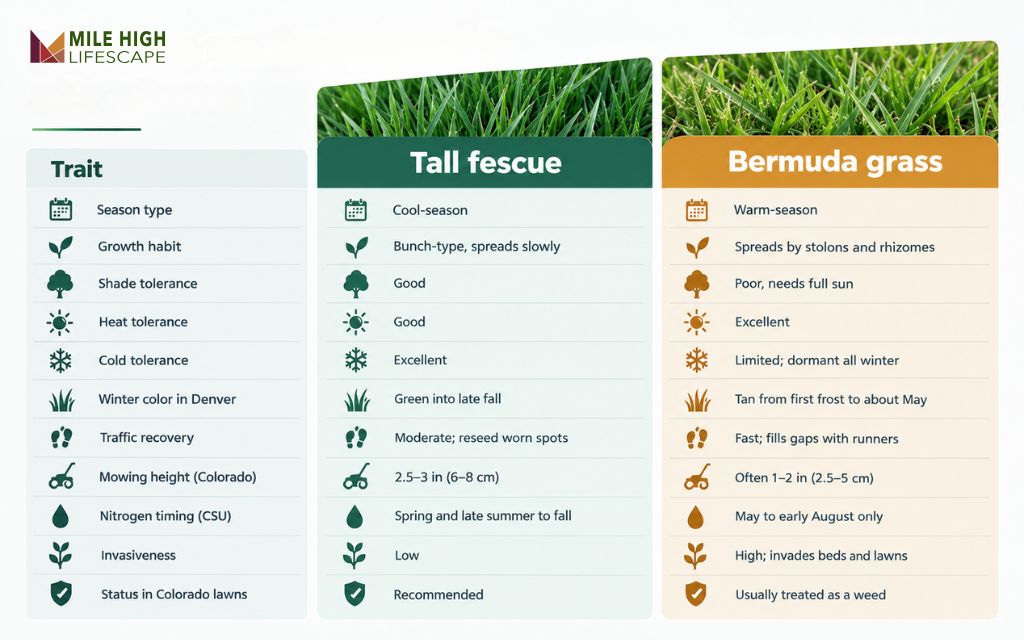
The core difference between fescue and bermuda is season type. Tall fescue grows in cool weather and keeps its color; bermuda grows in hot weather and goes dormant in cold. The table below lines up 11 traits.
| Trait | Tall fescue | Bermuda grass |
| Season type | Cool-season | Warm-season |
| Growth habit | Bunch-type, spreads slowly | Spreads by stolons and rhizomes |
| Shade tolerance | Good | Poor, needs full sun |
| Heat tolerance | Good | Excellent |
| Cold tolerance | Excellent | Limited; dormant all winter |
| Winter color in Denver | Green into late fall | Tan from first frost to about May |
| Traffic recovery | Moderate; reseed worn spots | Fast; fills gaps with runners |
| Mowing height (Colorado) | 2.5–3 in (6–8 cm) | Often 1–2 in (2.5–5 cm) in the South |
| Nitrogen timing (CSU) | Spring and late summer to fall | May to early August only |
| Invasiveness | Low | High; invades beds and lawns |
| Status in Colorado lawns | Recommended | Usually treated as a weed |
What is tall fescue?
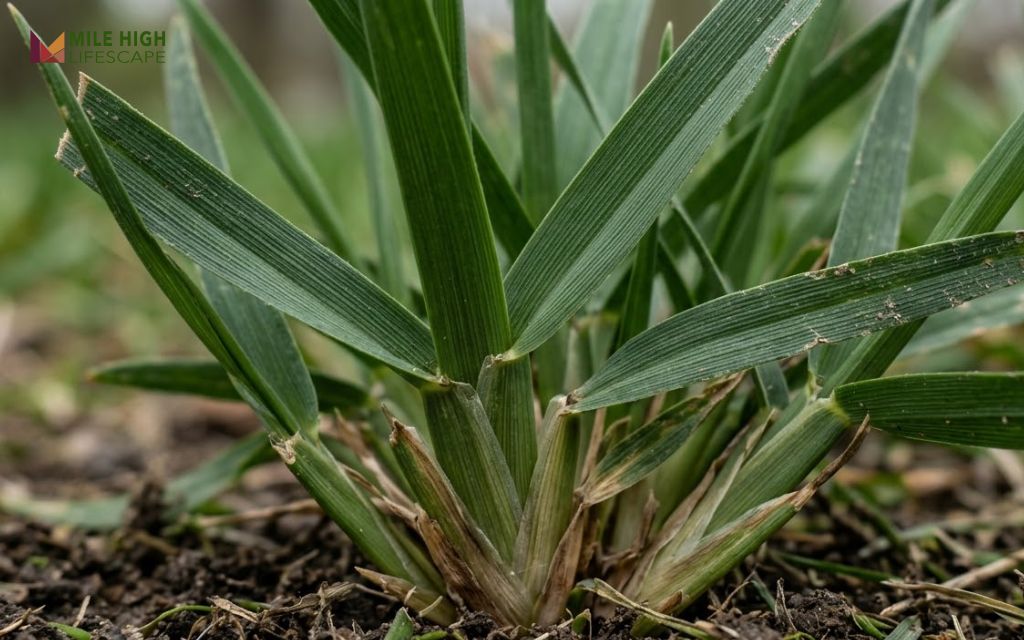
Tall fescue (Festuca arundinacea) is a cool-season, bunch-type grass with coarse, dark green blades and deep roots. Lawn seed uses turf-type tall fescue, which has a finer texture than the old pasture type.
CSU Extension discourages “Kentucky 31” (K-31) for lawns because it forms poor-quality turf. Turf-type blends mix 2 to 5 varieties and cost less than a single cultivar.
What is bermuda grass?
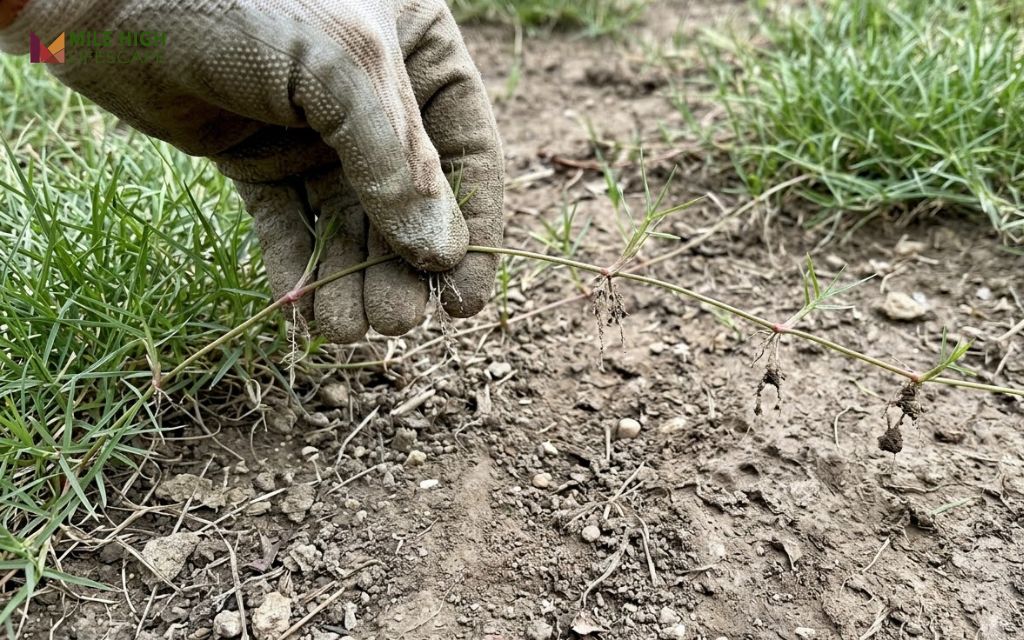
Bermuda grass (Cynodon dactylon) is a warm-season, sod-forming grass that spreads by above-ground stolons and underground rhizomes. It grows fastest in hot weather and forms the dense, low turf seen on Southern golf courses and athletic fields.
Common bermuda grows from seed, while many hybrid types go in as sod or sprigs. The same runners that heal worn turf also push bermuda into flower beds and neighboring lawns.
9 key differences between fescue and bermuda grass
The 9 differences below cover climate, light, water, heat, wear, color, mowing, feeding, and spread. Each one affects how the lawn looks and how much work it takes.
Climate and cold tolerance
Tall fescue grows best in cool spring and fall weather and has excellent cold tolerance. Bermuda grass grows best in summer heat and stops growing as nights cool. Cold winters set the northern limit for Bermuda, while long, humid summers set the southern limit for fescue.
In Colorado, tall fescue does most of its growing in spring and fall. Those 2 seasons are when cool-season lawns build roots, recover from summer, and respond to feeding.
Sun and shade
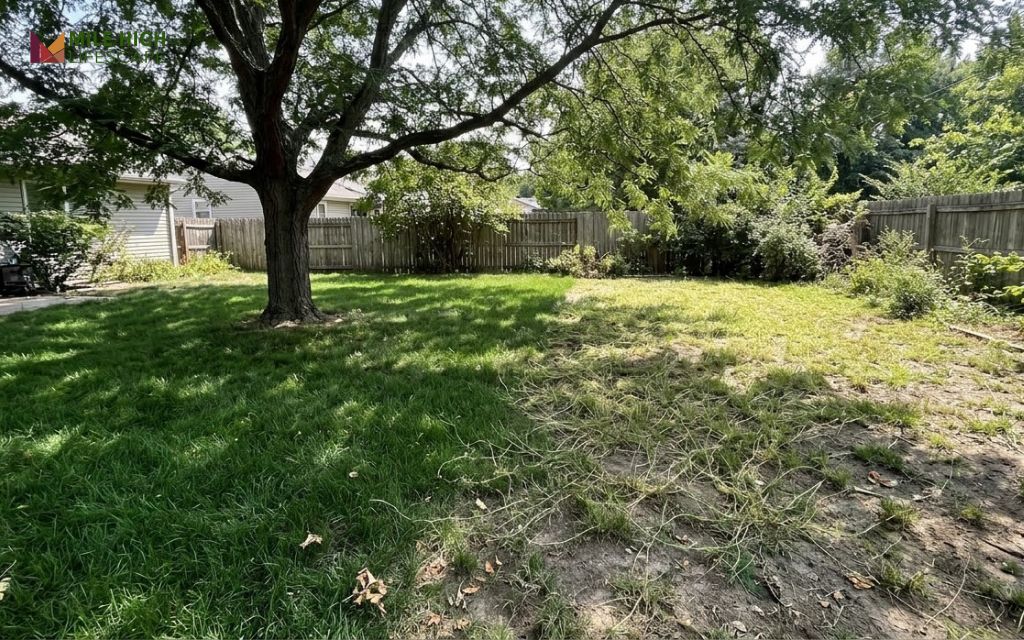
Tall fescue handles shade far better than bermuda. CSU lists shade performance among fescue’s advantages. Bermuda thins under trees and on the north side of buildings because it needs full sun for most of the day.
Water needs and drought tolerance
Neither grass is a no-water lawn. Bermuda survives drought by going dormant and greens up when water returns. Tall fescue avoids drought stress through deep roots, but only when the soil lets roots grow deep.
On shallow or compacted clay, CSU notes tall fescue may need as much water as Kentucky bluegrass, or more. A bluegrass lawn can use up to 2.25 inches (5.7 cm) of water per week in hot, dry, windy weather.
Heat tolerance
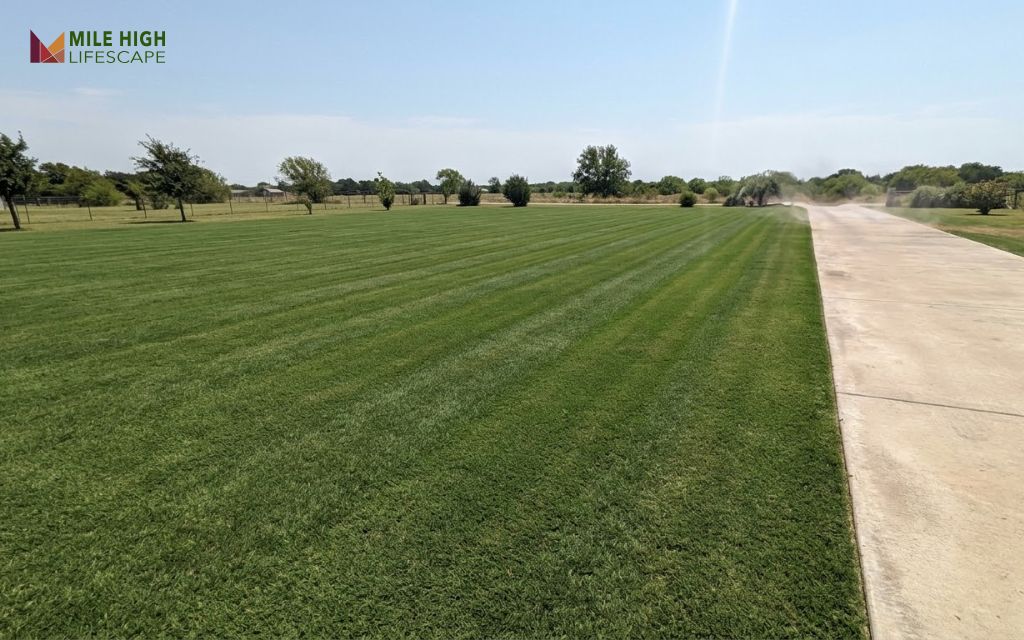
Bermuda grass handles heat better. It stays dense through long stretches above 90°F (32°C), the weather that stresses cool-season turf. Tall fescue tolerates heat well for a cool-season grass, yet thin spots may need fall overseeding after a hot summer.
Foot traffic and self-repair
Bermuda grass recovers from foot traffic faster because its runners fill bare spots. Tall fescue tolerates wear, but it grows in clumps and cannot spread into gaps. CSU notes that heavy use by children or pets can leave worn fescue areas that need overseeding.
Winter color and dormancy
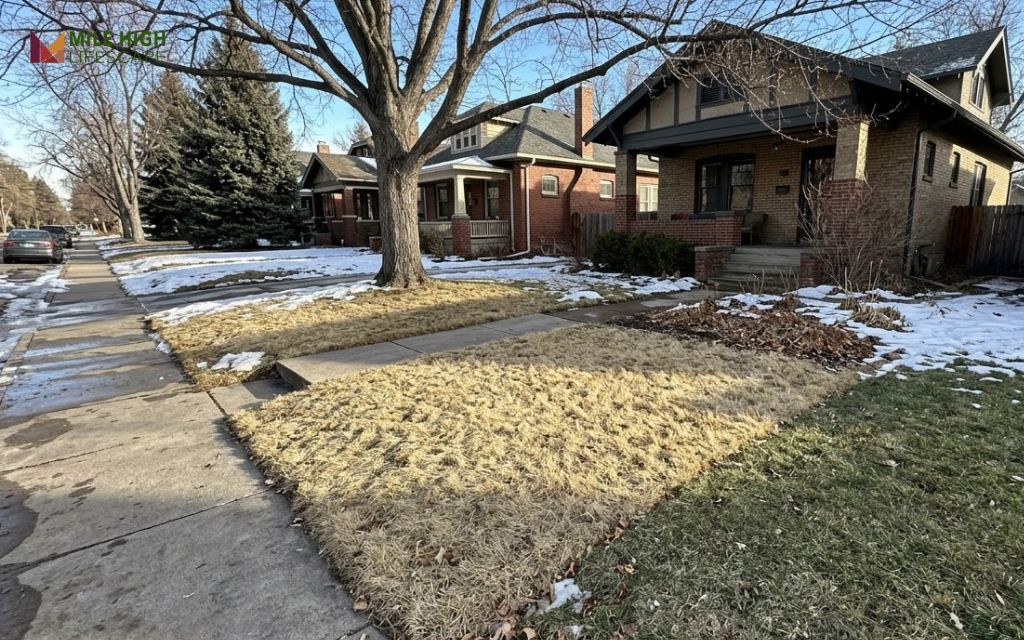
Tall fescue keeps its color longer into fall and greens up earlier in spring. Bermuda grass turns straw-colored after the first hard frost. In Colorado, warm-season grasses usually green up in May, so a bermuda lawn in Denver can stay tan for 6 to 7 months.
Mowing height and maintenance
CSU Extension recommends 2.5 to 3 inches (6–8 cm) for all Colorado lawn species, with 2 inches (5 cm) as the minimum. Southern bermuda lawns are often cut at 1 to 2 inches (2.5–5 cm), a height suited to warm, humid regions.
Remove no more than one-third of the blade per cut. Sharpen mower blades every fourth mowing, since fescue leaves shred under a dull edge. Keep the same height all year; CSU sees no reason to cut shorter in late fall.
Fertilizer needs
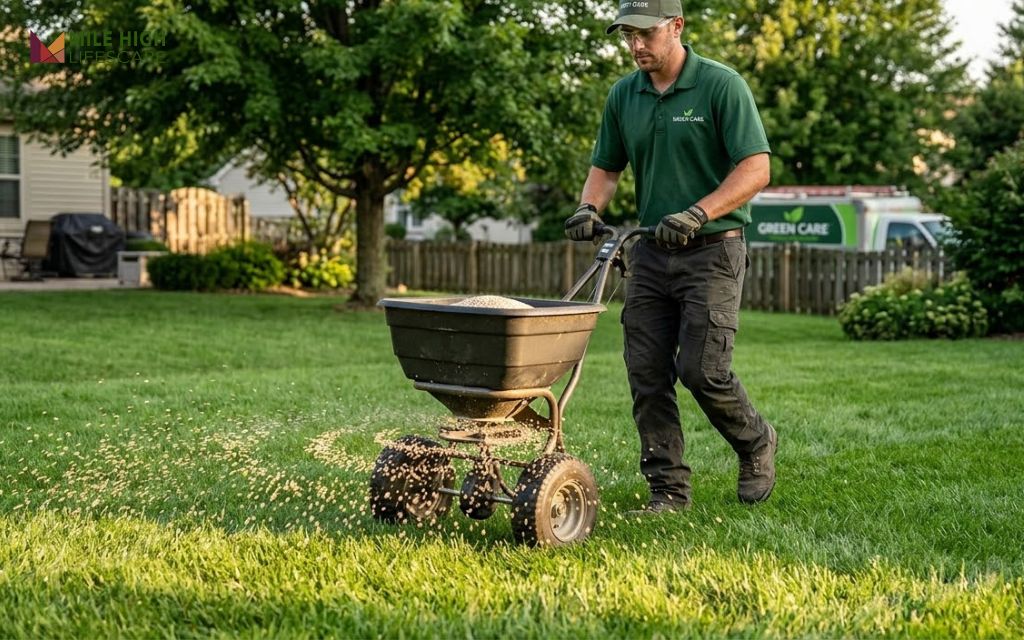
Tall fescue takes most of its nitrogen in spring and late summer. CSU suggests 1/2 lb of nitrogen per 1,000 sq ft (0.24 kg per 100 m²) in March or April, 1/2 to 1 lb in May to mid-June, and 1 lb (0.49 kg per 100 m²) from mid-August to mid-September.
Bermuda grass takes nitrogen only while it grows, from May to early August, at 1/2 to 1 lb per feeding. Fertilizer on dormant bermuda wastes product.
Invasiveness
Bermuda grass is invasive in lawns and beds. Its stolons and rhizomes cross edging, mulch, and sidewalk cracks, and CSU calls it difficult to eradicate once established. Tall fescue stays in place and is slow to invade flower and vegetable gardens.
Where each grass grows best and what the transition zone means
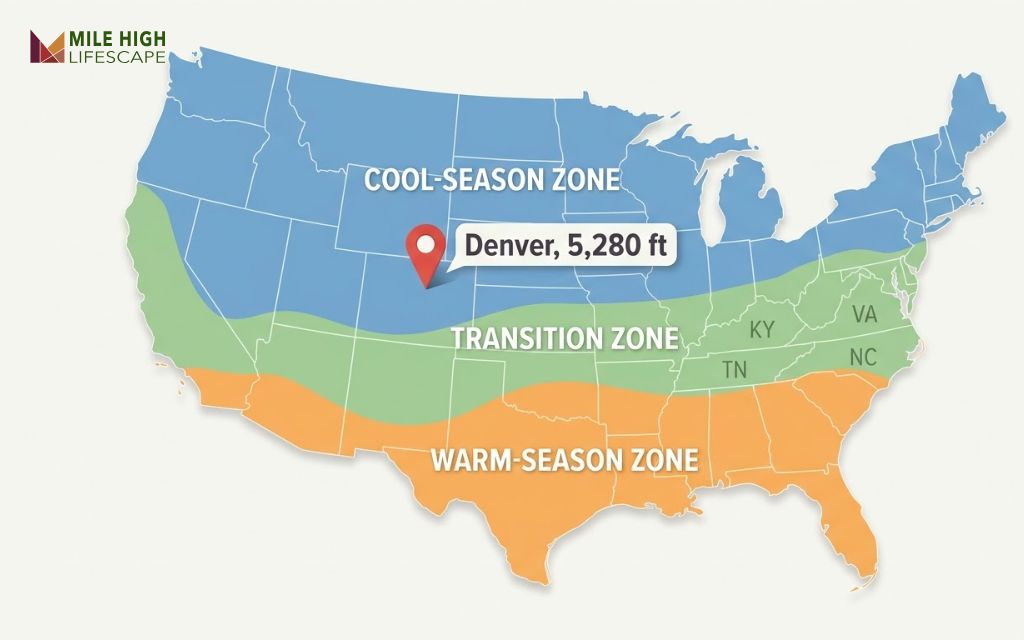
Location settles most fescue vs bermuda debates. Bermuda leads in the Southern US, tall fescue performs across cooler regions, and both overlap in the transition zone. That band includes Tennessee, Kentucky, Virginia, and North Carolina.
Homeowners in the transition zone trade summer toughness against winter color. That trade-off is why most comparisons end with “it depends.” Denver sits outside that band, at high elevation, in USDA hardiness zones 5b to 6a.
Fescue vs bermuda in Denver and Colorado
For most Denver lawns, tall fescue or another cool-season grass is the practical choice. The 4 local factors below explain why: grass recommendations, winter survival, soil, and water rules.
Why tall fescue fits most Front Range lawns
CSU Extension lists turf-type tall fescue among grasses that work well for Colorado lawns. The same list includes Kentucky bluegrass, fine fescues, buffalograss, and blue grama. Bermuda grass is not on it.
Tall fescue also tolerates salty soils better than bluegrass and rarely builds thatch. On Denver Metro properties, we see fescue blends hold up well under trees and in busy backyards when the soil is prepared first.
Field results from Colorado Springs Utilities point the same way. In its water-wise demonstration garden, tall fescue stayed green under twice-weekly watering while nearby bluegrass developed brown spots.
Can bermuda grass survive Denver winters?
Yes, some bermuda grass survives Denver winters. CSU reports naturalized bermuda across Colorado, even in the northern counties. The cultivars Yukon and Riviera have persisted in Fort Collins research plots since 2005.
Survival does not make a good lawn. Bermuda stays tan through most of the cool season, and CSU treats it as a weed in most lawn settings.
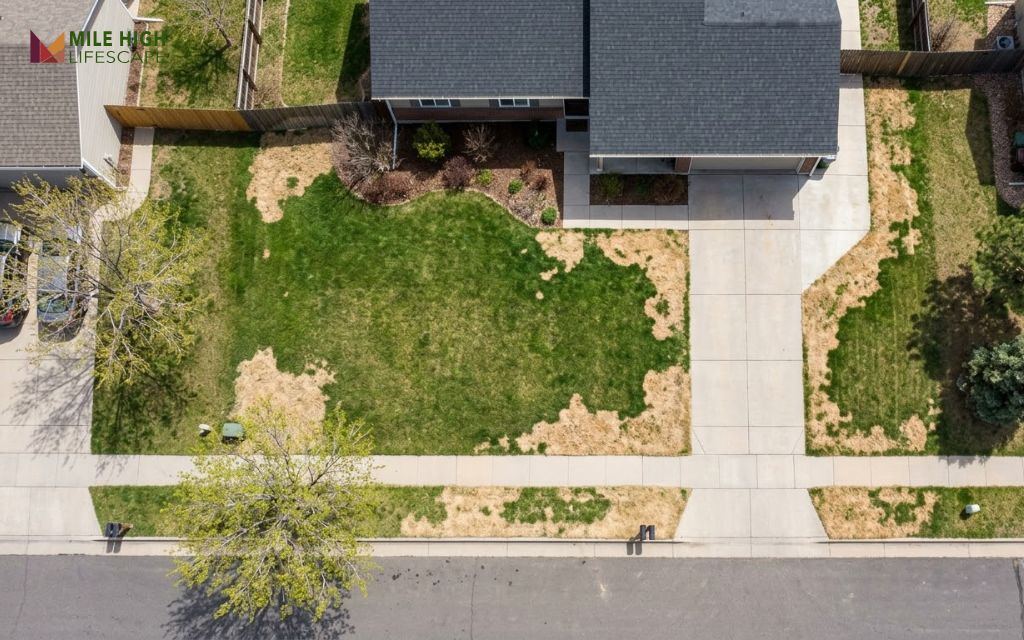
Clay soil, elevation, and water at 5,280 feet
Denver sits at 5,280 feet (1,609 m), with a semi-arid climate and heavy clay in many neighborhoods. CSU warns that shallow, gravelly, or clay soils along the Front Range block deep rooting in tall fescue.
Lawn aeration and compost before planting give roots room to reach water. On clay, CSU suggests 1 to 1.5 inches (2.5–3.8 cm) of water to wet the root zone 6 inches (15 cm) deep.
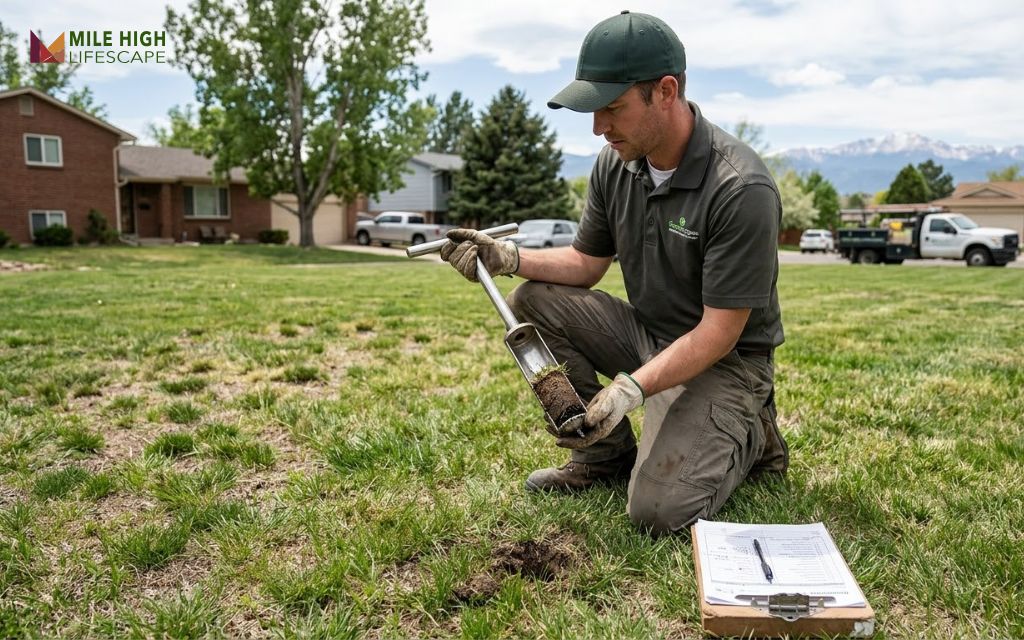
Test the soil before you choose seed or sod. The CSU Soil, Water and Plant Testing Laboratory reports pH, salts, and nutrients, so you amend only what the lawn lacks.
Watering grass under Denver’s 2026 drought rules
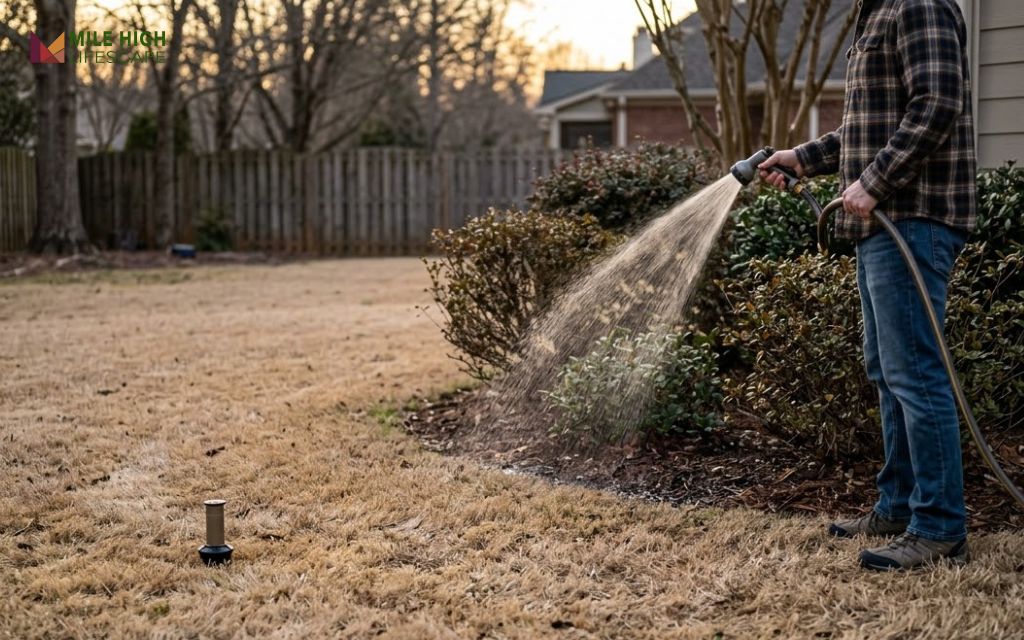
As of October 13, 2026, Denver Water prohibits lawn watering and all spray irrigation. The ban began October 1 under the utility’s Stage 1 drought declaration and stays until its board decides when watering can resume.
Hand-watering trees, shrubs, and perennials remains allowed. New grass establishment also stopped after September 30, so seeding or sodding now puts the investment at risk. Check Denver Water’s site before you plan a spring lawn project.
Fescue sod vs bermuda sod: seed or sod?
Seed is the usual way to start tall fescue in Colorado, because fescue sod is less available than bluegrass sod and costs more. CSU suggests 6 to 8 lb of seed per 1,000 sq ft (2.9–3.9 kg per 100 m²). Late August through September is the best window, with late April to early June as a backup.
Sod gives an instant lawn, controls erosion on slopes, and blocks early weeds. Bermuda sod suits Southern climates, but in Denver a sodded bermuda lawn still faces a long dormant season.
Read the seed tag before you buy. Look for named turf-type tall fescue varieties and avoid K-31, which CSU rates as poor lawn quality.
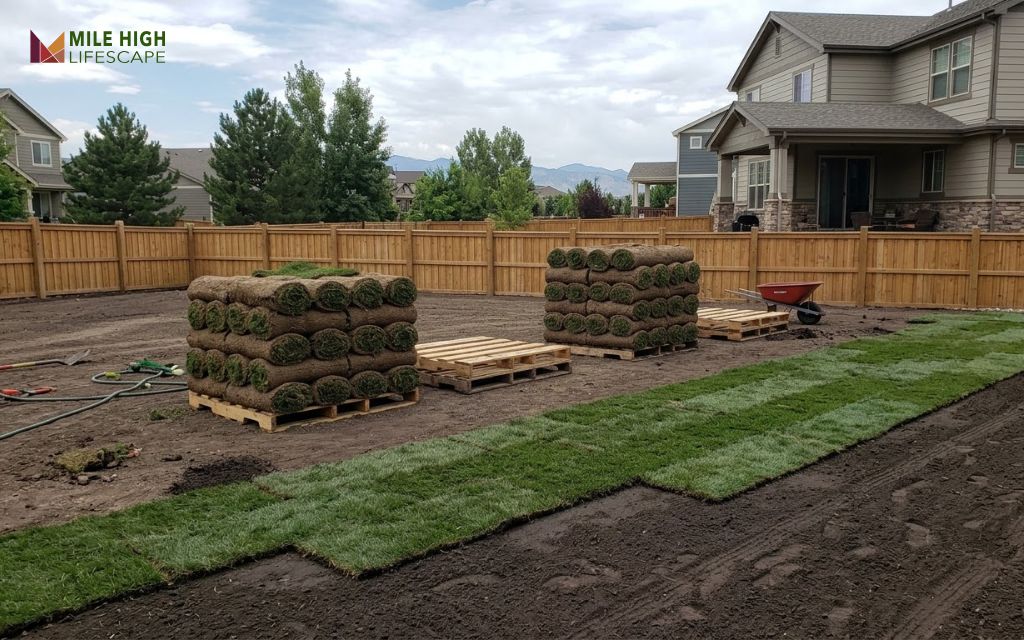
Sod installation in Denver with Mile High Lifescape
Mile High Lifescape provides Sod Installation for homes and properties across Denver Metro. We serve Denver, Lakewood, Littleton, Centennial, Broomfield, Thornton, Westminster, and Highlands Ranch.
With over 20 years of experience, our team matches the grass to your sun, soil, and traffic. Every project follows applicable building codes and proven landscaping techniques. A typical install covers 4 steps:
- Assess the site for sun hours, drainage, slope, and foot traffic.
- Prepare the soil by grading, loosening compacted clay, and adding compost.
- Lay the sod with tight, staggered seams and firm soil contact.
- Plan the watering around Denver Water rules and your sprinkler coverage.
Because of the 2026 watering ban, we time new sod to the season when establishment watering is allowed.
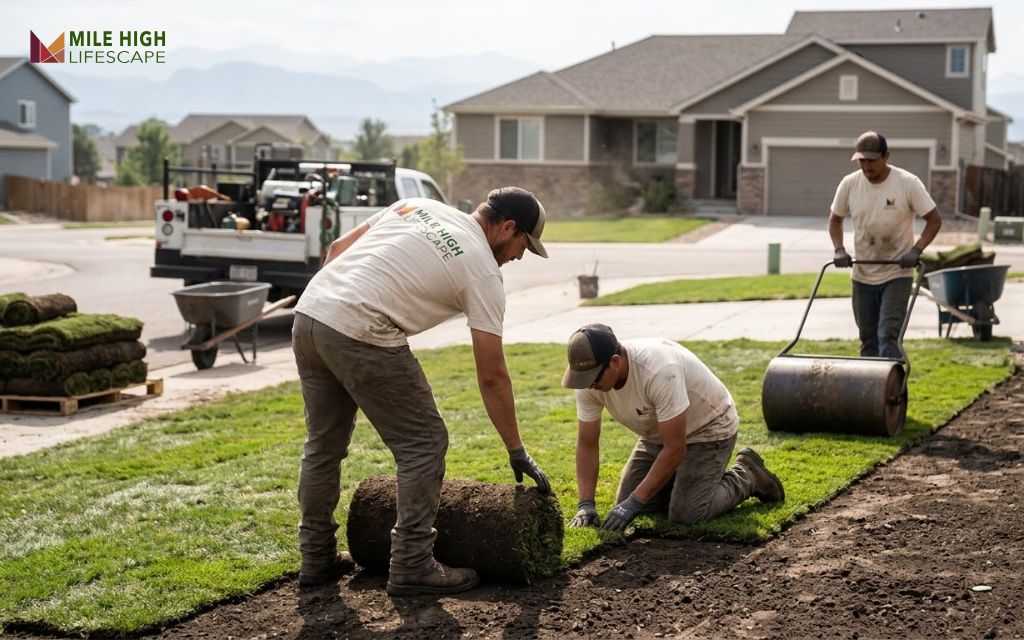
Bermuda grass creeping into your fescue lawn? Here’s what to do
Tan patches that stay brown after the rest of the lawn greens up in spring often mark bermuda grass. The CSU Jefferson County plant clinic names warm-season grass as a common cause of patchy spring lawns in Colorado.
Treat bermuda only while it is green and growing, because herbicides fail on dormant bermuda. CSU advises spot-spraying a non-selective herbicide, such as glyphosate, 2 to 3 feet (0.6–0.9 m) past the visible patch.
Repeat 2 to 3 more times at 3- to 4-week intervals, then reseed with cool-season grass. Always follow the product label, and scout for regrowth for a few years.
Can you mix fescue and bermuda?
Mixing fescue and bermuda does not work well in Colorado. The 2 grasses green up and go dormant at different times, so the lawn looks patchy for much of the year. Southern lawns sometimes overseed bermuda with ryegrass for winter color, but Denver’s short warm season makes that extra work.
Switching from bermuda to tall fescue
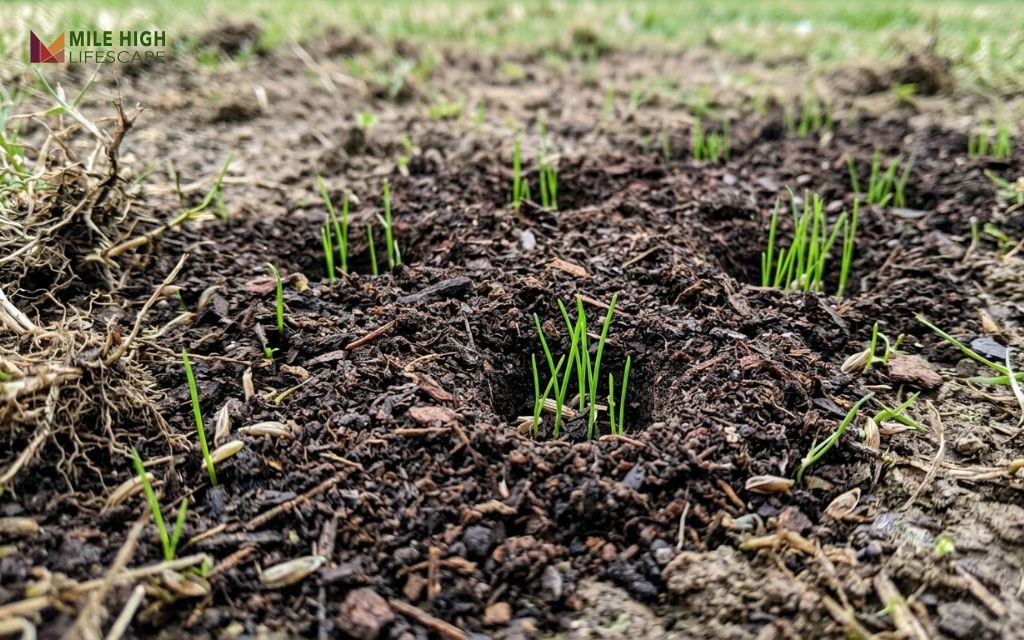
Switching from bermuda to tall fescue takes 1 full growing season. Kill the bermuda with repeated summer treatments, aerate and amend the soil, then seed tall fescue in late August or September. Water rules must allow establishment before you seed.
How to choose: a 4-question decision checklist
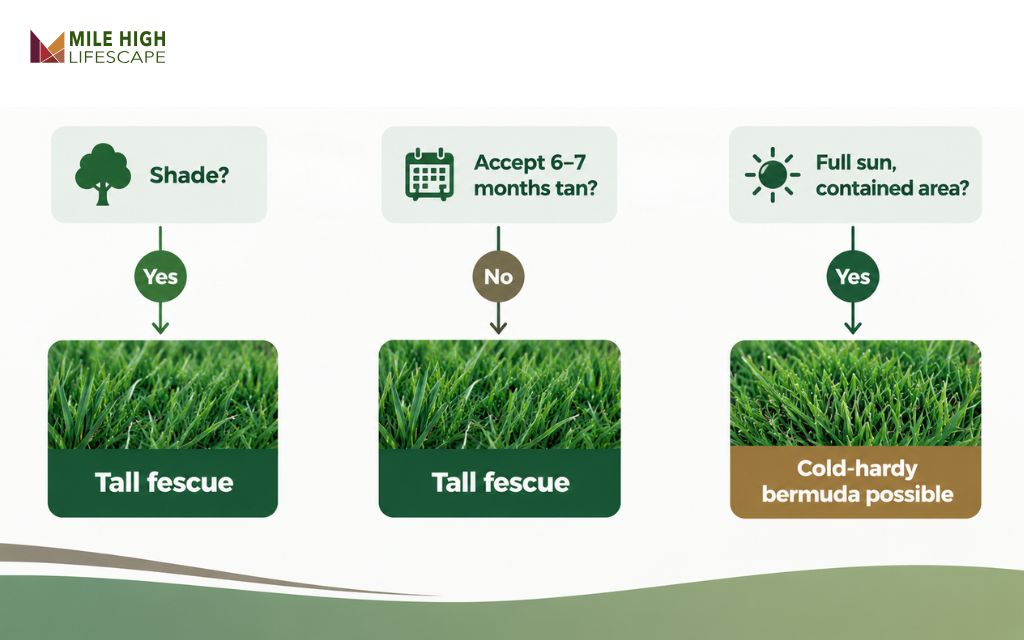
Answer these 4 questions before you buy seed or sod:
- Sun: How many hours of direct sun does the lawn get? Shade points to fescue.
- Use: Will kids, dogs, or guests wear paths across it? Plan for fescue overseeding.
- Water: Can your soil and sprinklers support deep, infrequent watering? Clay needs prep first.
- Color: Can you accept a tan lawn for 6 to 7 months? If not, skip bermuda.
- Pick tall fescue for most Denver yards. Consider bermuda only for a contained, full-sun area away from beds, using a cold-hardy cultivar.
Other lawn options worth considering in Colorado
Colorado lawns have 4 other proven grass options beyond tall fescue:
- Kentucky bluegrass is the most widely used lawn grass in Colorado and repairs itself through rhizomes, but it needs more water and fertilizer.
- Fine fescues handle shade and high elevation and need little fertilizer.
- Buffalograss is a native, low-water grass that turns tan from fall frost to mid or late May.
- Blue grama is a native grass with low water needs, suited to areas below 6,500 feet (1,981 m).
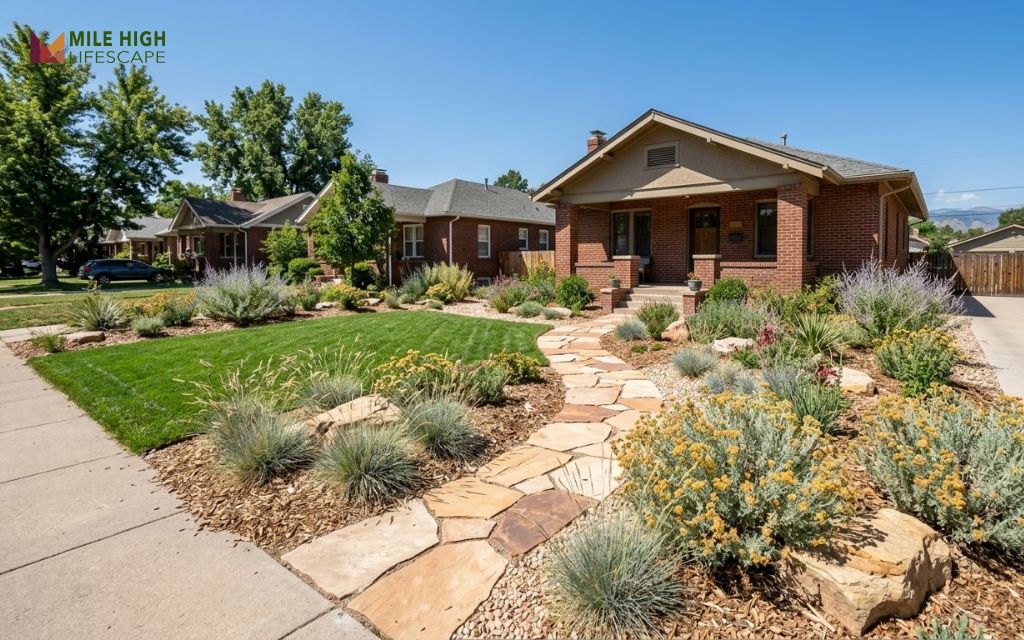
Shrinking the lawn is another path. Xeriscape landscaping replaces thirsty turf with plants and hardscape suited to Colorado’s dry climate.
When to call a lawn care professional
Call a professional when the fescue vs bermuda question turns into a lawn problem that outlasts one season. Common triggers include tan patches that never green up, bermuda crossing into beds, and thin fescue under trees. A planned renovation or uneven sprinkler installation coverage are 2 more reasons.
Our lawn care services include fertilization and weed control, aeration and overseeding, and turf renovation. Call (303) 877-9091, email hello@milehighlifescape.com, or visit 1007 S Federal Blvd, Denver, CO 80219, Monday to Saturday, 8 am to 5 pm.
FAQs about fescue vs bermuda grass
Which is better, fescue or bermuda?
Tall fescue is better for cool climates, shade, and green color into fall; bermuda is better for hot, sunny climates and heavy traffic. In Denver, tall fescue fits most lawns
Is fescue or bermuda better for shade?
Tall fescue is better for shade. Bermuda thins in shade because it needs full sun for most of the day.
Does fescue or bermuda use less water?
Bermuda uses less water in hot weather and survives drought through dormancy. Tall fescue saves water only when deep soil lets its roots grow down.
Will bermuda grass take over a fescue lawn?
Yes, bermuda can spread into a fescue lawn through its runners. Thick fescue, mowed at 2.5 to 3 inches (6–8 cm), slows the spread.
Can bermuda grass grow in Colorado?
Yes, but CSU treats it as a weed in most Colorado lawns. Cold-hardy cultivars such as Yukon and Riviera survive yet stay tan for months.
When should I plant tall fescue in Denver?
Plant tall fescue from late August through September, or from late April to early June. Confirm Denver Water allows establishment watering first.
Is fescue sod available in Colorado?
Yes, but tall fescue sod is less common than bluegrass sod and usually costs more. Many Colorado homeowners start fescue from seed instead.
What is the best grass type for Denver lawns?
No single grass is best for every Denver lawn, but tall fescue wins the fescue vs bermuda choice for most yards. It suits shade and busy backyards, while Kentucky bluegrass suits irrigated sunny lawns and buffalograss suits low-water areas.