How much does river rock cost? River rock pricing feels deliberately confusing because it involves multiple measurement units, and varies between national averages and local Denver markets. Then you factor in delivery fees, installation labor, and those surprise costs no one mentions upfront.
This guide cuts through the confusion to deliver exactly what Denver homeowners need: clear price ranges, practical cost calculators you can actually use, and proven money-saving strategies specific to the Denver metro area.
Whether you’re tackling a small accent bed or transforming your entire front yard, you’ll finish this article knowing exactly how much river rock costs and how to budget your project with confidence.
How much does river rock cost in Denver?
National averages
River rock pricing across the United States follows predictable patterns. Most suppliers charge $45 to $130 per ton for standard river rock. The same material runs $50 to $160 per cubic yard, depending on quality and location.
The typical river rock project costs between $350 and $1,650 from start to finish. National data shows most homeowners spend around $650 to $700 total. This figure includes material, delivery, and basic installation for medium-sized projects.
What that likely means for Denver
Denver sits in the middle to upper range of national river rock pricing. Freight costs push prices higher here than in states with abundant local quarries. Regional demand from water-conscious homeowners creates steady competition among suppliers.
Based on national ranges adjusted for Denver conditions, expect to pay toward the mid to upper brackets. A project that costs $500 in a stone-rich region might run $650 to $750 here. Large projects see bigger gaps.
Final quotes depend on three factors: which supplier you choose, how much material you order, and when you schedule delivery. Spring and early summer see the highest demand and least flexibility on pricing. Late fall and winter often bring better deals.
See more: Landscape rock garden ideas Denver homeowners love
Understanding river rock pricing units
River rock cost per ton
When suppliers quote river rock by weight, the typical national range runs $45 to $130 per ton for the material itself. Weight-based pricing makes sense for stone products because it accounts for density variations between different rock types and sizes.
Here’s what matters for your project planning: 1 ton of river rock generally covers 55 to 135 square feet when spread at depths between 2 and 4 inches.
The exact coverage depends on stone size. Smaller stones compact tighter and cover more area per ton than large cobbles.
River rock cost per cubic yard
Volume-based pricing ranges from $50 to $160 per cubic yard nationally for river rock. Many suppliers prefer cubic yard pricing because it simplifies calculations for homeowners and contractors alike.
One cubic yard weighs 2,400 to 2,800 pounds – roughly 1.2 to 1.4 tons.
The exact conversion depends on stone density and moisture content. River rock with higher quartz content weighs more than softer sedimentary stones, and damp material fresh from a riverside source weighs more than thoroughly dried stone.
When you see a price per cubic yard, you can estimate the equivalent per-ton price by multiplying by 1.3, then dividing the total by 2,000 pounds per ton. This math helps you spot whether a “deal” from one supplier actually beats another’s pricing.
River rock cost per bag
Big-box home improvement stores sell river rock in bags for small projects and touch-ups.
Common bag sizes run around 0.5 cubic feet (about 40 to 50 pounds), with typical pricing between $5 and $20 per bag depending on stone quality and color.
This convenience comes at a significant premium. Let’s run the numbers: at $8 per half-cubic-foot bag, you’re paying roughly $432 per cubic yard once you account for the 27 cubic feet in a yard. That’s 3 to 8 times more expensive than buying bulk river rock by the yard or ton from a landscape supply yard.
Bags make sense for tiny projects under 10 square feet or for topping off a nearly complete installation. For anything larger, bulk delivery saves significant money despite the delivery fee.
Cost per square foot
Square footage pricing gives you the most practical way to budget your specific project.
- At 2-inch depth: Bulk river rock at mid-range Denver pricing ($90 per yard) costs approximately $0.50 to $0.75 per square foot for material only, or $2.00 to $3.50 per square foot installed professionally.
- At 3-inch depth: The same material costs roughly $0.75 to $1.00 per square foot for material only, or $2.50 to $4.25 per square foot with professional installation.
- At 4-inch depth: Material costs increase to approximately $1.00 to $1.35 per square foot, with installed pricing running $3.00 to $5.00 per square foot.
These installed figures include material, delivery, basic site preparation, landscape fabric, and labor for spreading and grading the stone.
See more: How to calculate landscape rock before your projects without overspending
River rock prices by type and size
Standard vs premium river rock
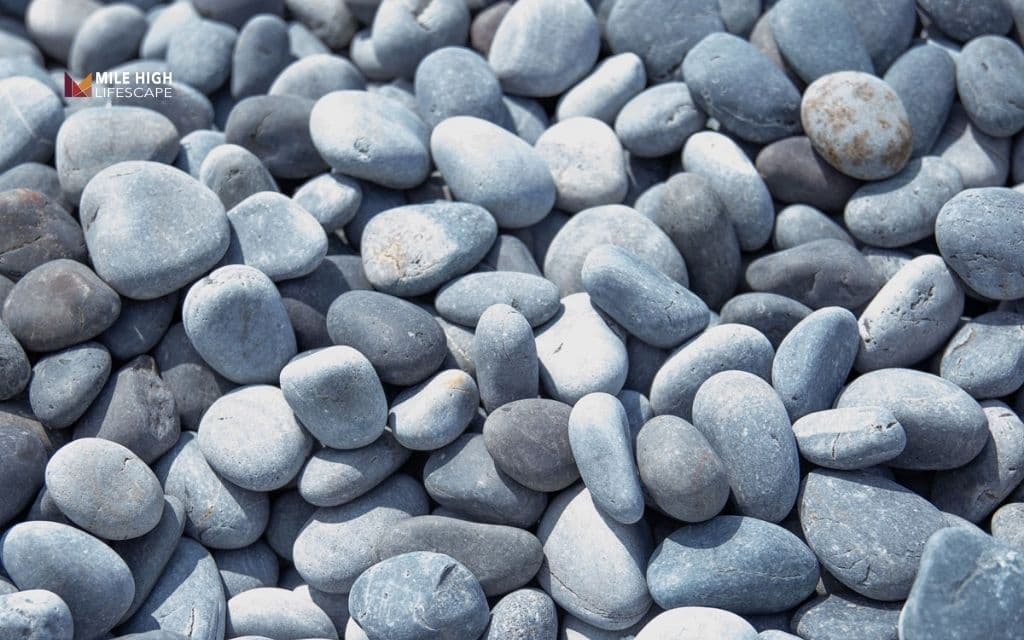
Standard river rock comes from local or regional quarries. It features mixed earth tones – grays, browns, tans, and occasional rust colors. This workhorse material handles most Denver landscaping projects. Prices stay within the mid-range of national averages.
Premium river rock elevates your design with specialty colors or rare sources. Pure white Mexican beach pebbles command premium prices. Black polished river rock imported from distant quarries costs more. Uniform-color stones sorted from mixed loads add sorting labor to the price.
Premium options can push costs 50 to 200 percent above standard ranges. A standard ton that costs $75 might run $110 to $225 for premium stone. Reserve premium materials for accent areas where they create maximum impact. Fill large areas with standard stone to control costs.
Size-based pricing
River rock size categories affect both pricing and application suitability:
- Pea gravel (1/4 to 3/8 inch): The smallest and often least expensive option at $50 to $90 per yard in Denver. Perfect for pathways, dog runs, and areas receiving foot traffic, but tends to migrate more easily than larger stones.
- Small river rock (3/4 to 1 inch): Mid-range pricing around $70 to $110 per yard. Excellent all-purpose size for most decorative beds, borders, and xeriscape gardens.
- Medium river rock (1 to 3 inches): Similar pricing to small stones, sometimes slightly higher at $75 to $120 per yard. Creates more dramatic texture and stays in place better on slopes.
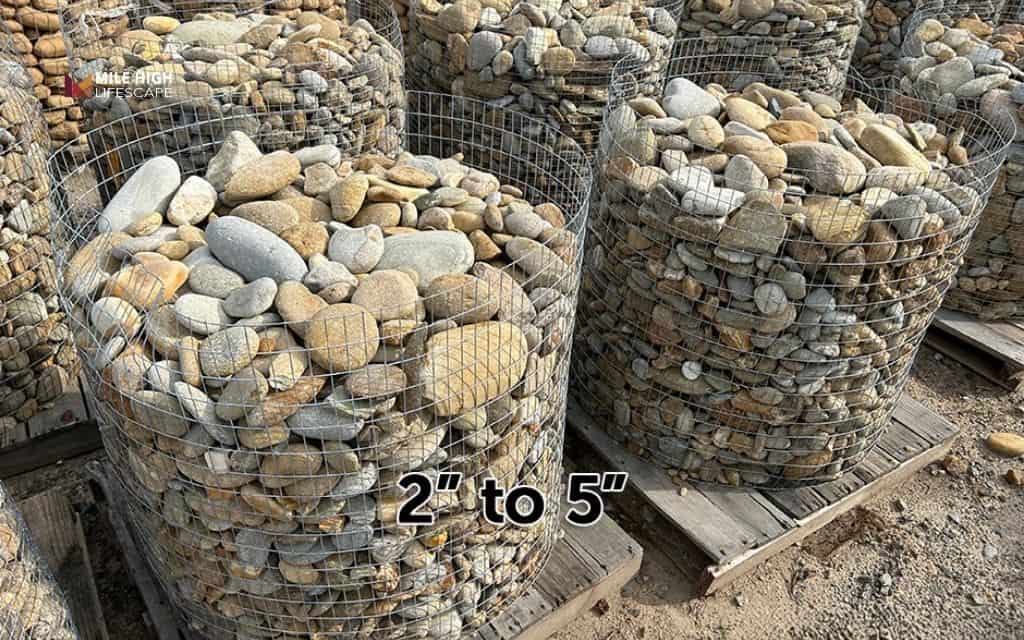
- Large river rock and cobbles (3 to 5+ inches): Premium pricing reaching $90 to $140+ per yard. These statement stones work well for dry creek beds, specimen accents, and areas where you want bold visual impact.
DIY vs professional installation
When DIY is a good fit
Tackling river rock installation yourself makes excellent financial sense when your project meets these conditions:
- Small to medium-sized beds measuring 50 to 300 square feet with straightforward layouts and easy access. You can handle the physical work without specialized equipment, using wheelbarrows, rakes, and basic hand tools you likely already own.
- Comfortable skill level with outdoor projects means you don’t mind physical labor and have some experience with basic grading and leveling.
- Flexible scheduling allows you to work at your own pace over several weekends rather than needing completion by a specific deadline.
- Minimal site preparation requirements like basically level ground without major drainage issues or slope stabilization needs. If your project just requires clearing weeds and laying fabric, DIY works perfectly.
When hiring a pro is smarter
Certain project characteristics justify the additional expense of professional installation:
- Steep slopes require proper grading and erosion control techniques to prevent stone migration. Professionals understand how to create terracing, install retention barriers, and angle drainage to keep your river rock in place.
- Drainage redesign or significant regrading needs professional assessment and execution. Getting water flow wrong leads to expensive erosion problems and potentially even foundation issues.
- Large quantities exceeding 4 to 5 yards of material become unwieldy for homeowners. Professional crews with machinery complete the same work in hours rather than days.
- Tight access situations where materials can’t reach the installation area via wheelbarrow might require specialized equipment like conveyor systems or machinery that homeowners don’t own.
- Complex designs incorporating multiple materials, intricate borders, or integrated hardscaping elements benefit from professional expertise and specialized tools.
Cost comparison
Let’s examine a typical 200-square-foot flower bed conversion to river rock at 3-inch depth. Your choice depends on budget, schedule, physical ability, and confidence in your skills.
| Cost Component | DIY Approach | Professional Installation |
| Material (2.5 cubic yards) | $225–$300 | $325–$400 |
| Landscape fabric | $40 | Included |
| Edging materials | $60 | Included |
| Delivery fee | $75–$125 | Included |
| Site preparation & labor | $0 (your time) | $350–$550 |
| Total Project Cost | $400 – $525 | $675 – $950 |
| Cost per square foot | $2.00 – $2.63 | $3.38 – $4.75 |
River rock vs other landscaping rock costs
River rock vs crushed gravel / decomposed granite
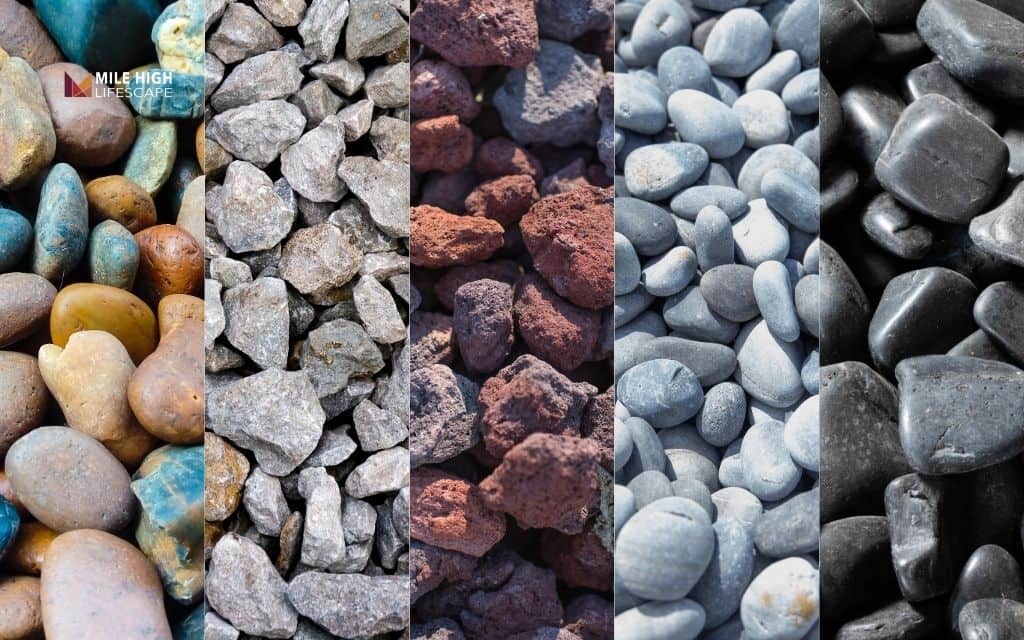
Crushed gravel costs less than river rock – typically $30 to $55 per ton compared to river rock’s $60 to $100 per ton range in Denver. Decomposed granite falls in a similar lower price bracket. These angular materials compact firm and work well for pathways and utility areas.
But river rock wins on aesthetics. The rounded, water-tumbled shape creates a finished look that crushed stone cannot match. Colors vary naturally within each load, adding depth and interest. The smooth texture feels pleasant underfoot on barefoot-friendly paths.
River rock vs lava rock, mexican beach pebbles & specialty stone
Lava rock brings a unique texture and natural red-brown color. Prices run $80 to $150 per ton – above standard river rock but worth considering for specific design goals. The porous surface holds heat and provides excellent drainage. Weight per cubic yard runs lighter than river rock, stretching coverage slightly.
Mexican beach pebbles command premium pricing. These smooth, uniformly colored stones cost $150 to $350 per ton depending on size and color purity. Pure white pebbles top the price range. Use these as accent stones in small, high-visibility areas rather than covering large beds.
Black polished stones and other specialty materials push toward the top of specialty pricing. These selections make sense for compact modern designs, container plantings, or architectural water features. One bag of specialty stone creates more impact than ten bags of standard river rock in the right application.
See more: https://milehighlifescape.com/river-rock-driveway/
Conclusion
The question “how much does river rock cost” stops being a mystery once you understand the complete picture. You know river rock prices range from $45 to $130 per ton nationally, with Denver typically landing in the mid-to-upper portion of that bracket.
You can convert tons to yards to square feet using the coverage formulas. You recognize that total project costs include material, delivery, site prep, fabric, edging, and labor and not just the stone itself.
Take three actions today.
- First, measure one project area you want to transform. Calculate the square footage. Decide on your preferred depth.
- Second, run the numbers using the formulas in this guide to estimate material needs.
- Third, contact two or three Denver suppliers for actual quotes based on your calculations.
Armed with knowledge, you negotiate confidently. You spot good deals and avoid overpaying. You make informed choices between DIY and professional installation. You select the right river rock type and size for your specific project. Most importantly, you move forward with your landscaping vision instead of staying stuck in the planning phase.
===================
For nearly two decades, Mile High Lifescape has served the Denver Metro area as the trusted landscape company. Our landscape rock service guides homeowners through material selection, provides accurate estimates, and delivers professional results.
Contact us at (303) 877-9091 or hello@milehighlifescape.com for personalized advice on your river rock project.
Frequently asked questions (FAQs)
How much does river rock cost per ton?
River rock costs $45 to $130 per ton across national markets. Denver pricing typically falls between $60 and $100 per ton for standard mixed-color river rock. Premium colors, specialty sources, or sorted uniform sizes push toward the upper end of the national range or beyond it.
How much does a yard of river rock cost?
One cubic yard of river rock costs $50 to $160 nationally, with Denver prices commonly ranging from $65 to $120 per yard. Factors that increase cost include premium colors, larger stone sizes, specialty sorting, and small delivery quantities.
How much does river rock cost for a typical front yard bed in Denver?
A 100-square-foot front yard bed with 3-inch river rock depth requires approximately 1 ton of material. Material costs run $60 to $100. Add $50 to $100 for delivery, $30 to $60 for landscape fabric and edging, and $100 to $300 for professional installation. Total project cost ranges from $240 to $560 depending on choices you make.
Is river rock more expensive than mulch long-term?
River rock costs more initially – roughly $0.50 to $1.25 per square foot for material versus $0.25 to $0.50 for mulch. But mulch requires replacement every 2 to 3 years as it decomposes. River rock lasts decades with no replacement needed. Over ten years, river rock saves money despite the higher upfront investment. The calculation favors river rock even more strongly in Denver’s dry climate where mulch breaks down faster than in humid regions.
How much does it cost to have river rock delivered and installed?
Complete river rock projects cost $300 to $1,600 for most homeowners, with average projects around $650 to $750 in Denver. This includes material, delivery, site preparation, landscape fabric, edging, and professional installation. Small projects under 50 square feet might run $250 to $400. Large projects exceeding 300 square feet can reach $1,500 to $2,500 or more depending on site conditions and stone selection.
Is it cheaper to DIY river rock installation?
DIY installation saves $200 to $500 on typical residential projects by eliminating labor costs. You pay only for materials, delivery, fabric, and edging. However, professionals complete installations faster, handle grading and drainage properly, and guarantee results. Your DIY labor investment typically ranges from 8 to 16 hours for a medium-sized bed. Calculate whether your time and physical effort warrant the savings for your specific situation.