Learning how to get rid of crabgrass comes down to two jobs: remove the plants growing now and stop next year’s seeds before they sprout. This guide is for Denver-area homeowners who want a clean lawn without guesswork. We lay out what to do each season, how to confirm you are really dealing with crabgrass, and which methods work at each stage.
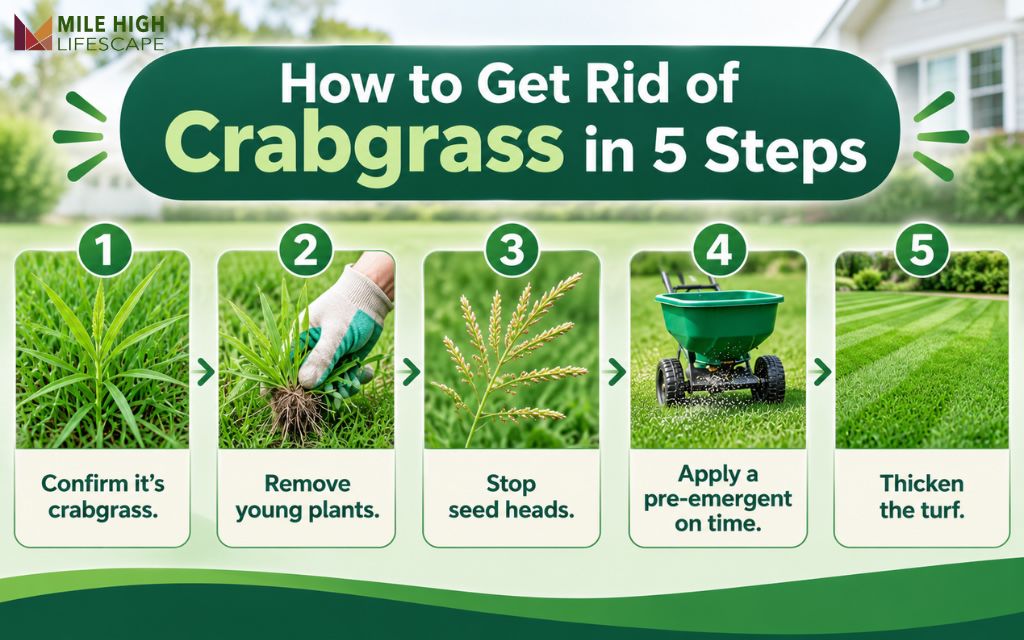
How to get rid of crabgrass in 5 steps
The best way to get rid of crabgrass is to pull or spot-treat young plants, stop them from setting seed, and apply a pre-emergent before soil reaches 55°F (13°C) in spring. A dense, high-mowed lawn then keeps new seedlings from rooting.
Here is the plan we follow on Denver lawns, step by step:
- Confirm it is crabgrass: Several perennial grasses look similar and need a different fix.
- Remove young plants: Hand-pull small patches or spot-spray a selective post-emergent while plants are small.
- Stop seed heads: Every plant that goes to seed refills the soil for next year.
- Apply a pre-emergent on time: In the Denver metro area, that means by early April.
- Thicken the turf: Mow higher, water deeply, fertilize, aerate, and fill bare spots.
Our rule of thumb: treat crabgrass as a two-season project. What you do this summer clears the lawn; what you do next spring keeps it clear.
What is crabgrass and why does it keep coming back?
Crabgrass (genus Digitaria) is a summer annual grass that dies every fall and returns every spring from seed. It keeps coming back because each plant drops seed before frost, and that seed waits in the soil.
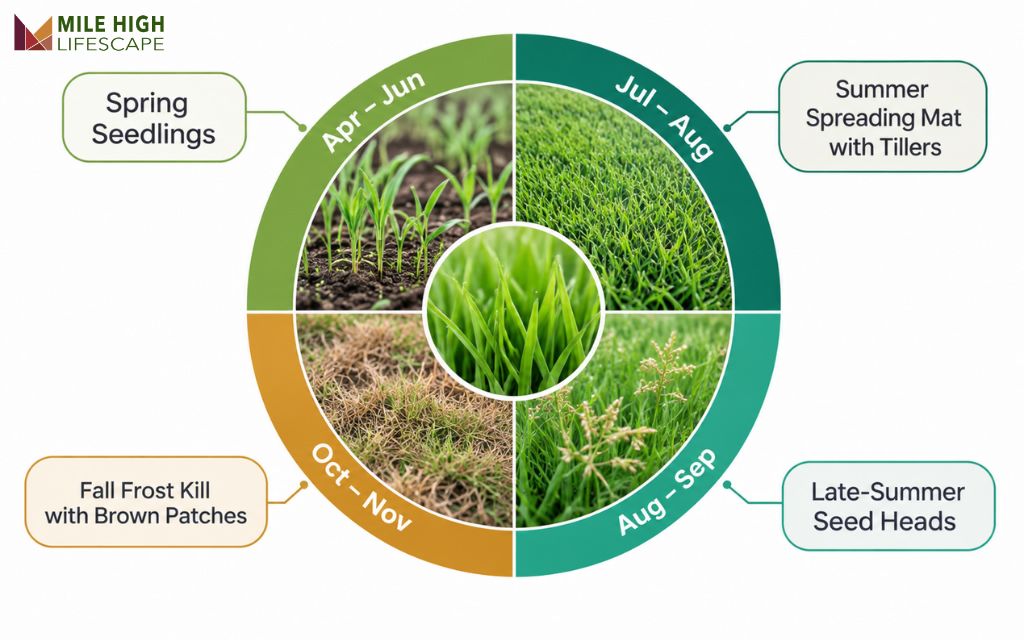
The crabgrass life cycle
In Colorado, crabgrass seed germinates in April, May, or June, according to CSU Extension. Seedlings grow fast through summer heat, when cool-season lawns slow down. Frost kills the plants in September or October, leaving brown, open patches.
Those dead patches are the real problem. Bare soil in spring gives the next wave of seed light and room to sprout.
How one plant turns into a lawn full of crabgrass
Crabgrass spreads two ways: by seed and by tillers, which are side shoots that root at their joints. UNH Extension reports that a single plant can produce dozens of tillers and up to 150,000 seeds.
Seed can also stay dormant for a few years. That is why one season of control rarely clears a heavy infestation for good.
Is it really crabgrass? How to identify it
Check the weed before you treat it. CSU Extension notes that much of what Colorado homeowners call crabgrass is actually another weedy grass. When we inspect a “crabgrass” complaint in early spring, it is often a perennial grass that stayed green all winter.
Crabgrass is a real threat here because of our elevation. CSU lists it as a lawn problem below about 6,000 to 6,500 feet (1,830 to 1,980 meters), and Denver sits near 5,280 feet (1,609 meters).
Smooth vs. large crabgrass
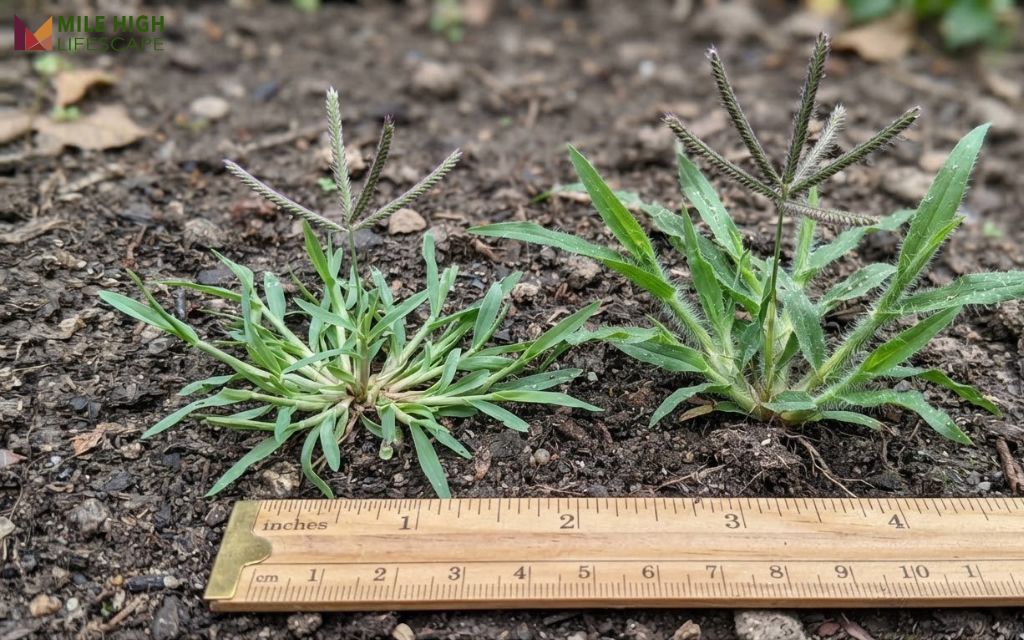
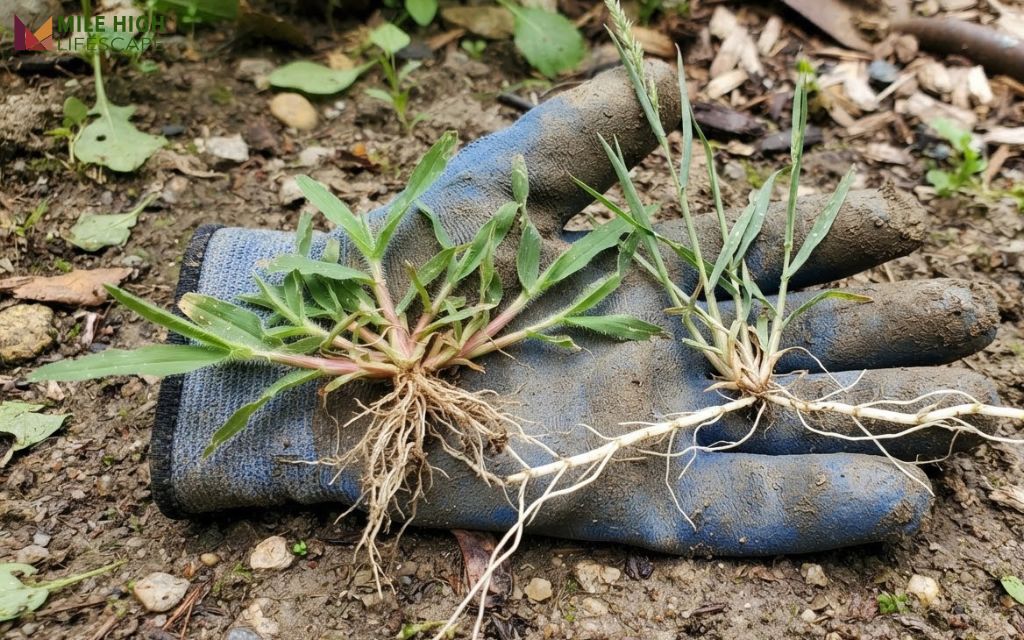
Two species show up in lawns. Both have wide, flat, light-green blades and a low habit that spreads out from a center, like the legs of a crab.
- Smooth crabgrass (Digitaria ischaemum): short, nearly hairless blades and a tight, low mat.
- Large or hairy crabgrass (Digitaria sanguinalis): longer blades covered in fine hairs, with a coarser look.
Crabgrass vs. quackgrass, tall fescue and other lookalikes
Timing is the fastest clue. Crabgrass is not green in March, so a grassy weed that is green in late winter is almost always something else.
| Weed | Annual or perennial | When you notice it | Key trait | What controls it |
| Crabgrass | Annual | Early summer to frost | Wide, light-green blades in a low, spreading mat | Pre-emergent, selective post-emergent, pulling |
| Quackgrass | Perennial | Early spring onward | Spreads by long, white underground rhizomes | Non-selective spot treatment, then reseed or sod |
| Tall fescue (as a weed) | Perennial | Year-round clumps | Coarse, dark blades in a tight bunch | Dig out or non-selective spot treatment |
| Bromegrass | Perennial | Early spring onward | Upright growth, creeping rhizomes | Non-selective spot treatment |
| Foxtail | Annual | Mid-summer | Bushy, bottlebrush seed head | Same as crabgrass |
Why identification changes the treatment
Crabgrass preventers and crabgrass killers do not control perennial grasses. CSU Extension notes that only a non-selective herbicide, such as glyphosate, kills quackgrass, tall fescue, or bromegrass, and it kills the lawn grass around them too.
That means a perennial patch needs spot treatment and then new seed or sod.
The best way to get rid of crabgrass depends on the season
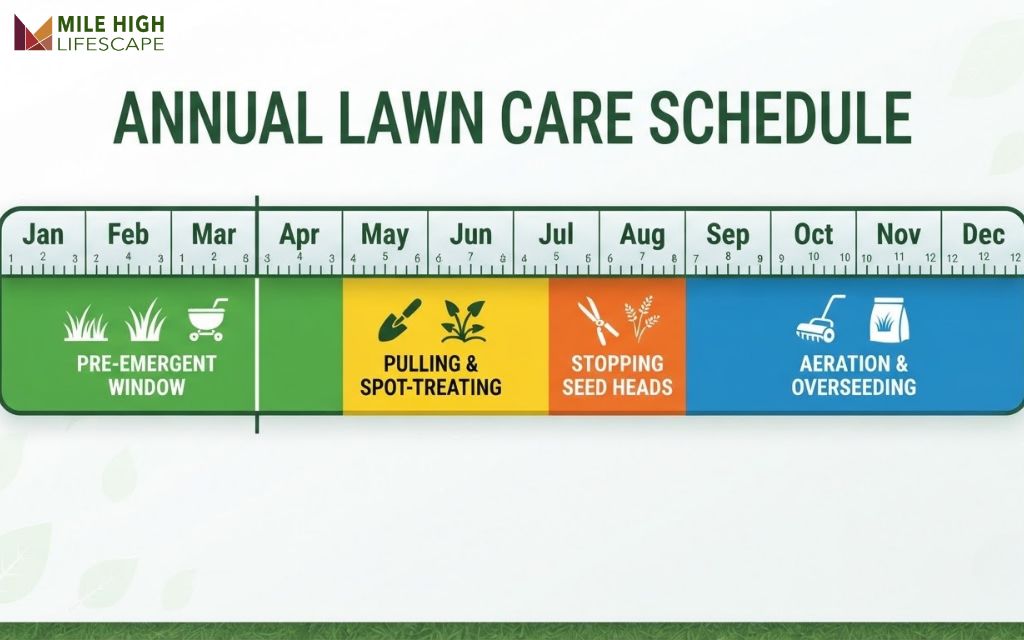
The right move depends on the calendar. A pre-emergent does nothing in August, and pulling in March finds nothing to pull. Use this table to see what to do right now on a Denver-area lawn:
| Season | What crabgrass is doing | What to do now |
| Late winter to early spring (Feb–early April) | Seed waits in cold soil | Apply a pre-emergent by early April; service the mower and sprinklers |
| Late spring to early summer (May–June) | Seedlings emerge and grow fast | Pull young plants; spot-treat at the 3- to 5-leaf stage |
| Mid to late summer (July–August) | Plants spread and form seed heads | Pull or bag seed heads; mow high; water deeply |
| Fall (September–October) | Frost kills plants after seed drop | Rake out dead clumps; aerate; overseed or sod bare spots |
| Winter (November–January) | Seed lies dormant | Plan next spring’s pre-emergent and lawn care schedule |
How to kill crabgrass that’s already growing
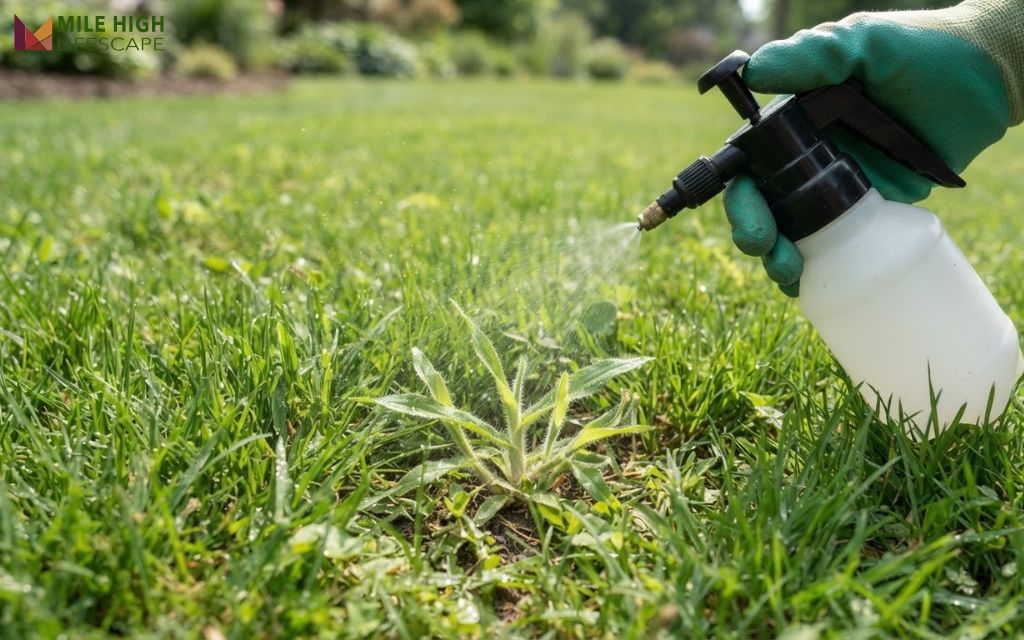
You can kill growing crabgrass by pulling it or by spraying a selective post-emergent herbicide. Both work best on young plants, so the earlier you act, the less effort it takes.
Hand-pull young plants and small patches
Pulling is the cheapest fix for a few scattered plants. Water the area the day before so the soil is moist, then grip the plant at its base and lift the whole root clump.
What kills crabgrass but not grass? Selective post-emergent herbicides
A selective post-emergent kills crabgrass without killing your lawn grass when you use it as labeled. The active ingredients homeowners see most are quinclorac, fenoxaprop-p-ethyl, and mesotrione.
CSU Extension rates quinclorac and fenoxaprop as excellent on seedlings but only fair to good on larger plants. Iowa State recommends treating at the 3- to 5-leaf stage. A few label points matter on Colorado lawns:
- Match the grass type: Fenoxaprop is labeled for cool-season lawns but not for buffalograss, bermudagrass, or zoysiagrass.
- Water first in dry weather: CSU advises moistening soil to 3 inches (8 cm) the day before you spray.
- Protect new grass: Wait until new seedlings have been mowed at least three times.
- Expect some yellowing: Treated turf can discolor for a short time.
Always read and follow the product label.
Late-summer crabgrass: stop the seed heads
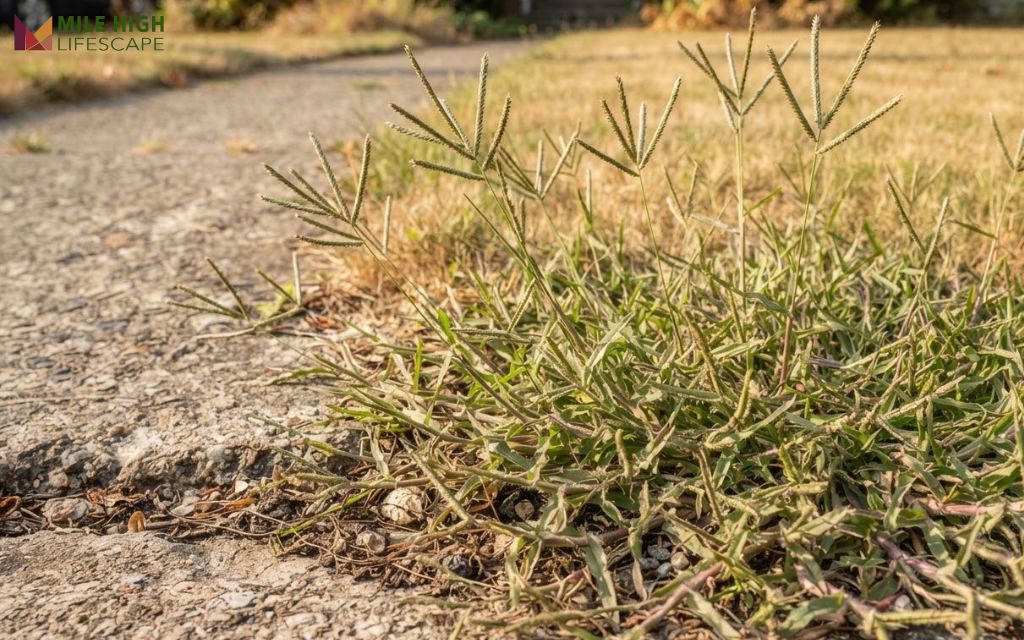
By August, crabgrass plants are large, tough, and hard to kill with any spray. Our advice at this stage is simple: stop the seeds.
Pull plants before seed heads open, or bag your clippings when seed heads are present. Frost will kill the parent plants in fall, and every seed you remove now means less work next spring.
Do vinegar, boiling water and other home remedies work?
Home remedies kill crabgrass leaves but also kill any lawn grass they touch. Oregon State Extension notes that boiling water damages desirable grass, and that vinegar for weeds needs about 20% acidity, several times stronger than kitchen vinegar.
These methods suit cracks in a patio or driveway, not the middle of a lawn. Corn gluten meal is a natural pre-emergent, but university results on crabgrass are mixed.
How to prevent crabgrass with a pre-emergent
A pre-emergent, often sold as a “crabgrass preventer,” is the most dependable way to prevent crabgrass. It forms a chemical barrier at the soil surface that kills seedlings as they sprout. It does not kill seeds or grown plants, so timing decides whether it works.
When to apply crabgrass preventer in Denver
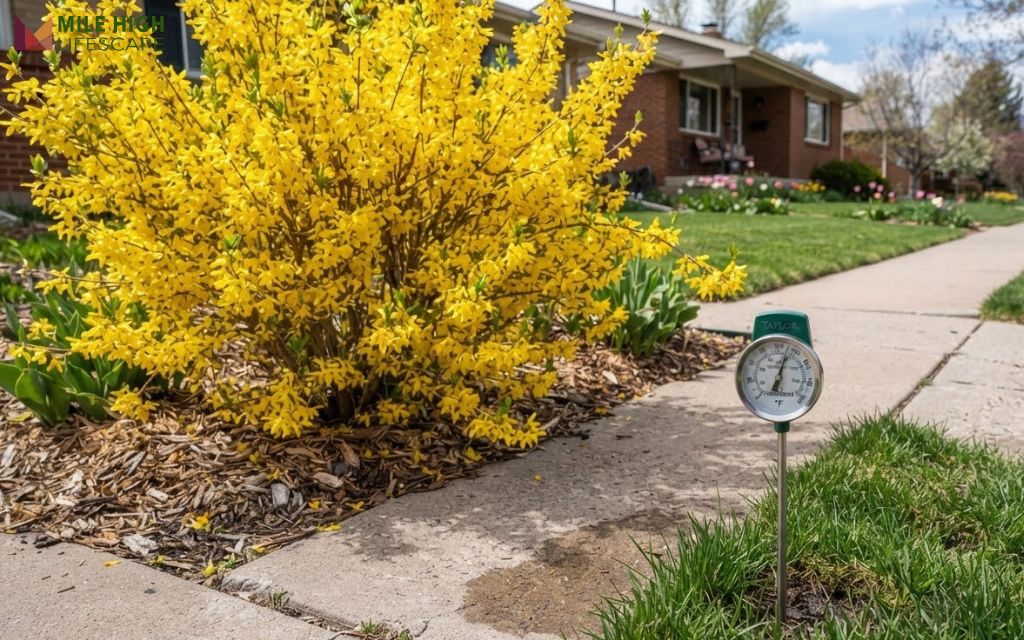
CSU Extension advises applying pre-emergent products by early April in the Denver metro area. Crabgrass begins to germinate when surface soil reaches 55°F to 60°F (13°C to 16°C), which tends to line up with forsythia bloom.
Some spots warm up sooner. Treat south-facing slopes and turf along sidewalks and driveways a little earlier, since concrete heats the soil next to it.
Common pre-emergent active ingredients
Product names change often, but active ingredients do not. CSU Extension rates these ingredients for crabgrass control:
| Active ingredient | Crabgrass control (CSU rating) | Notes |
| Dithiopyr | Excellent | Also controls very young emerged crabgrass |
| Pendimethalin | Excellent | Common in homeowner granules |
| Prodiamine | Excellent | Long-lasting barrier |
| Benefin + trifluralin | Excellent | Combination product |
| Siduron | Fair to good | The only option that is safe at seeding time |
How to apply and water it in
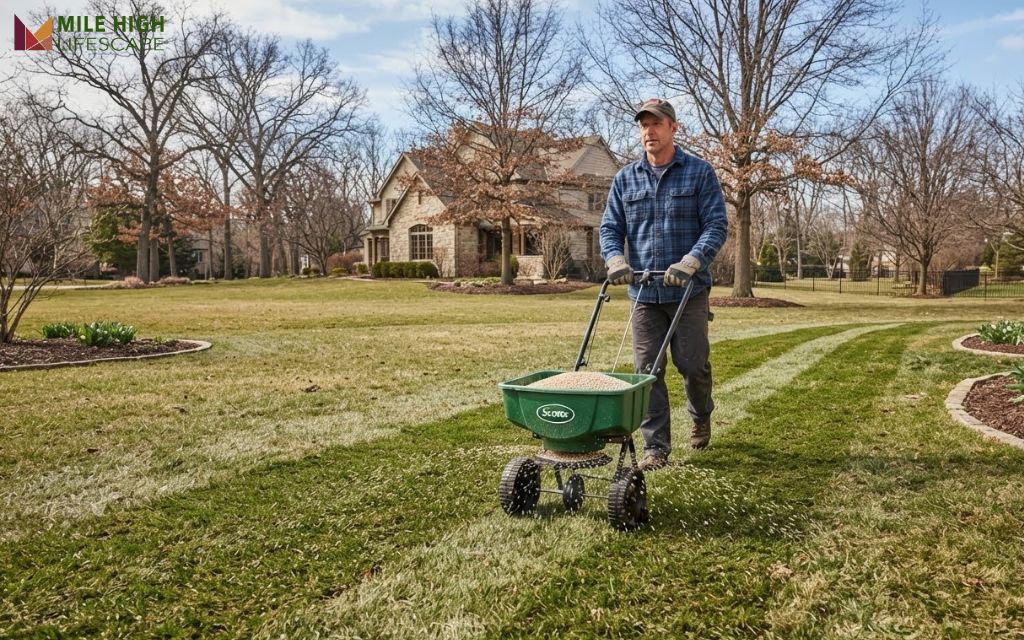
Apply the product evenly at the labeled rate. Skips and overlaps leave striped gaps in control, and excess rates can harm grass roots.
Then water in ½ to 1 inch (1.3 to 2.5 cm) from rain or irrigation within a day or two. Watering moves the product off the grass blades and into the soil, where seeds sprout.
Pre-emergent, seeding, sod and aeration: what not to mix
A pre-emergent cannot tell crabgrass seed from grass seed. CSU Extension gives clear rules:
- Seeding: Wait 2 to 4 months after a pre-emergent before you seed, based on the label. Siduron is the exception.
- New lawns: Wait until new grass has been mowed three times before applying a pre-emergent.
- Sod: Don’t apply a pre-emergent to soil before laying sod or onto new sod, because it can restrict rooting.
- Dethatching: Don’t dethatch after applying, because it breaks the barrier.
- Core aeration: Standard core aeration does not reduce the effectiveness of a pre-emergent already in place.
Build a thick lawn that crowds out crabgrass
A dense lawn is the long-term answer to controlling crabgrass. Crabgrass seed needs light and open soil to sprout, and thick turf takes both away.
Mow higher
Keep Kentucky bluegrass, tall fescue, and other common Denver lawn grasses at 2½ to 3 inches (6 to 8 cm) in summer. CSU Extension notes that lawns mowed below 2 inches (5 cm) have more aggressive grassy weeds.
Remove no more than one-third of the blade at each mowing. Taller grass shades the soil and keeps it cooler, which slows germination.
Water deeply, not daily, and follow Denver Water’s rules
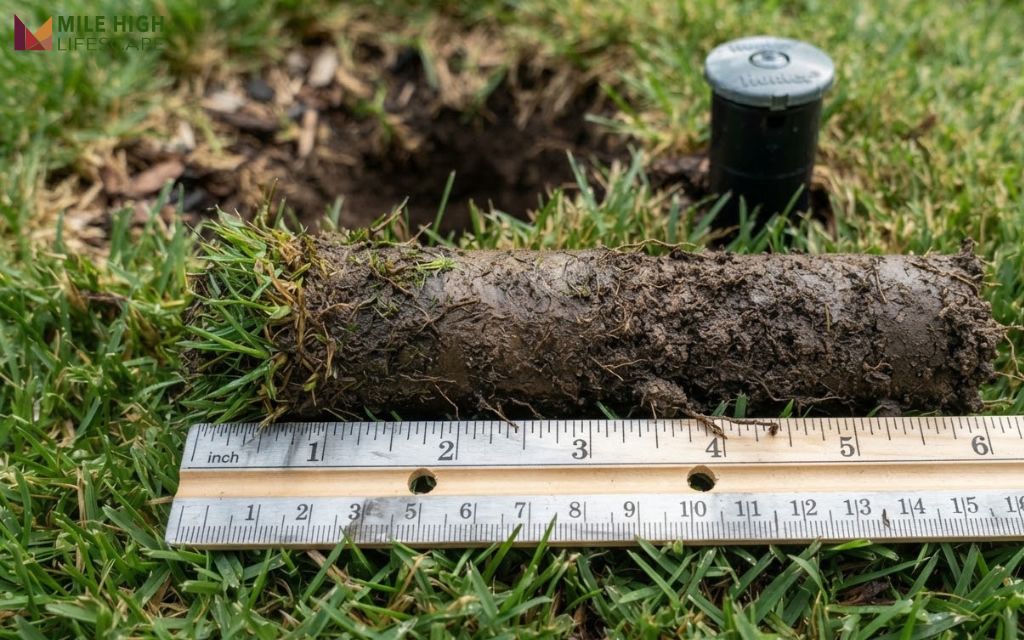
Light, frequent watering helps crabgrass. CSU Extension warns that it encourages weed seed to sprout, even after a pre-emergent. Water less often and longer, so moisture reaches the root zone and the soil surface dries between cycles.
As of November 2026, Denver Water has stopped lawn watering and spray irrigation since October 1, 2026, until its board acts again. Check your water provider’s current schedule before spring, and consider a sprinkler installation upgrade if your system waters unevenly.
Fertilize for your grass type
Feed cool-season lawns mainly in spring and fall, when the grass grows actively. UNH Extension notes that summer feeding can favor weeds over heat-stressed turf.
Aerate compacted soil
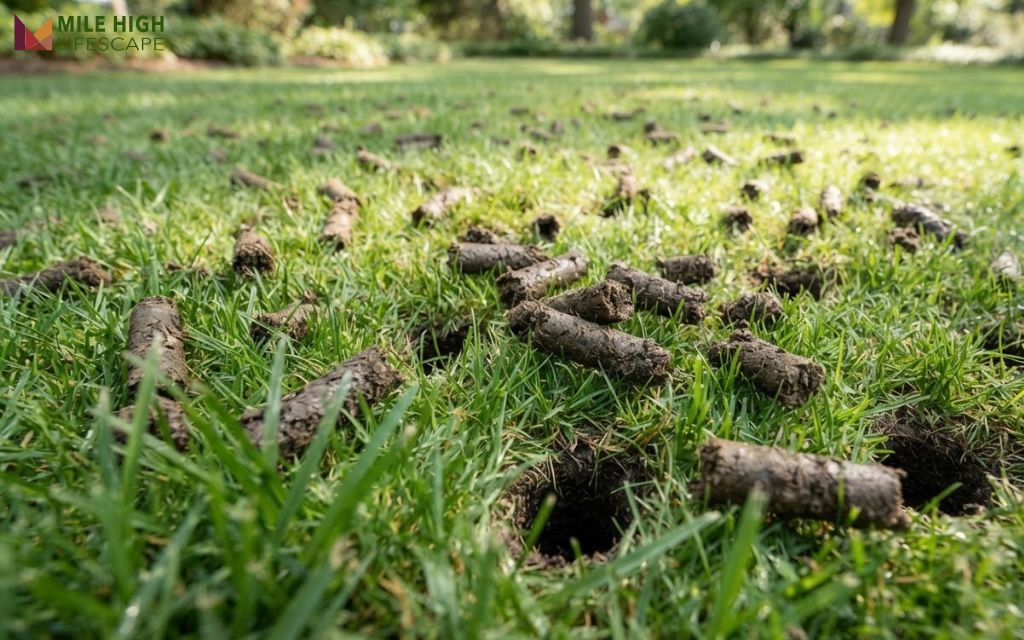
Compacted soil keeps roots shallow and leaves thin spots. CSU Extension recommends core aeration at least once a year to reduce compaction and control thatch. Our lawn aeration service pulls soil plugs so water and air reach the roots.
Overseed thin spots at the right time
Overseed in late summer or early fall, when crabgrass is winding down and cool-season grass is ready to grow. If you applied a spring pre-emergent, this timing also clears the label waiting period.
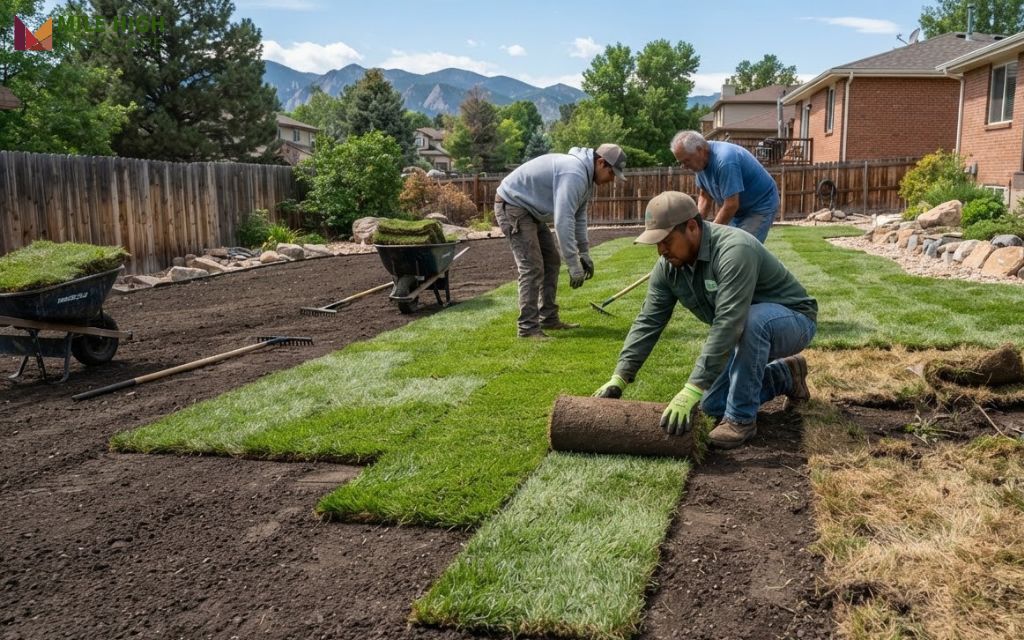
Sod installation for lawns crabgrass has taken over
When crabgrass or perennial grassy weeds cover a large share of a lawn, starting over can cost less time than years of patching. New sod gives you a dense, weed-free surface on day one, with no bare soil for seed to use.
Sod installation by Mile High Lifescape follows a set process:
- Clear the old turf: We remove the existing grass and weeds, including perennial patches.
- Prepare the soil: We grade the area and work in amendments where the soil needs them.
- Lay fresh sod: Rolls go down tight, with staggered seams to avoid gaps.
- Guide early care: We give you a watering and mowing plan for the first weeks.
Two cautions apply. Never apply a pre-emergent before laying sod or onto new sod. In addition, new sod needs steady water to root, so confirm your provider’s rules and any watering establishment permit before installation.
Getting rid of crabgrass in garden beds and rock areas
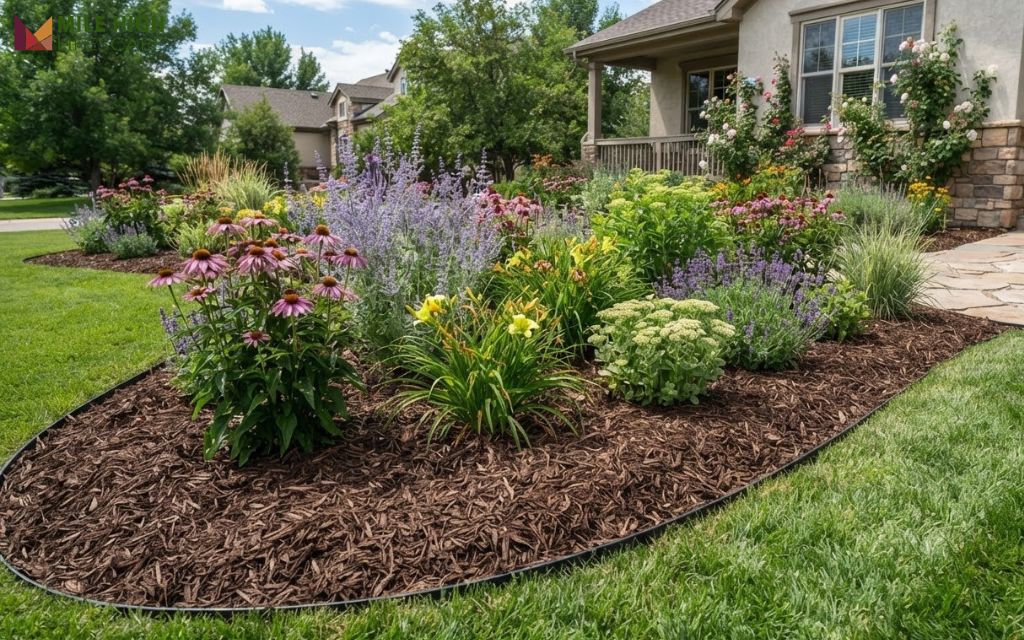
Crabgrass also invades flower beds, rock borders, and the edges of walkways.
- Mulch: A 2- to 3-inch (5 to 8 cm) layer of mulch blocks light from sprouting seeds.
- Hand-pull or hoe: Remove young plants while the soil is damp and before seed heads form.
- Spot treatment: A non-selective herbicide works away from desired plants, but shield nearby foliage from drift.
A fresh layer from our mulch installation service keeps beds covered through the growing season.
Common crabgrass control mistakes
Most crabgrass problems that return year after year trace back to a few habits. These are the ones we see most often on Denver-area lawns:
- Applying the pre-emergent late: Once seedlings are up, a preventer cannot stop them.
- Mowing too short: Scalped turf lets sunlight reach the soil.
- Watering a little every day: Moist soil surface favors weed seed.
- Treating the wrong weed: Crabgrass products don’t touch quackgrass or tall fescue.
- Letting plants go to seed: One summer of seed heads can restock the soil for years.
When to call a lawn care professional
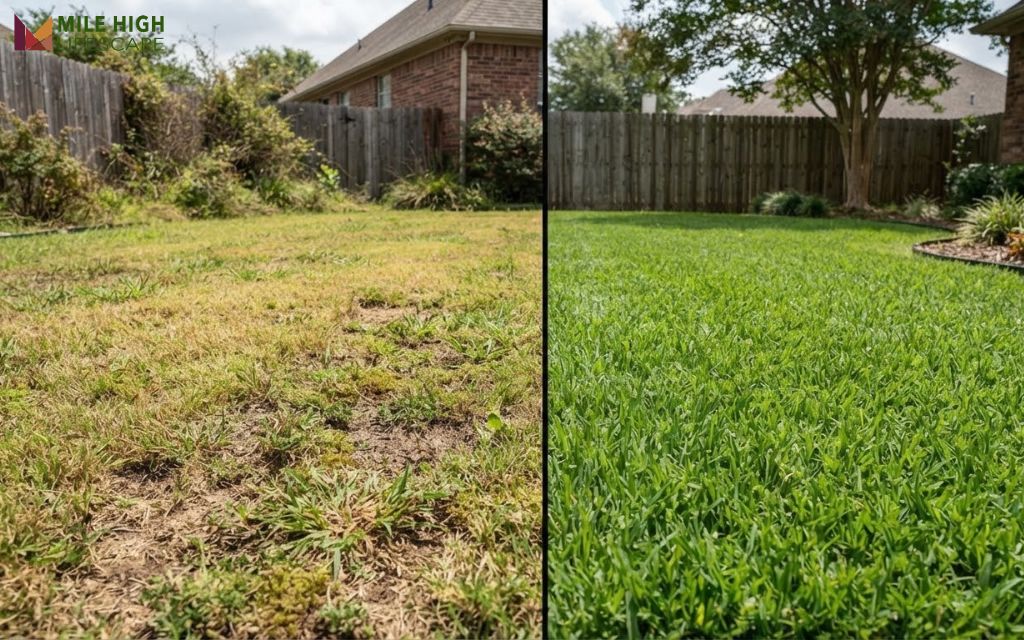
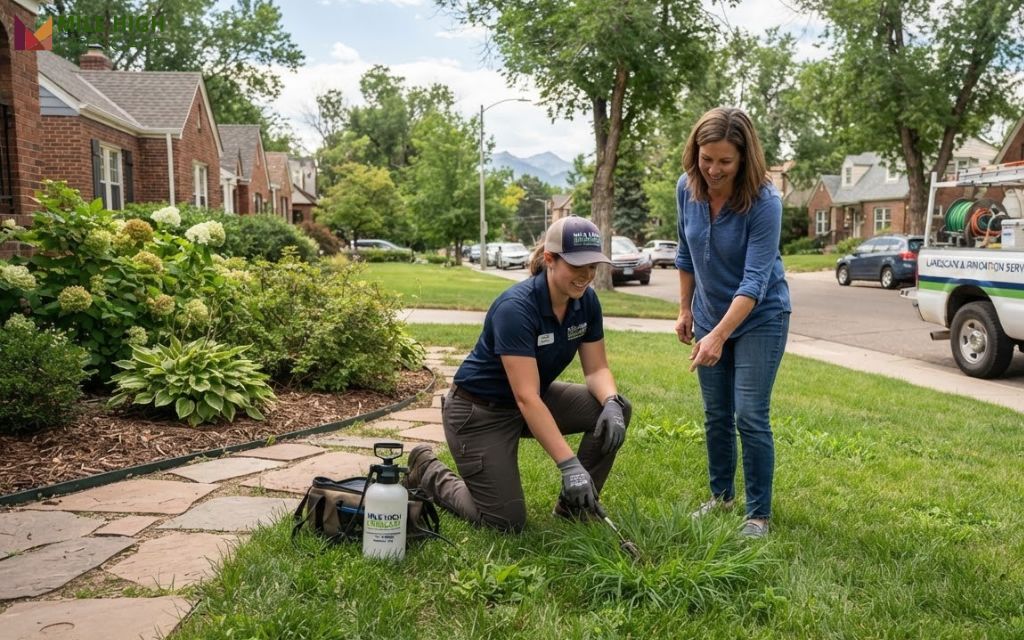
Call a professional when you have tried every step on how to get rid of crabgrass and it still returns each summer. Other signs include crabgrass covering more than a third of the lawn, unclear weed identification, or thin, compacted turf that needs repair before it can compete.
Mile High Lifescape has over 20 years of experience caring for lawns across the Denver Metro area, from Lakewood and Littleton to Thornton and Highlands Ranch. Our lawn care services include fertilization and weed control, aeration and overseeding, and lawn mowing and maintenance. We start by identifying the weeds, then build a plan around your grass type, soil, and watering rules.
FAQs about getting rid of crabgrass
What kills crabgrass but not grass?
A selective post-emergent herbicide with quinclorac, fenoxaprop-p-ethyl, or mesotrione kills crabgrass without killing labeled lawn grasses. It works best on young plants at the 3- to 5-leaf stage.
When should I put down crabgrass preventer in Denver?
Apply it by early April, according to CSU Extension. Treat warm spots, such as south-facing areas and turf along sidewalks, a little sooner.
Does crabgrass come back every year?
Yes, if it went to seed. The plants die at frost, but the seed in the soil sprouts the following spring.
Can I seed or lay sod after applying crabgrass preventer?
Not right away. Wait 2 to 4 months before seeding, based on the label, unless the product contains siduron. Don’t apply a pre-emergent before laying sod.
How to get rid of crabgrass naturally: does vinegar work?
Strong horticultural vinegar can burn crabgrass leaves, but it also kills lawn grass and often needs repeat applications.
Does weed and feed kill crabgrass?
Most weed-and-feed products target broadleaf weeds, not crabgrass. Look for a crabgrass active ingredient on the label.