
A tree that once fit its space can outgrow it within a decade. Branches reach the roofline. Roots push under a walkway. A homeowner searches for a way to reverse the growth, and the search often starts with one question: how to stop a tree from growing. The honest answer is direct. A healthy tree keeps growing for as long as it lives, and growth slows with age but seldom stops on its own.
This guide covers the realistic options, from what a homeowner can safely handle alone to what calls for a professional. It also answers two questions many searches skip. One is how to stop a tree from growing without killing it. The other is what to do about suckers and water sprouts near the trunk.
Can a tree’s growth actually be stopped
A tree grows from specialized tissue called meristem, found at branch tips, root tips, and just under the bark. As long as that tissue stays alive, the tree adds height, width, and root length. Cutting off top growth does not disable this tissue. It only removes the visible result, and the tree responds with new shoots, often growing back faster than before.
This is why homeowners who ask how to prevent a tree from growing seldom get a permanent answer. What exists instead is a set of management techniques:
- Crown reduction pruning slows upward growth for several years.
- Root barriers redirect roots away from a foundation or sidewalk.
- Growth regulating treatments suppress shoot elongation for one to three growing seasons.
- Soil management shapes growth too. Heavy nitrogen feeding pushes a tree toward faster, taller growth, while a leaner feeding schedule keeps growth closer to its natural rate.
Learn more: benefits of trimming trees
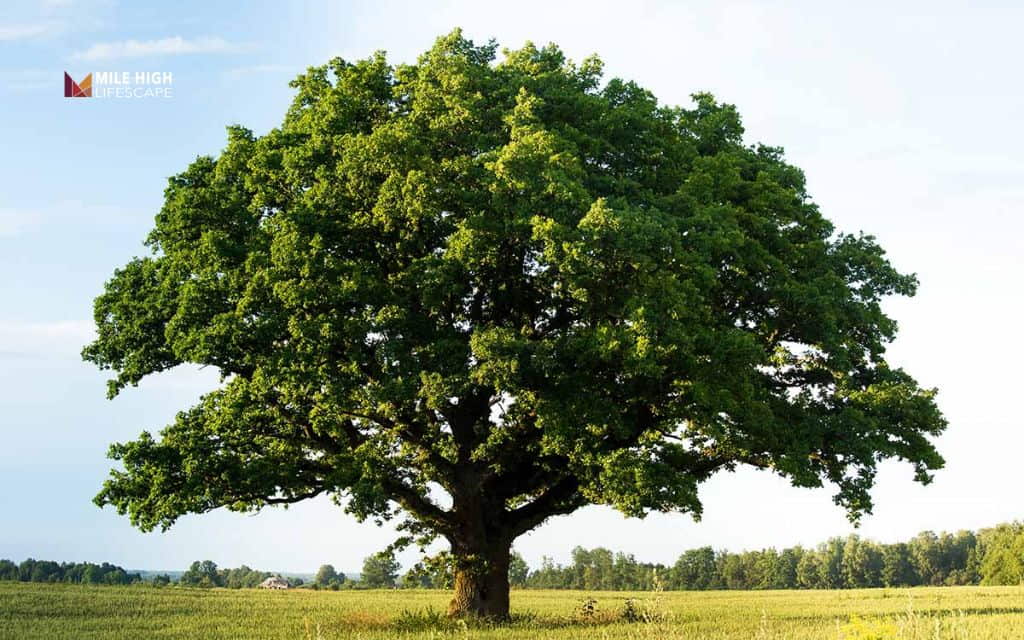
Signs a tree has outgrown its space
A few patterns show up again and again before a tree becomes a real problem for a property.
| Sign | What it usually means |
| Branches touching or resting on the roof | Canopy spread now exceeds the safe distance from the structure |
| Roots lifting a sidewalk or driveway | Surface roots have outgrown the soil volume available to them |
| Canopy blocking window light or a view | Lateral spread has closed a gap that once existed between the tree and the house |
| Shoots emerging from the base of the trunk | The tree may be stressed, recently pruned hard, or naturally prone to suckering |
| Branches growing into power lines | Height has reached a point that requires utility clearance pruning |
How to stop a tree from growing without killing it
A tree’s stored energy and vascular system depend on live foliage. Remove too much of it at once, through topping or heavy pruning, and the tree can starve, decline, or open itself up to decay and pests. Homeowners asking how to stunt a trees growth without harming it need a measured approach. Remove a small share of live growth at a time, and follow the tree’s existing branch structure.
That approach combines three tools: pruning that reduces the crown in stages, growth regulating treatments where appropriate, and root management where roots cause the issue. Spreading the work across two or three seasons, rather than forcing a result in one visit, keeps the tree healthy while it brings its size under control.
Learn more: How to trim tall trees safely and correctly
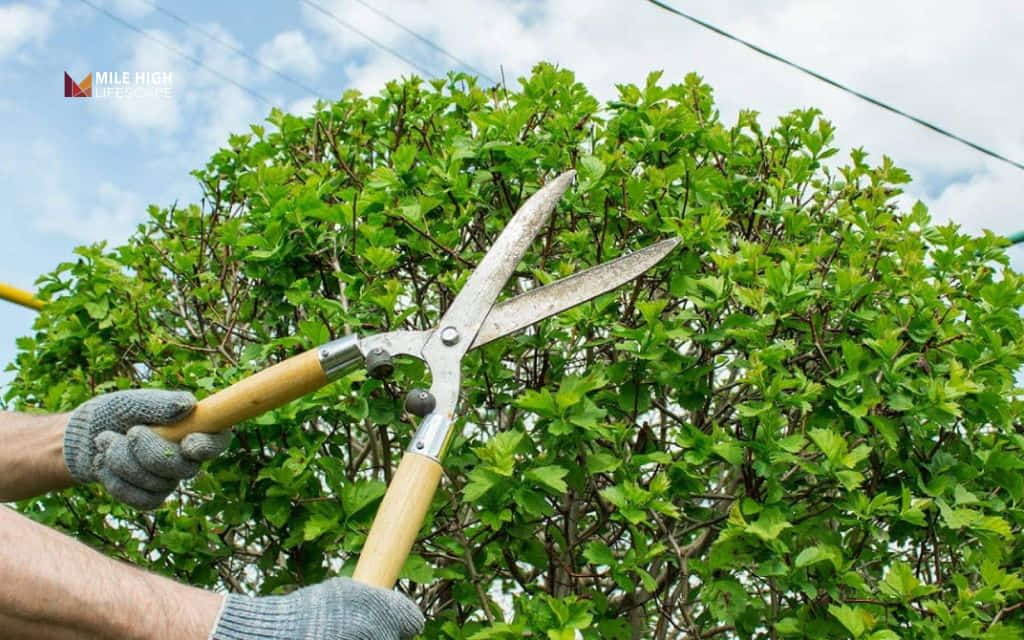
Safe ways to manage tree growth
Crown reduction pruning
Crown reduction cuts a branch back to a lateral branch large enough to take over as the new growth point. This method, sometimes called drop crotch pruning, keeps a tree’s natural shape intact while it lowers overall height and spread. Industry guidelines call for removing no more than one quarter of the live canopy in a single season. Taking more than that raises stress on the tree and opens the door to decay.
Most species respond best to this work during dormancy, the season when a tree is not pushing new growth. Applied on schedule and repeated every few years, crown reduction keeps a tree at a target size without the damage that topping causes.
Plant growth regulators
A trained applicator applies growth regulating treatments to the soil or trunk. These treatments reduce shoot elongation for a set period, commonly one to three growing seasons, depending on species and product. Property owners managing trees near power lines or in tight spaces often turn to this method to stretch the time between pruning cycles.
These treatments do not stunt roots or damage a tree’s overall health when applied as directed on the label. They also wear off, which means reapplication is part of any long-term plan. This is one answer to how to stunt tree growth without resorting to constant cutting.
Root barriers for spreading roots
A root barrier is a physical panel installed in the soil to redirect surface roots away from a foundation, sidewalk, or irrigation line. Contractors often install these during construction, though they can also be added later near a vulnerable structure.
A root barrier does not slow a tree’s overall growth. It only changes where the roots travel. Pairing a barrier with regular monitoring gives the best result. A shallow barrier, or one installed too close to the trunk, still lets roots grow around or under it over time.
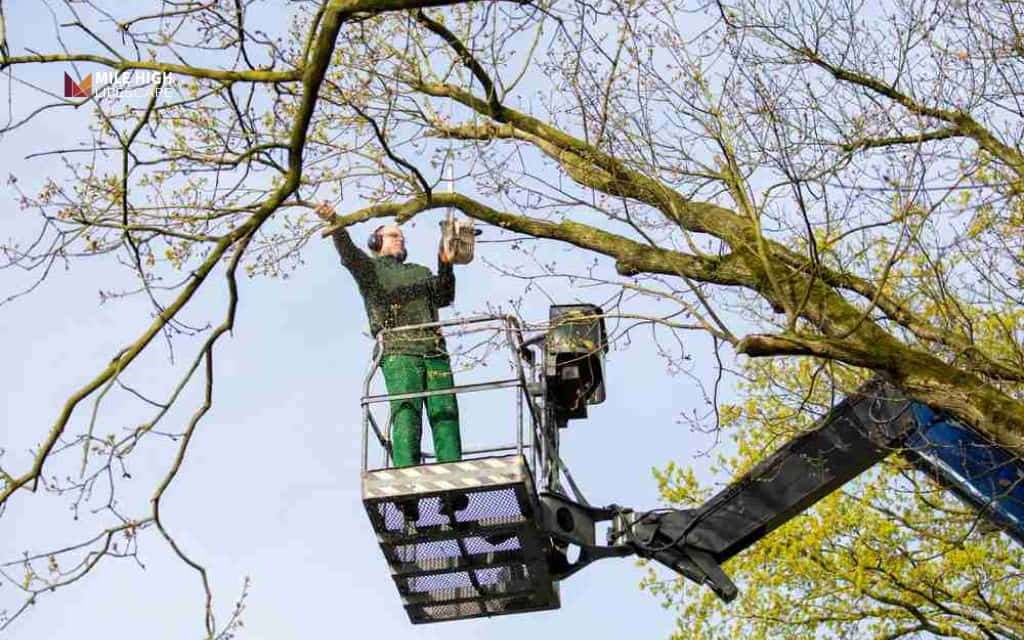
Why topping a tree is not the answer
Topping, the practice of cutting main branches or the trunk back to stubs, looks like a fast fix for a tree that has grown too tall. University extension programs describe the practice as damaging rather than helpful. Proper pruning, they note, improves a tree’s health, safety, and longevity. It removes dead, diseased, or weak wood and encourages stronger structure.
The shoots that follow a topping cut, often called water sprouts, grow with more force than the branches they replace. This creates a repeating cycle. The tree regrows faster and weaker each time. Decay spreads through the exposed cuts, and the size problem returns within a few years, often worse than before. A tree topped once needs far more corrective work later than it would have needed from proper reduction pruning in the first place.
Removing suckers and water sprouts
Suckers are vigorous, upright shoots that grow from the base of the trunk or the root system. Water sprouts differ. They grow from established branches or higher on the trunk, often after stress or heavy pruning. Extension programs describe root suckers as a common response in certain species. Left unmanaged, suckers can affect a tree’s appearance, flowering, fruiting, and overall health.
The safest removal method uses hand pruners while shoots stay young and soft:
- Cut flush, not short: Remove each shoot as close to its point of origin as possible, whether it comes from the trunk or the root. A stub left in place regrows with more force than a clean cut, since the remaining tissue signals the tree to push out new growth right at that spot.
- Time it right, then repeat: Take suckers and water sprouts off while they are still soft and young, before they harden into woody growth. Repeat this each season for a year or two, and the tree sends up fewer new shoots with each pass.
- Leave chemical treatments to a professional: Sucker suppressant products exist, but applying them without training can damage healthy bark and surrounding tissue. A certified arborist can determine whether this option fits a specific tree.
Managing stump regrowth after removal
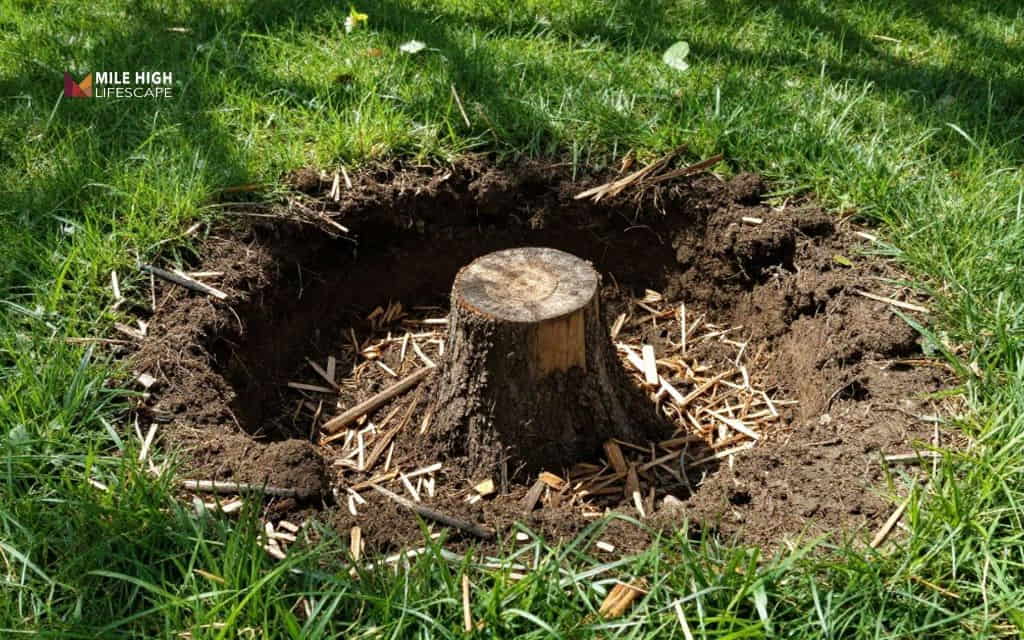
When a tree is removed but the stump remains, the live root system underneath often keeps sending up shoots in an attempt to replace lost foliage. This can continue for more than one growing season and is a separate issue from managing the size of a standing tree.
Stump grinding removes the visible stump and reduces new growth, though roots left in the soil can still resprout in some species. Removing the stump along with its major roots offers a more permanent solution, and the right method depends on the tree species involved. A professional evaluation helps determine which approach fits a given situation.
Learn more: https://milehighlifescape.com/how-to-remove-tree-suckers/
Choosing the right tree for the space
Many oversized tree problems begin at planting, not from anything the tree does wrong later. Choose a species with its mature height, canopy spread, and root habit in mind, and match those traits against the yard’s available space, nearby wires, and foundation clearance. This step prevents growth conflicts years before they start.
Sometimes a tree outgrows what pruning or root management can address. Replacing it with a species suited to the site’s long-term constraints delivers a more lasting result than repeated size control work. A nursery or certified arborist can help match a species to a property’s specific limits before a new tree goes into the ground.
Conclusion
There is no single fix for how to stop a tree from growing that works for every tree. Crown reduction pruning, growth regulating treatments, root barriers, sucker removal, and species selection each address one piece of an oversized tree. The right combination depends on the tree and the site. For a tree near a house, power lines, or a property line, or any tree too large for safe DIY work, professional evaluation is the safest next step.
Mile High Lifescape can assess a tree’s condition and recommend an approach suited to its size, species, and location. If overgrown, damaged, or hazardous branches need to be removed, our Tree Branch Removal service can help improve clearance, reduce safety risks, and maintain a healthier tree structure. Call (303) 877-9091 to schedule an assessmen today!
Frequently asked questions (FAQs)
Can pruning permanently stop a tree from growing?
No. Pruning slows growth and directs it for a period, but the tree resumes growth from remaining buds and root tissue. Repeated maintenance pruning keeps a tree near a target size over time, rather than stopping its growth outright.
Is there a way to stunt a tree’s growth without harming it?
Crown reduction pruning, done in stages and by a qualified professional, limits height and spread while it preserves the tree’s health. Aggressive cutting or topping in a single visit is far more likely to cause lasting harm.
How long do growth regulating treatments last?
Most applications suppress shoot growth for one to three growing seasons, depending on the species, the product used, and the tree’s overall condition. Reapplication is typically part of maintaining the effect.
Will cutting suckers make a tree produce more of them?
Cutting a sucker flush at its point of origin tends to reduce future sucker growth over time. Leaving a stub, or topping a tree again and again, triggers heavier regrowth instead.
Does a root barrier slow down a tree’s overall growth?
No. A root barrier redirects root growth away from a structure. It does not reduce canopy size or slow the tree’s overall growth rate.