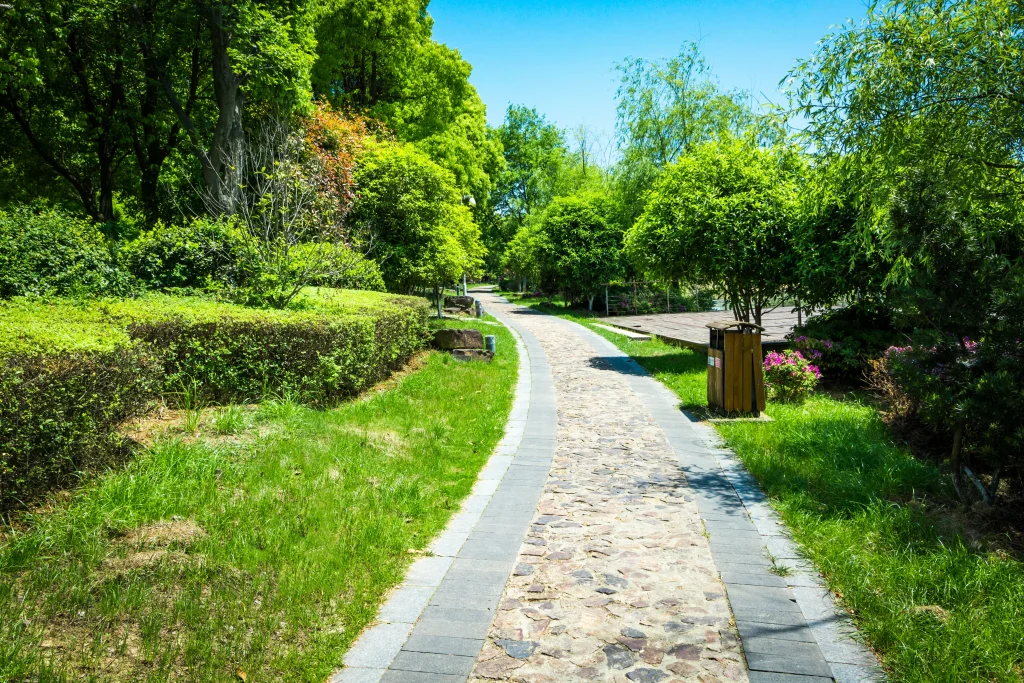
A well-designed landscape terrace can transform the way you see and use your outdoor space. Whether you are working with a steep hillside, an uneven backyard, or a rooftop with untapped potential, terracing gives you the structure to turn challenging terrain into something truly beautiful and functional.
Beyond good looks, landscape terraces offer a range of practical advantages that make them worth every bit of planning and effort:
- They improve drainage by slowing and directing water away from structures.
- They control erosion by stabilizing slopes and holding soil in place.
- They create more usable garden space in yards.
- They improve curb appeal, giving your home a polished, professionally designed exterior.
With the right plan and the right materials, even a single terrace level can make a meaningful difference.
What is a landscape terrace?
A landscape terrace is a series of leveled sections or tiers cut into a sloped yard or hillside to create flat, functional areas for planting, seating, or entertaining. Rather than fighting against a steep grade, terracing works with the land by breaking it into manageable horizontal platforms.
These leveled sections are supported by retaining walls built from stone, timber, concrete, or brick. The walls hold the soil in place and give the terrace its structure, while the flat areas on top become your planting beds, garden paths, patio spaces, and lounging zones.
Terraced gardens are most commonly used on sloped yards and hillside properties, but they are also popular in rooftop garden settings and compact urban spaces where every square foot of ground needs to work harder.
Benefits of terrace landscaping
Terrace landscaping delivers a combination of visual appeal and genuine practicality that few other garden features can match. Here is why so many homeowners choose to terrace their outdoor spaces:
- Reduces soil erosion and runoff by holding ground in place on slopes
- Creates more planting space on hillsides and inclines that would otherwise go unused
- Improves drainage by guiding water through controlled pathways instead of washing it downhill
- Improves accessibility across different levels of the yard
- Adds visual depth and architectural interest that elevates the entire garden design
- Makes steep yards more usable for patios, seating areas, fire pits, and lawn spaces
Things to know before building a terrace garden
1. Plan drainage before anything else
Before you choose a single stone or timber, your first priority should be drainage. Terraces that are not properly drained can quickly become unstable. Water that pools behind retaining walls puts enormous pressure on the structure and leads to cracking, shifting, and eventually failure.
Good drainage planning means grading the soil correctly, installing gravel layers or drainage pipes behind walls, and ensuring that water has a clear path to travel away from both the walls and your home’s foundation.
Poor drainage is one of the most common and most costly terrace garden mistakes. Getting this right from the start keeps your terrace stable and looking great for years to come.
2. Choose materials that match your style and budget
The materials you select for your landscape terrace will shape everything from its visual character to its long-term durability and maintenance needs. There is no single best material. The right choice depends on your design goals and how much you want to spend.
- Natural stone creates a timeless, premium look that blends into both traditional and contemporary landscapes. It ages gracefully and requires very little upkeep.
- Timber gives terraces a warm, rustic quality that feels natural and inviting. It is a popular choice for DIY terrace gardens and works well in woodland or cottage-style settings.
- Concrete works well for modern terrace designs. It can be poured into clean geometric shapes, stained in a range of colors, and stamped with patterns that mimic stone or tile. It is durable and relatively low maintenance.
3. Design terrace levels for easy access and planting
A terrace that is hard to reach or uncomfortable to work in will quickly feel like more burden than benefit. When designing your terrace levels, think about accessibility and usability.
Wide terrace levels give you more room to plant, move around, and maintain your garden. Narrow tiers can feel cramped and difficult to care for over time. Include well-placed steps or pathways between tiers so that moving between levels is safe and straightforward for everyone using the space.
Grouping plants together by their sunlight and watering needs makes ongoing maintenance much more efficient. Place drought-tolerant plants on the sunniest, driest levels and moisture-loving plants in areas with more shade or better water retention.
16 landscape terrace ideas to transform any garden
1. Build layered stone terraces for a timeless look
Few landscape features are as beautiful as a layered stone terrace. Stacked fieldstone, slate, or limestone retaining walls create a sense of age and permanence that no other material can replicate. Each tier holds planting beds filled with perennials, ground covers, or ornamental shrubs, giving the garden a rich, layered texture.
Layered stone terraces are not just beautiful. They are also highly functional, adding natural structure to hillside landscapes and controlling erosion without looking like an engineering project. The walls blend naturally into both rustic garden settings and more polished contemporary yards.
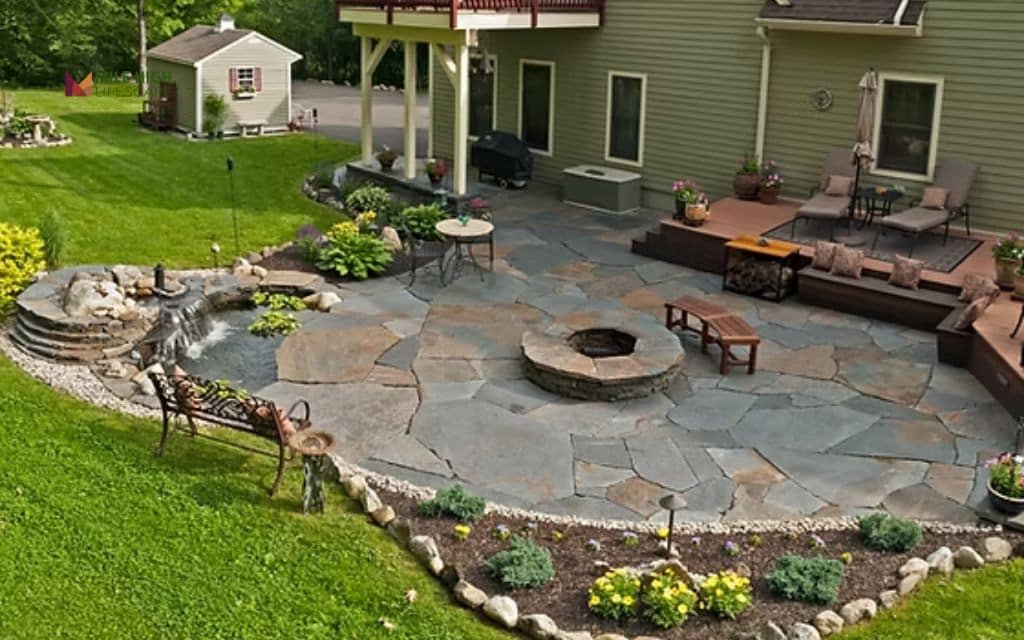
2. Create a cohesive terrace with matching materials
One of the easiest ways to make a terraced garden look professionally designed is to repeat the same materials throughout the entire space. When your retaining walls, garden pathways, patio surface, and step edges all share the same stone, brick, or concrete, the landscape reads as intentional rather than assembled from mismatched parts.
This kind of material consistency creates visual flow that connects each level of the terrace into a single, unified composition. It also makes individual sections feel larger because the eye moves smoothly across the space rather than stopping at jarring transitions.
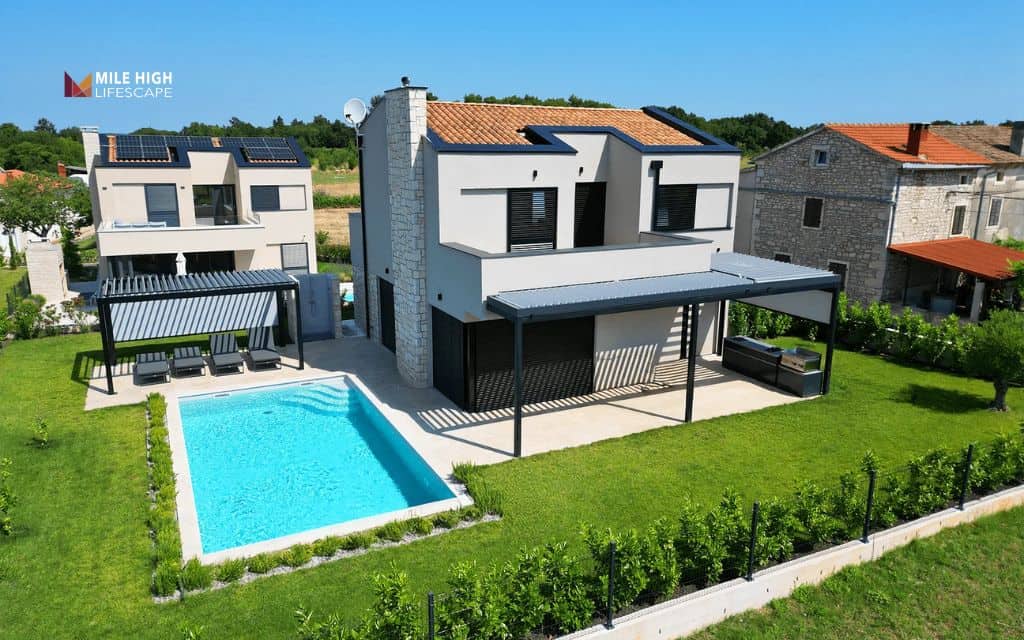
3. Design a bold modern terrace with clean lines
In a modern terrace design, every element earns its place. Planting tends to be restrained. Ornamental grasses, architectural succulents, and low-growing ground covers are chosen for their form and texture rather than profusion of color. Lighting integrated into the walls and steps adds a striking nighttime dimension.
This approach is particularly well suited to contemporary homes and urban landscapes where the architecture itself is strong and angular. A bold backyard terrace design here amplifies the character of the home rather than competing with it.
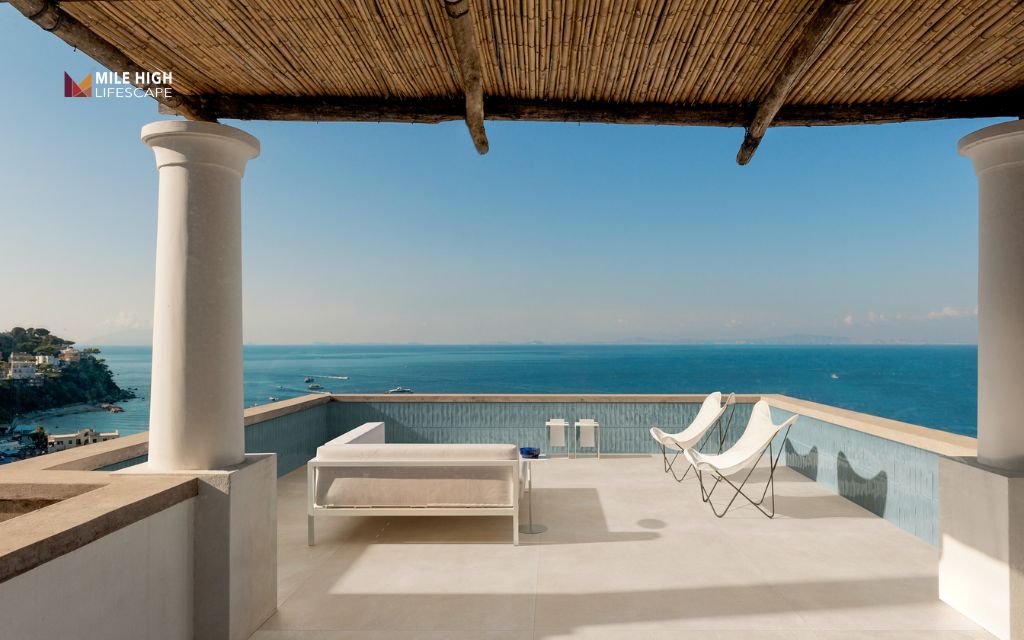
4. Use local stone and natural materials for authentic charm
There is something deeply satisfying about a terrace built from materials sourced close to home. Local stone and native materials carry the color, texture, and character of the regional landscape, and that authenticity is something no imported material can replicate.
Using local materials also has practical benefits. Transportation costs are lower. The stone or timber is already adapted to your regional climate, which means it will hold up well over time without special treatments or maintenance.
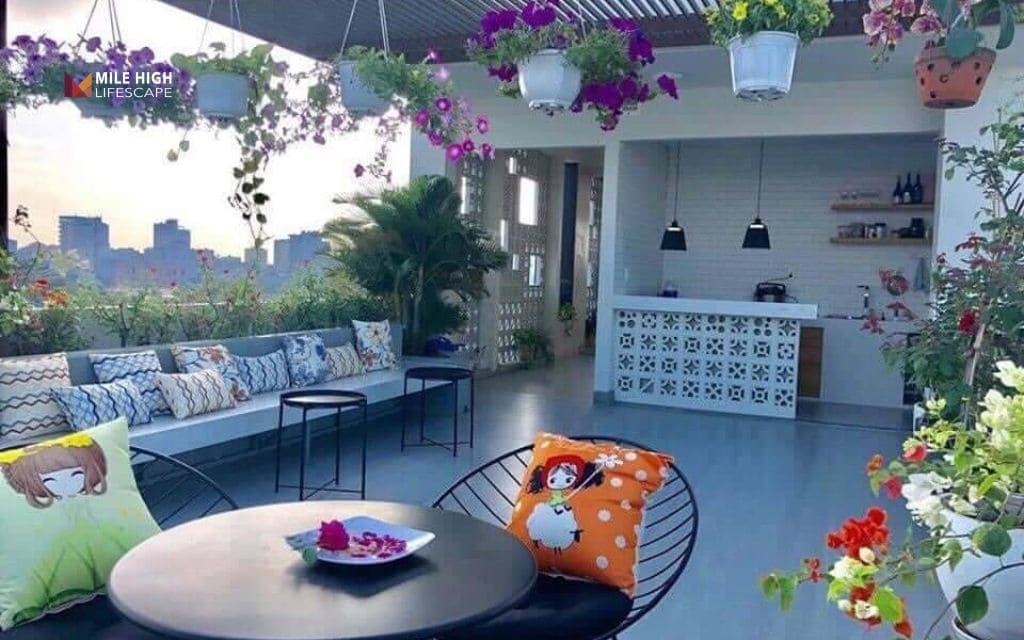
5. Add wood decking to a small terrace space
In compact outdoor spaces, a timber deck platform built into a terrace level transforms a narrow or steep strip of yard into an usable area for dining, lounging, and entertaining. Wood decking gives even the smallest terrace a warm, residential quality that stone or concrete alone cannot always achieve.
This approach works well on rooftop terraces and urban garden terraces where weight and space are both concerns. Lightweight composite decking or sustainably sourced hardwood planks can be installed over a structural frame, creating a clean, level surface that feels like an extension of the interior living space.
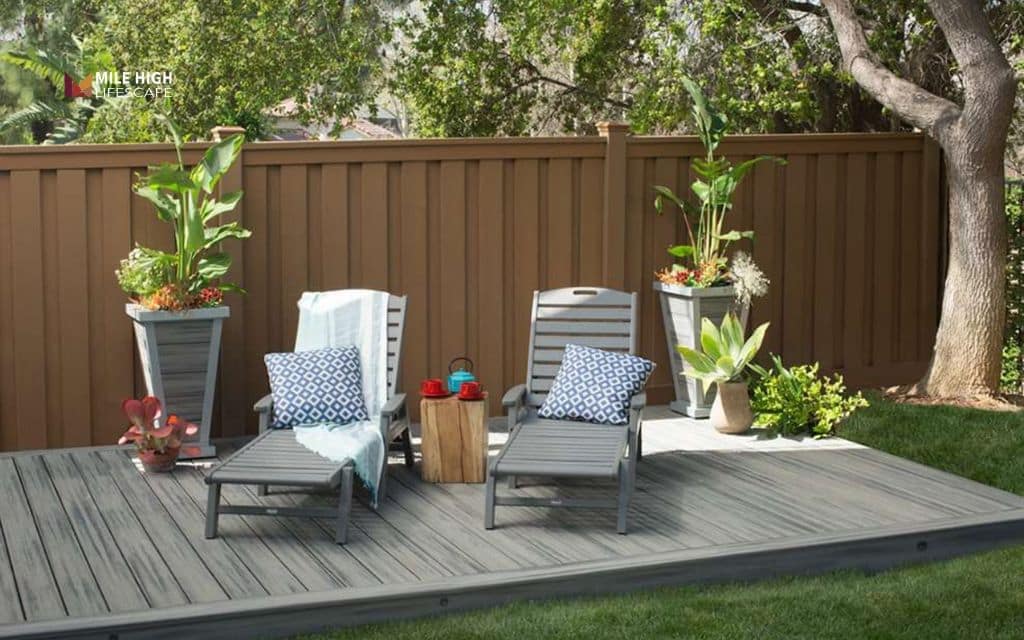
6. Surround terraces with small privacy trees
Adding small privacy trees along the edges of your landscape terrace is an elegant solution that brings both seclusion and beauty to the space. Trees soften hard wall surfaces, add vertical interest, and create a more enclosed, garden-room atmosphere.
Japanese maple is an outstanding choice for terrace planting. Its airy canopy, fine-textured foliage, and stunning fall color add year-round interest without overwhelming the space. Olive trees bring a Mediterranean character and beautiful foliage that pairs with stone terrace walls.
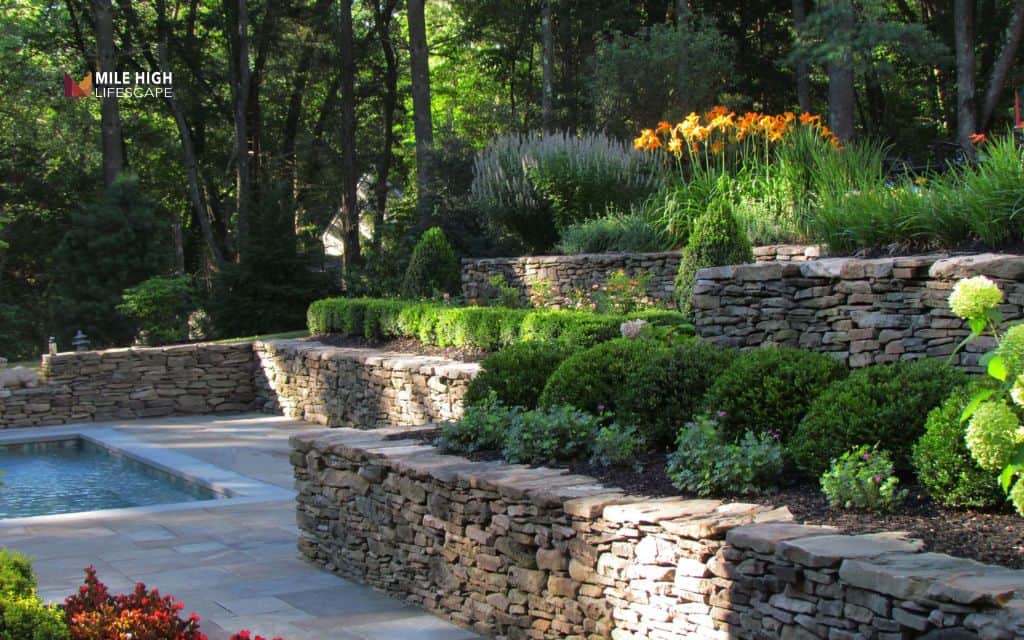
7. Combine pavers and plants for added texture
Pavers alone can feel harsh and flat. Plants alone can feel undisciplined. Together, they create exactly the right balance. Gravel pathways set between flagstone pavers are a classic combination. Plant the gaps between pavers with creeping thyme, sedum, or woolly thyme.
These low-growing plants tolerate foot traffic, fill in bare joints, and release a gentle fragrance when brushed. The result is a terrace that feels alive underfoot.
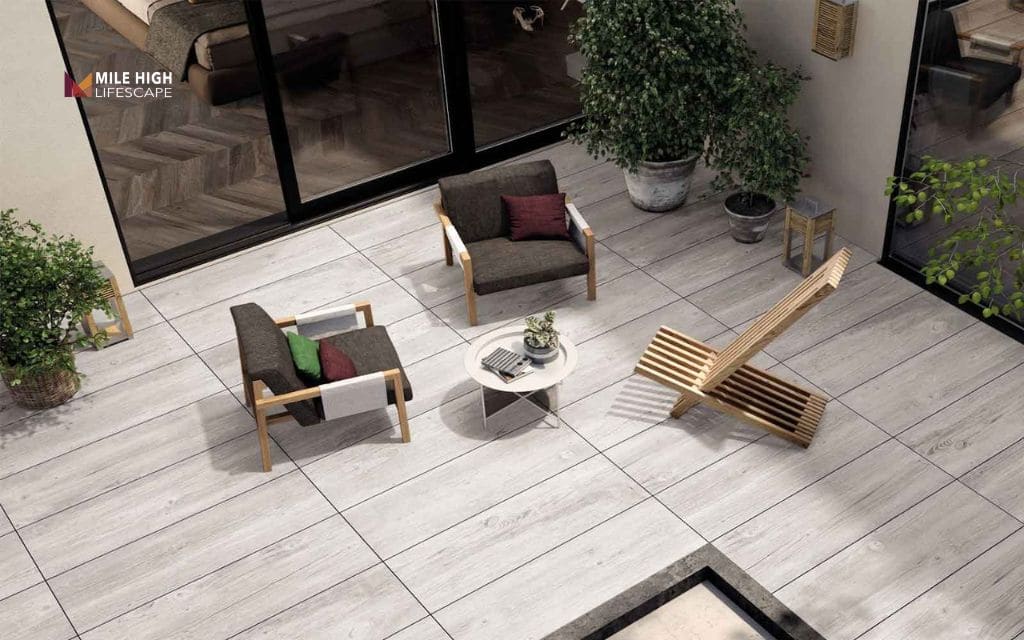
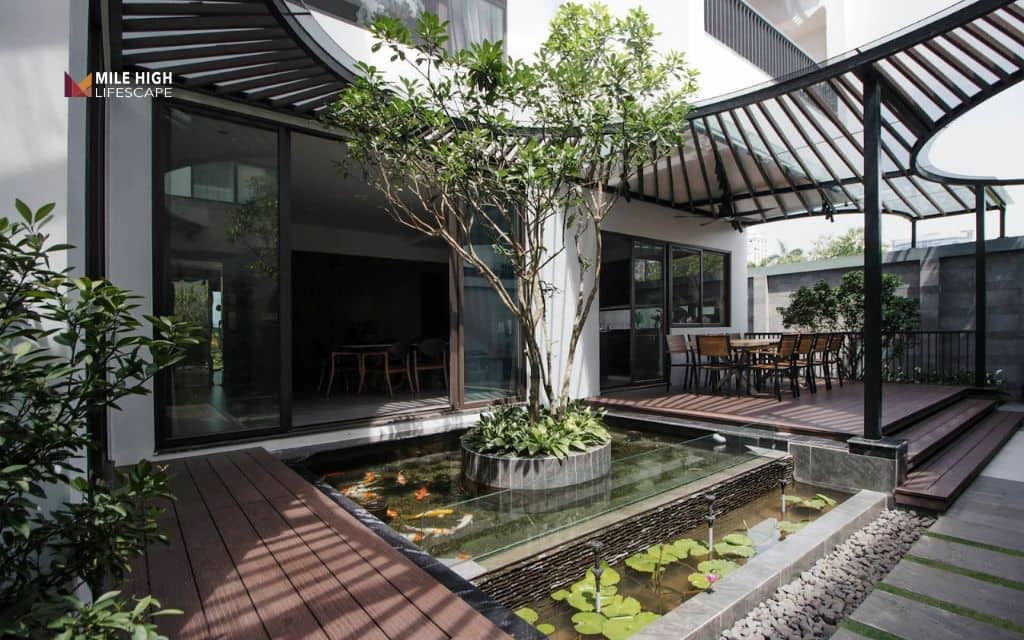
8. Bring movement into the terrace with water features
Water features are one of the most transformative additions you can make to a landscape terrace. The sound of moving water immediately changes the atmosphere of an outdoor space, masking street noise and creating a feeling of calm that no plant or paving can replicate.
On a terraced hillside, water features have a natural advantage. The slope itself provides the drop needed for a cascading fountain or a rill that flows from one level to the next. A well-placed water feature on a sloped terrace garden looks completely natural, as if water has always found its way down through the garden.
9. Use mirrors to make small terraces feel bigger
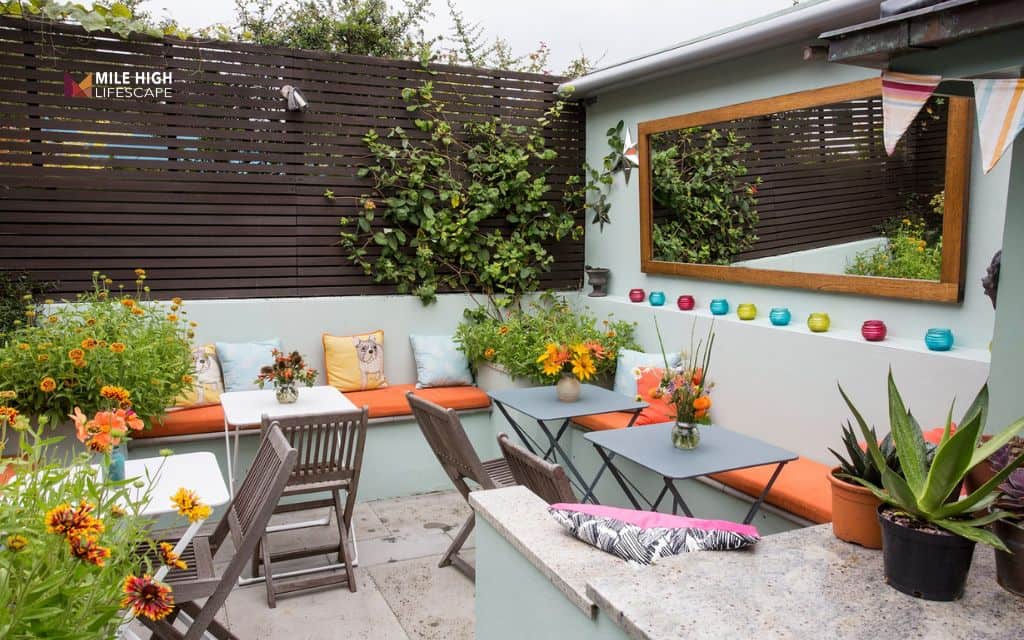
In enclosed terrace gardens, particularly small backyard terraces and rooftop garden spaces, mirrors are an effective design tool. A large outdoor mirror mounted on a wall or fence reflects the greenery, planting, and sky directly back into the space, visually doubling its apparent depth.
The reflection of plants and light creates the impression of a garden that extends further than it actually does. Cleverly positioned mirrors can make a compact terrace feel twice as spacious and twice as lush with no additional planting required.
10. Add built-in seating for entertaining
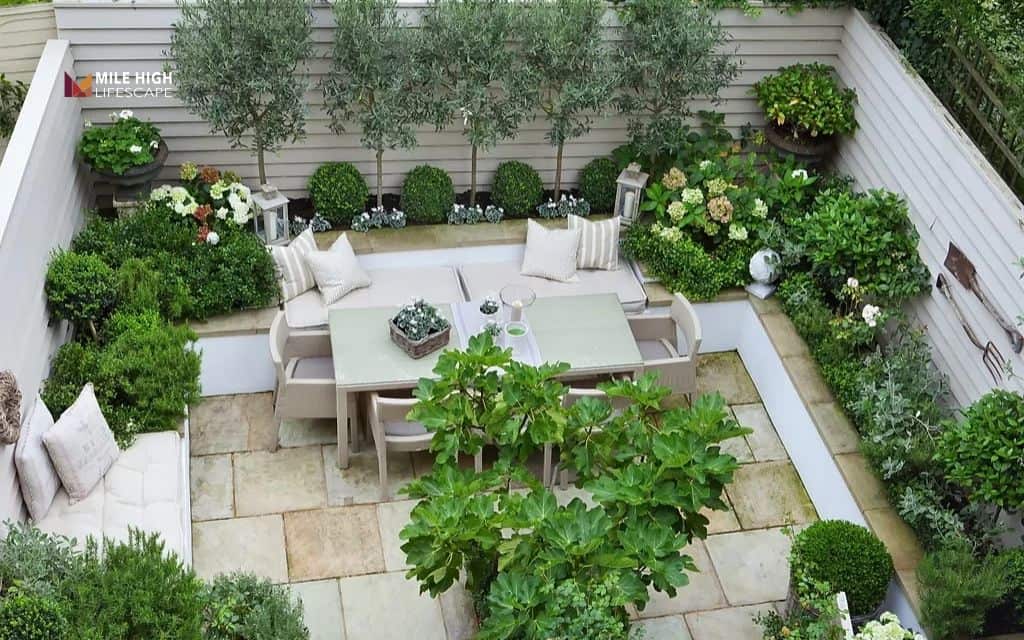
A landscape terrace is at its best when it invites people to sit, gather, and stay a while. Built-in sectional seating integrated into the terrace structure achieves this more efficiently than freestanding furniture. Seating built into retaining walls or raised platform edges eliminates the need for separate chairs or sofas that clutter a small space.
Concrete bench tops, timber seat boards across stone walls, or upholstered cushions on brick plinths all create generous seating that feels permanent and purposeful. The key is designing the seating as part of the terrace itself rather than adding it as an afterthought.
11. Turn sculptures into terrace focal points
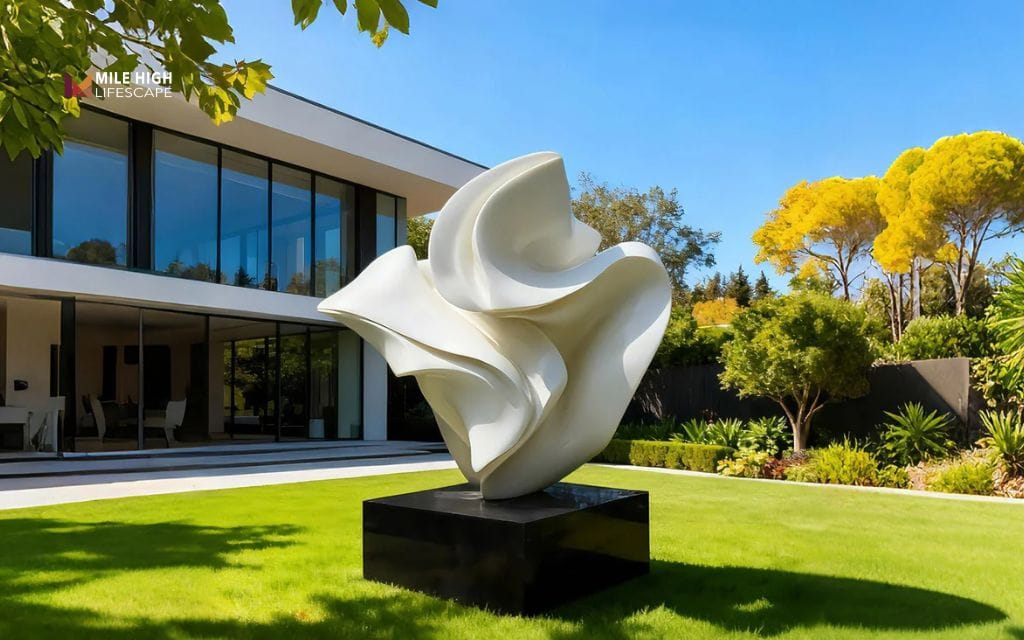
A well-chosen sculpture placed at the end of a terrace level, at the center of a planting bed, or at the top of a stairway does several things at once. It adds personality and artistic interest. It establishes a sense of scale. And it gives the terrace a sense of intention that elevates the whole design.
Stone sculptures complement natural stone terrace walls beautifully, blending age and texture into a harmonious whole. Metal sculptures, particularly in weathered bronze or corten steel, offer a contemporary alternative that develops character over time. Abstract forms tend to age better in garden settings than figurative pieces.
12. Create a minimalist green escape terrace
Not every terrace needs to be dramatic. Sometimes the most beautiful outdoor space is one that asks very little of the eye.
In a minimalist terrace, a single species of grass might sweep across one level. A pair of clipped box spheres might punctuate a stone wall. A gravel ground plane might be interrupted only by a carefully placed stepping stone path. Everything is chosen deliberately, and nothing is excessive.
This approach is well suited to small terrace garden spaces. It is also ideal for contemporary outdoor living where the goal is relaxation rather than stimulation. Low maintenance and high impact are the defining qualities of a minimalist terrace escape.
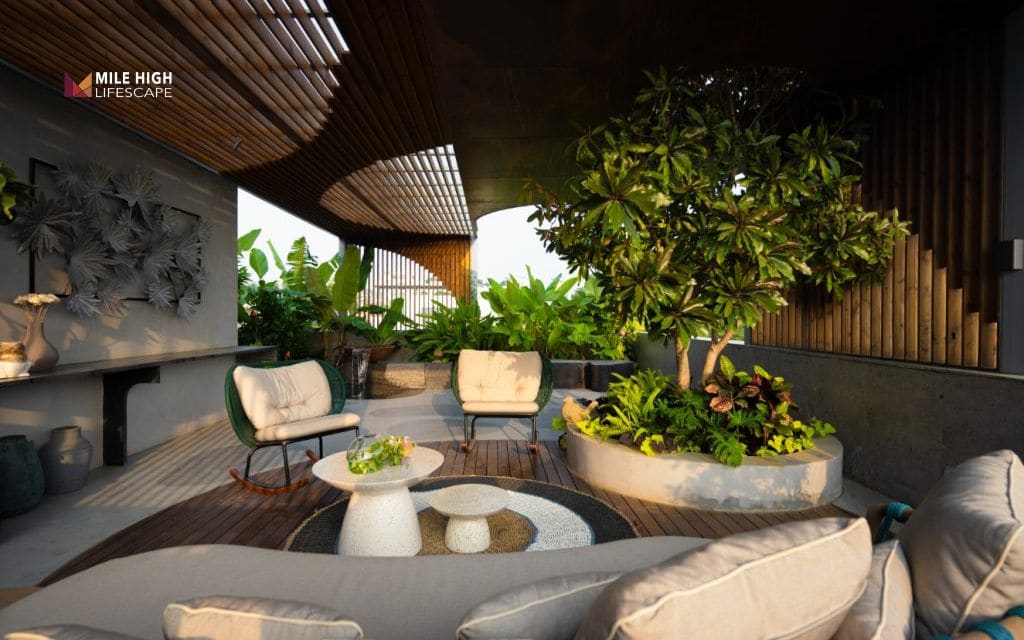
13. Build a vertical garden wall on the terrace
Vertical garden systems can be as simple as pocketed felt panels planted with succulents and herbs, or as elaborate as a fully irrigated modular planting framework. Either approach increases the total planting area of a small terrace without using a single additional square foot of floor space. This idea works well on rooftop and urban terrace gardens where walls are plentiful but ground space is scarce.
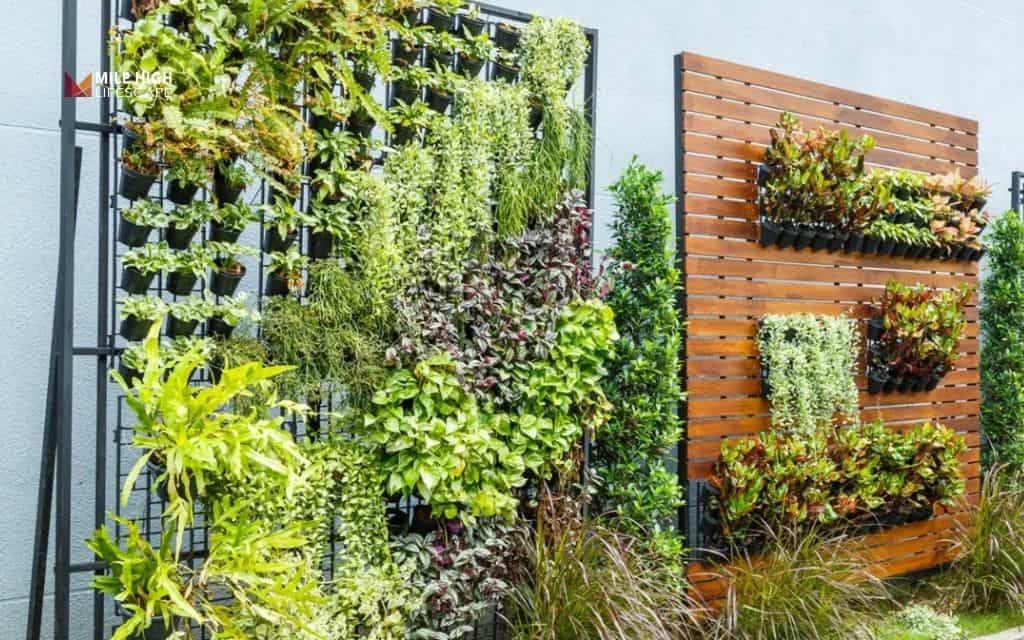
14. Design a Mediterranean-inspired terrace retreat
Lavender, rosemary, sage, and ornamental thyme are the workhorses of a Mediterranean terrace planting scheme. They thrive in full sun, require minimal watering once established, and fill the air with fragrance throughout the warm months. Combine them with plants like artemisia and the feathery texture of ornamental grasses for a palette that looks beautiful in any light.
A Mediterranean terrace retreat is one of the most achievable and rewarding terrace landscaping ideas for homeowners who want maximum atmosphere with minimum maintenance.
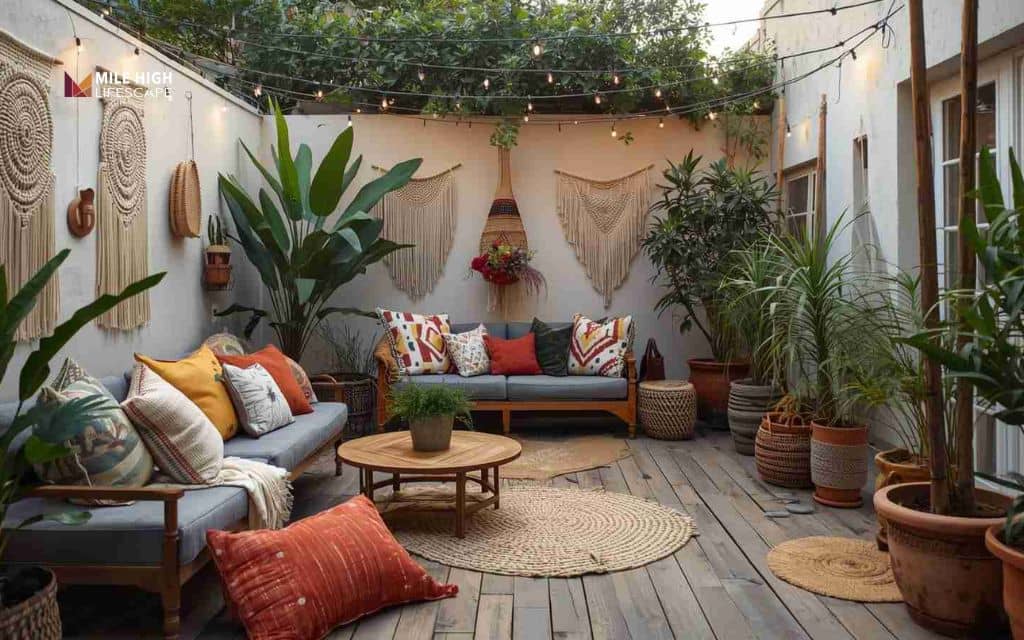
15. Create a cozy rooftop lounge garden
A terrace lawn or rooftop lounge garden turns a blank, exposed surface into one of the most desirable rooms in the house.
Container gardens are the backbone of a rooftop terrace lounge. Large planters filled with ornamental grasses, lavender, olive trees, and seasonal color plants create a soft enclosure and a sense of being surrounded by nature even high above street level.
Lightweight growing media and containers rated for rooftop use keep the structural load manageable. Comfortable outdoor furniture, outdoor rugs, and warm string lights complete the transformation from empty rooftop to genuine outdoor living room.
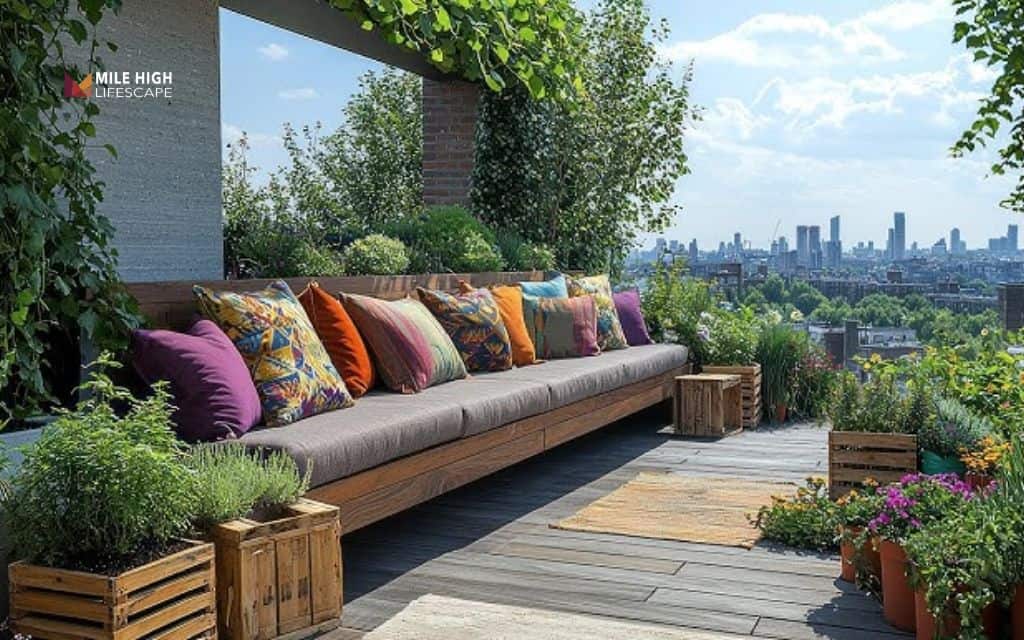
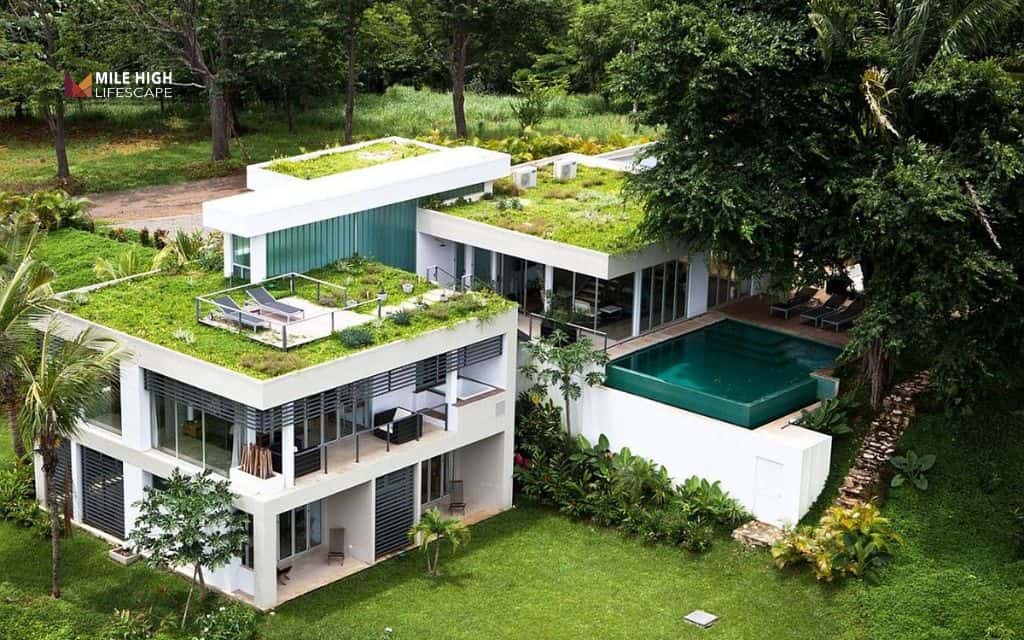
16. Build an eco-friendly green roof terrace
For homeowners committed to sustainable living, a green roof terrace is one of the most meaningful landscape investments available.
Green roof terraces play an important environmental role:
- They create habitat for pollinators such as bees, butterflies, and beneficial insects whose populations are under pressure in urban environments.
- They absorb and filter rainwater, reducing the volume of stormwater that flows into city drainage systems during heavy rain events.
- They help reduce the urban heat island effect by replacing heat-absorbing hard surfaces with living, cooling plant material.
Sedum mats, native wildflower mixes, and low-growing drought-tolerant plants are the most common choices for green roof planting because they require minimal growing medium depth and can tolerate the exposed, windy conditions typical of rooftop environments.
Read more: 20 Best Hillside Landscaping Ideas for Every Slope & Style
Conclusion
Landscape terraces are one of the most versatile and rewarding improvements you can make to a sloped, uneven, or underused outdoor space. Whether you are solving a practical problem like erosion, poor drainage, or a steep hillside, or simply looking to create a more beautiful and functional garden, terracing offers a solution that works at every scale and in every style.
Choose plants that suit the sunlight conditions on each terrace level, and favor species that match the maintenance time you realistically have available. Low-maintenance terrace gardens are not boring. They are simply well-planned.
Ready to bring your landscape terrace vision to life?
At Mile High Lifescape, we specialize in designing and building beautiful, functional terraced gardens that transform sloped and uneven yards into outdoor spaces you will love. From natural stone retaining walls to modern patio terraces, our experienced Denver landscaping team handles every detail, including drainage planning, material selection, and planting design, so you get results that are built to last.
Contact Mile High Lifescape today for a free consultation and let us turn your outdoor space into something truly special.
Frequently asked questions (FAQs)
Are terraced gardens expensive to build?
Costs vary depending on size, materials, drainage requirements, and retaining wall complexity. Simple timber or gravel terraces with smaller retaining walls can be quite budget-friendly, while large stone or concrete terrace systems with engineered drainage may require a more significant investment. Getting multiple quotes from landscape contractors helps establish realistic expectations for your specific site.
What plants grow best in terrace gardens?
Drought-tolerant plants, ornamental grasses, perennials, flowering shrubs, and native plants are among the best performers in terraced landscapes. Plants with deep or spreading root systems also help reinforce the soil between terrace levels. For Mediterranean-style terraces, lavender, rosemary, sage, and creeping thyme are reliable and beautiful choices.
How do terraces help with erosion?
Terraces slow the speed of water as it moves down a slope, which dramatically reduces the erosive force of runoff. The retaining walls and leveled soil platforms hold ground in place and prevent the kind of sheet erosion that strips topsoil from unprotected hillsides. When combined with good drainage design and plant cover, terrace gardens are one of the most effective erosion control strategies available to homeowners.
Can I build a terrace garden myself?
Small terrace gardens using timber edging, gravel, and raised beds are DIY-friendly for homeowners with basic landscaping skills. A single low timber retaining wall, for example, is well within reach for a motivated DIYer with a weekend and the right tools.
What is the difference between a terrace and a retaining wall?
A retaining wall is the structural component that holds soil in place on a slope. A terrace is the complete system, including the retaining wall plus the leveled planting or living area it creates. In other words, a retaining wall is one part of a terrace. You need retaining walls to build terraces, but a retaining wall on its own is simply a functional structure rather than a complete terraced garden feature.
What are the disadvantages of terracing?
Terracing does require upfront investment in planning, materials, and construction. Poorly designed terraces with inadequate drainage can cause retaining walls to shift or fail over time, which can be costly to repair. Steep sites may also require professional engineering or permits, adding to the overall project cost. Regular maintenance of retaining walls and drainage systems is also necessary to keep the terrace performing well season after season.
What is a backyard terrace called?
A backyard terrace is called a terrace or a terraced garden. Depending on the materials used and the style of the design, it may also be referred to as a terraced patio, a hillside garden, a retaining wall garden, or a raised garden bed system. In landscape architecture, the broader term grade change planting is sometimes used, but in everyday conversation, terrace or terraced garden is the most widely understood description.