Mulching tomato plants gives roots steady moisture, holds back weeds, and keeps soil off lower leaves. It also cuts the risk of soil-borne disease reaching the plant. Done wrong, mulch traps moisture against stems or keeps cold soil cold. This guide covers which materials to use, when to start, and how deep to spread them.
What is the best mulch for tomato plants? For most gardens, straw, shredded leaves, or dry grass clippings work well, and black plastic helps in cool springs. The sections below explain each choice, plus the timing, depth, and mistakes that decide whether mulching tomato plants helps or hurts.
Is mulch for tomatoes worth the effort?
Yes, mulching tomato plants pays off in most gardens. Mulch slows evaporation, moderates soil temperature, blocks weeds, and keeps fruit off bare soil. Soil type changes the return: sandy soil drains fast and gains the most, while clay soil holds water on its own and needs less help. Six benefits explain why mulch for tomatoes earns its place:
- Moisture: Mulch cuts evaporation, so soil stays evenly damp between waterings.
- Soil temperature: Mulch cools soil in summer heat and helps it hold warmth in spring.
- Weed control: Mulch blocks light, so fewer weeds compete with tomatoes for water and nutrients.
- Disease protection: Mulch limits rain splash that carries soil-borne spores onto lower leaves.
- Clean fruit: Mulch keeps fruit off the soil, which reduces rot.
- Soil health: Organic mulch breaks down into nutrients, improves soil structure, and prevents the crusting that blocks water.
Choosing mulch for tomato plants
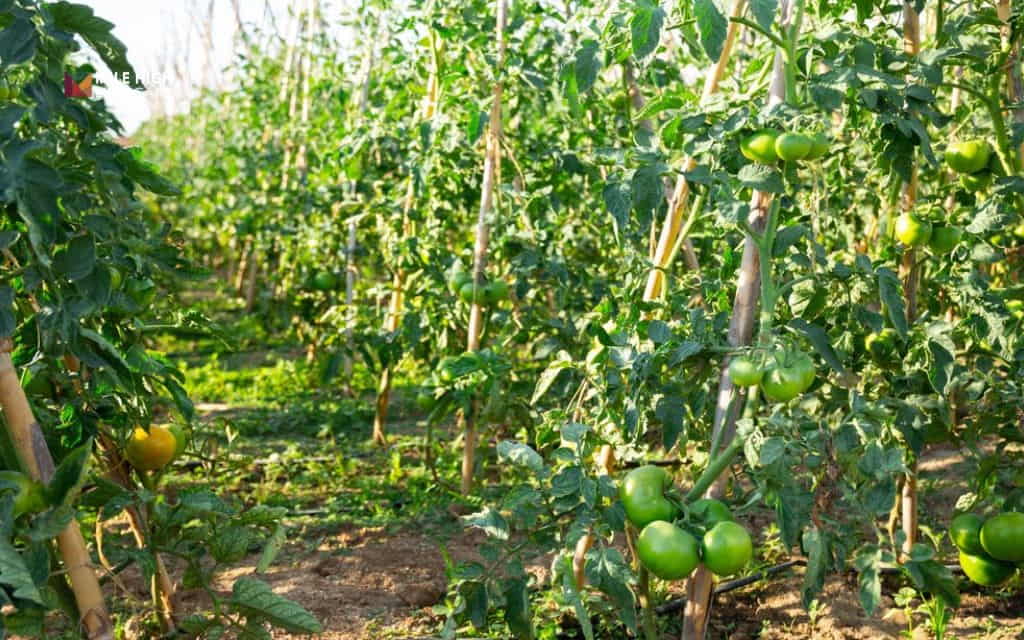
Good mulch for tomato plants lets water through, suppresses weeds, and carries no weed seeds or chemicals. Choose by budget, local supply, and whether you garden organically. Organic mulches feed the soil as they break down and need refreshing. Inorganic mulches last longer but add no nutrients.
Organic mulch types
Organic tomato mulch comes from plant material that breaks down and feeds the soil. Eight materials suit a tomato bed:
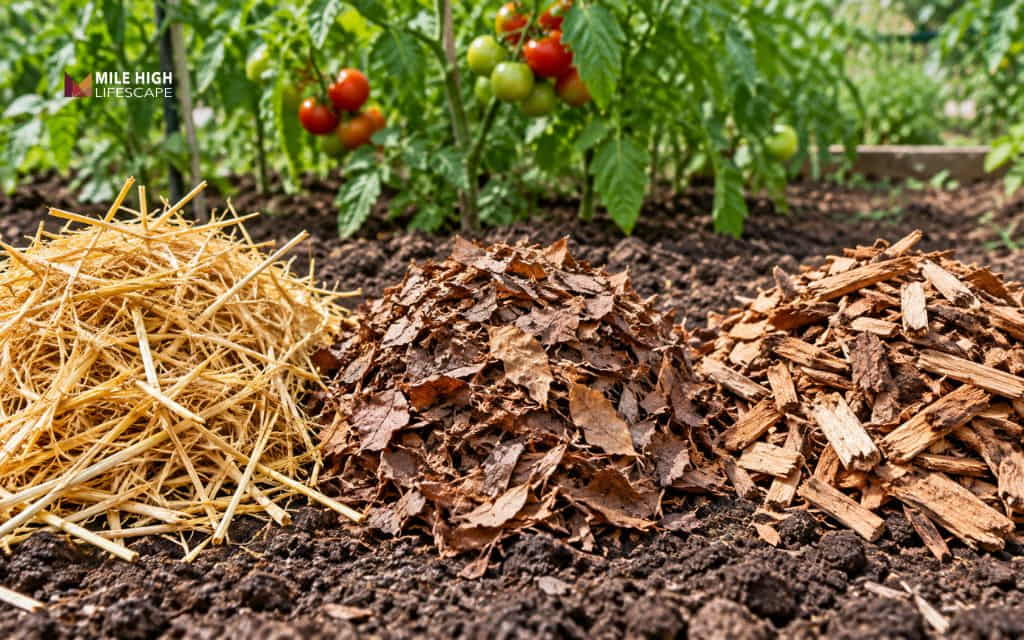
- Straw: Straw suppresses weeds and cools soil. Buy certified weed-free straw, and avoid hay, which carries weed seeds.
- Grass clippings: Dry clippings before use, and skip any from a lawn treated with chemicals. When you decide whether to bag or mulch lawn clippings, set aside a dry batch for the tomato bed.
- Shredded leaves: Shred leaves and let them dry first. Whole leaves mat down and smother plants, and loose leaves can blow away.
- Wood chips: Choose untreated chips and keep them on the surface. Chips last longer than clippings or leaves. Mixed into the soil, they can temporarily draw down nitrogen.
- Bark: Pick undyed bark. Finer blends cover better and release nutrients faster.
- Compost: Compost delivers nutrients faster and more evenly than some other mulches. Use it sparingly, because excess nitrogen favors leafy growth over blossoms and fruit.
- Newspaper: Lay sheets three thick around the root zone, then cover them with a light layer of organic mulch. Most newsprint now uses plant-based ink.
- Cocoa hulls: Cocoa hulls recycle a byproduct, but dogs find the scent attractive, so use caution if dogs visit your garden.
Inorganic mulch types
Inorganic options suit gardeners who want cover that does not decompose. Four types fit tomato beds:
- Black plastic: Black plastic warms soil in cool springs and blocks weeds. You lay it in spring and lift it in fall, and it needs irrigation underneath. Many gardeners pull it in midsummer and switch to organic mulch.
- Red plastic: Red plastic holds soil warmth and may raise tomato yields, with gains of up to 20% reported in research plots. Results vary by product, and some studies suggest it repels root-feeding nematodes.
- Landscape fabric: Landscape fabric blocks weeds but adds no nutrients.
- Gravel, lava rock, and rubber: These last for years and add no nutrients.
Mulch comparison at a glance
Compare depth, best use, and cautions for each material before you pick mulch for tomatoes:
| Mulch | Depth | Best for | Watch out |
| Straw | 3 to 6 inches | Weed control and summer cooling | Buy certified weed-free straw, not hay |
| Shredded leaves | 2 to 4 inches | Free mulch from your yard | Shred first, since whole leaves mat and blow away |
| Grass clippings | Thin, dry layers | Free mulch that feeds soil | Dry them first and skip treated lawns |
| Wood chips | 2 to 4 inches | Long-lasting cover | Use untreated chips and keep them on the surface |
| Bark | 2 to 4 inches | Tidy beds | Avoid dyed bark |
| Compost | 2 to 3 inches | Feeding soil | Use sparingly, since excess nitrogen favors leaves over fruit |
| Newspaper | 3 sheets thick | Cheap weed barrier | Cover with a light layer of organic mulch |
| Black plastic | Sheet | Warming soil in cool springs | Needs irrigation underneath and removal each fall |
| Red plastic | Sheet | Possible yield boost | Costs more, and results vary by product |
For most home gardens, straw or shredded leaves are the best mulch for tomato plants. They cost little and cool the soil. Choose black plastic for mulching tomato plants only if your springs run cold and you can irrigate underneath. In one university trial, wheat straw, shredded newspaper, and composted bark matched black plastic on yield at lower cost.
When to start mulching tomato plants
Start mulching tomato plants after transplanting, once the soil has warmed. In a cool spring, mulch keeps soil cold and slows growth, so wait. Follow soil temperature, not the calendar. One vegetable gardening guide puts full mulch coverage at soil temperatures between 60 and 70°F.
Go light around seedlings and add more once stems turn sturdy. By midsummer, mulching tomato plants with 3 to 4 inches of dried leaves, compost, clippings, or straw can lower soil temperature by 10°F or more. If you start with black plastic, many gardeners pull it in midsummer and cover the bed with organic mulch.
How to apply mulch around tomatoes
Steps to apply tomato plant mulch
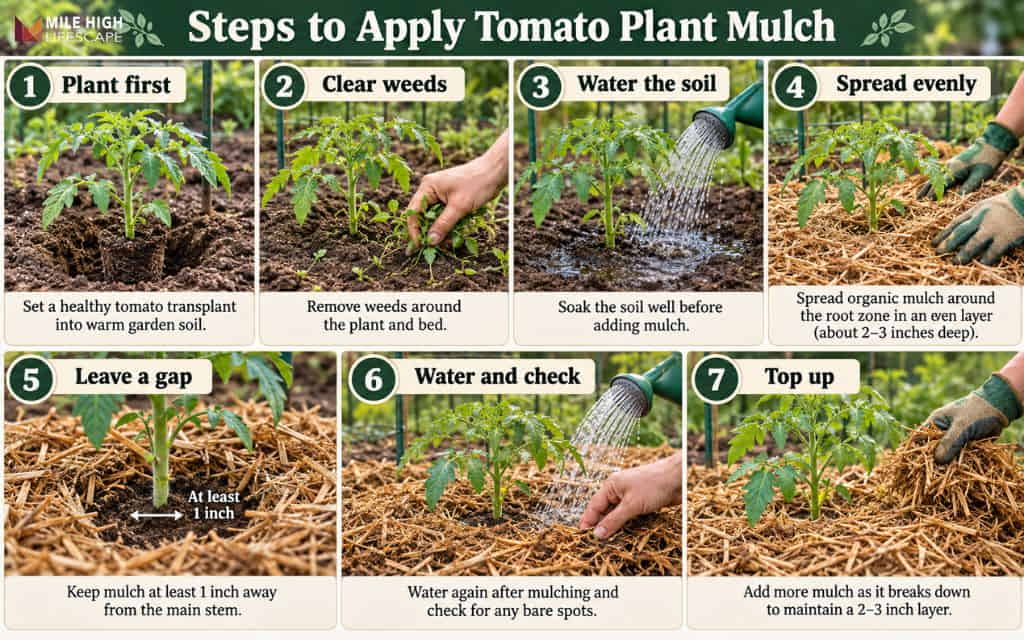
Follow these seven steps in order to apply tomato plant mulch without harming stems or roots:
- Plant first: Set transplants in warm soil, then start mulching tomato plants.
- Clear weeds: Pull weeds by hand so they do not grow through the mulch.
- Water the soil: Soak the bed before you spread anything.
- Spread evenly: Cover the root zone to the depth listed in the table above.
- Leave a gap: Keep mulch at least 1 inch from the main stem.
- Water and check: Water again after spreading, and look for bare spots.
- Top up: Refresh organic mulch as it breaks down.
Mulch depth and stem clearance
Mulching tomato plants at the right depth matters. Most organic mulches work at 2 to 4 inches, and straw at 3 to 6 inches. Keep the layer at least 1 inch from the main stem, because mulch that touches stems or leaves holds moisture against the plant and raises the chance of fungal disease.
Moisture and disease control
Mulch holds moisture, so check the soil before you water. Mulching tomato plants also blocks soil splash, one of the most common ways leaf diseases such as early blight and Septoria leaf spot reach tomatoes. Mulch reduces that risk but cannot remove disease already in the soil, so pair it with these habits.
- Water at the base: Use a soaker hose, or add drip irrigation during sprinkler installation, to deliver water to the roots and keep leaves dry.
- Support the plants: Cages or stakes lift leaves off the soil and improve airflow, which helps leaves dry.
- Watch spring rain: Straw can keep soil too wet in heavy spring rain, so thin the layer if the soil stays soggy.
- Clean up and rotate: Remove tomato debris after harvest or till it into the soil, and avoid planting tomatoes in the same bed every year.
Mulching tomatoes in pots
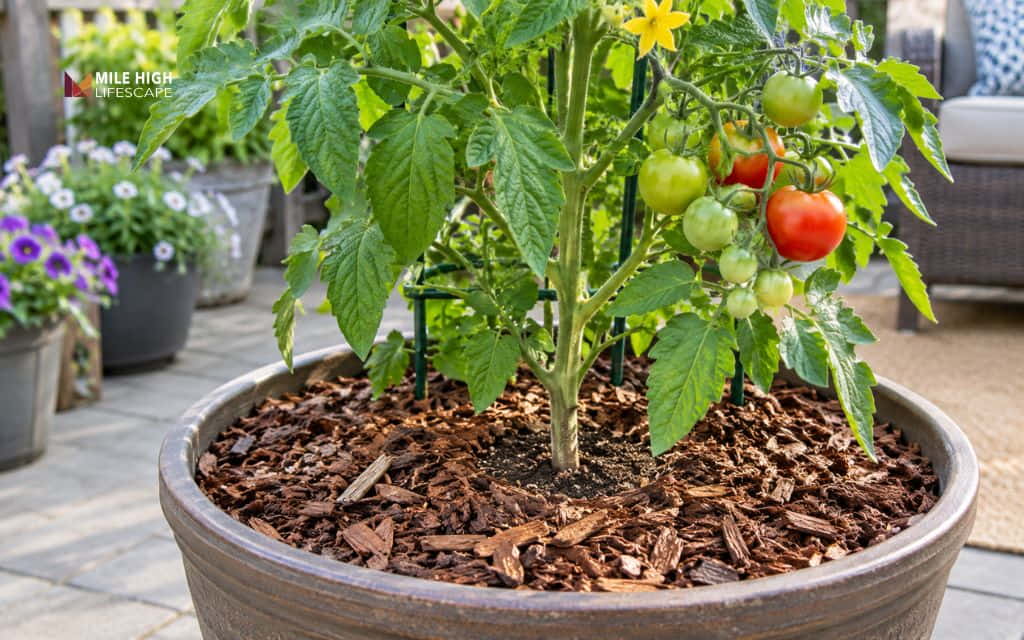
Mulching tomato plants in containers helps because pots lose water quickly. Use a lightweight organic mulch such as fine bark. Roots in a pot depend on air, drainage, and nutrients. Pebbles or plastic can work, but they add no nutrients, and plastic can limit water movement.
Mulching tomato plants in pots follows the same stem rule as garden beds, so leave a gap at the stem. Check the soil moisture under the mulch before each watering, and refresh the layer as it breaks down.
Mulching mistakes that harm tomatoes
Avoid these errors when mulching tomato plants:
- Mulching too early: Mulch on cold soil keeps it cold and slows growth.
- Piling mulch on stems: Mulch that touches stems traps moisture and invites fungal disease.
- Heavy layers on seedlings: Thick mulch around tender seedlings smothers them, so add more once stems turn sturdy.
- Using hay: Hay carries weed seeds and fills the bed with weeds, so use straw instead.
- Spreading wet clippings: Wet clippings mat down and block air and water from reaching roots.
- Digging in wood chips: Chips mixed into the soil can temporarily draw down nitrogen, so leave them on the surface.
- Overdoing compost: Too much nitrogen gives leafy plants and fewer blossoms and fruit.
- Ignoring damp mulch: Mushrooms usually signal mulch that stays damp and shaded. If you want to get rid of mushrooms in mulch, loosen or thin the layer so it dries between waterings.
Mulch installation in Denver from Mile High Lifescape
Prefer to hand off the work of mulching tomato plants and your other beds? Mile High Lifescape provides mulch installation for landscape and garden beds across Denver and the surrounding Front Range communities, with more than 20 years of landscaping experience. Projects range from a single-bed refresh to a full-property installation.
- Delivery and installation: Mulch arrives at your property and goes into your beds, so you do not haul material or rent equipment.
- Finished beds: Each bed gets clean edges, consistent depth, and proper clearance around stems and trunks, with no mulch volcanoes or buried root flares.
- Final cleanup: The job ends with cleanup, so you come home to finished beds.
- Mulch guidance: Mile High Lifescape recommends shredded or double-shredded wood mulch for most Denver properties, because it suppresses weeds, holds moisture, and breaks down slowly.
- Upfront estimates: Free on-site estimates give you a clear number before work begins, with no hidden fees.
Call us at (303) 877-9091 to request a free on-site estimate for your beds.
Frequently asked questions (FAQs)
What is the best mulch for tomatoes?
For most home gardens, straw and shredded leaves are the best mulch for tomatoes. Mulching tomato plants with them costs little, cools the soil, and feeds the bed as the mulch breaks down. Wood chips last longer, and black plastic suits cool springs. In one university trial, wood chips outyielded black plastic.
Can you use grass clippings as tomato mulch?
Yes, if they are dry and untreated. Mulching tomato plants with clippings works best when you spread them out to dry first, then lay a thin layer around the roots and keep it off the stem. Skip clippings from lawns treated with chemicals, because tomato plants can absorb those chemicals.
Does mulch prevent tomato blight?
Mulch reduces blight risk but does not prevent it. Mulching tomato plants blocks soil splash, which carries spores to lower leaves. The fungi behind early blight and Septoria leaf spot overwinter on plant debris in the soil, so also water at the base, support plants, clear debris in fall, and rotate beds.
Is black plastic mulch good for tomatoes?
It can be. Black plastic works for mulching tomato plants in cool springs because it warms soil and blocks weeds, and commercial growers use it widely. It takes more labor than organic mulch, needs irrigation underneath, and comes up each fall. Many gardeners pull it in midsummer and replace it with straw or clippings.
Can you mulch tomatoes with newspaper?
Yes. Mulching tomato plants with newspaper works when you lay it three sheets thick or shred it, then cover it with a light layer of organic mulch to hold it in place. Most newsprint now uses plant-based ink. In one university study, shredded newspaper produced yields comparable to black plastic.
Should you remove mulch at season’s end?
Remove tomato debris after harvest, since the fungi behind early blight and Septoria leaf spot overwinter on it. Pull up plastic sheeting each fall, and store red plastic if you plan to reuse it. Organic mulch breaks down into the soil over time.
How often should you add more mulch?
Mulching tomato plants takes upkeep, so add more when the layer thins. Organic mulches break down and need refreshing, and midsummer is a good time for a thicker layer. Wood chips decompose slowly, so you may not need to replace them during the season.