Both pea gravel and river rock are popular decorative aggregates in Denver landscapes, and for good reason. They handle our semi-arid climate beautifully, require minimal water, and can last decades with proper installation.
But they’re not interchangeable, and choosing the wrong one can mean uncomfortable walkways, washed-out beds after storms, or a look that clashes with your home’s style.
This guide delivers a clear comparison built on Denver’s conditions. You’ll learn which material suits your project type, your budget, and your tolerance for ongoing maintenance. By the end, you’ll know exactly which stone belongs in your yard.
Quick comparison: Pea gravel vs river rock at a glance
The table below shows how pea gravel and river rock compare across the factors that matter most for Denver landscapes:
| Factor | Pea Gravel | River Rock |
| Typical size range | ¼ – ½ inch diameter | ¾ – 2+ inches diameter |
| Shape & texture | Small, rounded, uniform; smooth to touch | Larger, irregular, varied; textured surface |
| Common colors | Tan, gray, buff, mixed earth tones | Gray, brown, tan, white, multi-colored |
| Best uses | Garden paths, between pavers, play areas, light patios, bed top-dressing | Dry creek beds, drainage swales, downspouts, foundation borders, xeriscape accents |
| Cost | Lower per cubic yard | Higher per ton/cubic yard |
| Maintenance level | Moderate (needs raking, edging, occasional top-ups) | Low (stable once installed, minimal adjustment needed) |
What is pea gravel?
Characteristics
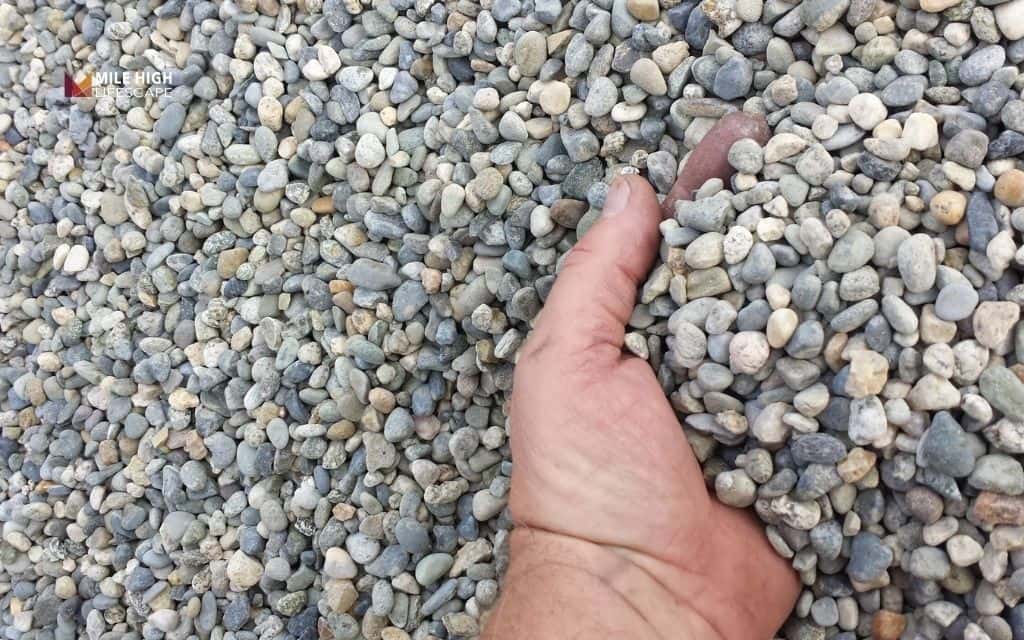
Pea gravel consists of small, rounded stones typically measuring ¼ to ½ inch in diameter – about the size of, well, peas. These smooth stones are weathered in riverbeds over time, or they’re mechanically tumbled from crushed rock to achieve those soft, rounded edges.
What makes pea gravel distinctive is its uniformity. Unlike larger river rock with dramatic size variation, pea gravel creates an even, carpet-like surface.
You’ll find it in natural earth tones – tans, grays, creams, and warm browns that blend with Denver’s high desert landscape. Some suppliers offer blended mixes that create subtle color variation, mimicking the look of a natural riverbed.
Common uses
Pea gravel works best in applications where people walk or where a soft, uniform appearance matters.
- Garden paths benefit from the comfortable surface. The material fills gaps between pavers and stepping stones, creating visual flow while allowing water to drain.
- Informal walkways in cottage-style gardens use pea gravel to soften hardscape edges. The material works for play areas when properly contained, though it requires maintenance to prevent displacement.
- Light-use patios gain drainage and a casual European courtyard feel.
- Some gardeners apply pea gravel as decorative top-dressing for container plants or small beds. The small stones suppress weeds and retain soil moisture.
Pros & cons of pea gravel
Pros:
- Relatively inexpensive: Pea gravel typically costs $30-60 per cubic yard in the Denver metro area, making it one of the most budget-friendly landscape rock options.
- Comfortable underfoot: The smooth, uniform size makes it genuinely pleasant to walk on, which matters for high-use areas like paths to gardens, side yards, and around outdoor living spaces.
- Good drainage in flat or gently sloped areas: The spaces between small stones allow water to percolate through rather than pooling on the surface. This drainage benefit is significant for preventing muddy pathways and protecting plant roots from waterlogging.
- Easy to refresh and move around: Unlike larger rock installations that require heavy equipment to adjust, you can easily rake pea gravel back into place, add more material when needed, or even change your mind and repurpose it elsewhere in your yard.
Cons:
- Can migrate easily on steeper slopes: You’ll need edge restraints and a compacted base layer to keep it in place. On any slope visible from the street, consider whether you’ll spend spring mornings raking gravel back uphill.
- Tracks into the house if not contained: Those smooth little stones love to hitch rides on shoes, paws, and kids’ toys. Without proper edging and transition zones (like a concrete step or paver landing), you’ll be sweeping pea gravel off floors regularly.
- Needs edging and occasional raking/top-ups: Budget for installing edging materials upfront, and plan on spending 1-2 hours quarterly raking to smooth out footprint depressions. You’ll likely need to add a few wheelbarrows of fresh gravel every 3-5 years.
See more: Water-wise river rock flower beds: 15 creative designs for Denver gardens
What is river rock?
Characteristics
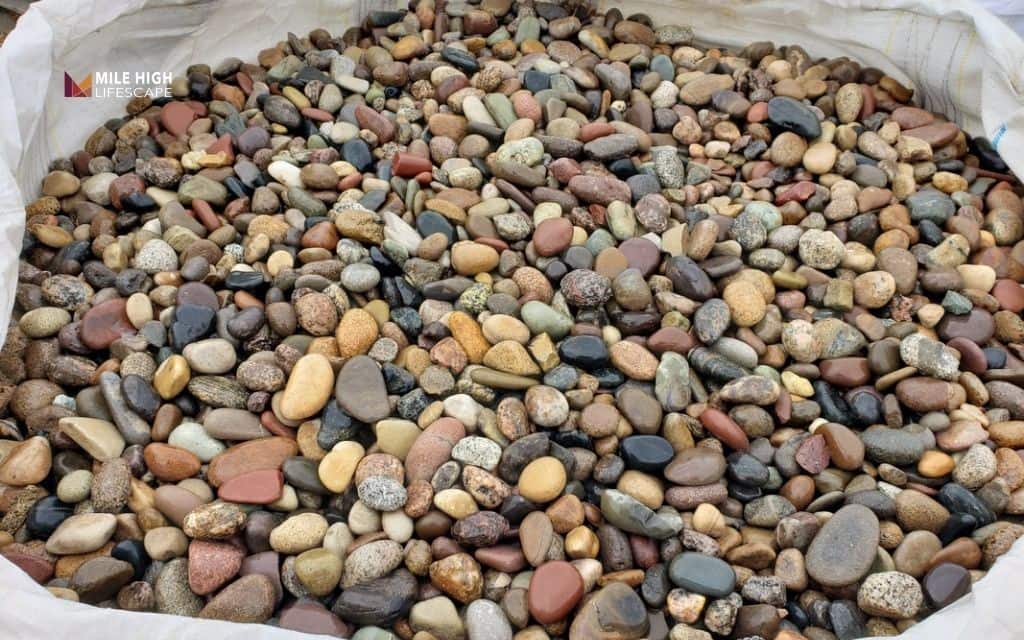
River rock ranges from ¾ inch to several inches in diameter.
Natural water action rounds these stones, though they retain more irregular shapes than pea gravel. Each piece shows unique character – some oval, some nearly spherical, others showing flat faces or elongated forms.
The varied shapes and sizes create visual interest. Colors span the spectrum depending on source: gray granite, tan sandstone, white quartz, brown limestone, and mixed varieties that combine multiple rock types in one load.
The larger size and weight keep these stones in place. Wind and water struggle to move them.
Common uses
River rock excels in drainage applications:
- Dry creek beds use river rock to channel storm runoff while creating natural-looking features.
- Drainage swales lined with river rock prevent erosion and handle Denver’s intense but brief thunderstorms.
- Foundation plantings benefit from river rock borders around downspouts. The stones disperse water and prevent soil splash-back onto siding.
- Xeriscape designs use river rock as accent bands that separate mulched areas from turf or hardscape.
The material creates focal points. Place river rock around specimen trees or water features to draw the eye. Use it as borders that define garden beds without the maintenance demands of living edges.
Pros & Cons
Pros:
- Excellent for drainage channels and erosion control: The large stone size and wide gaps allow massive volumes of water to flow through quickly. This makes it invaluable for problem areas where water concentrates.
- Visually bold; great for focal areas: River rock commands attention in a way pea gravel never will. Use it strategically to draw the eye toward architectural features, frame water features, or create that “mountain stream” aesthetic that feels.
- Less likely to compact than small gravel: Because the stones are larger and have bigger gaps, foot traffic and settling don’t pack river rock down into a solid mass the way finer materials can.
- Very low long-term maintenance: Once installed, river rock stays put. You might pull a few weeds that sprout in wind-blown soil on the surface, but you won’t be raking it smooth, topping it up, or fighting migration.
Cons:
- Higher upfront cost per ton/yard than many gravels: River rock typically runs $50-120 per cubic yard or ton in Denver, depending on size, color, and source.
- Can be uncomfortable underfoot: The irregular surface with large gaps between stones makes walking across river rock unpleasant in anything less than sturdy shoes. Don’t use it for pathways, patio surfaces, or anywhere people will be walking regularly.
- Heavy to move and adjust once installed: A cubic yard of river rock weighs roughly 2,400-2,800 pounds. Once you’ve placed it, making changes means significant physical labor or hiring equipment.
Pea gravel vs river rock: Key differences that matter in Denver
Size, shape, and comfort underfoot
Pea gravel measures ¼ to ½ inch. The small, rounded stones create a comfortable walking surface. Bare feet tolerate pea gravel paths without discomfort. This makes it suitable for garden walkways, pool areas, and seating spaces.
River rock spans ¾ to 2+ inches. The larger, irregular surface feels lumpy underfoot. Walking barefoot across river rock proves uncomfortable. Use it for visual accents and drainage, not pathways where people walk regularly.
Drainage and erosion control
Both materials drain water, but they handle different conditions. Pea gravel works in flat areas and as base layers under pavers. The small stones provide adequate drainage for moderate water flow.
Denver’s slopes expose pea gravel’s limitation. Heavy storms wash stones downhill. Even gentle grades show migration after intense rain.
River rock excels in high-flow situations. Large gaps between stones move water rapidly. Downspout areas, dry creek beds, and French drains need this capacity. The stones stay in place during Denver’s summer thunderstorms.
Aesthetics and design style
Pea gravel creates a neutral, uniform surface. The material supports designs where plants take center stage. It fits European courtyard styles and formal gardens common in Denver’s historic neighborhoods.
River rock makes a visual statement. The bold appearance fits Colorado’s mountain aesthetic. Use it to create focal points or reinforce naturalistic xeriscapes. The varied colors and shapes change with light throughout the day.
Maintenance over time
Pea gravel requires active management. Foot traffic creates depressions that need raking. Storms move stones, especially near edges. Plan to add material every 3 to 5 years to replace stones lost to displacement and soil compaction.
River rock sits stable after installation. The stones don’t move. You might pull occasional weeds between rocks, but the material itself needs no adjustment. Your initial investment delivers decades of service.

Cost comparison – Pea gravel vs river rock for Denver projects
Material cost ranges
Material costs fluctuate with market conditions and source location. Current Denver-area pricing shows general patterns that help budget planning.
- Pea gravel costs less per cubic yard than river rock. Local suppliers price pea gravel in a range that makes it accessible for larger projects. Coverage per ton depends on installation depth – a 2-inch layer covers more square footage than a 4-inch layer.
- River rock costs more per ton or cubic yard due to processing and transport. The larger stones require more energy to extract, sort, and deliver. Premium colors or specific size grades add to the base price.
Calculate your total material need before comparing costs. Measure the area in square feet and determine appropriate depth. Paths need 2 to 3 inches of pea gravel; drainage features require 4 to 6 inches of river rock for proper function.
Online calculators help convert measurements to tons or cubic yards, but verify with your supplier for accurate estimates.
See more: How much does river rock cost?
Installed vs DIY cost
Installation costs exceed material costs for most projects. Professional installation includes site preparation, base material, fabric installation, edging, and placing the rock.
Site preparation determines labor intensity. Removing existing sod, clay, or old rock adds time and cost. Grading to create proper drainage slopes requires equipment and skill. Base materials like road base or crusher fines create stable foundations that prevent settling.
DIY installation saves labor costs but demands time and physical effort. Small projects – a 4-foot by 10-foot path or a 3-foot by 8-foot drainage strip – suit DIY work. Large projects strain DIY capabilities. Moving several tons of rock, installing proper base layers, and achieving correct grades challenges most homeowners.
Complex projects justify professional installation. Drainage systems that protect foundations need correct design and execution. Steep slopes require retention systems and proper engineering.
How to choose between pea gravel vs river rock
Start with your project type
The first and often most decisive factor is simply what you’re trying to accomplish. Some applications clearly favor one material over the other.
Choose pea gravel when your project is:
- Pathways and walkways where people will walk regularly – between garden beds, along fence lines, around the side of the house, or connecting different outdoor spaces
- Seating and patio areas for bistro sets, fire pit surrounds, or casual outdoor lounging spots where comfort underfoot matters
- Play areas or dog runs where you need a forgiving surface that’s gentle on knees and paws (though expect ongoing cleanup)
- Decorative accents where you want subtle texture without bold visual presence – around containers, as a top-dressing in planting beds, or filling gaps between pavers
Choose river rock when your project is:
- Drainage management including dry creek beds, swales, downspout discharge zones, or French drain surfaces where water concentrates
- Erosion control on slopes or in areas where Denver’s intense storms create runoff problems
- Foundation perimeters where you need excellent drainage to protect your home’s structure from moisture and freeze-thaw damage
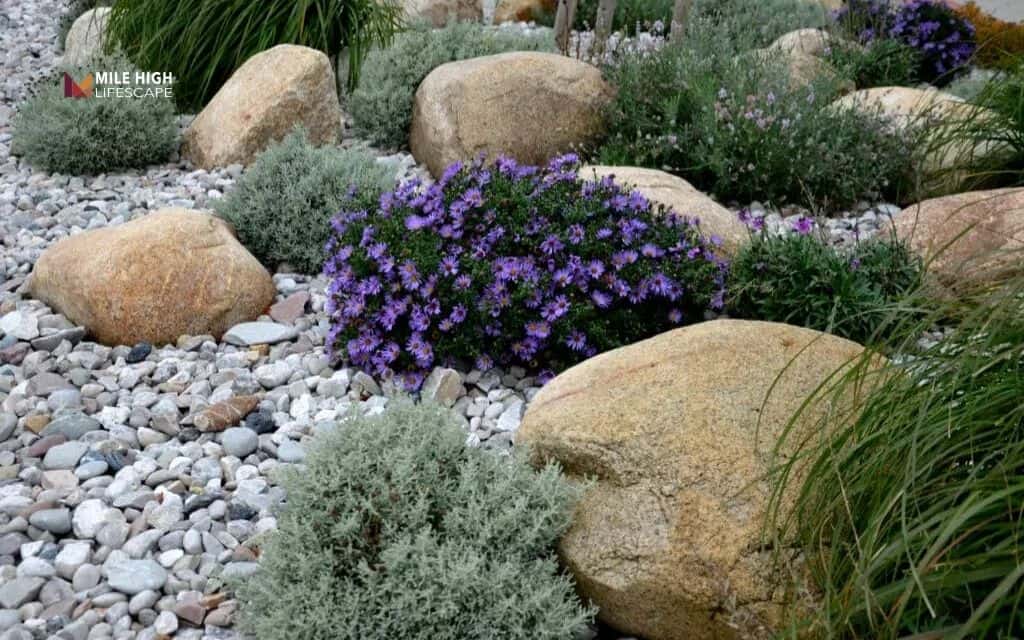
- Bold accents and focal points in xeriscapes, around boulders or water features, or as contrasting bands in ornamental grass plantings
Consider comfort, look, and maintenance
Ask specific questions about how you’ll use the space:
- Will people walk here barefoot? Pea gravel wins.
- Do you want visitors to notice the landscape or the plants? Pea gravel stays in the background; river rock draws attention.
Maintenance tolerance shapes long-term happiness. If you enjoy garden tasks and don’t mind raking paths or adding material every few years, pea gravel works fine. If you want a “set it and forget it” solution, river rock delivers.
About aesthetic preferences, walk outside and look at your home’s architecture.
- Modern, contemporary, or traditional homes with clean lines often pair beautifully with pea gravel’s uniform texture.
- Ranch-style homes, mountain contemporary, or rustic designs frequently look more cohesive with river rock’s natural variation.
Although visual preference matters, let function guide the choice. A beautiful path that tracks stones into your house or a drainage feature that fails during storms creates frustration that outweighs aesthetics.
HOA and neighborhood style
Homeowner associations in Denver sometimes specify approved materials or design styles.
Review your HOA guidelines before purchasing materials. Some associations prefer uniform appearances across the neighborhood. Others encourage individual expression within certain parameters.
Neighborhood context influences choices. Historic neighborhoods with established garden styles benefit from traditional materials. A Capitol Hill cottage garden fits with pea gravel paths. A mountain-view property in the foothills matches river rock’s natural aesthetic.
When in doubt, take a walk around your neighborhood with your phone camera. Document examples of both materials used well, and note which aesthetic feels more aligned with your home’s style and your personal preferences.
Conclusion
The pea gravel vs river rock decision depends on your specific project needs. No universal winner exists. Match the material to the job.
Walk your property and identify problem areas: muddy paths, poor drainage zones, or dead lawn strips. Match each zone to the appropriate material. Comfortable walking paths benefit from pea gravel. Heavy drainage areas need river rock.
Start with one small project to observe how each material performs in your microclimate. Denver’s conditions vary from neighborhood to neighborhood. Your yard’s specific exposure, slope, and soil determine which material succeeds.
Both materials serve Denver landscapes well when placed correctly. Success comes from understanding the differences and applying that knowledge to your conditions.
___________
For nearly two decades, Mile High Lifescape has been proudly serving the Denver Metro area as the go-to landscape company. With a reputation for excellence, we offer a comprehensive range of friendly and professional landscape rock services.
Contact Mile High Lifescape at (303) 877-9091 or hello@milehighlifescape.com to discuss your project. Our team helps you select materials that match your goals, budget, and maintenance preferences.
Frequently asked questions (FAQs)
Is pea gravel or river rock better for drainage in Denver yards?
River rock handles drainage better in most Denver applications. The larger gaps between stones allow rapid water movement through swales and downspout areas. Pea gravel works for flat areas with moderate flow but struggles on slopes during Denver’s intense summer storms.
Which is cheaper: pea gravel or river rock?
Pea gravel costs less per cubic yard upfront. However, it requires periodic top-ups every 3 to 5 years. River rock costs more initially but needs minimal ongoing investment, often making it more economical over 10+ years.
Can I mix pea gravel and river rock in the same landscape?
Yes, mixing both materials works well. Use river rock in drainage areas and around foundations; install pea gravel for paths and between pavers. Use edging at transition zones to prevent the materials from mixing.
What depth should I use for pea gravel walkways?
Install pea gravel paths 2 to 3 inches deep over a compacted base layer. This depth provides comfortable walking while minimizing displacement. Deeper applications create loose, unstable surfaces.
Does pea gravel wash away more easily than river rock in heavy storms?
Yes, pea gravel migrates significantly during Denver’s thunderstorms, especially on slopes. River rock stays stable due to its weight and size. Use river rock in any location facing erosion risk or heavy runoff.
Which is better around foundations: pea gravel or river rock?
River rock works better around foundations and near downspouts. It disperses water rapidly without washing away and prevents soil splash-back onto siding. Pea gravel migrates from foundation areas, creating gaps that allow water to pool against the house.