
Backyard slopes look harmless until soil starts shifting after every hard rain. Homeowners staring at an eroding hillside or a yard that slants toward the foundation often start researching the purpose of retaining wall systems before they understand what these structures actually do. The answer reaches far beyond holding back dirt. It touches drainage, usable space, and how a property holds up over time.
The purpose of retaining wall construction
Retaining walls exist to hold back soil at a point where the ground changes elevation. Gravity pulls soil downward and outward, a force engineers call lateral earth pressure. Without something to resist that force, soil on a slope shifts, settles, or slides. The wall absorbs and redirects that pressure, keeping the higher ground in place instead of spreading across the yard below.
This structural role separates a true retaining wall from a low garden border or edging feature. Retaining walls carry load, holding cubic yards of soil in position year after year through freeze cycles, heavy rain, and the constant pull of gravity.
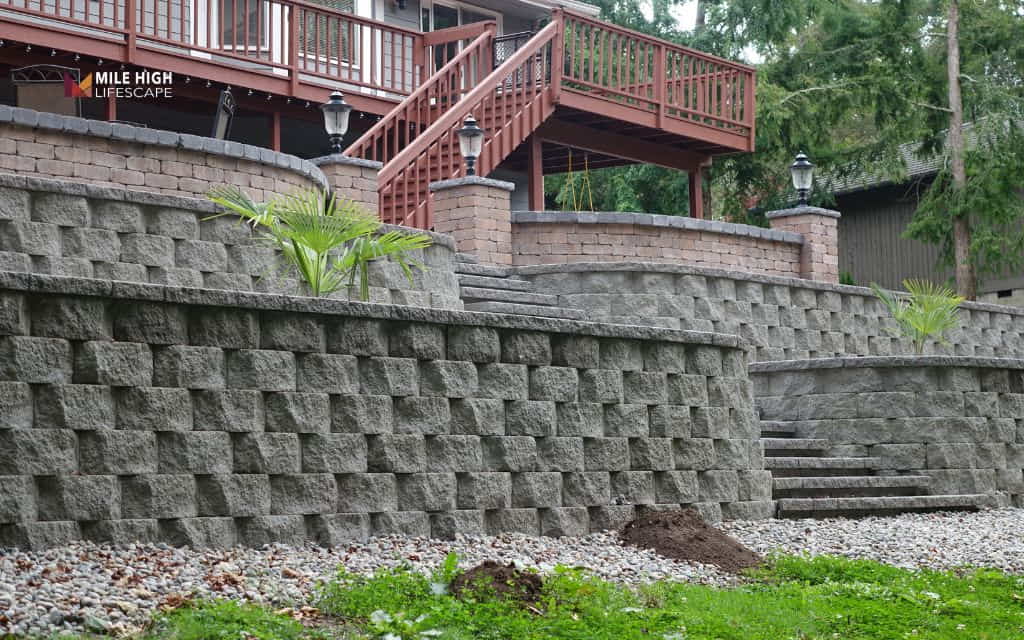
Retaining walls stabilize slopes and prevent erosion
Steep or uneven ground erodes fast. Rain strips loose topsoil, carries it downhill, and leaves bare patches where grass and plants struggle to grow. Retaining walls interrupt that process, breaking a long slope into shorter, flatter sections, often called terracing, so water has less distance to gather speed and less soil to carry with it.
Stabilizing a slope protects more than the surface. Loose, shifting soil can undermine a driveway, a patio, or the foundation of a house sitting near the grade change. Walls built to resist lateral pressure keep that movement contained, protecting the structures and plantings above and below them.
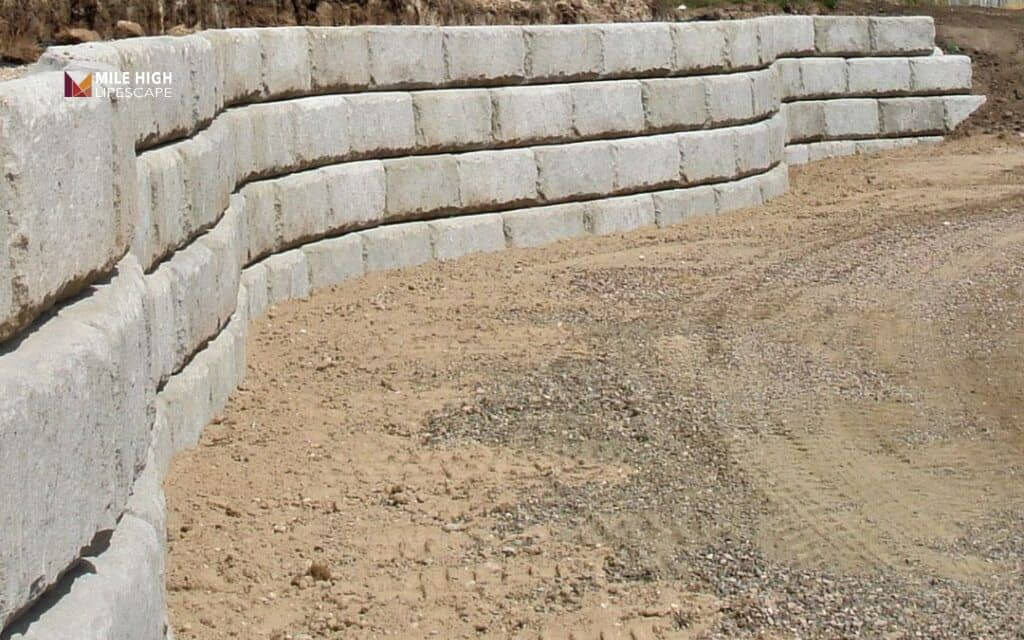
Retaining walls create level, usable outdoor space
Flat ground works harder than a slope. Retaining walls turn unusable hillside into a level surface, opening space for a patio, a garden bed, or a play area that a sloped yard could never support. Terraced walls can stack several flat sections up a hillside, multiplying usable square footage on a lot that once offered none.
That level space also improves how people move through a yard. Instead of navigating an awkward slope, a homeowner gets a flat path or landing between terraces, making the property easier and safer to use.
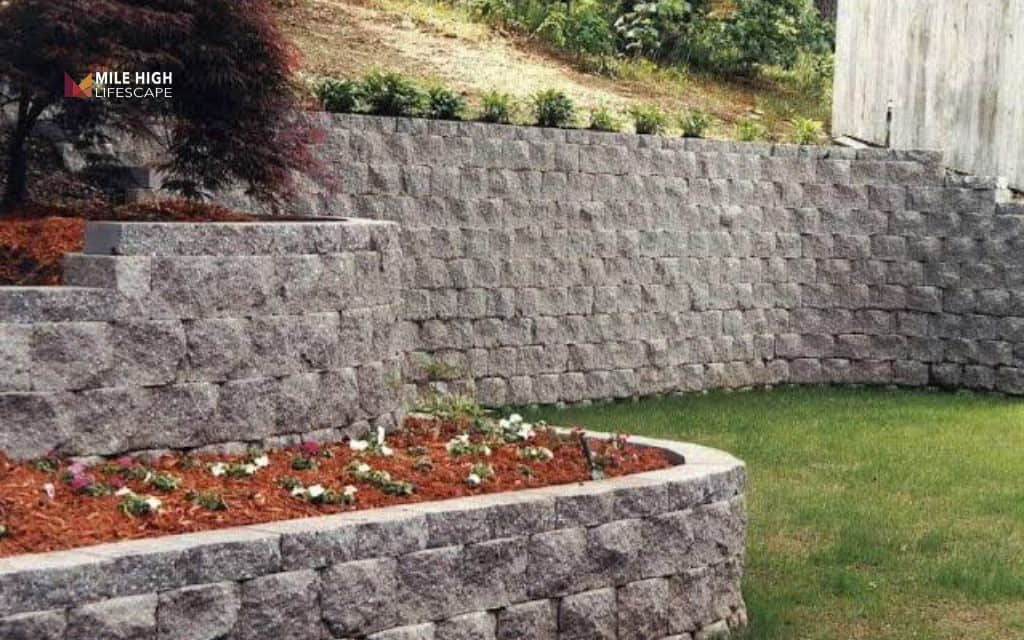
Retaining walls manage drainage and water pressure
Water is the main threat to a retaining wall. When it collects behind a wall instead of draining away, it adds weight and hydrostatic pressure to a structure already resisting the pull of the soil in front of it. Over time, that added pressure can crack, bow, or topple even a well-built wall.
Proper drainage prevents this. Gravel backfill, drainage pipe, and weep holes give water a path out of the soil instead of letting it pool against the wall. Any retaining wall project should treat drainage as part of the structure, not an afterthought added once problems appear.
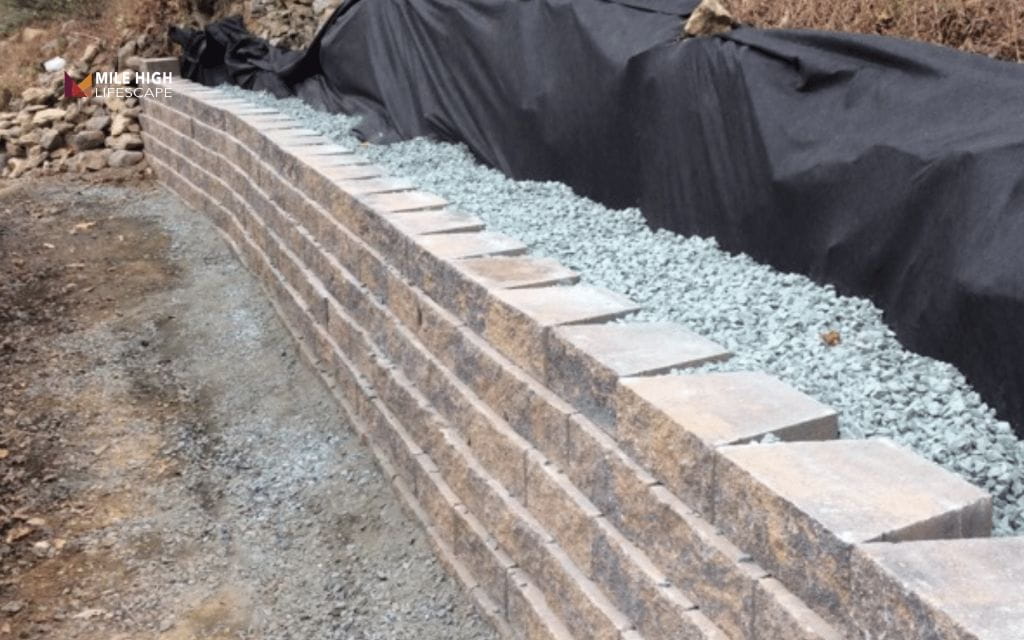
Retaining walls enhance landscape design
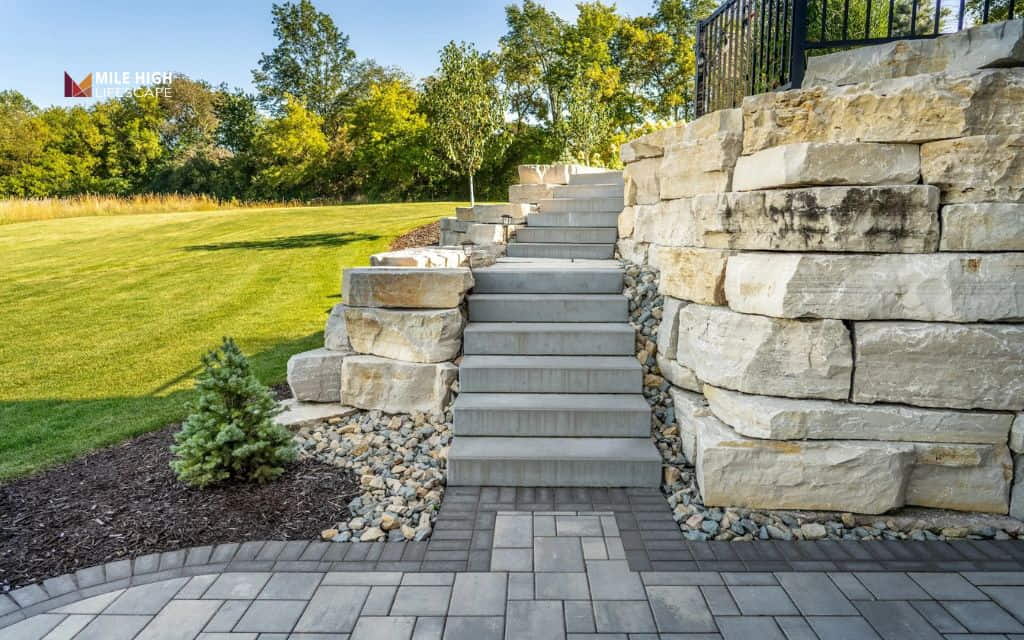
Retaining walls do not have to look purely functional. Stone, concrete block, and timber all bring different textures and colors to a yard, and a wall can double as a design anchor for a patio, a garden bed, or a walkway. Some walls are built wide and flat on top, turning the structure into extra seating for a gathering space.
Designed well, a retaining wall ties separate areas of a yard together instead of looking like an isolated fix for a slope problem. It becomes part of the landscape rather than something bolted onto it.
Mile High Lifescape brings a full landscaping service to every wall project, working stone, lighting, and other hardscape features around it so a patio, a walkway, and outdoor lighting read as one connected design instead of separate projects added on over time.
Decorative walls vs. structural retaining walls
Not every wall in a yard qualifies as a true retaining wall. Confusing a decorative wall with a structural retaining wall obscures the real purpose of retaining wall construction, and treating a structural need as a decorative project invites failure down the road.
| Aspect | Decorative wall | Structural retaining wall |
| Function | Holds back a few inches of mulch or soil along a flower bed or walkway edge | Holds back soil at a real elevation change and resists ongoing lateral earth pressure |
| Load carried | Little to no load | Significant, sustained soil weight |
| Engineering needs | Rarely required | Often required, especially for taller or load-bearing walls |
| Typical use | Garden edging, walkway borders | Sloped yards, grade changes, erosion-prone areas |
When to consider professional design and installation
Height, load, and soil conditions all raise the stakes of a retaining wall project. Walls supporting a driveway, a patio, or a structure above them carry more force than those holding back a simple flower bed. Complex soil, a steep grade, or a wall built taller than a homeowner can safely assess on their own all point toward professional design.
Permit and engineering requirements differ by city and county, so a wall that needs no permit in one area may need a stamped engineering plan in another. Checking local building codes before starting a project, especially for taller walls or ones bearing additional load, prevents costly rework and keeps the structure safe.
Conclusion
Retaining walls earn their place in a yard through the practical purpose of retaining wall construction: holding soil, stopping erosion, managing water pressure, and turning unusable slope into functional space, all while adding a design element to the landscape.
Homeowners across the Denver Metro area rely on Mile High Lifescape for retaining walls built to handle real soil and water pressure. We also handle drainage solutions and erosion prevention, so a new wall stays protected against the water damage that causes most failures. Call (303) 877-9091 to talk through what your slope needs.
Frequently asked questions (FAQs)
Does every sloped yard need a retaining wall?
No. Mild slopes with healthy groundcover may erode very little on their own. Retaining walls become worthwhile when erosion is active, the grade threatens a structure, or a homeowner wants to convert the slope into usable flat space.
What is the difference between a retaining wall and a garden wall?
Retaining walls hold back soil at a real elevation change and resist lateral earth pressure. Garden walls are typically decorative, holding a few inches of soil or mulch with little structural load behind them.
Can poor drainage really cause a retaining wall to fail?
Yes. Water trapped behind a wall adds weight and hydrostatic pressure that the structure was never designed to hold. Bulging, cracking, and eventual collapse often trace back to drainage that was skipped or installed incorrectly.
Do I need a permit to build a retaining wall?
It depends on the height, the load it carries, and local building codes, which vary widely across the country. Checking with the local building department before construction is the safest way to confirm requirements.
What materials are commonly used for retaining walls?
Stone, concrete block, brick, and timber are the most common choices. Each offers different durability, cost, and appearance, so the right material depends on the wall’s height, purpose, and the look of the surrounding landscape.