When chosen and installed correctly, river rock erosion control can be an effective, attractive, water-wise solution for many common Denver yard problems – but it’s not a one-size-fits-all fix.
Denver yards face distinct challenges. Short, intense rainstorms arrive without warning. Spring snowmelt creates sudden rushes of water. Clay soil sheds water instead of absorbing it. Sloped yards and downspout splash zones turn into channels during storms. Homeowners want erosion control that protects their property and fits naturally into a xeriscape design.
This guide covers why river rock works for erosion control, how to choose the correct size and type, and step-by-step installation methods for common Denver scenarios. You’ll learn when river rock is the right choice and when your situation calls for a different approach.
Understanding erosion control
What is erosion control?
Erosion is the gradual loss of soil caused by moving water, rainfall, or snowmelt. In Denver landscapes, erosion typically begins as subtle problems like a small channel forming near your downspout, exposed plant roots after a rainstorm, or soil accumulating on your driveway. Left unchecked, these minor issues escalate into serious landscape damage.
Slope failure or washouts occur when soil loses stability and shifts suddenly. This is most common on sloped properties throughout Denver’s neighborhoods, particularly on hillside lots in areas like Green Mountain, Bear Valley, and the foothills communities.
When saturated clay soil loses its cohesion during rapid snowmelt or intense rainfall, entire sections of landscaping can slide downhill, threatening structures and neighboring properties.
Why erosion control matters in your landscape
Loss of topsoil reduces plant health and root stability. Topsoil contains the organic matter and nutrients your plants need to thrive. When erosion carries this precious layer away, you’re left with dense clay subsoil that drains poorly and supports minimal plant growth.
Exposed roots and uneven ground reduce curb appeal. Those exposed tree roots near your sidewalk or the gully running through your front yard tell potential buyers you’ve deferred important maintenance.
Uncontrolled runoff can threaten walkways, patios, foundations, and neighboring properties. Water flowing unchecked across your landscape can undermine concrete surfaces, causing settling and cracking.
More seriously, runoff directed toward your foundation can lead to basement water intrusion and structural concerns.
A Denver reality check
Rainfall in Denver is infrequent but often short and intense. A typical summer storm drops a month’s worth of rain in 30 minutes. Spring snowmelt creates sudden, concentrated water flow that overwhelms unprepared landscapes.
Clay-heavy soils shed water instead of absorbing it. Water runs across the surface rather than soaking in. This makes erosion control a functional necessity, not just a cosmetic upgrade.
The role of river rocks in erosion control
What river rock does in erosion applications
River rock consists of naturally rounded stones shaped by flowing water. These smooth, rounded edges distinguish river rock from crushed stone or angular gravel. Unlike crushed stone, river rock doesn’t interlock but it reduces the force of moving water through a different mechanism.
How river rock helps prevent erosion
River rock works by slowing water velocity and dispersing energy from rainfall and runoff. The stones protect soil surfaces from direct impact. Water passes through the spaces between stones without carrying soil away.
This process differs from creating a solid barrier. River rock allows water to move while reducing its erosive power. The rounded stones absorb impact energy and redirect flow patterns across their surfaces.
Benefits of using river rock in Denver landscapes
- Fits well with xeriscape and water-wise designs: Denver Water’s xeriscape principles emphasize using rock as mulch in dry zones, and river rock’s natural appearance complements native grasses, penstemons, and other drought-tolerant plants. The rounded stones create visual contrast with spiky yucca or fountain grass without looking manufactured.
- Long-lasting and rot-resistant: Wood mulch breaks down within 2-3 seasons in Denver’s intense UV exposure and requires constant replacement. River rock lasts indefinitely with minimal maintenance, making it more cost-effective over a 10-year timeframe despite higher initial installation costs.
- Creates a natural, visually appealing finish: The warm earth tones of Colorado river rock echo the colors in our native landscape. This creates cohesive designs that feel rooted in place rather than imported from different climates.
Important note: River rock is not a replacement for proper grading or drainage. It’s one component of a complete erosion-control strategy. The rock controls surface erosion but doesn’t fix underlying drainage problems or unstable slopes.
Types of river rocks for erosion control
River rock sizes
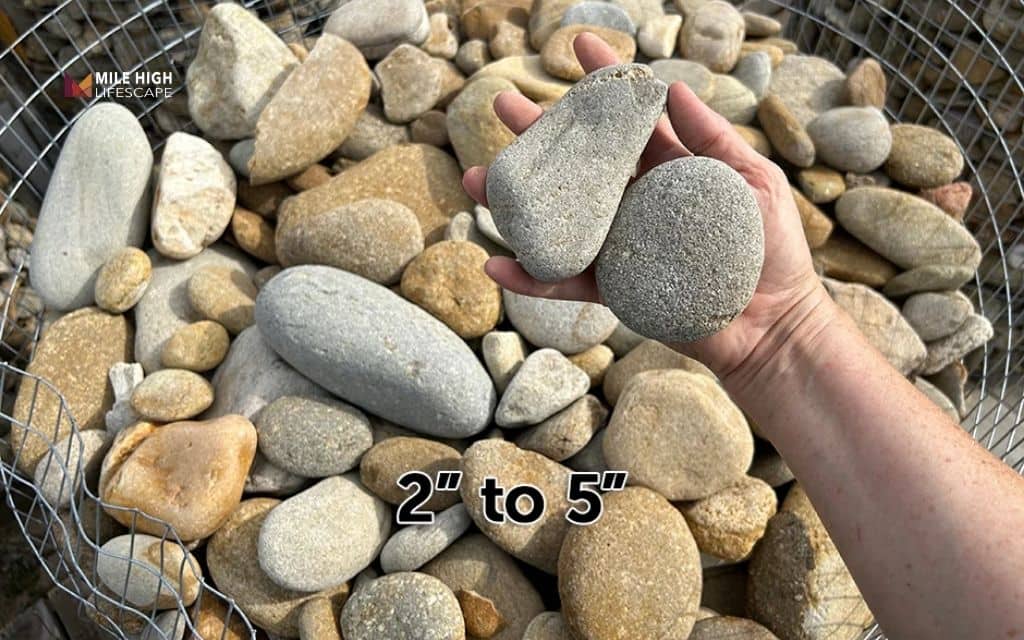
- ¾”–1½”: This size range is primarily decorative. The stones are too small and light to resist moving water. They wash away during moderate storms. This size works for areas with minimal water exposure but fails in erosion control applications.
- 1½”–3″ (Most common choice): This range is ideal for downspout splash zones, shallow swales, and decorative dry creek beds. The stones are large enough to resist typical Denver storm runoff while remaining easy to install and reposition. Most erosion control projects in residential Denver yards use this size range.
- 3″–6″+: Best for concentrated runoff, entry and exit points of water flow, and areas with stronger water energy. These larger stones handle high-velocity water that would move smaller rock. Use them where downspouts discharge, where water enters drainage swales, or along steep sections of drainage paths.
Color and heat considerations
- Light-colored rock reflects heat and is gentler on nearby plants. Buff, tan, and light grey river rock can be 15-20 degrees cooler than dark stone during peak afternoon sun. This matters in Denver’s intense sun environment, where exposed surfaces can exceed 140°F on summer afternoons.
- Dark rock absorbs heat and may increase plant stress in the microclimate surrounding the stones. Black, charcoal, and deep brown river rock creates attractive contrast but can cook sensitive plant roots within 6-12 inches of the rock mass. This is particularly problematic for shallow-rooted perennials and newly planted materials.
Denver Water xeriscape guidance recommends avoiding heat traps near plant roots. Their research shows that dark rock mulch raises soil temperature 8-12 degrees compared to light-colored alternatives, increasing plant water demand by 15-25%.
In a water-restricted landscape, this directly conflicts with xeriscape goals. For erosion control areas within 18 inches of plantings, choose light or medium-toned river rock.
Evaluating the best river rock for your landscape
Assess water flow intensity
Gentle sheet flow across flat or nearly flat areas allows medium-sized river rock to work well. Water spreads evenly without concentrating into channels. The 1½”–3″ range handles this condition effectively.
Fast or concentrated flow requires larger rock or alternative materials. Water flowing through a narrow channel or down a slope carries more energy. These conditions may require 3″–6″ river rock, crushed stone with better interlock properties, or riprap for steep slopes.
Consider the slope of the area
Nearly flat areas allow river rock to perform well. Stones stay in place and water disperses across the surface. Standard installation methods work without modification.
Noticeable slopes require additional measures. River rock may migrate downhill during storms. These situations require larger stone, edge restraints along the downhill side, or engineered solutions like terracing or retaining structures. Slopes steeper than 3:1 (horizontal to vertical) often need professional assessment.
Match the rock to the purpose
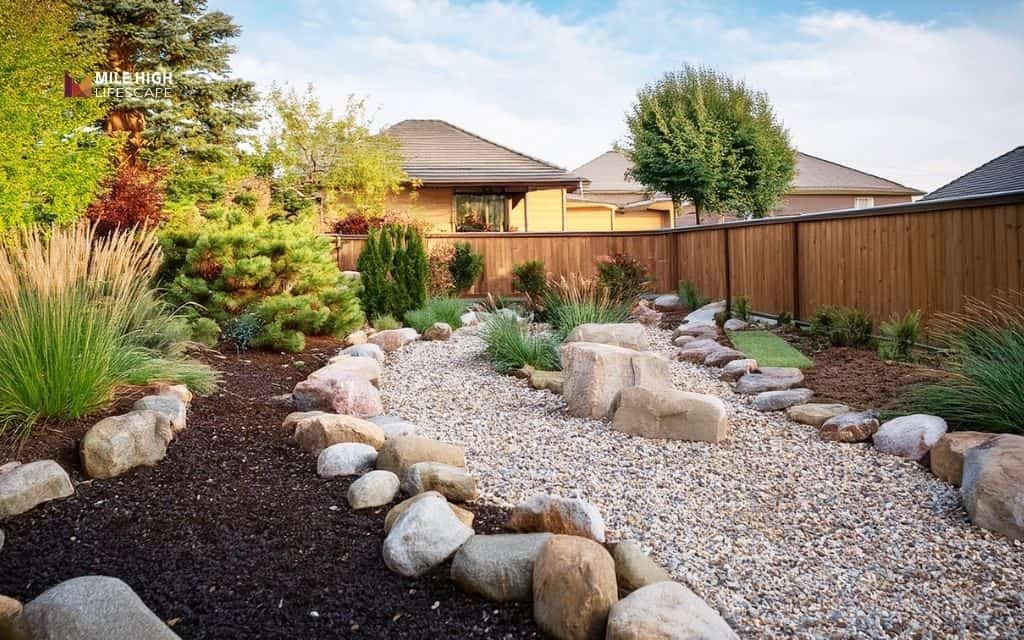
Decorative applications with light drainage needs work well with river rock. Dry creek beds, splash zones under low-flow downspouts, and decorative borders between lawn and planting beds all suit river rock.
Serious erosion control may require crushed stone or riprap instead. Angular crushed stone interlocks to resist movement. Riprap (large, angular stone) handles high-velocity water and steep slopes that would overwhelm river rock.
Simple decision rule: If soil continues washing away after storms, the rock size is too small or the material choice is wrong for the conditions.
How to install river rock for erosion control
Identify the water path
Observe runoff during rain or snowmelt. Note where water enters the area, how it flows across the space, and where it exits. Mark these points with stakes or spray paint.
Water follows the path of least resistance. Understanding this path allows you to place rock where it provides the most benefit. Focus on entry points where water first contacts the area and transition zones where water changes direction or velocity.
Prepare the base
Remove loose soil, turf, and roots from the installation area. The base should be firm and stable. Shape a gentle grade to guide water along the intended path. Water should flow steadily without ponding or changing direction abruptly.
Compact the base where necessary using a hand tamper or plate compactor. Soft or loose soil allows stones to settle unevenly and creates depressions where water pools. A firm base keeps the rock layer at consistent depth.
Use geotextile fabric correctly
Use heavy-duty, permeable landscape fabric designed for erosion control. Avoid cheap plastic sheeting or weed barrier products. These materials trap water and create drainage problems.
Fabric should hold soil in place while allowing water to pass through. Install fabric with the permeable side facing up and overlap seams by at least 6 inches. Secure edges and seams with landscape staples every 2–3 feet.
Avoid fabric where fine sediments may clog it. Sandy or silty soils in areas with heavy sediment load can blind the fabric over time. In these situations, the rock-on-soil method may work better.
Install rock at the correct depth
Minimum 2 inches throughout the area follows Denver Water xeriscape guidelines. This depth provides adequate coverage while allowing water to pass through to the fabric or soil below.
3 – 4 inches in active flow areas provides better protection. Use this depth where water concentrates, along the center of drainage swales, and anywhere water velocity increases.
Place larger stones at water entry points and transition zones. Use smaller stones downstream where water velocity decreases. This graduation controls water energy at critical points while maintaining aesthetics in visible areas.
Add edge restraint
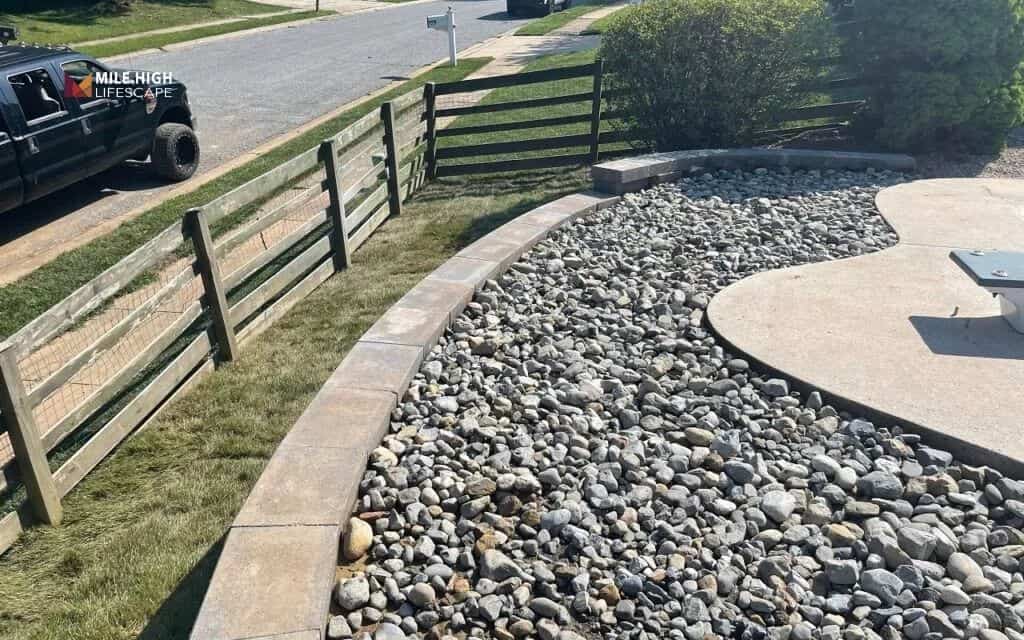
Metal landscape edging, larger stones, or natural borders prevent rock migration into lawns and walkways. Without restraint, river rock gradually spreads beyond the intended area through frost heave, foot traffic, and water movement.
Install edging flush with or slightly below the surrounding grade. Edging that protrudes above grade creates a tripping hazard and disrupts mowing patterns. Secure metal edging with stakes every 3 – 4 feet. For natural stone borders, use rocks twice the diameter of the field stone.
Maintenance of river rock for erosion control
Routine inspections
Check the installation after heavy rain or significant snowmelt. Look for displaced rock, exposed fabric or soil, and areas where water changed its flow pattern. Reposition displaced rock immediately to prevent further erosion.
Remove leaves and debris that redirect water or create dams. Organic material accumulates in rock installations over time. This debris blocks water flow and forces water to find new paths, potentially undermining your erosion control.
Long-term maintenance
Occasional rock top-ups may be needed every 3–5 years. Some rock settles into the soil profile or migrates despite edge restraints. Add rock to maintain the minimum 2-inch depth throughout the area.
If erosion persists despite maintenance, upgrade to larger stone or install additional drainage measures. Persistent erosion indicates the installation doesn’t match the site conditions. Address the mismatch rather than repeatedly replacing rock.
Signs you may need professional help
Rock consistently washes away despite using the correct size and installation depth. This indicates water velocity or volume exceeds what river rock can handle. Professional assessment can identify whether the problem requires grading changes, subsurface drainage, or engineered solutions.
Ongoing soil loss despite repairs suggests an underlying drainage problem. The river rock addresses surface erosion but doesn’t solve water table issues, concentrated groundwater seepage, or slope instability.
Erosion near foundations, structures, or utilities requires immediate professional attention. These situations pose risks to property and safety. A licensed landscape contractor or civil engineer can assess the problem and recommend appropriate solutions.
Conclusion
River rock can be an excellent erosion control solution when the correct size is selected, it’s installed at proper depth, and it’s used in the right location. Denver’s unique climate challenges – intense storms, rapid snowmelt, and clay soil – require careful attention to sizing and installation details.
For nearly two decades, Mile High Lifescape has been proudly serving the Denver Metro area as the go-to landscape company. With a reputation for excellence, we offer a comprehensive range of friendly and professional landscape rock service in Denver. Count on us to transform your outdoor space into a beautiful oasis that exceeds your expectations.
Need help with your erosion control project? Contact Mile High Lifescape at (303) 877-9091 or email hello@milehighlifescape.com for a free consultation.
Frequently asked questions (FAQs)
Is river rock good for erosion control in Denver?
River rock works well for erosion control in Denver when sized correctly for the water flow conditions. It handles typical residential runoff from storms and snowmelt while supporting water-wise xeriscape designs. River rock performs best in areas with moderate water flow and gentle slopes.
What size river rock is best for erosion control?
The 1½”–3″ size range works best for most Denver erosion control projects, including downspout splash zones and shallow drainage swales. Use 3″–6″ or larger for areas with concentrated water flow or steeper slopes. Avoid ¾”–1½” rock in erosion applications—it’s too light to resist moving water.
Can river rock stop erosion on a slope?
River rock can reduce erosion on gentle slopes but may require larger sizes, edge restraints, and careful installation. Slopes steeper than 3:1 (horizontal to vertical) often need angular crushed stone, riprap, or engineered terracing. River rock alone is not sufficient for steep slope stabilization.
How deep should river rock be for drainage?
Install river rock at a minimum depth of 2 inches for basic drainage and erosion control, following Denver Water xeriscape guidelines. Use 3–4 inches in areas with active water flow or concentrated runoff. Deeper installations provide better protection and resist displacement during storms.
Does river rock increase heat around plants?
Dark-colored river rock absorbs heat and can stress nearby plants during Denver’s intense summer sun. Light-colored river rock reflects heat and creates a cooler microclimate. Choose tan, white, or pale gray rock near plant root zones and save darker colors for areas away from plantings.