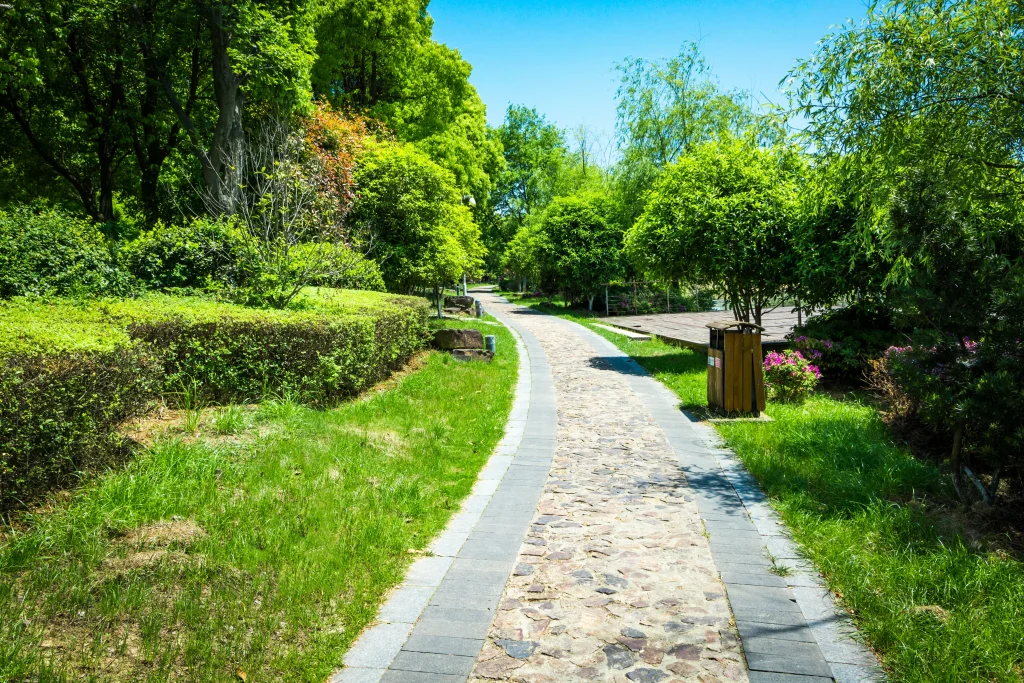
Choosing the right rock garden plants transforms difficult Denver yards into low-maintenance, water-wise, and beautiful landscapes that actually work with the climate instead of fighting it.
If you’re dealing with a south-facing slope that bakes in the summer sun, clay soil that puddles after every rain, or steep terrain where nothing seems to grow, you’re not alone. Denver’s semi-arid climate brings unique challenges: semi-arid conditions, stubborn clay soil, slopes that erode and freeze-thaw cycles.
Rock gardens offer a smarter solution. By combining drought-tolerant plants with strategic rock placement, you create a resilient landscape that requires less water, fewer chemicals, and minimal maintenance while actually looking better year after year.
This guide covers everything you need to know:
- What defines a successful rock garden in Denver (zones 5a–5b)
- How to choose plants that thrive in rocks, gravel, and poor soil
- 30 proven rock garden plants organized by use (sun, shade, slopes, walls)
- Planting, spacing, and maintenance tips specific to our climate
Let’s turn those problem areas into your landscape’s best feature.
What is a rock garden, really?
A properly designed rock garden creates a well-drained, layered system that mimics alpine and native habitats. Rocks provide structure, moderate soil temperature, reduce water evaporation, and suppress weeds. Plants soften the landscape, add seasonal color, attract pollinators, and stabilize soil between stones.
They solve drainage problems on slopes, transform unusable areas into focal points, and reduce landscape maintenance demands.
Why rock gardens work so well in Denver
Rock gardens solve several problems at once, making them particularly effective for Front Range landscapes:
- Rocks improve drainage in clay soil: Denver’s notorious clay holds water like a sponge, causing root rot and fungal issues. Rocks create air pockets and improve percolation, giving plant roots access to oxygen even after heavy rain. When you excavate for a rock garden and layer gravel beneath larger stones, you’re essentially building a drainage system.
- Reduced evaporation and weed growth: Rocks act as natural mulch, shading soil and slowing water loss from evaporation. Weeds also struggle to penetrate rock mulch, cutting maintenance time significantly.
- Temperature moderation for roots: While Denver’s air temperature swings wildly (70°F one day, 30°F the next), rocks buffer these extremes. They absorb heat during the day and release it slowly at night, protecting roots from sudden freezes. In summer, they keep root zones cooler than exposed soil would be.
How to choose rock garden plants for Denver (Zones 5a–5b)
Sun vs shade rock gardens
Full sun locations (6+ hours of direct sunlight) include south- and west-facing slopes, open yards, and areas away from structures. These spots get intense UV at our elevation and dry out quickly. Choose plants labeled for full sun that can handle drought and heat reflection from rocks.
Partial shade areas (3-6 hours of sun, or dappled light) include north-facing walls, the base of large evergreens, and east-facing slopes that get morning sun but afternoon shade. These cooler microclimates retain more moisture and suit a different plant palette.
Full shade (under 3 hours of sun) is trickier in rock gardens since most alpine plants prefer bright conditions. If you’re working with deep shade, focus on the hardy ferns and shade-adapted selections in the “Shady Rock Garden Plants” section below.
Soil, drainage, and rock type considerations
Here’s a counterintuitive truth: lean soil produces better rock garden plants than rich soil.
In nature, alpine plants grow in rocky, nutrient-poor substrates. When you give them rich garden soil, they grow leggy, flop over, and become more susceptible to disease.
For most rock garden plants, mix native soil with coarse sand, pea gravel, or decomposed granite at a 1:1 ratio. This creates the fast-draining, mineral-rich environment these plants prefer. Avoid compost and fertilizer in rock garden areas.
Rock type matters too. Gravel and small stones (1-3 inches) work as mulch and in planting pockets. Medium stones (6-12 inches) define borders and create terraces. Boulders (18+ inches) become focal points and create distinct microclimates.
Native vs non-native rock garden plants
Colorado native plants adapted to our climate over thousands of years. They require no fertilizer, minimal water once established, and support local pollinators and wildlife. Natives like Penstemon, Blanket Flower, and Pasque Flower should form the backbone of any Denver rock garden.
Non-native plants still have a place when they’re adapted to similar climates. Many Mediterranean and alpine plants from dry regions thrive here: think Lavender from the arid mountains of France, or Sedum from rocky Asian hillsides. These plants have evolved the same survival strategies our natives use – deep roots, water-storing leaves, minimal foliage.
The 30 best rock garden plants for Denver
Each plant below includes sun requirements, water needs after establishment, mature size, and ideal uses in Denver landscapes. All selections are hardy to zone 5 and proven performers in Front Range conditions.
Low-maintenance rock garden plants
These low maintenance rock garden plants establish quickly, rarely need attention, and look good year-round with minimal intervention.
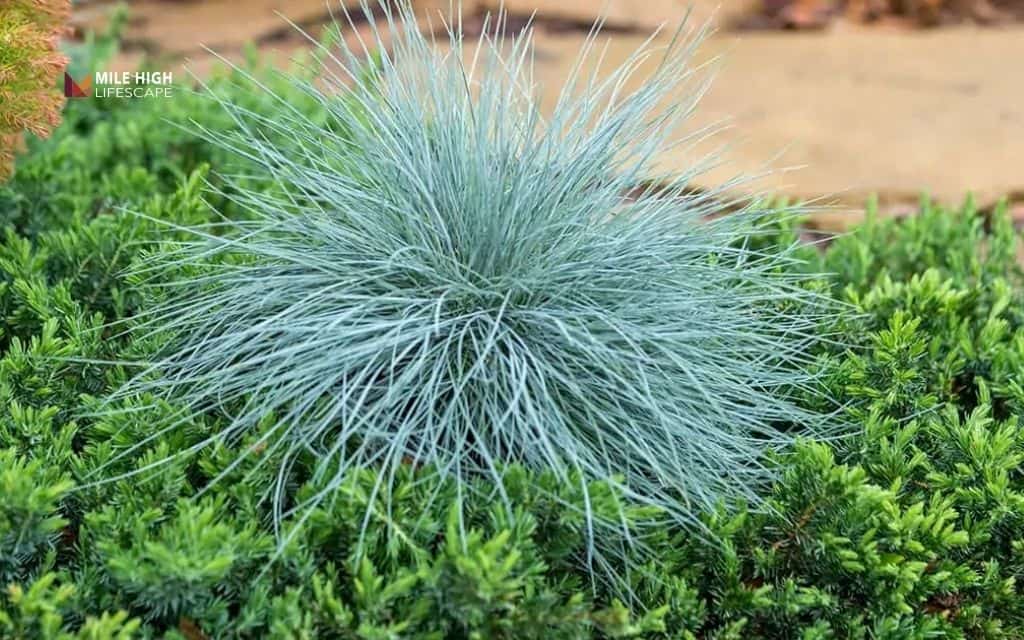
Blue Fescue (Festuca glauca)
- Sun: Full sun
- Water: Low (water deeply 2-3 times monthly after establishment)
- Size: 8-12 inches tall and wide
- Best use: Edging rock pathways, mass planting in gravel gardens, modern landscapes
- Why it works: Blue-gray evergreen foliage provides year-round color. Tolerates reflected heat from rocks. No mowing, no fertilizer. Doesn’t spread aggressively. Extremely drought-tolerant once established (usually by end of first season).
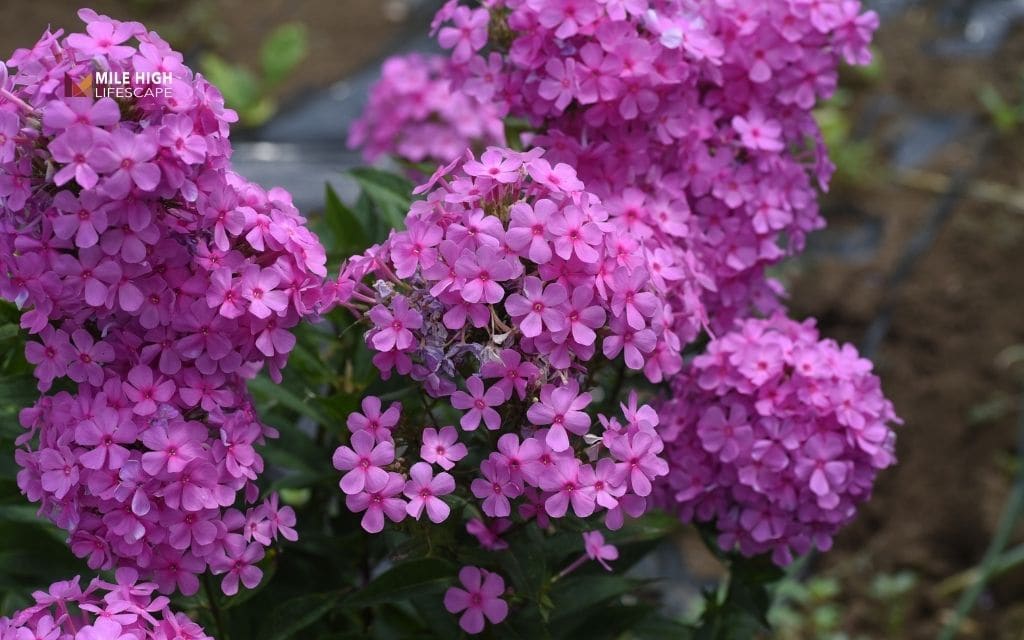
Creeping Phlox (Phlox subulata)
- Sun: Full sun to partial shade
- Water: Low to moderate
- Size: 4-6 inches tall, spreads 12-24 inches
- Best use: Cascading over rock walls, filling between stepping stones, slope stabilization
- Why it works: Masses of pink, purple, white, or red flowers in April-May. Forms dense mats that suppress weeds. Evergreen foliage survives Denver winters. One of the best plants for walls and rocky slopes.
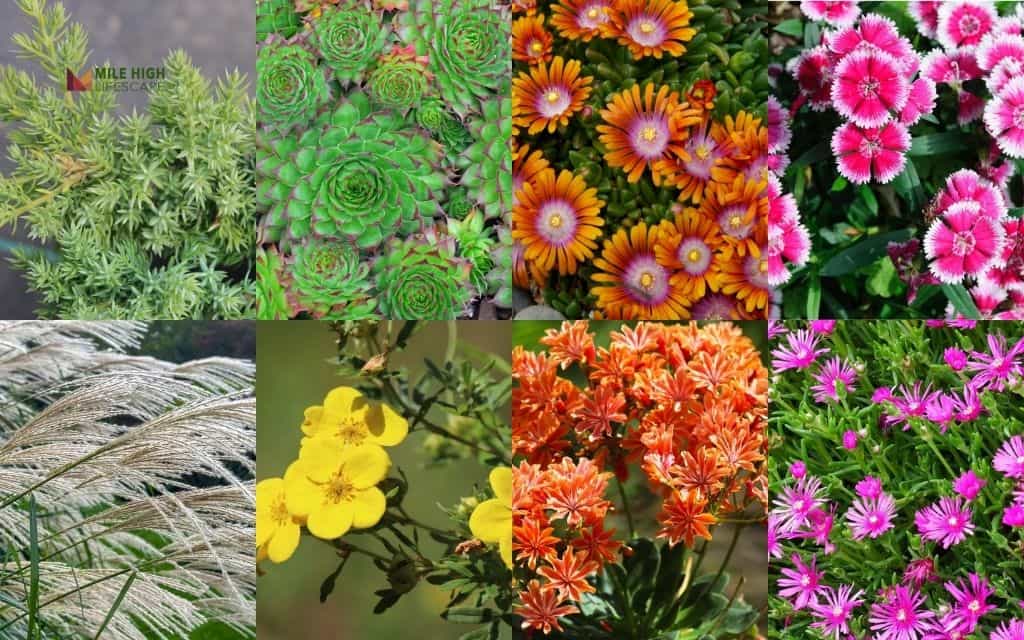
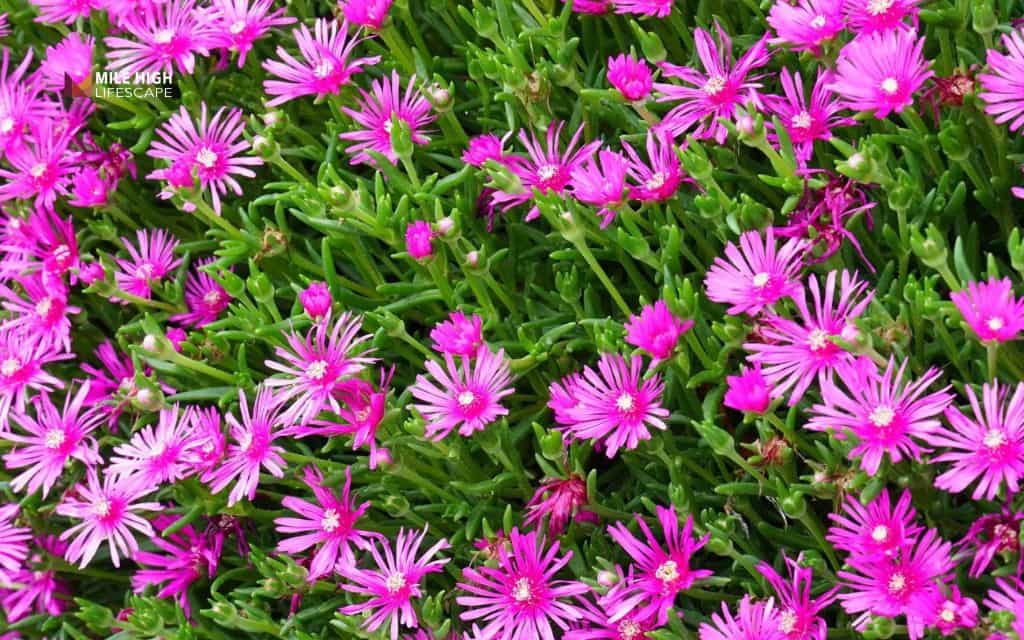
Ice Plant (Delosperma cooperi)
- Sun: Full sun
- Water: Low
- Size: 3-6 inches tall, spreads 12-18 inches
- Best use: Hot, dry slopes; gravel gardens; rock mulch beds
- Why it works: Succulent leaves store water for weeks without irrigation. Brilliant magenta, yellow, or orange flowers June-September. Can handle reflected heat that would fry other groundcovers. Deer resistant.
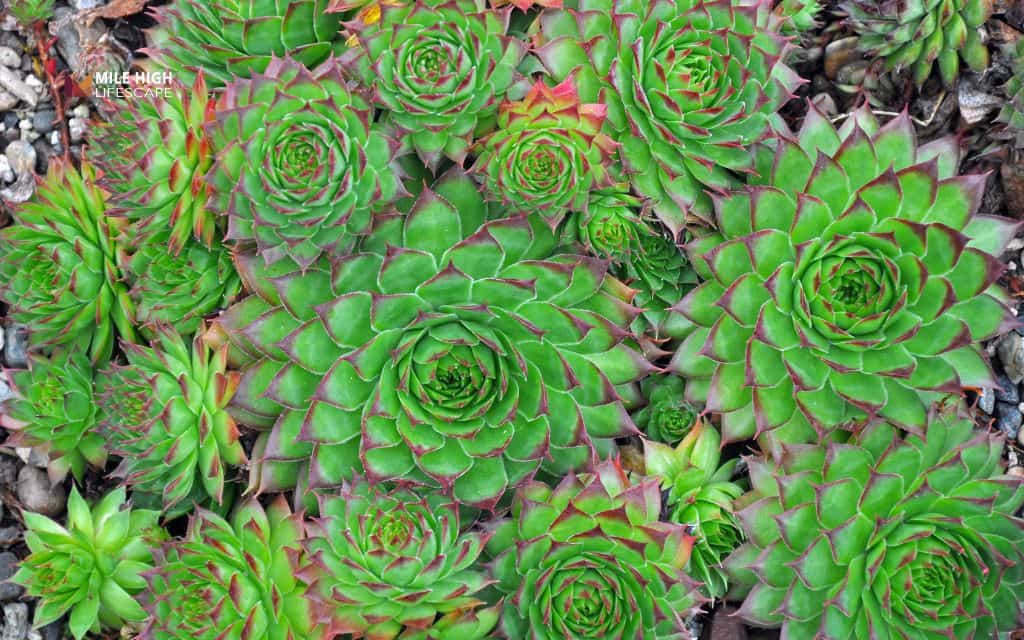
Hens and Chicks (Sempervivum)
- Sun: Full sun to partial shade
- Water: Very low (monthly deep watering in summer)
- Size: 2-4 inches tall, spreads via offsets
- Best use: Container gardens, rock crevices, living walls, plants that grow on rocks without soil
- Why it works: Literally grows on rocks with minimal soil. Dozens of varieties with colors from green to burgundy. Rosettes survive -30°F. Produces offsets (chicks) that fill in spaces naturally. Perfect for vertical rock walls.
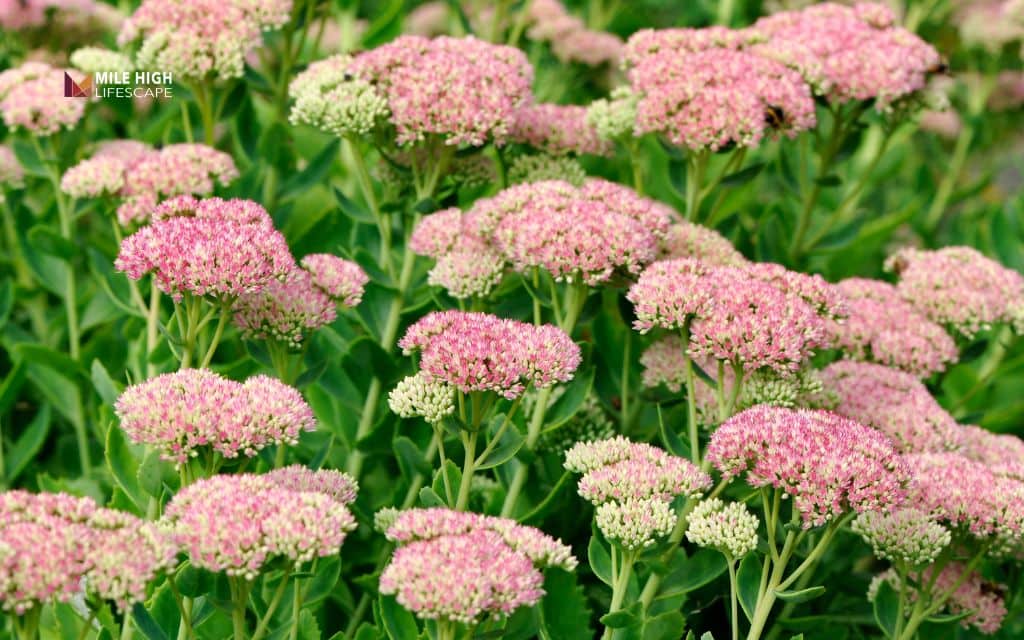
Sedum (Stonecrop – multiple species)
- Sun: Full sun to partial shade
- Water: Very low
- Size: Varies by variety (2-18 inches tall)
- Best use: Living groundcover, green roof plants, rock crevice planting, stone garden plants
- Why it works: Succulent foliage requires almost no water. Hundreds of varieties available. ‘Angelina’ offers golden evergreen foliage; ‘Dragon’s Blood’ turns burgundy in fall; ‘Autumn Joy’ provides structural form through winter. Many Sedums actually prefer poor soil and perform worse with rich compost.
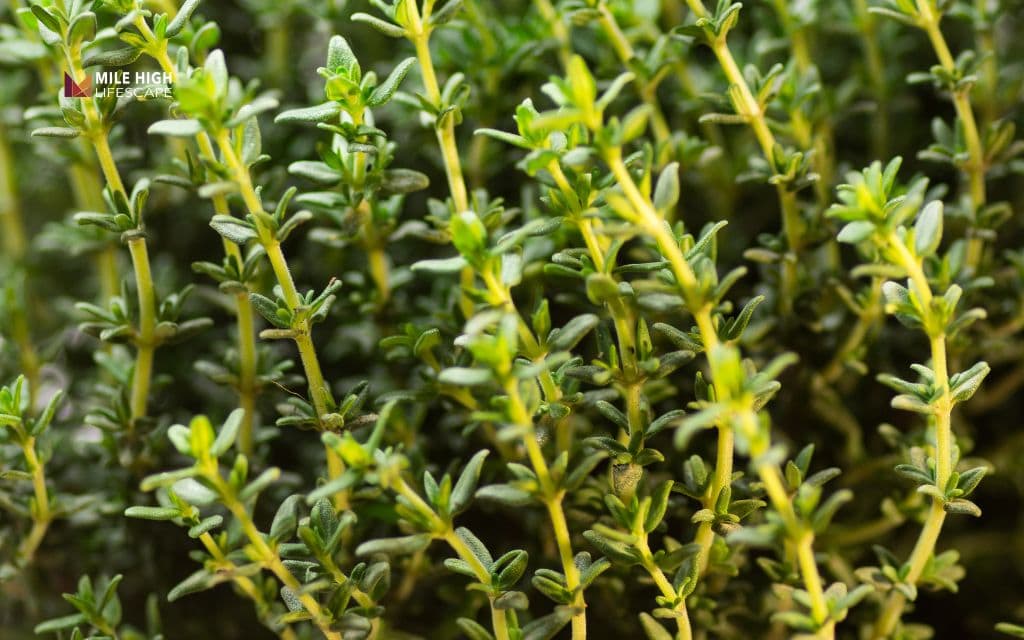
Thyme (Thymus serpyllum and T. pseudolanuginosus)
- Sun: Full sun
- Water: Low
- Size: 2-4 inches tall, spreads 12-18 inches
- Best use: Between stepping stones, fragrant groundcover, rock plant for sunny slopes
- Why it works: Aromatic foliage releases scent when stepped on. Creeping thyme forms dense mats that tolerate moderate foot traffic. Purple or pink flowers attract bees in June-July. Evergreen in Denver with good drainage. Edible for culinary use.
Flowering plants for rock and flower gardens
These selections deliver color and pollinator value while thriving in rocky, well-drained conditions – perfect for a rock flower garden or rock and flower garden design.
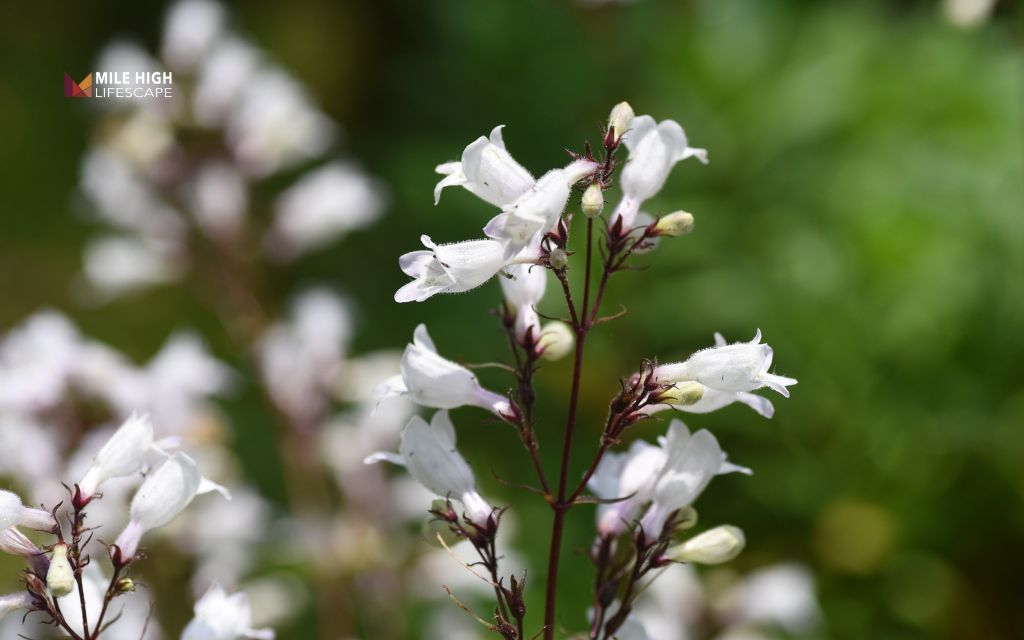
Penstemon (multiple native species)
- Sun: Full sun
- Water: Low
- Size: 12-24 inches tall
- Best use: Native pollinator gardens, mixed rock plantings, vertical color
- Why it works: Colorado native with tubular flowers hummingbirds love. Penstemon strictus (Rocky Mountain Penstemon) offers blue-purple spikes in May-June. Penstemon barbatus blooms red-pink into July. Deep taproots access water below rock layers. Drought-tolerant once established.
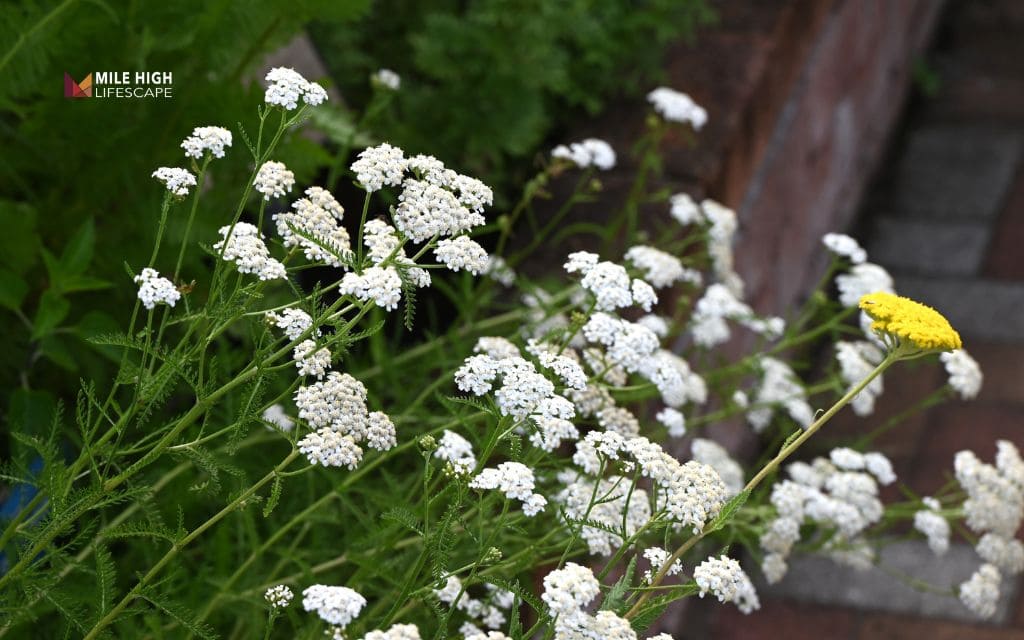
Yarrow (Achillea millefolium)
- Sun: Full sun
- Water: Low
- Size: 18-30 inches tall, spreads 18-24 inches
- Best use: Informal rock gardens, pollinator habitat, cut flowers
- Why it works: Native Colorado wildflower. Flat-topped flower clusters (white, yellow, pink, red) bloom June-September. Ferny foliage stays low when not blooming. Handles poor soil, heat, and drought. Self-sows moderately but isn’t invasive.
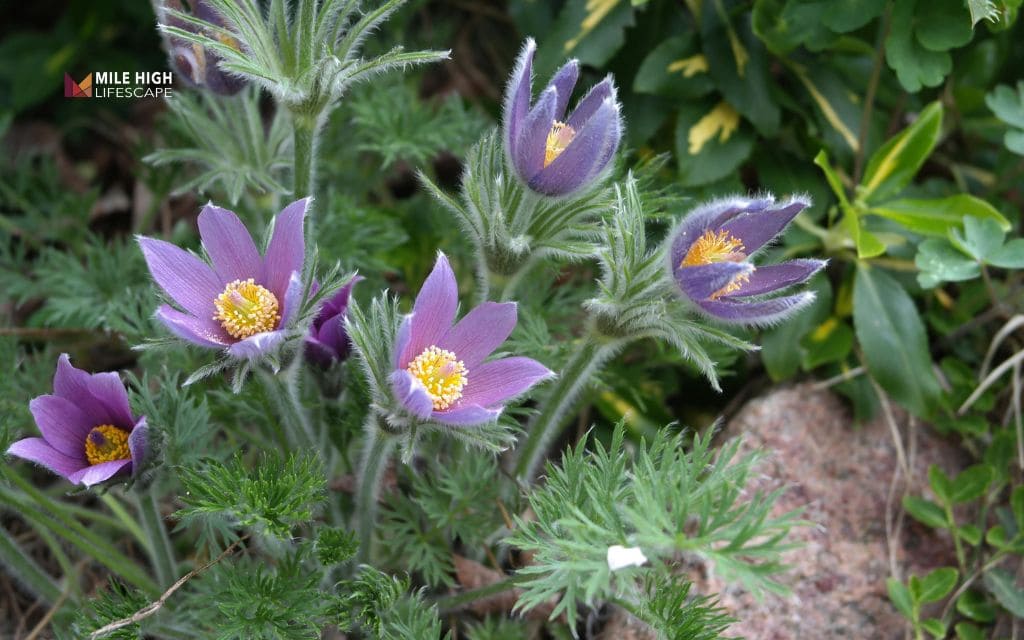
Pasque Flower (Pulsatilla patens)
- Sun: Full sun to partial shade
- Water: Low to moderate
- Size: 6-12 inches tall
- Best use: Early spring color, native rock gardens, well-drained slopes
- Why it works: Colorado’s state flower blooms March-April before most plants wake up. Purple chalice-shaped flowers followed by fuzzy seed heads. Thrives in rocky soil with good drainage. Short-lived (3-5 years) but self-sows. Must have excellent drainage to prevent winter rot.
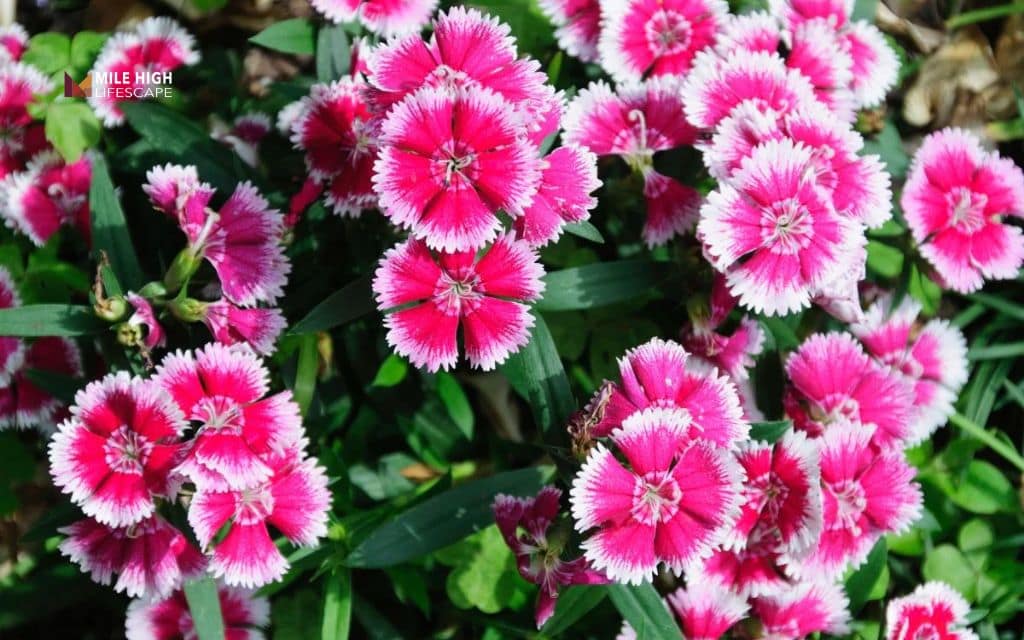
Dianthus (Dianthus gratianopolitanus)
- Sun: Full sun
- Water: Low
- Size: 6-10 inches tall, spreads 12-18 inches
- Best use: Edging rock walls, fragrant groundcover, cottage-style rock gardens
- Why it works: Blue-gray foliage stays evergreen. Fragrant pink, red, or white flowers May-June smell like cloves. Forms tight mats. Prefers lean, alkaline soil—perfect for Denver’s conditions. Doesn’t need deadheading but benefits from light shearing after bloom.
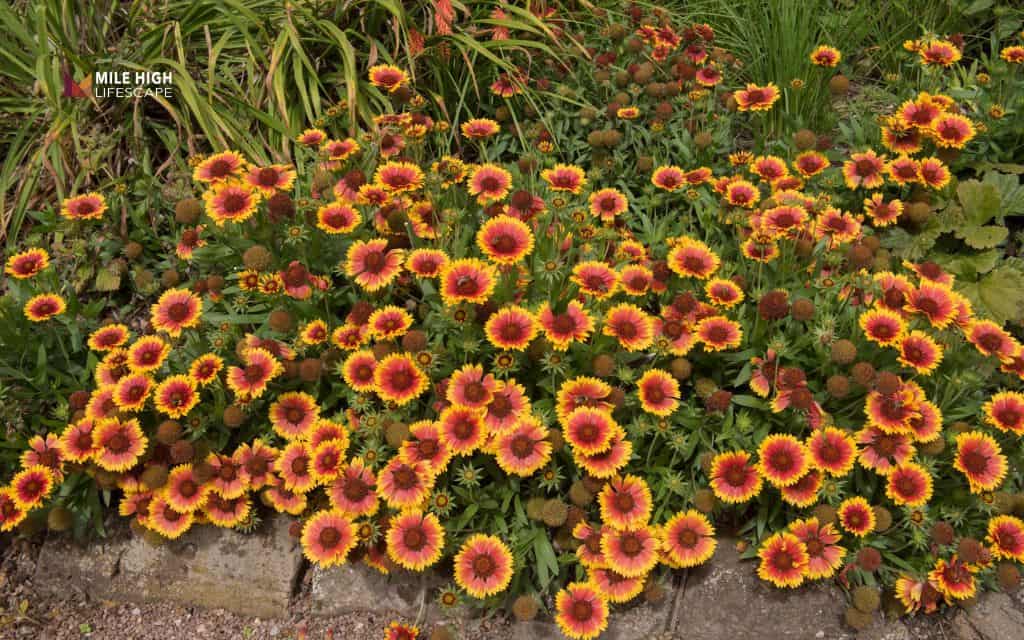
Blanket Flower (Gaillardia aristata)
- Sun: Full sun
- Water: Low
- Size: 12-18 inches tall and wide
- Best use: Native rock gardens, pollinator habitat, long-blooming color
- Why it works: Native Colorado wildflower. Red and yellow daisy flowers bloom June-September with no deadheading needed. Tolerates heat, drought, poor soil, and reflected light from rocks. Short-lived perennial (3-4 years) but self-sows. Butterflies and bees visit constantly.
Plants that grow on rocks or in very little soil
These specialized selections can be established in rock crevices with minimal soil – true plants that grow on rocks with remarkable drought tolerance.
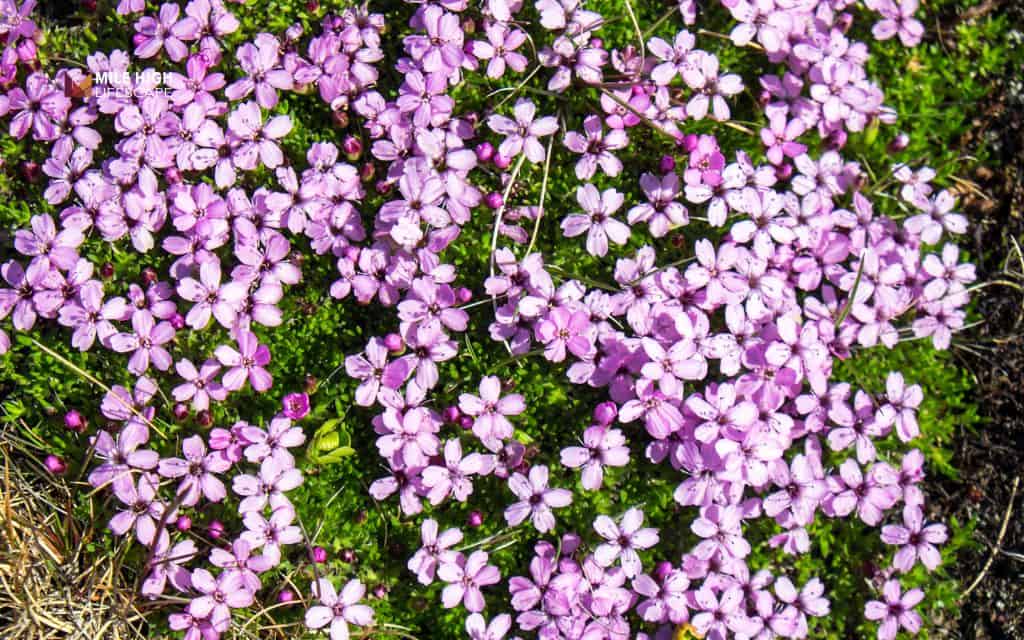
Moss Campion (Silene acaulis)
- Sun: Full sun
- Water: Low to moderate
- Size: 1-2 inches tall, forms cushions 6-12 inches wide
- Best use: Rock crevices, alpine gardens, scree slopes
- Why it works: Native alpine plants form dense cushions. Pink flowers appear June-July. Grows in cracks with as little as 1 inch of soil. Perfect for vertical rock walls or exposed boulder faces. Slow-growing but extremely long-lived (decades).
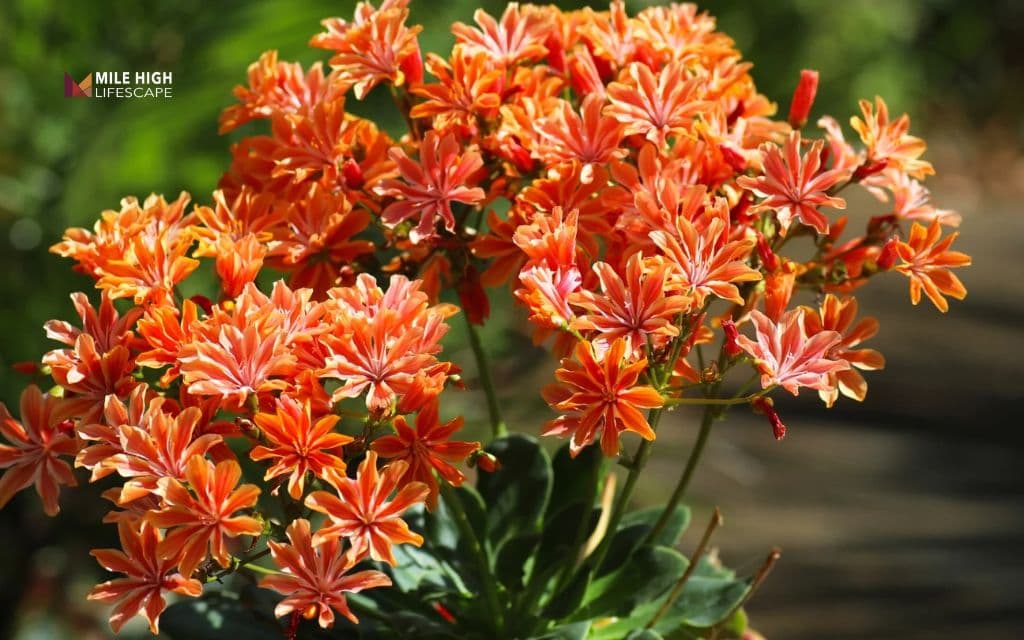
Lewisia (Lewisia cotyledon)
- Sun: Partial shade to full sun (afternoon shade in hot locations)
- Water: Low (keep dry in winter)
- Size: 6-8 inches tall, rosette form
- Best use: Rock crevices, vertical walls, container gardens
- Why it works: Succulent rosettes with spectacular pink, orange, or white flowers in May-June. Native to rocky western slopes. Must have perfect drainage – plant sideways in rock walls to prevent water accumulation in the crown. Worth the effort for a stunning spring display.
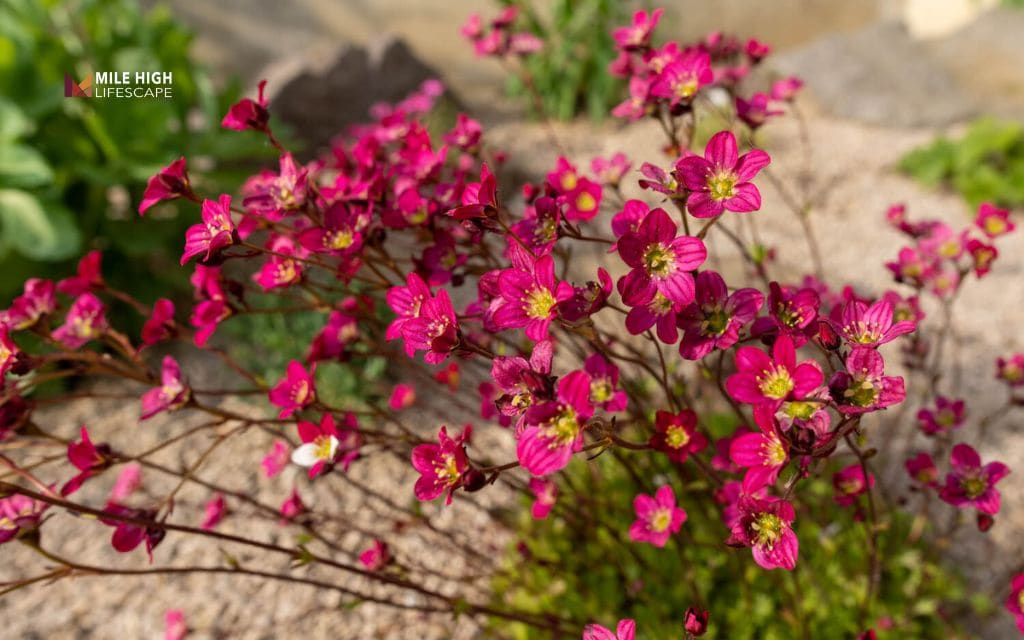
Saxifraga (Saxifraga species)
- Sun: Partial shade to full sun
- Water: Moderate (keep evenly moist, not wet)
- Size: 4-8 inches tall, spreads slowly
- Best use: North-facing rock walls, stone wall crevices, plants for a stone wall
- Why it works: “Saxifraga” means “stone breaker” – plants literally grow in rock cracks. Cushion or mat-forming habit. White, pink, or yellow flowers in spring. Many species and cultivars are available. S. x arendsii hybrids are most reliable in Denver. Prefer cool locations with good air circulation.
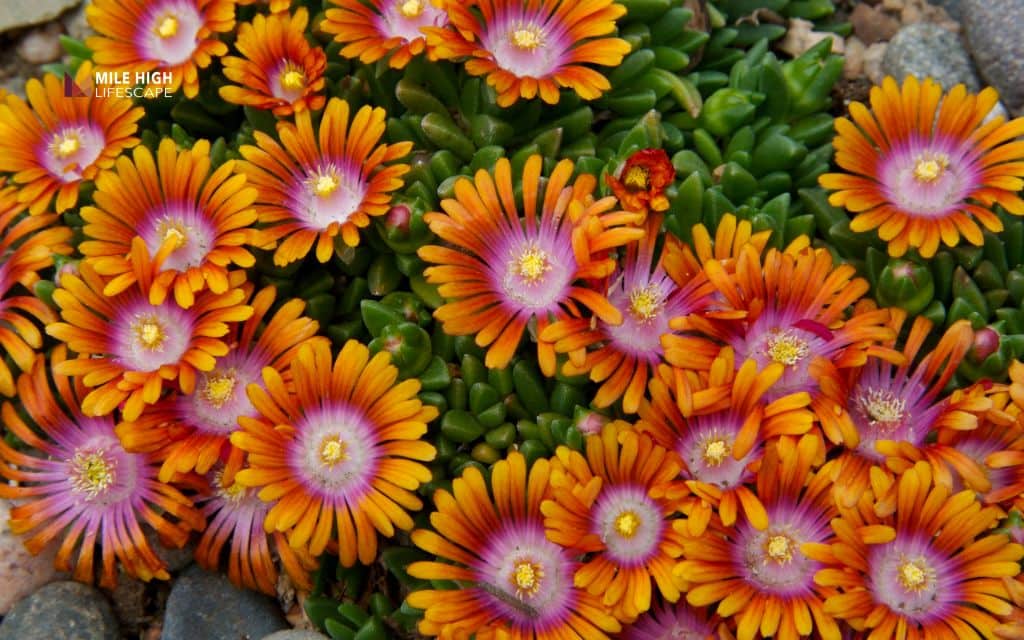
Delosperma (multiple varieties beyond cooperi)
- Sun: Full sun
- Water: Very low
- Size: 3-6 inches tall, spreads 12-24 inches
- Best use: Hot dry slopes, gravel mulch, vertical walls, plants that grow on rocks without soil
- Why it works: Beyond the common Ice Plant, varieties like ‘Fire Spinner’ (bicolor) and ‘Blut’ (red) offer different colors. Succulent foliage and long bloom season (May-October) make this one of the best performers in Denver rock gardens. Can colonize vertical surfaces with minimal soil.
Shady rock garden plants
These shady rock garden plants thrive in north-facing exposures, under trees, or on the shaded side of structures where most rock garden plants struggle.
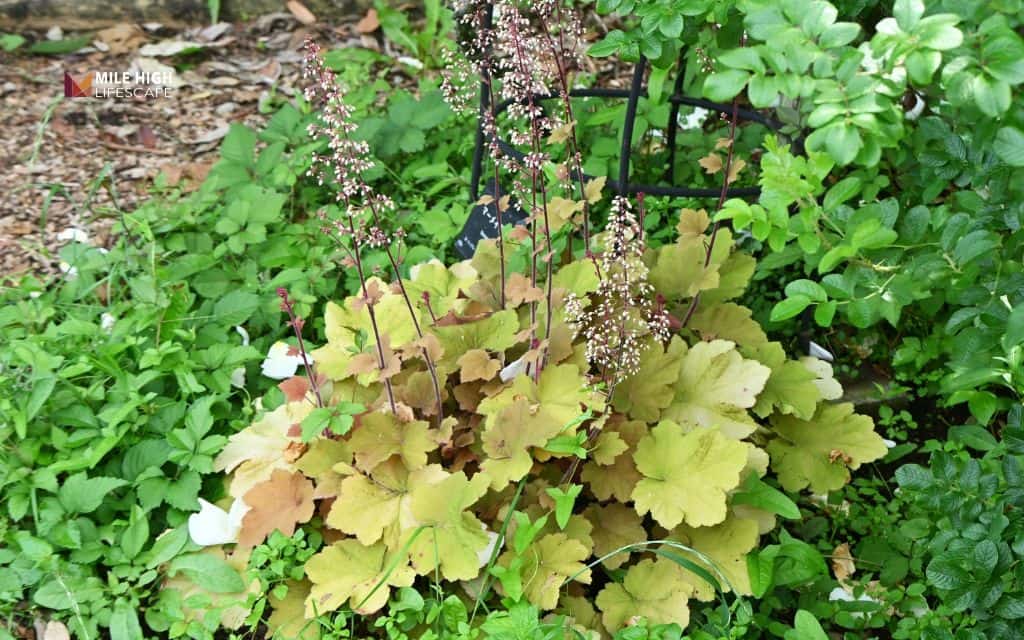
Coral Bells (Heuchera)
- Sun: Partial shade to full shade
- Water: Moderate (weekly deep watering in summer)
- Size: 8-18 inches tall, 12-18 inches wide
- Best use: Shaded rock walls, woodland rock gardens, foliage color year-round
- Why it works: Evergreen foliage in colors from lime to burgundy to silver. Delicate flower spikes in late spring. Native Colorado species (H. parvifolia) is more drought-tolerant than cultivars. Plant in rock crevices with partial shade and good drainage. Tolerates Denver winters better than hostas.
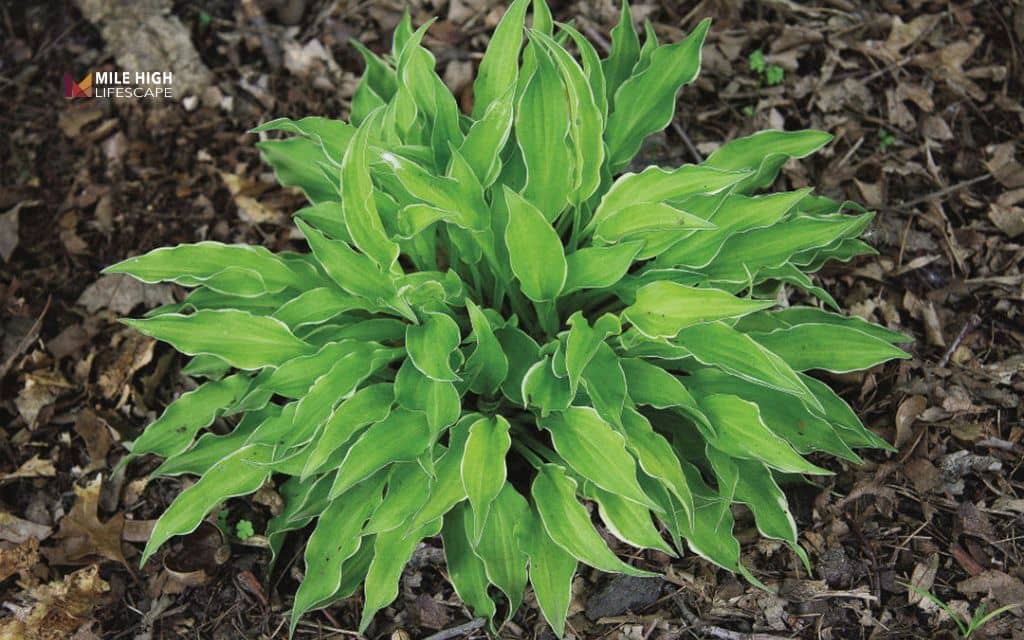
Hosta (compact varieties)
- Sun: Partial shade to full shade
- Water: Moderate to high
- Size: 6-15 inches tall (dwarf varieties)
- Best use: Shaded north-facing rock walls, moist rock gardens with supplemental water
- Why it works: Foliage provides texture contrast to rock. Choose dwarf varieties (‘Blue Mouse Ears’, ‘Mighty Mouse’) for rock gardens. Requires more water than most rock garden plants – best in areas with natural moisture or supplemental irrigation. Slugs can be problematic in wet springs.
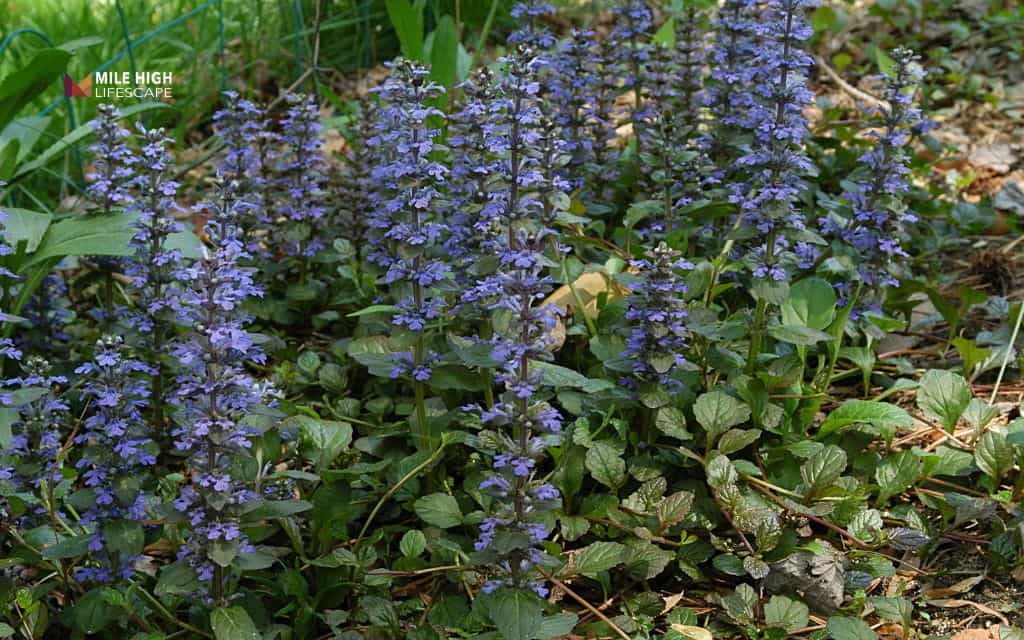
Ajuga (Ajuga reptans)
- Sun: Partial shade to full shade
- Water: Low to moderate
- Size: 4-6 inches tall, spreads 12-18 inches
- Best use: Groundcover in shaded rock areas, between shaded stones, erosion control
- Why it works: Forms dense mat that suppresses weeds. Bronze, purple, or variegated foliage stays low. Blue or purple flower spikes in May-June. Spreads via runners – can be aggressive, so use where you want full coverage. More drought-tolerant than it looks.
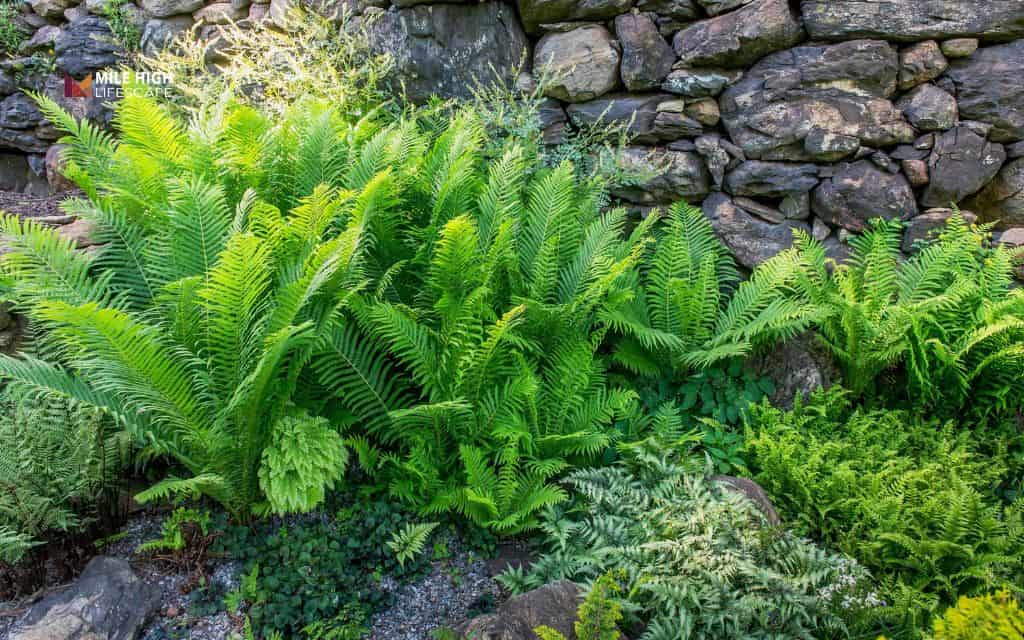
Ferns (cold-hardy types)
- Sun: Partial shade to full shade
- Water: Moderate
- Size: 12-24 inches tall (varies by species)
- Best use: Shaded rock walls, north-facing slopes, woodland rock gardens
- Why it works: Lady Fern (Athyrium filix-femina) and Maidenhair Fern (Adiantum pedatum) survive Denver winters in protected locations. Plant in rock crevices with organic matter and consistent moisture. Not for dry rock gardens, but excellent in shaded areas with natural or supplemental water. Provide winter mulch for best results.
Plants for rock walls and stone walls
These cascading and crevice-dwelling selections excel as rock wall plants and rockery wall plants, softening hard stone surfaces while requiring minimal root space.
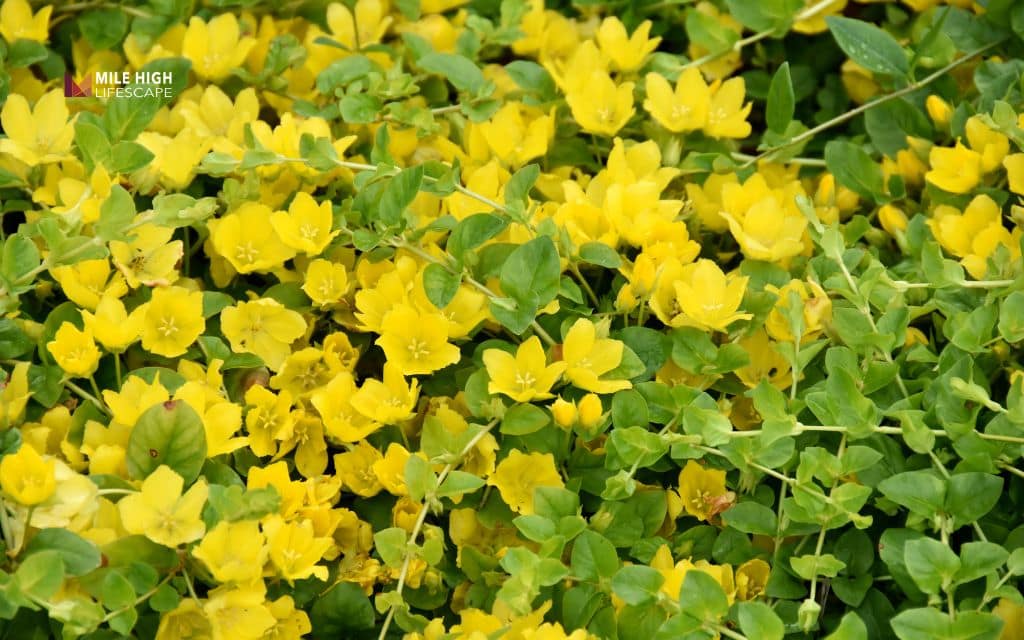
Creeping Jenny (Lysimachia nummularia)
- Sun: Full sun to partial shade
- Water: Moderate
- Size: 2-4 inches tall, spreads indefinitely
- Best use: Cascading over stone walls, between wall stones, moist rock areas
- Why it works: Bright chartreuse foliage (gold in full sun) trails beautifully. Yellow flowers in summer are a bonus. Can handle more moisture than most rock garden plants – good for walls with poor drainage or natural seepage. ‘Aurea’ variety offers the brightest color. Can be invasive in moist areas; use deliberately.
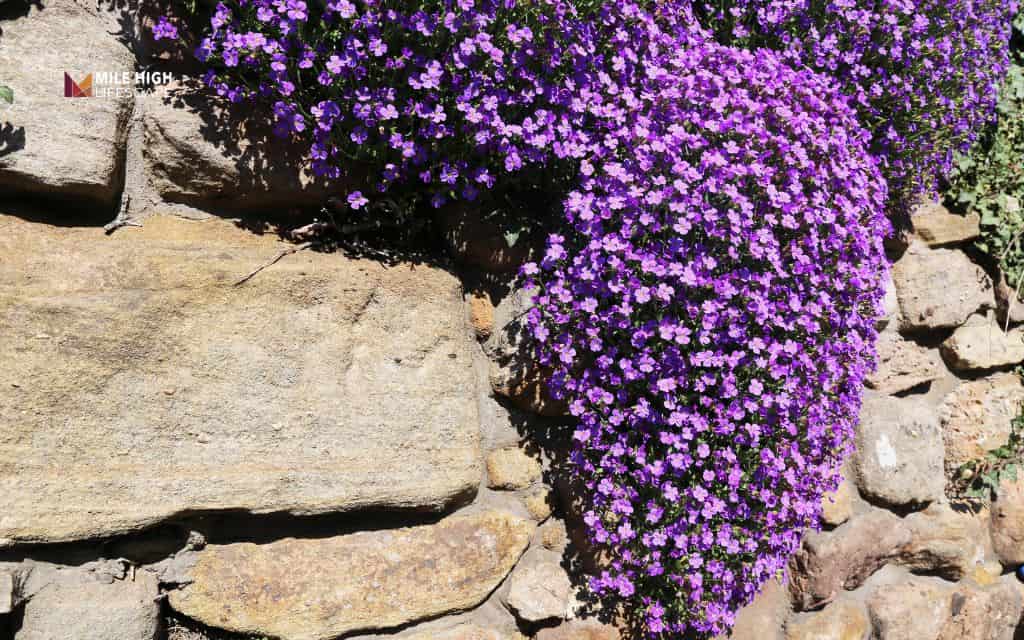
Rock Cress (Aubrieta deltoidea)
- Sun: Full sun to partial shade
- Water: Low to moderate
- Size: 4-6 inches tall, spreads 18-24 inches
- Best use: Cascading over walls, spring color in rock gardens
- Why it works: Masses of purple, pink, or magenta flowers in April-May completely cover foliage. The evergreen mat forms a dense groundcover. Shear lightly after blooming to encourage compact growth. Drought-tolerant once established. One of the showiest spring bloomers for plants is a stone wall.
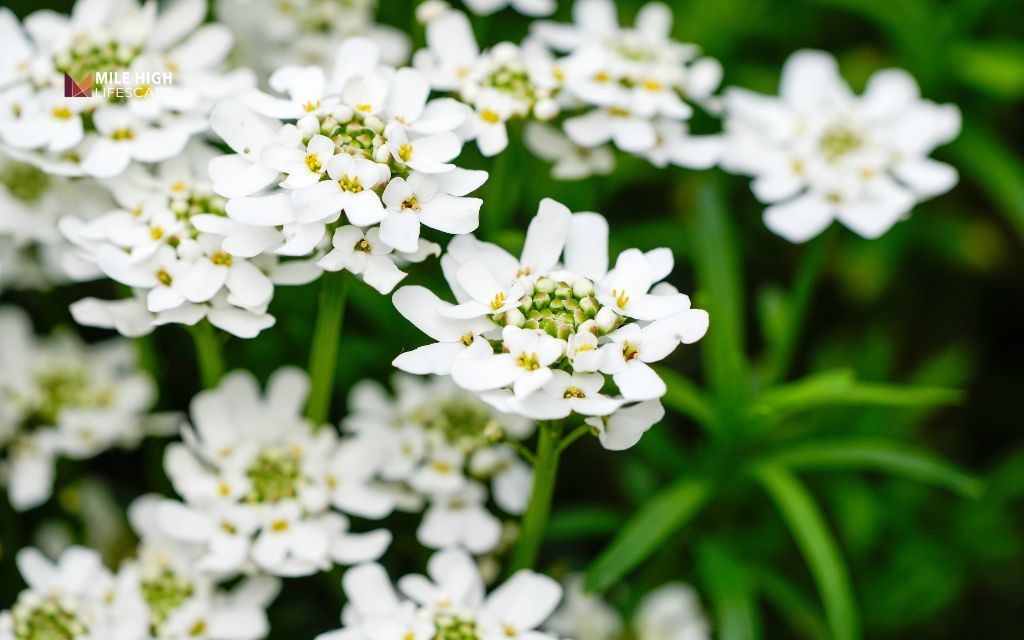
Candytuft (Iberis sempervirens)
- Sun: Full sun to partial shade
- Water: Low to moderate
- Size: 8-12 inches tall, spreads 12-18 inches
- Best use: Rock wall edging, formal rock gardens, white flower display
- Why it works: White flowers in April-May create a bright display. Dark green evergreen foliage provides year-round structure. More drought-tolerant than it appears. Prefers well-drained sites – perfect for rock walls. Shear after blooming to maintain shape. ‘Snowflake’ is the most common variety.
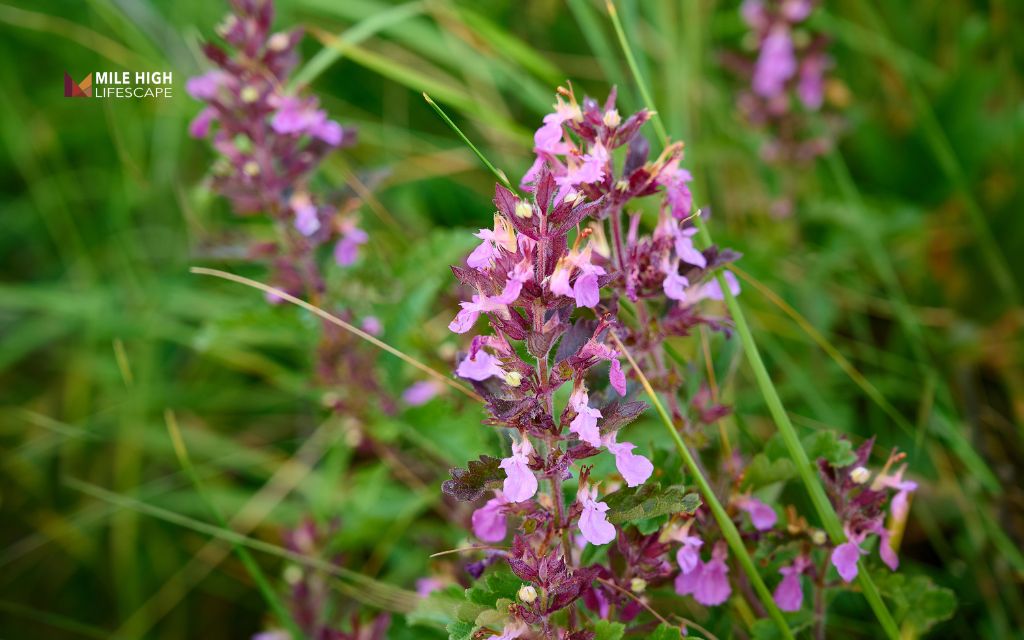
Wall Germander (Teucrium chamaedrys)
- Sun: Full sun
- Water: Low
- Size: 10-15 inches tall, spreads 12-18 inches
- Best use: Rock wall planting, herb gardens, dry stone walls
- Why it works: Woody perennial with aromatic foliage. Purple-pink flowers in summer. Traditionally used in European stone walls. Drought-tolerant and deer-resistant. Can be sheared as a low hedge. Thrives in lean, alkaline soil typical of Denver.
Shrubs and structural plants for rock gardens
These larger selections provide structure and year-round interest, acting as anchor plants in landscaping with rocks and plants.
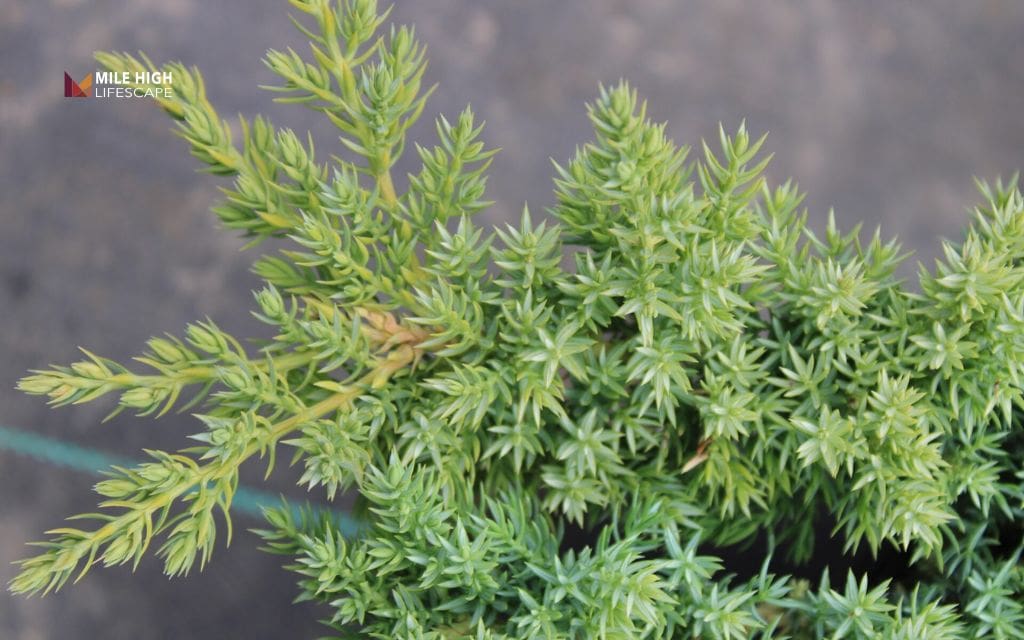
Dwarf Juniper (Juniperus species)
- Sun: Full sun
- Water: Low
- Size: 6-18 inches tall, spreads 3-6 feet (varies by cultivar)
- Best use: Groundcover on slopes, structural evergreen in rock gardens, erosion control
- Why it works: Evergreen foliage in blue, green, or gold. ‘Blue Star’ forms compact mounds. ‘Calgary Carpet’ hugs slopes. Extremely drought-tolerant and cold-hardy. Native to Rocky Mountains. Plant once and forget—requires no maintenance except occasional shaping.
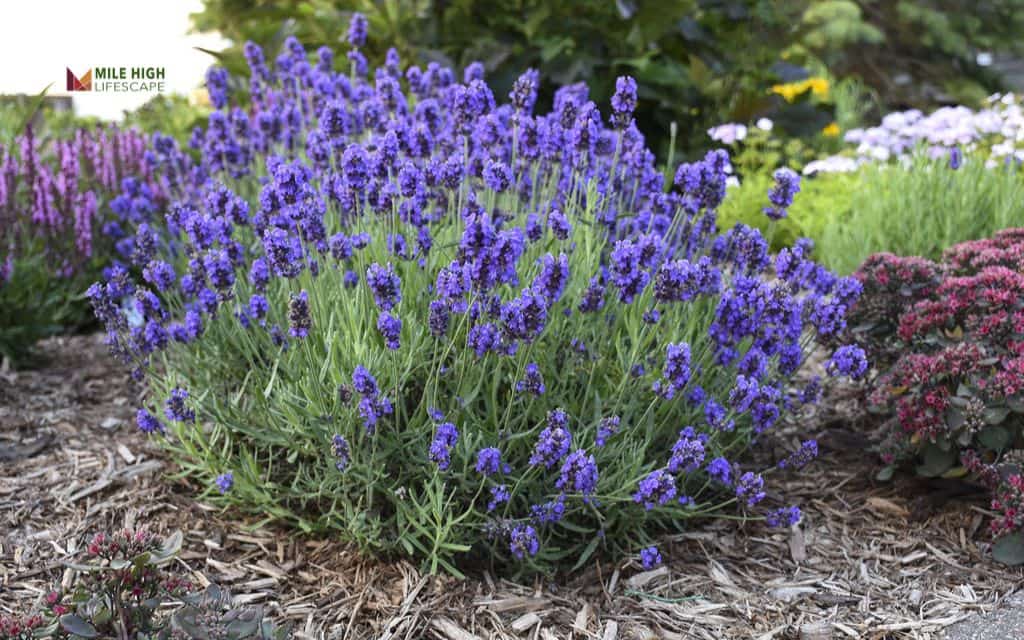
Lavender (Lavandula angustifolia – cold-hardy varieties)
- Sun: Full sun
- Water: Low
- Size: 18-24 inches tall and wide
- Best use: Fragrant rock gardens, formal rock edging, pollinator habitat
- Why it works: Purple flowers and aromatic foliage attract bees and butterflies June-August. ‘Hidcote’ and ‘Munstead’ are most cold-hardy for Denver. Requires excellent drainage – rock gardens provide ideal conditions. Shear after blooming. Can struggle in heavy clay without rock-amended soil.
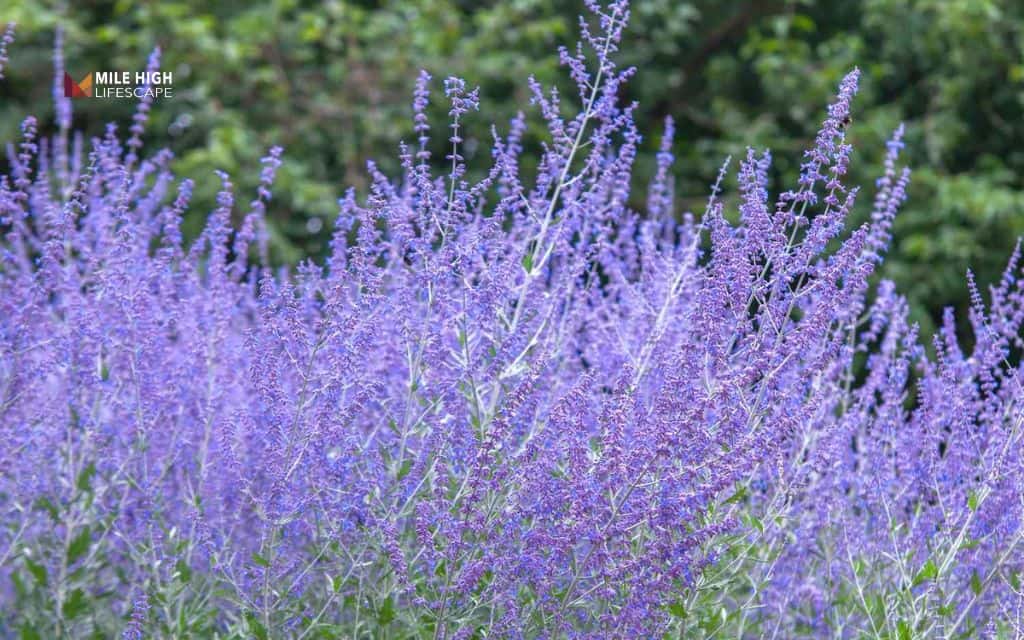
Russian Sage (Perovskia atriplicifolia)
- Sun: Full sun
- Water: Low
- Size: 3-4 feet tall, 2-3 feet wide
- Best use: Large rock gardens, background planting, structural element in modern rock garden ideas
- Why it works: Silver-gray foliage and lavender-blue flowers July-September. Airy appearance softens hard rock edges. Woody stems provide winter structure. Cut to ground in early spring. Extremely drought-tolerant and deer-resistant. Thrives in poor, rocky soil.
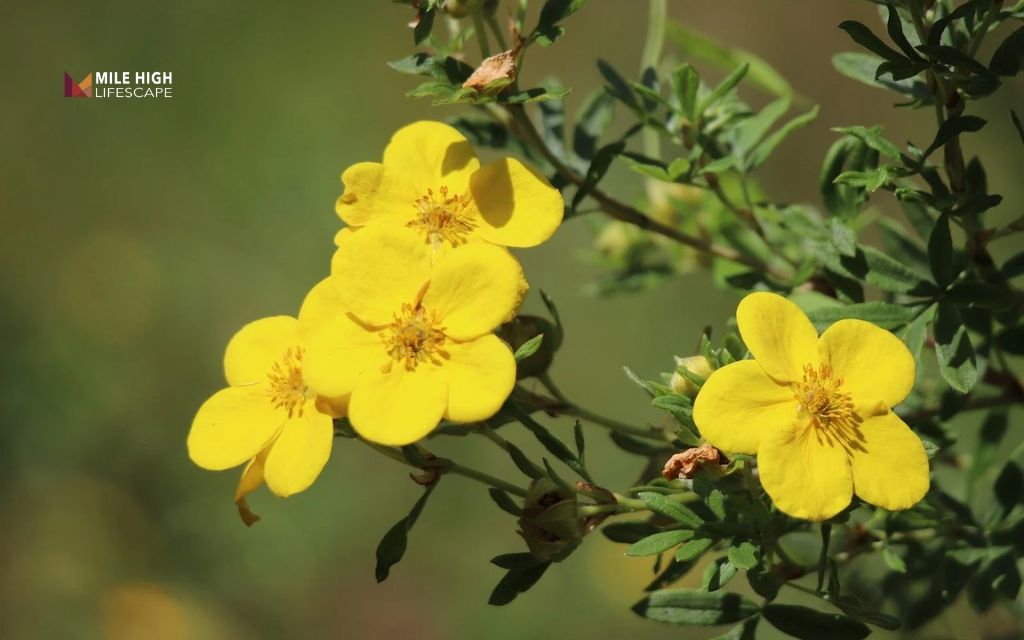
Potentilla (Potentilla fruticosa)
- Sun: Full sun to partial shade
- Water: Low to moderate
- Size: 2-4 feet tall and wide (varies by cultivar)
- Best use: Flowering shrub in rock gardens, informal hedging, long bloom season
- Why it works: Yellow, white, pink, or orange flowers bloom June-September. Native to Rocky Mountains. Tolerates alkaline soil, drought, and cold. ‘Goldfinger’ offers large yellow flowers. ‘Abbotswood’ blooms white. No serious pests or diseases. Reliable performer in rock gardens.
Modern rock garden accent plants
These architectural selections create contemporary looks, perfect for modern rock garden ideas and adding bold form to stone garden plants designs.
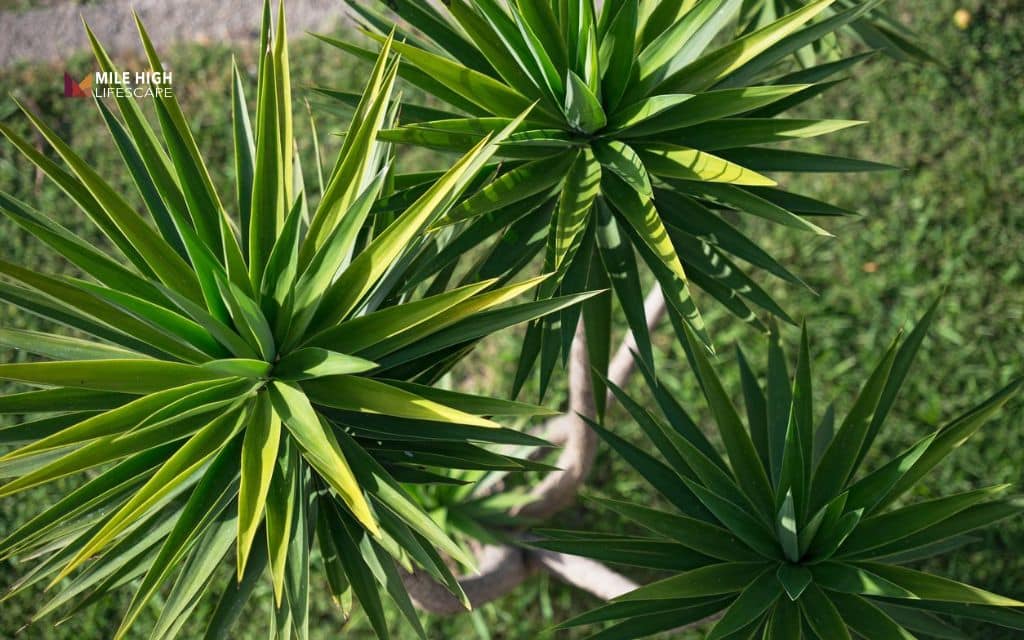
Yucca (cold-hardy varieties)
- Sun: Full sun
- Water: Very low
- Size: 2-3 feet tall (foliage), flower stalks to 5-6 feet
- Best use: Focal point in rock gardens, xeriscape designs, modern landscapes
- Why it works: Spiky evergreen foliage adds architectural drama. White flower stalks in June-July reach 5-6 feet. Yucca glauca (Soapweed) is native to Colorado. Y. baccata is also hardy here. Extremely drought-tolerant once established. Plant among boulders for desert-modern aesthetic.
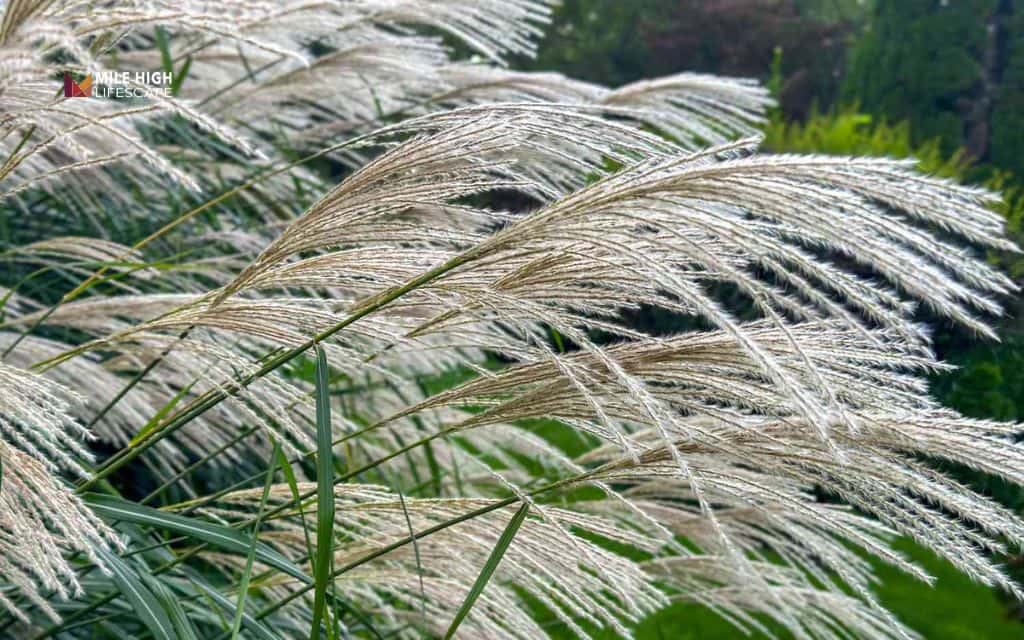
Ornamental Grasses (Little Bluestem, Blue Oat Grass)
- Sun: Full sun
- Water: Low
- Size: Little Bluestem 2-3 feet; Blue Oat Grass 18-24 inches
- Best use: Movement and texture in rock gardens, fall color, winter interest
- Why it works: Little Bluestem (Schizachyrium scoparium) is native, turns bronze-red in fall, and provides winter structure. Blue Oat Grass (Helictotrichon sempervirens) offers blue-gray foliage year-round. Both add softness to hard rock edges. Drought-tolerant and low-maintenance. Cut back in early spring.
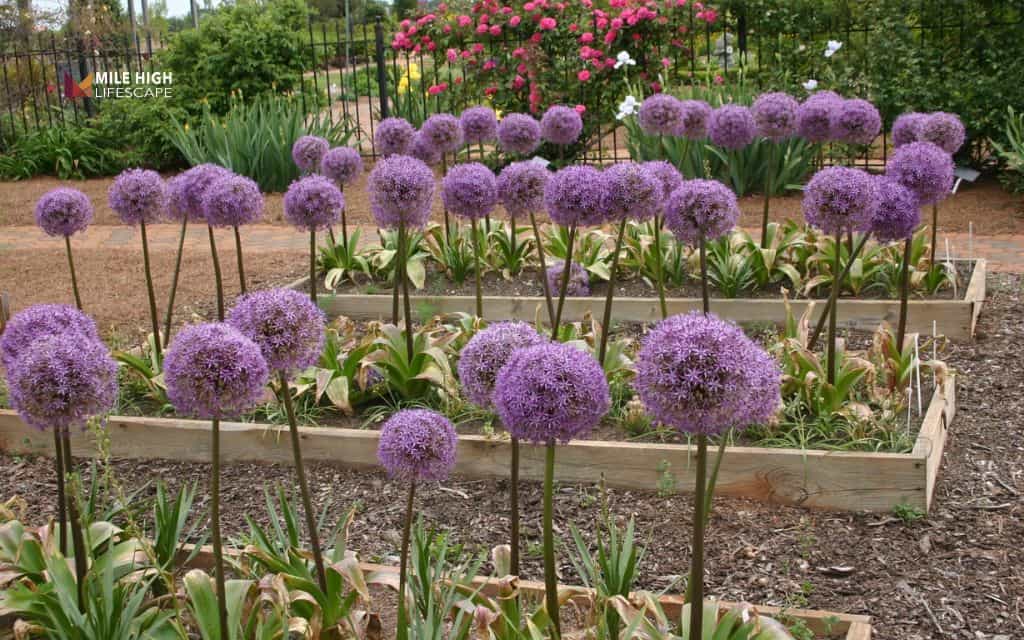
Allium (ornamental onion)
- Sun: Full sun
- Water: Low
- Size: 12-36 inches tall (varies by species)
- Best use: Spring-summer vertical interest, pollinator gardens, modern rock designs
- Why it works: Purple, white, or pink globe flowers on tall stems May-July. Allium cernuum (nodding onion) is a Colorado native. A. ‘Millenium’ blooms late summer. Bulbs naturalize in well-drained rock gardens. Deer and rabbit resistant. Plant in fall for spring bloom.
Common mistakes with rock garden plants
Even drought-tolerant plants can fail when cultural conditions are wrong. Here are the four most common mistakes Denver gardeners make – and how to avoid them.
Mistake 1: Overwatering
The number one killer of rock garden plants in Denver is too much water, especially in clay soil with poor drainage. Most rock garden plants evolved in arid environments where they go weeks without rain. When you water them daily or even every few days, roots sit in moisture they’re not adapted to handle, leading to root rot and fungal disease.
The fix: Water deeply but infrequently. For newly planted rock gardens, water 2-3 times per week for the first month, then gradually reduce to once weekly. In fall and winter, water only if soil is bone-dry during warm spells.
Mistake 2: Using rich soil
In vegetable gardens and perennial borders, rich compost-amended soil makes sense. In rock gardens, it causes problems. When rock garden plants get too much nutrition, they produce lush, floppy growth that’s more susceptible to disease and doesn’t survive Denver winters well. These plants evolved in lean, rocky substrates.
The fix: Mix native soil with coarse sand, pea gravel, or decomposed granite 1:1. Skip the compost. Skip the fertilizer. If your native soil is heavy clay, increase the sand or gravel ratio to 2:1 for better drainage.
Mistake 3: Planting too densely
Crowded plants compete for water and nutrients in already-lean soil. More importantly, dense planting creates humid microclimates where fungal diseases thrive. Many rock garden plants spread naturally over time. If planted too close initially, they’ll eventually battle for space.
The fix: Space plants according to their mature spread, not their size at planting. Yes, your new rock garden will look sparse at first. Fill gaps with gravel mulch, not more plants.
Mistake 4: Ignoring winter drainage
Plants that survive summer drought can die in winter waterlogging. Denver’s freeze-thaw cycles mean snow melts during warm spells, saturates soil, then refreezes – creating ice around roots.
Many rock garden plants (especially those requiring excellent drainage like Lewisia, Pasque Flower, and Lavender) will rot if water pools around crowns in winter and early spring.
The fix: When placing plants, ensure crowns sit slightly higher than surrounding soil – never in depressions where water pools. In heavy clay, create raised rock gardens 12-18 inches high, or excavate and install a gravel drainage layer.
Conclusion
With the right rock garden plants, you can transform Denver’s challenging landscape conditions into genuine advantages. By working with our semi-arid climate instead of fighting it, you’ll create a beautiful, resilient landscape that:
- Reduces water use by 40-60% compared to traditional landscaping
- Solves slope and poor soil problems through improved drainage and erosion control
- Eliminates lawn maintenance while creating year-round visual interest
- Supports pollinators and native ecosystems through diverse plant selections that bloom spring through fall
The plants in this guide – from Sedum to Penstemon to Dwarf Juniper – thrive in Denver’s zone 5 conditions. They handle clay soil, intense sun, freeze-thaw cycles, and limited rainfall without constant attention.
_____________
Selecting the right plants represents only half the equation for successful rock gardens. Mile High Lifescape brings nearly 20 years of experience to landscape rock service.
Our team designs rock gardens that solve real problems: slopes that erode, areas where grass struggles, spots that flood during snowmelt. We source appropriate rocks, create proper soil mixes, and position plants for long-term success rather than quick impact that fades.
Professional installation eliminates costly trial-and-error. You receive a rock garden built correctly from the start – no drainage failures, no plants that die after the first winter, no settling issues. We guarantee our work and provide guidance on minimal maintenance requirements.
Call (303) 877-9091 or email hello@milehighlifescape.com for a free consultation today.
Frequently asked questions (FAQs)
What are the best rock garden plants for Denver?
Blue Fescue, Creeping Phlox, Sedum, Hens and Chicks, Ice Plant, Penstemon, and Dwarf Juniper are top performers. They handle zone 5 winters, drought, clay soil, and intense sun with minimal care once established.
Can plants really grow on rocks without soil?
Yes. Hens and Chicks, Sedum, Moss Campion, and Delosperma establish in rock crevices with just 1-2 inches of gritty soil. Their shallow roots and drought adaptations let them colonize vertical surfaces where traditional plants fail.
How often should I water a rock garden?
Water new gardens 2-3 times weekly for the first month, then weekly through the first season. By year two, water deeply only every 2-3 weeks during dry spells. Overwatering kills more rock garden plants than drought in Denver.
Are rock gardens expensive to install?
DIY rock gardens cost $3-8 per square foot; professional installation runs $15-30+ per square foot depending on materials and site prep. Long-term water and maintenance savings make them economical over time.
Do rock garden plants survive Denver winters?
All plants in this guide are zone 5 hardy and proven in Denver. Winter survival depends on excellent drainage – plants die from waterlogging more than cold. Proper site slope and raised planting prevents winter root rot.