Sheet mulch turns a lawn into a planting bed without tilling or stripping the sod. You lay cardboard over the grass, cover it with compost and wood mulch, and let the layers smother the turf and feed the soil. Homeowners use sheet mulch to retire turf, and gardeners use it to start new beds. This guide covers how the method works, what to buy, each step, and where it fails.
How layered cardboard removes grass
Sheet mulch is a layering method, also called lasagna mulching or sheet composting. It smothers grass and weeds under cardboard or newspaper, topped with compost and mulch. The barrier blocks light, so the grass beneath cannot make food and dies over time. Worms and microbes then break the dead turf, cardboard, and mulch down into organic matter.
Plan on six months or more before you plant a sheet mulch bed. Soil type, rainfall, and other factors set the pace, and dry weather slows the breakdown of cardboard and mulch. Start in fall, and the layers decompose over winter, so the area is ready for a new flower bed by spring.
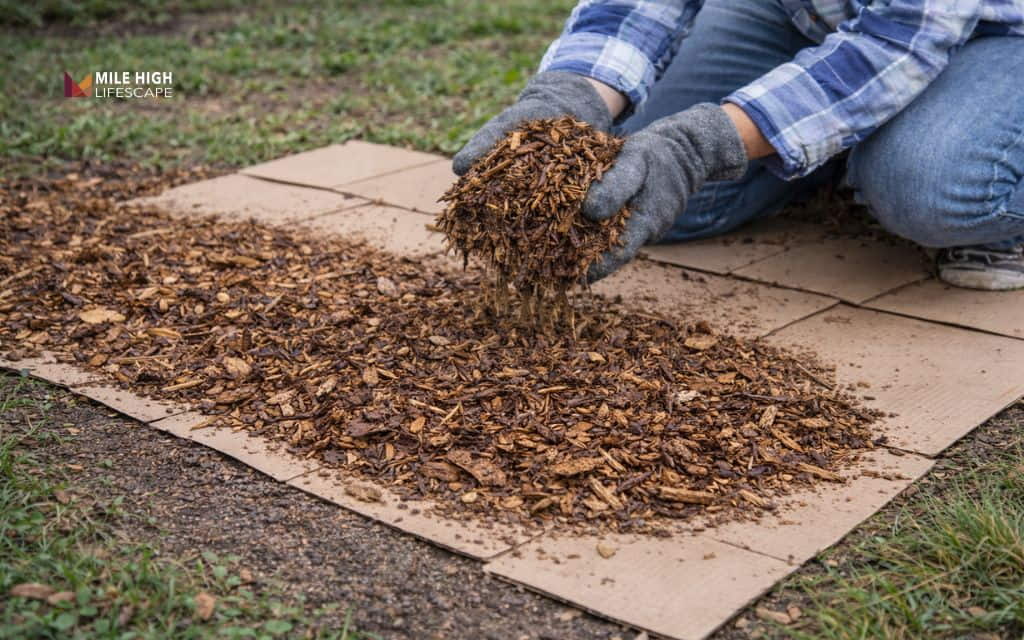
Check your lawn before you start
Sheet mulching for weed control works best on turf grass and annual weeds. Sheet mulch layers cannot stop plants that regrow from roots and rhizomes. Find these plants first, then decide whether to remove them by hand or choose another method.
| Condition | What happens | What to do |
| Bindweed, quackgrass, or blackberry | Roots and rhizomes survive and grow through the sheet mulch | Dig them out first, or cut the sod instead |
| Bermuda grass, ivy, or oxalis | These plants resist smothering | Remove them by hand before you lay cardboard |
| Grass that meets a sidewalk, driveway, or path | Compost and mulch spill onto the hardscape, and runner weeds cross into the bed | Cut a trench along the edge, and call 811 before you dig |
| Existing trees and shrubs | Cardboard and mulch piled against trunks and stems cause problems | Leave a gap around the base of each plant |
| Dry soil | The sheet mulch stays dry and decays slowly | Water the area well before you start, and soak each layer |
Materials and amounts for mulching with cardboard
Mulching with cardboard works best with plain brown corrugated sheets. Skip glossy, printed, and waxed boxes, and remove staples and plastic labels. Newspaper also works as a barrier. Keep the cardboard layer from getting too thick, since thick stacks decompose slowly.
| Layer | Material | Depth | Purpose |
| Cardboard | Plain brown corrugated | Enough layers to block light, with a 6 to 8 inch overlap | Blocks light and suppresses weeds |
| Compost | Finished compost | 1 to 4 inches | Feeds soil life and gives small plants a planting medium |
| Mulch | Wood chips or shredded bark | 3 to 6 inches | Holds the layers in place and keeps moisture in the soil |
| Skip | Landscape fabric, rock, waxed boxes, and hay, manure, or compost with herbicide residue | None | Fabric does not break down, rock does not feed the soil, and herbicide residue can kill broadleaf plants |
Calculate the volume of your sheet mulch before you order. Multiply the area in square feet by the depth in inches, divide by 12, then divide by 27 to get cubic yards. Mulch 3 inches deep over 500 square feet takes about 4.6 cubic yards.
Seven steps from lawn to planting bed
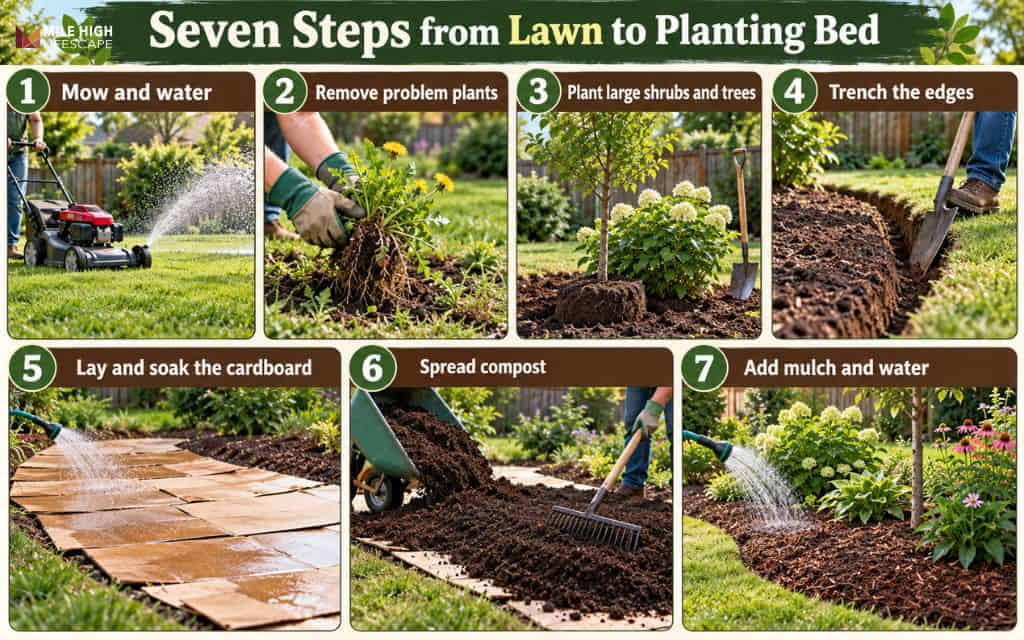
The steps below show how to sheet mulch a lawn in sections you can finish in one day. Cardboard left uncovered dries out or tears in rain, and it stops blocking weeds.
- Mow and water: Mow the grass short, then water the area well so the soil starts moist.
- Remove problem plants: Dig out bindweed, quackgrass, blackberry, ivy, and other plants that grow through sheet mulch layers.
- Plant the large shrubs and trees: Set plants from 5-gallon containers or larger before you lay cardboard, then work the layers around them.
- Trench the edges: Cut a trench where grass meets a sidewalk, driveway, or path. The trench keeps compost and mulch off the hardscape and blocks runner weeds. Call 811 before you dig.
- Lay and soak the cardboard: Remove staples, then overlap sheets by 6 to 8 inches so weeds find no gaps. Wet each sheet as you go to hold the sheet mulch in place.
- Spread compost: Cover the cardboard with 1 to 4 inches of finished compost.
- Add mulch and water: Top the compost with 3 to 6 inches of wood chips or shredded bark, then water the whole sheet mulch bed.
You can sheet mulch at any time of year. Fall suits the method because the layers break down over winter, and the bed is ready for planting in spring. Water the bed when rain does not come.
How to plant and care for a bed after sheet composting
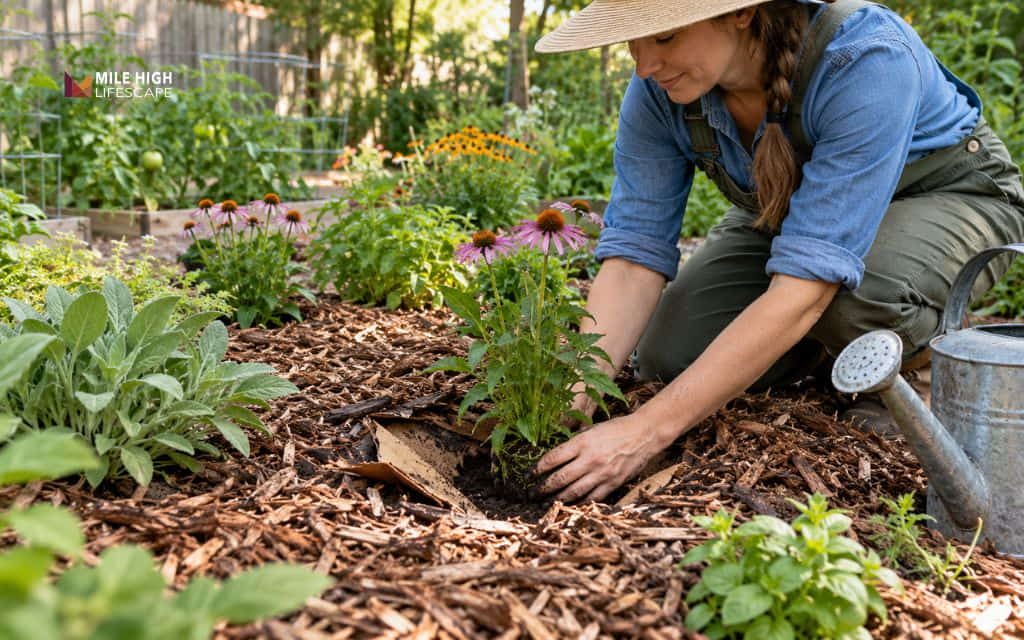
You can plant into the sheet mulch right away or wait. To plant at once, rake the mulch aside, cut an opening in the cardboard, set the plant, backfill with native soil, and pull the mulch back. Set the root ball no lower than the mulch layer, and keep mulch away from stems and trunks.
Match the layers to the plants. Vegetables and annuals call for more organic material, while native perennials and plants in xeriscape landscaping call for less. Mulch laid 3 inches deep lasts about a year. Top up the sheet mulch as it thins, adding no more than 4 inches.
Why layering fails and how to fix it
Weeds still appear after sheet mulch, most often at the edges and through holes in the cardboard. Pull them by hand, and cover larger patches with fresh cardboard and mulch:
| Problem | Cause | Fix |
| Weeds at the edges | Gaps at the border, holes in the cardboard, or seed carried in by wind and birds | Pull them by hand, and cover larger patches with cardboard and mulch |
| Grass or weeds return through the bed | Rhizomes and roots survived under the cardboard | Remove them before you sheet mulch, or cut the sod |
| Cardboard dries out or tears | Sheets sat uncovered, or rain ripped them | Cover each section with compost and mulch the same day |
| Layers decompose slowly | Dry soil and dry weather slow the sheet mulch | Water the bed when rain is scarce |
| Mulch thins | Mulch breaks down, about a year at 3 inches deep | Add mulch to restore depth, adding no more than 4 inches |
| Slugs appear | Moist layers shelter them | Protect seedlings, and trap or hand-pick the slugs |
| Mushrooms or yellow fungus appear | Decomposition is under way | Rake them aside, and keep pets and children from eating mushrooms. The yellow fungus does not harm plants or pets |
Layering versus other lawn removal methods
Three methods remove a lawn without herbicide. Sheet mulch is slow and builds soil, sod cutting is fast and lifts out roots, and solarization uses the sun’s heat to kill grass and weeds.
Sod cutting suits lawns with rhizome grasses and persistent weeds, since it removes the roots with the turf. The full process is covered in this guide on how to remove sod.
| Method | How it works | Best for | Trade-off |
| Sheet mulch | Blocks light with cardboard, then covers it with compost and mulch | Turf grass and annual weeds | Takes six months or more |
| Sod cutting | Lifts the turf and roots out of the ground | Lawns with rhizome grasses and persistent weeds | Removes some topsoil, and the sod needs disposal |
| Solarization | Uses the sun’s heat to kill grass and weeds | Clearing a lawn without digging | Soil must be saturated first |
When to hire a pro for sheet mulch installation
Mulch is the bulkiest material in a sheet mulch project: 500 square feet at 3 inches deep takes about 4.6 cubic yards, and every yard must be hauled and spread. Large areas and tight deadlines call for a pro. Mile High Lifescape provides mulch installation services for Denver and surrounding Front Range communities:
- Proven experience: The company brings 20+ years of landscaping experience to every job.
- Any project size: Crews handle single-bed refreshes and full-property installations.
- Start to finish service: Work covers material delivery through final cleanup, so you do not haul or clear anything.
- Clear estimates: Free on-site estimates come with upfront pricing, no hidden fees, and no obligation.
Call (303) 877-9091 to book a free on-site estimate for your sheet mulch project.
Frequently asked questions (FAQs)
What is sheet mulching?
Sheet mulching is a no-dig method that smothers grass and weeds under cardboard or newspaper, then covers the barrier with compost and mulch. The layers decompose into organic matter that improves the soil.
What is sheet composting?
Sheet composting builds soil in place by letting layered organic material decompose on top of the ground. Many sources use the term interchangeably with lasagna composting, though one extension guide notes that sheet composting can use a single layer, while lasagna composting stacks several.
How long does it take to sheet mulch a lawn?
Plan for six months or more before planting. Fall suits the method because the layers break down over winter. To plant sooner, cut small openings in the cardboard and plant through the mulch.
Which cardboard works best?
Sheet mulching cardboard should be plain brown corrugated, not glossy, printed, or waxed. Remove staples and plastic labels. Tape is optional: one program says it can stay, while another advises removing it, and removing it keeps the bed cleaner.
Is cardboard safe for vegetable gardens?
Plain, untreated cardboard is considered safe for soil that will grow food, according to one conservation district. Skip glossy and printed boxes, and check hay, manure, and compost for herbicide residue before you spread them.
Does sheet mulch work for weeds?
Sheet mulching for weeds works on turf and annual weeds, because the layers block light. It does not stop bindweed, quackgrass, blackberry, ivy, and other plants that regrow from roots or grow through the barrier. Remove them first, or cut the sod instead.