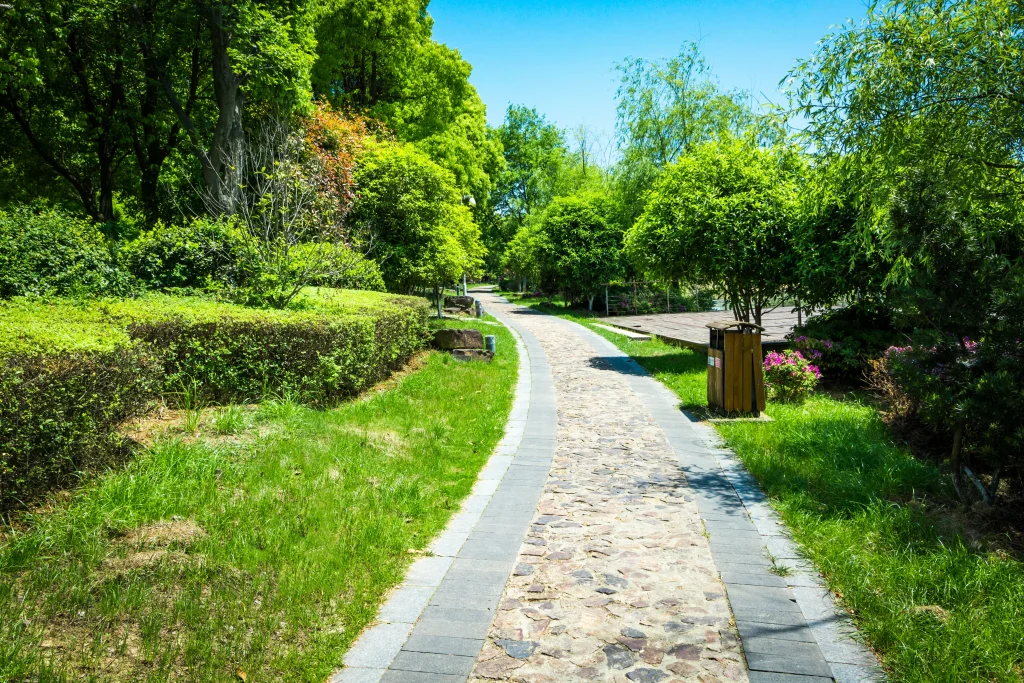
Planning a new garden walkway or considering ground cover options for your outdoor space? You’ve likely encountered decomposed granite – commonly shortened to DG.
But what is decomposed granite, exactly? Is it a type of gravel? A specialized soil? Or something entirely different? More importantly: is DG the right material for your landscaping project?
This straightforward guide breaks down everything you need to know about decomposed granite, from basic definitions to practical applications, helping you make an informed decision for your garden, patio, or pathway project.
What is decomposed granite?
Decomposed granite (DG) is weathered granite rock that has naturally broken down over time into small, granular particles, typically ranging from fine, sand-like consistency to pea-sized gravel pieces.
Common landscaping uses include:
- Walking paths and garden trails
- Patio surfaces and outdoor living areas
- Decorative ground cover
- Base material around stepping stones
- Natural mulch alternative
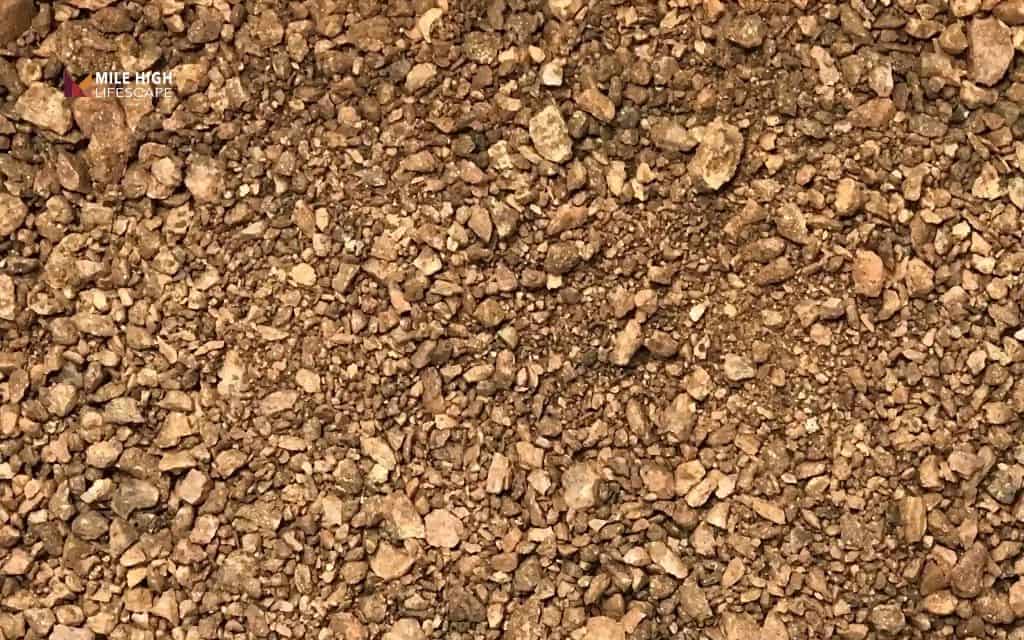
What is DG in landscaping?
Decomposed granite (DG) serves as a versatile hardscape surface that bridges the gap between natural earth and formal paving.
Popular landscape DG applications:
- Garden pathways: Creates inviting, natural-looking trails through flower beds and vegetable gardens
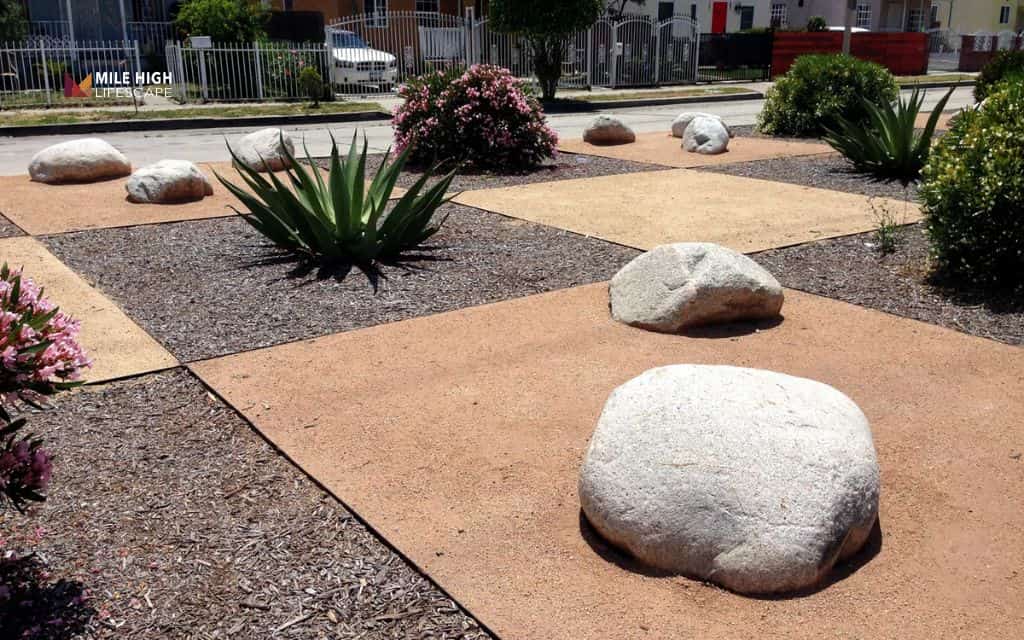
- Patio surfaces: Provides an affordable alternative to concrete or pavers when properly compacted
- Light-traffic driveways: Works for infrequent vehicle use with adequate depth and proper base preparation
- Stepping stone filler: Fills gaps between pavers or flagstones for a cohesive look
- Play area surfacing: Offers a softer landing surface than concrete (when installed correctly)
The key advantage? DG landscape material allows water to penetrate naturally while maintaining a clean, finished appearance, unlike impermeable concrete that creates runoff issues.
Types of decomposed granite: Standard vs stabilized
Standard (natural) DG
Standard DG is the most economical option and works beautifully for garden paths where a natural, informal look is desired. Because it remains loose even after compaction, it allows excellent water permeation, making it ideal for areas around trees and plantings.
However, you’ll need to refresh the surface every 1-2 years by raking and adding a thin layer to maintain its appearance. The material can track indoors on shoes, so consider placement near entryways carefully. Without proper edging, standard DG will gradually spread into adjacent lawn or garden areas.
Stabilized DG
Stabilized DG contains natural or synthetic binders (often plant-based resins) that activate when moistened during installation, creating a semi-permeable hardened surface. This option reduces dust and tracking while maintaining the natural appearance of decomposed granite.
The binding agents make stabilized DG more resistant to erosion from rain or irrigation, extending the lifespan to 5-10 years with minimal maintenance. While more expensive upfront, stabilized DG eliminates the need for frequent replenishment. It’s particularly valuable in Denver’s climate where wind can quickly disperse loose materials.
Where does decomposed granite work best?
Garden paths
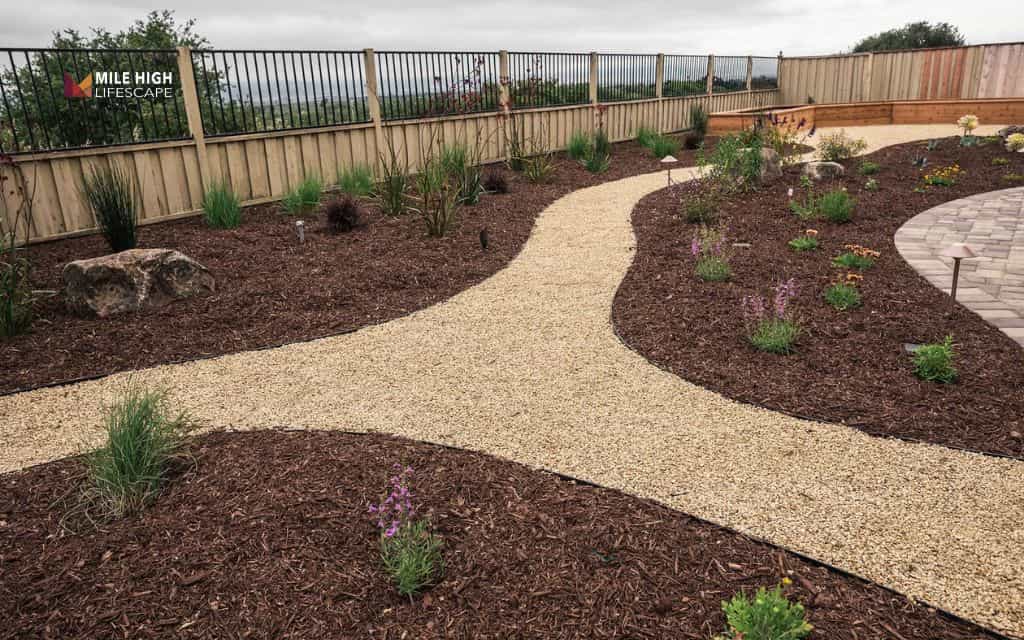
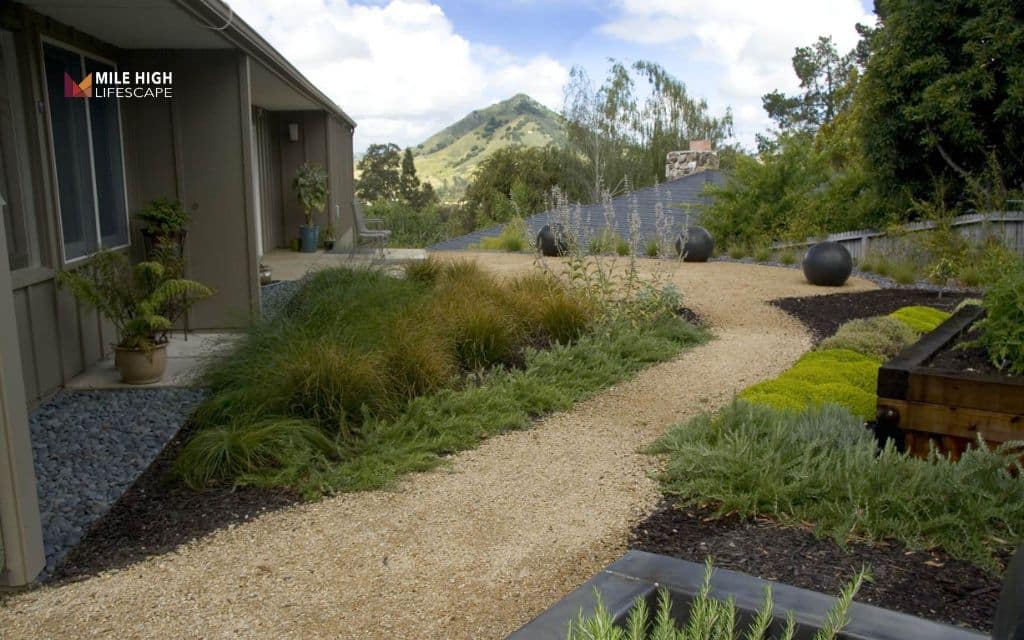
Garden paths are DG’s most popular application because the material naturally complements plantings while providing firm, comfortable walking surfaces. The slightly crunchy texture makes paths feel established and cottage-garden casual rather than overly manicured.
DG paths work exceptionally well when meandering through perennial beds or connecting different garden zones.
For best results, keep path width to 3-4 feet minimum to accommodate wheelbarrows and garden carts. The natural color variations in decomposed granite blend seamlessly with most garden styles.
Patios
DG patios offer a permeable alternative to concrete that’s significantly cooler underfoot during Denver’s hot summer days. Stabilized DG is essential for patio applications to prevent dust and material displacement under furniture.
A properly installed DG patio can support outdoor dining sets, grills, and even fire pits when the base is adequately prepared. The surface provides enough “give” to be comfortable for bare feet while remaining firm enough for chairs and tables.
However, avoid DG for patios under mature trees where falling leaves may become embedded in the surface.
Around plants & garden beds
Unlike organic mulches, DG doesn’t decompose or blow away, making it an excellent long-term groundcover around shrubs and perennials. The material’s thermal properties help moderate soil temperature, protecting plant roots from temperature extremes.
When installed over landscape fabric, DG provides effective weed suppression while still allowing water and air to reach plant roots. The fine particles settle around plant stems without creating air pockets, unlike larger gravel.
For best results, maintain a 2-3 inch layer and keep DG pulled back slightly from direct contact with plant stems to prevent moisture issues.
Light-use driveways
Light-use driveways require a minimum 4-inch base layer of crushed stone topped with 3-4 inches of compacted DG. This application works best for secondary driveways, RV pads, or parking areas that see occasional rather than daily traffic.
Stabilized DG is mandatory for driveway applications to prevent rutting and displacement under vehicle weight. The surface can handle standard passenger vehicles but isn’t recommended for heavy trucks or constant traffic.
Plan for periodic maintenance to address any settled areas.
Pros and cons of decomposed granite
Pros
- Affordable
- Natural appearance
- Good drainage
- Easy to repair
- DIY-friendly
Decomposed granite costs roughly 30-50% less than paver or flagstone installations when comparing material and labor. The natural earth tones blend with virtually any landscape style, from xeric gardens to cottage designs.
Because DG is permeable, it helps prevent runoff issues and supports groundwater recharge. If areas become damaged or settled, you can easily add and compact additional material without needing to replace entire sections.
Most homeowners can successfully install DG paths and small patios as weekend DIY projects with basic tools.
Cons
- Can wash away without edging
- May create dust (standard DG)
- Requires maintenance
- Not ideal for steep slopes without stabilization
Without proper edging, DG gradually migrates into lawn areas, requiring repeated reapplication and creating maintenance challenges.
Standard DG produces fine dust during dry periods, which can be problematic near windows, pools, or outdoor seating areas. Even with excellent installation, DG surfaces need periodic raking, replenishing, and re-compacting every 1-3 years depending on traffic and weather exposure.
On slopes exceeding 5-7%, standard DG tends to wash downhill during heavy rains unless you use stabilized products or install cross-slope barriers. Additionally, DG isn’t suitable for areas where snow shoveling is required, as the material can be displaced along with snow removal.
Basic installation guide
Step 1: Excavate
Excavation depth depends on your project’s purpose. Ensure the excavated area has a slight slope (1-2% grade) for drainage away from structures. Remove all organic material, roots, and debris to prevent future settling. For curved paths, use a garden hose to mark your desired shape before digging. Compact the exposed soil with a hand tamper or plate compactor to create a stable foundation.
Step 2: Add base layer
A 2-3 inch layer of crushed stone or road base creates the essential foundation for long-term stability. Use ¾-minus crushed stone (crushed rock with fines) rather than smooth river rock, as angular edges lock together when compacted.
Spread the base material evenly and compact thoroughly with a plate compactor or hand tamper. This step is critical for preventing future settling.
Ensure the base maintains your desired slope for drainage. For high-traffic areas or driveways, increase base depth to 4 inches.
Step 3: Install edging
Edging is non-negotiable for DG installations – metal, plastic bender board, or stone edging all work effectively.
Install edging so the top sits slightly above your finished DG surface (about ½ inch) to contain the material. Secure edging with stakes every 3-4 feet to prevent shifting over time.
For curved paths, flexible metal or plastic edging works better than rigid materials. Consider the visual impact – steel edging provides clean modern lines while natural stone creates a softer transition to surrounding landscapes.
Step 4: Add DG
Spread DG evenly across your prepared base, maintaining consistent depth throughout the project area.
For standard DG, aim for 2-3 inches; for stabilized DG, follow manufacturer specifications as some products require specific depths for proper curing. Use a rake to achieve uniform coverage and smooth out any low spots or ridges.
Work in manageable sections, especially for larger projects, to ensure even compaction. Keep the surface slightly below your edging to prevent spillover.
Step 5: Compact
Lightly mist the DG with water. Compact in multiple passes using a plate compactor, working in a systematic pattern to cover the entire surface. For stabilized DG, follow the manufacturer’s watering and curing instructions precisely, as improper moisture levels can compromise the binding process.
Add additional DG and repeat the watering and compacting process if low spots appear after initial compaction. Allow the surface to cure for 24-48 hours before regular foot traffic, or longer for stabilized products.
Conclusion
Now you have a clear understanding of what decomposed granite is and whether this versatile dg landscape material suits your specific project needs.
Decomposed granite offers:
- Natural aesthetics that complement garden settings
- Budget-friendly alternative to expensive hardscaping
- DIY-accessible installation for motivated homeowners
- Excellent drainage for sustainable landscaping
The key to success? Proper installation with adequate base preparation, quality edging, and thorough compaction.
Whether you’re creating meandering garden paths, building an outdoor patio, or refreshing ground cover around plantings, decomposed granite delivers practical performance with natural beauty when installed correctly.
Looking for professional landscape rock installation in Denver?
Mile High Lifescape specializes in decomposed granite pathways, decorative stone features, and custom rock landscaping designed for Colorado’s unique climate. Call (303) 877-9091 to discuss your project with our local landscaping experts who understand Denver’s soil, drainage, and aesthetic preferences.
Frequently asked questions (FAQs)
What is decomposed granite made of?
Decomposed granite is made from natural granite rock that has weathered and eroded over time into small granular particles. The texture varies from fine sand-like consistency to small gravel pieces, making it a versatile material for pathways, patios, and decorative ground cover applications.
Is decomposed granite the same as gravel?
Not quite. While both are loose stone materials, decomposed granite gravel is considerably finer and more compactable than standard gravel. When properly installed and compacted, DG forms a firmer, more stable surface, particularly stabilized varieties that include binding agents.
What is the difference between standard and stabilized DG?
Standard DG consists of loose, compactable particles but can shift or erode over time without proper edging. Stabilized DG contains binding agents that help particles adhere together when moistened and compacted, creating a harder, more durable surface with significantly less dust and erosion. Stabilized varieties work best for high-traffic patios and areas requiring long-term stability.
How deep should decomposed granite be installed?
For most garden pathways and patio applications, install DG at 2–3 inches depth over a properly compacted base layer of crushed stone. Projects with heavier traffic or vehicle use may require deeper installation (up to 4–6 inches total) for adequate long-term stability and performance.
Does decomposed granite require maintenance?
Yes, though maintenance remains relatively minimal compared to other landscape surfaces. Over time, you may need to rake the surface smooth, add thin top-dressing layers, or re-compact high-traffic areas. Proper installation with quality edging and adequate base preparation significantly reduces ongoing maintenance requirements.