
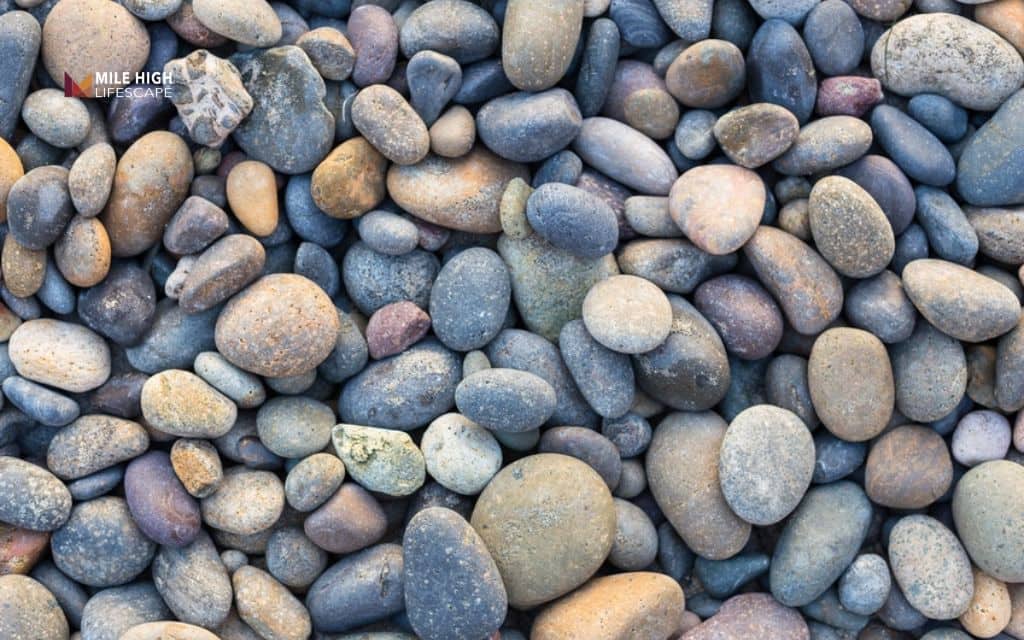
A river rock driveway uses rounded stones from riverbeds as the surface material. These stones sit over a compacted base layer. You can use them for your entire driveway or just decorative sections and borders.
River rock brings a natural, mountain aesthetic that fits Colorado’s landscape. Water drains through the gaps between stones, reducing runoff and ice buildup. The permeability helps during our spring snowmelts and summer thunderstorms.
But river rock doesn’t work everywhere. Your site’s slope, traffic patterns, and intended use determine whether river rock makes sense for your property.
This guide covers the practical side of river rock driveways in Denver. You’ll learn where they succeed and where they struggle. By the end, you’ll know whether river rock fits your driveway needs.
Is river rock good for driveways in Denver?
It depends entirely on your site conditions, how you’ll use the driveway, and your willingness to adapt your expectations. River rock isn’t a one-size-fits-all solution, but when matched correctly to your property, it can be both stunning and functional.
Where river rock driveways shine
River rock driveways work beautifully in specific scenarios where their unique characteristics become advantages rather than limitations:
- Low to moderate-traffic residential driveways: If you’re pulling in and out once or twice a day with a car, river rock can handle that load. It’s the good choice for weekend mountain homes, secondary driveways, or properties where the driveway sees regular use but not constant heavy traffic.
- Flat to gently sloped sites: If your driveway slope is less than about 8%, river rock will stay put beautifully. The stones interlock enough to resist movement while still maintaining that permeable, flexible character.
- Homes aiming for natural, rustic, or mountain aesthetics: If you’re working on a xeriscape design, native boulders, or trying to create that foothills lodge vibe, a river rock driveway ties everything together.
- Specific driveway sections: Consider using river rock for parking pads, RV storage areas, overflow guest parking, or as decorative bands along the edges of a paved main drive. These applications give you the beauty of river rock without the functional compromises.
Where river rock struggles
Here’s where river rock driveways become problematic:
- Steep driveways: Steep driveways present problems for rounded stones. Anything above a five percent grade causes migration. Gravity pulls stones downhill each time a tire spins or brakes. You’ll spend time raking stones back uphill or accepting an uneven surface.
- Tight turning areas: The garage approach where you cut the wheel hard pushes stones sideways. Cul-de-sacs and sharp curves see the same issue. Angular gravel locks together under these forces. River rock rolls and spreads.
- Snowplowing: Standard plow blades catch rounded stones and throw them onto lawns or into the street. You need to raise the blade or use rubber edges. Even then, some stone displacement occurs each winter. Spring cleanup becomes routine maintenance.
- Heavy vehicles: Daily delivery trucks or construction equipment create ruts. The rounded profile provides less load distribution than angular aggregate. Commercial-grade traffic demands a different material choice.
Pros and cons of a river rock driveway
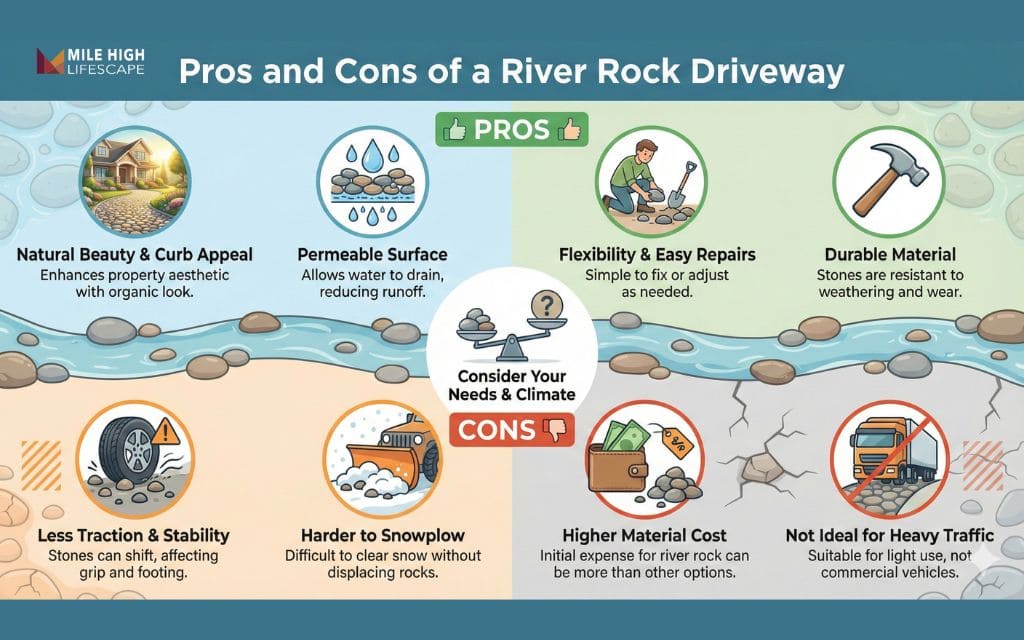
Key benefits
- Natural beauty and curb appeal: This is the primary reason most people choose river rock driveways. The look is unmistakable – like a mountain lodge entrance or a high-end resort approach. The stones catch light differently throughout the day, creating a visual texture that flat pavement can’t match.
- Permeable surface characteristics: River rock allows water to infiltrate through the voids between stones, reducing surface runoff significantly. This means less standing water that freezes into slick patches, better groundwater recharge, and reduced strain on storm drains.
- Flexibility and easy repairs: With asphalt or concrete, you’re looking at patching that never quite matches and often fails within a year or two. With river rock, you just rake the area smooth and add more stone if needed.
- Durable material that handles freeze-thaw cycles: Traditional Denver driveways suffer from our freeze-thaw cycles that can run through multiple iterations in a single week during spring and fall. Concrete spalls and cracks. Asphalt develops potholes and alligatoring. River rock? It doesn’t care. Each stone expands and contracts independently without creating structural failure.
Limitations
- Less traction and stability than angular gravel: Rounded river stones don’t interlock – they roll over each other. When you accelerate, brake, or turn, your tires push stones aside rather than gripping a solid surface. This creates that characteristic “squirm” feeling that some drivers love (it feels like you’re driving on a beach) and others find unsettling. You’ll develop ruts in your regular tire paths, particularly where you brake before entering the garage.
- Harder to snowplow effectively: Denver’s snow removal challenges are real. Standard plow blades and even snowblowers with metal augers will catch rounded river rock and fling it everywhere. Many river rock driveway owners in Denver keep a bag of extra stones near the garage for quick cleanup after each storm.
- Higher material cost than standard driveway gravels: River rock typically costs more per ton than crushed limestone or recycled asphalt. The aesthetic value justifies the expense for many homeowners. Budget for this premium when planning your project.
- Not ideal for heavy commercial traffic or tight turning circles: If you run a business from home with frequent delivery trucks, operate heavy equipment, or have commercial vehicles making tight turns regularly, river rock will rut out quickly. Similarly, if your driveway includes a tight turnaround circle or complex maneuvering areas, the stones will migrate and create maintenance headaches.
Best river rock types and sizes for driveways
Not all river rock is created equal for driveway applications. The size, washing process, and color you choose significantly impact both function and aesthetics.
Ideal size range
Most experienced landscapers in Denver recommend ¾-inch to 1½-inch river rock for driveway surfaces.
This range represents the sweet spot between several competing factors:
- ¾-inch stones are on the smaller end but still drivable. They compact more tightly, create a firmer surface, and are less likely to scatter during snow removal. However, they’ll work their way into the base layer more quickly, requiring more frequent replenishment.
- 1-inch to 1¼-inch stones are the most popular choice for general driveway use in Denver. They’re small enough to drive on comfortably, large enough to stay put reasonably well, and won’t disappear into your base layer as quickly as smaller stones. Most local landscape supply yards stock these sizes in multiple colors.
- 1 1⁄2-inch stones are the upper limit for comfortable driving. They provide excellent drainage, resist sinking into the base, and create bold visual impact. However, some drivers find them less comfortable to drive on, and they’re more likely to scatter during turns or snow removal.
Anything larger than 1½ inches becomes decorative rock rather than functional driveway material – you’re getting into the realm of boulders and landscape features.
Washed vs unwashed river rock
This distinction matters more than most people realize, especially in Denver’s dusty climate:
Washed river rock
Washed river rock has been tumbled and rinsed to remove clay, silt, and fine particles. It costs about 20-30% more than unwashed rock, but the benefits are substantial.
You get cleaner color (not coated in beige dust), better drainage, less mud tracking into your house after rain, and reduced dust clouds during our dry months.
For driveways that are visible from the street or close to your home’s entrance, washed rock is worth the premium.
Unwashed river rock
Unwashed river rock includes clay and silt from wherever it was sourced. It’s cheaper, and some contractors argue it helps the stones compact together better. The downside is more dust, muddier appearance after rain, and potentially slower drainage.
If you’re doing a long driveway on a tight budget or the area isn’t prominently visible, unwashed rock can work.
Color and style choices
- Natural gray river rock (Colorado river rock or creek rock): It ranges from light dove gray to darker charcoal, with individual stones showing subtle color variation. This is the safest aesthetic choice – it complements every house exterior and looks “Colorado.” Expect to pay $60-80 per cubic yard for quality washed gray river rock.
- Multi-color river rock (mixed or rainbow river rock) includes tans, browns, grays, reds, and even black stones in a single batch. It creates visual interest and can tie together multiple colors from your home’s exterior or hardscape. The effect is more casual and eclectic. Pricing is similar to gray, around $70-85 per cubic yard.
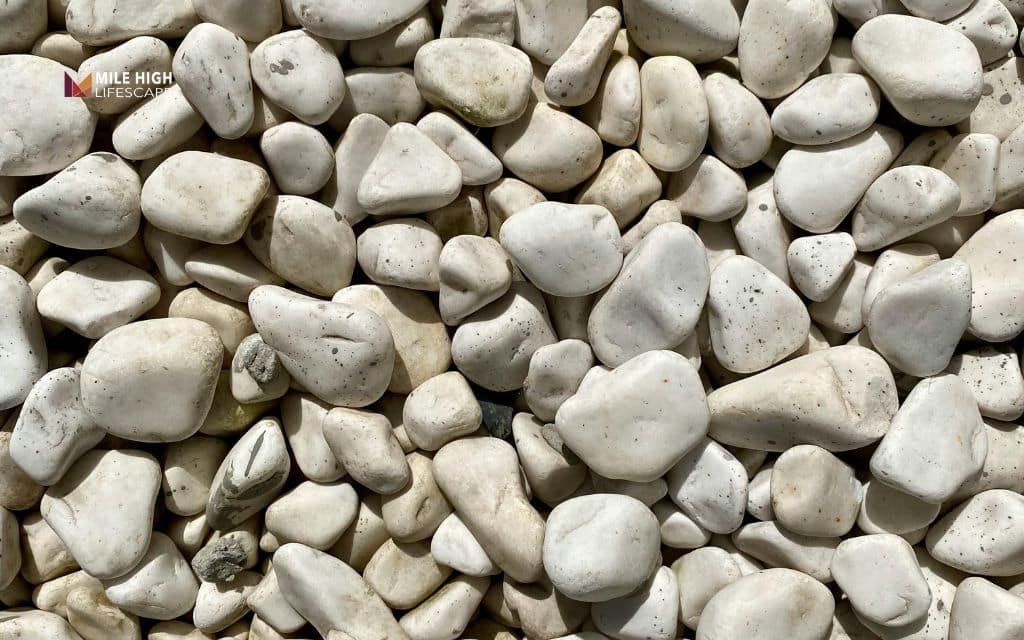
- Tan or beige river rock creates a warmer, softer look. It works with stucco, adobe-style, or earth-tone exteriors. In Denver’s strong sunlight, light-colored river rock reflects heat rather than absorbing it, which can actually reduce the heat island effect around your property.
- Dark or black river rock creates dramatic contrast and reads as more formal or contemporary. It’s stunning against white or light gray modern homes. However, dark rock absorbs heat significantly. This is typically the most expensive option, often $90-110 per cubic yard.
How to build a river rock driveway
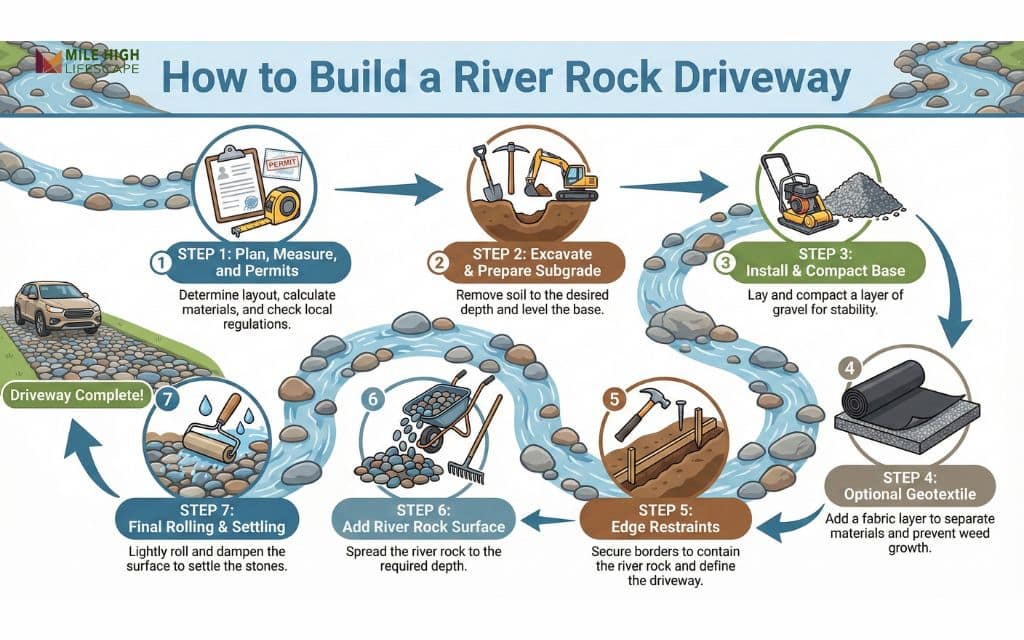
Step 1: Plan, measure, and permits
Start by checking local regulations. Some homeowners associations restrict driveway materials or require approval. Denver doesn’t typically require permits for driveway resurfacing, but verify with your local building department. Jefferson County and other suburbs may have specific rules.
Measure your driveway area accurately. Calculate length times width to get square footage. Convert to square yards by dividing by nine. This number helps you estimate base and surface material quantities.
Standard calculations guide material needs. Plan for four to eight inches of compacted base depending on soil conditions and traffic. Add two to three inches of river rock on top. A two-hundred-square-foot driveway needs roughly three to four tons of base material and one to one and one-half tons of river rock.
Step 2: Excavate and prepare subgrade
Remove all grass, plants, and organic material from the driveway area. Topsoil contains organic matter that compresses and shifts over time. Dig down to stable mineral soil for a solid foundation.
Excavate to accommodate your planned base depth plus the river rock surface. An eight-inch total build typically requires removing six to ten inches of existing material depending on current grade. The finished driveway should sit slightly above the surrounding lawn to promote drainage.
Grade the excavated area to promote drainage. A two percent slope away from structures prevents water from flowing toward foundations. Create subtle crowns on flat driveways so water runs to the edges.
Step 3: Install and compact base
Use class five aggregate, road base, or crushed gravel for the foundation layer. These angular materials compact tightly and resist shifting. The base provides structural support for the river rock surface.
Spread base material in lifts no more than four inches thick. Thicker layers don’t compact properly in the center. You end up with a hard surface over soft material that fails under load.
Compact each lift thoroughly with a plate compactor or roller. Walk the compactor over each area three to four times in different directions. The material should feel hard underfoot and not shift when you walk across it.
Add water lightly during compaction if the material seems too dry. Moisture helps particles bind together during compaction. Too much water creates mud that won’t compact. The material should feel slightly damp, not wet.
Test compaction by walking across the base. Your footprints should barely show. If you sink in more than a quarter inch, compact more before adding the next lift.
Step 4: Optional geotextile
Geotextile fabric prevents subgrade soil from mixing with base material. This separation maintains the structural integrity of each layer. It’s particularly valuable on clay soils common in Denver.
Lay fabric directly on the prepared subgrade before adding base material. Roll it out in strips with six to twelve inches of overlap between pieces. Smooth out wrinkles that could create weak spots.
Pin the fabric with landscape staples every few feet. This keeps it from shifting as you spread base material on top. The pins pull out easily if you need to adjust the fabric position.
Skip fabric on well-draining sandy or gravelly soils. The separation benefit doesn’t justify the cost in these conditions. Clay or silty soils gain significant performance improvement from the fabric barrier.
Step 5: Edge restraints
Install edging around the driveway perimeter before adding river rock. This containment prevents stones from spreading into adjacent areas. Without edges, you’ll rake rocks back onto the driveway.
- Steel landscape edging provides the most durable option. The metal stakes into the base material and holds a clean line. It bends for curves and withstands vehicle impacts at driveway edges.
- Concrete or paver edges create a more substantial border. They cost more and require additional excavation for installation. The permanence and formal appearance suit traditional home styles.
- Treated timber edging offers a rustic alternative. Railroad ties or landscape timbers stake into place with rebar. They soften the driveway edges and complement natural landscaping. Replace them every ten to fifteen years as they weather.
Step 6: Add river rock surface
Spread river rock evenly over the compacted base. Use a small tractor with a loader bucket for large driveways. For smaller areas, wheelbarrows work but require more time and effort.
Rake the stones to an even depth across the entire surface. Two to three inches of river rock provides adequate coverage without excessive depth. Thicker layers increase material costs without improving performance.
Create a subtle crown in the center of the driveway if your base doesn’t already have one. This encourages water to flow to the edges rather than puddling in tire tracks. A gentle rise of an inch per ten feet of width works well.
Step 7: Final rolling and settling
Drive slowly over the fresh river rock surface. This seats the stones into the base and begins the compaction process. Make several passes in different directions to achieve even settling.
Light rolling with a lawn roller helps but isn’t essential. The weight compacts surface stones without the cost of renting heavy equipment. Fill the roller partway with water for adequate weight without damage to the base.
Expect some initial stone movement as the surface finds its level. Vehicles will leave slight impressions for the first few weeks. This settling is normal. The surface stabilizes as stones nestle into their final positions.
Add small amounts of additional rock to any low spots that develop. Traffic patterns become evident within the first month. Address these areas early before deep ruts form.
Maintenance: Living with a river rock driveway in Denver
Routine care
- Occasional raking: Once or twice a season, spend 20-30 minutes walking your driveway with a landscape rake, smoothing out ruts where tires create patterns and redistributing stones that have migrated toward edges.
- Replenish stones every few years in high-traffic areas: Most river rock driveways need a “top-up” of about 1-2 cubic yards every 3-5 years to maintain ideal depth. Keep track of where you bought your original stone and what color you used, so topping up with stone from the same supplier increases chances of a good match.
- Monitor edges annually: Freeze-thaw cycles can push edging out of alignment, and heavy rains sometimes undermine edge support. Catching small problems early prevents bigger issues later.
Weed and dust control
Two ongoing maintenance challenges require proactive approaches:
- Geotextile fabric underneath helps: Wind deposits soil on top of your river rock, and eventually, weeds find a way. Expect to pull weeds, just like any part of your landscape. Pulling weeds from loose river rock is much easier than prying them from cracks in concrete.
- Pre-emergent herbicide application in early spring: Products like Preen or corn gluten meal can be spread over river rock and work their way down to prevent seeds from sprouting. Apply after your final spring raking for best results.
- Spot-treat persistent weeds: Most tough perennial weeds in Denver (bindweed, creeping bellflower, dandelions) respond to spot treatment with glyphosate or organic alternatives. The permeable nature of river rock means herbicide infiltrates quickly – use carefully to avoid oversaturation that could affect adjacent plantings.
- Dust control during dry months: Denver’s spring winds can create dust clouds from fine particles between stones. Occasionally hosing down the driveway settles dust, and the water drains through harmlessly rather than creating mud puddles like it would with clay surfaces.
See more:
For nearly two decades, Mile High Lifescape has been proudly serving the Denver Metro area as the go-to landscape company. Our team brings deep knowledge of Colorado’s unique climate challenges and landscape opportunities.
Contact us at (303) 877-9091 or hello@milehighlifescape.com for expert guidance on your driveway project.
We offer comprehensive landscape rock services including professional installation of river rock features, proper base preparation, and drainage solutions tailored to Denver conditions.
Conclusion
River rock driveways work in Denver when the conditions match the material. Flat to gently sloped sites with moderate traffic see the best results. The permeable surface handles Colorado’s weather cycles while creating a natural mountain aesthetic.
Consider your commitment level carefully.
Full river rock installations deliver maximum visual impact but require seasonal maintenance. Hybrid designs with river rock borders and compacted gravel travel lanes reduce upkeep while preserving aesthetics. Parking pads or decorative sections offer the look without converting your entire driveway.
Start small if you’re uncertain. A test section near your garage or an RV parking pad lets you experience the material before expanding. You’ll learn how river rock behaves on your specific site and whether the maintenance fits your lifestyle.
Frequently asked questions (FAQs)
Is a river rock driveway durable enough for Colorado winters?
River rock withstands freeze-thaw cycles better than concrete or asphalt because individual stones flex independently without cracking. The main winter challenge comes from snowplowing, which can displace rounded stones if you use standard equipment. Raise plow blades slightly and use rubber edges to minimize stone movement. The material itself handles temperature extremes without degradation.
What size river rock is best for a driveway?
Three-quarter inch to one and one-half inch diameter works best for driveway applications. This size range compacts adequately for vehicle traffic while maintaining drainage gaps. One-inch river rock serves as the optimal middle ground for most Denver driveways. Smaller pea gravel sinks into the base too readily, while larger stones create an uncomfortable driving surface.
Do river rock driveways wash out in heavy rain?
Properly installed river rock driveways resist washout on slopes up to five percent when built with adequate base and edge restraints. The rounded stones can migrate on steeper grades during intense storms. Edge restraints contain stones and prevent wholesale movement. The gaps between stones allow water to drain through rather than flowing across the surface with erosive force.
Can you drive a snowplow on a river rock driveway?
Yes, but technique matters. Raise the plow blade a half inch above the surface and push snow forward rather than scraping down to bare rock. Rubber-edged blades cause less displacement than steel. Accept that some stones will scatter into adjacent areas despite careful plowing. Plan to rake stones back into place each spring as part of routine maintenance.
Is river rock or crushed gravel better for a long Denver driveway?
Crushed gravel outperforms river rock on long driveways with steep sections or heavy traffic. The angular edges lock together under load, preventing ruts and migration. River rock provides better aesthetics and equivalent drainage for flat, moderate-use driveways. Consider crushed gravel for the main drive with river rock borders if you want both performance and appearance. Your driveway length matters less than slope and traffic intensit