How do you remove sod? Cut the turf 1.5–2 inches (4–5 cm) deep into strips, slice under the roots, lift each pad, and haul it away. If you can wait, kill the grass in place instead. This guide shows Denver-area homeowners which method fits new sod, garden beds, or xeriscape, and how to avoid costly mistakes.
How do you remove sod?
You remove sod in one of two ways: cut it out and haul it away the same day, or kill it in place and wait 4 weeks to 8 months. Physical removal suits new sod and fast projects. Kill-in-place methods suit garden beds and xeriscape.
Three factors decide the method: area size, deadline, and what you install next. A 150-square-foot (14 m²) bed and a 1,500-square-foot (139 m²) backyard need different tools.
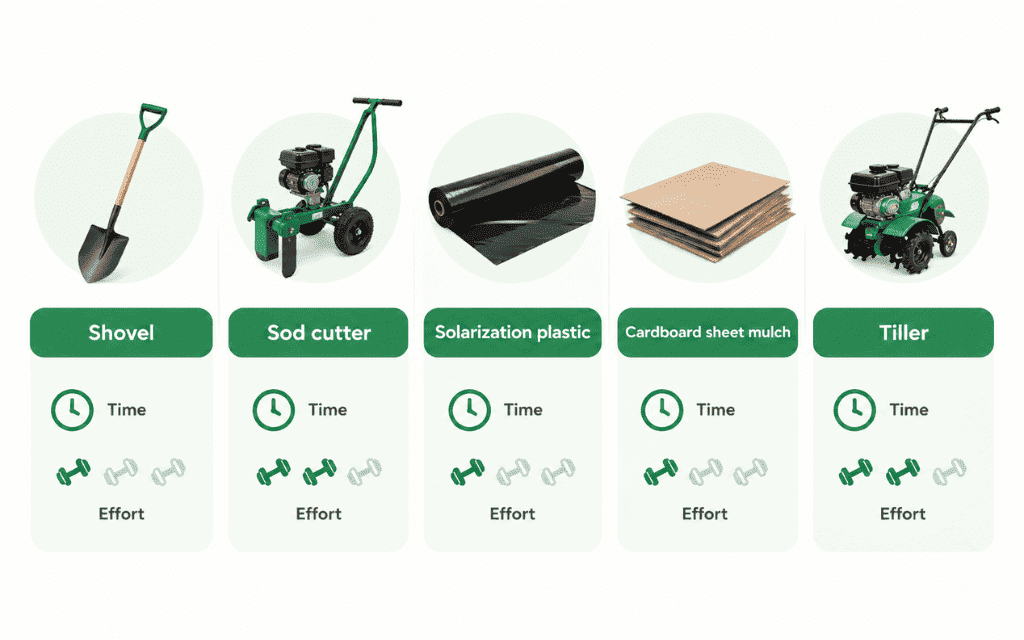
5 ways to remove sod compared
The table below compares 5 common sod removal methods by timeline, labor, and best use.
| Method | Time before planting | Physical effort | Cost level | Best for |
| Shovel or hand tools | Same day | High | Low | Beds and areas under 200 sq ft (19 m²) |
| Sod cutter | Same day | Moderate | Moderate (rental) | Re-sodding and lawns over 200 sq ft (19 m²) |
| Solarization | 4–8 weeks in summer | Low | Low | Flat, sunny areas you can leave covered |
| Sheet mulching | 6–8 months | Low to moderate | Low | Garden beds, xeriscape, and tree rings |
| Tilling or herbicide | 1–3 weeks | Low to moderate | Low to moderate | Large areas with no deadline pressure |
Before you cut sod: 4 steps that prevent costly mistakes
These 4 checks protect your utility lines, sprinkler system, and back.
Call Colorado 811 before you dig
Colorado law requires homeowners to contact Colorado 811 before any digging project, including gardening and landscaping. Submit a request at colorado811.org or call 811 at least 3 business days before you start. The locate service is free.
Utility crews mark buried lines with paint or flags. Dig by hand within 18 inches (46 cm) of any mark. Denver Water notes that marks stay valid for 30 days, or until they fade.
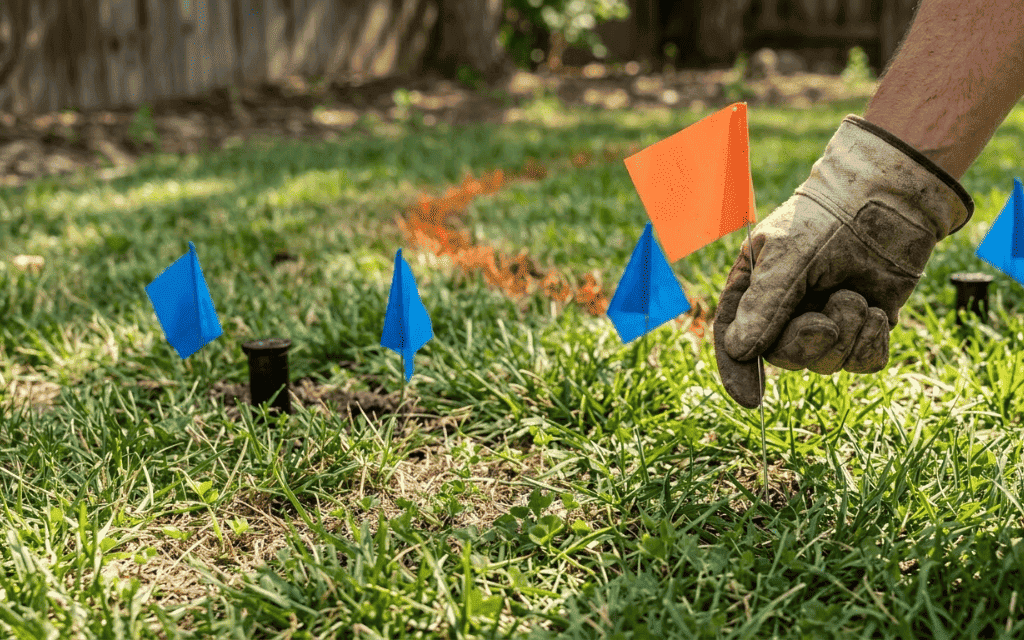
Flag sprinkler heads and irrigation lines
A spade or sod cutter blade can snap a pop-up head or sever a shallow lateral line. Run each zone, push a flag beside every head, and sketch where the lines cross the work area.
Resource Central advises mapping zones first, because a half-removed zone keeps watering bare soil. If the new layout needs capped zones or drip lines, plan the change with a Sprinkler Installation specialist before you cut.
Water the lawn 1–3 days ahead
Moist soil cuts clean, while dry soil fights the blade. Water the area deeply 1–3 days before you dig, so the soil feels damp but not muddy.
Front Range clay turns hard in dry spells. Ask Extension experts warn that a sod cutter can glance off dry ground without reaching the roots. Saturated clay causes the opposite problem: it turns heavy and compacts under boots.
Decide what the space becomes next
Your next project sets the method and the cut depth. New sod needs complete turf removal. A garden bed or xeriscape can use kill-in-place methods that keep organic matter in the soil.
Check HOA rules before you replace lawn with plants, rock, or mulch. Colorado law limits HOA bans on waterwise landscaping, yet approval steps vary by association.
How to remove sod with a shovel, step by step
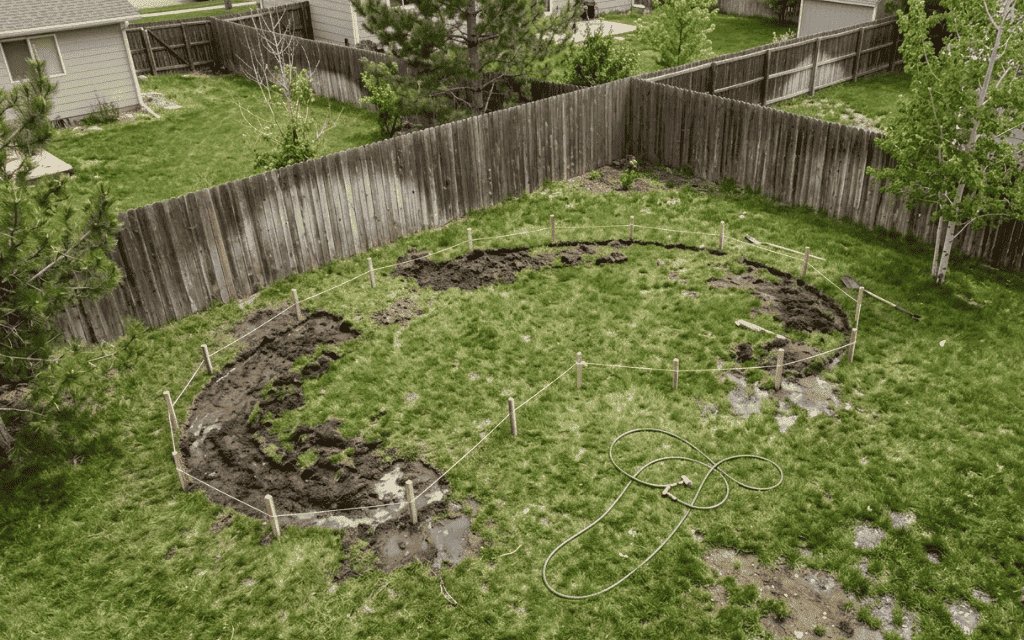
To remove sod with a shovel, cut the lawn into narrow strips, slice under the roots, and lift small pads. This method works best for beds, edges, and areas under 200 square feet (19 m²).
Tools you’ll need
Manual sod removal needs 6 basic tools:
- A flat spade or square shovel with a sharpened edge for clean, shallow cuts.
- A half-moon edger for straight strip lines along beds and walkways.
- A grub hoe for chopping stubborn crowns and thick root mats.
- Leather gloves and knee pads to protect your hands and joints.
- A wheelbarrow or heavy tarp to move pads off the work area.
- String and stakes to mark the outline before you cut.
6 steps to cut sod out by hand
Follow these 6 steps in order.
- Mark the area: Outline the space with string, stakes, or marking paint. Measure both diagonals; equal lengths confirm square corners.
- Score the strips: Push the spade straight down along parallel lines about 12 inches (30 cm) apart. Cut the full length of the area.
- Cut the pads: Cross-cut each strip every 12–18 inches (30–45 cm). Smaller pads weigh less and lift with less strain.
- Slice under the roots: Start at the far end of a strip. Slide the blade under the turf at a low angle and cut 1.5–2 inches (4–5 cm) deep. Kneel for this step to control the depth.
- Lift the pad: Pry the pad up, sever the last roots, and set it in the wheelbarrow. Work backward so the uncut turf gives your blade leverage.
- Rake and inspect: Rake the exposed soil and pick out root clumps, rocks, and white grubs.
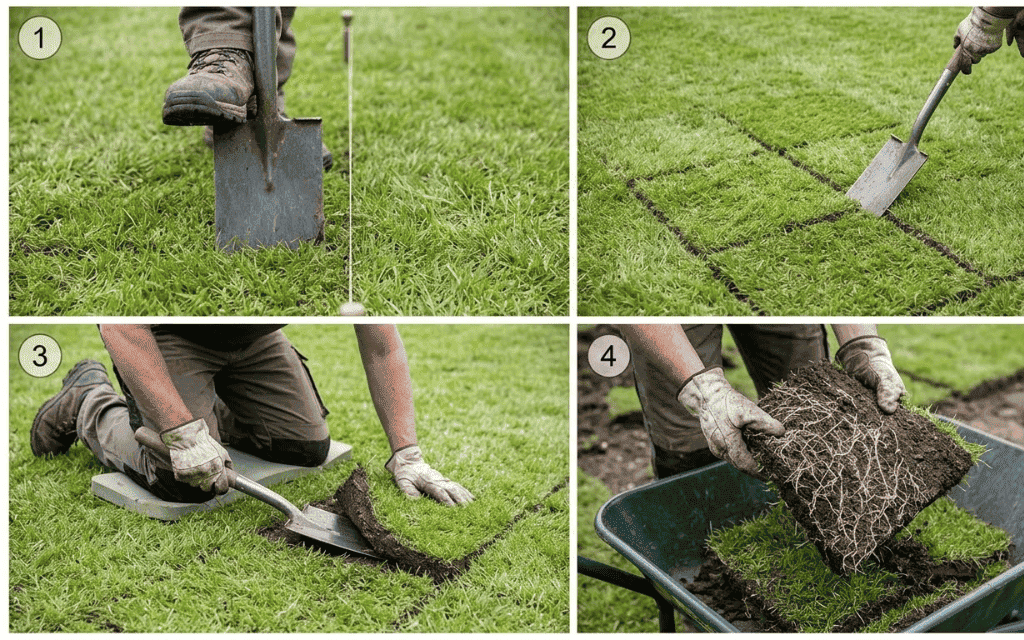
How to pull up sod without wrecking your back
Lifting heavy pads strains your back more than cutting does. These 5 habits keep the work manageable:
- Keep pads small: A 12-by-12-inch (30 × 30 cm) pad lifts with one hand; a 6-foot (1.8 m) rolled strip does not.
- Kneel to slice: Cutting from your knees keeps the blade level and your spine neutral.
- Sharpen the blade: A file stroke every hour restores a dull edge and cuts effort.
- Rotate tasks: Alternate 20 minutes of cutting with 20 minutes of hauling.
- Bring a partner: Resource Central estimates that 2 people can remove and haul about 100 square feet (9.3 m²) of lawn per hour by hand.
How to cut sod out of a lawn with a sod cutter
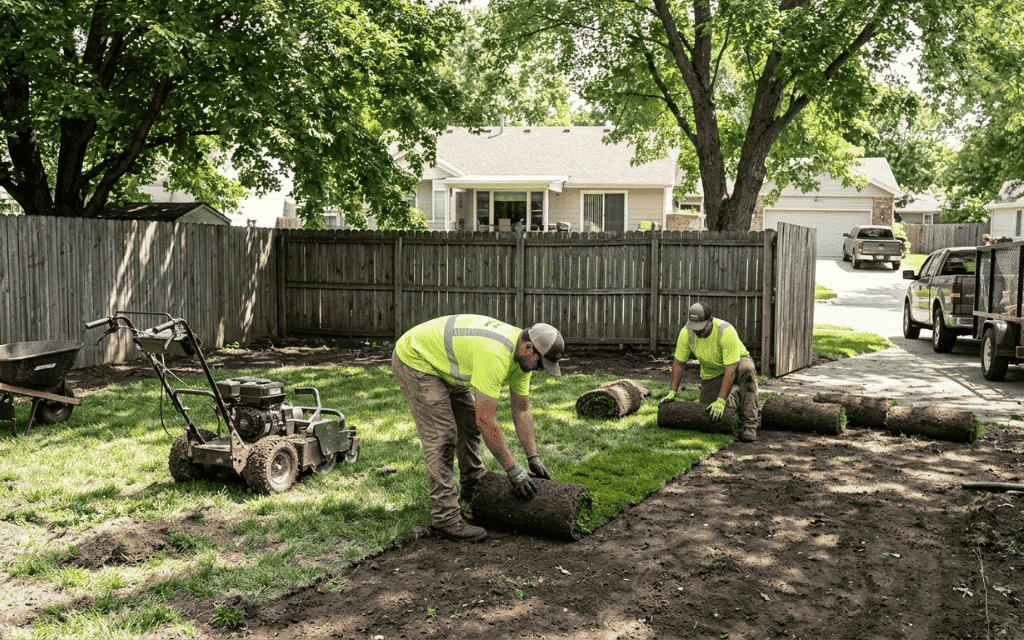
A sod cutter slices turf into uniform strips at a set depth. It is the fastest way to cut sod out of a lawn larger than 200 square feet (19 m²). CSU Extension recommends a sod cutter to strip old grass before laying new sod.
Manual kick cutter vs. gas-powered sod cutter
A manual kick cutter pairs a flat blade with a kick bar. It suits small beds, but progress depends on leg strength and a sharp blade.
A gas-powered sod cutter drives itself forward and cuts strips at an adjustable depth. Most rental units cut strips 12–18 inches (30–45 cm) wide. Rental yards and home improvement stores stock both types.
How to use a rented sod cutter safely
Use this 6-step routine:
- Confirm the marks: Check that 811 paint and sprinkler flags remain visible.
- Set the depth: Adjust the blade to about 2 inches (5 cm), the minimum depth Thornton Water recommends for physical turf removal.
- Start straight: Run the first pass along a fixed edge, such as a driveway, sidewalk, or patio.
- Cut parallel passes: Line each new pass beside the last one without gaps.
- Roll and shorten: Roll each strip and cut it into 2–3-foot (60–90 cm) lengths for easier lifting.
- Finish by hand: Clean up edges, corners, and tree rings with a spade.
Sod cutters are heavy. Plan for a low trailer, read the rental guide, and wear boots and eye protection.
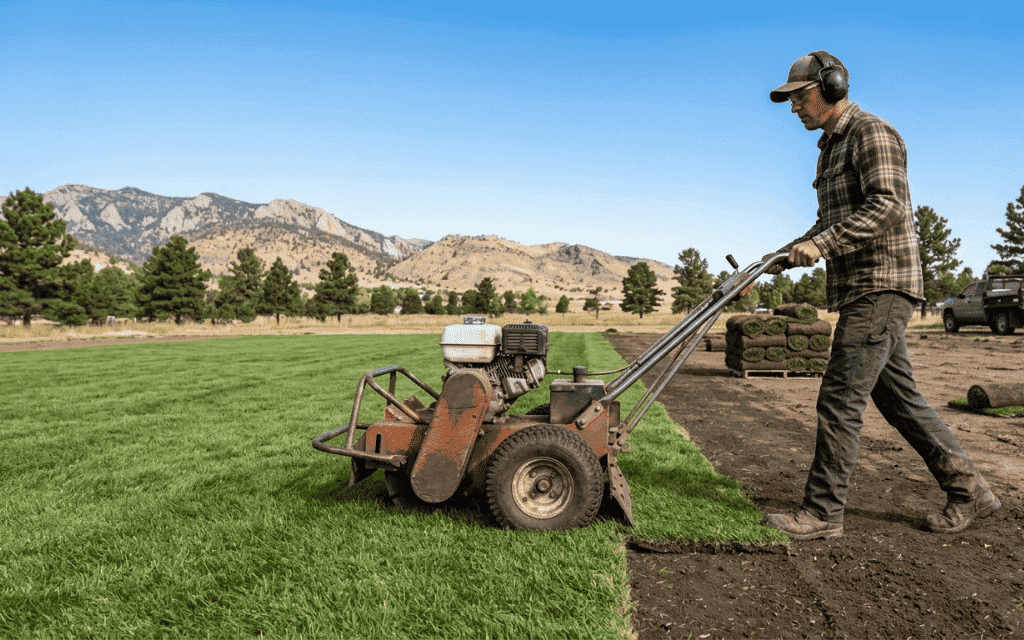
No-dig options: solarization and sheet mulching
No-dig methods kill grass in place, keep topsoil on site, and skip the hauling. They trade labor for time.
Solarization: 4–8 weeks in summer
Solarization uses plastic sheeting and sunlight to heat and kill turf. On Colorado’s Front Range, late May through July gives the fastest results, according to Resource Central.
Mow short, water deeply, and cover the lawn with plastic. Bury or weigh down every edge so no air escapes. The top 6 inches (15 cm) of soil can reach 140°F (60°C), per the UC Master Gardener Program. Leave the cover for 4–8 weeks, until the grass turns brown and brittle.
Sheet mulching: 6–8 months, start in fall
Sheet mulching smothers grass under cardboard and organic layers. Start in fall so the bed is ready for the next growing season. Build it in 5 steps:
- Mow the lawn as short as possible.
- Cover it with overlapping cardboard or 10–12 sheets of newspaper.
- Soak the layer so it stays flat and starts to break down.
- Spread 2 inches (5 cm) of compost over the paper.
- Finish with 4 inches (10 cm) of mulch.
Sheet mulching builds rich soil for perennials and vegetables. Skip it before re-sodding; rhizome grasses can push through thin layers.
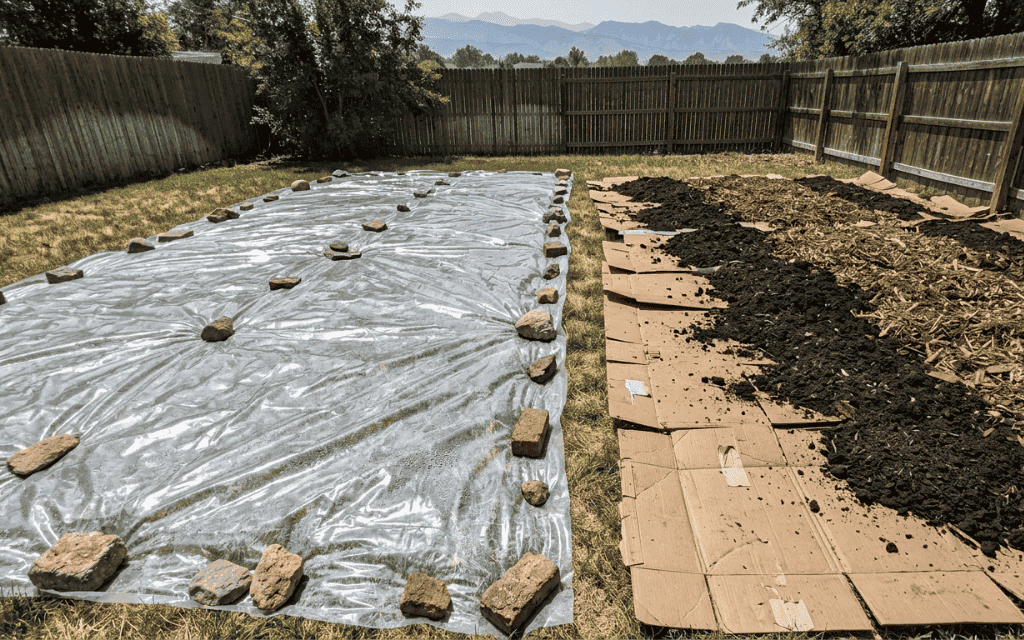
What about tilling or herbicide?
Tilling and herbicide both kill turf, but each creates follow-up work.
- Tilling chops sod into the soil and keeps organic matter on site. It also leaves live turf fragments, lifts buried weed seeds, and can spread rhizome weeds such as quack grass. Breaking established sod takes a rear-tine tiller and 2 or more passes.
- Herbicide kills turf in about 1–2 weeks with a non-selective product. Follow the label exactly, skip windy or rainy days, and expect a second application on dense turf. Herbicide does not remove the dead sod, so you still rake, cut, or plant through it.
For vegetable beds, we recommend physical or no-dig methods over herbicide.
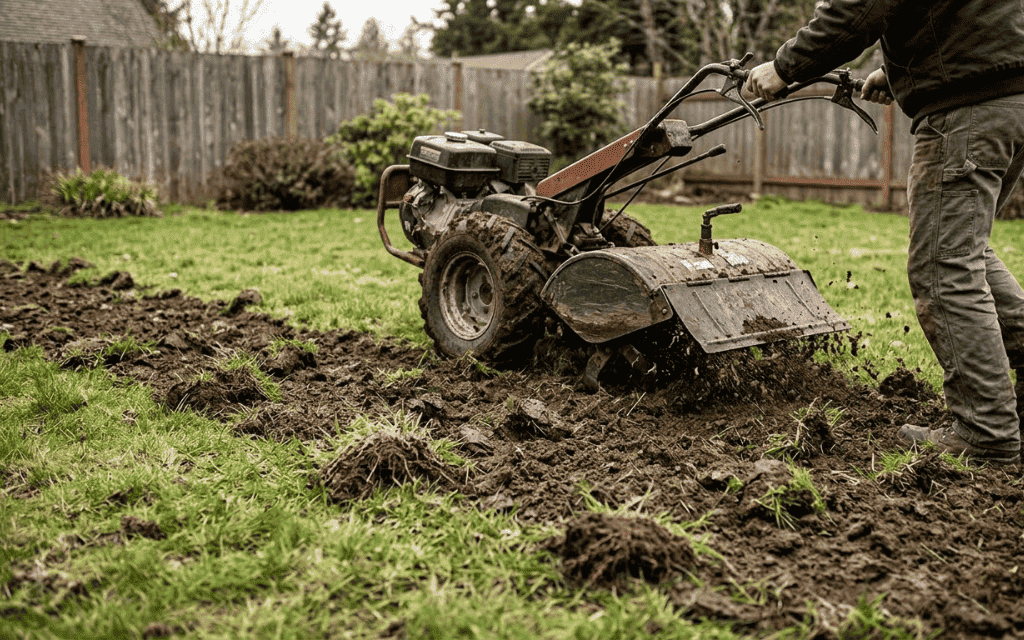
What is the easiest and best way to remove sod?
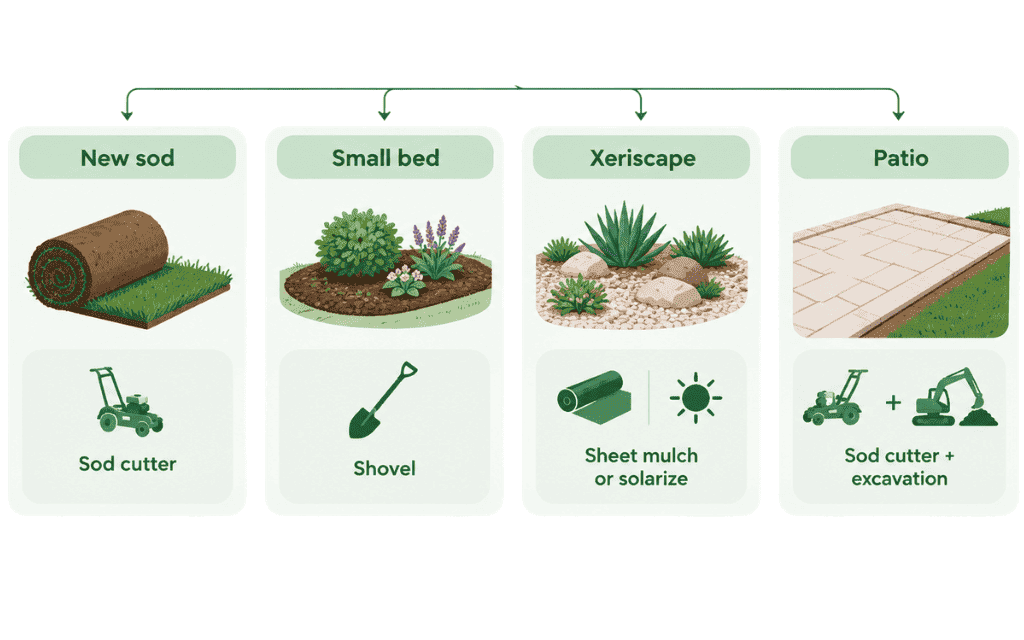
The easiest way to remove sod is solarization or sheet mulching, because heat and time do the work. The best way depends on your next project and deadline.
| Your project | Best method | Why |
| New sod lawn | Sod cutter | Removes roots and thatch evenly for good soil-to-sod contact |
| Small flower bed | Shovel | Precise edges and no rental needed |
| Xeriscape or perennial bed | Sheet mulching or solarization | Keeps topsoil and adds organic matter |
| Patio or walkway | Sod cutter, then excavation | Clears turf before base material goes in |
| Large lawn, tight deadline | Professional crew | Crews finish in days instead of weeks |
Why grass grows back after you remove sod
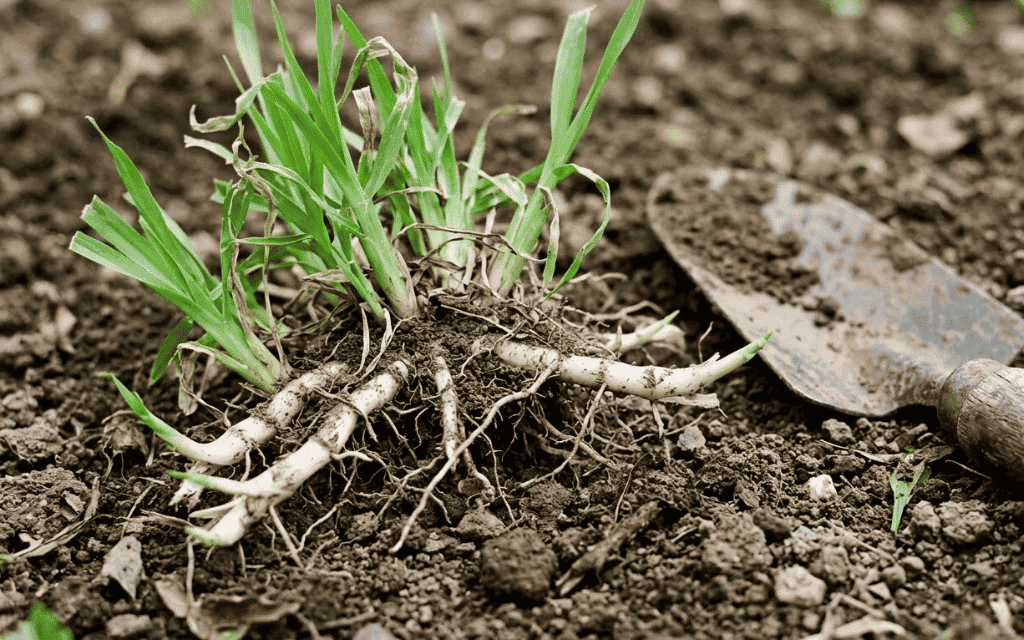
Grass grows back when rhizomes or crowns survive below the cut. Kentucky bluegrass, a common lawn grass across the Front Range, spreads through underground rhizomes that a shallow cut can miss.
Ask Extension experts advise homeowners to stay vigilant for bluegrass stragglers after removal. To clean up, water the bare soil for 2 weeks, let missed sprouts emerge, and dig each one out with its roots. Repeat once. For stubborn patches, solarize the area after removal, as Resource Central suggests.
The UC Master Gardener Program warns that cutting sod alone fails on Bermuda grass, whose roots run several feet deep.
What to do with the sod you remove
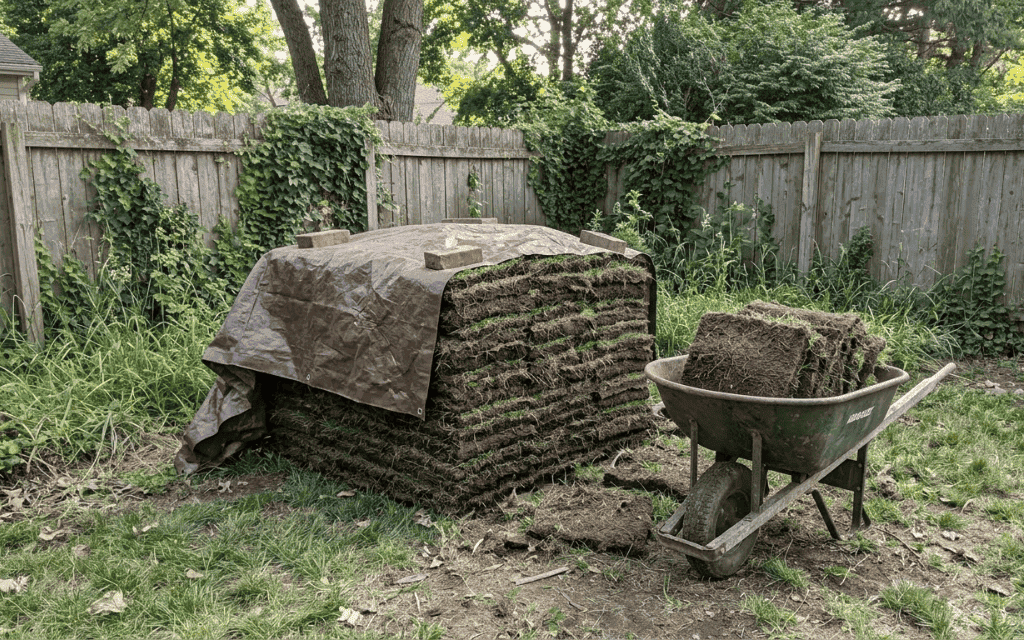
Plan where heavy, removed sod goes before you cut. You have 4 options:
- Reuse healthy pads to patch thin spots or fill low areas in the remaining lawn.
- Compost pads by stacking them grass side down and covering the pile; they break down over several months.
- Share usable pads with neighbors through a local online group.
- Haul the rest to a facility that accepts soil and turf.
Denver residents should skip the green cart. City of Denver rules exclude sod and dirt from green compost carts. Check your own city’s rules if you live elsewhere in the metro area.
What to do after removing sod
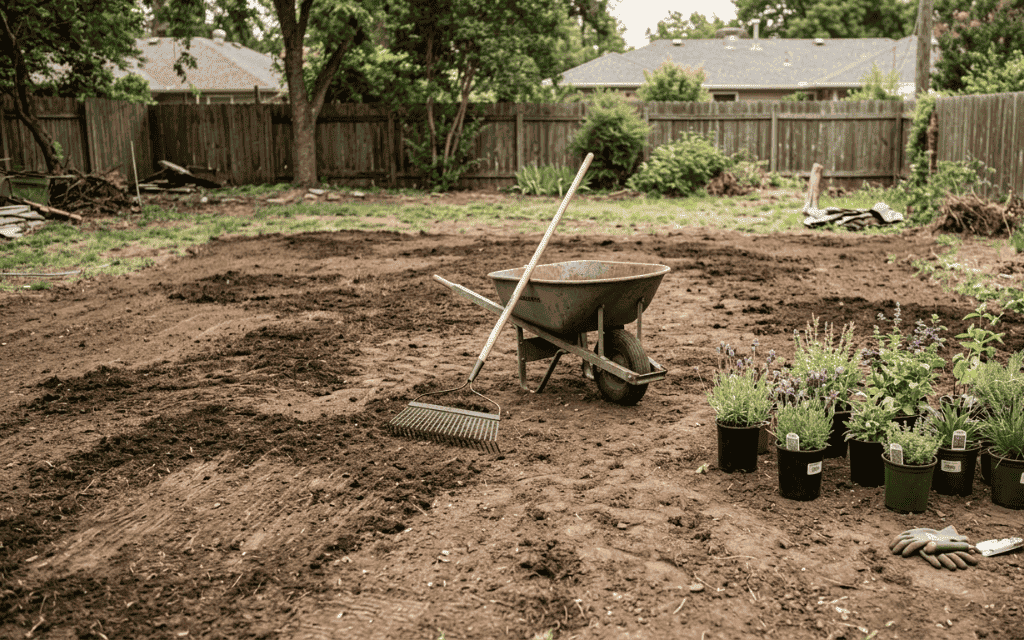
Prep work depends on whether grass or plants go in next.
Preparing soil for new sod
New sod roots best into loose, level, amended soil. After removal, follow 4 steps:
- Rake the surface level and remove leftover roots.
- Grade the soil to slope away from the foundation.
- Loosen the top 4–6 inches (10–15 cm) and mix in compost to improve clay soil.
- Add topsoil to replace the 1.5 – 2 inches (4–5 cm) that left with the sod.
Our guide on How to Lay Sod in 6 Easy Steps covers the installation that follows.
Turning the space into xeriscape, beds, or mulch
A cleared lawn makes room for waterwise plants. Our Xeriscape Landscaping team designs low-water beds for Front Range conditions, and our Mulch Installation service finishes beds with a protective layer.
Watch your trees after the lawn goes. CSU Extension in Pueblo County notes that tree roots likely took about half the water you applied to the turf. Give nearby trees their own irrigation. As of October 2026, Denver Water’s 2026 turf removal discounts of up to $750 are fully allocated; check its site for future rounds.
When to call a professional for sod removal
Call a professional when the project size, slope, or timeline exceeds what a weekend allows. These 5 signs point to hiring help:
- Size: the area exceeds 500 square feet (46 m²).
- Terrain: the yard has slopes, tight access, or many trees.
- Irrigation: the sprinkler system needs rerouting or new zones.
- Scope: you want removal and new sod or xeriscape in one project.
- Health: back, knee, or heat limits make manual work risky.
Mile High Lifescape brings over 20 years of experience in lawn care and landscaping across the Denver Metro area. We plan removal around your utilities, sprinklers, and next project.
Sod installation from Mile High Lifescape
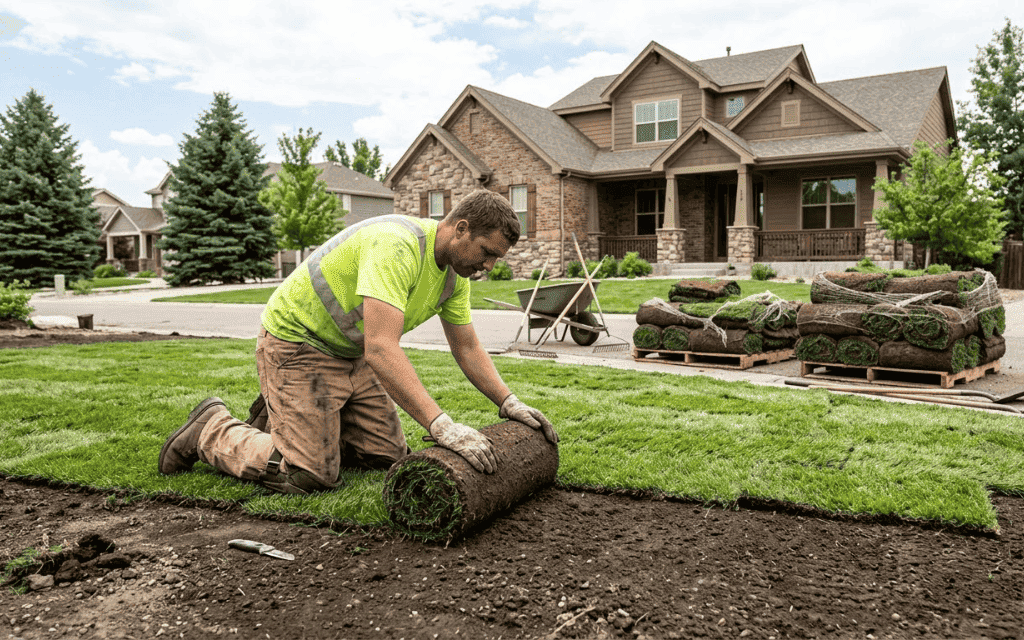
How do you remove sod and get a new lawn without losing a whole season? Hand the full job to one crew. Mile High Lifescape installs new lawns for homeowners across Denver, Lakewood, Littleton, Centennial, Broomfield, Thornton, Westminster, and Highlands Ranch. Our Sod Installation service gives you a finished lawn instead of a bare yard.
Each project follows 3 stages:
- Site preparation: we clear the area, grade the soil, and amend it for root growth.
- Installation: we lay fresh sod in a staggered pattern with tight seams.
- Aftercare: we give you a watering and first-mowing plan for Denver’s dry air.
Want a budget first? Read our sod installation cost guide, then call (303) 877-9091 or email hello@milehighlifescape.com for a quote.
FAQs about removing sod
How deep should you cut when removing sod?
Cut 1.5–2 inches (4–5 cm) deep. That depth removes the crowns and most roots while keeping topsoil. Thornton Water recommends at least 2 inches (5 cm) for physical removal.
How long does it take to remove sod by hand?
Two people remove about 100 square feet (9.3 m²) per hour, according to Resource Central. A 500-square-foot (46 m²) area takes most of a day.
Can you lay new sod over old grass?
No, remove the old grass first. Old turf decays under the new layer and blocks root contact with the soil. CSU guidance calls for stripping dead grass with a sod cutter before sodding.
Do I need to call 811 to remove sod in Colorado?
Yes. Colorado law requires a locate request before any digging. Contact Colorado 811 at least 3 business days ahead.
Can I put old sod in my Denver compost cart?
No. City of Denver rules exclude sod and dirt from green compost carts. Reuse, compost, or haul it instead.
Will grass grow back after removing sod?
Yes, if rhizomes stay in the soil. Water the area for 2 weeks, then dig out new sprouts with their roots.
How do you remove sod so the grass doesn’t grow back?
Cut 1.5–2 inches (4–5 cm) deep and clear every rhizome you find. Kentucky bluegrass resprouts from rhizomes left in the soil. Water the bare area for 2 weeks, then dig out new sprouts with their roots. Solarize stubborn patches if they keep coming back.