What is black mulch, and does it belong in your beds? Black mulch is shredded or chipped wood that manufacturers color with a carbon-based dye. It covers soil, blocks weeds, slows water loss, and gives beds a dark backdrop that makes plants stand out.
This guide explains what black mulch is made of, how it works in a bed, where it fits, and how long it lasts. It also covers the wood-source question, which matters more than the dye.
What is black mulch?
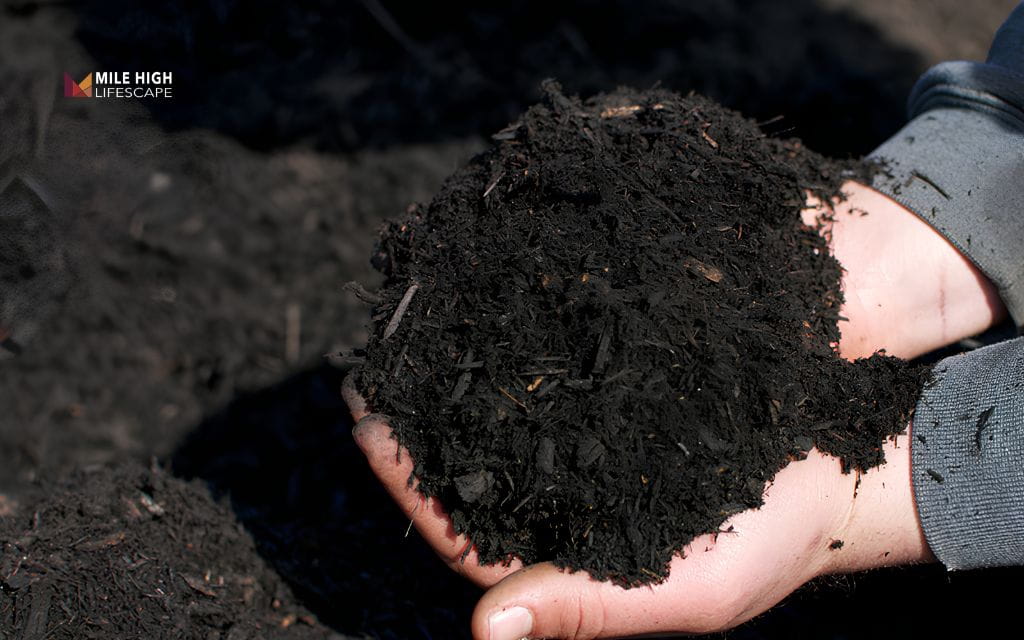
Black mulch is wood mulch dyed black. Producers shred or chip the wood, apply a carbon-based colorant, and dry the finished product for sale in bags or bulk. The wood does the work of mulch, and the dye supplies the color.
Synthetic covers, including black plastic sheeting and dark gravel, are different materials that add no organic matter to the soil. Dyed wood breaks down and feeds the soil over time. In practical terms, what is black mulch? It is organic wood mulch with a dark finish.
What black mulch is made of?
Most black mulch starts as shredded hardwood, bark, or recycled wood such as used pallets and wood from construction sites. Dried wood absorbs dye well, so manufacturers favor recycled material. They grind the wood, apply the colorant, and let the mulch dry. The color comes from a carbon-based dye similar to the colorants used in ink and cosmetics.
The dye is rarely the problem. Penn State Extension and UMass Extension report that mulch colorants are not considered toxic to plants. The wood underneath carries the risk, because recycled wood can include older pressure-treated lumber that contains arsenic. Ask your supplier which wood was dyed, and skip mulch that smells sour.
What black mulch does in a garden bed
The benefits of black mulch match those of other organic mulch. Extension specialists list weed suppression, moisture retention, temperature moderation, and soil building. Black mulch adds contrast. The dark surface frames green foliage and bright blooms, and it gives borders a defined edge.
- Weed suppression: Mulch spread 2 to 3 inches deep blocks light from reaching weed seedlings, which cuts the amount of weeding.
- Moisture retention: The layer shades the soil and slows evaporation, so beds need watering less often.
- Temperature moderation: Dark color absorbs more sunlight and can warm soil in early spring. Research on dyed shredded mulch found that color changes surface temperatures far more than soil temperatures below.
- Soil building: Wood decomposes over time and adds organic matter to the soil.
- Visual contrast: The dark backdrop sets off foliage, flowers, stone, and edging.
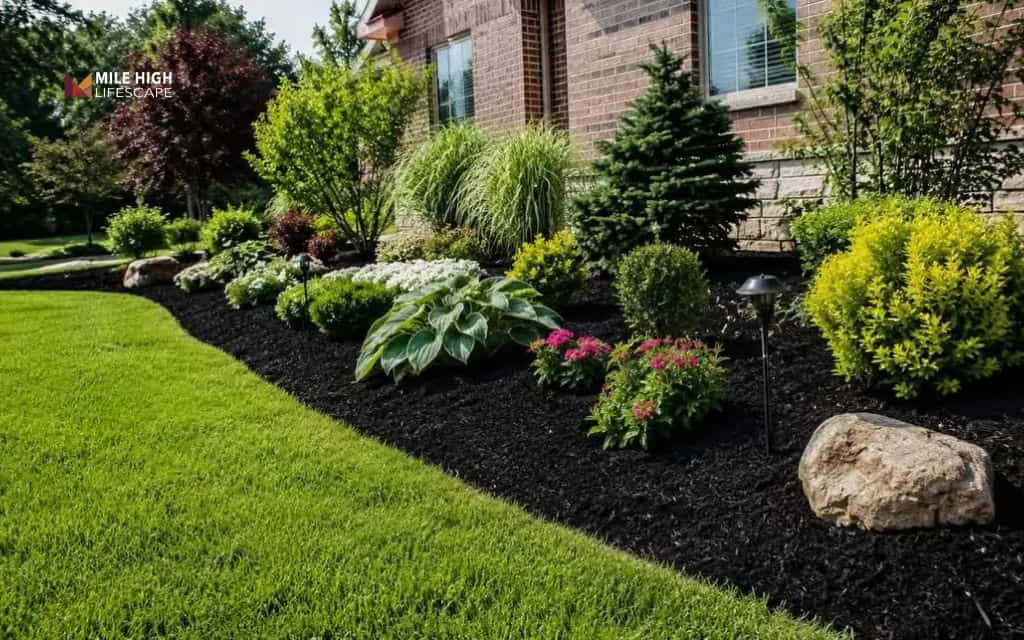
Black mulch with flowers works through contrast. Around green foliage such as hosta, the dark surface makes leaf color stand out, and bright blooms read clearly against it. Homeowners who plant new borders often pair fresh mulch with flower bed services that cover planting and upkeep.
Where black mulch fits and where it does not
Black mulch suits beds where contrast matters. It works around shrubs and perennials, along borders and walkways, and in tree rings. Black mulch in flower beds sets off bright blooms. It also complements gray and modern exteriors, so it shows up often in landscape ideas for front of house that rely on contrast between dark beds and green foliage.
Black mulch fits some sites less well. Dark mulch absorbs more sunlight, so lighter mulch can suit hot, exposed spots with heat-sensitive plants. Dyed mulch is also rarely used around edible crops, because the wood source is hard to confirm. Straw or undyed organic mulch suits vegetable beds better.
Black mulch vs brown mulch
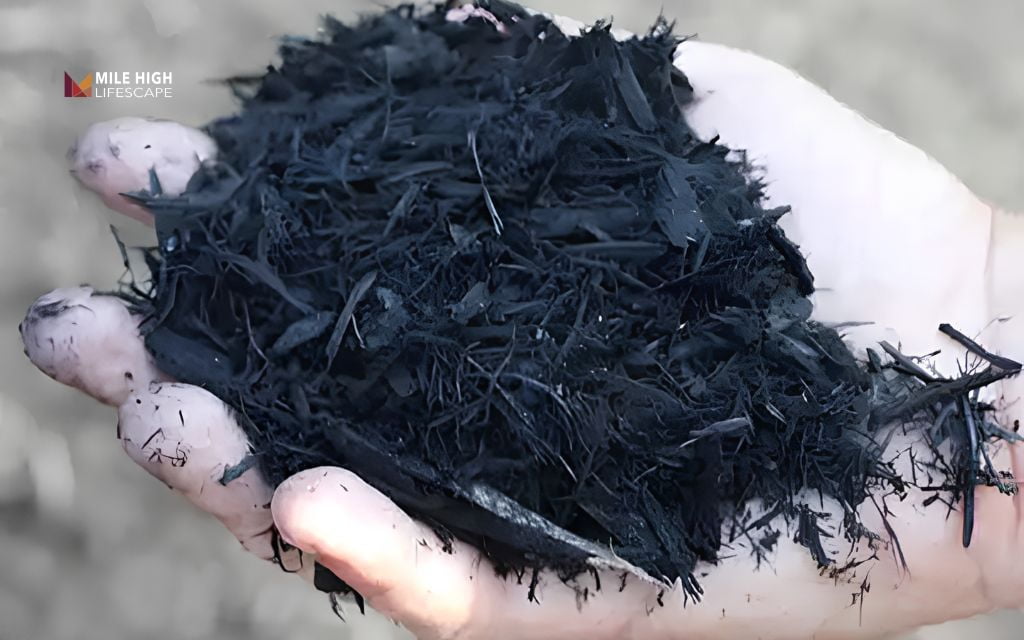
Black and brown mulch perform the same core jobs, so the choice rests on appearance, sun exposure, and site.
| Factor | Black mulch | Brown mulch |
| Color source | Wood dyed with a carbon-based colorant | Natural wood tone or brown dye |
| Appearance | Crisp, high-contrast, and modern | Softer, and blends with natural settings |
| Sunlight absorption | Higher, so the surface can run warmer | Lower |
| Best fit | Gray or modern homes, bright flowers, green foliage | Red brick homes, casual and rustic gardens |
How long black mulch lasts and how to apply it
Black mulch has two lifespans, one for the color and one for the wood. The color often lasts from one season to about a year, and rain and irrigation speed fading because carbon-based dye can lose color when water hits it over time. The wood decomposes more slowly, so beds need a top-up only when the layer thins.
- Depth: Spread mulch 2 to 3 inches deep, because thin layers fail to block weeds and layers over 4 inches cut air and water to the roots.
- Stem clearance: Pull mulch back at least 2 to 3 inches from stems and tree trunks, since mulch against bark holds moisture and invites rot.
- Foundation gap: Keep mulch 6 to 12 inches from the house foundation to keep moisture away from the structure and leave room to inspect for termites.
- Refresh: Add new mulch only to replace what has broken down.
Conclusion
What is black mulch? It is dyed wood mulch that suppresses weeds, holds moisture, and gives beds a dark frame for plants, and its value depends on the wood under the dye. Choose clean wood, spread it 2 to 3 inches deep, and keep it back from stems, trunks, and foundations.
Mile High Lifescape handles mulch installation services from delivery through cleanup. The crew preps the bed, cuts clean edges, spreads mulch at an even depth, and keeps it clear of stems, so you skip the hauling and keep your weekend. Homeowners in Denver can call (303) 877-9091 to get a free estimate.
Frequently asked questions (FAQs)
What is black mulch used for?
Gardeners use black mulch to cover soil in flower beds, around trees and shrubs, and along borders and walkways. It suppresses weeds, holds moisture, and adds contrast between the bed and the plants.
What is black mulch made of?
Black mulch is made of shredded or chipped wood colored with a carbon-based dye. Many producers use recycled wood such as pallets, so the wood source matters as much as the color.
Is black mulch good for flower beds?
Yes, when the wood comes from a clean source. Black mulch suppresses weeds, holds moisture, and makes blooms and foliage stand out. Spread it 2 to 3 inches deep and keep it back from stems.
How long does black mulch last?
The color usually holds for a season to about a year, depending on sun and watering. The wood lasts longer and needs a top-up once the layer thins below 2 inches.
Is black mulch safe for vegetable gardens?
Extension sources describe mulch dyes as non-toxic to plants, but the wood underneath is the open question. One University of Florida study found that a retail colored mulch sample leached arsenic above a groundwater cleanup target, while virgin-wood samples did not. For vegetable beds, choose straw or untreated, undyed mulch.
Does black mulch attract termites?
Iowa State University Extension found no evidence that moist mulch draws termite foragers in from the surrounding landscape. Moist mulch can still shelter termites that are already present, so keep a gap between mulch and the foundation.