Black spots on pears can mean several different things. Some spots point to a fungal disease. Others come from bacteria, insects, bruising, or simple ripening. The good news is that most causes are manageable once you know what you are looking at.
This guide walks through the most common reasons for black spots on pears, how to tell them apart, and what to do about each one. It also answers a question many people ask first: are pears with black spots still safe to eat?
What causes black spots on pears?
Black spots on pears usually trace back to one of six causes. Some homeowners search for pear tree black spots on leaves specifically, since foliage symptoms often appear before any spotting shows up on the fruit. When black spots on pear tree leaves and fruit appear together, especially after a wet spring, a fungal disease is the most likely explanation.
- Pear scab: A fungal disease that produces olive green to black lesions on fruit, leaves, and twigs.
- Fabraea leaf spot: A fungal disease that causes dark, circular spots on leaves and small black flecks on fruit.
- Fire blight: A bacterial disease that blackens blossoms, shoots, and sometimes fruit.
- Insect damage: Feeding by stink bugs, plant bugs, or psylla that leaves dark marks or a sooty coating.
- Bruising: Physical damage from wind, hail, or handling that darkens the skin.
- Natural ripening: Harmless surface changes such as lenticel spotting or cosmetic fungi.
Learn more: tree disease treatment
Pear scab
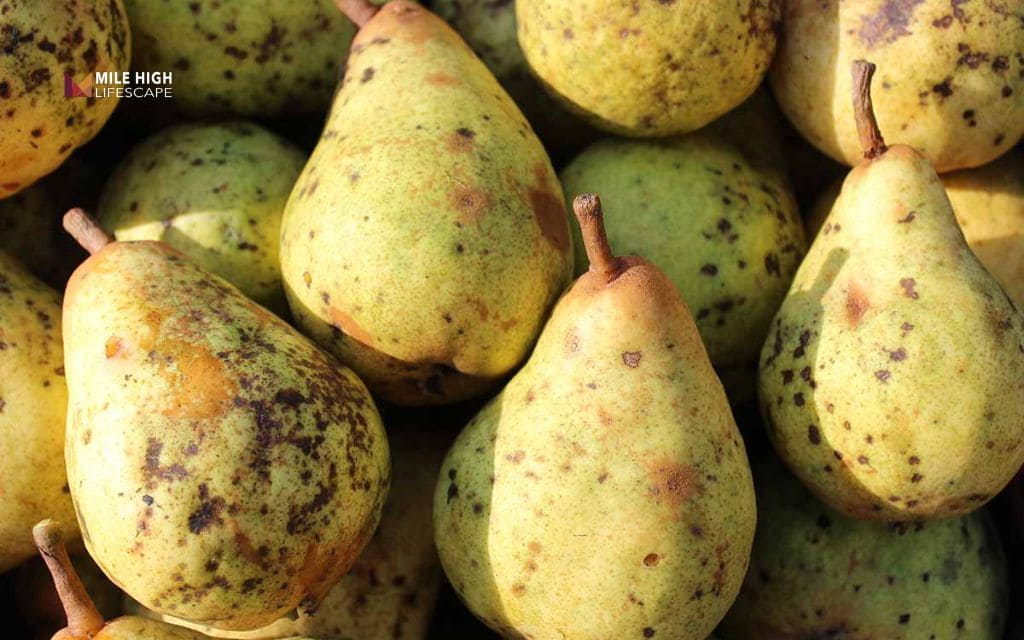
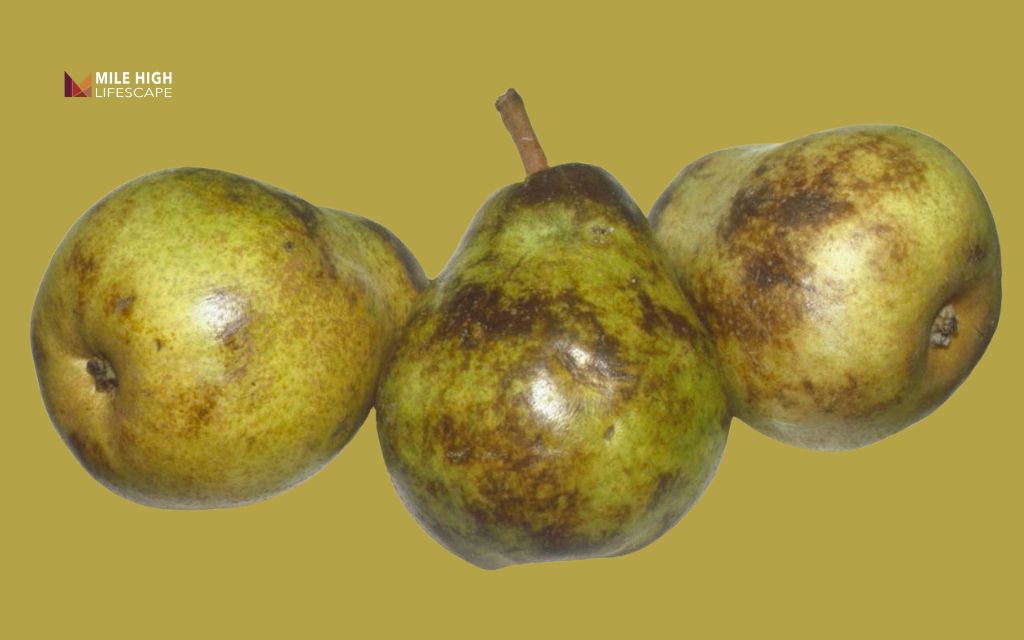
Pear scab is the pear tree fungus most homeowners notice first, and it remains the most common cause of black spots on pears. The disease comes from the fungus Venturia pirina, which infects leaves, blossoms, twigs, and fruit. Spots start as olive green patches and darken to black as the infection matures. On young fruit, scab lesions can crack the skin and distort growth. On fruit that becomes infected later in the season, the spots stay small and superficial, sometimes not appearing until the pears are in storage. The same fungus can also cause black spots on pear leaves, though leaf infections are less common on pears than on the fruit and twigs.
The fungus survives winter in fallen leaves on the ground and releases spores in spring when new growth emerges. Wet weather during bloom and early fruit development creates ideal conditions for infection, since the fungus needs extended periods of leaf wetness to take hold. Removing fallen leaves each autumn and pruning for airflow both reduce the amount of fungus that carries over to the next season.
Fabraea leaf spot
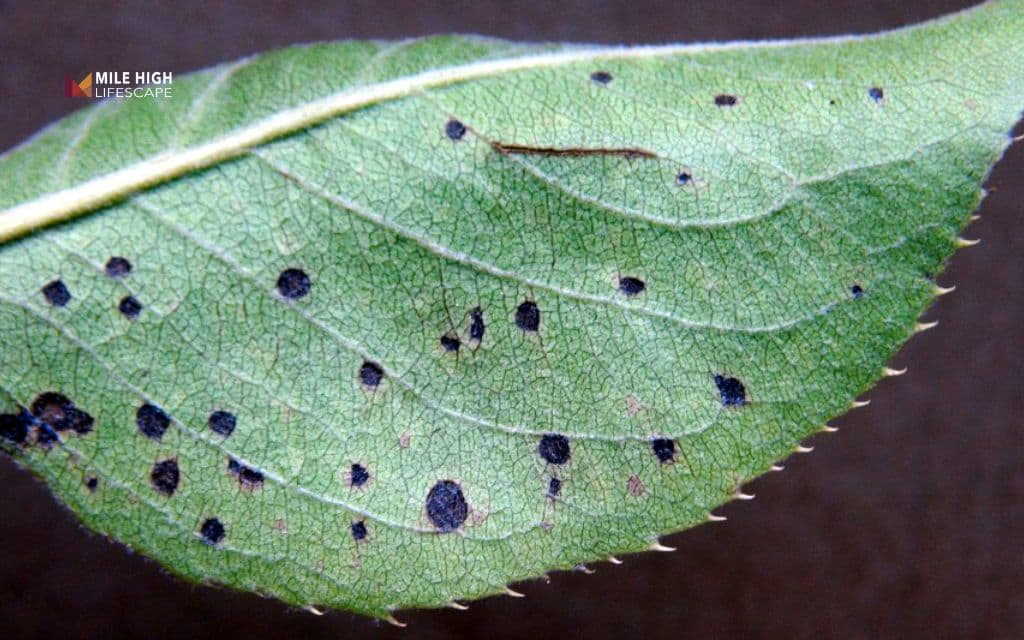
Fabraea leaf spot is another fungal disease, but it targets leaves first. A pear tree with black spots on leaves during a wet spring, before any spotting shows up on the fruit, often points to this disease rather than pear scab. Small, circular, purplish brown to black spots appear on the upper leaf surface and can merge into larger dead patches as the infection spreads. Heavily infected leaves often drop early, which weakens the tree over time and reduces fruit quality. On fruit, the disease produces small, dark, sunken flecks that are usually less dramatic than scab lesions but still noticeable.
Wet, humid conditions favor this disease, and it tends to be worse in years with frequent spring rain. Like pear scab, the fungus overwinters in fallen leaves and infected twigs, so sanitation is the first line of defense. Raking and disposing of leaf litter each fall limits the spores available to reinfect the tree the following spring.
Learn more: bugs on tree
Fire blight
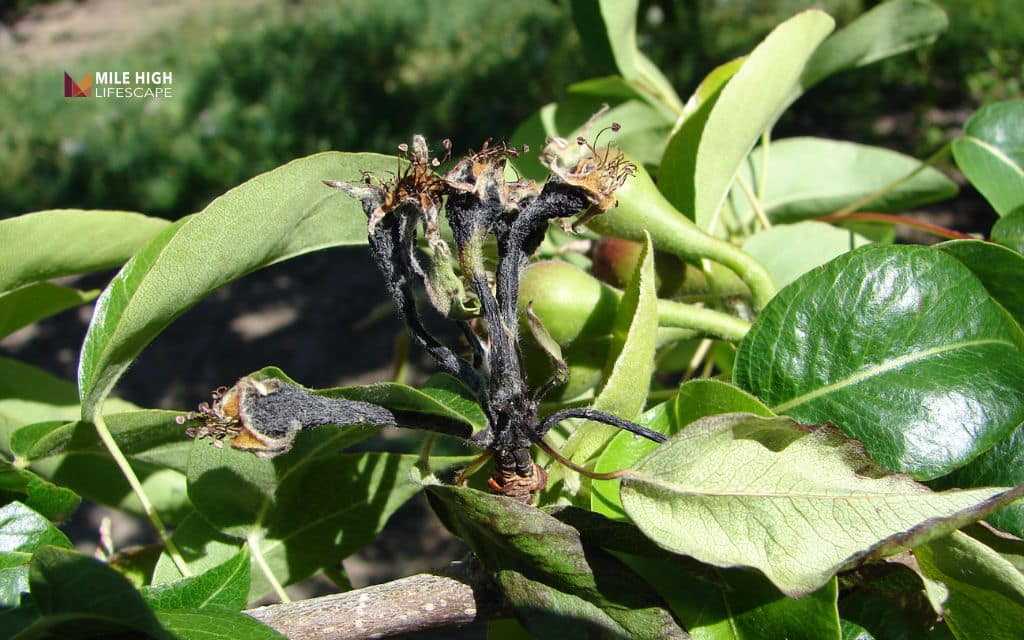
Fire blight is caused by bacteria rather than fungus, and it behaves differently from the diseases above. Infected blossoms and young shoots wilt suddenly and turn black, often curling into a shape known as a shepherd’s crook. On fruit, fire blight can cause water soaked lesions that darken and may ooze a sticky bacterial fluid in humid weather.
This disease spreads quickly through rain splash, pollinating insects, and contaminated pruning tools, and it moves fastest during warm, wet spring weather. Fire blight is considered the most destructive pear disease because it can kill entire branches or, in severe cases, the whole tree. Pruning out infected wood well below the visible damage, and disinfecting tools between cuts, helps stop the spread before it reaches the trunk.
Insect-related spotting
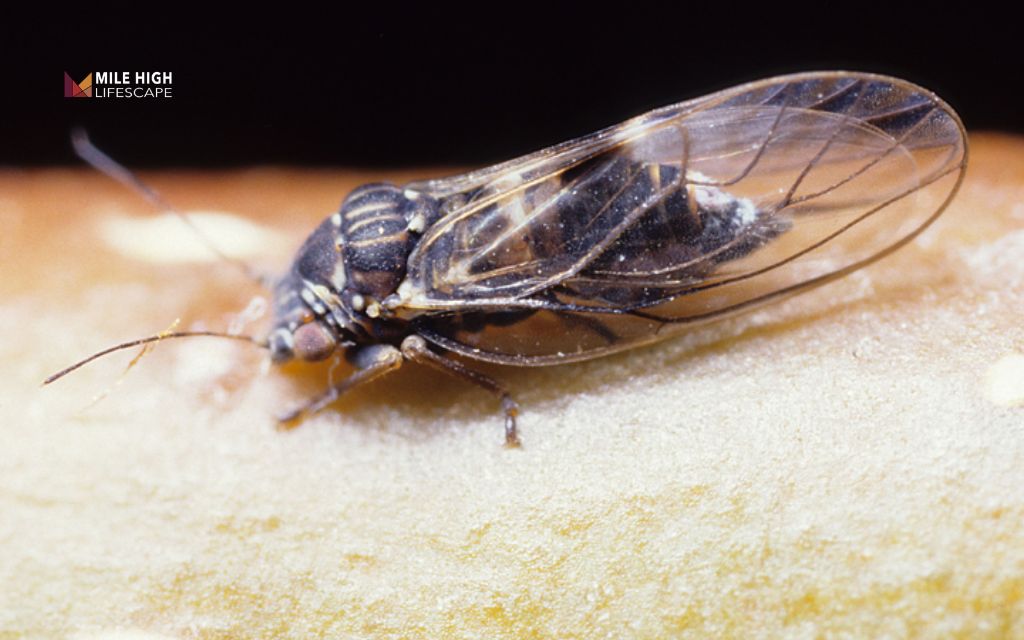
Several insects cause dark spotting on pears without any disease involved. Feeding wounds often begin as small brown spots on pears before darkening to black as the surrounding tissue reacts to the injury. Stink bugs and plant bugs pierce developing fruit to feed, leaving small, dark, sunken marks that can distort the fruit’s shape as it grows, a symptom sometimes called cat facing. Pear psylla feed on leaves and excrete a sticky honeydew that coats the fruit and leaves, and this residue often grows a black sooty mold on its surface.
Insect damage is usually easy to distinguish from disease because it comes with physical evidence: puncture marks, sticky residue, or visible insects on close inspection. Monitoring trees regularly during the growing season, especially after bloom, makes it easier to catch insect activity before it affects a large portion of the crop.
Bruising and mechanical damage
Not every dark spot on a pear points to a disease or a pest. Wind, hail, and rough handling during harvest can bruise the flesh beneath the skin, and bruised tissue darkens to brown or black over the following days. Unlike disease lesions, bruises do not have a defined margin or spread outward over time, and there is no fungal growth or discoloration pattern radiating from the spot.
Bruising is more common right after storms or during harvest and handling, and it tends to appear on the side of the fruit that took the impact. Handling pears gently, picking them at the right stage of ripeness, and cushioning them during storage all reduce bruising.
Natural ripening and cosmetic changes
Some black spots on pears are a normal part of ripening and cause no harm at all. Small dark dots at the lenticels, the tiny pores on the fruit’s skin, are a natural part of maturation and do not affect the flesh underneath. Sooty blotch and flyspeck are cosmetic fungi that coat only the surface of the fruit in a smudgy black or speckled pattern; they can usually be rubbed or washed off and do not penetrate the skin.
Overripe pears can also develop soft, dark patches as the fruit’s cells naturally break down. These cosmetic changes rarely affect flavor and are one of the more reassuring explanations for the spotting, since no treatment is needed.
Learn more: How to tell if a tree is dying
Comparing symptoms to find the cause
Reviewing the symptoms side by side can help narrow down which cause matches what you are seeing on your own tree or fruit.
| Cause | Appearance | Where it shows up | Texture | Spread pattern |
| Pear scab | Olive green to black lesions | Fruit, leaves, twigs | Rough, can crack skin | Spreads with wet spring weather |
| Fabraea leaf spot | Purplish brown to black circular spots | Leaves first, then fruit | Flat, may merge into larger patches | Spreads in humid, wet conditions |
| Fire blight | Blackened, scorched-looking tissue | Blossoms, shoot tips, sometimes fruit | Water soaked, may ooze | Spreads rapidly in warm, wet weather |
| Insect damage | Dark pitted or sunken marks, sooty coating | Fruit surface, leaves | Punctured or sticky | Localized to feeding sites |
| Bruising | Brown to black soft patches | Point of impact | Soft, no defined margin | Does not spread over time |
| Natural ripening | Small dark dots or smudgy coating | Skin surface, at lenticels | Superficial | Consistent with fruit maturity |
Are pears with black spots safe to eat?
In most cases, yes. Pears with black spots from scab, mild insect feeding, bruising, or natural ripening changes are typically safe to eat once the affected area is cut away. The remaining flesh is usually unaffected in flavor and texture, and cosmetic surface fungi like sooty blotch wash off without penetrating the fruit.
The exception is fruit showing signs of active decay, such as mushy texture, visible mold, a fermented smell, or widespread soft rot. These signs point to secondary decay organisms that can affect the whole fruit, not just the surface, and that fruit should be discarded. Fire blight affected fruit is not toxic, but its quality is often too poor to eat and it should be inspected carefully before use.
Prevention and treatment
Most of the causes above respond well to consistent tree care rather than a single fix. Combining a few practices throughout the growing season gives pear trees the best chance of staying free of black spots.
- Sanitation: Rake and dispose of fallen leaves and fruit each autumn to reduce fungal spores that overwinter in leaf litter.
- Pruning: Thin dense growth to improve airflow and sunlight penetration, which speeds drying after rain and slows fungal spread. Remove fire blight infected wood well below visible damage and disinfect tools between cuts.
- Irrigation practices: Water at the base of the tree rather than overhead to keep foliage dry, since prolonged leaf wetness favors fungal infection.
- Fungicide timing: Protectant fungicides labeled for pear scab and Fabraea leaf spot are most effective when applied before infection periods, particularly during bud break through petal fall.
- Disease monitoring: Inspect trees regularly during the growing season, especially after rain, to catch early symptoms before they spread.
Conclusion
Black spots on pears rarely mean the harvest is lost. Once you know whether the cause is a fungal disease, a bacterial infection, insect feeding, bruising, or simple ripening, the right response becomes clear, and most pear trees recover fully with consistent sanitation, pruning, and monitoring.
If black spots on pears keep returning, the Tree and Shrub Care team at Mile High Lifescape can diagnose the cause and build a treatment plan for your property. Serving homeowners across the Denver Metro area, call (303) 877-9091 to schedule a consultation and protect your pear trees.
Frequently asked questions (FAQs)
Can black spots on pears spread to other fruit trees?
Pear scab and Fabraea leaf spot are generally specific to pears and closely related trees, while fire blight can spread to apples and other members of the rose family. Keeping infected material away from other susceptible trees reduces the risk.
Why do my pears have brown spots instead of black ones?
Brown spots often indicate an earlier stage of the same fungal infections that eventually turn black, or they can result from bruising, sunscald, or natural ripening. The color alone is not always enough to confirm the cause, so checking texture and location helps narrow it down.
Will black spots on pear tree leaves eventually appear on the fruit?
Fungal diseases like pear scab and Fabraea leaf spot commonly start on leaves and later affect fruit, especially in wet seasons. Treating the tree early, before fruit set, reduces the chance of the infection reaching the harvest.
Can I still can or cook pears with black spots?
Pears with minor surface blemishes can usually be trimmed and used in cooking or canning. Fruit with soft rot, mold, or an off smell should not be used, since heat does not reliably eliminate all risks from spoiled fruit.