Palm trees give a landscape instant character. Some soar past eighty feet on a crown of feather-shaped fronds. Others stay small enough for a patio pot. Between those extremes sit dozens of species, each suited to a different climate, yard size, and maintenance budget.
This guide covers 32 types of palm trees planted across the United States, from cold-hardy species that shrug off snow to tropical varieties suited only to the warmest zones. Each entry notes the key identifying traits, the USDA Hardiness Zone required, and one detail that sets the species apart.
Getting to know palm trees before you plant one
Palm varieties split into two leaf types: feather (pinnate) palms, with fronds branching off a central rib, like the date palm and queen palm, and fan (palmate) palms, with leaves spreading from a single point, like the windmill palm and cabbage palm. A few entries here, including the sago palm and needle palm, are palm-like but botanically distinct, though their care and appearance still line up closely with true palms.
Growth habit matters too: solitary-trunk palms read as more formal, while clumping types grow multiple stems from one base and recover better from a damaged stem. Cold tolerance separates these types of palm trees more than any other factor, and every profile below lists a USDA Hardiness Zone, the coldest range a mature, established palm can survive outdoors; fronds usually show cold damage before the trunk does.
32 types of palm trees for every climate and space
Areca palm
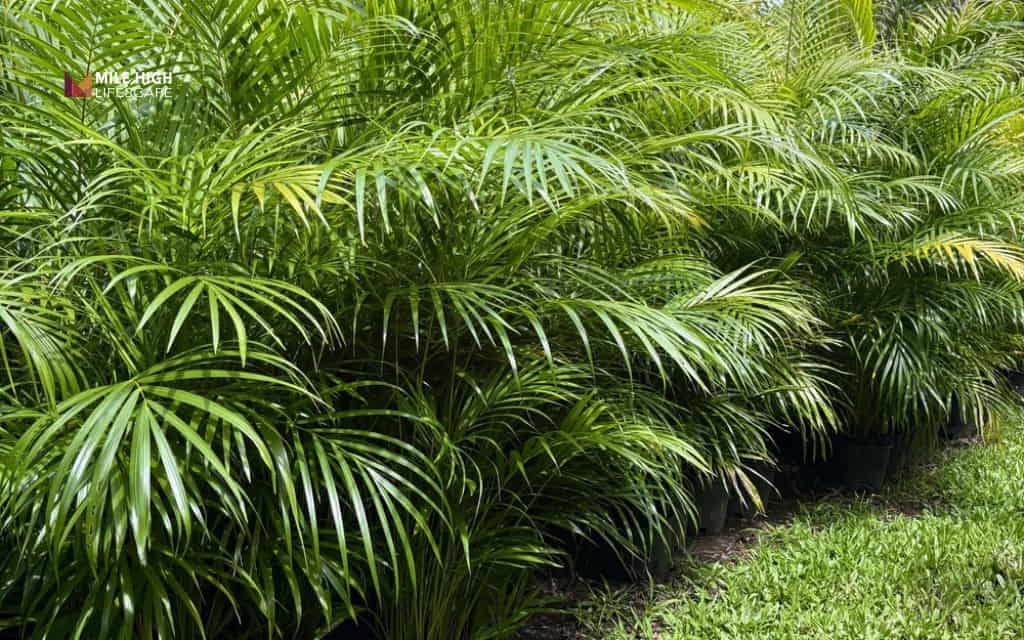
Areca palm (Dypsis lutescens) grows soft, feathery, pinnate fronds in dense, arching clumps with no visible trunk at the base. Mature height ranges from 6 to 30 feet, though container-grown plants usually stay under 10 feet. It is hardy in USDA Zones 10 to 11. Areca palm is one of the most popular indoor palms in the country, prized for filtering indoor air, but it is sensitive to fluoride and chlorine, so growers who keep it inside typically water with distilled or rain water.
Bismarck palm
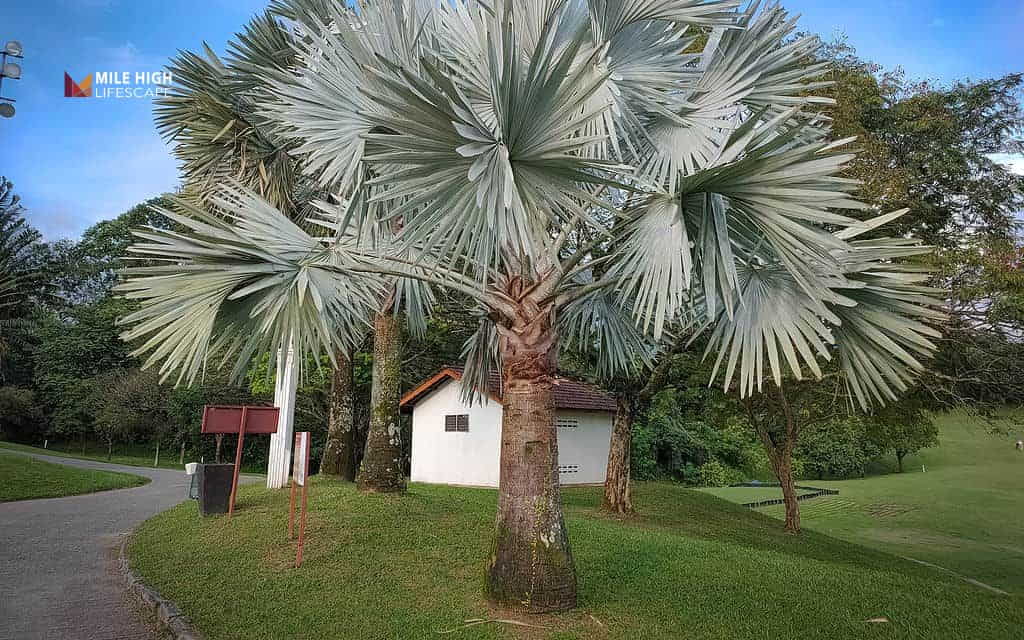
Bismarck palm (Bismarckia nobilis) carries broad, stiff, silver-blue fan leaves atop a single thick trunk. It reaches 50 to 60 feet tall with a canopy spread up to 20 feet, so it needs real room to mature. It is hardy in USDA Zones 8b to 11 and tolerates brief dips to 15°F once established. Young plants spend years building width before the trunk finally begins to climb, so patience matters more than fertilizer with this species.
Blue latan palm
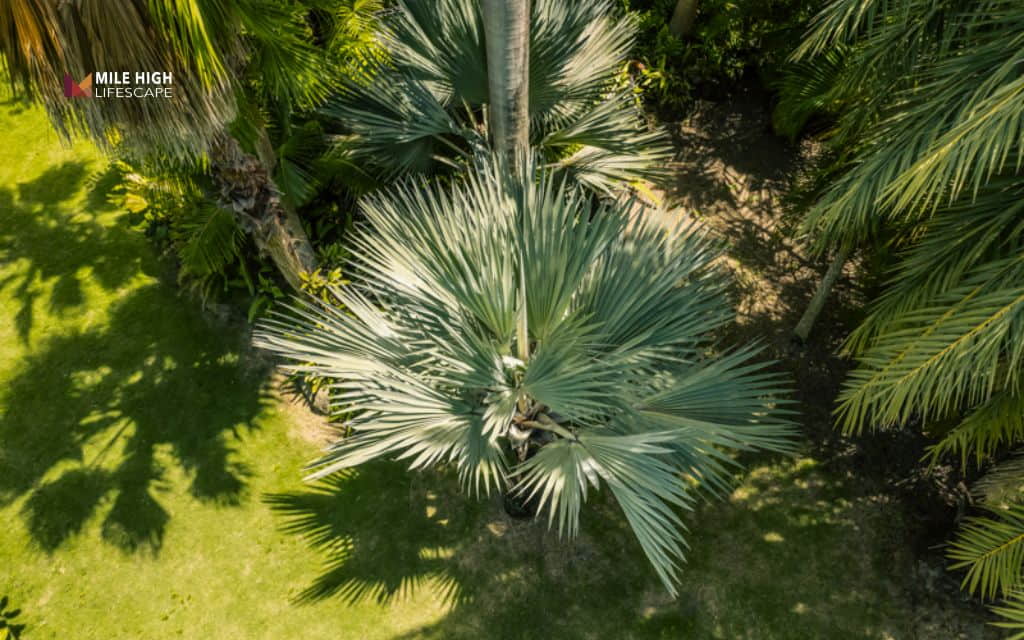
Blue latan palm (Latania loddigesii) produces stiff, silvery-blue, fan-shaped leaves edged in red that can span 8 feet across, set on a pale gray trunk. Mature height runs 20 to 25 feet. It is hardy in USDA Zones 10 to 11 and has almost no frost tolerance, suffering damage at temperatures at or below freezing. Native to the Mascarene Islands near Mauritius, it is one of the showier blue-toned palms grown in warm coastal landscapes.
Bottle palm
Bottle palm (Hyophorbe lagenicaulis) is named for its smooth, pale gray trunk, which swells into a rounded, bottle-like shape while the plant is young. A sparse crown of four to eight arching, glossy fronds tops the trunk. Mature height stays a compact 12 to 15 feet, and it is hardy in USDA Zones 10 to 11. Bottle palm is considered endangered in its native habitat on Round Island near Mauritius, which has made cultivated specimens a conservation success story as well as a landscape favorite.
Learn more: Planting in summer
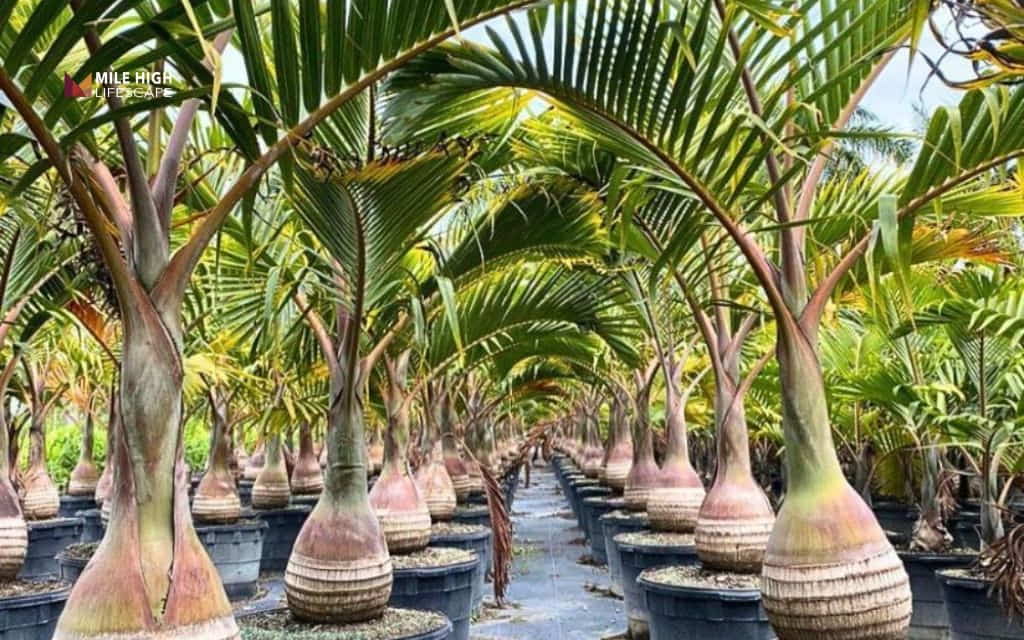
Cabbage palm
Cabbage palm (Sabal palmetto), often called sabal palm, carries large costapalmate fan leaves up to 6 feet long on a single sturdy trunk. It grows 40 to 50 feet tall and is hardy in USDA Zones 8 to 11, tolerating both salt spray and high wind better than most palms. It is the official state tree of both Florida and South Carolina. Dead leaf bases, known as boots, often cling to the trunk for years unless a crew removes them, and those boots can shelter pests if left unmanaged.
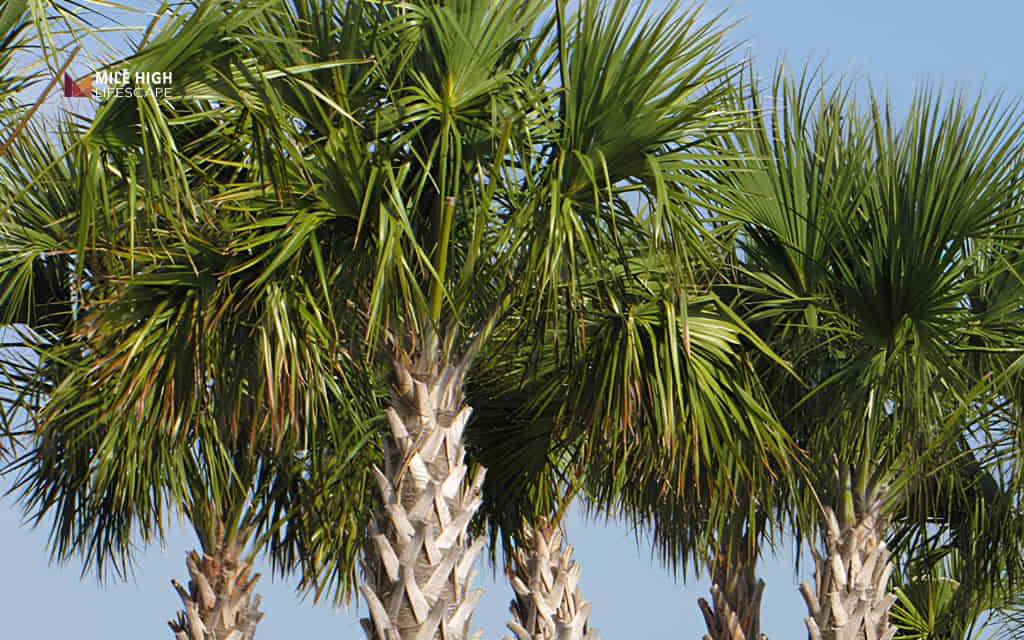
California fan palm
California fan palm (Washingtonia filifera) grows waxy, gray-green fan fronds edged with curling, threadlike fibers, which is where the species name filifera comes from. Its columnar trunk supports a height of 40 to 60 feet. It is hardy in USDA Zones 8 to 11. This is the only palm species native to California, found historically in desert oases across the state’s southeastern deserts, which makes it an unusually drought-tolerant choice for arid landscapes.
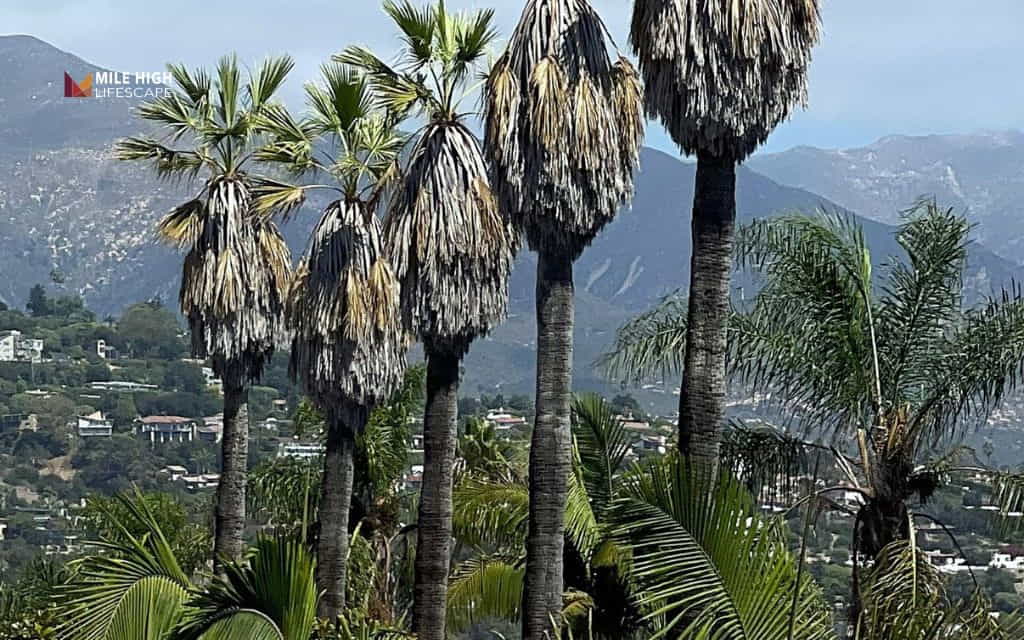
Canary island date palm
Canary island date palm (Phoenix canariensis) forms a dense, rounded crown of up to 100 gracefully arching feather fronds on a massive trunk marked with diamond-shaped leaf scars. Mature specimens reach 40 to 60 feet, though the species grows slowly and often stays closer to 40 feet in cultivation. It is hardy in USDA Zones 9 to 11. Sharp spines line the base of each frond stem, so pruning crews wear gloves and eye protection when working on this species.
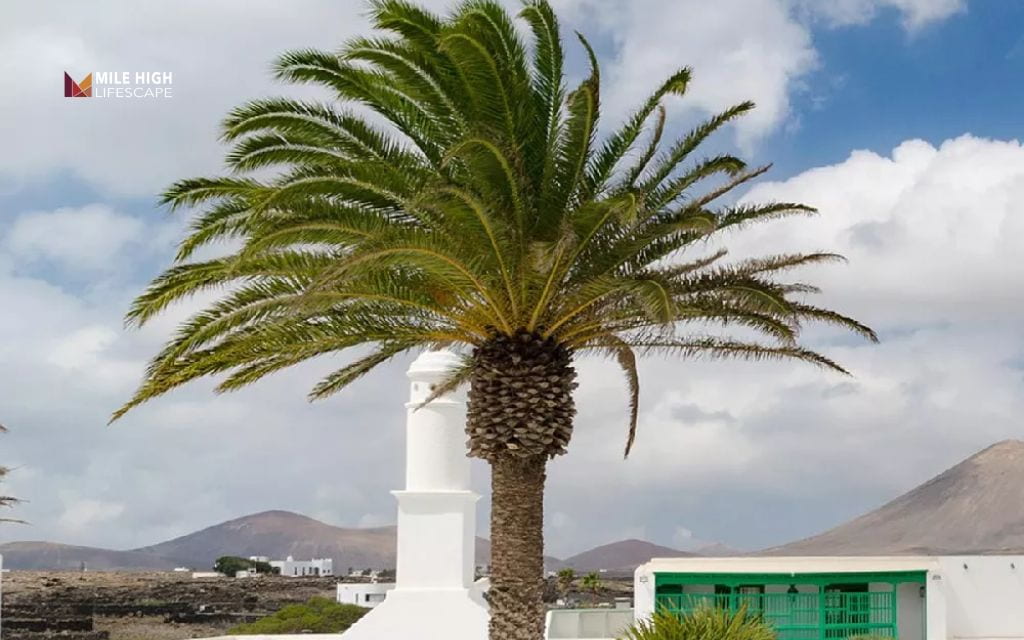
Cat palm
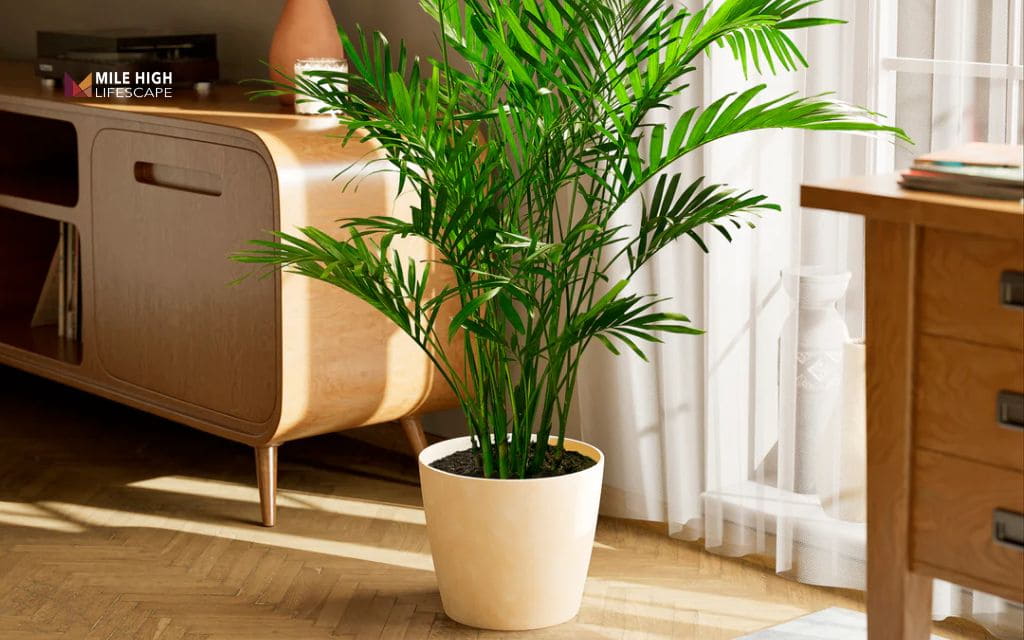
Cat palm (Chamaedorea cataractarum), also sold as cascade palm, grows as a dense, trunkless clump of glossy green, feather-shaped fronds. It reaches 4 to 8 feet tall and is hardy in USDA Zones 9b to 11. Native to streamsides in southern Mexico and Central America, cat palm wants consistent moisture and tolerates shade better than almost any other palm on this list, which is why it remains one of the most common indoor palm choices.
Learn more: https://milehighlifescape.com/trees-for-sandy-soil/
Chinese fan palm
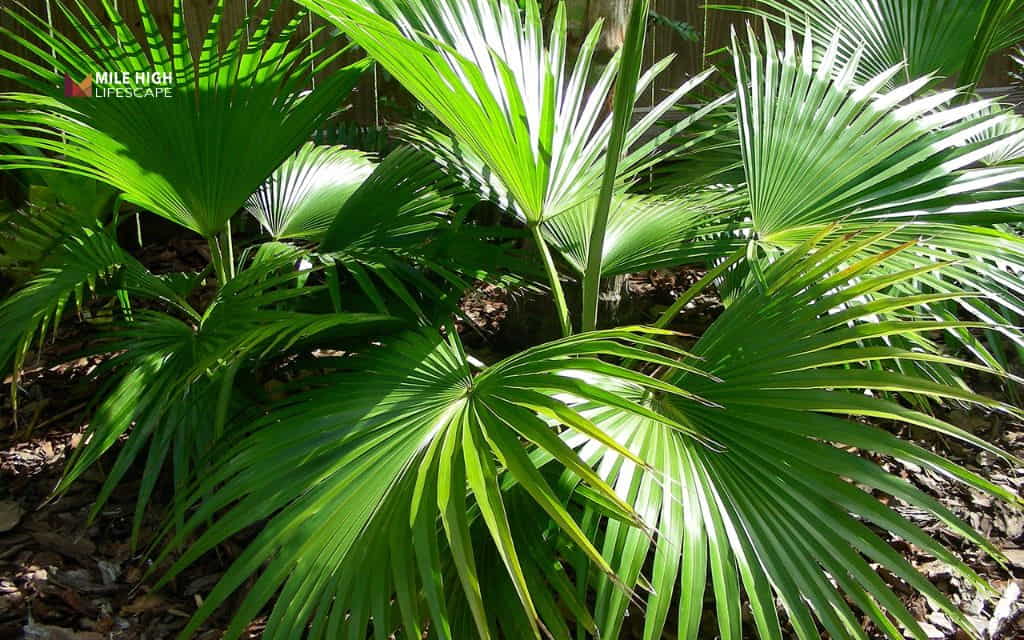
Chinese fan palm (Livistona chinensis) grows broad, emerald-green fan leaves whose tips droop downward, giving mature plants a fountain-like silhouette and its nickname, fountain palm. It stands 10 to 30 feet tall on a slender trunk and is hardy in USDA Zones 8b to 11. Native to Japan, China, and Taiwan, it tolerates light shade better than most fan palms, making it a flexible choice for planting beneath taller trees.
Christmas palm
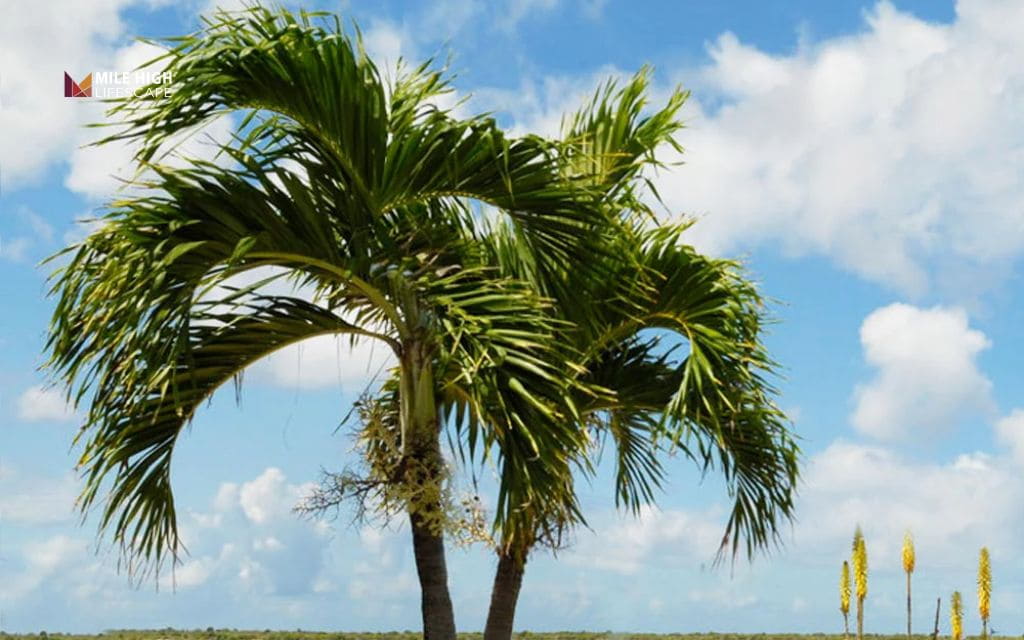
Christmas palm (Adonidia merrillii) is a compact, single-trunked palm with a sleek, uniform crown, reaching 15 to 25 feet tall. It is hardy in USDA Zones 10 to 11. Native to the Philippines, the species earns its common name from clusters of bright red fruit that ripen around the winter holidays, giving the tree seasonal color that few other palms can match.
The species covered so far already show how much range exists among types of palm trees suited to warm-climate landscapes. The next group leans further into feather-leafed varieties prized for fruit, shade, and cold tolerance.
Date palm
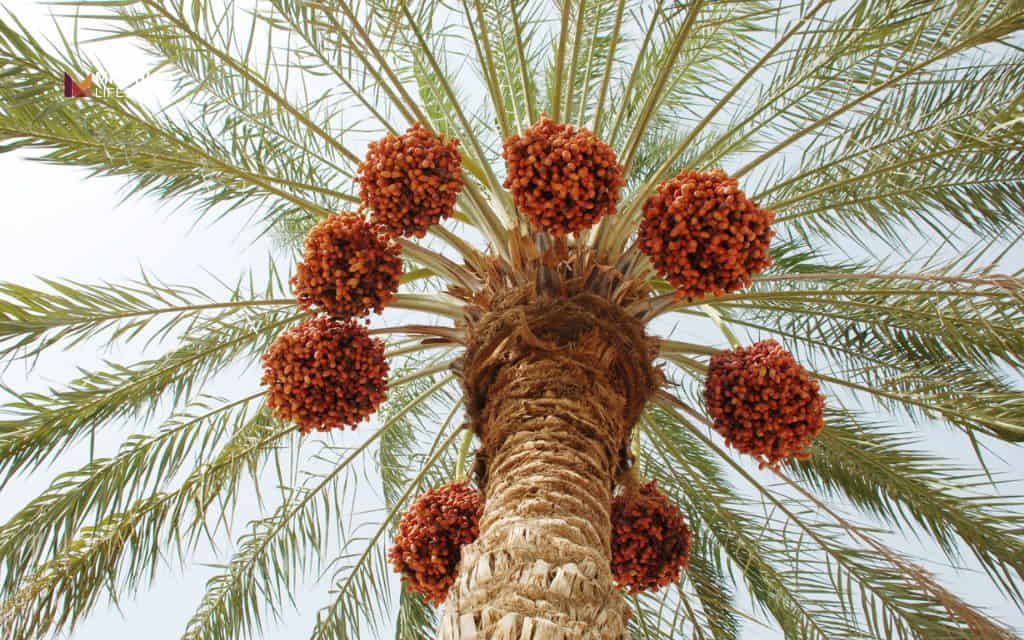
Date palm (Phoenix dactylifera) is the species behind the fruit found in grocery stores, and it carries a crown of 100 to 120 arching feather fronds that can reach 16 feet in length. Mature height runs 50 to 80 feet on a slow-growing, slender trunk. It is hardy in USDA Zones 9 to 11. Cultivated for more than 5,000 years, date palm tolerates poor, rocky soil better than almost any other species on this list.
European fan palm
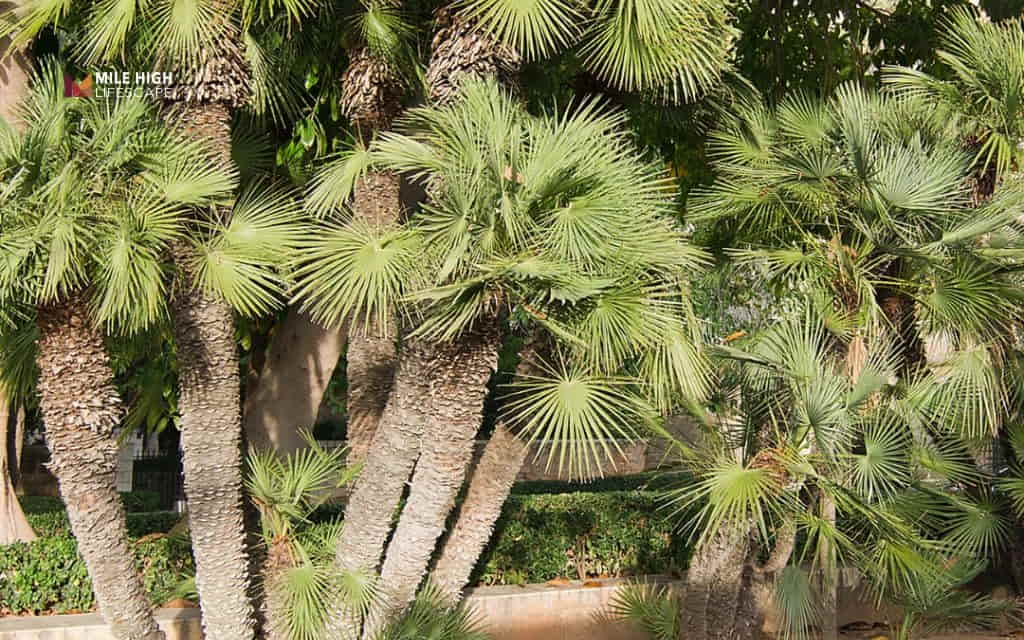
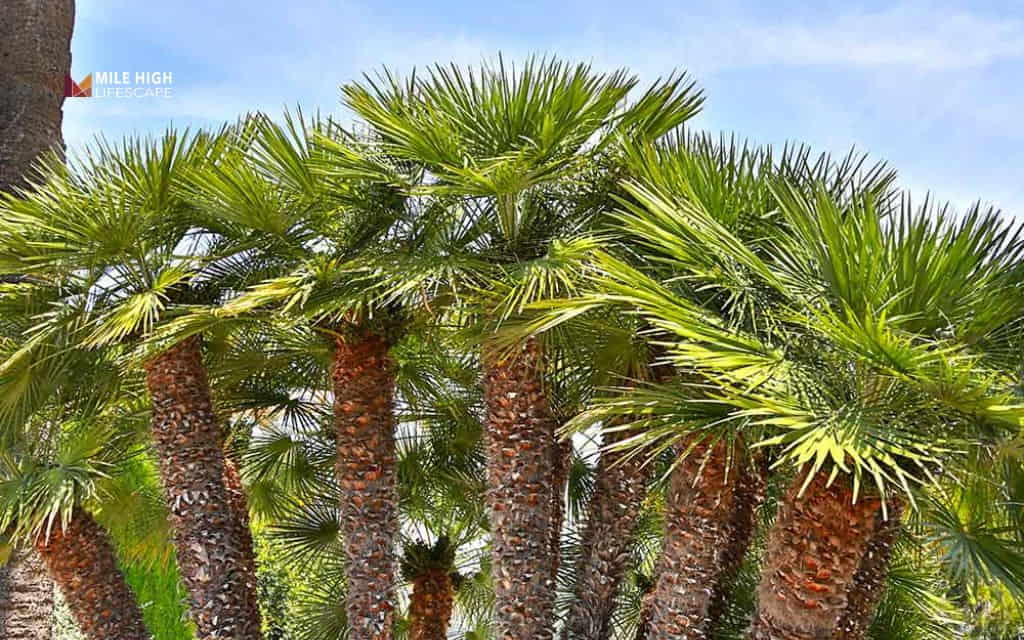
European fan palm (Chamaerops humilis) is a bushy, multi-trunked palm that can carry up to eight trunks in a single clump, each topped with blue-green to silver-green fan leaves. It stays a manageable 6 to 15 feet tall and is hardy in USDA Zones 8 to 11, making it the most cold-hardy fan palm commonly sold in American nurseries. Native to the Mediterranean, it tolerates heat, drought, salt spray, and wind with equal ease.
Fiji fan palm
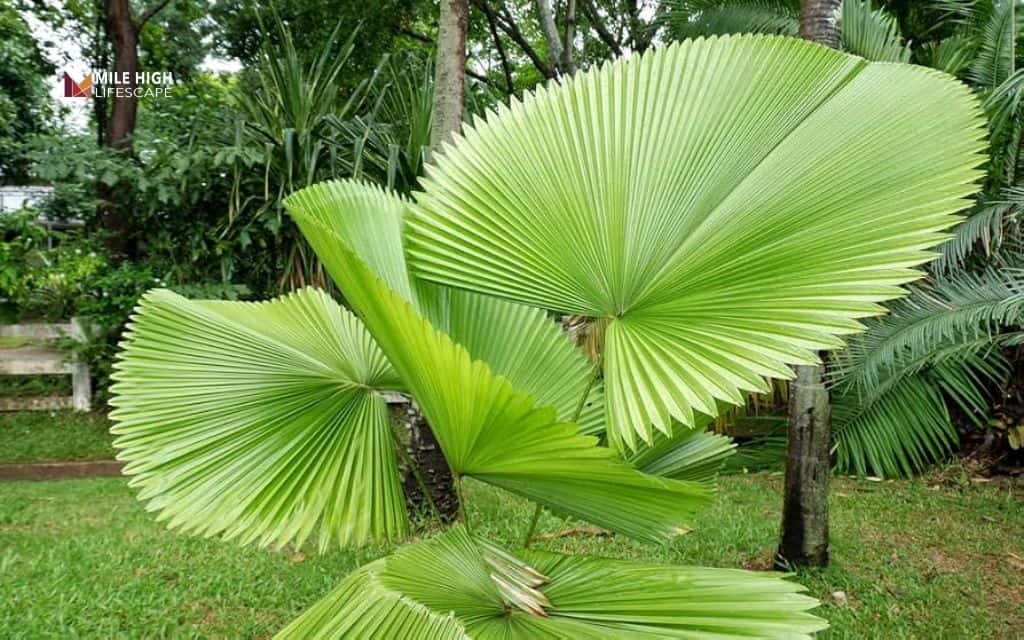
Fiji fan palm (Pritchardia pacifica) grows large, bright green, fan-shaped leaves on a solitary trunk, reaching 20 to 30 feet tall. It is hardy in USDA Zones 10 to 11 and has essentially no frost tolerance. Native to Fiji, it produces small white flowers followed by black fruit, and its broad, rounded foliage reads as more tropical than most fan palms, which tend to look stiffer and more angular.
Fishtail palm
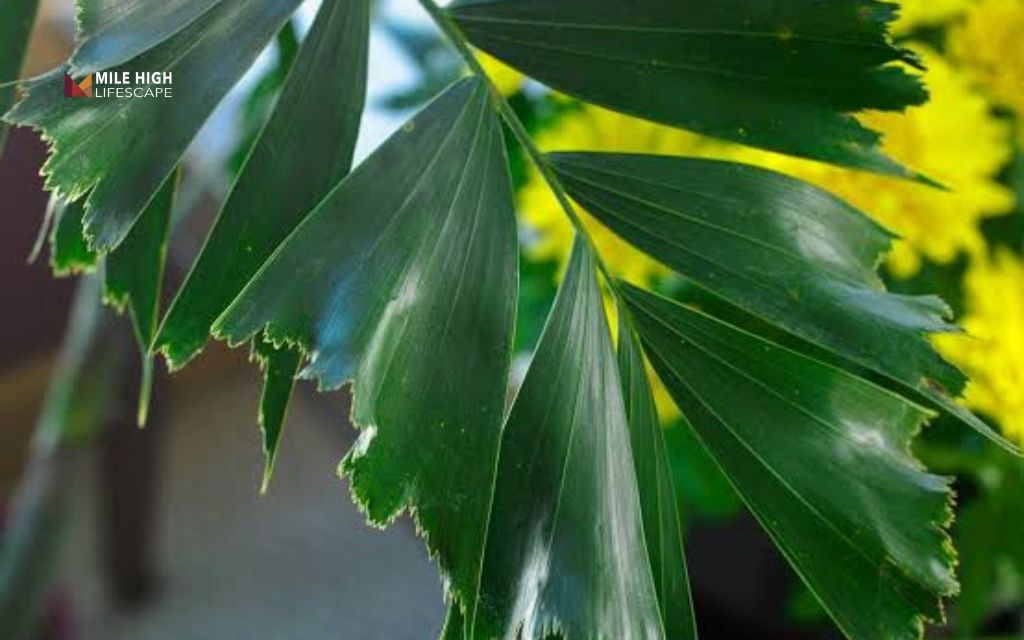
Fishtail palm (Caryota mitis) is instantly recognizable for its bipinnate leaflets, meaning each leaflet is itself divided again, into a ragged, triangular shape resembling a fish’s tail. No other palm genus shares this leaf structure. It grows as a multi-stemmed cluster reaching 15 to 25 feet and is hardy in USDA Zones 9b to 11. Native to Southeast Asia, it tolerates deep shade well, which makes it a common choice for shaded courtyards and interior atriums.
Foxtail palm
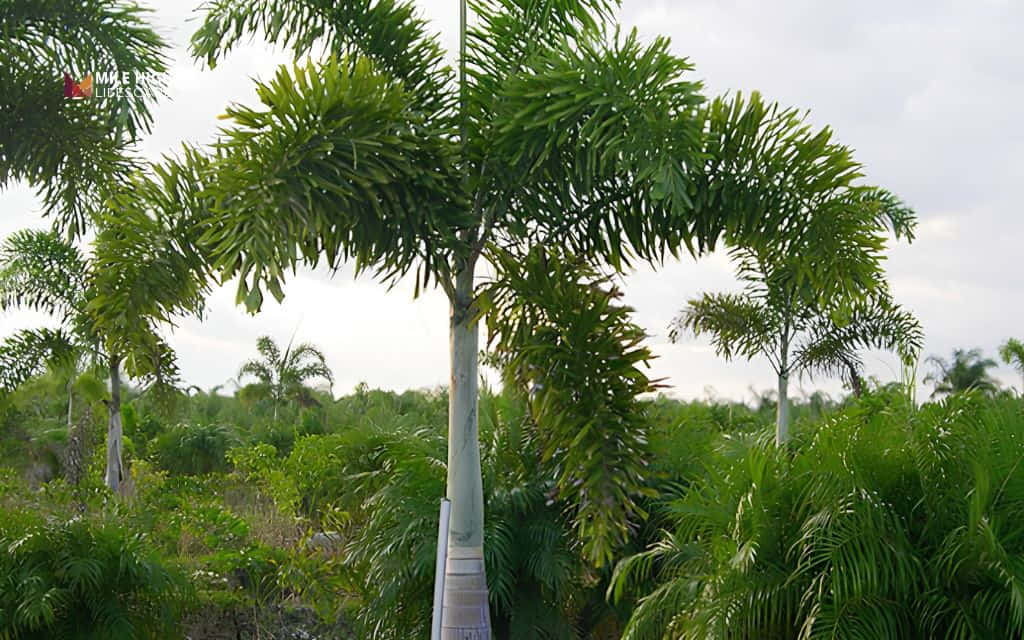
Foxtail palm (Wodyetia bifurcata) grows full, bushy feather fronds that fan out in every direction, resembling the brush of a fox’s tail. It reaches 20 to 30 feet on a smooth, slender trunk and is hardy in USDA Zones 9b to 11. Native to Australia, it is self-cleaning, meaning spent fronds drop on their own instead of clinging to the trunk, which cuts down on pruning compared with most feather palms of similar size.
Fan and feather palms both appear again in the next batch, a reminder that leaf shape alone does not predict mature size or cold tolerance among these types of palm trees.
Kentia palm
Kentia palm (Howea forsteriana) carries long, dark green, gently arching feather fronds on a ringed, solitary trunk. In its native habitat it can reach 40 feet, though container-grown plants typically stay between 6 and 12 feet. It is hardy in USDA Zones 9b to 11. Kentia palm is native only to Lord Howe Island off the coast of Australia and has been a favored parlor plant since the Victorian era, prized for tolerating low indoor light better than nearly any other palm.
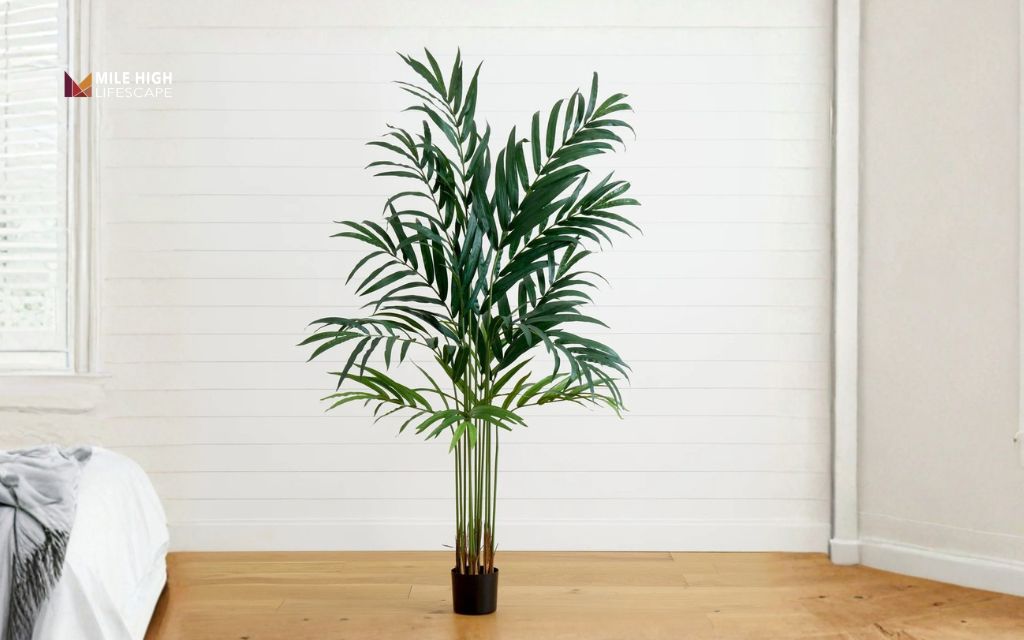
King palm
King palm (Archontophoenix cunninghamiana) shows off a smooth, glossy green crownshaft beneath a full head of feather fronds. It typically grows 30 to 50 feet tall, though it can reach 80 feet under ideal conditions, and it is hardy in USDA Zones 9b to 11. Native to Australia, king palm looks best planted in small groups of two or three trunks rather than as a single specimen, which is how many landscape architects use it near entryways.
Learn more: how long do trees live
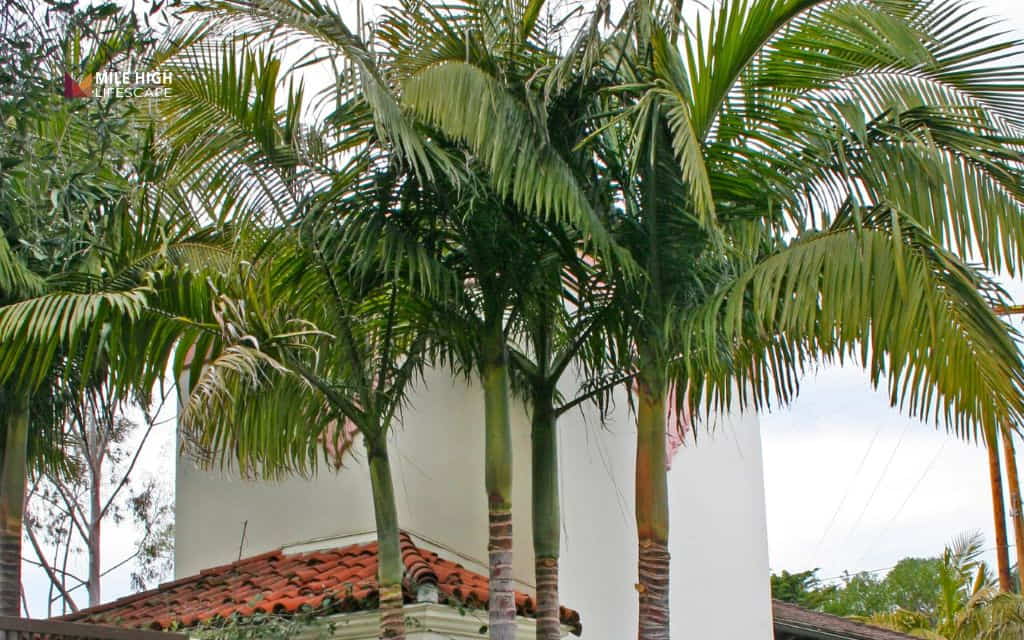
Lady palm
Lady palm (Rhapis excelsa) grows glossy, dark green, fan-shaped leaves in a slow-growing, clumping form that resembles bamboo at a glance. It reaches 6 to 15 feet tall and is hardy in USDA Zones 9 to 11. Native to southern China, it tolerates deep shade better than almost any palm grown in the United States, which has made it a long-standing favorite for indoor atriums and shaded courtyards alike.
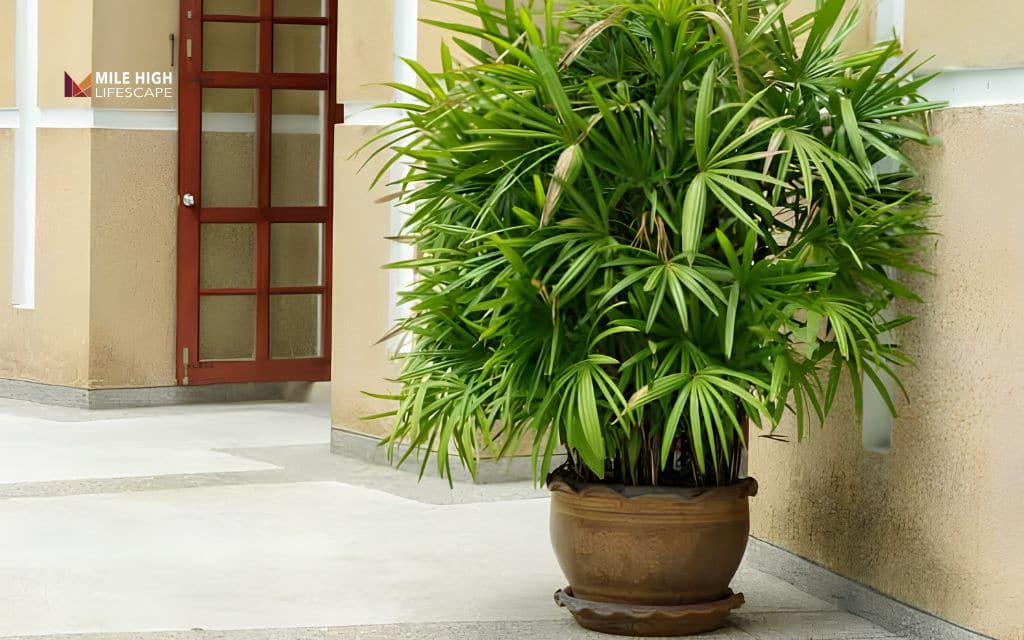
Lipstick palm
Lipstick palm (Cyrtostachys renda) is grown almost entirely for its brilliant red crownshaft, which resembles a tube of lipstick beneath its feather fronds. It reaches 25 to 35 feet tall and is hardy only in USDA Zones 11 to 12, the narrowest range on this list. Native to Southeast Asian rainforests, it is extremely cold sensitive, and any temperature drop below 50°F can kill the plant, which limits it to the warmest tropical landscapes and greenhouse collections.
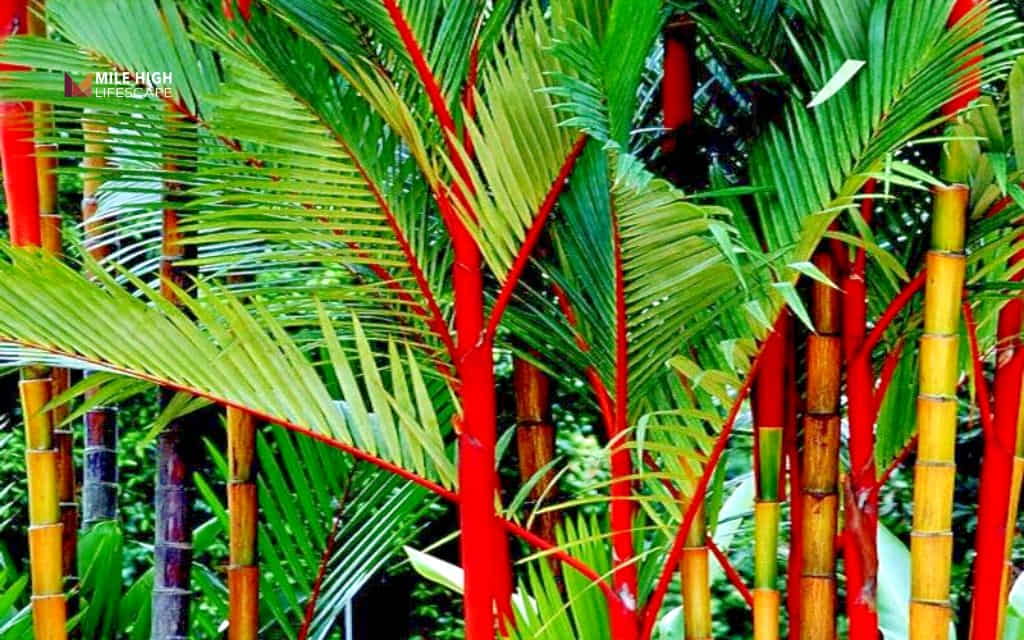
Majesty palm
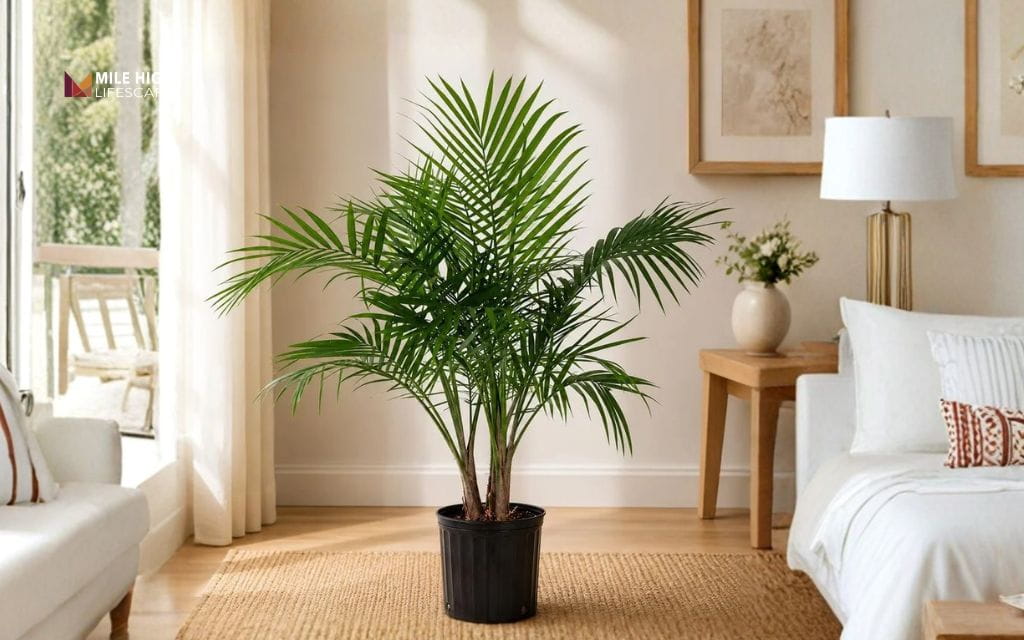
Majesty palm (Ravenea rivularis) grows tall, soft, feathery fronds on a solitary trunk and can reach 80 feet in its native habitat, though cultivated specimens usually stay far shorter. It is hardy in USDA Zones 9 to 11. Native to riverbanks in Madagascar, majesty palm needs steady water and nutrients, since its fronds yellow quickly in dry soil, a trait that reflects its origin along tropical rivers.
Cold hardiness swings widely among the remaining types of palm trees on this list, from tropical species that need year-round warmth to a few that tolerate genuine winter freezes.
Mazari palm
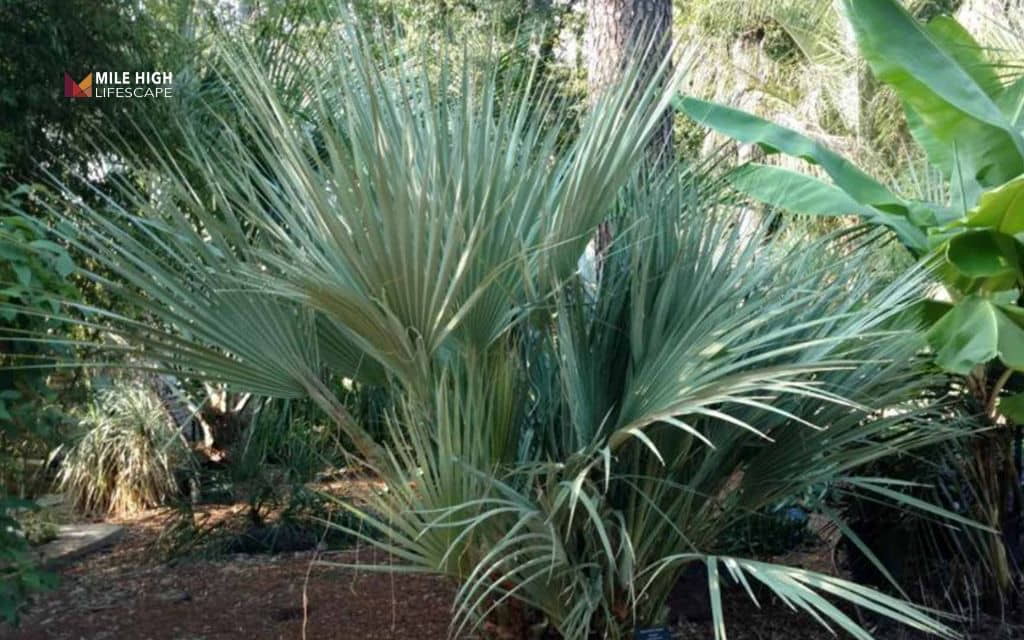
Mazari palm (Nannorrhops ritchiana) grows blue-toned, leathery fan leaves on a clumping plant with several short trunks, staying under 15 feet tall in most landscapes. It is hardy in USDA Zones 6b to 11. Native to the high-altitude deserts of Afghanistan and northern Pakistan, it survives winters as cold as negative 4°F, making it one of the most cold-hardy palms available for landscaping outside the deep South.
Mexican fan palm
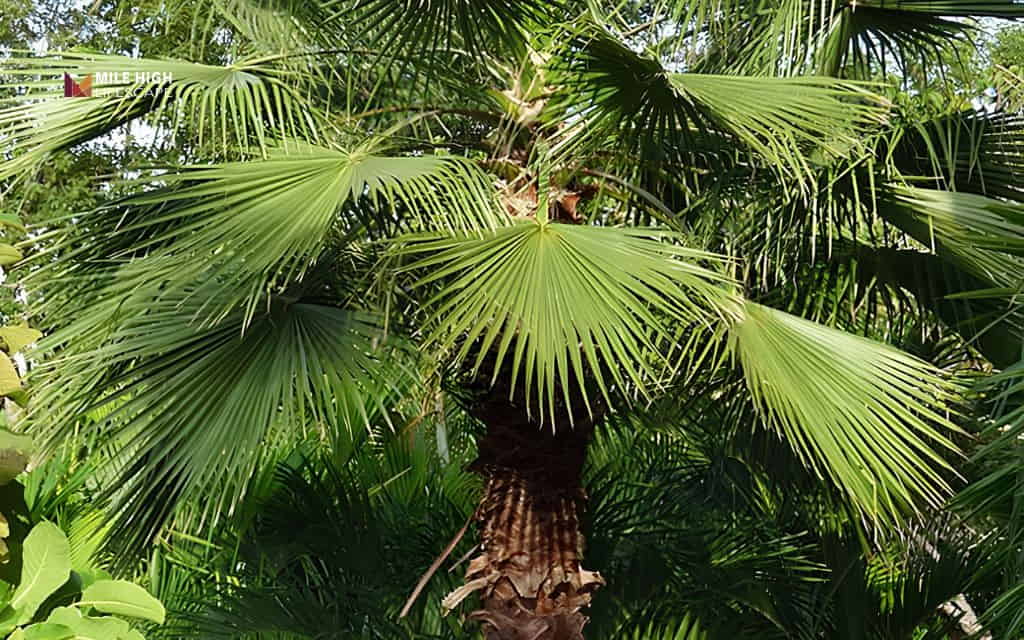
Mexican fan palm (Washingtonia robusta) grows fan-shaped leaves atop an extremely tall, slender trunk that can reach 100 feet. It is hardy in USDA Zones 8b to 11 and is one of the fastest-growing palms sold in the United States. Native to northern Mexico and Baja California, it forms a thick skirt of dead fronds against the trunk that many municipalities require homeowners to remove, since the dry material creates a fire hazard.
Needle palm
Needle palm (Rhapidophyllum hystrix) is a shrubby, nearly trunkless fan palm armed with long, sharp, needle-like spines at the base of each leaf, which give the species its common name. It stays a compact 5 to 10 feet tall and wide. It is widely considered the most cold-hardy palm species in the world, reliably surviving in USDA Zone 6b and briefly tolerating temperatures well below zero. Native to the southeastern United States, it is the palm of choice for gardeners pushing tropical style into colder regions.
Parlor palm
Parlor palm (Chamaedorea elegans) grows slender, upright, feather-shaped fronds and stays compact, typically 3 to 6 feet tall indoors, though it can reach 16 feet outdoors in the tropics. It is hardy in USDA Zones 10 to 11. Native to Mexico and Guatemala, parlor palm has been a standard houseplant since Victorian times precisely because it tolerates low light and neglect better than almost any other palm.
The remaining species of palm trees on this list round out the alphabet with a mix of cold-hardy feather palms, compact patio favorites, and a few unusual growth forms.
Pindo palm
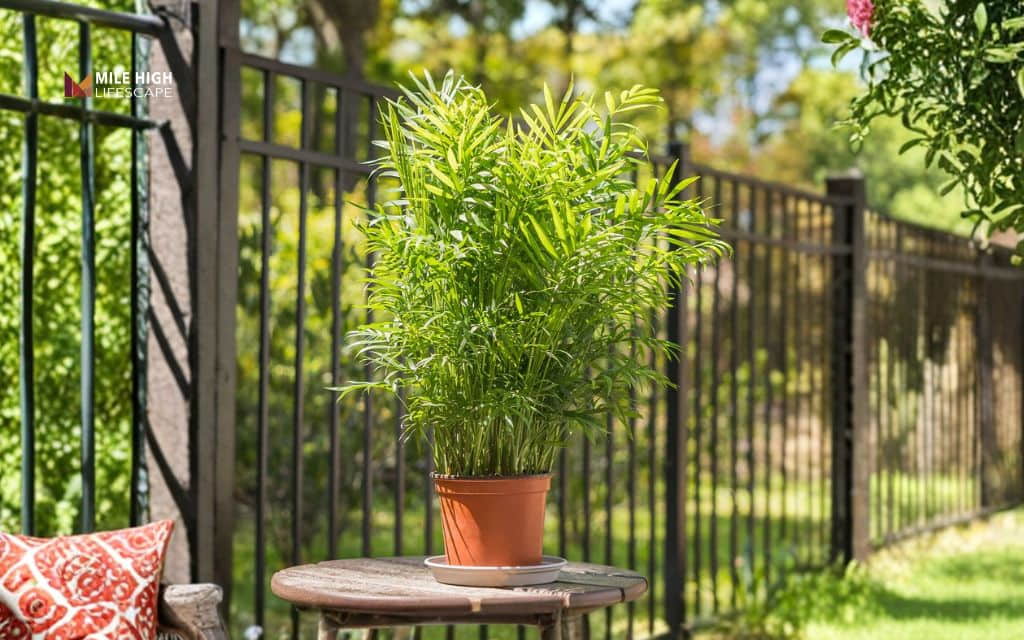
Pindo palm (Butia capitata), also called jelly palm, grows blue-green to gray-green feather fronds that curve back toward the trunk, creating a soft, weeping crown. It reaches 10 to 20 feet tall and is hardy in USDA Zones 8 to 11, ranking among the most cold-hardy feather palms available. The common name jelly palm comes from its fruit, which growers in warm climates harvest to make jelly, a use that sets it apart from purely ornamental species.
Pygmy date palm
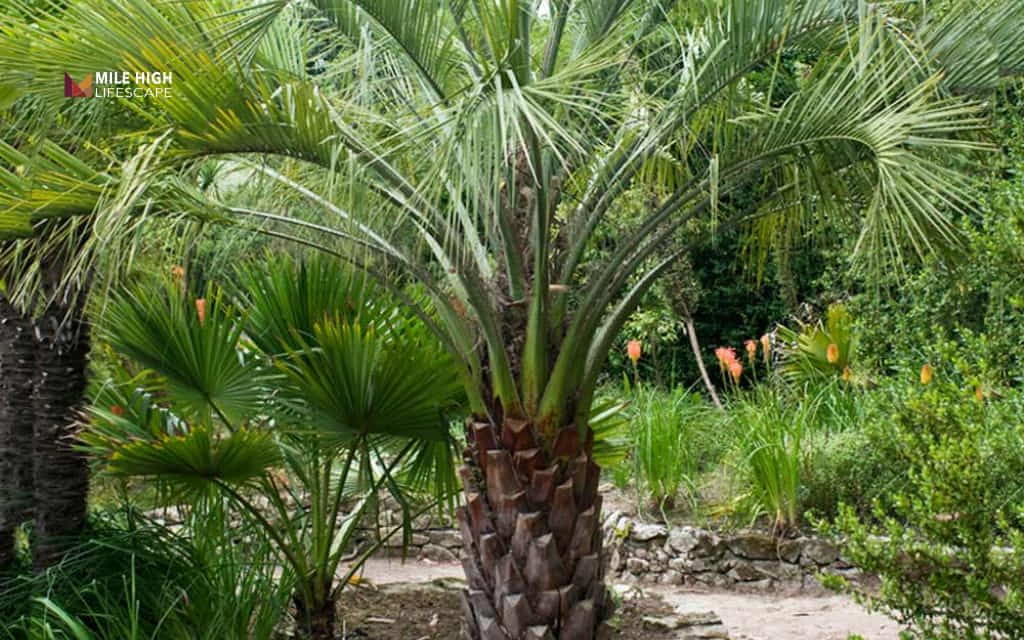
Pygmy date palm (Phoenix roebelenii) is a miniature relative of the true date palm, with slender, arching feather fronds and a slim, textured trunk. It stays a manageable 6 to 12 feet tall, making it one of the smaller feather palms on this list. It is hardy in USDA Zones 10 to 11. Native to Southeast Asia, it is often planted in clusters of three to five trunks for a fuller look, a technique that also helps mask its otherwise sparse young growth.
Queen palm
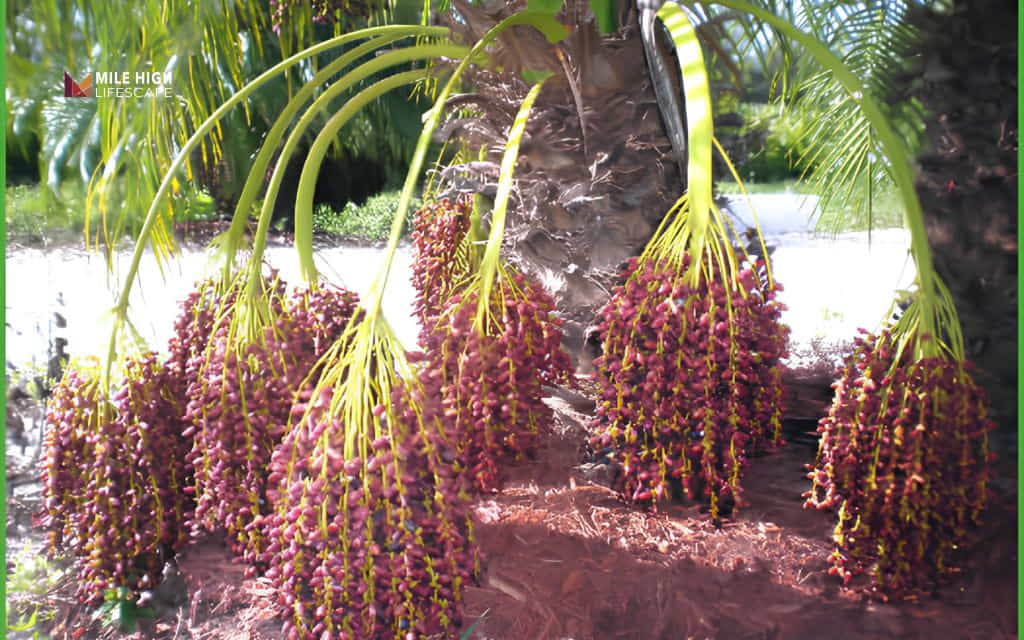
Queen palm (Syagrus romanzoffiana) grows a long, straight, slender trunk topped with gracefully arching feather fronds that can reach 15 feet in length. Mature height runs 50 to 70 feet, and the species is hardy in USDA Zones 9 to 11. Native to South America, queen palm grows faster than most large palms and can live 50 to 150 years, which makes it a common choice for fast landscape impact that still holds up over decades.
Royal palm
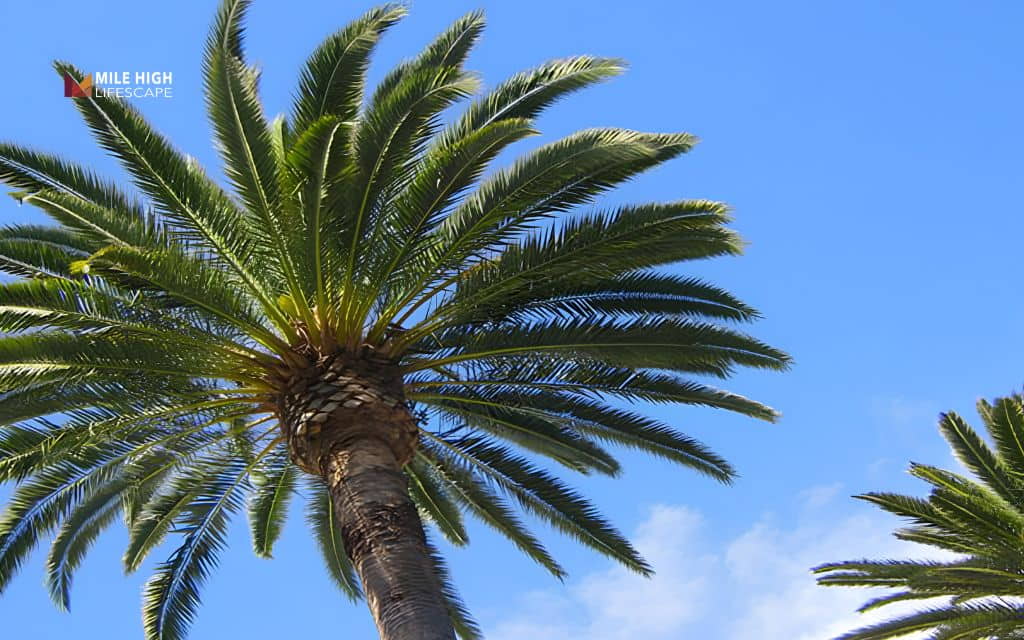
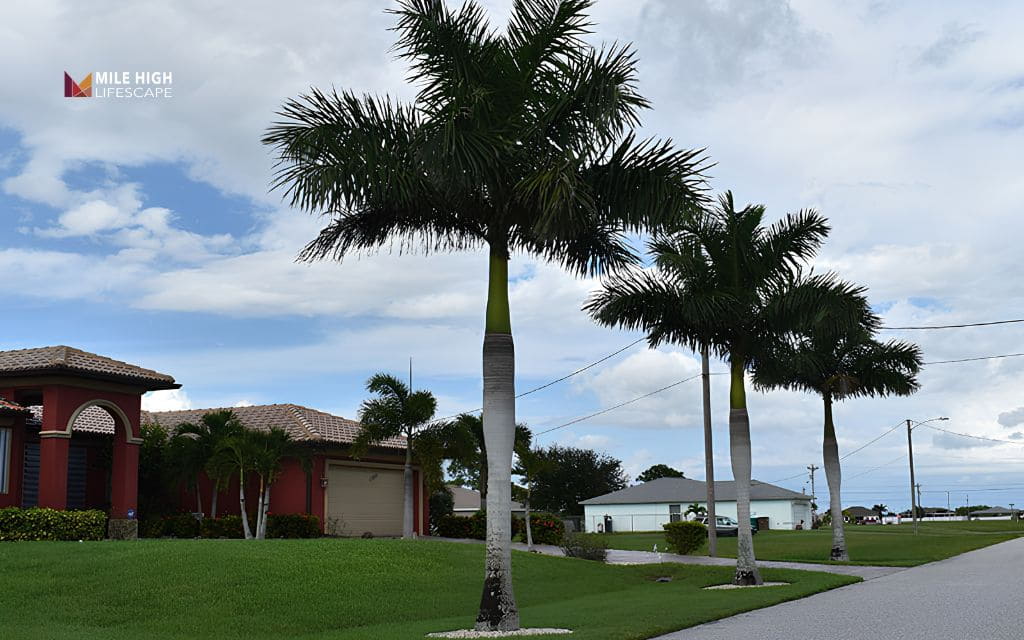
Royal palm (Roystonea regia) is one of the most architectural palms available, with a smooth gray trunk, a bright green crownshaft, and fronds that can reach 13 feet long and weigh up to 50 pounds. It grows 80 to 100 feet tall and is hardy in USDA Zones 10 to 11. Native to Florida and the Caribbean, it is self-cleaning, dropping entire dead fronds on its own, so growers plant it at least 8 feet from structures and walkways to keep falling fronds from causing damage.
Sago palm
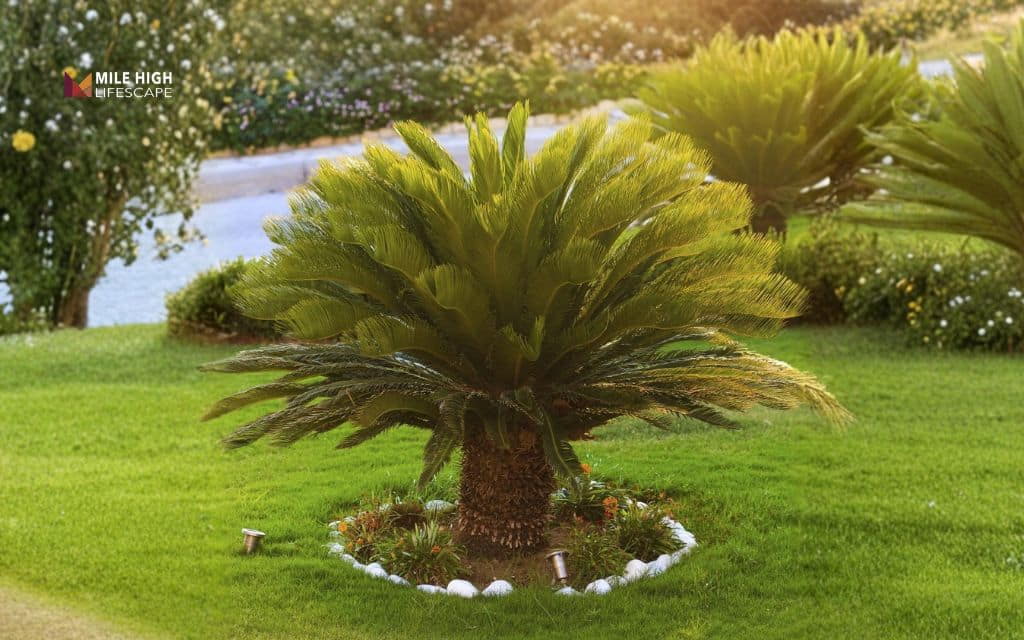
Sago palm (Cycas revoluta) is not a true palm but a cycad, a group of plants that predates flowering plants by tens of millions of years, which is why it is sometimes called a living fossil. It grows stiff, glossy, feather-like leaves in a rosette and stays a compact 3 to 10 feet tall. It is hardy in USDA Zones 8b to 11 and tolerates drought well once established, thanks to its leathery foliage. Every part of the plant is toxic if ingested, a fact worth knowing before planting it around pets or small children.
Senegal date palm
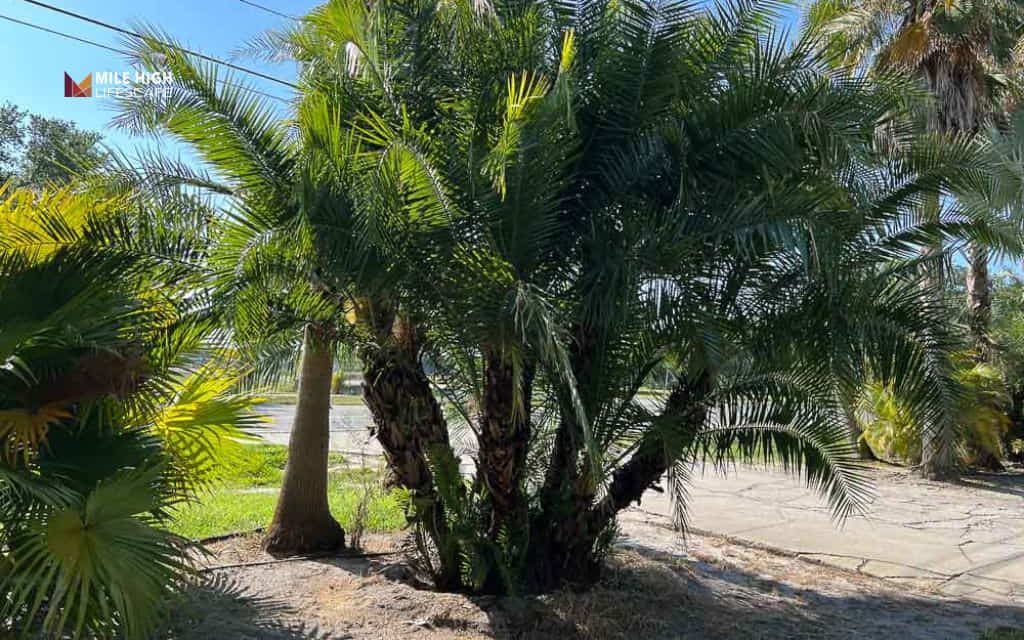
Senegal date palm (Phoenix reclinata) is a clump-forming palm with several gracefully arching, fiber-covered trunks topped in long, feather-shaped fronds. It reaches 25 to 50 feet tall and is hardy in USDA Zones 9 to 11. Native to dry regions of sub-Saharan Africa, it produces suckers at the base that, left unchecked, form a dense, impenetrable clump, so growers selectively remove some suckers to keep the arching trunks on display.
Triangle palm
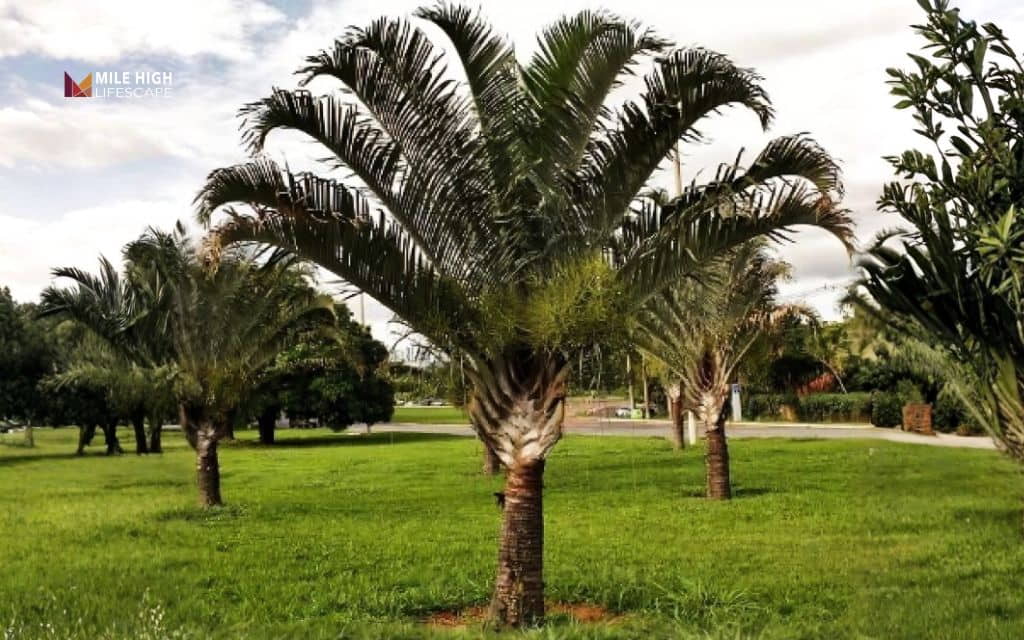
Triangle palm (Dypsis decaryi) earns its name from overlapping leaf bases that stack into a distinct three-sided, triangular shape at the crown, unlike any other palm on this list. It grows 10 to 15 feet tall on a solitary trunk and is hardy in USDA Zones 10 to 11. Native to Madagascar, it tolerates drought, heat, and wind well, and its striking geometric form makes it a favored focal point in a planting bed rather than a background tree.
Windmill palm
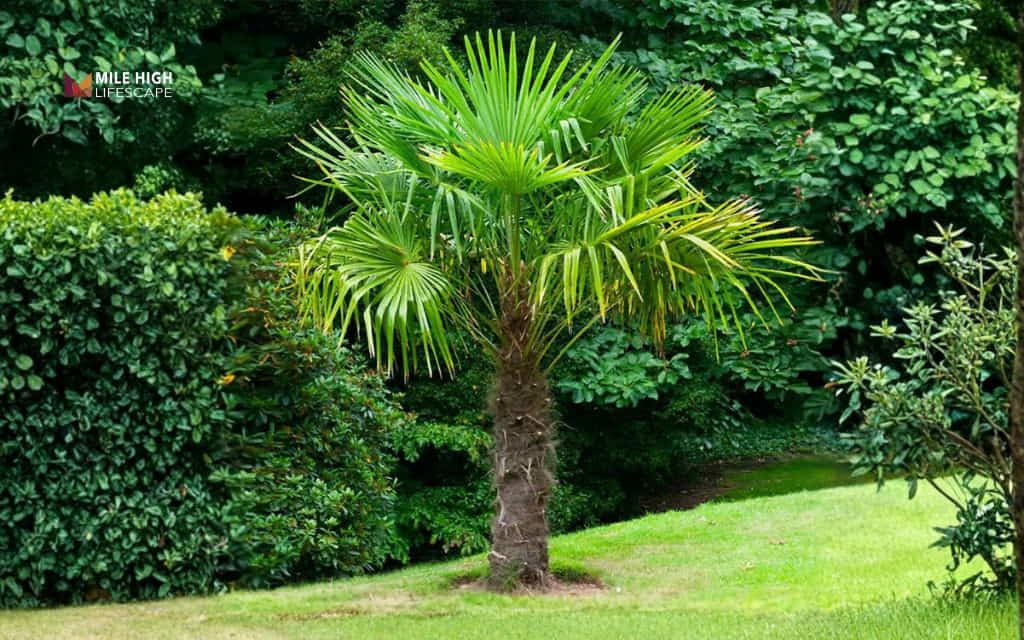
Windmill palm (Trachycarpus fortunei), sometimes called Chinese windmill palm, carries stiff, deeply divided, fan-shaped leaves on a trunk wrapped in dense, hairy black fiber. It typically reaches 20 to 40 feet, though many landscape specimens stay shorter. It is hardy in USDA Zones 7 to 11, making it the most widely planted cold-hardy fan palm in the country and a common sight as far north as the mid-Atlantic coast. Native to mountain forests in China, it tolerates urban conditions and container growing better than most large palms.
How to choose the right palm tree for your landscape
Selecting from dozens of palm tree varieties starts with your USDA Hardiness Zone, since a palm rated for Zone 10 will not survive an average winter in Zone 7. The factors below narrow the search before you visit a nursery:
- USDA Hardiness Zone: Match the species to your zone first. Cold-hardy types of palm trees like windmill palm and needle palm suit Zones 6b to 8, most landscape palms suit Zone 9, and tropical species like royal palm need Zones 10 to 12.
- Available space: Large species like royal palm and Mexican fan palm need a wide, open site clear of structures, since mature specimens can tower past 60 feet, while compact palms like lady palm and pygmy date palm fit small yards or containers.
- Light exposure: Full-sun species such as queen palm and Canary Island date palm bleach or thin out in heavy shade. Lady palm, fishtail palm, and kentia palm tolerate filtered light or a shaded porch far better.
- Maintenance level: Self-cleaning species such as foxtail palm and royal palm drop their own dead fronds and need less pruning. Species that hold onto dead fronds, including Mexican fan palm and cabbage palm, require periodic professional trimming to manage fire risk and pest habitat.
- Local microclimate: A certified arborist or local nursery can confirm which different varieties of palm trees perform best in your specific conditions, since wind exposure, soil drainage, and reflected heat from pavement can shift a palm’s real-world hardiness by half a zone or more.
Conclusion
With 32 types of palm trees to choose from, the right species comes down to matching your USDA Hardiness Zone, available space, and maintenance appetite to its natural growth habit. Whatever you choose, healthy establishment starts with correct planting depth, steady early watering, and a palm-specific fertilizing schedule.
Mile High Lifescape brings the same attention to detail to every tree we plant and maintain. Our tree care service keeps Denver Metro landscapes healthy with expert pruning and seasonal maintenance. Call us at (303) 877-9091 schedule a consultation and get a personalized plan for your property.
Frequently asked questions (FAQs)
What are the most common types of palm trees for home landscapes?
Queen palm, windmill palm, pindo palm, and cabbage palm rank among the most widely planted types of palm trees in the United States, thanks to their combination of manageable size, reasonable cold tolerance, and wide availability at nurseries. The right pick still depends on your specific USDA Hardiness Zone and available space.
What is the most cold-hardy type of palm tree?
Needle palm holds the title among true palms, reliably surviving in USDA Zone 6b and briefly tolerating temperatures well below zero. Windmill palm and Mazari palm follow closely behind, both hardy into Zone 7 and Zone 6b respectively, which makes all three realistic options for gardeners well outside the traditional palm belt.
What is the difference between a fan palm and a feather palm?
Fan palms, also called palmate palms, grow leaves that spread from a single point like an open hand, as seen in the windmill palm and cabbage palm. Feather palms, called pinnate palms, grow leaflets branching off a central rib, as seen in the queen palm and date palm. The distinction affects both appearance and, in some cases, cold tolerance, since many of the hardiest species are fan palms.
How do I know which palm tree suits my climate?
Start with your USDA Hardiness Zone, since it sets the outer limit for which species can survive an average winter outdoors. From there, factor in summer humidity, wind exposure, and soil drainage, since these conditions can shift a palm’s real-world performance even within its rated zone. A local certified arborist or extension office can confirm which species of palm trees are proven performers in your specific area.
How fast do palm trees grow?
Growth rate varies widely across types of palm trees, and species matters more than age or care in predicting speed. Mexican fan palm and foxtail palm grow quickly, often adding several feet of trunk a year under good conditions. Canary Island date palm and windmill palm grow slowly, sometimes gaining only a few inches of trunk height annually, which is part of why mature specimens of slow growers command higher prices at nurseries.
Do all palm trees need full sun?
No. While most large landscape palms, including queen palm and royal palm, perform best in full sun, several species tolerate shade well. Lady palm, kentia palm, parlor palm, and fishtail palm all thrive in filtered light or partial shade, which makes them suited to planting beneath larger trees or on shaded patios.
Are palm trees high-maintenance?
Maintenance needs depend heavily on species and size. Compact, self-cleaning palms like foxtail palm and lady palm need little more than occasional watering and an annual feeding. Large species that retain dead fronds, such as Mexican fan palm and cabbage palm, require periodic professional pruning to manage fire risk, so it helps to weigh a species’ mature size and growth habit against your long-term maintenance plans before planting.