Bark is one of the most reliable ways to identify a tree, especially during months when leaves, flowers, and fruit are absent. Unlike foliage, which changes with the seasons, bark keeps its texture, color, and pattern all year, making it a dependable reference point for homeowners, gardeners, and anyone who wants to know what is growing on their property.
This guide breaks down the different tree bark types by texture, color, and pattern, explains why bark changes as a tree ages, and outlines the warning signs that separate healthy bark from bark that signals trouble.
What tree bark does
Bark is the outer layer of a tree trunk and branches, and it does far more than give a tree its appearance. Underneath the visible surface, bark protects the living tissue that transports water and nutrients between the roots and the canopy. It shields the tree from temperature swings, sun scorch, wind damage, insect invasion, and fungal infection, acting as the tree’s first line of defense against nearly every environmental threat it faces.
Because bark serves this protective role, its structure varies widely from species to species. A tree growing in a location prone to wildfire tends to develop thick, insulating bark, while a tree that relies on a smooth surface to discourage climbing insects and vines keeps a tighter, unbroken covering. These adaptations explain why the bark of a tree can differ so much between species growing side by side, and why there are so many different tree bark types to learn in the first place.
Different tree bark types by texture
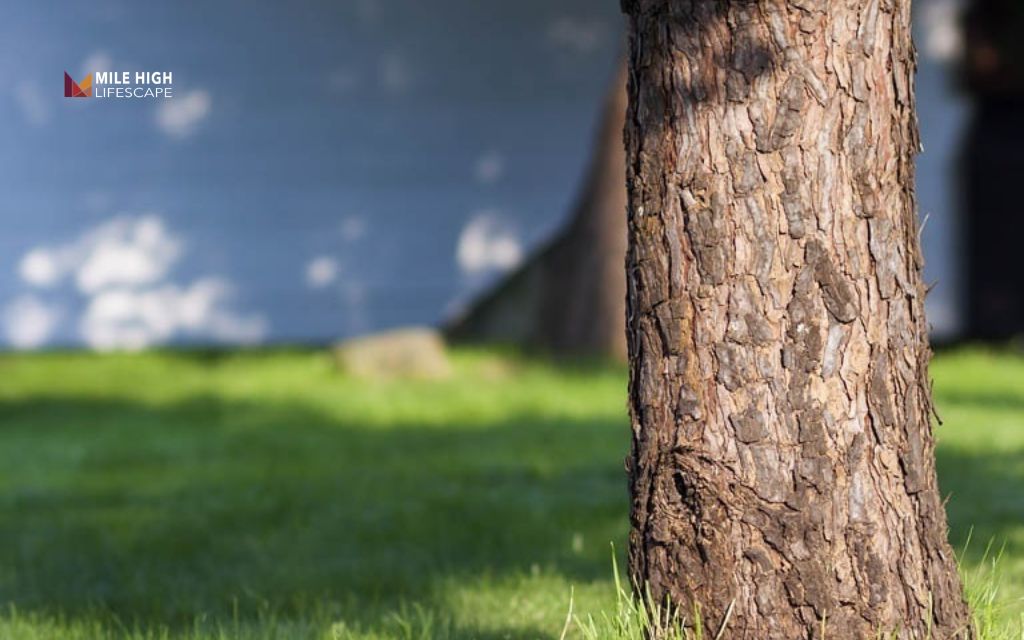
Tree bark generally falls into a handful of recognizable types based on texture. Some trees keep smooth bark well into maturity, while others develop rough, deeply grooved surfaces within their first few decades. Knowing these different bark types narrows down identification quickly, even before you look at a single leaf.
| Bark type | What it looks like | Common examples |
| Smooth | Unbroken, tight surface with little to no cracking | American beech, quaking aspen |
| Papery | Thin layers that peel away in curling strips | River birch, paper birch |
| Scaly | Small, flat pieces that flake off in patches | Black cherry, sycamore |
| Plated | Thick, block-like sections separated by shallow cracks | Flowering dogwood, persimmon |
| Furrowed | Vertical ridges separated by deep grooves | Oak, sweetgum, black walnut |
| Fibrous | Stringy, shredding strips that pull away in narrow bands | Eastern redcedar, shagbark hickory |
Bark color and other identifying clues
Color adds a second layer of information that narrows down species identification once texture has been assessed. Bark color ranges from pale gray and silvery white to deep brown, reddish brown, and near black, depending on the compounds present in the outer tissue.
Oaks often carry a reddish brown tone similar to black tea, while trees with dark bark such as mature black walnut and black cherry take on a nearly black appearance as they age. Color can shift over time as well, so a young tree and an older specimen of the same species may look noticeably different despite sharing the same bark type.
Beyond color, look for lenticels, the small raised pores scattered across the bark that allow a tree to exchange gases with the surrounding air. These pores can appear round, oval, diamond shaped, or arranged in horizontal lines, and their shape is often distinctive enough to confirm a species once texture and color have narrowed the possibilities. Scent offers one more clue on species such as birch and sassafras, which release a noticeable fragrance when the bark is lightly scratched.
Learn more: Tree disease treatment
How bark changes as a tree matures
Bark identification gets more complicated with age because most species look different at twenty years old than they do at eighty. Young trees typically start with smooth, thin bark that has not yet developed the ridges, plates, or fissures associated with the mature form of the species. As the trunk expands, this outer layer often cannot stretch fast enough to keep pace, causing it to crack, split, and gradually take on the furrowed or plated texture that defines the species in adulthood.
This shift matters because the different tree bark types described in a field guide are not fixed for life. A young oak or maple can be mistaken for an entirely different tree if bark is the only feature under consideration. Comparing bark alongside trunk diameter, overall tree shape, and site conditions gives a more accurate picture, particularly for trees planted within the last five to ten years that have not yet reached the bark pattern most references describe.
Signs of bark damage, disease, or pest activity
Cracks and splits
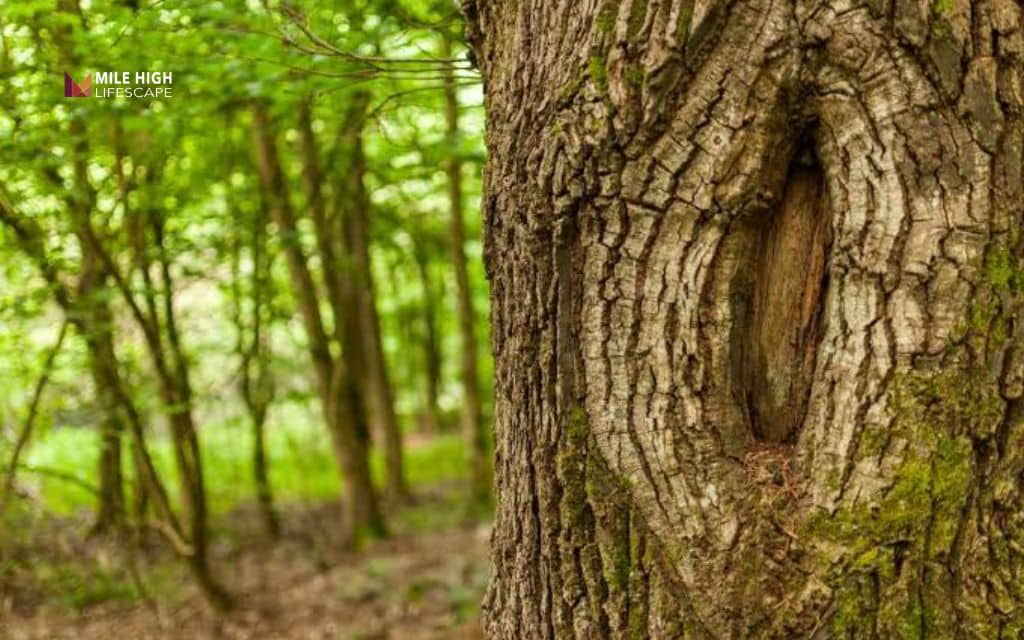
Vertical cracks that run with the grain of the trunk can result from rapid temperature changes, sunscald, or frost damage. Small, shallow cracks often heal on their own, but wide or deep splits that expose the inner wood leave the tree vulnerable to decay and infection.
Cankers and sunken patches
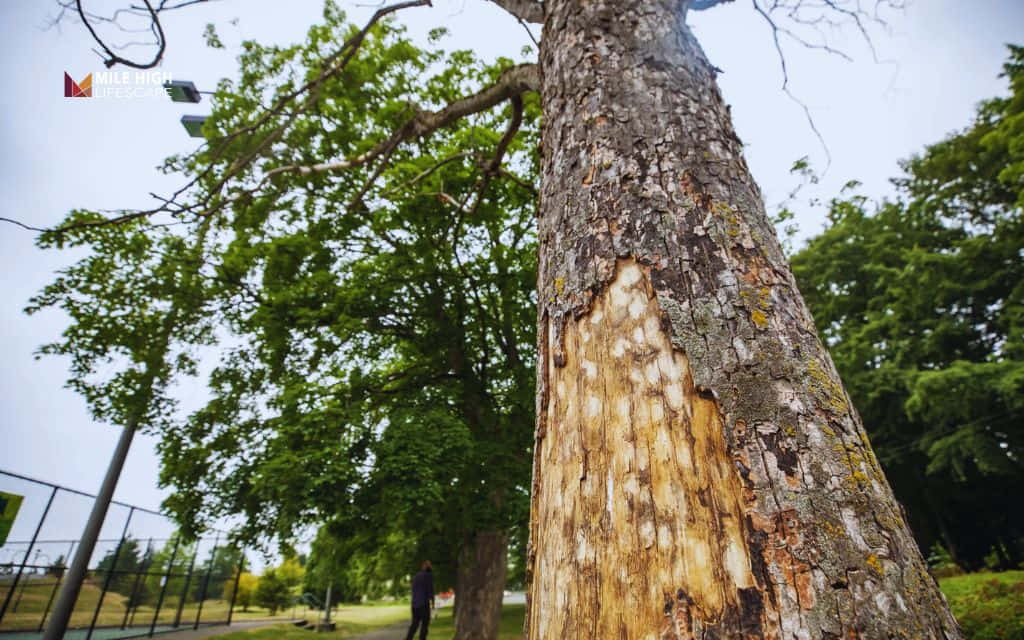
A canker appears as a sunken, discolored patch where the bark has died back, often with cracked or oozing edges. Cankers typically signal a fungal or bacterial infection and can girdle a branch or trunk if left untreated, cutting off the flow of water and nutrients to everything above the wound.
Insect boring holes
Small, round holes scattered across the trunk, sometimes accompanied by sawdust like debris at the base of the tree, point to boring insects working beneath the surface. These pests tunnel through the inner bark and wood, disrupting the tree’s ability to move water and nutrients.
Oozing, discoloration, or fungal growth
Sap oozing from the bark, unusual dark staining, or mushrooms and shelf fungi growing directly from the trunk all indicate active decay inside the tree. By the time fungal fruiting bodies appear on the outside, the internal damage is often more advanced than it looks.
Any of these signs are worth a closer look from a professional, since bark abnormalities can point to problems that are not always visible from the surface alone.
Learn more: how long do trees live
Identifying trees by bark plus other features
Bark is a strong starting point for identification, but it works best combined with other characteristics rather than relied on by itself. Leaf shape, arrangement, and margin remain the fastest way to confirm a species during the growing season, while buds, twig color, and growth habit fill in the gaps during winter when leaves are unavailable. Fruit, seed pods, and flowers, when present, offer additional confirmation and can distinguish between closely related species that share similar bark.
A practical approach is to note the bark type first using texture and color, then cross check that observation against the tree’s overall shape, branching pattern, and any leaves, buds, or fruit within reach. This layered method catches the cases where two unrelated species happen to share a similar bark pattern, which is more common than most people expect.
Conclusion
Learning to read the different tree bark types turns an ordinary walk around the yard into a useful diagnostic tool. Texture, color, lenticels, and how bark changes with age each add a piece to the identification puzzle, and combining those clues with leaves, buds, and growth habit produces the most reliable results.
If you have noticed cracking, cankers, oozing, or other bark changes that do not match what is typical for the species, it is worth having a closer look before the issue spreads. Mile High Lifescape offers tree and shrub care for homeowners across the Denver Metro area who want a professional opinion on what their bark is telling them. Reach out at (303) 877-9091 to schedule an assessment.
Frequently asked questions (FAQs)
Can you identify a tree by bark alone?
Bark narrows down the possibilities significantly, but confirming an exact species usually requires checking leaves, buds, or fruit as well, since several different tree bark types can look nearly identical on unrelated species.
Why does some tree bark peel or flake?
Peeling and flaking, seen in trees such as river birch and sycamore, happens when the trunk grows faster than the outer bark can stretch, causing thin outer layers to separate and shed.
Is peeling bark a sign of a problem?
Not necessarily. Peeling is normal and expected for certain species. It only signals a problem when it appears on a species that does not naturally shed bark, or when it is paired with cracking, oozing, or dead patches underneath.
Does bark color change as a tree ages?
Yes. Many species start with lighter, smoother bark that darkens and roughens with age as the outer layer thickens.
What does rough, cracked bark on a young tree mean?
It can be entirely normal for the species, but it can also indicate sunscald, frost damage, or mechanical injury, particularly if the cracking is new or paired with dieback in the canopy above.