
Fresh mulch rarely stays exactly where it lands. Rain washes it toward the lowest point of a bed, wind carries the lighter pieces into the lawn, and a sloped yard fights gravity every time it rains.
Piling on more mulch each season treats the symptom, not the cause, and for many yards, how to keep mulch from washing away comes down to matching the fix to the reason it moved in the first place.
This guide covers how to keep mulch in place using methods that address the actual cause, from bed edges and mulch choice to slopes, moisture, and depth.
Why mulch moves out of place
Mulch rarely shifts for no reason. Most of the time, one or two specific conditions are working against it, and naming the cause matters more than reaching for more material.
- Heavy rain and runoff: Mulch trails toward the lowest point of a bed or onto walkways after a storm.
- Sloped beds: Mulch collects at the bottom of a slope no matter how often it gets raked back.
- Wind: Lightweight pieces end up in the lawn or against fences after dry, gusty stretches.
- Poor or missing edging: Mulch spreads past the bed line onto grass or sidewalks with nothing to stop it.
- Wrong mulch type: Fine or lightweight material, such as straw or shredded leaves, shifts even in mild weather.
- Irrigation overspray: Mulch clumps or washes out near sprinkler heads while the rest of the bed stays put.
- Foot traffic and pets: Mulch spreads into trails or gets kicked into the lawn near paths people or pets use often.
How to keep mulch in place using 9 practical methods
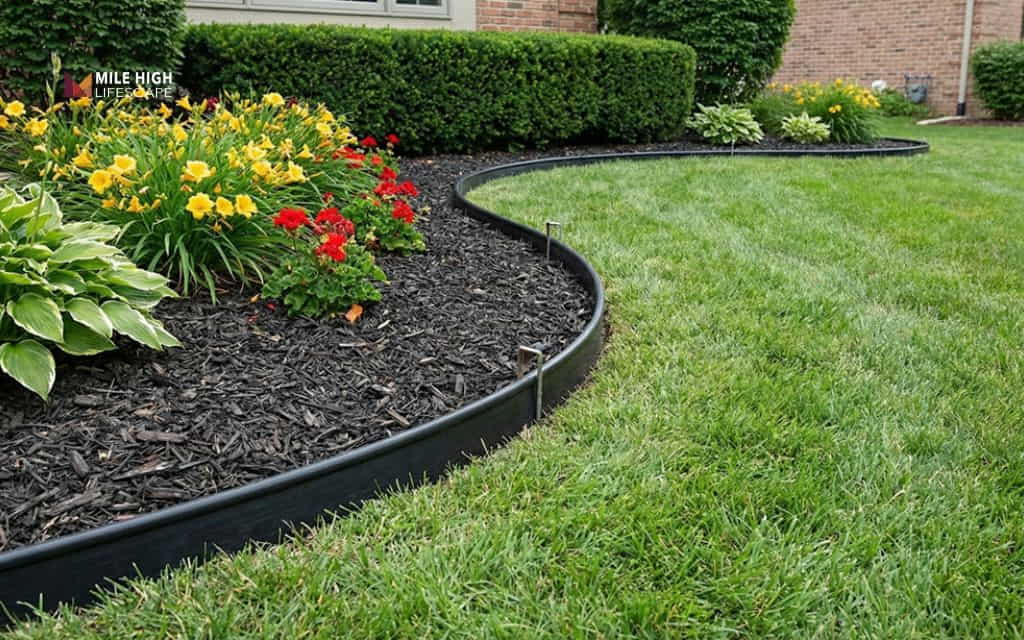
Install proper edging
Physical barriers keep mulch from spreading past the bed line, and the right material depends on budget and the look of the yard.
- Metal (steel or aluminum): Bury 4 to 6 inches deep with a few inches exposed, works well for curved beds and long term durability.
- Stone or brick: Set in a 4 to 6 inch trench for a natural, permanent look.
- Wood (timber, planks, railroad ties): Bury 3 to 5 inches deep for a budget friendly, rustic style.
- Plastic or rubber: Stake down in a 3 to 6 inch trench for flexible curves at lower cost.
- Concrete curbing: Set 4 to 6 inches deep with professional installation for a permanent, mower resistant edge.
Edging works best paired with the right grade. Lowering or tapering the soil slightly at the bed edge keeps the finished mulch surface close to the level of the surrounding lawn or walkway, so less material sits above grade and less spills over before wind or rain even get involved.
This grading step keeps mulch settled for the long term, rather than relying on the edging alone to hold everything back.
Create a mulch trench
Digging a mulch trench creates a built in edge without buying separate material. Mark the bed line with rope or spray paint, then use an edging shovel to cut a shallow trench roughly 3 to 4 inches deep along that line.
Angle the cut so the bed side sits slightly higher than the lawn side, then pack the soil firmly along the outer edge to form a solid lip.
For curved beds, soften the line by trimming the soil gradually rather than cutting sharp angles. Pavers or flat stones set into the trench add extra hold for beds that see heavy rain or foot traffic.
Use heavier mulch options
Heavier or interlocking materials resist movement naturally, which cuts down on how often a bed needs a refresh.
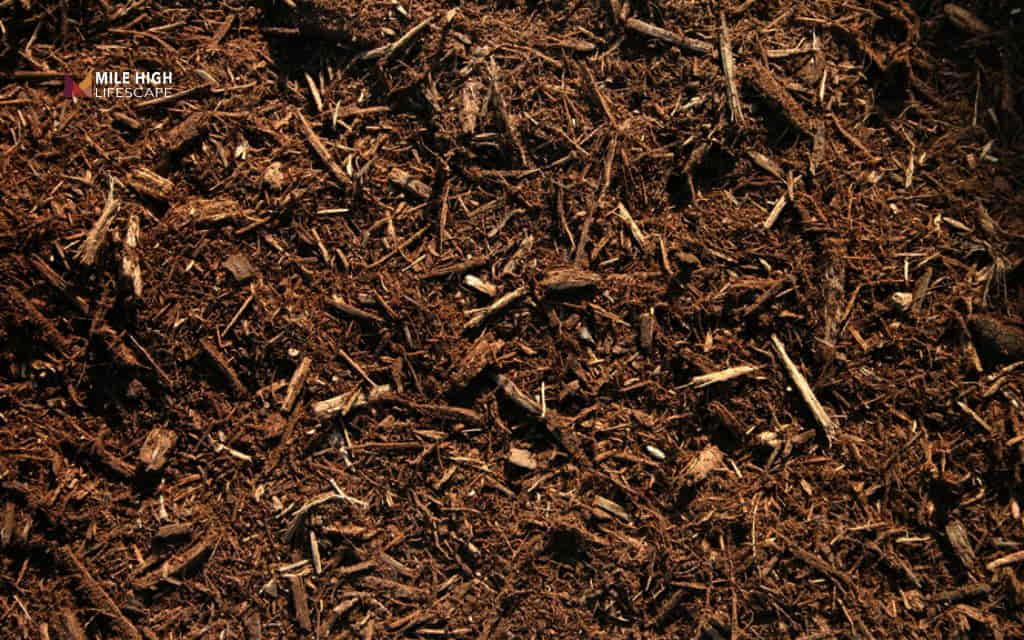
- Shredded hardwood bark: Fibers interlock and settle into a dense mat.
- Cedar or pine bark nuggets: Larger, heavier pieces resist wind and light rain.
- Rubber mulch: Heavy, long lasting, and highly resistant to washing away.
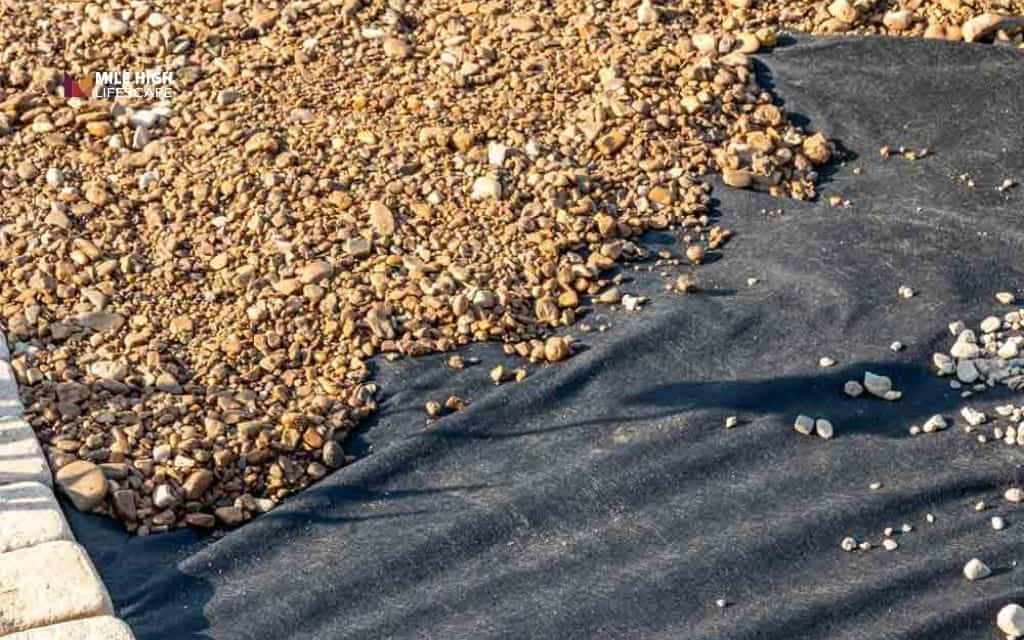
- River rock or pea gravel: Weight keeps it in place, though a fabric barrier underneath prevents it from sinking into the soil.
Lightweight options such as straw or shredded leaves still work well for vegetable beds, though they need extra help, like netting or a trench, to stay in place through wind and rain.
Remove landscape fabric and plastic sheeting
Plastic sheeting and landscape fabric sit underneath mulch to block weeds, but a slick surface gives mulch nothing to grip once water gets underneath it. Without solid edging, mulch resting on plastic tends to slide or roll off the bed instead of settling in.
Cardboard or newspaper works as a weed barrier without the slip, and both break down over time and add organic matter to the soil. Dense ground cover plants or a thicker layer of organic mulch, roughly 3 to 4 inches, can also suppress weeds without relying on plastic at all.
Keep mulch moist
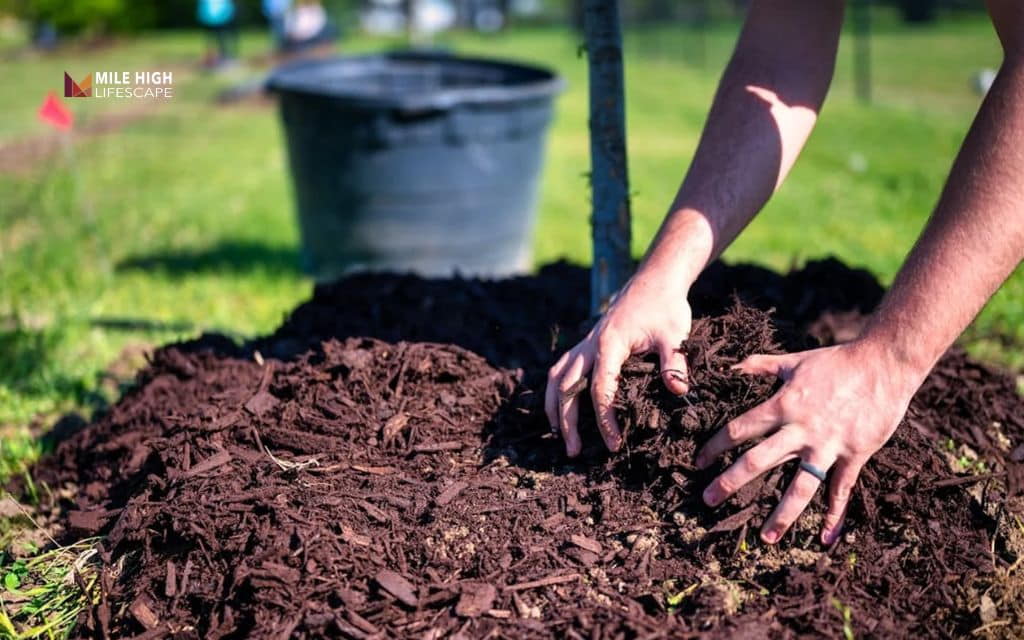
Slightly moist mulch is heavier and less likely to blow or wash away than mulch that has dried out. Moisture also helps mulch do its other jobs, holding soil temperature steady, slowing evaporation from the soil below, and blocking the sunlight weed seeds need to sprout.
Moisture retentive materials such as pine straw or shredded bark hold water longer than lighter options. Drip irrigation or a soaker hose keeps the soil watered without blasting mulch out of place the way an overhead sprinkler can.
Occasional watering during a dry, windy stretch helps mulch stay settled until conditions calm down.
Apply mulch stabilizer carefully
Mulch stabilizer, sometimes called mulch glue or binder, is a spray on adhesive that binds the top layer of mulch together so wind and light rain have less to carry off. It works best as a supplement after drainage, edging, and mulch selection are already handled, rather than as the first fix for a bed that keeps washing out.
Applying it correctly starts with raking the mulch into an even layer and lightly watering it to help the coating adhere. Garden sprayers apply an even coat while avoiding nearby plants, and the first coat needs a couple of hours to dry before a second coat goes on.
Most stabilizers hold for 12 to 24 months before needing a fresh coat, and checking the product label for its ingredients is worth doing if the bed sits close to edible plants.
Use mulch netting or erosion control blankets for slopes
Homeowners searching for how to keep mulch from washing away on a slope usually need more than one method working together. Netting or an erosion control blanket laid over mulch gives gravity and rain less of a chance to pull material downhill.
On moderate slopes, a biodegradable option such as straw or coconut fiber netting can retain mulch on slope areas while it breaks down naturally over a season or two, which suits flower beds and spots with moderate rainfall. Plastic netting holds up better on high traffic or steeper areas where erosion is more persistent.
On severe slopes, or wherever runoff concentrates into a steady stream, netting alone will not solve the underlying erosion problem. Terracing the slope, planting deep rooted vegetation, or adding drainage improvements addresses the cause directly, and a landscaping professional can help determine which approach fits a specific grade.
Maintain proper mulch depth
Most beds, shrubs, and trees do best with 2 to 4 inches of mulch. Too little leaves gaps where weeds can push through and gives wind and rain less material to work with before bare soil shows. Too much holds excess moisture against roots and can suffocate them over time.
Checking the depth at a few spots around the bed, especially after a heavy storm or windy stretch, catches thin areas before they turn into bare patches. Mulch should stay a few inches away from tree trunks, roughly 3 to 5 inches for young trees and 8 to 10 inches for mature ones, to avoid trapping moisture against the bark.
Use strategic planting to anchor mulch
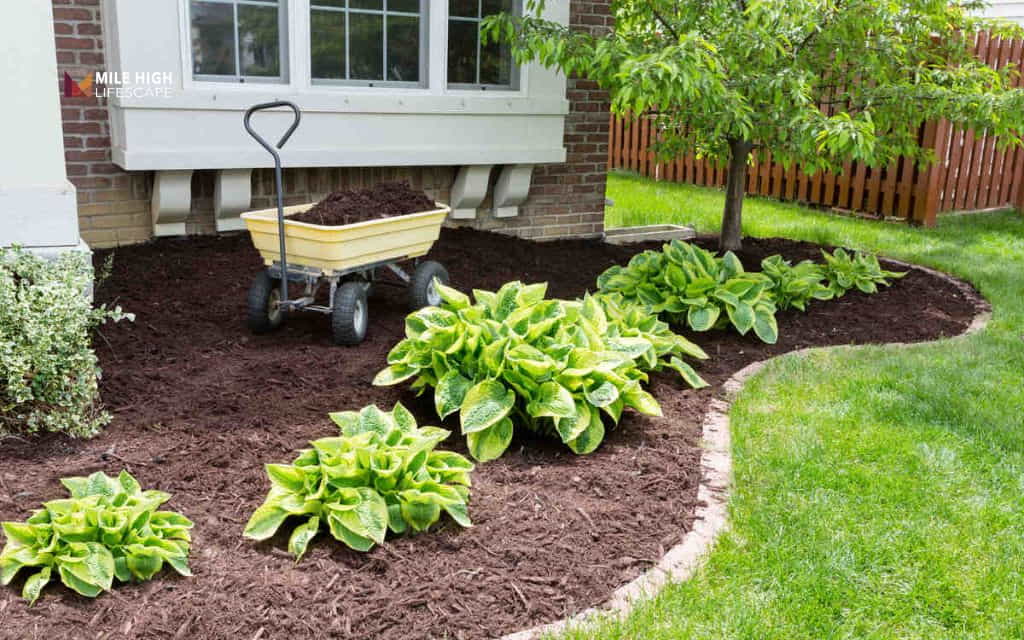
Plant choice and placement can hold mulch in place without any hardscaping at all. Ground cover plants form a dense mat that traps mulch underneath their foliage, and mulch friendly perennials with leafy mounds act as a soft retainer along the bed edge.
Shrubs with low branches placed along the perimeter work as a windbreak that catches material before it blows off the bed, and bunch type native grasses have dense root systems that help stabilize the soil itself.
Layering plant heights, tall varieties in back, mid sized shrubs in the middle, and ground covers up front, is a reliable way to keep mulch in place on slope beds and flat beds alike, since it creates natural terracing that stops mulch from migrating downhill or into the lawn.
Conclusion
These methods cover how to keep mulch in place through wind, rain, and slope conditions alike, and most yards only need two or three of them working together rather than every method at once. Matching edging, mulch type, and moisture to the actual cause of movement saves the seasonal cycle of raking beds back into shape.
Getting mulch to stay put often comes down to fixing the edge, the grade, or the drainage before adding new material. If a Denver yard keeps losing mulch to slopes or runoff, Mile High Lifescape‘s mulch installation services address the edging and grading, while drainage solutions handle the underlying water movement.
Call (303) 877-9091 a plan built around the specific yard!
Frequently asked questions (FAQs)
How to keep mulch in place on a slope?
Coarse or shredded mulch, secure edging, and netting or an erosion control blanket work well together on moderate slopes. Severe slopes often need terracing or drainage improvements before mulch will stay put on its own.
What is the best mulch for windy areas?
Heavier, interlocking materials such as shredded hardwood bark or rubber mulch resist wind better than lightweight straw or pine needles.
How do you stop mulch from washing away in heavy rain?
Start with proper edging and a graded bed edge, choose a heavier mulch type, and add netting or a stabilizer in spots that take on the most water.
Are mulch stabilizers safe for plants?
Most cured stabilizers are non toxic and let air and water reach the soil, though checking the label is worth doing near edible plants or sensitive roots.
What is the most affordable way to hold mulch on a slope?
Mulch trenches or edging made from stone or logs already on the property cost little beyond labor and hold up well for most moderate slopes.