
When properly designed and installed, a sprinkler system delivers the precise amount of water your lawn needs – no more, no less. This targeted approach not only supports a healthier landscape but also promotes water conservation, a critical consideration in our water-conscious region. Denver’s clay-heavy soils and varying microclimates require localized expertise to ensure your irrigation system performs optimally year-round.
At Mile High Lifescape, we understand the specific needs of Denver properties. Our professional sprinkler installation services ensure your system is customized to your property’s unique requirements, providing proper coverage while maximizing water efficiency.
Benefits of Installing a Sprinkler System for Your Denver Lawn
A properly installed sprinkler system offers numerous advantages for Denver property owners dealing with our region’s challenging climate conditions:
Water Conservation
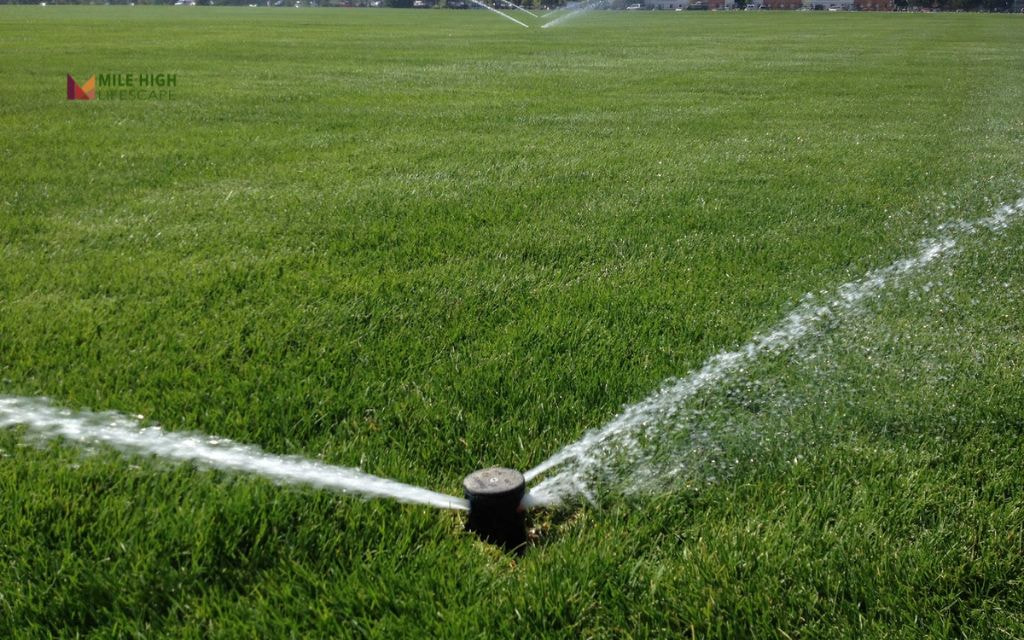
Modern sprinkler systems are designed to deliver precise amounts of water exactly where needed.
In Denver’s arid climate, this efficiency can reduce water consumption by up to 30% compared to manual watering, leading to significant water bill savings while promoting environmental sustainability.
Time-Saving
With automated watering schedules, you’ll reclaim hours of your week that would otherwise be spent dragging hoses and manually watering your lawn.
Once programmed, your sprinkler system handles the work while you focus on enjoying your beautiful landscape rather than maintaining it.
Consistent Coverage
Professional installation ensures even water distribution across your entire lawn, eliminating dry patches and overwatered areas.
This uniform coverage is particularly important in Denver, where hot spots can quickly develop during summer months if irrigation is inconsistent.
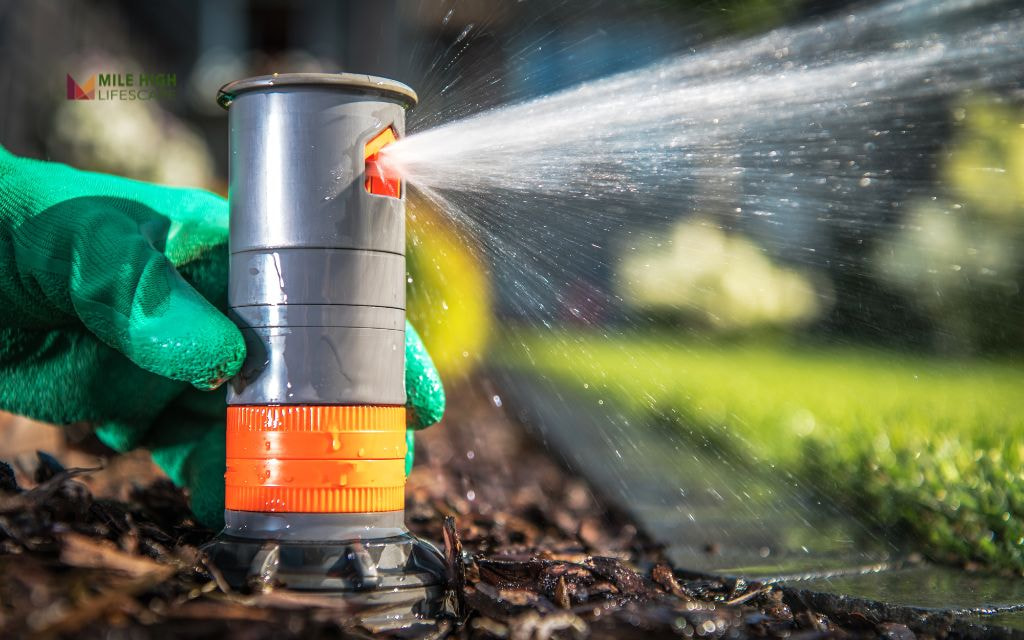
Healthier Lawn
Consistent, appropriate watering promotes deeper root growth and more resilient grass. Denver’s challenging climate can stress lawns, but properly timed watering schedules help your lawn establish stronger drought resistance and better withstand our region’s temperature fluctuations.
Increased Property Value
A professionally installed sprinkler system can increase your Denver property’s value by up to 5-10%. Potential buyers recognize the benefits of built-in irrigation, especially in our semi-arid climate where lawn maintenance presents unique challenges.
Reduced Labor
Say goodbye to hauling hoses, setting up sprinklers, and the physical effort of manual watering. Automated systems eliminate this labor while providing better results, particularly valuable during Denver’s hot summer months when manual watering becomes a daily necessity.
Types of Sprinkler Systems for Denver Properties
Choosing the right sprinkler system for your Denver property depends on several factors, including your landscape design, soil type, and water conservation goals.
Below, we explore the most effective irrigation options for Colorado’s unique climate and soil conditions:
| Sprinkler Type | Description | Best For |
| In-Ground Sprinklers | Fixed sprinkler heads built into the ground that provide consistent coverage across your landscape. These systems are customizable and can be zoned to meet specific watering needs. | Lawns, gardens, and commercial landscapes throughout Denver where comprehensive coverage is needed. |
| Drip Irrigation | Slow-release system that delivers water directly to plant roots, minimizing evaporation and runoff. Ideal for Denver’s water conservation efforts with up to 50% water savings compared to traditional sprinklers. | Flower beds, vegetable gardens, shrub borders, and xeriscape areas commonly found in Denver landscapes. |
| Rotary Sprinklers | Heads that rotate in a circular pattern, distributing water in streams over medium to large areas. These work well in Denver’s occasionally windy conditions as they’re less prone to drift. | Large lawns or yards with irregular shapes, particularly effective for properties in suburban Denver areas. |
| Pop-Up Sprinklers | Sprinklers that emerge from the ground during operation and retract when not in use, providing a clean landscape appearance. These are durable enough to withstand Denver’s winter conditions. | Lawns with foot traffic, areas near sidewalks, or recreational spaces where above-ground fixtures would be obtrusive. |
| Smart Sprinkler Systems | Advanced systems with weather sensors, soil moisture monitoring, and smartphone controls. These systems can automatically adjust to Denver’s rapid weather changes and water restrictions. | Properties requiring maximum water efficiency, drought management, and convenience—especially valuable during Denver’s water restriction periods. |
At Mile High Lifescape, we often recommend combination systems for Denver properties that incorporate several types of sprinklers to address varying landscape needs.
For example, pop-up or rotary sprinklers for lawn areas paired with drip irrigation for flower beds and garden spaces provides optimal efficiency while addressing Denver’s specific climate challenges.
When Should You Install a Sprinkler System in Denver?
Timing your sprinkler system installation correctly can ensure optimal results and minimize disruption to your landscape. Denver’s distinct seasons offer different advantages for irrigation installation.
Spring Installation (Highly Recommended)
Early to mid-spring (April-May) is ideal for installation in Denver. The ground has thawed but summer heat hasn’t yet stressed your lawn.
Installing in spring ensures your system is ready for Denver’s dry summer months when irrigation is most crucial.
Fall Installation (Recommended)
September through early October offers cooler temperatures that make installation easier on your landscape. Fall installation allows the system to be in place before winter, ready for spring activation, and often coincides with less busy schedules for installation teams.
Winter Installation (Not Recommended)
While technically possible during mild periods, winter installation in Denver is challenging due to frozen ground and the risk of unexpected snow.
We generally recommend waiting for spring unless there’s an unusually warm winter period.
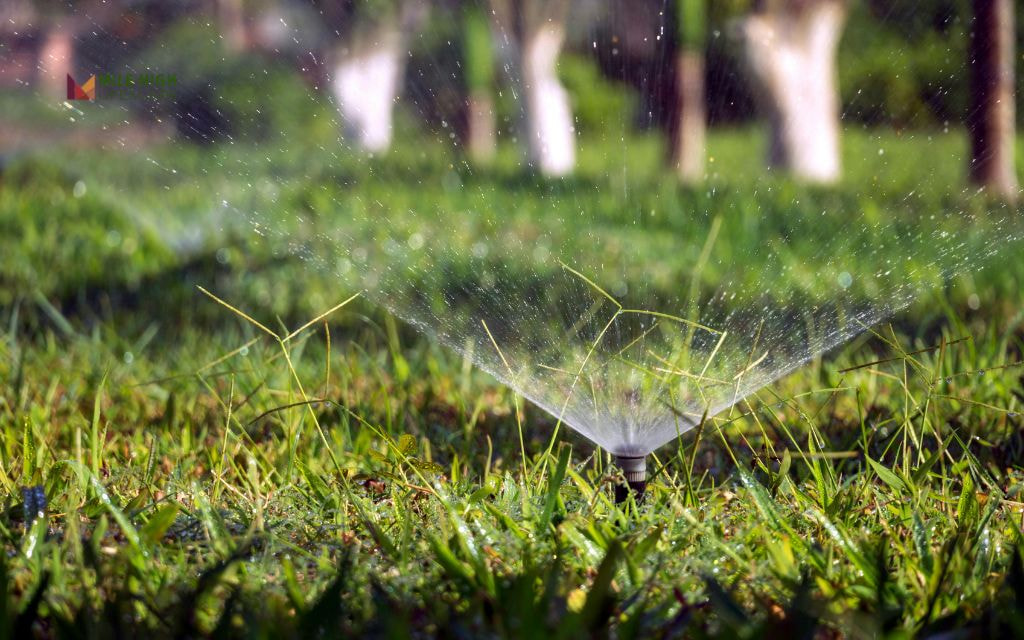
The Sprinkler System Installation Process
Installing a sprinkler system in Denver is a structured process that requires careful planning, technical knowledge, and an understanding of local soil conditions, water regulations, and climate demands. Following each phase in the correct order is what separates a system that performs reliably for years from one that causes problems from the start. Here is a complete walkthrough of how the installation process works from beginning to end.
Step 1: Property Assessment and Consultation
Every successful installation begins with a thorough evaluation of the property, including lawn size, sun and shade patterns, soil composition, and existing landscape features such as trees, flower beds, sidewalks, and slopes. In Denver, where clay-heavy soils and microclimates vary significantly from neighborhood to neighborhood, this assessment is essential for determining appropriate head types, zone boundaries, and pipe depth. Homeowners should also discuss their watering goals and any Denver Water guidelines or HOA requirements that may affect the system design.
Step 2: Water Supply Evaluation
Before any components are selected, the installer must gather key measurements about the home’s water supply, including working water pressure in PSI, water meter size, service line size, and flow rate in gallons per minute. These numbers determine how many zones the system can support and which sprinkler heads are compatible with the available supply. Mismatching components to water pressure is one of the most common causes of poor system performance, so this evaluation should never be skipped.
Step 3: System Design and Zone Planning
With property measurements and water data confirmed, the installer creates a scaled layout of the irrigation system mapping all zone boundaries, valve and manifold locations, pipe routing, and sprinkler head placement. Zones are divided based on the physical characteristics of the landscape and the GPM capacity of the water supply, with turf areas, garden beds, sloped sections, and shaded zones grouped separately. A critical design principle is head-to-head coverage, ensuring each sprinkler head’s spray pattern reaches the adjacent head to eliminate dry spots across the lawn.
Step 4: Permits, Utility Checks, and Regulations
In Denver, a city permit is typically required before any irrigation installation can begin, ensuring the system complies with local plumbing codes, Denver Water efficiency standards, and backflow prevention requirements. Before any digging takes place, it is also essential to call 811, the national dig safety hotline, to have all underground gas lines, power lines, and cable TV lines marked on the property. Professional installers familiar with the Denver metro area can also advise homeowners on available rebate programs for water-efficient irrigation systems.
Step 5: Trenching
Trenches are laid out following the mapped pipe routes, with stakes and string marking the path and flags indicating each sprinkler head location. In Denver’s climate, lateral lines should be dug to a depth of 8 to 12 inches to protect against frost, while main supply lines that remain pressurized year-round should be installed 12 to 18 inches deep. Denver’s clay-heavy soil can make excavation more labor-intensive, and a power trencher rental is a practical option for larger properties.
| Trench Depth Guideline | Recommended Depth in Denver |
| Lateral irrigation lines | 8 to 12 inches |
| Main supply lines (pressurized) | 12 to 18 inches |
| Denver frost line reference | Approximately 36 inches |
Step 6: Pipe Selection and Assembly
Two types of pipe are commonly used in residential irrigation: PVC and polyethylene. PVC is the more widely used material due to its strength and is assembled using solvent cement, while polyethylene is more flexible and better suited to regions with extended freeze cycles like Denver. For the main supply line, PVC in a larger diameter with schedule 40 wall thickness is the recommended choice for durability and consistent flow performance.
Step 7: Valve Manifold and Backflow Preventer Installation
The valve manifold groups all zone valves in a single accessible location near the water supply line, allowing each zone to be operated independently to maximize water pressure. Adequate spacing between valves should be maintained to allow for future removal and replacement without disrupting adjacent components. Connected directly to the manifold is the backflow preventer, a mandatory component under Denver code that prevents irrigation water from flowing back into the household drinking water supply.
Step 8: Sprinkler Head Installation and Pipe Connection
Sprinkler heads should not be fully attached until after the system has been flushed, as debris left in the lines will eventually clog emitters and reduce efficiency. Risers connect the pipe to each head, and swing joints or flexible connectors make final positioning easier and more precise. Head height is also an important detail: pop-up heads in turf areas must sit at the correct grade so they retract fully when not in use, while shrub heads in garden beds should be set at a height that accounts for the mature size of surrounding plants.
Step 9: System Flush and Testing
Before sprinkler heads are permanently attached, each valve must be opened manually to flush the pipes of any dirt, debris, or shavings that entered during assembly. Once the flush is complete, the controller is used to run each zone individually to check for proper spray coverage, pressure consistency, and any signs of leaks at pipe joints or fittings. In Denver, water pressure at each zone should fall within the 40 to 65 PSI range for proper head performance, and spray arc adjustments are made at this stage before backfilling begins.
Step 10: Controller Wiring and Programming
Each zone valve is connected to the irrigation controller via low-voltage wiring, and the zone-to-station assignments should be documented and kept near the controller for future reference. Modern smart controllers can be programmed to comply with Denver’s seasonal watering restrictions, and many models include Wi-Fi connectivity, real-time weather integration, and soil moisture monitoring. These features allow the system to automatically skip a cycle after rainfall or adjust run times based on Denver’s unpredictable spring and summer weather patterns.
Step 11: Backfill and Final Walkthrough
Once every zone has been tested and all adjustments confirmed, the trenches are backfilled and the saved sod is replaced to restore the lawn’s appearance. The final walkthrough covers controller programming, zone assignments, seasonal adjustment tips, and winterization procedures, which are critical for protecting Denver irrigation systems before temperatures drop. Homeowners should also receive a copy of the system layout diagram showing all head locations, valve boxes, and zone boundaries for future maintenance reference.
| Installation Phase | Key Action | Denver-Specific Note |
| Property Assessment | Evaluate soil, sun, shade, and landscape layout | Account for clay soil and microclimate variation |
| Water Supply Check | Measure PSI, GPM, meter and service line size | Confirm compatibility with Denver Water infrastructure |
| System Design | Map zones, pipe routes, and head placement | Separate turf zones from garden beds and slopes |
| Permits and Utility Check | Pull city permit; call 811 before digging | Backflow preventer required under Denver code |
| Trenching | Dig to proper depth along mapped routes | Lateral lines 8 to 12 inches; mains 12 to 18 inches |
| Pipe and Manifold Assembly | Lay pipe; build valve manifold | PVC preferred for mains; poly for freeze-prone laterals |
| Head Installation | Position and attach sprinkler heads | Set heights for turf retraction and bed plant clearance |
| Flush and Testing | Flush debris; test all zones with controller | Verify 40 to 65 PSI range; check coverage and leaks |
| Controller Wiring | Wire valves; program timer | Set schedules per Denver watering restrictions |
| Backfill and Walkthrough | Restore lawn; document system layout | Discuss winterization and seasonal programming |
Costs of Sprinkler System Installation in Denver
Understanding what drives sprinkler system installation costs in Denver is the first step toward budgeting smartly. Prices vary widely depending on the system type, the size and layout of your property, the number of watering zones required, and Denver-specific factors like terrain and local permitting. Here is a breakdown of the major cost categories every homeowner should know before getting started.
System Type
The type of sprinkler system you choose has the greatest impact on your total investment. Above-ground sprinklers are the most budget-friendly option, typically running between $100 and $250 per quarter acre, though they offer less coverage consistency and aesthetic appeal. Underground or in-ground systems are the most common choice for Denver lawns and generally cost between $1,500 and $2,500 per quarter acre, while fully automatic systems with built-in scheduling capabilities range from $2,000 to $3,000. Drip irrigation, which delivers water directly to plant root zones and is particularly well-suited to Denver’s water-conscious culture, is priced by coverage area at roughly $1 to $3 per square foot.
| Sprinkler System Type | Estimated Cost |
| Above-Ground Sprinklers | $100 – $250 per ¼ acre |
| Underground / In-Ground Sprinklers | $1,500 – $2,500 per ¼ acre |
| Automatic Sprinklers | $2,000 – $3,000 per ¼ acre |
| Drip Irrigation Systems | $1 – $3 per sq ft |
Number of Zones
A zone refers to a section of your yard controlled by its own valve and watering schedule. More zones allow for more targeted irrigation, which is especially useful for yards with a mix of turf, garden beds, and hardscape borders. A single-zone system typically costs between $500 and $1,000, while a five-zone setup runs $2,500 to $5,000. Each additional zone beyond that adds approximately $400 to $600 to the overall cost. For most mid-sized Denver residential properties, a three-to-five zone configuration strikes the right balance between efficiency and affordability.
Sprinkler Head Selection
The type of sprinkler head installed in each zone affects both performance and price. Fixed heads are the simplest option and cost $10 to $20 per head, while bubbler and misting heads fall in the $15 to $25 range and are ideal for densely planted beds or low-growing ground cover. Pop-up heads, a popular choice for turf areas, range from $15 to $30, and rotary heads suitable for wider coverage areas cost $20 to $40. For larger lawns requiring broad, even distribution, gear-driven and impact rotor heads are the go-to options at $25 to $50 per unit. Head selection should match the specific watering needs of each zone rather than be treated as a one-size-fits-all decision.
| Sprinkler Head Type | Cost per Head |
| Fixed Head | $10 – $20 |
| Bubbler / Misting Head | $15 – $25 |
| Pop-Up Head | $15 – $30 |
| Rotary Head | $20 – $40 |
| Gear-Driven Rotor Head | $25 – $50 |
| Impact Rotor Head | $30 – $50 |
Backflow Prevention
Denver requires all residential sprinkler systems to include a backflow preventer, a device that ensures irrigation water cannot reverse into the household drinking water supply. This is a non-negotiable safety component, and each backflow preventer valve typically costs between $100 and $200. Do not overlook this in your initial budget, as it is a standard requirement under local code.
Smart Add-Ons
Optional upgrades can significantly extend the value of your system over time. Rain and soil sensors, priced at $50 to $150 per unit, automatically pause watering cycles when moisture levels are already sufficient, which is a practical feature given Denver’s occasional summer storms. Wi-Fi-enabled smart controllers, which allow remote management of your irrigation schedule via smartphone, run between $200 and $500 and are increasingly popular among homeowners who want to reduce water usage without sacrificing convenience.
| Add-On Feature | Estimated Cost |
| Rain and Soil Sensors | $50 – $150 per unit |
| Wi-Fi / Smart Controller | $200 – $500 per unit |
| Backflow Preventer Valve | $100 – $200 per unit |
Terrain Challenges
Denver’s soil composition and topography can add layers of complexity and cost to the installation process. Properties with rocky or heavily compacted soil require more intensive excavation work, pushing costs up to $2 to $4 per square foot in affected areas. Sloped yards present a different challenge: without proper drainage solutions in place, water runoff can erode soil and create pooling issues. Addressing slope drainage typically adds $10 to $20 per linear foot to the project cost, but it is a worthwhile investment in the long-term performance of your system.
Permits
Like most exterior utility work in Denver, sprinkler system installation requires a city permit to ensure compliance with local plumbing and water use codes. Permit fees generally fall between $50 and $150, depending on the scope of the project and the specific service area. Working with a licensed contractor who handles the permitting process on your behalf is the most reliable way to avoid delays or code violations after the fact.
Why Choose Mile High Lifescape for Sprinkler System Installation
Expert Local Knowledge
With years of experience in the Denver metro area, we understand the unique irrigation challenges presented by Colorado’s climate and soil conditions. Our team is familiar with Denver Water regulations and can design systems that comply with local water conservation requirements.
Custom Solutions
No two Denver properties are identical. We design custom irrigation systems tailored to your specific landscape, accounting for sun exposure, plant types, soil conditions, and your water conservation goals. Our solutions address Denver’s microclimates and varying terrain.
Certified Installers
Our installation teams are certified irrigation specialists with extensive training in the latest techniques and technologies. We maintain memberships in the Irrigation Association and stay current with industry best practices specific to arid Western climates.
Customer-Centered Service
We pride ourselves on clear communication, detailed estimates with no hidden fees, and responsive customer service. Our 98% customer satisfaction rating reflects our commitment to exceeding expectations on every installation project throughout the Denver metro area.
Comprehensive Maintenance
Our relationship doesn’t end with installation. We offer seasonal maintenance packages, including spring system activation, mid-season check-ups, and fall winterization – essential services for protecting your irrigation investment from Colorado’s freezing temperatures.
Projects by Mile High Lifescape: Sprinkler System Installations
Project 1: Residential Lawn Irrigation in Boulder
Challenge: A Boulder homeowner approached us needing an efficient, low-maintenance system for their medium-sized lawn that would withstand dry summer conditions while remaining water-conscious.
Solution: We installed a custom in-ground sprinkler system featuring smart controls with soil moisture sensors and weather monitoring capability. The system incorporated high-efficiency rotary nozzles providing uniform coverage with minimal drift.
Result: The lawn maintained vibrant health throughout summer heat waves, and the homeowner reported a 30% reduction in their seasonal water bill compared to previous manual watering methods.
“Mile High Lifescape transformed our watering routine from a daily chore to a completely automated process. Our lawn looks better than ever while using less water.” – Luke V.
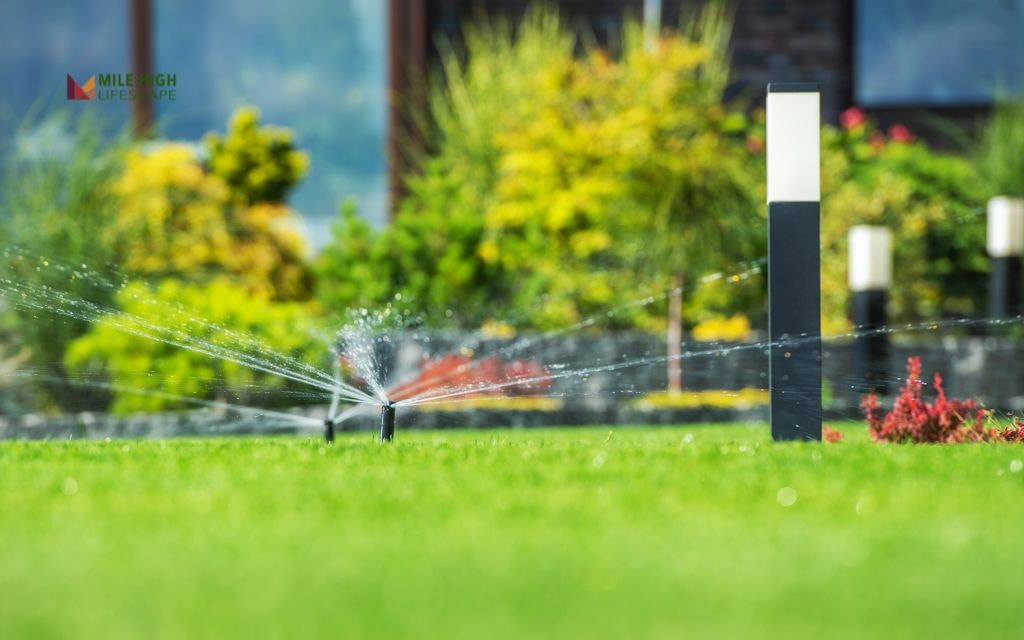
Project 2: Large Commercial Property in Cherry Creek
Challenge: A Cherry Creek business campus required irrigation for diverse landscape zones including turf areas, native plant sections, and ornamental gardens – each with distinct watering requirements.
Solution: We designed and implemented a comprehensive zone-based irrigation system with dedicated circuits for specific plant communities. The installation featured advanced smart timers allowing property managers precise control over watering schedules and volumes.
Result: The property maintained consistent landscape quality throughout changing seasons while reducing overall water consumption by approximately 40% compared to the previous system.
“The Mile High Lifescape team delivered exactly what our property needed – a sophisticated irrigation system that handles our complex landscape without wasting resources. The installation was completed efficiently with minimal disruption to our business operations.” – Josh G
Conclusion
A professionally installed sprinkler system is one of the smartest investments you can make for your Denver property. Beyond saving time and water, it ensures your landscape remains healthy and vibrant despite our challenging climate conditions.
At Mile High Lifescape, we understand the unique irrigation needs of Denver properties. Our team combines local knowledge with technical expertise to deliver custom sprinkler systems that perform reliably year after year.
From initial design through professional sprinkler installation and ongoing support, we’re committed to enhancing your property while conserving Colorado’s precious water resources.
Contact us at (303) 877-9091 or visit our website to schedule a free consultation and quote for your property’s irrigation needs.
Frequently Asked Questions (FAQs)
How deep should sprinkler lines be buried in Denver?
In Denver, sprinkler lines should be buried at least 8-12 inches deep to protect them from freezing during winter months. Main lines that remain pressurized year-round should be installed 12-18 inches deep. Our installation depth considers Denver’s frost line (typically around 36 inches) and includes proper sloping for drainage when winterizing the system.
How long does sprinkler system installation take for a typical Denver home?
For an average Denver residential property (7,000-10,000 square feet), a complete sprinkler system installation typically takes 1-2 days. Larger properties or those with complex landscaping may require 2-3 days. Our team works efficiently to minimize disruption to your property and landscape. We provide a specific timeline during your consultation based on your property’s unique characteristics.
Do sprinkler systems increase home value in Denver?
Yes, a professionally installed sprinkler system typically increases Denver home values by 5-10% of the system cost. In our water-conscious region, buyers specifically look for properties with efficient irrigation systems already in place.
Is a sprinkler system worth the cost in Denver’s climate?
Absolutely. Denver’s semi-arid climate with hot summers makes manual watering both time-consuming and inefficient. Most homeowners see a return on investment through water savings (20-30% compared to manual watering), increased property value, and significant time savings.
How do Denver’s watering restrictions affect sprinkler system usage?
Denver frequently implements watering restrictions, particularly during summer months. A properly designed sprinkler system actually makes compliance easier, as modern controllers can be programmed to water only on allowed days and times. Smart systems can automatically adjust to restrictions and weather conditions.